
I never stop to be amaze of my beautiful Morbihan and now Unesco World Heritage site, I am glad to have found me again pictures in my cd rom vault that should be in my blog for you and me, This is Locmariaquer in my beautiful Morbihan , and lovely region of Brittany, and in my belle France. I come here often as close to home to be near the ocean and the beautiful beach and bars (see posts), Therefore, let me tell you again on the megaliths of Locmariaquer , part II !!! Hope you enjoy the post as I
These are stones really that it seems nobody has determine where they come from or how they were done or what purposes! There are a lot of hypothèses but not a real conclusion accepted by all responsible organisms. The town of Locmariaquer is located at the western mouth of the Gulf of Morbihan and western part of Mor Braz which opens access to the Atlantic Ocean. All worth the detour me think. Locmariaquer with a remarkable concentration of megaliths ,and considered one of the most complete site.
The Table des Marchand is a passage dolmen measuring a little over 10 meters in length (including 7 meters for the corridor). The building is composed of eighteen orthostat supports and three cover slabs. The cover table of the chamber is 5.72 meters long, but is truncated at its western end, 3.95 meters wide and 0.85 meter thick. The height under the slab reaches 2.50 meters from the current floor. Originally, the dolmen was placed in the center of a cairn 20 meters in diameter surrounded by a facing wall, preserved to a height of 1.75 meters, with a pronounced fruit. There is no evidence to show whether the cairn covered the cover slab. Later, this cairn was enlarged to reach 30 meters in diameter and the chamber became eccentric. Several slabs have engravings. No ancient author of the 18C gave a name to the monument and it was to experience many vicissitudes. In 1834, Prosper Mérimée,French writer, historian and archaeologist ; transformed this name into Table des Marchands, a name subsequently taken up, with some spelling variations, by many authors throughout the 19C In 1883, walls were built around the cover slab to protect the interior of the dolmen chamber.
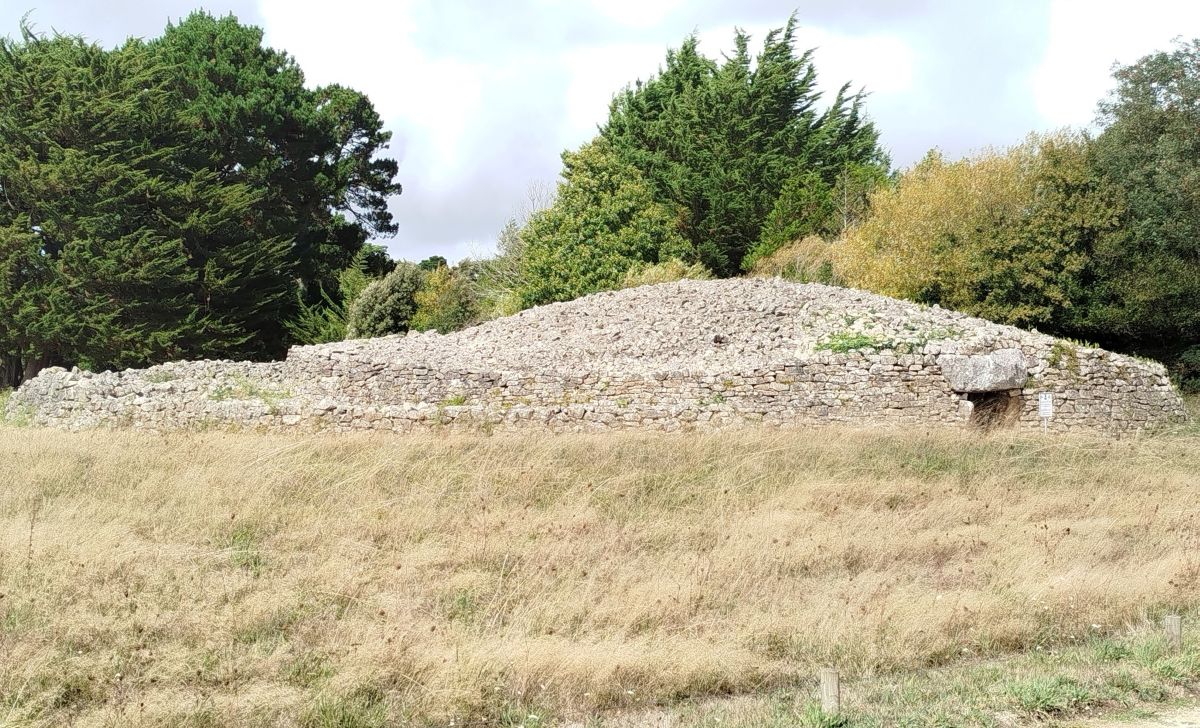
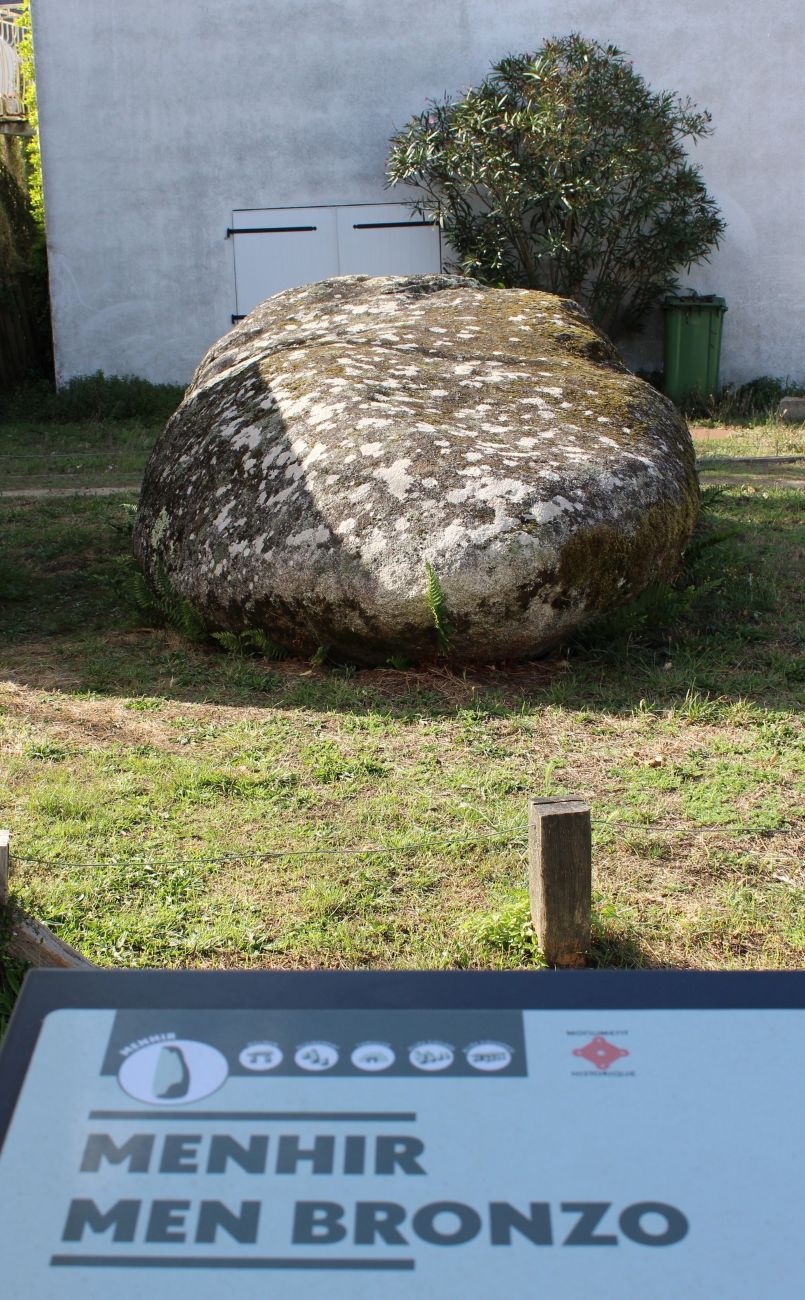
In the Bronzo alley. This broken menhir Men er Bronzo is close to the dolmen of Mane Réthual, it is perhaps linked to the latter. The corridor and the chamber are approximately 15 meters long, the chamber is double: twice, an advance of blocks on each side forms a narrowing, which compartmentalizes the chamber into two parts . 39 supports form the walls, the whole is covered by 6 slabs. The cover slab of the chamber measures 11.30 meters long and 4 meters wide, and is largely overhanging on the back of the monument. It is decorated with a magnificent coat of arms, and was also originally a large stele intended to be erected, and which was subsequently reused as a cover slab.
The above is now part of the complex registered as World Heritage by UNESCO in 2025 under the name of Megaliths of Carnac and the banks of the Morbihan, within area 3: Confluence of the three rivers.
The official Locmariaquer megaliths site on the Table des Marchands : https://www.site-megalithique-locmariaquer.fr/en/discover/the-merchants-table
The town of Locmariaquer on its megaliths : https://www.locmariaquer.bzh/decouvrir-la-ville/presentation/patrimoine-historique/patrimoine-megalithique/
The local Gulf of Morbihan tourist office on the megaliths : https://www.golfedumorbihan.co.uk/explore/live-the-exceptional/cultuur/megaliths/
The local Bay of Quiberon tourist office on the megaliths of Locmariaquer: https://www.baiedequiberon.co.uk/preparing-your-stay-in-quiberon-bay/good-deals/locmariaquer-megalith-site
There you go folks, a dandy place to see with the whole family ; very educational indeed, One of the sights of our world ,a must to visit me think. Go see the Megaliths of Locmariaquer, indeed worth it, Again, hope you enjoy this post on the megaliths of Locmariaquer , part II !!! as I.
And remember, happy travels, good health, and many cheers to all !!!


En 1977, j’étais dans la région. J’ai immédiatement reconnu le nom. De magnifiques souvenirs.
LikeLiked by 2 people
Ravi de vous vivre des belles souvenirs dans ma region. Merci de ton commentaire Salut!
LikeLiked by 1 person