
This is a nice quant village and a wonderful off the beaten path visit of Châteaufort. I am glad to have found me some pictures in my cd rom vault that should be in my blog for you and me, When I was in Versailles, I came to this village in my road warrior trails on any fun weekend. The village of Châteaufort is located in the Yvelines department no 78, in the Île-de-France region of my belle France. It is part of the Haute Vallée de Chevreuse Regional Natural Park. Therefore, here is my take on this is Châteaufort !!! Hope you enjoy the post as I.
The village of Châteaufort is served by the D36 road, which connects Palaiseau and Saclay via Villiers-le-Bâcle, the new town of Saint-Quentin-en-Yvelines via Magny-les-Hameaux, and is crossed by the D938 road, which connects it to Versailles via Buc and to Saint-Rémy-lès-Chevreuse via Magny-les-Hameaux. The village is 29 km from Rambouillet, 31 km from Paris, 13 km from Versailles , and 462 km from my current town, We came here a while back from Versailles along the Rue de la Paroisse right on Rue Ducis again right on Rue du Maréchal Foch continue on Avenue de l’Europe, into Avenue du Général de Gaulle ,Rue Royale then left on Rue Henri de Régnier then bear right onto the ramp Saint Martin to connect with the D938 road continue bear left onto Rue Louis Blériot same D938 road continue on same road now name Avenue Jean Casale passing by Buc becoming Route de Bordeaux arount Toussus le Noble continue becoming Route de Versailles or D6 road continue same road becomes the D361 road continue to roundabout bear right onto the D36 road or Roue de Châteaufort continue entering Châteaufort becomes the D938 road again making a loop name Route de Chevreuse then bear left onto the D95 road or Route de Gif then bear left onto Rue d’Ors see panel for Domaine et Moulin d’Ors and parking walk to the sights,
The Château d’Ors was built in 1637 by Jean de Luynes. Abandoned by his heir in 1951, it fell into disrepair until 1984, when the first historical reenactments were created. The estate was then purchased by the village. One can still admire the chapel, the watermill restored by the Haute Vallée de Chevreuse Regional Natural Park, the beautiful outbuildings, the dome housing a rare intact icehouse, the orangery, the guardhouses decorated with terracotta bas-reliefs, and the gallery bridge, whose medieval arch was adorned with covered arcades in the early 19C. This is today part of the Domaine d’Ors nature reserve, a protected natural area located in the Mérantaise valley,
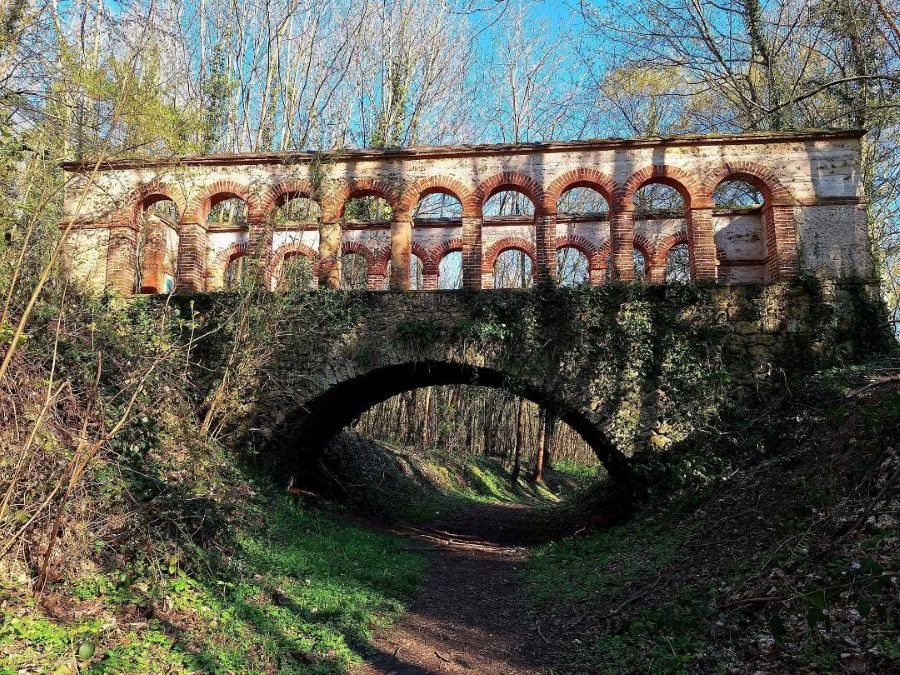
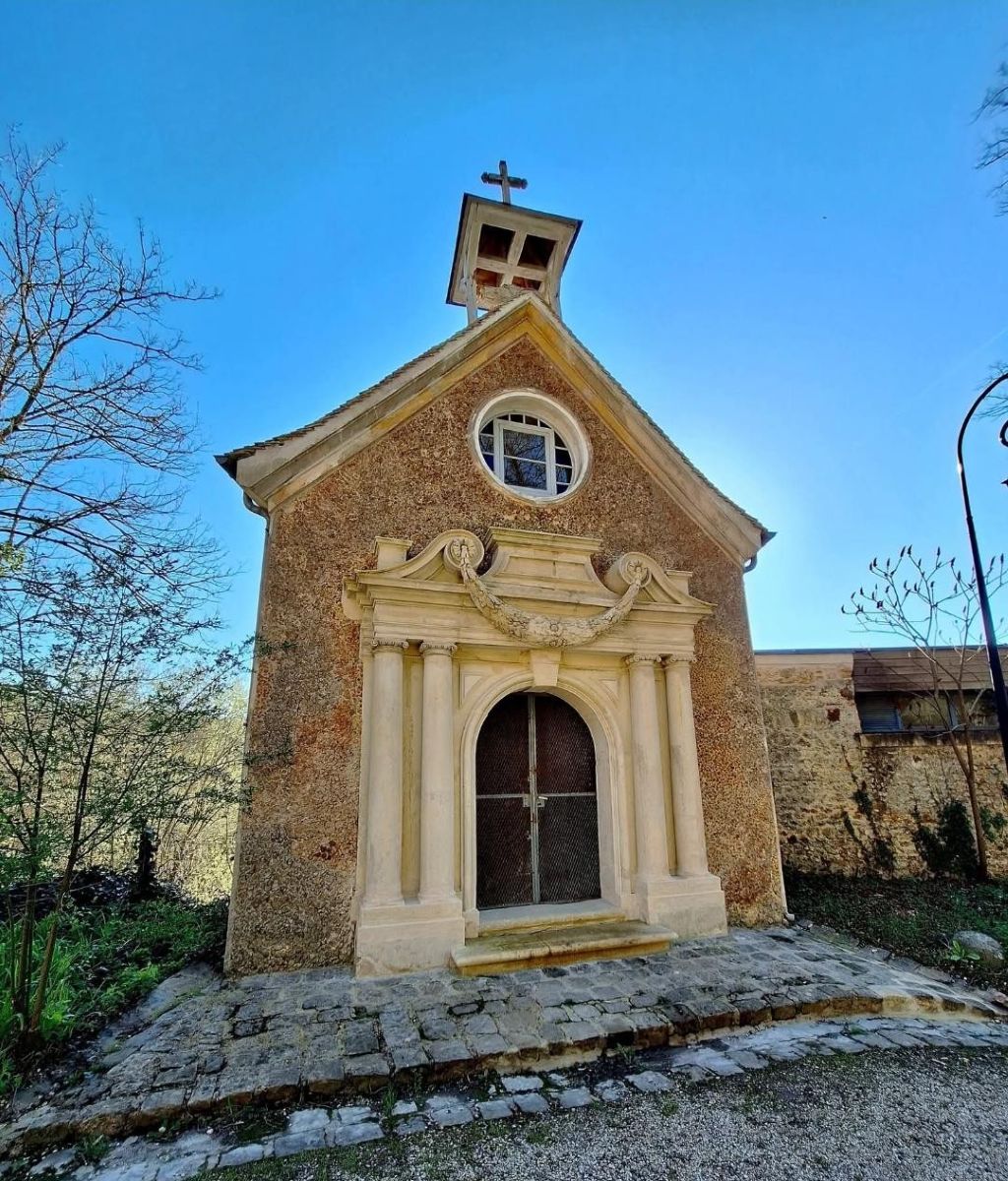
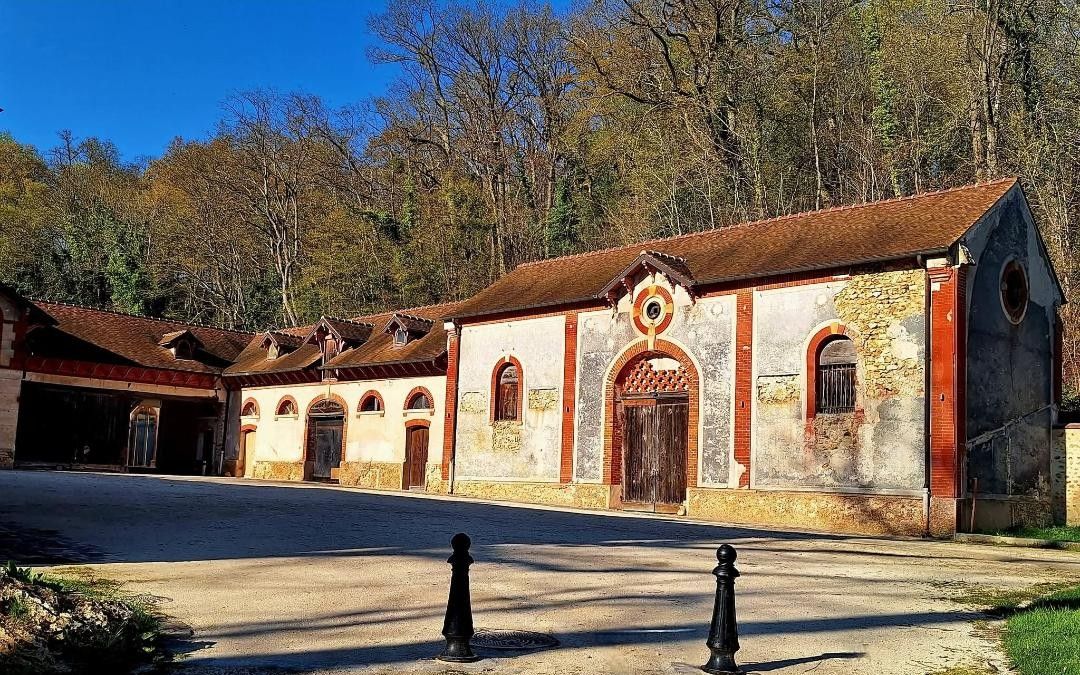
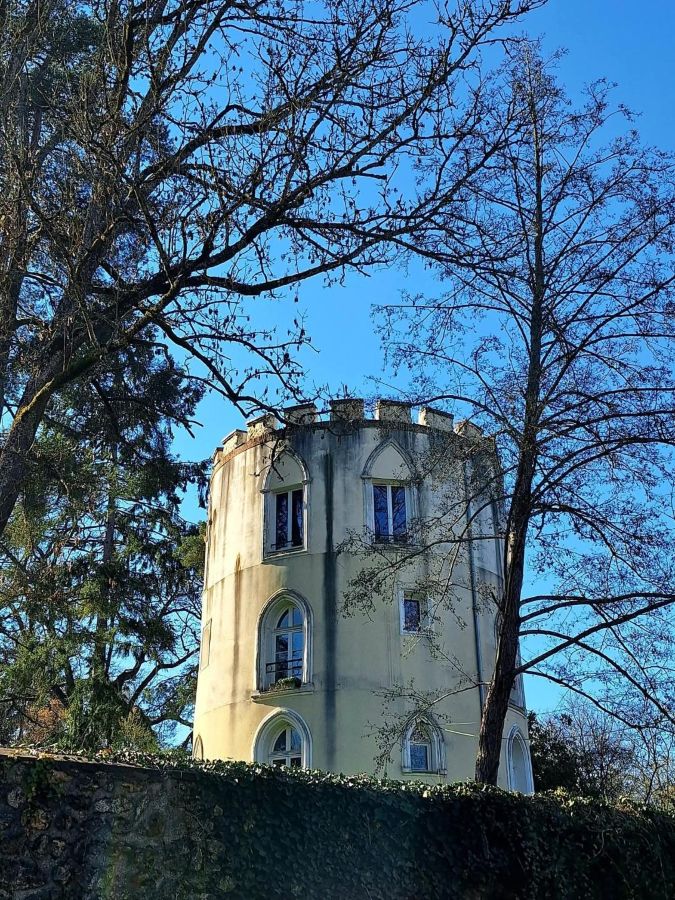
. The Château de la Geneste, currently built in the 19C, includes an estate with a horse training ground, stables, and outbuildings. In 1339, the property was owned by a Parisian bourgeois, who was its first owner. In the 17C, the estate consisted of a rebuilt castle, a large courtyard, a cowshed, stables, a barn, a sheepfold, a garden, and the fief of La Haye-Dieu. It is currently a private estate, and an interesting tower can be seen from the street.In 2012-2013, it hosted the students of season 9 of Star Academy.
The Dungeon or Keep has half of the lower level of this circular keep, which was 19 meters in diameter at its base and must have risen to a height of approximately 36 meters, constitutes the only remaining vestige of the fortified castle built in the 11-12C. Its walls are 3 meters thick and have four wide, quadrangular buttresses. Only the lower half of the tower, corresponding to a ground-floor room, is preserved. One can see a stone corbel adorned with a grimacing face, a latrine corridor, and the remains of two arrow slits. It reveals one side of its base in Place St-Christophe. Remains of it still exist, now used as a private residence.
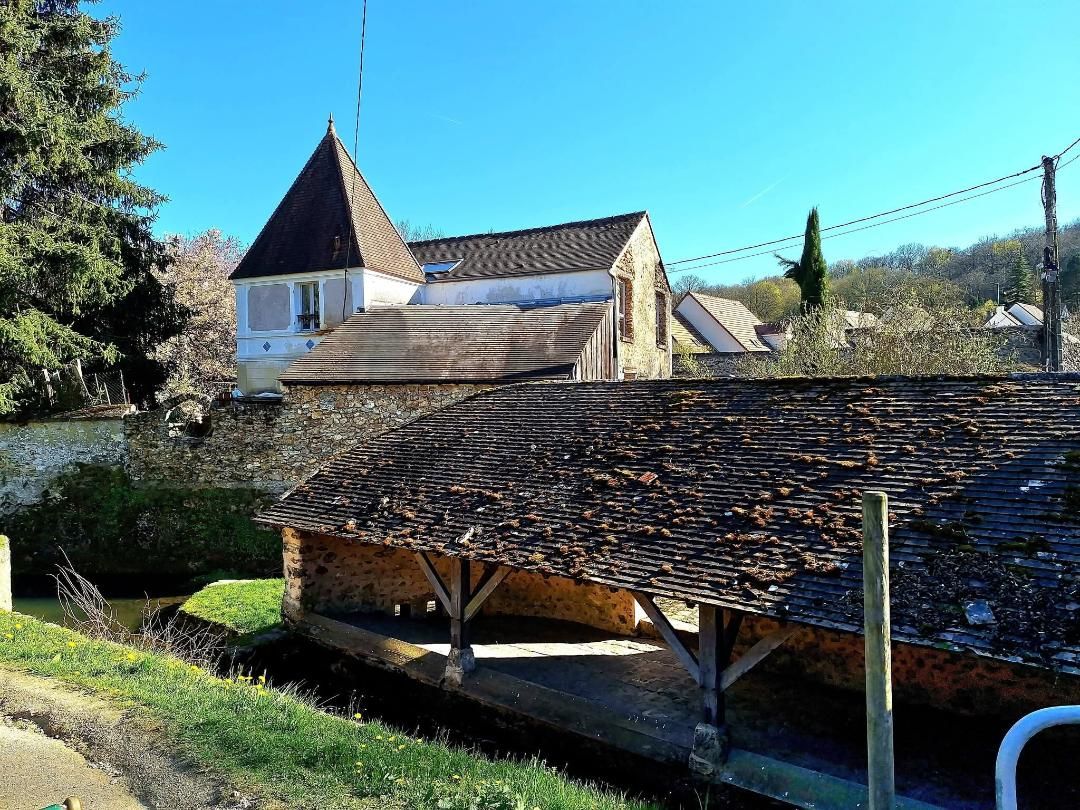
The lavoir or wash house located near the Mérantaise river, was for a long time a meeting place for the women of Castelfort who came to wash their laundry. Restored a few years ago this wash house is among the remarkable elements of the town’s vernacular heritage and one of the best preserved.
Other things to see here are the three former castles of the village named: Le Donjon (see above), the Château de la Motte or Château de Marly, built on the summit of the Marly mound and is the oldest of the village’s fortified castles. It was once owned by the knight Amaury, of the House of Gometz, and founder of the Saint-Christophe priory, with the permission of the dominant lords of the site, the Montlhéry family. Today, a bourgeois house stands there, rising two stories with an attic level. and the Château du Gavois; built on a former castle mound belonging to the Montlhéry family, offers event spaces for hire. To these three ancient fortifications, we can add the Fief d’Ors, The ramparts, of which only a few ruins remain, rose to the top of a steep hillside, above a stream, the Mérantaise, which flows into the Yvette river and the Saclay plateau. This once considerable place was chosen, in the 10-11C, to be the chief town of a region within the diocese of Paris. Châteaufort then had two churches and a priory: one for the town, adjoining the priory, and the other for the commoners living outside the walls, at a place called La Trinité . The Church of Saint-Christophe located on the site of a former priory mentioned in 1068. The current church, in the Napoleon III style, dates from 1848. One can admire the small crypt of the adjoining priory, restored in 1982.
A bit of history tell us that in the 11C, Guy II of Montlhéry the Red was lord of Châteaufort, and in 1112, his son, Hugh of Montlhéry, known as Hugh of Crécy or of Pomponne, Grand Seneschal of France, inherited the title. A lordship is documented in 1354. In 1480, Louis XI granted the land of Châteaufort to Louis of Brabant. In 1529, Francis I gifted it to Jean de la Barre. In 1616, it passed to the House of Guise, and on June 27, 1650, to that of Charles d’Escoubleau, Marquis of Sourdis. Ruined by the religious civil wars, Châteaufort became an impoverished village. Before 1809, a new castle was built, the location of which can be seen on the Napoleonic land register. It was destroyed in 1951. Throughout its history, the town of Châteaufort has been part of three different departments: 1790: creation of the Seine-et-Oise department, to which Châteaufort was attached. Effective January 1, 1968: Châteaufort was attached to the new Essonne department (no 91) during the division of Seine-et-Oise. Effective November 29, 1969: Châteaufort was attached to the Yvelines department ( no 78). Since January 1, 2013, it has been part of the Versailles Grand Parc urban community.
The anecdote I like tell us that on August 19, 1913, Adolphe Pégoud (whose real first name was Célestin), taking off from the Borel airfield in Châteaufort , performed the first parachute jump from an airplane, abandoning an old Blériot XI aircraft that had been sacrificed for the occasion. These maneuvers gave Pégoud the idea of performing aerial figures that were unthinkable at the time. Thus, in the following weeks, he carried out the first inverted flight and one of the very first loops in history, becoming a pioneer of aerobatics.
The village of Châteaufort on its heritage : https://mairie-chateaufort78.fr/patrimoine-communal/
The Parc Naturel Régional Haute Vallée de Chevreuse on Châteaufort : https://www.parc-naturel-chevreuse.fr/un-territoire-preserve/le-patrimoine-dans-les-55-communes/la-carte-des-communes-du-parc/chateaufort
The local Haute Vallée de la Biévre tourist office on Châteaufort : https://www.valleedelabievre.fr/villes-et-villages-de-caractere/chateaufort/
The Yvelines dept 78 tourist office on the Chevreuse greens : https://www.destination-yvelines.fr/chevreuse-la-verte/
The Versailles tourist office on Châteaufort : https://en.versailles-tourisme.com/chateaufort.html
There you go folks, enjoy this wonderful ride into the French soul, and the countryside of the Yvelines dept 78 at quant nice off the beaten path to Châteaufort, there is a lot more to tell you of my former home area. Again ,hope you enjoy this post on this is Châteaufort !!! as I.
And remember, happy travels, good health, and many cheers to all !!!


