
Again, pictures found in my cd rom vaults that should be in my blog for you and me, This is in the hilly quant town ,and worth the detour me think, The town of Vaux-sur-Seine is located in my dear former Yvelines department no 78 along the Seine river in the Île-de-France region of my belle France. Therefore, let me tell you a bit on the Château of Vaux sur Seine !!! Hope you enjoy the post as I
The town of Vaux sur Seine borders Meulan-en-Yvelines, Évecquemont, Menucourt, Boisemont, and Triel-sur-Seine, and is separated by the Seine from Verneuil-sur-Seine and Les Mureaux. The town is crossed by the busy D190 road, which connects Poissy to Mantes-la-Jolie. The town is located 16 km from Saint-Germain-en-Laye , 37 km from La Défense, 8 km from Verneuil-sur-Seine, 46 km from Paris, 35 km from Versailles, and 467 km from my current home, I always came here from Versailles along the Rue de la Paroisse right on Bd du Roi at Place de la Loi turn left onto the Bd Saint Antoine continue on Route de Saint Germain or D181 road continue on Route de Versailles or N186 highway to continue onto the A13 autoroute de Normandie dir Rouen continue thru exit/sortie 8 Les Mureaux to get on the D43 road continue thru City center Les Mureaux on Avenue Paul Raoult to cross the Seine river twice on the pont Rhin et Danube , already in Meulan-en-Yvelines, then bear right on Quai Albert Joly then bear left onto Place Brigitte Gros and a quick right onto Rue Gambetta or D190 road same road changes name but continue on the D190 road here call Rue du Général de Gaulle then bear left onto rue de l’église cross the railroad tracks road becomes the rue du Château to the church and parking, The church is next door ,see post,
The château de Vaux sur Seine is located above the Church of Saint-Pierre-ès-Liens (see post) at no 1 Rue du Château. In the 15C, Louis XI gifted the land of Vaux to his barber and confidant, Olivier Le Daim. Le Daim then undertook the construction of the current château. From its vast terrace, one can enjoy an unparalleled view of the Seine Valley. Like all manor houses, this château was extensively remodeled over the centuries, its architecture often reflecting the transition from one style to another. Nevertheless, it has retained much of its original structure, particularly its round towers. Until the French revolution, the lords exercised their authority and their right of high and low justice over the Vaux estate. The château changed hands several times, and the estate was more or less divided up.
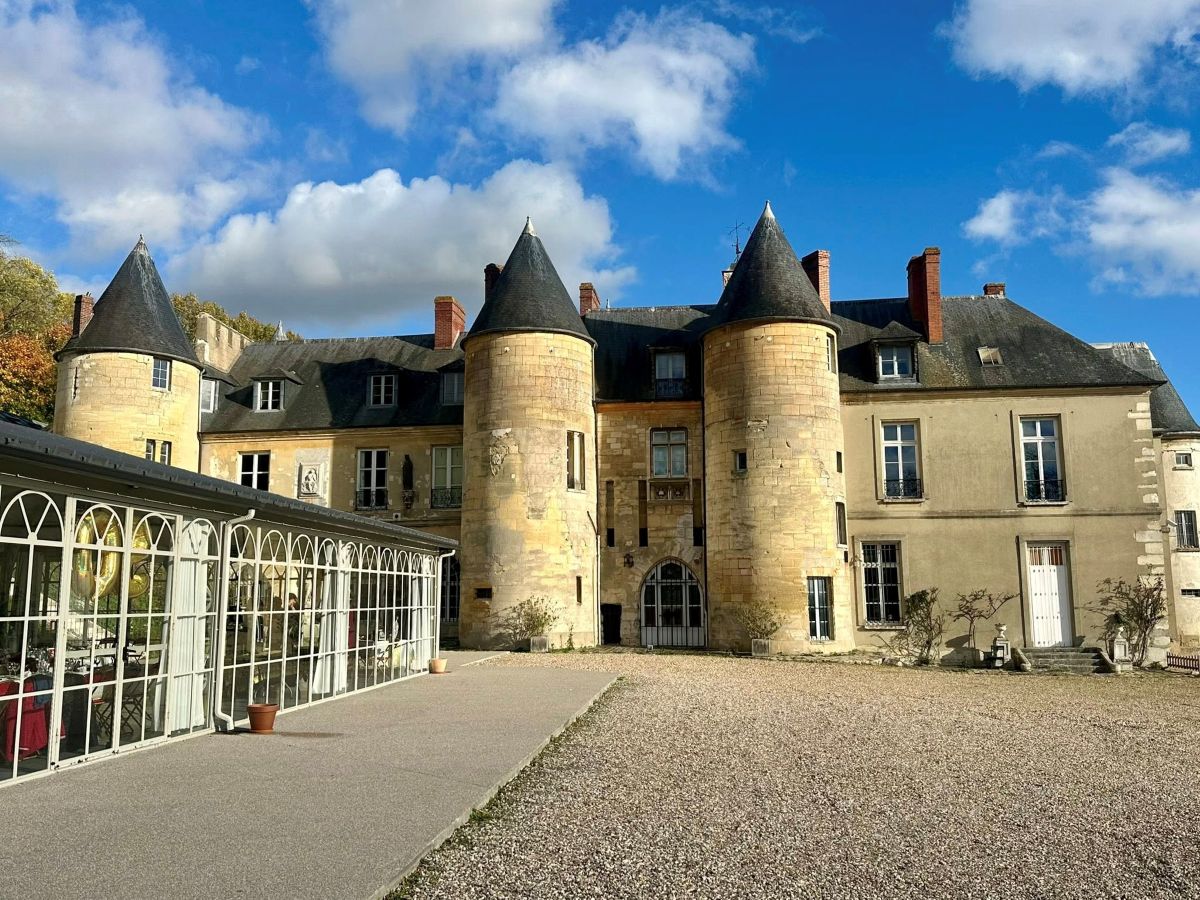
Thus, in 1819, the Château de Vaux sur Seine, its woods, the kitchen garden, and the gypsum quarries were put up for sale. A baron of the Empire, Vincent Marochetti, a lawyer at the Court of Cassation and the Council of State in Paris, was reportedly commissioned by the Grand Duchess of Tuscany to purchase plaster in Vaux-sur-Seine. He settled in Vaux and became its mayor from 1820 to 1822. The château then passed into the hands of his son, the sculptor Carlo Marochetti, who created the bas-relief depicting the Battle of Jemappes on the Arc de Triomphe, the altarpiece in the Church of the Madeleine, and the tomb of Vincenzo Bellini in Père-Lachaise Cemetery. At that time, the château hosted European artistic and political figures such as Camillo Cavour, Gioachino Rossini, Camille Saint-Saëns, and Sully Prudhomme. Since then, the château has remained the property of his descendants, who continue to live there.
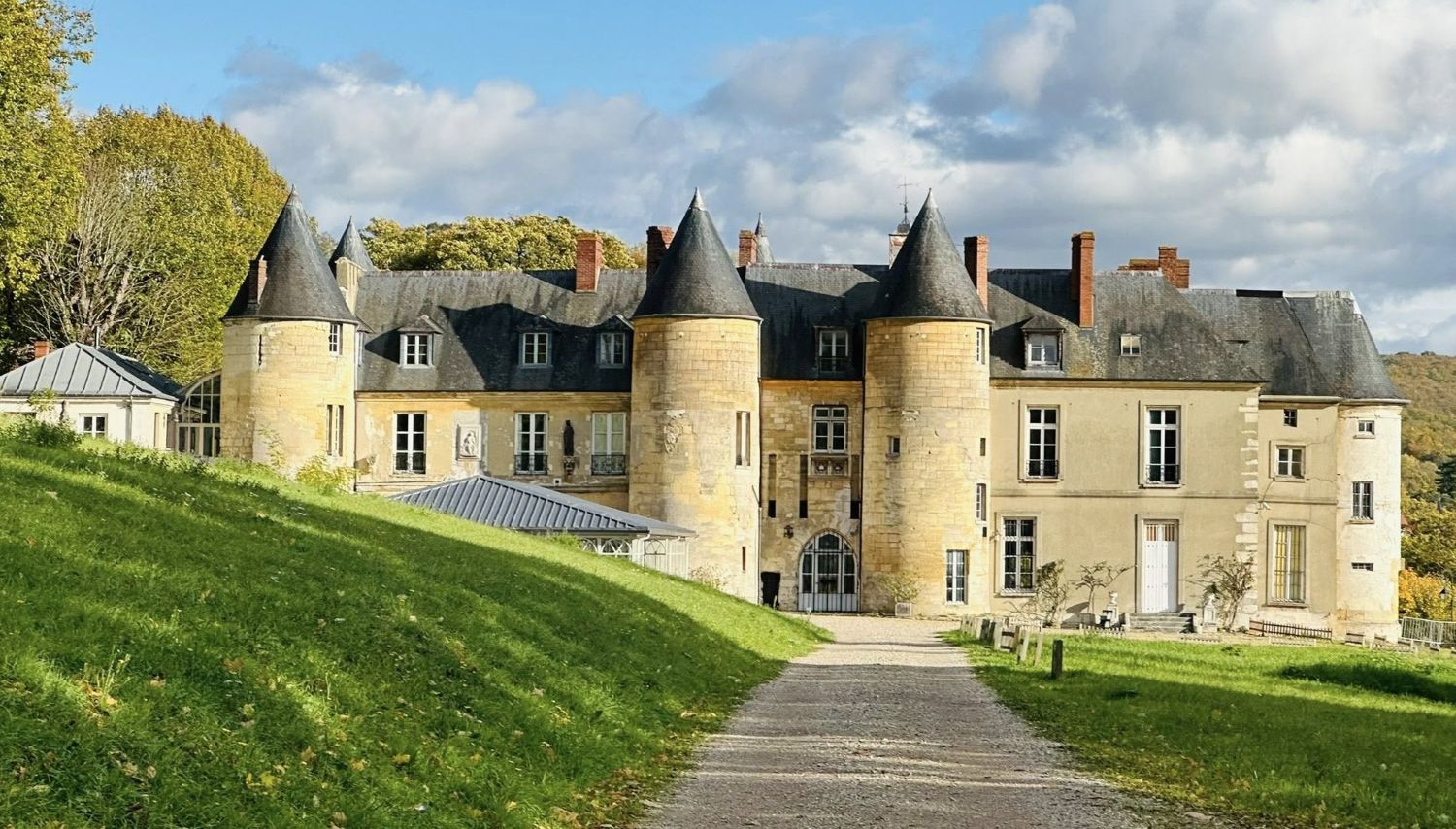
The Marochetti family has always been highly esteemed and has often left its mark on the life of Vaux through its generous actions. Moreover, at various times, it has also contributed to giving the small village of Vaux a brilliant artistic and literary reputation.The estate covers 11 hectares and includes numerous belvederes, a vegetable garden, an orchard, and a wooded park. Built in the Neoclassical style, the château, which has about thirty rooms, underwent modifications in the 19C. This château, which existed during the Hundred Years’ War, was a stronghold belonging to the Lord of Meulan. Today, the ochre and gold walls of the château and the centuries-old stones of the church lend a gentle melancholy to this tranquil landscape, set apart from the main road.
Other things to see here are the Pavillon d’Artois, 187 Grande-Rue; and the Villa “La Martinière,” formerly the municipal library, 87 rue du Général-de-Gaulle
A bit of history tell us that the land of Vaux was owned by the Counts of Meulan until 1118, the year of the death of Robert I of Meulan. The lordship of Vaux then passed through several families. It was formerly owned by the Counts of Meulan and the abbeys of Jumièges and Cernay. In the 17C, it was the lordship of the Count of Saint-Simon, a favorite of Louis XIII and father of the memoirist. At the time of the French revolution, it was owned by the Celestines of Limay.
The town of Vaux sur Seine on the castle: https://www.vauxsurseine.fr/project/chateau-de-vaux-seine/
The Yvelines dept 78 tourist office on the castle of Vaux sur Seine: https://www.destination-yvelines.fr/chateaux/chateau-de-vaux-sur-seine/
The local Terres en Seine tourist office on the castle of Vaux sur Seine:https://www.terres-de-seine.fr/decouvrir/patrimoine/chateau-de-vaux-sur-seine/
There you go folks, always something to see and this is off the beaten path town, but worth the detour me think. Again, hope you enjoy the post on the Château of Vaux sur Seine !!! as I
And remember, happy travels, good health, and many cheers to all !!!


