
I find it amazing the opportunity to do my road warrior trails in my adopted region giving me great pleasure in reviving these wonderful memorable moment in family trips. There are many things to see in my lovely Bretagne, and we have been to many and there are many more to be seen. However, the coastal region is sublime and always a welcome to visit any time Again, really, thanks for following me all these years since 2010! Therefore, let me give you my take on this is Telgruc sur Mer !!! Hope you enjoy the post as I.
The village of Telgruc-sur-Mer is located in the Finistère department no 29, in my lovely Bretagne region of my belle France, It is on the Crozon peninsula and north of Douarnenez Bay, It is 24 km from Châteaulin and 41 km from Quimper, 51 km from Brest, 11 km from Crozon, and 142 km from my current town from which I came along the D33 road to connect with the N165 expressway dir Lorient/Brest, continue dir Quimperlé and then Quimper then Brest before get on exit/sortie 59 Ti Hemon to connect with the D41 route de Châteaulin, then bear right onto the D770 road dir Châteaulin, go around this City on Avenue de Quimper with the Aulne river on your right hand side continue onto the D887 road or Rue Graveran continue on road D208 or Rue Ménez Hom into the village making a right turn onto Place du 3 Septembre 1944 and the church with parking,
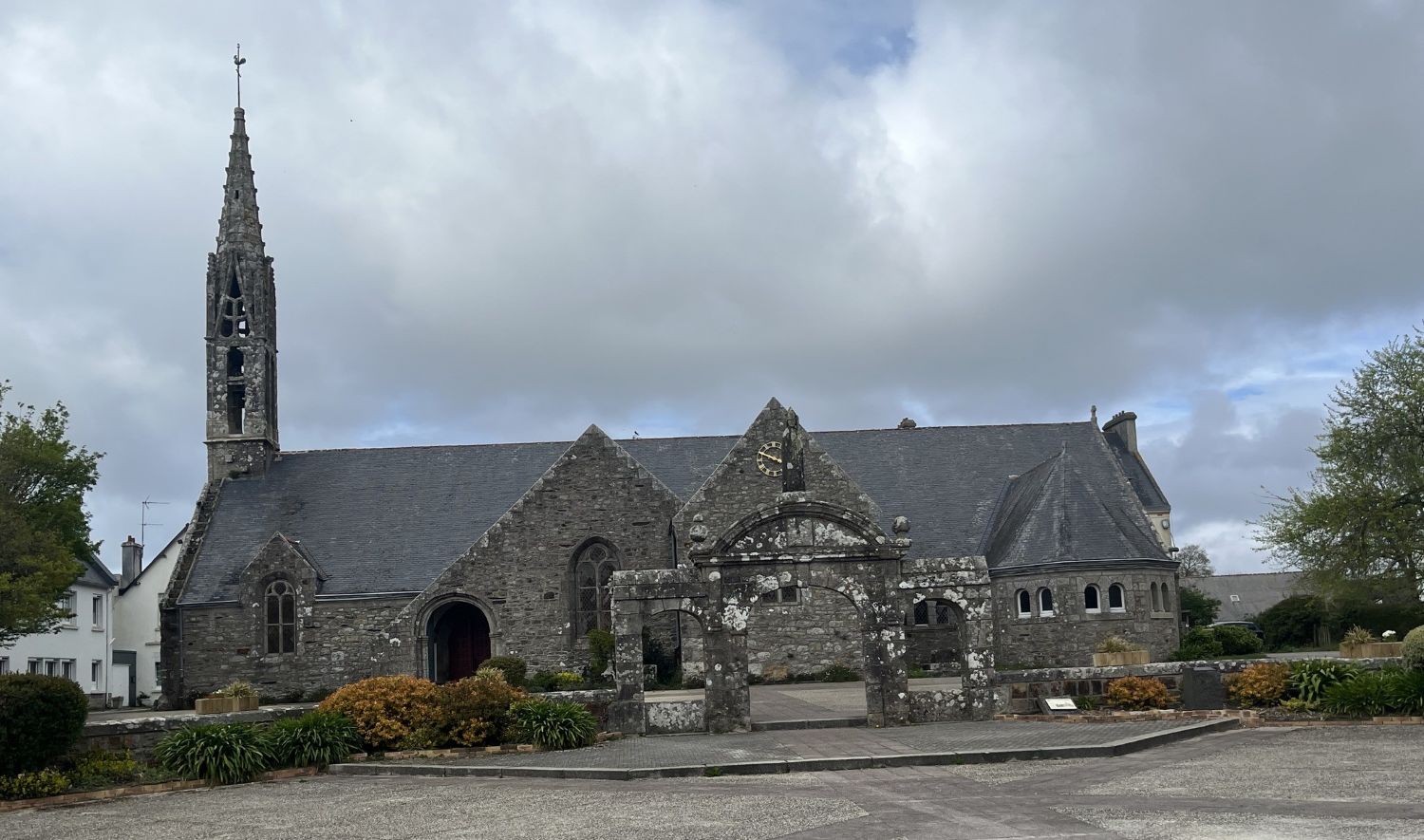
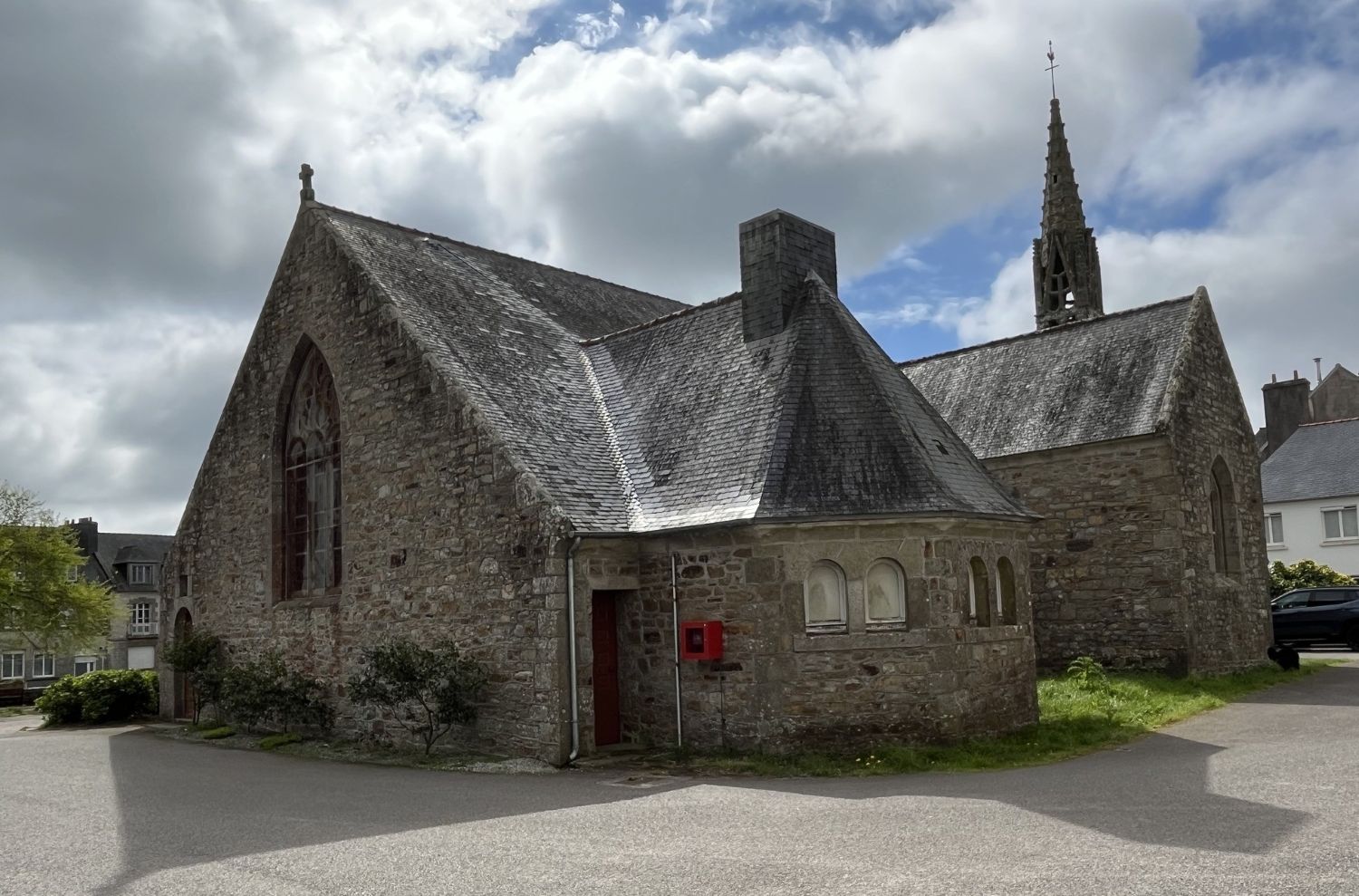
The Church of Saint-Magloire, dedicated to Saint Magloire, was built between 1576 and 1585 with stones brought from Locronan. It was partially destroyed during the devastating Allied bombing raid of 1944 (WWII). The church boasts remarkable statuary, including 14 statues from the 16C to the 18C, a triumphal arch with statues of Saint Magloire and Saint Guénolé (17C), and a 16C bell tower, which was preserved. The 17C high altar and several polychrome statues, which were preserved during the bombing. Saint Magloire was born around 535 in Glamorgan, Wales. He was educated by Saint Iltud and became the second bishop of Dol-de-Bretagne, succeeding Samson.
Other things to see here are the ruined Lanjulitte chapel, dedicated to Saint Julitte, was built in 1677. It ceased to be used as a place of worship in 1955. The Saint-Divy fountain (16C). The Pen ar Run dolmen, dating from the Neolithic period. The Launay bridge (1912) over the Aber. The restored Luzéoc windmill overlooking Traezh Beleg beach. This mill is a replica of an older mill, called Penn-ar-Stank, built around 1834-1835. In ruins, it was bought in 1982 by the village and restored in the following years at the initiative of the Eost association.
A bit of history I like tell us that a Roman road, running from Douarnenez to Camaret, passed through Plonévez-Porzay and joined the road coming from Aquilonia, passing by Pentrez beach and crossing the eastern part of what is now the village of Telgruc-sur-Mer. According to the cartulary of Landévennec, it was King Gradlon who, around the 6C, granted to Saint Guénolé the parishes of Telgruc and Argol, along with the dependent parish of Carvan (now Trégarvan). In fact, the abbatial fief of Landévennec, which included the territory of Landévennec, Argol, Trégarvan, and part of Telgruc, did not date back to King Gradlon, as the 11C monks wrote in their apocryphal charters, but to the founder of the abbey, Saint Guénolé, who had established it from the earliest days of Breton migration (5-6C) by appropriating the land through clearing and cultivation. The preacher Julien Maunoir preached a mission in Telgruc in 1674. The mayor of Telgruc bought the presbytery, which had become national property; he made it his home and his notary’s office, and the tobacconist’s shop was run by his wife. He refused to leave it after the Concordat. His descendants only left in 1913 because the Bishop of Quimper had placed the parish under interdict. Military maneuvers were frequently organized at that time in Telgruc, where there was a firing range, frequented in particular by the 118th Infantry Regiment of Morlaix. The Brest navy also frequently carried out maneuvers (for example in 1896 and 1900) and landing exercises; for example, in July 1909, a company of sailors landed at the place designated as Caon, below the Telgruc battery. The war memorial of Telgruc-sur-Mer was inaugurated on September 13, 1920. On September 1, 1944, around 17h (5 p.m.), members of the Resistance entered Telgruc, followed shortly afterward by American soldiers; Two days later, numerous American tanks occupied the town, Trez Bellec beach, and the heights of Ménez Caon. On November 11, 1948, the Croix de Guerre was awarded to the village of Telgruc-sur-Mer.
The village of Telgruc sur Mer on its heritage : https://www.telgruc-sur-mer.bzh/decouvrir-visiter/histoire-et-patrimoine/
There you go folks, another sublime spot to visit very nice natural and monumental complex in one, with nice architecture and history to boot. Again, hope you enjoy this post on this is Telgruc sur Mer !!! as I.
And remember, happy travels, good health, and many cheers to all !!!


