
I am coming back at your with my Paris city of lights and beauty beyond description. This is an unusual place I happened to stop once, curious as used to past in front of the Polish church in Paris on my way to work, I found me pictures in my cd rom vault that should be in my blog for you and me. This is an off the beaten path of my eternal Paris worth the detour me think, Therefore, here is my take on the Société historique et littéraire polonaise (SHLP) of Paris !!! Hope you enjoy the post as I.
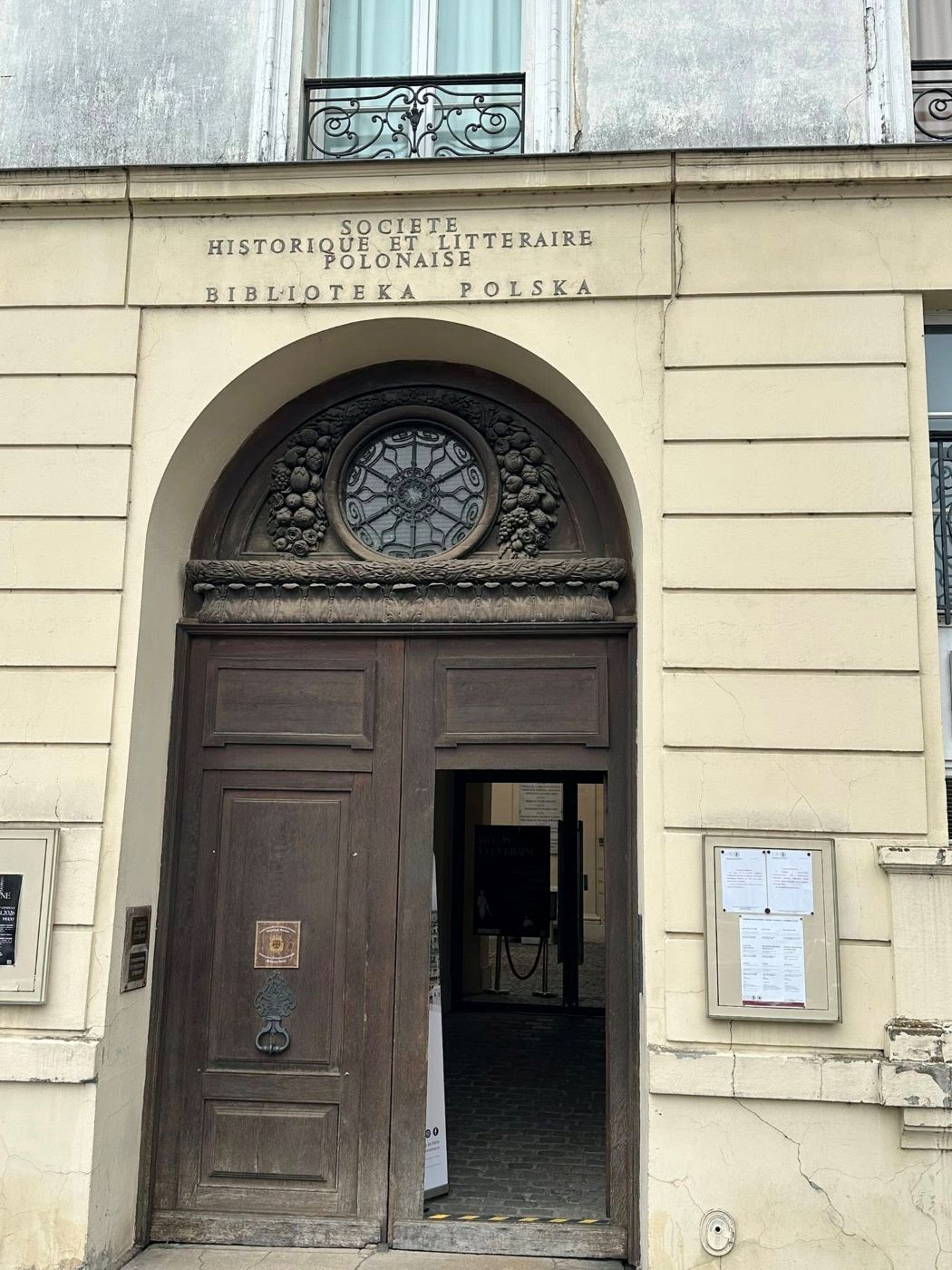
The Société historique et littéraire polonaise (SHLP) or the Polish Historical and Literary Society is an association recognized as being of public utility by Emperor Napoleon III by decree of June 10, 1866. It was founded in 1832 by prominent Polish patriots who had taken refuge in France after the failure of the November 1830 uprising. The institution had an immense influence on the preservation of Polish national identity and the restoration of Polish independence following the Treaty of Versailles. Still active today, it promotes the development of studies in Polish history, literature, and art. It also aims to foster dialogue between French and Polish cultures, and more generally between the cultures of Central and Eastern Europe on the one hand, and Western Europe on the other. Its headquarters are located at 6, quai d’Orléans of the 4éme arrondissement of Paris, .The SHLP retains ownership of its collections, but since July 2024, they have been managed by the Polish Library Institute,
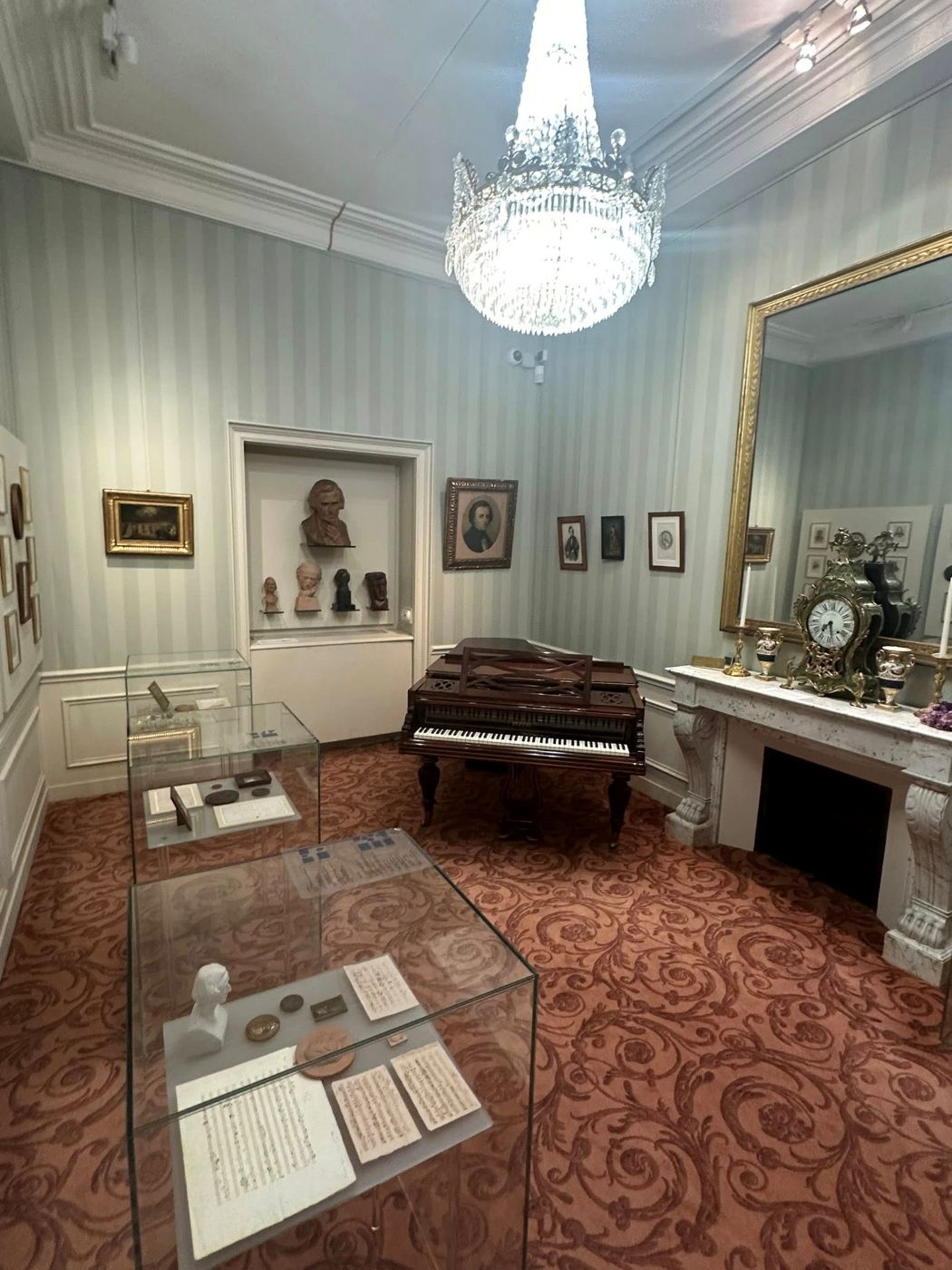
The Salon Chopin is the only exhibition in France exclusively dedicated to the composer. This room recreates the last apartment inhabited by the musician, located at 12 Place Vendôme. Besides numerous portraits of Chopin and close friends, such as George Sand, Julian Fontana, and Wojciech Grzymała, as well as drawings and period mementos, the room also displays the artist’s correspondence, photographs, and musical manuscripts. Some of the most poignant pieces in the exhibition evoke the artist’s death: a plaster cast of his hand, a death mask created by Auguste Clésigner, and the portrait of Chopin on his deathbed by Kwiatkowski. A Pleyel piano from 1845, a gift to the artist, occupies a central place in the exhibition.
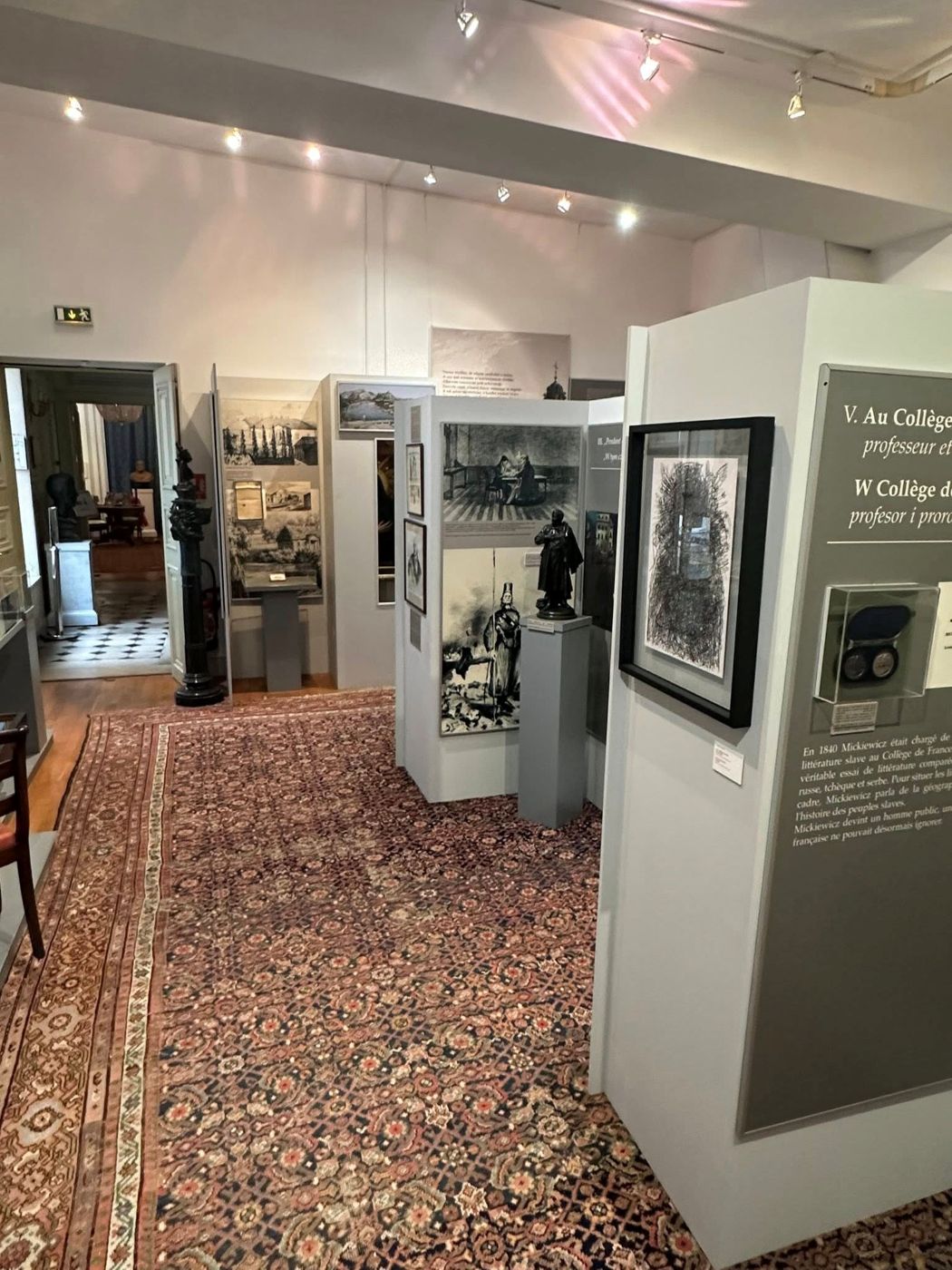
The Musée Adam Mickiewicz Museum was dedicated to him for almost half his life in early 19C Paris. A national prophet for the Poles, a pilgrim and man of action for the French, he was a professor of Slavic literature at the Collège de France. The poet’s son and director of the Polish Library, Władysław Mickiewicz, created a literary museum in 1903 devoted to his father’s life and work. The museum boasts a rich collection of manuscripts in Adam Mickiewicz’s own hand, as well as some first editions of his works, personal belongings, and his correspondence with contemporaries, including Marie d’Agoult, Alphonse de Lamartine, Victor Cousin, Johann Wolfgang von Goethe, Jules Michelet, Charles de Montalembert, Alfred de Vigny, and Charles-Augustin Sainte-Beuve.
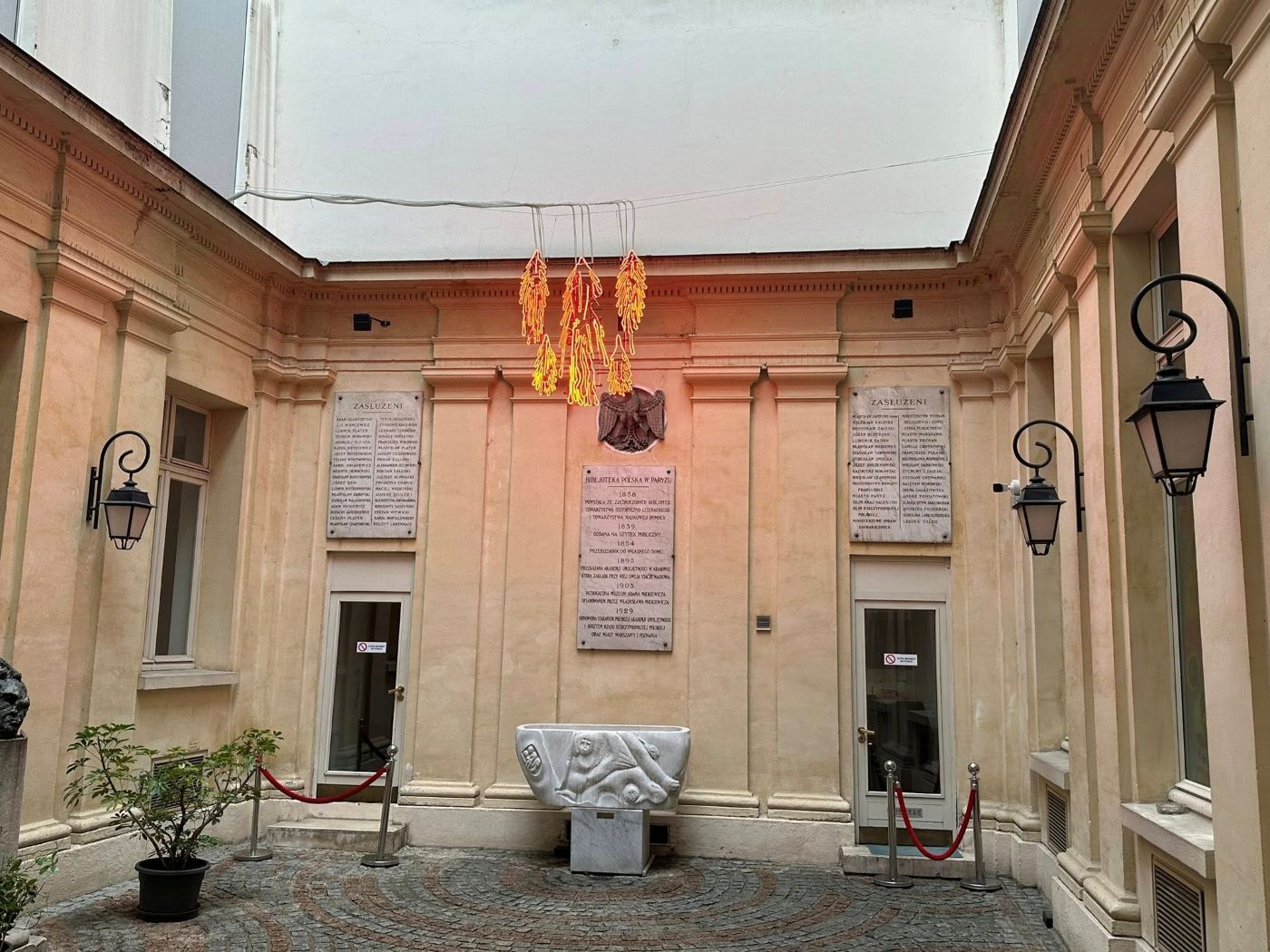
The Bibliothèque Polonaise de Paris (BPP) or the Polish Library in Paris is the oldest institution of its kind outside of Poland. Founded by Polish émigrés in 1838, it has been located since 1853 in the private mansion at 6 Quai d’Orléans, on the Île Saint-Louis, in the heart of Paris. Its collection includes numerous printed materials, newspapers, journals, pamphlets, manuscripts, map collections, engravings, paintings, sculptures, and photographs, all bequeathed to the Library by several generations of émigrés. Among other things, it preserves early printed works dating from the 16C and 17C, the archives of the Polish national uprisings and the Great Emigration, as well as the legacy of independence activists in exile. The Library houses the most important collections, archives, and memorabilia of Mickiewicz and Chopin, as well as other artists such as Olga Boznańska and Bolesław Biegas, including works and documents signed by them. It is an invaluable resource for researchers interested in the 19C, as well as for historians of 19-20C literature, culture, and art.
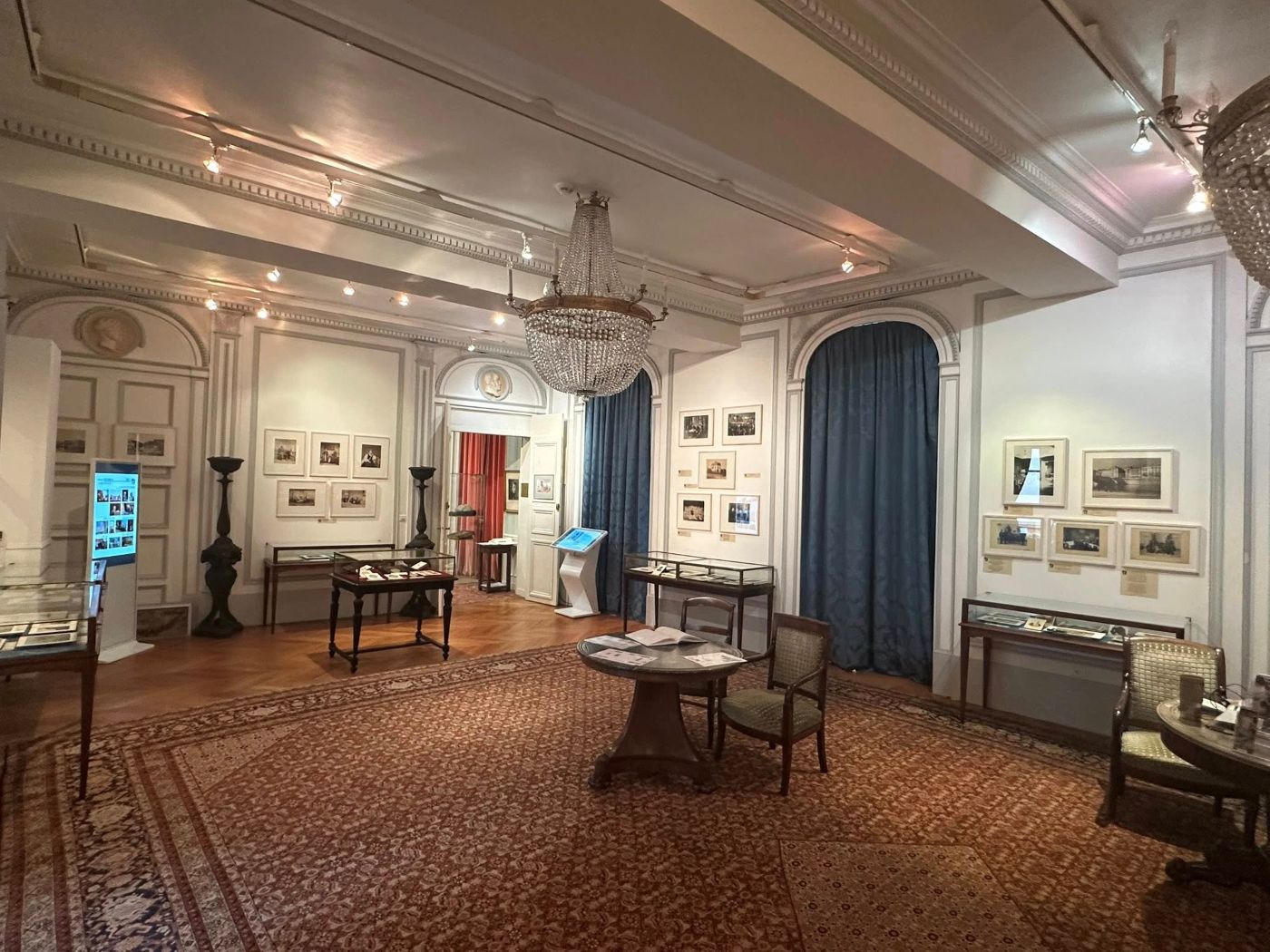
A bit of history I like tell us that the society was founded in 1832 as the Polish Literary Society by Polish émigrés: Prince Adam Czartoryski, who became its first president, and Count Alexander Walewski, the illegitimate son of Napoleon I and future Minister of Foreign Affairs under Napoleon III.5 I have to say here met the descendant when volunteer on the construction of the Palais des Tuileries that was not done for lack of funds), Initially, its aim was to publish and distribute memoirs and notes on Polish affairs in French. It resolved to address not only the present but also the past by creating a Historical Committee tasked with searching Western archives for all documents relevant to ancient Poland. Its goal was to collect documents pertaining to Polish history and culture in order to combat, from France, the Germanization and Russification of Poland. The society boasts numerous distinguished members. Among the thirteen founding members were General Józef Bem, hero of the Hungarian Revolution of 1848, Alphonse d’Herbelot, Théodore Morawski, Ludwik Plater, and General Jan Umiński. Among these prestigious Polish members were Frédéric Chopin, Adam Mickiewicz, Zygmunt Krasiński, Juliusz Słowacki, Cyprian Norwid, Aleksander Jełowicki, Joachim Lelewel, and Generals Józef Dwernicki and Henryk Dembiński, Léonard Chodzko, as well as many leading French figures: George Sand, Lamennais, Alfred de Vigny, the Marquis de Lafayette, David d’Angers, Charles de Montalembert, Jules Michelet, Edgar Quinet, and Prosper Mérimée. The Polish Library in Paris, whose principal founders were Prince Adam Czartoryski, Adam Mickiewicz, General Karol Kniaziewicz, the poet Julien-Ursin Niemcewicz, and the historian Karol Sienkiewicz, opened to the public in 1839 at 10 rue Duphot, where it housed 2,194 volumes, 147 maps, and works of art. In 1854, the Polish Literary Society and Library moved to its current location at 6 quai d’Orléans.
The institution suffered greatly during the nazis occupation in WWII, when the building was devastated by the occupying forces, its collections were scattered, and its buildings were destroyed. From 1945 onward, it worked to recover what had been lost during the Occupation. Unfortunately, the collections were largely curtailed. During the Cold War, the Polish Historical and Literary Society and the Polish Library in Paris refused to fall under the control of the communist authorities in Warsaw. They were committed to defending a free Polish culture, a stance reinforced by the decision of the French National Assembly in 1959. Throughout the 20C, the institution maintained contact with intellectuals and prominent figures such as Maria Skłodowska-Curie (vice-president in the 1920s), Paul Cazin, André Gide, Henri de Montfort, Bronisław Geremek, and Hélène Carrère d’Encausse. The current president of the Polish Historical and Literary Society, director of the Polish Library in Paris, is the physicist C. Pierre Zaleski.
Other sites of interest for this post are :
The Librarie Polonaise or Polish Bookstore is located at 123 Boulevard Saint-Germain, 6éme arrondissement of Paris, It was founded in 1830, the Polish bookstore changed addresses frequently before settling permanently on Boulevard Saint-Germain. It sells books and cultural products related to Poland and other neighboring countries.
The Church Notre Dame de l’Assomption is a Polish Catholic church located on Place Maurice-Barrès, at the corner of Rue Saint-Honoré and Rue Cambon in the 1er arrondissement of Paris. It was built between 1670 and 1676. For several years,I walked by it on my way to work and sadly can’t find me pictures yet,
The official Société historique et littéraire polonaise (SHLP): https://www.shlp.fr/
The official Polish Library Institute : .https://ibpp.eu/fr/
The official Musée de l’Histoire et de l’Immigration on Paris 2nd capital of Poland : https://www.histoire-immigration.fr/polonia-des-polonais-en-france-depuis-1830/paris-deuxieme-capitale-de-la-pologne
The Paris tourist office on the Polish library : https://parisjetaime.com/eng/shopping/librairie-polonaise-p2254
The parish of the Church Notre-Dame-de-l’Assomption (Polish community in Paris) : https://parafiaconcorde.com/
There you go folks, Paris , its a whole world of its own indeed, I was brief there just out of curiosity, but worth the detour me think. It is highly recommended for a visit and to get to know Paris, and its history of the arts. Again, hope you enjoy this post on the Société historique et littéraire polonaise (SHLP) of Paris !!! as I.
And remember, happy travels, good health, and many cheers to all !!!


