
We have driven and walked in my eternal Paris, and would like to have an imprint in my blog on the wonderful family times we had there, There is so much to see , doing my best, and glad found me these pictures in my cd rom vault ,which now transposing in my blog for you and me, This was my former worked city, so glad to post more memorable spots on it, I thank you for your readership over the years and to bear with my rants! After all, Paris is to rant, shout and yelled about, me think. Therefore, here is my take on curiosities of Paris, part LXXXIV !!! Hope you enjoy the post as I.
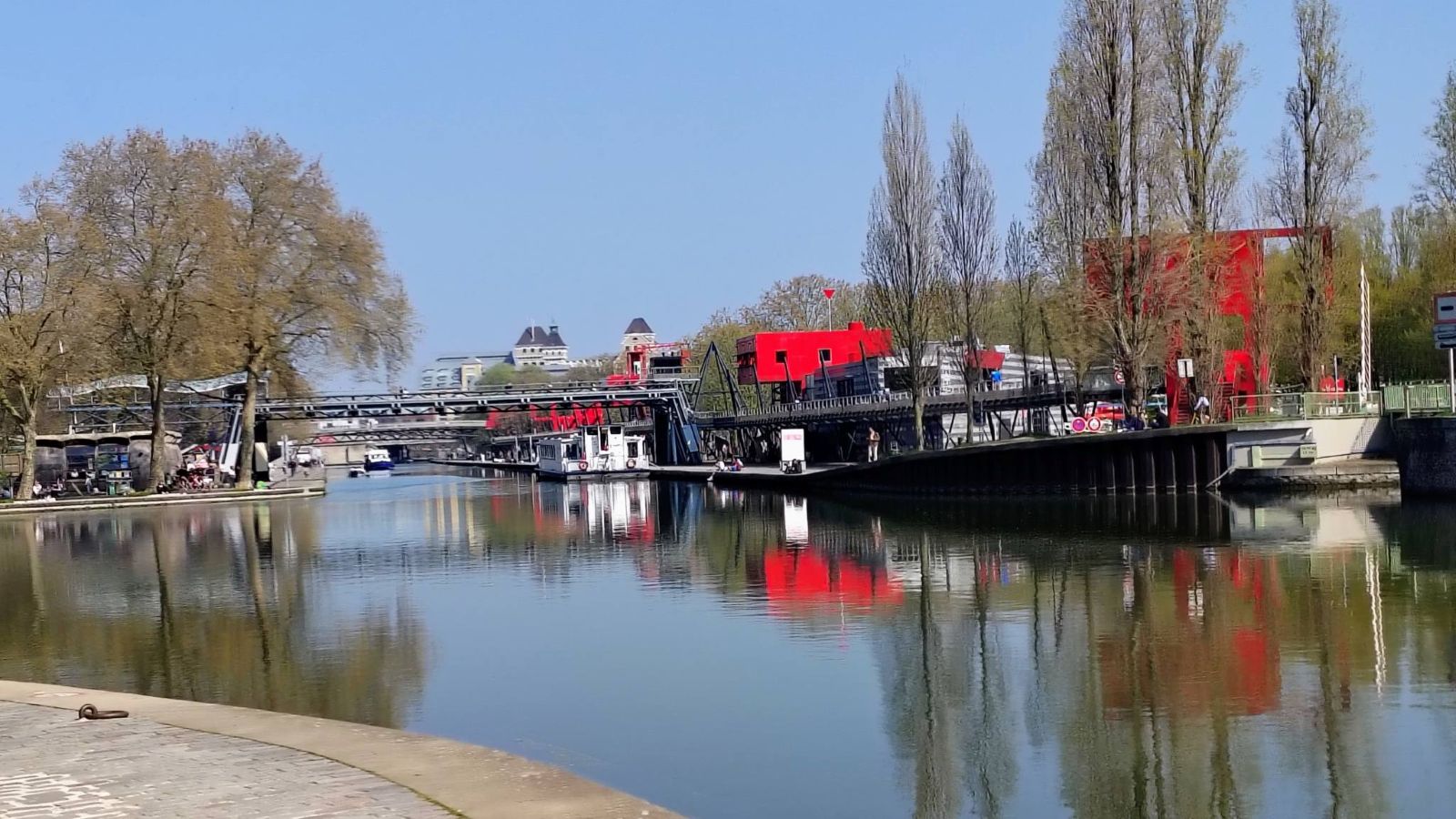
The Canal de l’Ourcq (see posts) boating on it at 8 kph passing many levies and wonderful sightseeing The canal de l’Ourcq before starting at Mareuil-sur-Ourcq to reach the Bassin de la Villette in Paris, the Ourcq river is canalized and navigable from the Port aux Perches in the town of Silly-la-Poterie. With the Canal Saint-Denis, Bassin de la Villette, and the Canal Saint-Martin, (see posts) it constitutes the network of Parisian canals, 130 km long and which belongs to the city of Paris. Its construction began in 1802 and ended in 1825.
The city of Paris on things to know about the Canal de l’Ourcq: https://www.paris.fr/pages/10-choses-a-savoir-sur-le-canal-de-l-ourcq-19869
The Paris tourist office on the Canal:https://parisjetaime.com/eng/transport/canal-de-l-ourcq-p1872
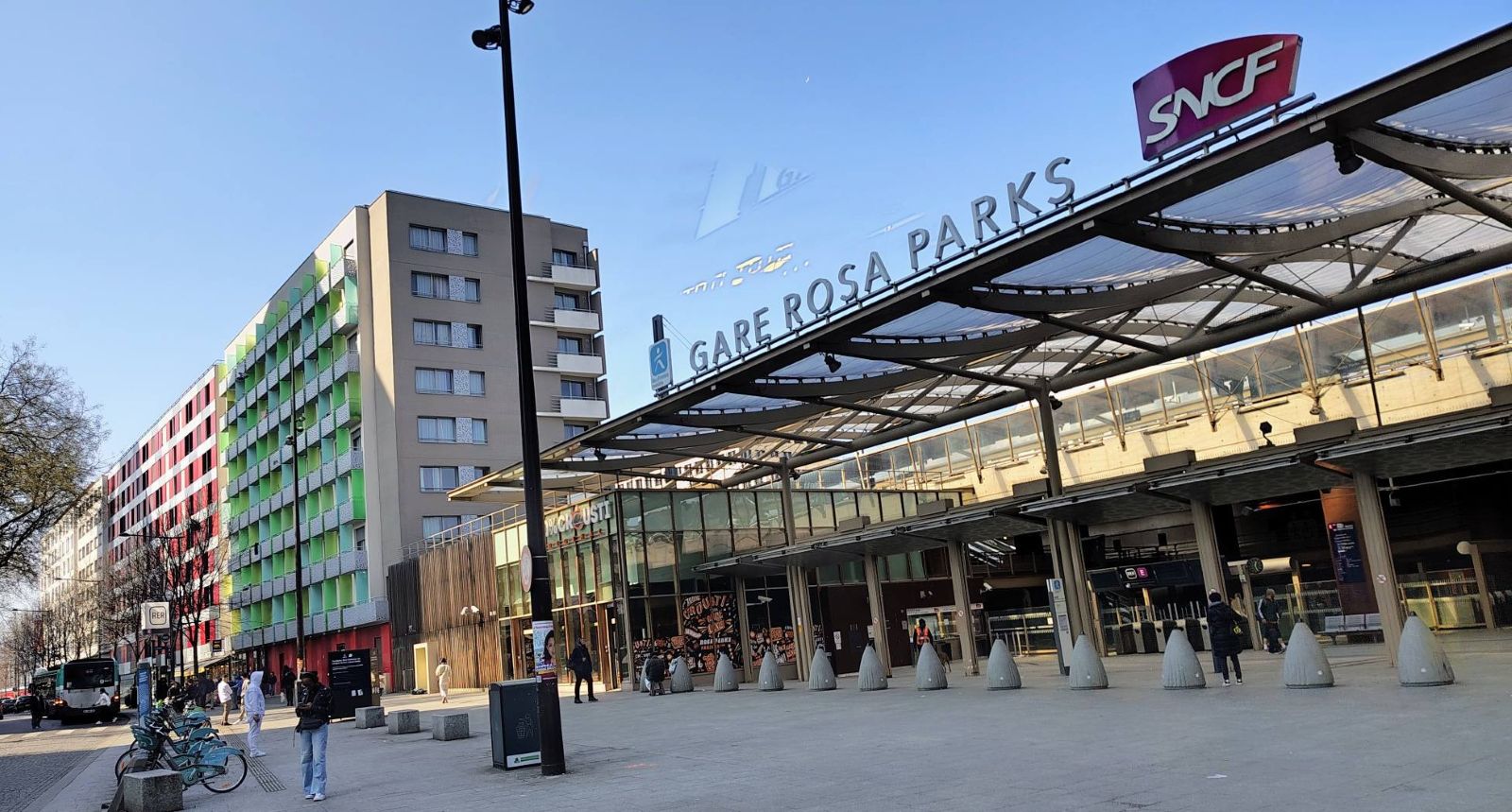
The Gare Rosa Parks train station,(see pic) formerly named Évangile due to its location near Rue de l’Évangile and the Croix de l’Évangile, is a station on RER line E, on the border of the 18éme and 19éme arrondissements, which opened on December 13, 2015. Inside the passenger building, kiosks have been present since September 2019. There is also a ticket window, Île-de-France ticket machines, and long-distance ticket machines. A small supermarket also sells food and some everyday items. A Subway sandwich shop is located to the left of the south entrance. The station is served by Tramway line 3b, by RATP bus lines 35, 45, 54, 60, and 239, and at night by the Noctilien night bus line N140. Notable buildings: The Croix de l’Évangile (Cross of the Gospel), the last remaining wayside cross in Paris, is located to the west of the station. The Church of Saint-Luc is directly accessible to pedestrians via Rue Henri-Verneuil (opposite the station, on the south side), Rue Colette-Magny, and the Passage Wattieaux towards Rue de l’Ourcq. The Centquatre-Paris, a cultural center of the City of Paris, is accessible from the station via Rue Gaston-Tessier and Rue d’Aubervilliers.
The official RATP on the RER E trains: https://www.ratp.fr/en/infos-trafic/rer-transilien/e
The official Transilien on the gare Rosa Parks: https://www.transilien.com/fr/gare/8765479
The official SNCF trains on the gare Rosa Parks : https://www.garesetconnexions.sncf/fr/gares-services/rosa-parks
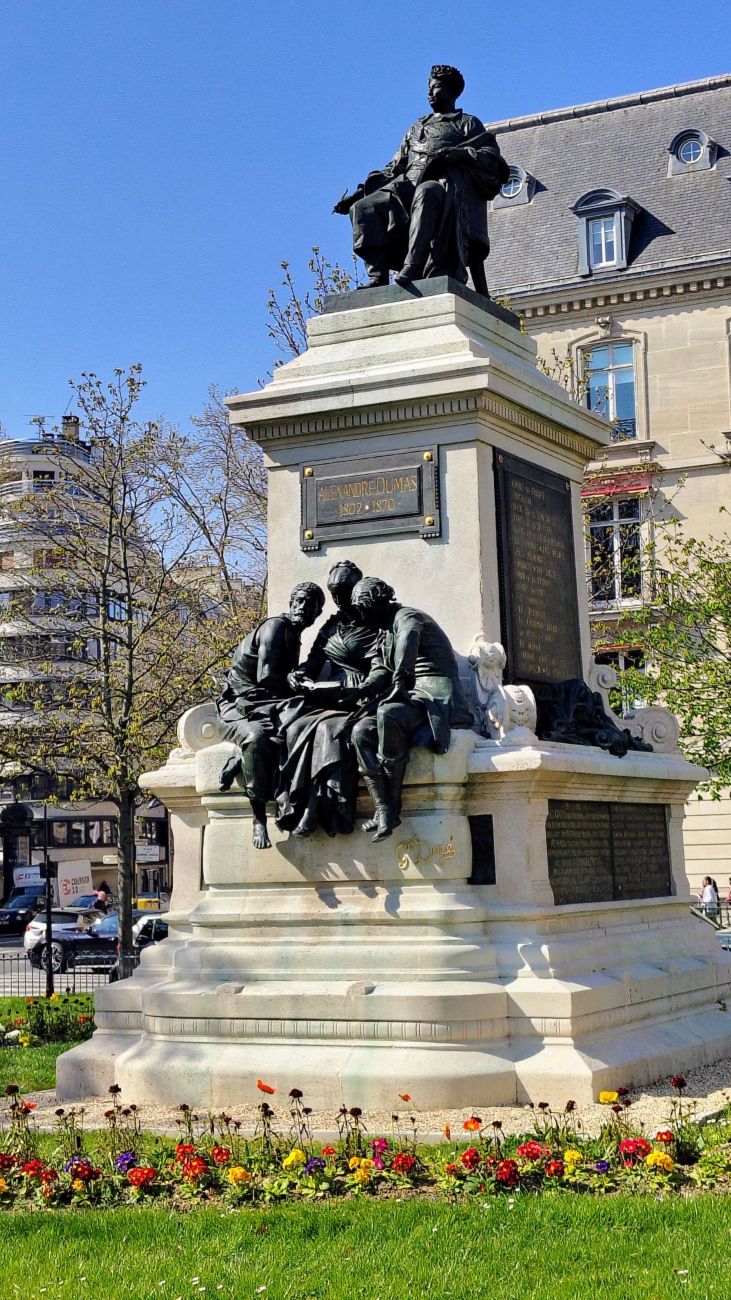
The Place du Général-Catroux is located in the 17éme arrondissement of Paris. This rectangular square is bisected by Boulevard Malesherbes and Avenue de Villiers; it also includes Rue Henri-Rochefort, Rue de Phalsbourg, Rue de Thann, Rue Georges-Berger, Rue Legendre, and Rue Jacques-Bingen. The square is named after General Georges Catroux, an army general, minister of the Fourth Republic, and French ambassador. He was one of the principal generals who rallied to General de Gaulle after the Appeal of June 18th and played a leading role in the Free French movement. The square is served by metro line 3 at the Malesherbes station. Opened in 1862 on the site of a park, it was officially named “Place Malesherbes” in 1864. However, it was long known as “Place des Trois Dumas” because of the three statues of the Dumas brothers that adorn its center. It took its current name in 1977 Notable buildings: No. 1: Hôtel Gaillard, built for Émile Gaillard, a regent of the Bank of France (see post) and art collector, to house his collections of furniture, trinkets, paintings, etc. The red brick building, inspired by the architecture of the castles of Blois and Gien, was built between 1878 and 1882. After Émile Gaillard’s death in 1902, his collections were dispersed, and the building was bought by the Bank of France in 1919 to serve as a branch. An entrance exists at No. 11 ter, rue Georges-Berger, where the building is known as the Hôtel Berger. No. 20: private mansion where the composer Charles Gounod lived from 1878 until his death in 1893; Its facade has been heavily altered since. Statue of General Thomas Alexandre Dumas, by Alphonse Emmanuel de Moncel de Perrin, 1912. He is depicted leaning on a rifle. It was melted down under the Vichy regime in 1942. The City of Paris erected Fers (Bracelets) on its site, created in 2009 by Driss Sans-Arcidet, representing a monumental broken chain in memory of General Dumas, who was born a slave in Haiti. Monument to Alexandre Dumas père ,(see pic) by Gustave Doré, inaugurated on November 4, 1883, depicts Alexandre Dumas seated in a dressing gown, with figures representing his readers and characters from his most famous works on its base. A statue of d’Artagnan adorns the rear of the pedestal. French writer Alexandre Dumas arrived in Paris in 1822. Penniless and dreaming of fame, he was reminiscent of his hero, d’Artagnan. Dumas began his career in the theater, but he quickly turned to the novel. The Three Musketeers (1844) inaugurated the series of great historical narratives that secured his renown. He died on December 5, 1870, and is now buried in the Panthéon (5éme arrondissement). Monument to Alexandre Dumas fils (Alexandre Dumas the Younger) by René de Saint-Marceaux, 1906. Alexandre Dumas fils was one of the first writers to live in the Plaine Monceau, a neighborhood of painters, actors, and musicians. He resided at 98 Avenue de Villiers. The monument to Sarah Bernhardt, by François Sicard, 1926, depicts the actress in the title role of Racine’s Phèdre. She owned a townhouse at the far end of the square, on the corner of Avenue de Villiers and Rue Fortuny. The monument to Solitude, a Mulatto woman by Didier Audrat, was inaugurated on May 10, 2022, in the presence of Jean-Marc Ayrault. The monument to Edmond Rostand, inaugurated on June 28, 2023, is a bust created by sculptor Patrick Berthaud, a replica of the one sculpted by Sarah Bernhardt, commissioned by Thomas Sertillanges, president of the Edmond Rostand Festival. He lived at 2 Rue Fortuny, where he wrote Cyrano de Bergerac.
The Paris tourist office on the 17éme arrondissement de Paris : https://parisjetaime.com/eng/article/explore-paris-s-17th-arrondissement-a831
The Paris tourist office on the statues of the 3 Dumas : https://parisjetaime.com/eng/culture/les-statues-des-trois-dumas-p1829
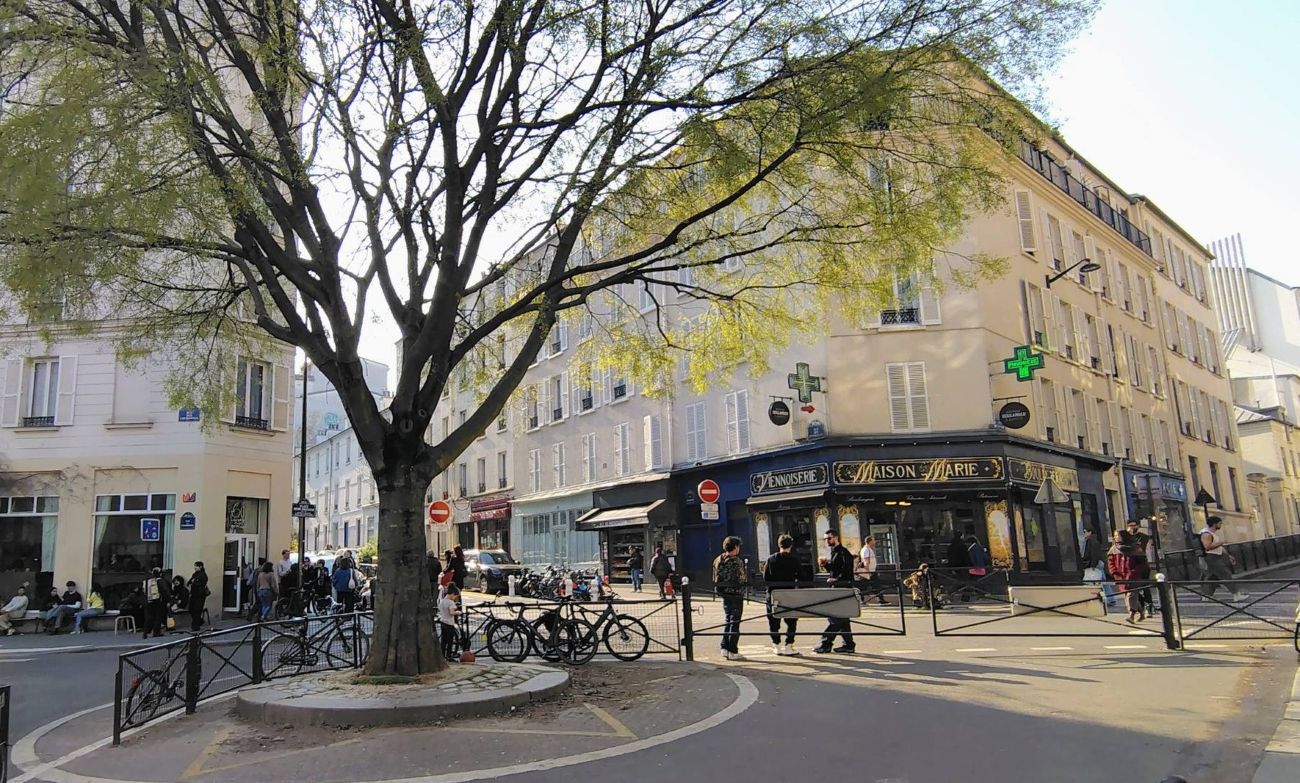
The Place Henri-Krasucki is located in the Belleville quartier/neighborhood of the 20éme district/arrondissement of Paris. The square is situated at the intersection of Rue Levert, Rue de la Mare, Rue des Envierges, Rue des Couronnes, and Rue des Cascades. It is named after Henri Krasucki, a member of the French Resistance (FTP), a leader of the French Communist Party, and General Secretary of the CGT (General Confederation of Labour) from 1982 to 1992. He lived for many years at no 107 Rue des Couronnes, which leads onto this square. The intersection was officially named “Place Henri-Krasucki” by a municipal decree on April 29, 2004. Notable buildings here are the storefront of the boulangerie Maison Marie, (see pic) built in 1910, located at 43 Rue des Envierges, 71 Rue de la Mare, and Place Henri-Krasucki; and four enamel plaques displaying landscapes in medallions and adorned with Art Nouveau arabesques. These decorations are inspired by the theme of the seasons and evoke the style of the painter Puvis de Chavannes in their palette of colors, figures, and setting. Spring: the mill on the river; Summer: the wheat harvest (a couple of reapers); Autumn: haymaking (two gleaners); Winter: the windmill under the snow. Two inscribed plaques read: Rue des Envierges: “Croissants / Butter Brioches” and Rue de la Mare: “Pastries / Specialty Breads.” The shop front was renovated around 1986, and the paintings under glass were restored. The Cascades inspection chamber located under the roadway, situated between 84 and 91 Rue des Cascades and Place Henri-Krasucki, is part of the Belleville water system. The chamber was built during the construction of the Belleville aqueduct. The Belleville water system is a network of hydraulic structures designed to channel water from the springs on Belleville Hill to the areas below.
The Paris tourist office on the 20éme arrondissement de Paris : https://parisjetaime.com/eng/article/explore-paris-s-20th-arrondissement-a834
There you go folks, a dandy city to explore and enjoy with the family, Memorable moments in my eternal Paris, driving and walking all over in my road warrior trails brings out sublime awesome spots with nice memorable family visits of yesteryear always remember and always looking forward to be back, eventually. Again hope you enjoy the post on curiosities of Paris , part LXXXIV !!! as I.
And remember, happy travels, good health, and many cheers to all !!!


