
I am again to tell you about more streets of my eternal Paris. I have many many posts on Paris and several on the streets of the most beautiful city in the world. I have come up with pictures from cd rom vault that should be here for you and me. As always thank you for following my blog some since Nov 26, 2010. Therefore, here is my take on the Rue François Miron of Paris !!! Hope you enjoy it as I.
The Hôtel du Président Hénault is a private mansion located at 82 rue François-Miron, in the 4éme arrondissement of Paris. It features a façade on rue François-Miron (see post) and a main façade in cut stone overlooking a garden at 5-7 rue de Fourcy,(see below) with two grand staircases, one external and one internal. It was built in 1707 on the site of two houses for Charles-Jean-François Hénault. The mansion was acquired in 1793 by Edme Delaborne and remained in the same family until the 20C. It was acquired in 1943 by the City of Paris and has housed the Maison Européenne de la Photographie (European House of Photography) since 1996. The building is made available to an association, “Paris Audiovisuel – Maison Européenne de la Photographie” (MEP), founded in 1978 by Jacques Chirac, then Mayor of Paris. The MEP offers a variety of services, including a library of 36,000 books available for on-site consultation, a 100-seat auditorium, a video library with approximately 1,000 films, a specialized bookstore, and a café housed in the 18C vaulted rooms. It offers guided tours, lectures, film series related to its exhibitions, and specific programs for young audiences. The MEP‘s collection focuses on contemporary photography and comprises more than 20,000 works, primarily analog and digital photographs, as well as artists’ videos. It also boasts an extensive collection of books on photography, including artists’ books and technical or theoretical texts. The MEP regularly organizes exhibition cycles highlighting international themes, movements and artists, mainly from the second half of the 20C and the 21C. You can get to it by Métro : Saint-Paul line 1 or Bus line 96, arrêt/stop Rue de Jouy.
The Rue de Fourcy is located in the 4éme arrondissement of Paris. The nearest metro stations are: Pont Marie (line 7); Hôtel de Ville (lines 1 and 11); and Saint-Paul (line 1). This street is named after Henri de Fourcy, Provost of the Merchants of Paris from 1684 to 1692. It lies between the Saint-Paul and Saint-Gervais quartiers/neighborhoods, forming a boundary between them. Originally a dead end leading to Rue Saint-Antoine, the street was transformed by being extended to Rue de Jouy in 1684. Notable buildings here are at No. 6: Hôtel Charpentier de Fourcy, dating from 1677. Its open-air wooden walkways, reminiscent of the layout of Lyon’s traboules (covered passageways), are visible from the street through the railings. The building currently houses a youth hostel. No. 7: European House of Photography main facade entrance (see pic).
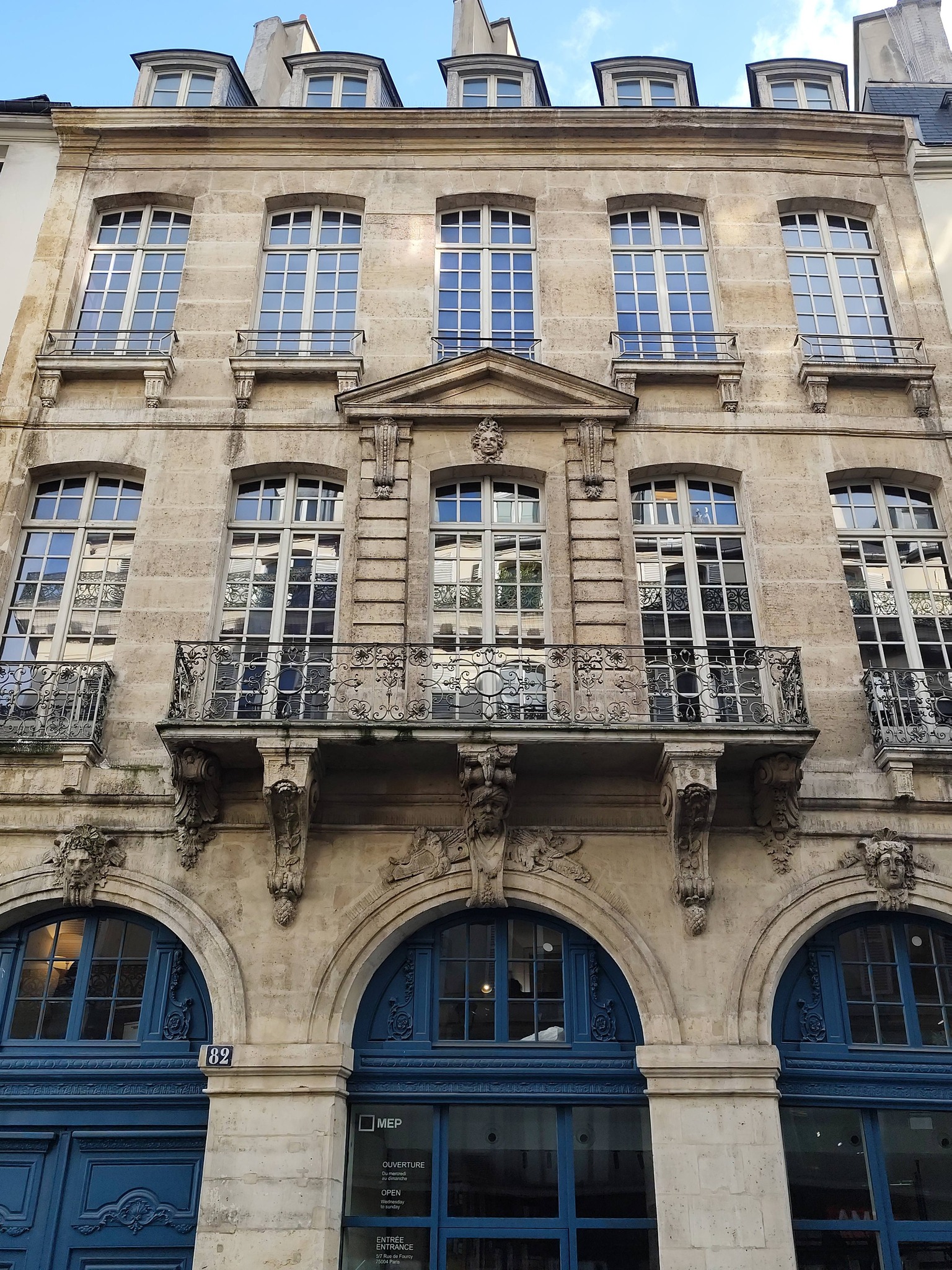
The official Maison Européenne de la Photographie (MEP) : https://www.mep-fr.org/
The Paris tourist office on the Maison Européenne de la Photographie (MEP) : https://parisjetaime.com/eng/culture/mep-maison-europeenne-de-la-photographie-p3515
The Hôtel de Beauvais is a private mansion located at 68 rue François-Miron, in the 4éme arrondissement of Paris, built from 1655 onwards in the Marais quartier/ neighborhood . It houses today the Paris Administrative Court of Appeal. This mansion features four arcades with shops. The metopes of the façade’s frieze were adorned with lion and ram heads, intended as allusive emblems of the king and his maiden name. It was from its balcony that the queen mother, Mazarin, and Turenne witnessed, on August 26, 1660, the date of the inauguration, the entry into Paris of Louis XIV and Marie Thérèse to celebrate their marriage. Françoise d’Aubigné, (later Marquise et Madame de Maintenon) who was present, saw her future husband and sovereign for the first time in her life. The porch is surmounted by the arms of France in commemoration of the events of August 26, 1660. Jean Orry, from Troyes, purchased the Hôtel de Beauvais in 1706. Since 1697, Orry had amassed a fortune supplying the armies before becoming an advisor to the king. Louis XIV sent him to Madrid from 1701 to 1706 to assist the Duke of Anjou, (born in Versailles palace, and baptised in Notre Dame Church there) who had been called to the Spanish throne as Felipe (Philip) V ,also recalled him to Spain from 1713 to 1715, effectively making him his chief minister. His son, Philibert Orry, born in 1689 was a protégé of Cardinal Fleury during the minority of Louis XV, he would become Controller-General of Finances and Superintendent of the King’s Buildings for about fifteen years, from 1730 to 1745.
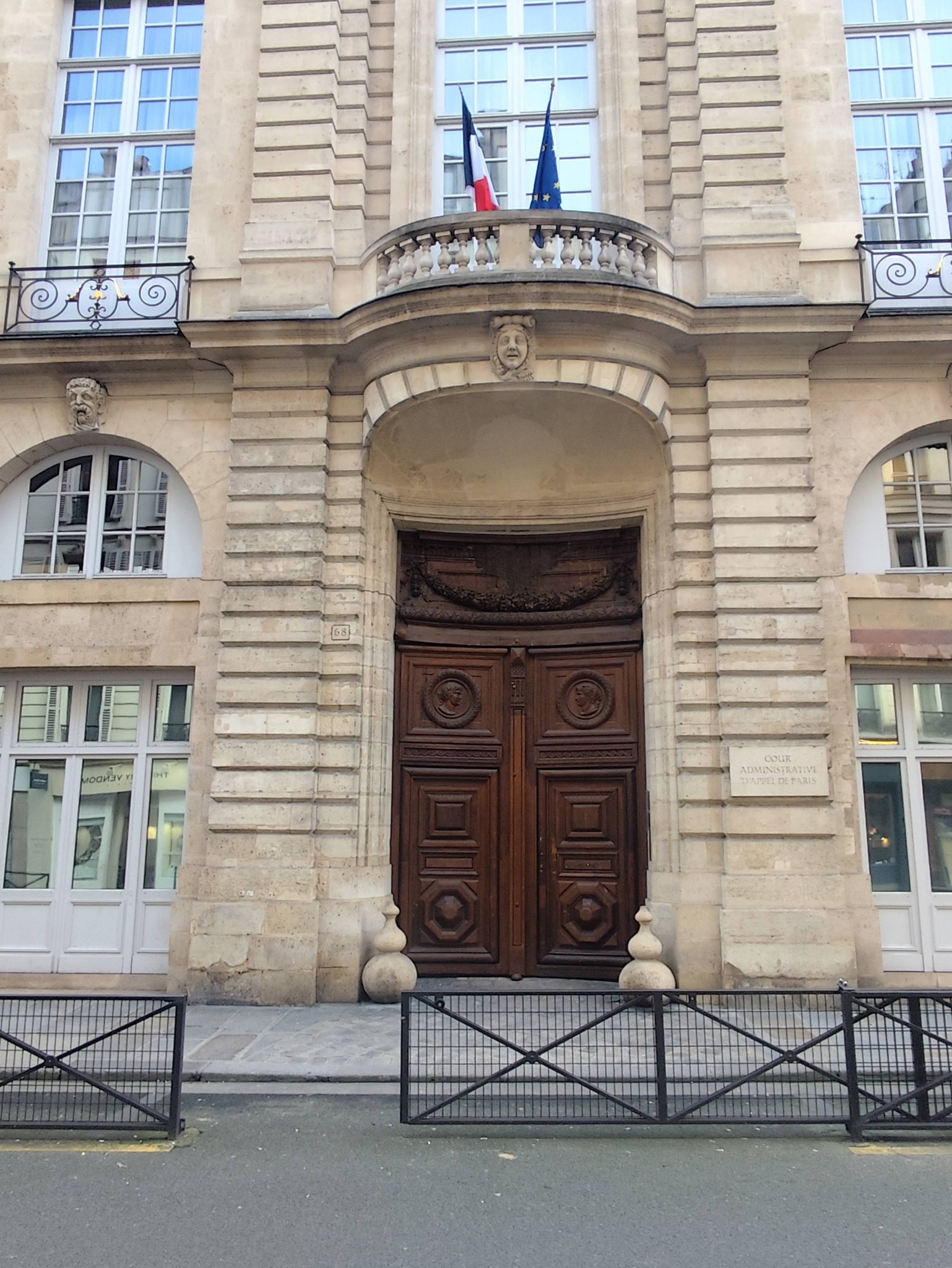
A bit of history tell us that in Paris, a house was given to the Abbey of Chaalis in 1243 by a lady named Éloïse de Palaiseau. It comprised two buildings, one of which was called « l’hôtellerie du Faucon » or the Falcon Inn. At the beginning of the 13C, the abbots of Chaalis had their mansion built on the site of the present-day Hôtel de Beauvais, erected on the site of this former medieval house, of which beautiful Gothic cellars remain beneath the courtyard of the Hôtel de Beauvais, dating from the 15C. Owned by the wife of Nicolas Fouquet, Superintendent of Finances, this residence was sold on March 30, 1654, to Pierre de Beauvais. This mansion gave way to a prestigious hôtel particulier built from 1654 onwards for Catherine Bellier, wife of Pierre de Beauvais and first lady-in-waiting to Queen Anne of Austria, as a reward for services rendered. Nicknamed Cateau la Borgnesse ( One-Eyed) because of her misaligned eye, this commoner, chosen for her perceived ugliness, is said to have deflowered the young Louis XIV, then 14 years old, on the queen’s orders. She retained the privilege, for the rest of her life, of being among the first to attend the king’s rising, a strategic position for currying favor and an enviable privilege. For six months, the hôtel particulier hosted the Mozart family for the first Parisian leg of their European tour. Accompanied by his father Leopold Mozart and his sister Maria Anna, young Wolfgang was then 7 years old and too small to see the hanging garden above the stalls designed for eighteen horses in the hôtel’s courtyard. The Mozarts lived on the second floor from November 18, 1763, to April 1764. Seized during the French revolution and transformed into a coaching inn, the mansion was subsequently rented and modified throughout the 19-20C. In 1995, at the suggestion of the Council of State, the government decided, at the cost of significant restoration work, to establish the seat of the Administrative Court of Appeal there. Eight years elapsed between the signing of a long-term lease between the State and the City of Paris and the installation of the judges and staff of the Court at the building on October 26, 2003. Since 2004, it has housed the Paris Administrative Court of Appeal.
The official Administrative Court of Appeals of Paris Hôtel de Beauvais : https://paris.cour-administrative-appel.fr/qui-sommes-nous/histoire-et-patrimoine/histoire-de-l-hotel-de-beauvais
The Paris tourist office on the Hôtel de Beauvais : https://parisjetaime.com/eng/culture/hotel-de-beauvais-p1584
The Rue François-Miron is in the 4éme arrondissement of Paris of old axis allowing access to the center of Paris from the east, it was made up in 1865 by the unification of two streets, the rue du Fourour-Saint-Gervais and a part from rue Saint-Antoine, of which it constitutes an extension. In the middle of the 19C, rue François-Miron, was 67 meters long, located in the old 9th arrondissement, neighborhood or quartier of Hôtel-de-Ville began at 4-6, rue de Lobau and ended at 1 , Rue du Pourour-Saint-Gervais and at 13, rue Jacques-de-Brosse. Currently, Rue François-Miron, has a length of 385 meters, is located in the 4éme arrondissement or district and in the neighborhood or quartier of Saint-Gervais, and starts at Place Saint-Gervais and ends at 1, rue de Rivoli and 11, rue de Fourcy, up to the Place des Combattantes-et-Combattants-du-Sida. It owes its name to François Miron, provost of the Paris merchants from 1604 to 1609. Two interesting houses here which caught my attention are at no 11 call maison À l’enseigne du Faucheur (reapers brand) and no 13 : maison À l’enseigne du Mouton (sheep’s sign-see pic), corner with rue Cloche-Perce. This street was not baptized by the name of the provost of the merchants of King Henri IV in 1865. It indeed belonged to rue Saint-Antoine du Moyen Age to the drilling of the rue de Rivoli in the middle of the 19C which modified the urban framework of the Marais district. Their current aspect dates from 1967 following their rehabilitation.
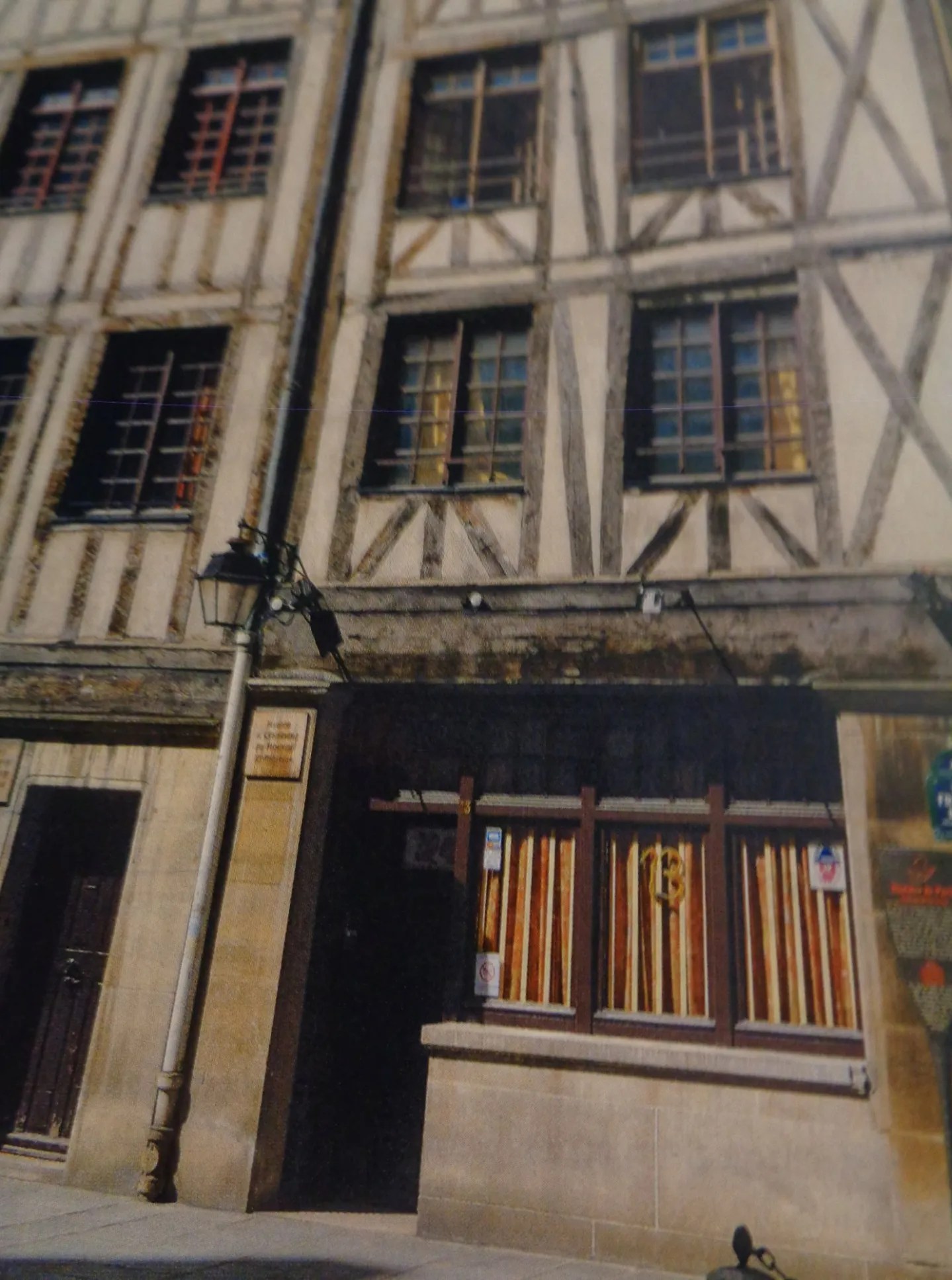
And I continue on same street to the old Napoleon barracks, also called a lobau barracks, occupies the space between the Saint-Gervais and Baudoyer squares and the François-Miron, Lobau and Rivoli streets, At no 4: The Couperin family lived there ;the Couperin were holders continuously for almost two hundred years of the organ of the Saint-Gervais church in Paris, one of the most important instruments in the City, The Maison Faust is located at no 13 (see pic) Rue François Miron in the 4éme arrondissement of Paris, Built in 1380, this is one of only two 14C houses to have survived. Originally a modest building housing a shop, which earned it the nickname “the house with the sheep’s head sign,” it features vaulted stone cellars and half-timbered upper floors, and includes a secret passage whose purpose has long been a source of fascination. From its windows, one might have seen François Villon, Joan of Arc, Henry IV, Molière, Louis XIV, or Napoleon. This house has survived fires, the French revolution, Baron Haussmann’s urban renewal projects, and two World Wars, playing its part in these events. True to its past as a meeting place, it now hosts your private celebrations. With a surface area of 100 square meters, this reception space offers an ideal setting for organizing both private and professional events. With a comfortable capacity of 60 people, Maison Faust can host a wide variety of events such as weddings, birthdays, parties, corporate events and much more… The official club Maison Faust: https://maisonfaust.fr/
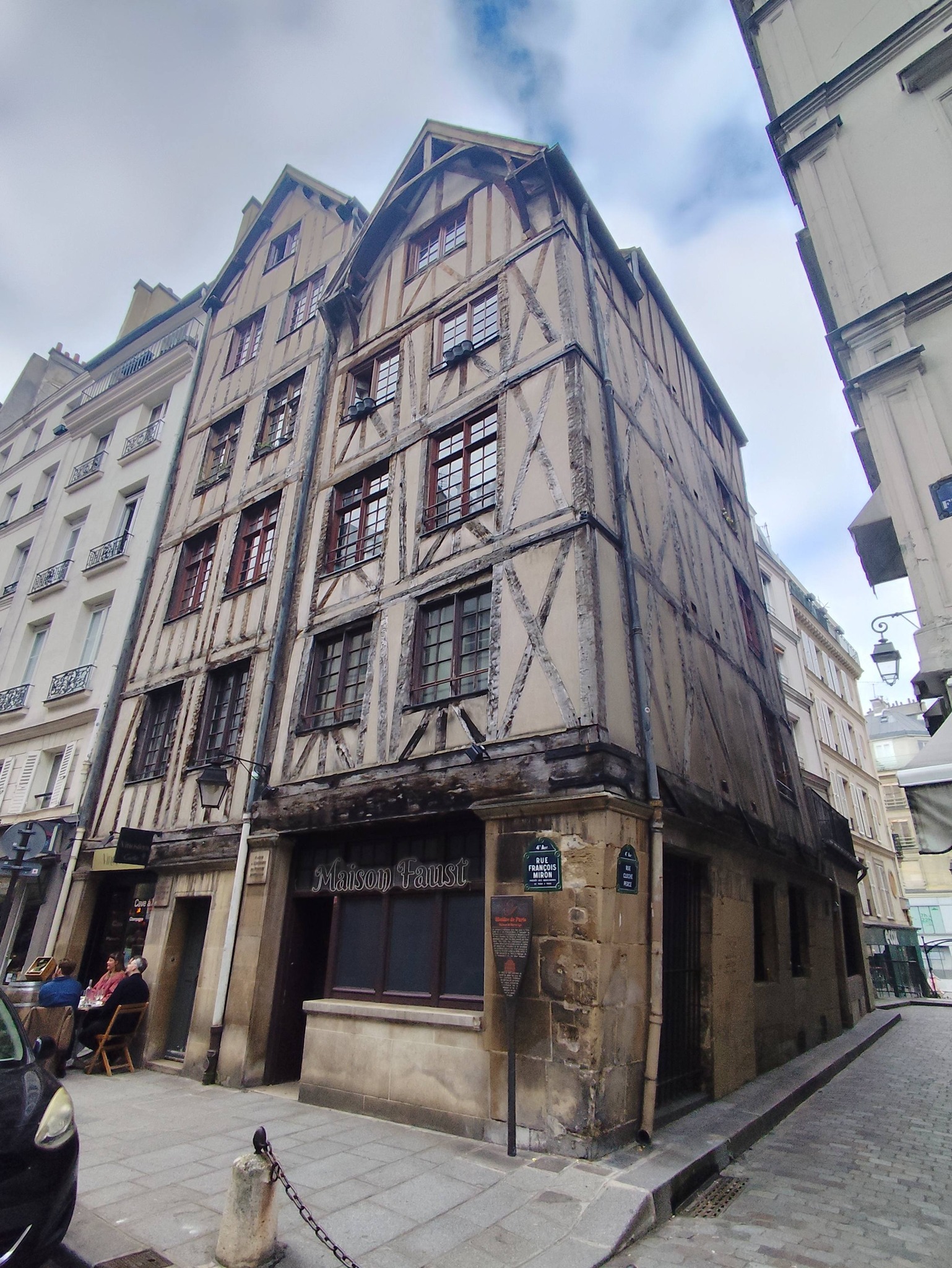
And more at no 14: known as Maison Camuset, built by Jacques V Gabriel (The father of Ange-Jacques Gabriel) with that of No. 17 rue des Barres. At no 22: Approximate location of the first Baudoyer gate in the Carolingian enclosure The first medieval enclosure built at the end of the 10C and at the beginning of the 11C, is one of the seven enclosures having successively surrounded Paris. At nos 39 to 45: Location of the old little Saint-Antoine or le Petit Saint-Antoine was a canon house founded in Paris in 1361 to rescue patients with infernal fire or burning sickness ; the convent was the origin between the street Saint-Antoine (current rue François-Miron) and rue du Roi-de-Sicily, At nos 44-46: The Maison d’Ourscamp, built at the end of the 16C; It houses the association for the safeguard and enhancement of historic Paris , The ground floor was hollowed out to pass the sidewalk from rue de Fourcy. At No 68 Hotel de Beauvais (see above pic), At no 82 Hôtel du Président Hénault back side (see above pic)
The Paris tourist office on Paris Centre, the citycenter (1-4) : https://parisjetaime.com/eng/article/explore-the-centre-of-paris-a846
The private Association Marais-Louvre on the houses on rue François Miron : https://marais-louvre.fr/les-maisons-a-colombages-de-la-rue-francois-miron-sont-elles-authentiques
There you go folks, another dandy beautiful set of glorious streets of my eternal Paris. I have criss cross them many and have many in my blog already, Again, hope you enjoy this post on the Rue François Miron of Paris !!! as I.
And remember happy travels, good health, and many cheers to all !!!


