
These are wonderful monuments of my belle France. Whether believer or not these tell the history and architecture of France that are a must to see while here, Indeed they are very popular by locals and tourists alike, I walked and drove by this church as are many glad to found me new pictures in my cd rom vault to show in my blog for you and me. Therefore, let me tell you a bit on the Church Notre Dame des Blancs Manteaux of Paris !!! Hope you enjoy the post as I.
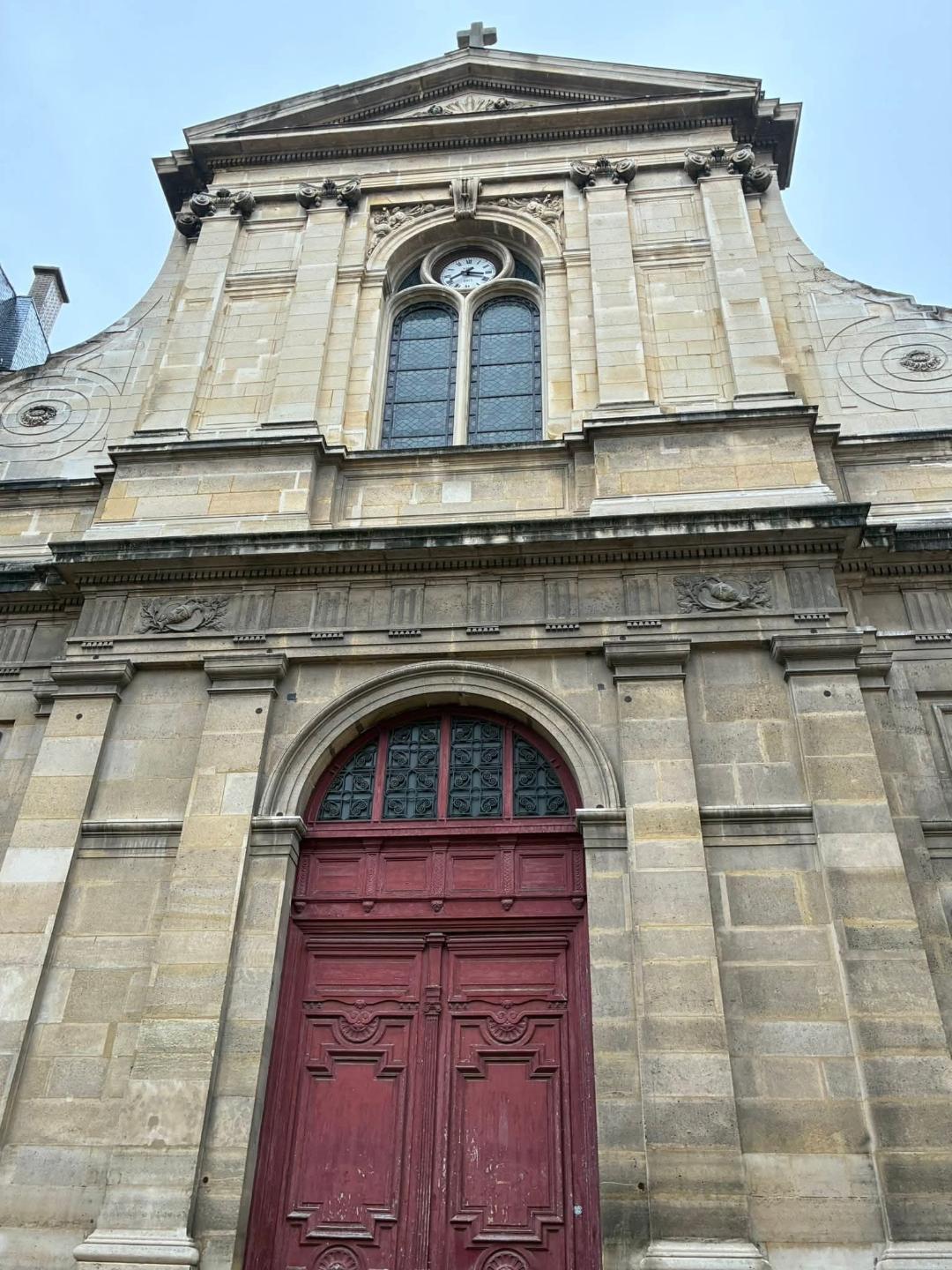
The Church Notre Dame des Blancs Manteaux or Our Lady of the White Cloaks is located at 12 Rue des Blancs-Manteaux in the Marais quartier or neighborhood of the 4éme district or arrondissement of Paris. It has been dedicated to the Virgin Mary since 1258, the year the “Servants of the Blessed Virgin” settled there at the request of the knight Pierre Luillier and his wife Mahaut Boucher d’Orsay, and the construction of the first church along Rue des Blancs-Manteaux. Today, it is served by priests of the Community of Saint Martin. Because the members of this order wear a black robe and a white cloak, they are nicknamed the “White Cloaks,” hence the church’s common name.
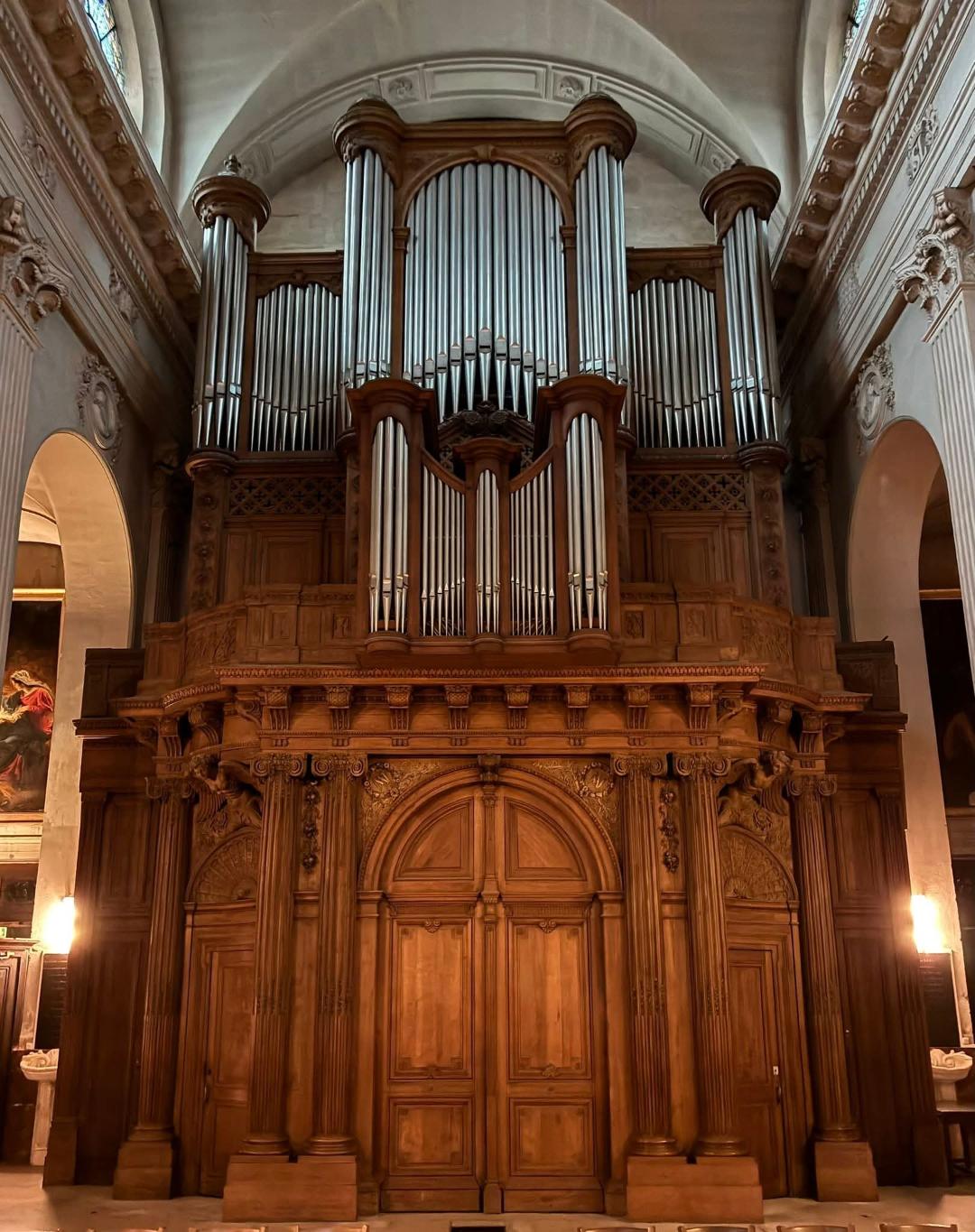
The Church Notre Dame des Blancs Manteaux is bordered by the Square Charles-Victor-Langlois. The main entrance is located on Rue des Blancs-Manteaux, but there is also a secondary entrance on 53 Rue des Francs-Bourgeois. The sober, classical-style façade, built in 1705 for the Barnabite church, was demolished by Haussmann during the construction of Boulevard du Palais on the Île de la Cité and rebuilt by Baltard in 1863. He added a bay to the nave and created the entrance vestibule, which supports the organ loft, using 17C woodwork from the former church of Saint-Victor Abbey. The old monastery fountain (1719) was reinstalled in 1929 against the wall of the church.
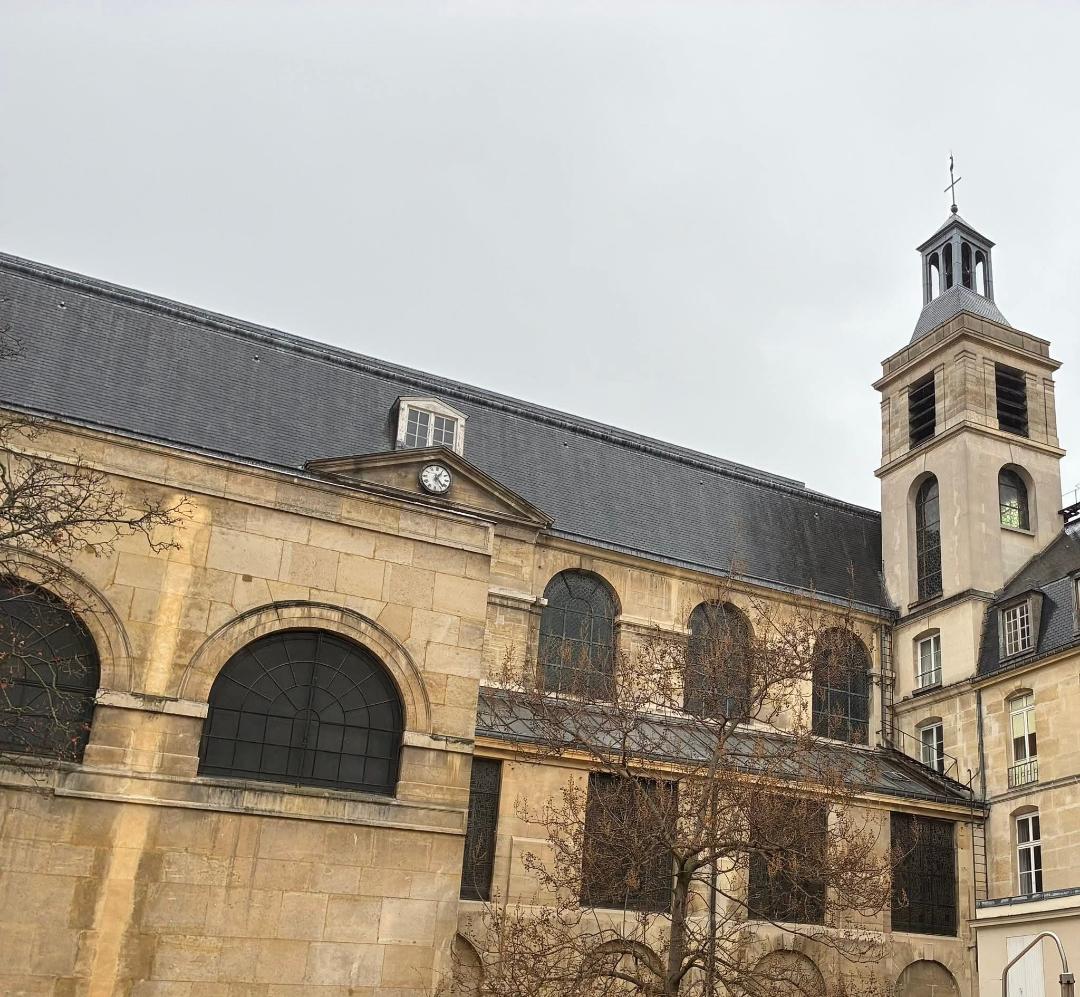
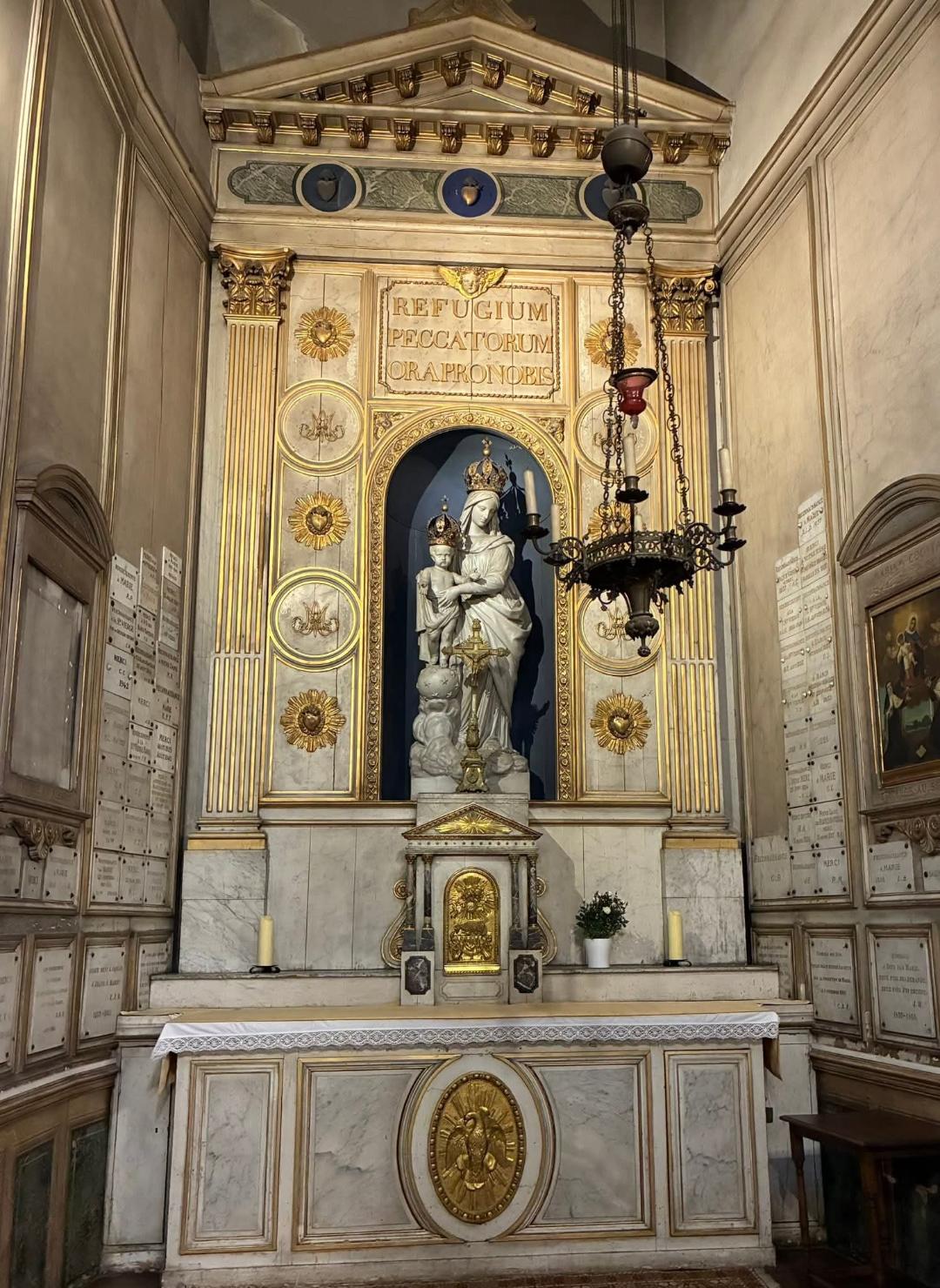
Inside, light streaming through large windows in the barrel vault illuminates the pure, white nave. Below the central window, on the entablature that runs around the nave and chancel, nineteen bas-reliefs, facing each other, connect the Old and New Testaments, forming a series of biblical symbols specific to this church. These bas-reliefs are separated by the monograms of saints linked to the history of the site, including the AM of the Ave Maria of the Annunciation and the SB of Saint Benedict or the SM of Saint Maur. In the center of the nave and above the altar, beneath the Glory surrounding the Holy Spirit, the Virgin is depicted emerging from a cloud and crushing evil, symbolized by a serpent. This painted clay sculpture was created in 1831. Statues of the four Evangelists, set against the woodwork, come from the former Saint-Victor Abbey. Saint Louis and Saint William of Malavalle face each other at the entrance to the chancel. In the right aisle, beneath the stained-glass windows created in 1946, which recount the history of the church, is a 14C stone Virgin and Child in the Champagne style, situated between two 17C paintings. In the left aisle, the baptistery chapel is adorned with a Holy Family surmounted by the Baptism of Jesus.
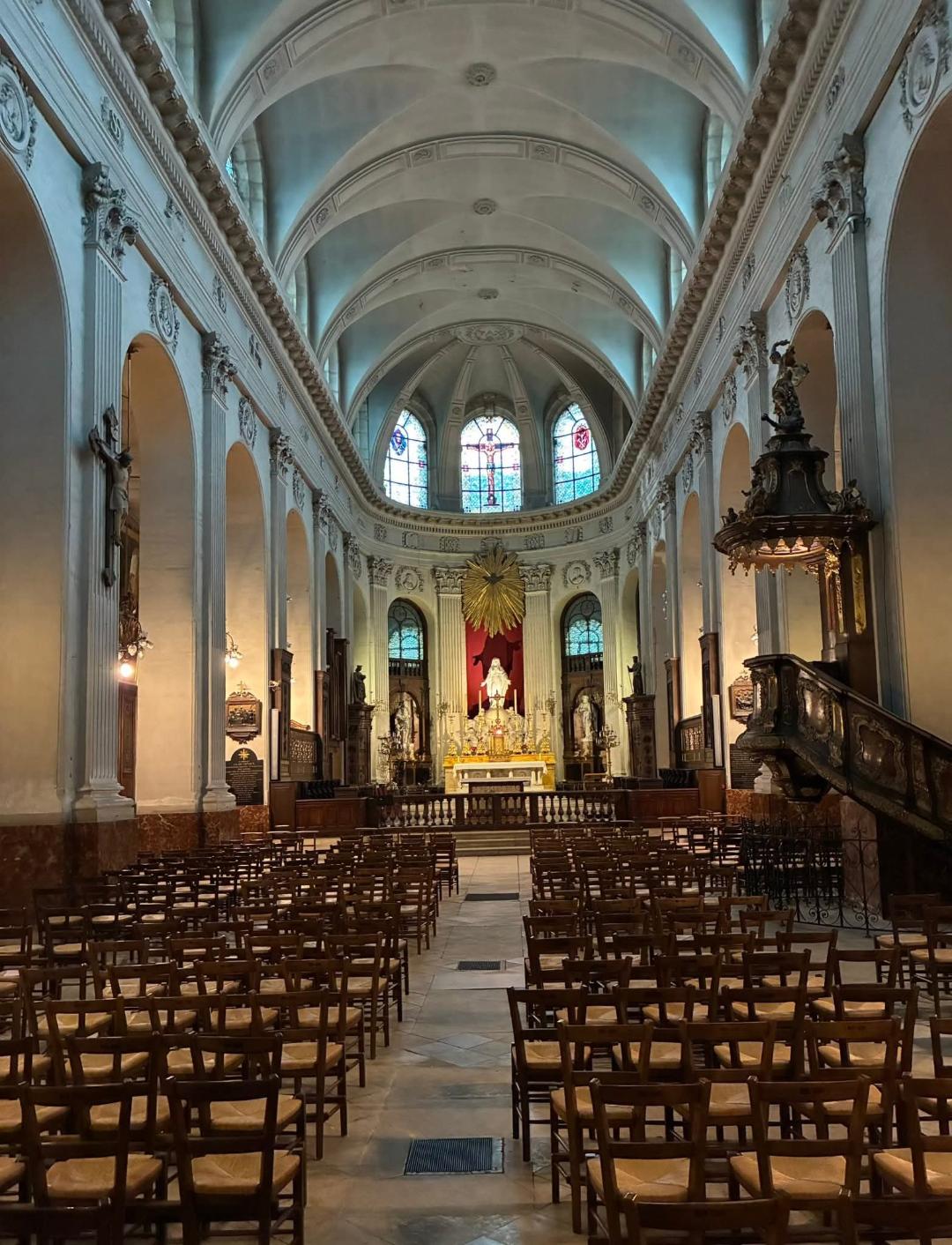
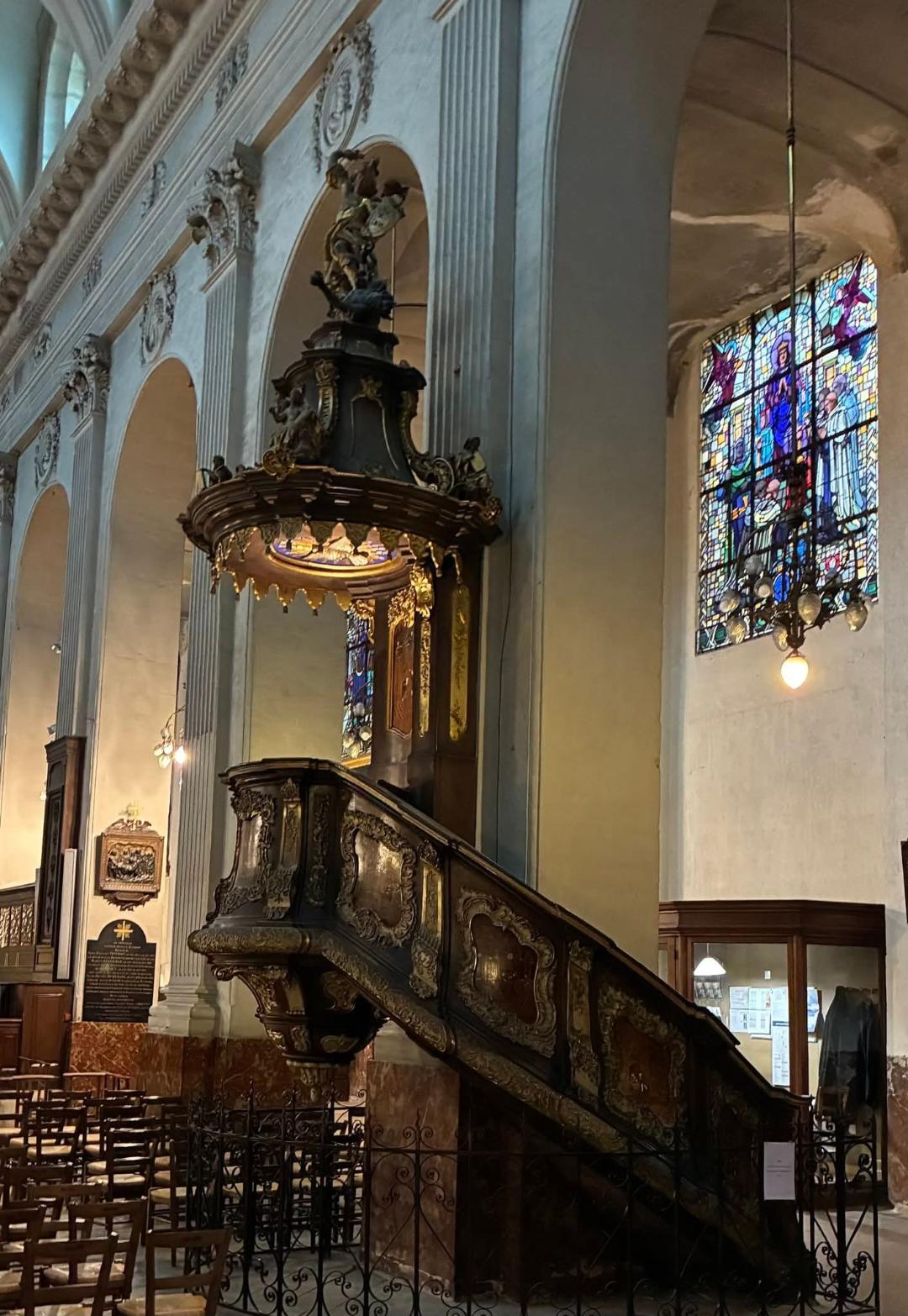
As you walk back towards the choir organ, you can admire a painting of Mary Magdalene wiping Jesus’ feet during a meal at Simon’s house. The stained-glass windows above the aisle depict the history of the convent and its two successive churches. They date from 1946. Notable among them are those illustrating the founding of the convent by Saint Louis, its reappropriation by the Guillemites, Chancellor Le Tellier laying the first stone of the second church in 1685, and the founding of the Carmelite convent in the Faubourg Saint-Jacques in Paris. The church houses a magnificent pulpit of Bavarian origin, dated 1749. Formerly attributed to the Dutch School, this pulpit, acquired in 1864 and subsequently restored at the expense of the parish council, actually comes from a church in Belgium. Its sounding board is surmounted by a statue of Saint Michael slaying Lucifer and those of the four Evangelists. The pulpit and steps are adorned with marquetry panels (wood, pewter, ivory) and mother-of-pearl inlays, depicting various biblical subjects with inscriptions; the borders of these panels are made of carved and gilded wood. As indicated by the cartouche on each medallion, the scenes adorning the organ case are taken from the Bible. On the back panel, the archangel Gabriel announces to Mary that she will give birth to the Messiah. Above, two figures each hold a cartouche bearing a verse from the Book of Isaiah and another from the Song of Songs. They frame God the Father, surrounded by a glorious cloud. The sounding board is decorated with a Glory from which emerges a dove, symbol of the Holy Spirit. Above, the four Evangelists, accompanied by their symbolic animals, support the battle of Saint Michael, who vanquishes the devil, symbol of evil, represented by a naked, blackened man.
The organ was installed in 1863 on the gallery. In 1944, the blast from a bomb damaged the stained-glass windows and the organ. Restored between 1962 and 1964, it was officially inaugurated on June 25, 1968. An association dedicated to the Great Organs of Notre-Dame-des-Blancs-Manteaux has existed since 1991, with the aim of supporting the musical life of the parish.
A bit of history I like tell us that the Blancs-Manteaux monastery comprises substantial buildings, a chapel, and gardens. In the 17C, it housed Benedictine monks. The chapel was then oriented in the normal east-west direction and ran along the Rue des Blancs-Manteaux. The Church Notre-Dame des Blancs-Manteaux has been a sanctuary dedicated to the Virgin Mary (Annunciation) since 1258, the date of the establishment of the “Servants of the Blessed Virgin” and the construction of the first east-west oriented church along the Rue des Blancs-Manteaux. The community of the Servants of the Blessed Virgin was founded in 1223 in Marseille and was approved in 1257 by Pope Alexander IV. The Servants of the Blessed Virgin were dressed in white. Their vocation was the contemplation of the mystery of the Annunciation. Since their arrival, the church of the Blancs-Manteaux has been dedicated to the mystery of the Annunciation. The community of the Servants of the Blessed Virgin was also dissolved by the Council of Lyon. King Philip the Fair gave their monastery to the Order of Saint William. On July 18, 1297, Pope Boniface VIII authorized the Guillemites to take possession of the convent. In the 17C, the Guillemites merged with the Benedictine order. It was in this church that the body of Duke Louis I of Orléans (brother of Charles VI) was laid in 1407 after his assassination at the corner of Rue Vieille-du-Temple by the men of John the Fearless. In 1618, the founding chapter of the Congregation of Saint-Maur was held at the Blancs-Manteaux convent. Later, the superior of the Congregation of Saint-Maur resided at Saint-Germain-des-Prés. From then on, the Blancs-Manteaux priory was closely linked to Saint-Germain-des-Prés, serving as its novitiate. In 1685, the foundation stone of the current church was laid and the convent was renovated. The French revolution suppressed the Congregation of Saint-Maur and the monks were dispersed. In 1792, the convent was requisitioned by the City of Paris.The church was returned to worship by the concordat of 1801 and became a parish church in 1807. Almost all of the furnishings were acquired by the parish and successive priests during the 19C.
The Parish of Notre Dame des Blancs Manteaux on the church : https://ndbm.fr/
The Parish of Notre Dame des Blancs Manteaux on the organ association : https://ndbm.fr/histoire-culture/association-des-orgues/
The City of Paris on the Church Notre Dame des Blancs Manteaux : https://www.paris.fr/lieux/eglise-notre-dame-des-blancs-manteaux-19477
The Paris tourist office on the 5éme arrondissement de Paris : https://parisjetaime.com/eng/article/explore-paris-s-5th-arrondissement-a820
There you go folks, another icon monument of my dear Paris, and worth the detour for the architecture, history or soul in them. It was always wonderful to walk, drive or visit them over the years and still do when visiting, You will do well to come and visit it too, Do see my individual post on many of the churches of Paris in my blog. Again, hope you enjoy this post on the Church Notre Dame des Blancs Manteaux of Paris !!! as I.
And, remember, happy travels, good health, and many cheers to all !!!


