
We have driven and walked in my eternal Paris, and would like to have an imprint in my blog on the wonderful family times we had there, There is so much to see , doing my best, and glad found me these pictures in my cd rom vault ,which now transposing in my blog for you and me, This was my former worked city, so glad to post more memorable spots on it, I thank you for your readership over the years and to bear with my rants! After Paris is to rant, shout and yelled about, me think. Therefore, here is my take on curiosities of Paris, part LIV !!! Hope you enjoy the post as I.
Metro Brochant is located on the line 13, in the 17éme arrondissement of Paris, on the border between the quartiers/neighborhoods of Épinettes and Batignolles. It is located under Avenue de Clichy, at the exit of Rue Brochant. The station opened on January 20, 1912, with the commissioning of the Nord-Sud branch of Line B, which branched off at La Fourche station toward Porte de Clichy. It owes its name to its proximity to Rue Brochant, which honors the French geologist and mineralogist André Brochant de Villiers, director of the Saint-Gobain factory and member of the French Academy of Sciences. The station has two entrances opening onto either side of the end of Rue Brochant, both consisting of a fixed staircase decorated with a ceramic and wrought iron balustrade in the characteristic style of the old Nord-Sud network: accéss no. 1 Rue Brochant – Marché des Batignolles market is located opposite no. 32 of the aforementioned street on the one hand and no. 127 Avenue de Clichy on the other; accéss no. 2 Avenue de Clichy is located opposite no. 47 Rue Brochant on the one hand and no. 129 Avenue de Clichy on the other.
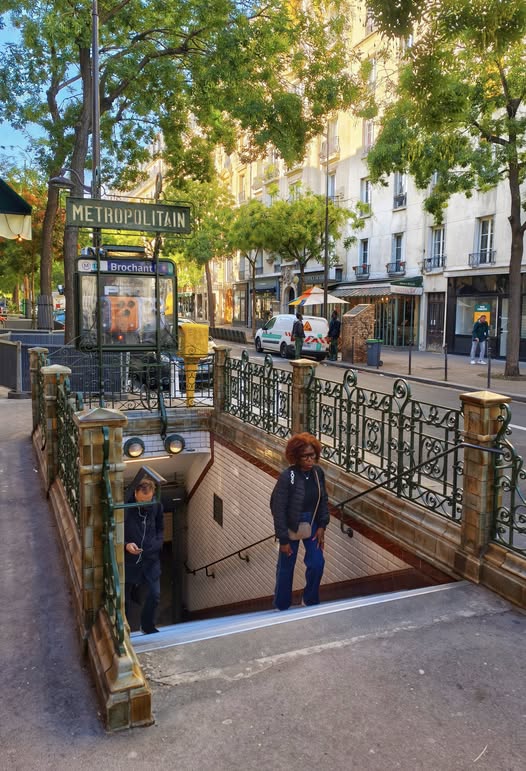
The Rue Brochant is located, and name see above. This street in the former village of Batignolles was opened in 1845 under the name “Rue Notre-Dame”, before being classified as a Parisian road by decree of May 23, 1863, and then taking the name “Rue Brochant” by decree of August 24, 1864. Notable buildings here are well the one the singer Barbara was born at No 6 on June 9, 1930, at her parents’ home, near the Square des Batignolles. She then spent her childhood in the neighboring rue Nollet with her grandmother.
The RATP public transport in Paris on the metro Brochart line 13 : https://www.ratp.fr/en/plans-lignes/metro/13
The Paris tourist office on the 17éme arrondissement de Paris : https://parisjetaime.com/eng/article/explore-paris-s-17th-arrondissement-a831
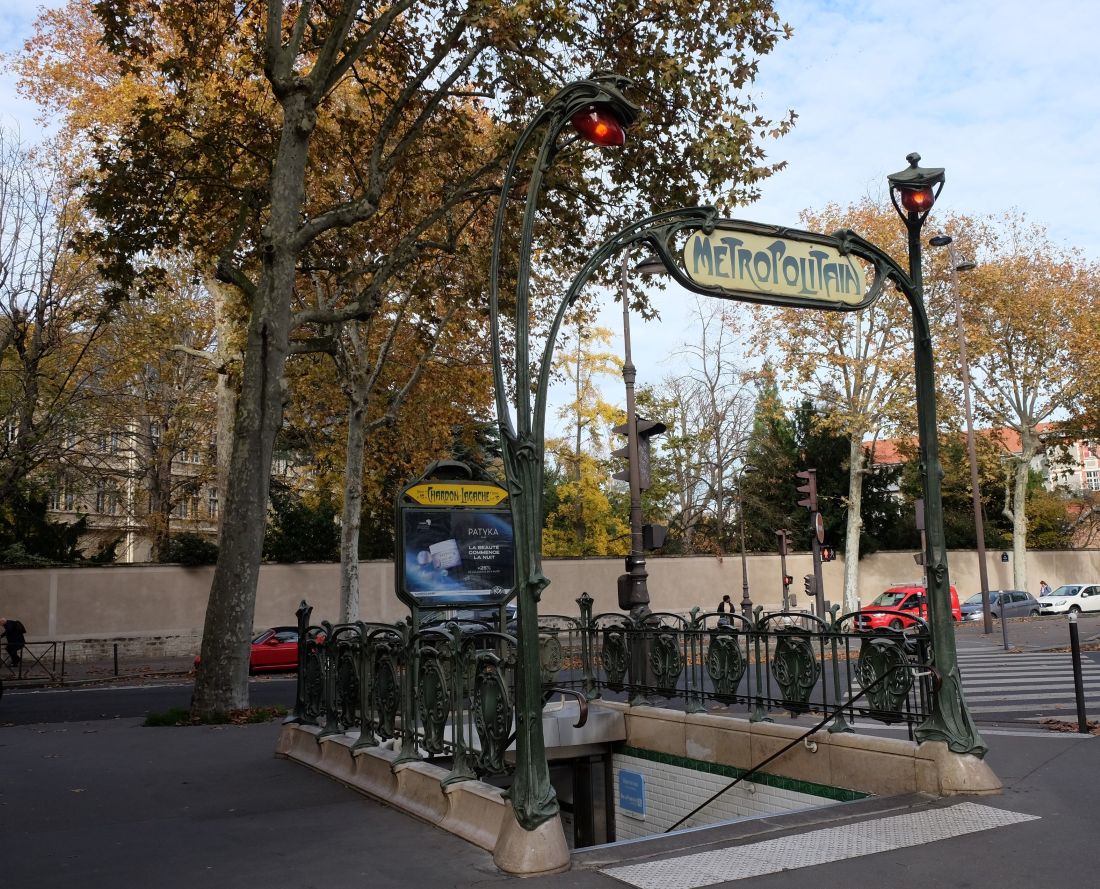
The metro Chardon-Lagache is on line 10, located in the 16éme arrondissement of Paris. The station is situated at the intersection of Rue Chardon-Lagache, Rue Molitor, and Rue Mirabeau, within the Auteuil quartier or neighborhood. It lies between the Michel-Ange – Molitor and Mirabeau stations, south of the Auteuil loop, and is served only by trains heading towards Gare d’Austerlitz. The station has a single entrance, marked “Rue Chardon-Lagache – Hôpital Sainte-Périne,” located at No 16 Rue Chardon Lagache at its intersection with Rue Molitor. Consisting of a fixed staircase and adorned with a Guimard-style entrance structure, Chardon-Lagache is a curved station with a unique configuration for the Paris Métro: due to its location on the southern section of the Auteuil loop, it has a single track bordered by a side platform, and the vault is elliptical. With a conventional length of 75 meters, the platform is located on the outside of the curve, The station opened on September 30, 1913, with the commissioning of the first extension of Line 8, from the temporary terminus at Beaugrenelle (now Charles Michels station since 1945) to Porte d’Auteuil via a deep underground crossing of the Seine. It owes its name to its proximity to Rue Chardon-Lagache, which honors Pierre-Alfred Chardon and Amélie Lagache, founders of the retirement home that became the current Sainte-Périne Hospital at No 1 Rue Chardon Lagache.
The official RATP transports on metro line 10: https://www.ratp.fr/en/plans-lignes/metro/10
The Paris tourist office on the 16éme arrondissement de Paris: https://parisjetaime.com/eng/article/a-la-decouverte-du-16e-arrondissement-de-paris-a830
The Allée des Brouillards is located in the 18éme arrondissement of Paris. This street is located on the northern slope of the Butte Montmartre; it begins at Place Dalida and ends at 4 Place Casadesus. It is served by metro line 12 at the Lamarck – Caulaincourt station.
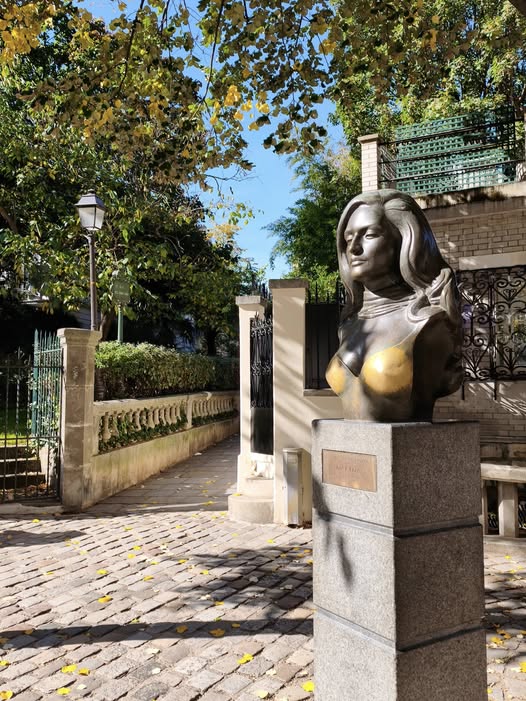
In the distant past, when springs still surfaced on this small plateau, the water vapor emanating from them, upon contact with the fresh air, formed a sort of mist enveloping the entire landscape, so much so that the farm and mill built there in the 12C were named “des Brouillards.” In the 18C, the ruined mill and the surrounding estate were bought to build a residence with a triangular pediment nicknamed the “Château des Brouillards” an 18C folly located at the corner of Place Dalida and Allée des Brouillards, and extended as far as Place Constantin-Pecqueur., the entrance to which is currently located at 13, rue Girardon. Gérard de Nerval, At the end of the 19C, the abandoned castle was occupied by artists who were then without resources: Kees van Dongen, Francisque Poulbot, Théophile Alexandre Steinlen, while in one of the pavilions located opposite, at No 8, in 1889, Auguste Renoir and his favorite model Aline Charigot, whom he married on April 14, 1890, settled. It was here that Auguste Renoir’s son, Jean Renoir, was born on September 15, 1894, one of the pioneers of French cinema, to whom we owe The Rules of the Game, The Grand Illusion, and French Cancan. The Château des Brouillards as seen by the painters such as Eugène Delâtre, Château des Brouillards, no. 11 and no. 11bis rue Girardon, 18éme arrondissement, 1881, drawing, Paris, Musée Carnavalet. Auguste Renoir, Garden at Montmartre, 1890-1899, oil on canvas, Oxford, Ashmolean Museum. Auguste Renoir, Children in the Garden at Montmartre, 1895, oil on canvas, 46 × 55 cm and André Warnod, Le Château des Brouillards, pen and ink drawing, In 1906, in this district of the hill, so miserable that it was nicknamed “the maquis,” Amedeo Modigliani moved into a wooden hut. Some twenty years later, the castle was bought and renovated by the violinist Marius Casadesus and five generations of Casadesus would then succeed one another. In the 20C, the alley welcomed other artists including, at No 4, the actor Jean-Pierre Aumont. The district would also inspire various authors. In 1983, Claude Nougaro, who lived nearby, dedicated a song to it, covered in 2014 by Maurane, for which he wrote the lyrics to music by Richard Galliano; in 1984, the street served as the setting for the first minutes of the film La Septième Cible; in 1994, Martine Robier published 9, allée des Brouillards with Flammarion and in 2000, Christine Haydar published Rendez-vous allée des Brouillards with Jean-Claude Lattès. The bust of Dalida, (see pic) , It is now located in Place Dalida, that is not anecdotal, since it is a few meters from the singer’s former home, at the intersection of Rue de l’Abreuvoir, Rue Girardon and Allée des Brouillards. The bust will pay a more official tribute and will serve as a true place of pilgrimage for admirers.
The Paris tourist office on the 18éme arrondissement de Paris : https://parisjetaime.com/eng/article/explore-paris-s-18th-arrondissement-a832
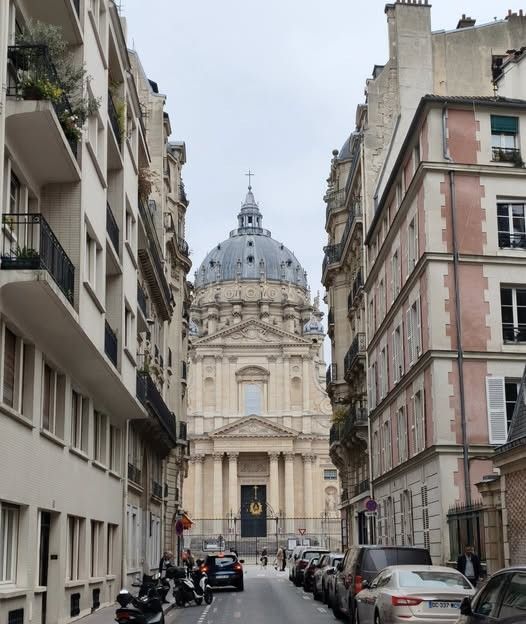
The Rue du Val-de-Grâce is located in the Val-de-Grâce quartier/neighborhood of the 5éme district/arrondissement of Paris. The street is served nearby by RER line B at Port-Royal station and Luxembourg station. This street is named after the Church Val-de-Grâce (see post), opposite which it begins. In 1790, the Carmelite community was dissolved. The Carmelite convent of the Faubourg Saint-Jacques, located on Rue d’Enfer (now Rue Henri-Barbusse), was sold as national property on July 26, 1797, with the purchaser agreeing to open several roads, including a road between Rue Saint-Jacques and Rue d’Enfer. To the east of Rue d’Enfer, the Carthusian enclosure was sold on July 9, 1798. It was planned to continue the road to the newly created Rue de l’Est (now Boulevard Saint-Michel). A decision of November 9, 1805, set the width of the street at 10 meters. Notable buildings here are the Val-de-Grâce military training hospital and the Church Val-de-Grâce. The Marco Polo Garden of the Paris Observatory Garden, which it leads to. At No. 6: former mansion of Mlle de la Vallière, ground floor inhabited in 1891 by the woman of letters Marie-Louise Gagneur (née Mignerot), who died there on February 17, 1902, and her daughter Marguerite Gagneur, sculptor under the name of Syamour, until 1911; Alfons Mucha also had his studio there, as did Hilaire Hiler until 1934. The artist Daniel Louradour also lived there. The film director Henri Diamant-Berger lived and died there. At Nos. 7 and 9: garden. The painter Guillaume Fouace lived at no 9 from 1887 until his death in 1895. Between the two wars, the premises of the Turgenev Russian Library were located at no 9.
The Paris tourist office on the 5éme arrondissement de Paris : https://parisjetaime.com/eng/article/explore-paris-s-5th-arrondissement-a820
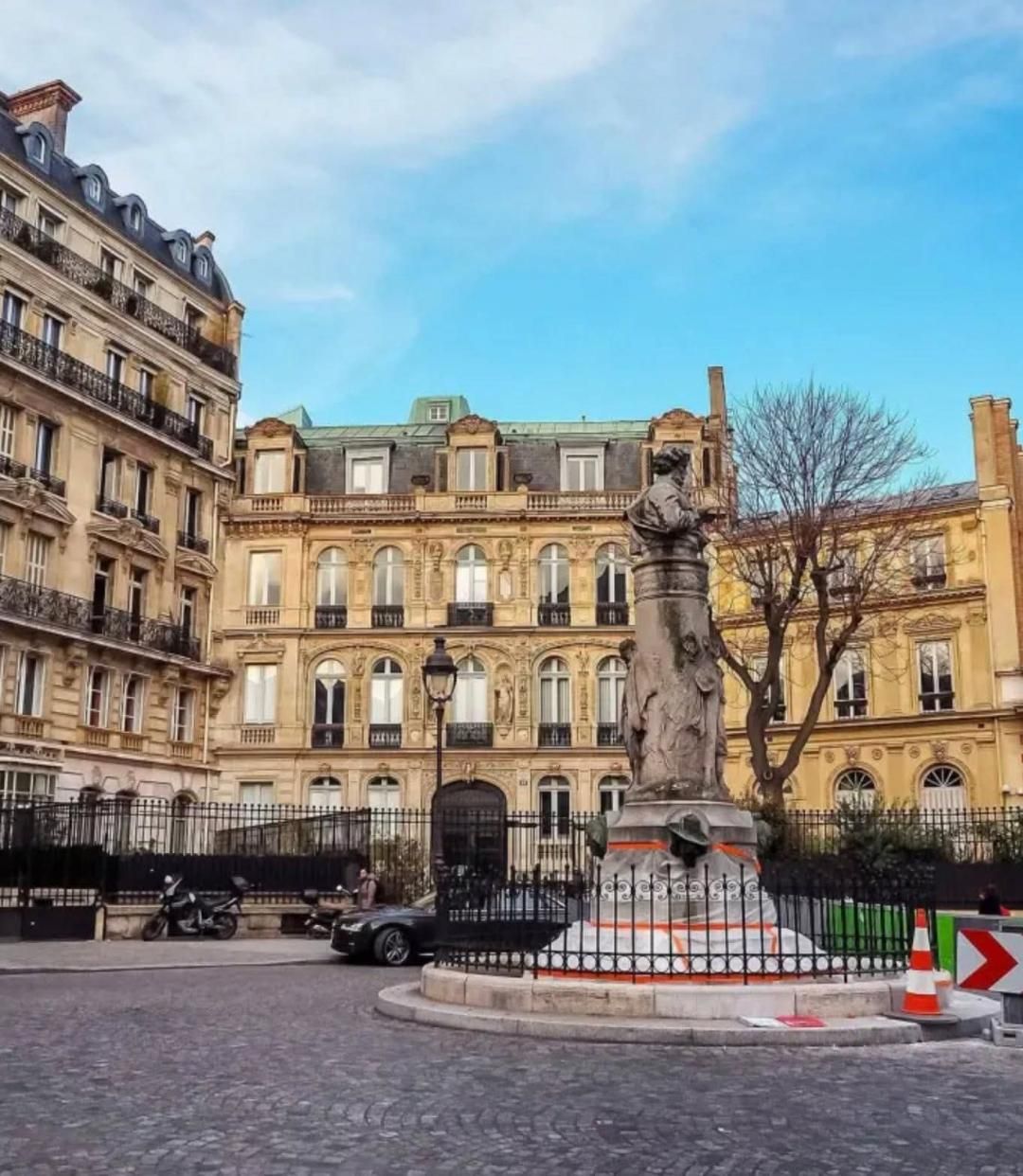
The Place Saint-Georges is located in the 9éme arrondissement of Paris. This square, which provides access to the Saint-Georges metro station, is situated in the heart of the Saint-Georges quartier/neighborhood, at the junction of Rue Saint-Georges and Rue Notre-Dame-de-Lorette. It is served by metro line 12 at the Saint-Georges station. It takes its name from its proximity to Rue Saint-Georges, the origin of whose name is probably due to a sign. The square was opened, along with Rue Notre-Dame-de-Lorette, Rue Neuve-Saint-Georges and Rue La Bruyère, by ordinance of April 21, 1824. Notable buildings here are the central fountain, (see pic) originally intended to water horses, was replaced in 1904 by a Monument to Gavarni, by the sculptor Denys Puech, which also includes a fountain surmounted by a bust of the cartoonist. A scene from the Paris Carnival, with three figures, including a female dockworker in the middle, is depicted in relief on the base. Paul Gavarni specialized in the representation of these carnival figures. It is the only Parisian monument that directly evokes the Paris Carnival. No. 27: Dosne-Thiers Foundation. Alexis Dosne had a mansion built on the square, which his wife sold to Adolphe Thiers when the latter married his daughter, Élise Dosne. On December 2, 1851, during Napoleon III’s coup d’état, Adolphe Thiers was arrested in his room. After the Second Empire, Adolphe Thiers was elected President of the French Republic (France) , and suppressed the Paris Commune. No. 28: the hôtel of the Marquise de Païva, adorned with cherubs, lions, and statues in the Neo-Gothic and Neo-Renaissance styles. Having moved here in 1851, she later had a new, luxurious mansion built bearing her name on the Avenue des Champs-Élysées. At the end of Rue Saint-Georges, at No. 51 of that street: in 1908, it housed the headquarters of the National Society of Fine Arts. Today, it is the Théâtre Saint-Georges, inaugurated on February 8, 1929. Some scenes from the film The Last Metro, by François Truffaut, were filmed here in 1980. In the Arts ,the square is shown as Place Saint-Georges, a painting from 1875 by Pierre-Auguste Renoir. Place Saint-Georges in 1879, a painting by Edmond Grandjean. Place Saint-Georges, a painting from 1880 by Gustave Caillebotte.
The Paris tourist office on the 9éme arrondissement de Paris: https://parisjetaime.com/eng/article/explore-paris-s-9th-arrondissement-a828
There you go folks, a dandy city to explore and enjoy with the family, Memorable moments in my eternal Paris, driving and walking all over in my road warrior trails brings out sublime awesome spots with nice memorable family visits of yesteryear always remember and always looking forward to be back, eventually. Again hope you enjoy the post on curiosities of Paris , part LIV !!! as I.
And remember, happy travels, good health, and many cheers to all !!!

 Paris1972-Versailles2003
😍❤️🇫🇷
LikeLiked by 1 person
Thanks for stopping by Cheers
LikeLiked by 1 person