
I like to tell you a bit on the memorable town of Conflans Sainte Honorine. There is a wonderful history of river boating here and we remember if fondly, I am lucky to found me some pictures hidden in my cd rom vault to do this post for you and me, The town of Conflans Sainte Honorine is located in the Yvelines department 78 in the Île-de-France region of my belle France. Therefore, here is my take on curiosities of Conflans Sainte Honorine, part II !!! Hope you enjoy it as I.
The town of Conflans-Sainte-Honorine is located in the northern Yvelines department no, 78, on the border between Val-d’Oise department no, 95 and the Cergy-Pontoise metropolitan area, It is 14 km from Saint-Germain-en-Laye , 30 km from Paris, 27 km from Versailles, and 485 km from my current home. My parking on street by the Seine on the Promenade François Mitterand, I always came here by car from Versailles along the Bd du Roi to Place de La Loi bear left onto Bd Saint Antoine, continue on Route de Saint Germain then Route de Versailles or D186 road go undernearth the A13 Autoroute de Normandie and continue on the N186 highway to Route de Marly go around bearing right by the Château de Marly pond to the Avenue de l’Abreuvoir or D386 road get again on the N186 highway route de Versailles by Port Marly bear left onto Avenue de Saint Germain continue onto Avenue du Général Leclerc passing by Le Pecq on the D284 road then to the N13 highway passing by Saint Germain en Laye continue bearing right onto Rue Albert Priolet or N184 highway ,this becomes the Route des Princes continue cross the D190 road and continue on the N184 highway ,this passes by a wonderful are the forest of St Germain en Laye , cross over the D308 road continue over the railroad tracks of Achéres and continue in the forest, cross the Seine river on the Pont de Conflans bridge bear right on a roundabout to get into Rue du Général Mangin right on Rue du Maréchal Joffre just before the Seine river bear left onto Quai de la République then bear left onto Rue Victor Hugo passing Place de l’église and into the Place Jules Gévelot with parking on the castle museum of boating,
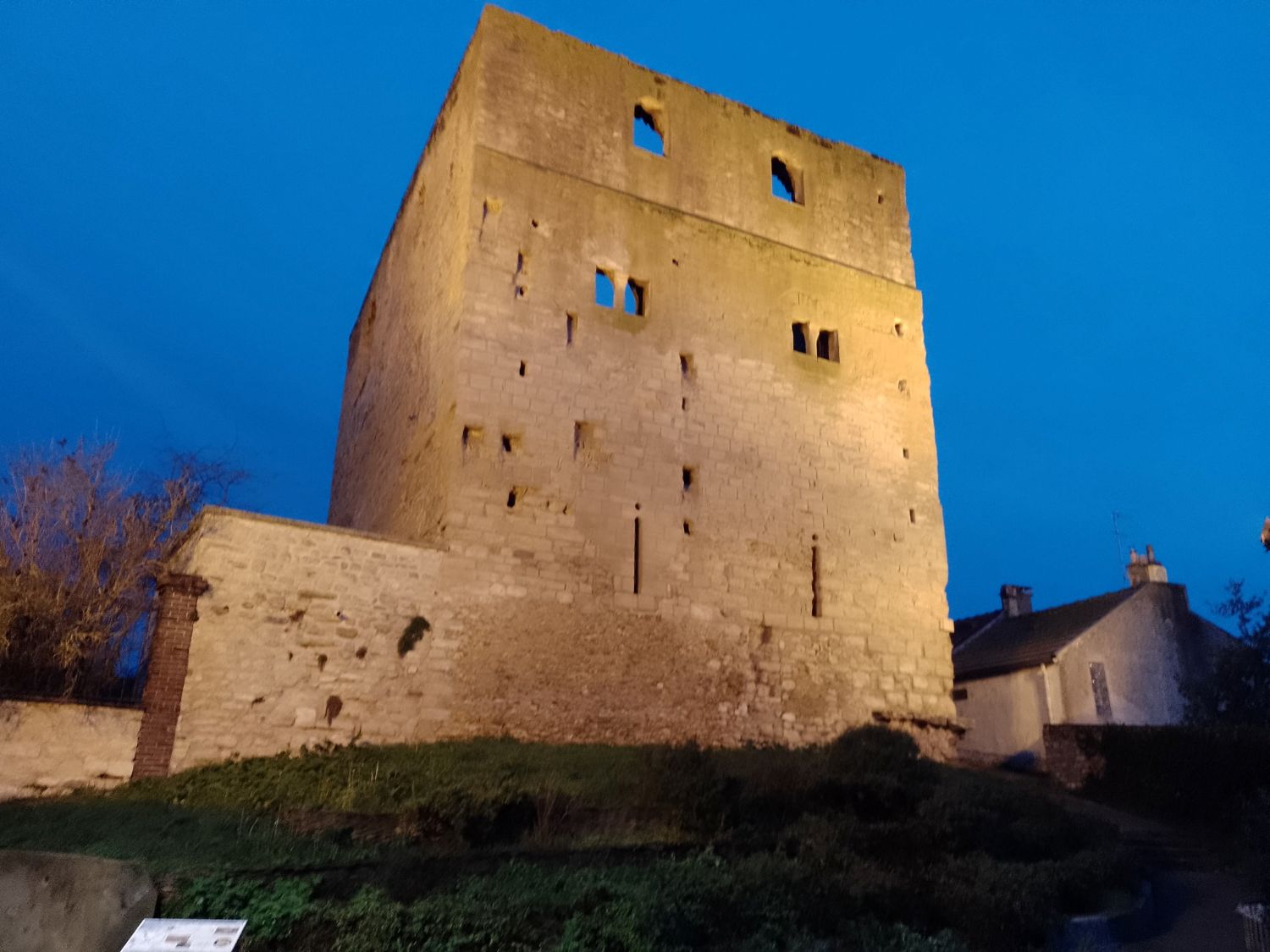
The Tour Montjoie Tower,built at the end of the 11C from local limestone, the tower is the oldest preserved keep in the Île-de-France region. Constructed by the Count of Beaumont after tensions with the Montmorency family, it replaced an earlier wooden tower. Simple and sturdy, its four still-intact walls bear witness to its strategic role: monitoring the Seine at the confluence with the Oise rivers. Three twin windows indicate residential use on the upper floor, while the upper levels, heated at the time, were pierced by arched openings. Partially restored in 1979, the tower has regained its original appearance. The old putlog holes and traces of medieval scaffolding are still visible. The Montjoie Tower takes its name from the Latin Mons Jovis, the “Mount of Jupiter.” It is a rare survivor of the medieval fortifications of Île-de-France, still standing after more than 900 years! Inside, the main floors were heated and designed for residential use, which was unusual at the time. And if you look closely at the exterior walls, you can still see the putlog holes, remnants of the scaffolding used during its construction!
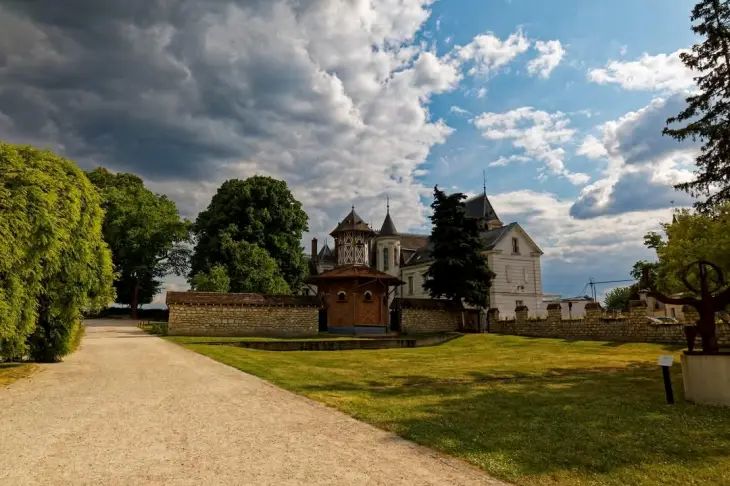
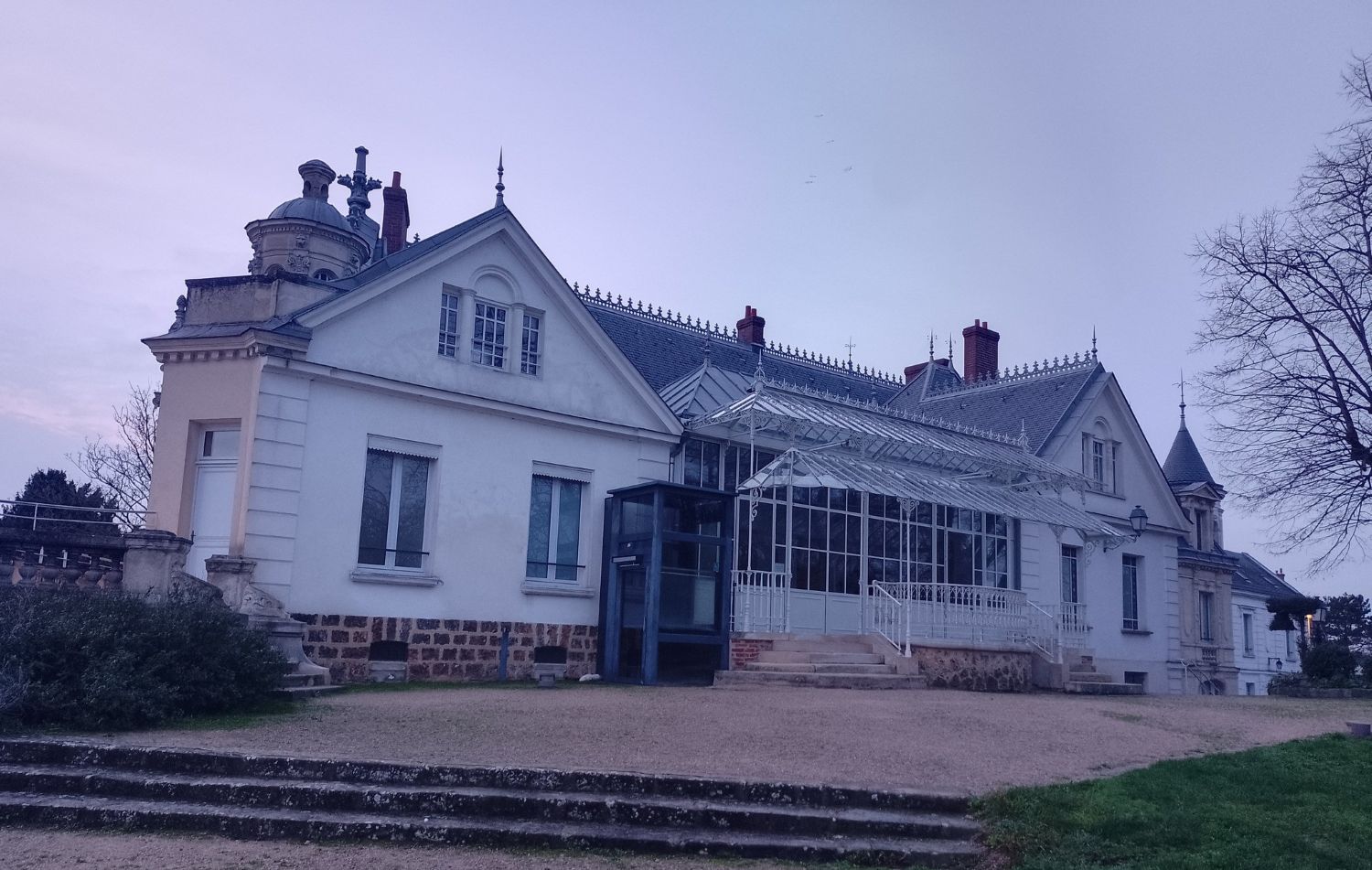
The Parc du Prieuré or Priory Park’s charm is captivating thanks to its preserved landscapes and historical significance. Amidst the lush flora, various sculptures and art installations can be discovered, each telling a unique story. The Priory Park, originally a monastery spans 5 hectares perfect for relaxation. A playground, paddling pool, panoramic views of the Seine, and historical and museum heritage make it a favorite spot for all ages. The park also houses several remarkable heritage features: the château du Prieuré Castle, which houses the Riverboat Museum; the orangery, restored in 2015 for exhibitions; the Gévelot greenhouse, renovated in 2012; and the Grand Cellar. From its terraces, the view over the Seine Valley is breathtaking, offering a beautiful interlude between nature, culture, and heritage in the heart of Conflans-Sainte-Honorine.
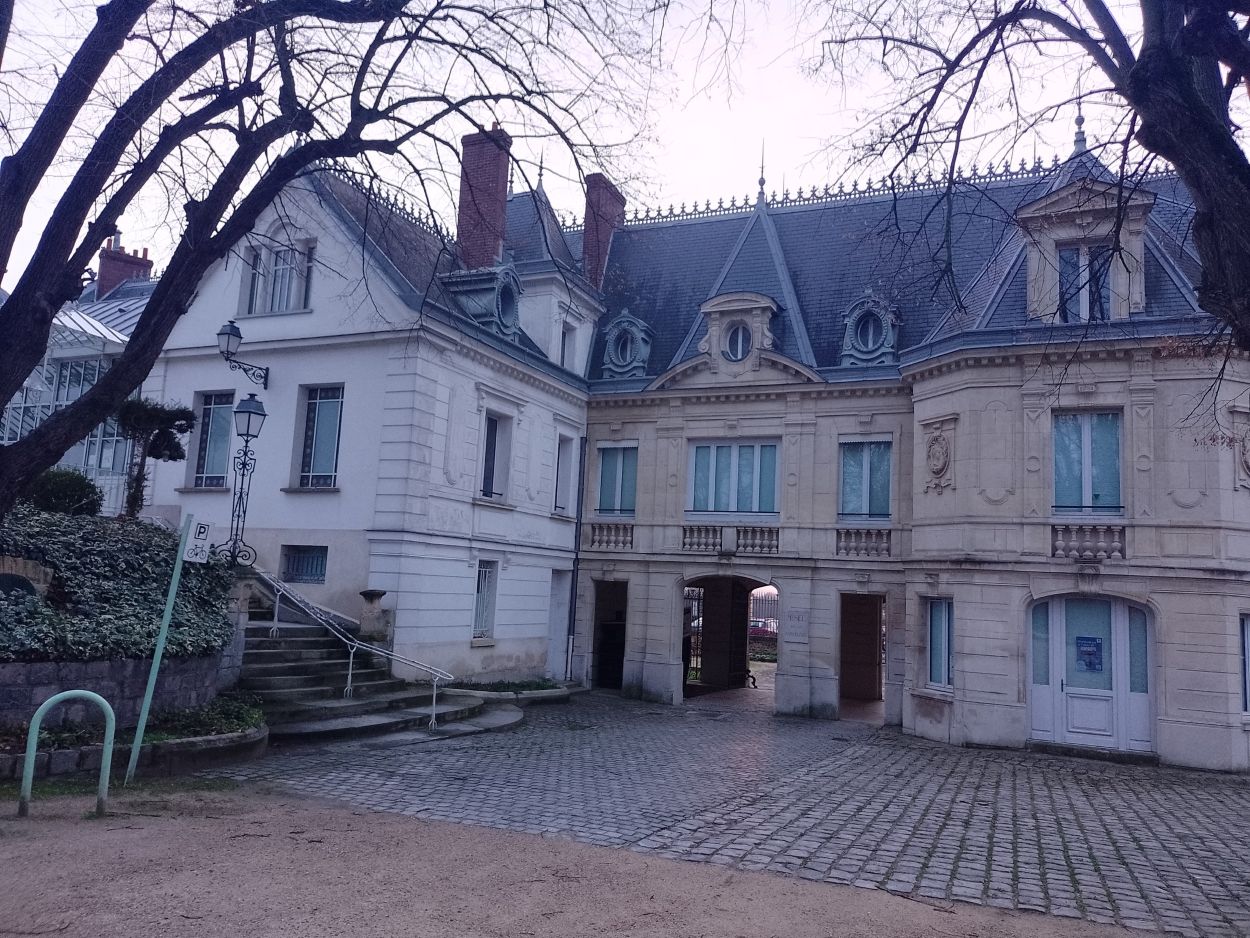
The Château du Prieuré aka Château Gévelot ,today houses the Riverboat Museum. In 1808, the former Sainte-Honorine priory was purchased by the family of Samuel Lhéritier de Chézelles, a former general of the French revolution and the Napoleonic Empire. The main building was completely redesigned, and an English-style garden was laid out. A barn was built, and an icehouse was created in a former vaulted room. The Sainte-Honorine church No. 2, built from 1750-51 onwards, replacing the one from 1085-86, was converted into a barn/stable and then demolished around 1840. Between 1829 and 1838, the estate was purchased by Marguerite Fardel, who carried out hydraulic works: the construction of a reservoir fed by water pumped from the Seine. She also added an orangery. She sold the property to Joséphine Marcal, widow of Joseph Marin Batard-Gévelot, in 1850. Joséphine bought several houses to demolish and had the northernmost wing built in 1856. In 1868, her son, Jules Gévelot, inherited the property and undertook numerous projects: consolidating the estate, purchasing the Clos de Rome and building an underpass beneath Rue aux Moines to reach the Seine river in 1881, constructing the waterfall, a large greenhouse, and the dovecote. In 1904, his widow, Emma, inherited the estate, which she kept until her death in 1927. Her heirs sold it to the town of Conflans Sainte Honorine in 1931. The town opened the Riverboat Museum there in 1966. The Grand Cellar of the Priory , and the Salle Bouyssel municipal hall was created in a converted barn, named in homage to the resistance fighter Joseph Bouyssel, a schoolteacher and resistance fighter during WWII, notably from the Meilhan maquis, one of the sites of the Gers (dept 32 Occitanie) resistance ; he was 33 years old, fought in the war from 1939 to 1940.
Now see the history of the town in the other post here will tell you a bit on Sainte Honorine,In the 3C, during the Carolingian era, Sainte Honorine, virgin and martyr, bore supreme witness to Christ. All that is known of her are the relics that were brought from Upper Normandy to Conflans-Sainte-Honorine. Her veneration in Normandy is very ancient, and tradition holds that she was a Gallic martyr. Tradition recounts that she was martyred in the year 303 during the last Roman persecution. Sainte Honorine is also the patron saint of prisoners. Honorine was from the Gallic tribe of the Caletes (present-day Pays de Caux). Around 303, she was martyred by the Romans in Lillebonne, and her body was thrown into the nearby Seine river. Her body was recovered in Graville (present-day Le Havre) and buried there. To escape Norman invasions, her body was brought to Conflans at the confluence of the Seine and Oise rivers. February 27th is the date currently chosen for the ceremonies and processions, a practice dating back to 1080. Honorine comes from the Latin word for “honor” (honoris). Since the town’s name was enlarge to Conflans Sainte Honorine,
The local Terres de Seine tourist office on the parc du Prieuré : https://www.terres-de-seine.fr/patrimoine_culturel/parc-du-prieure-4/
The local Terres de Seine tourist office on Conflans Sainte Honorine : https://www.terres-de-seine.fr/decouvrir/bords-seine/conflans-capitale-de-la-batelellerie/
The City of Conflans Sainte Honorine on its heritage: https://www.conflans-sainte-honorine.fr/culture-sport-et-loisirs/histoire-patrimoine/parcours-touristiques/
The Yvelines dept 78 tourist office on Conflans Sainte Honorine : https://www.destination-yvelines.fr/visite-conflans-sainte-honorine/
There you go folks, another quant ,nice memorable town in my former dept 78 Yvelines. Oh yes , Conflans Sainte Honorine is worth the detour, me think. Again, hope you enjoy the post on curiosities of Conflans Sainte Honorine, part II !!! as I.
And remember, happy travels, good health, and many cheers to all !!!


