
I am , again reviving old glories of my former home, as I used to lived not far from here, and passed by often. I am talking about Magnanville, in department 78 Yvelines, region of Île de France of my belle France. I am able to do this post as found me pictures in my cd rom vaults that should be in my blog for you and me. Anyway ,this is a nice off the beaten path town that is worth a detour, me think. Therefore, let me tell you on this is Magnanville !!! Hope you enjoy as I
The town of Magnanville is located in the Yvelines department no, 78 of the Île-de-France region, and in my belle France. The town is part of the Mantes-la-Jolie (see post) urban area, situated on its southern outskirts. The main road through the town is the RD 928. The town is served by the Mantes-Sud interchange of the autoroute A13 of Normandie, which passes near its northern border, marked by the D110 road. The D983 road,connecting Mantes-la-Jolie to Houdan, runs through the town from north to south. The town is 2 km from Mantes la Jolie, 26 km from Houdan, 30 km from Poissy, 45 km from Versailles, and 433 km from my current town, We came here from Versailles going north to connect with the A13 autoroute de Normandie at exit/sortie 6 continue dir Rouen to exit/sortie 12 Mantes Sud on the D928 road or Avenue de l’Europe dir Magnanville, then bear right onto Rue de la Ferme and City hall parking,
A large agricultural estate belonging to the Châtellenie of Rosny in the 11C, of which Baudoin de Magnanville witnessed a deed of gift signed in favor of the priory of Rosny. The Château de Magnanville was built in 1750 by the farmer and owner of the estate, Charles Savalette, a relative of Madame de Pompadour’s husband. Charles Savalette commissioned the construction of the château, which took three years. The castle comprised 50 very refined and sumptuous apartments and a theater. Upon his death in 1756, his eldest son succeeded him, and he sold the estate in 1767 to Tavernier de Boullongne aka de Préninville. The château was demolished in the 19C, and the remains were purchased in 1807 by Baron de Robillard, who commissioned the construction of the wing that is still visible today. In 1928, a sanatorium and a retirement home were opened on the grounds of the Château de Magnanville by the Léopold Bellan association. This castle served as a military hospital for the army in 1940 during WWII. Today it has the Léopold Bellan Gerontological Center of Magnanville.
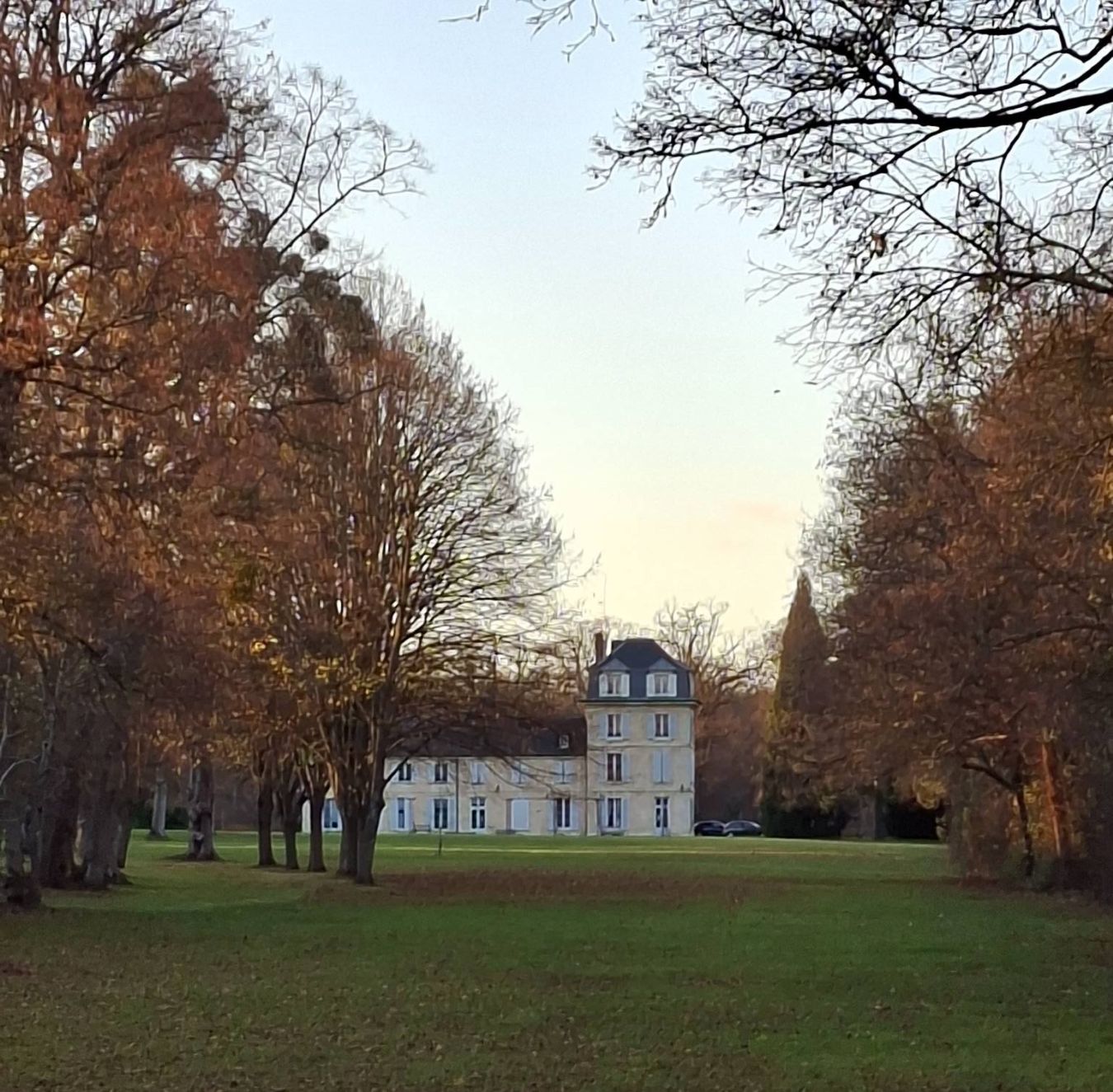
The manor farm and its outbuildings were constructed, comprising several buildings including the main house and the former stables, built between 1750 and 1755. A large cylindrical dovecote covered with a pepperpot roof, extends the buildings of the old manor farm. Today, the restored buildings have been converted into premises dedicated to socio-cultural activities and are commonly known as La Ferme or the Farm.
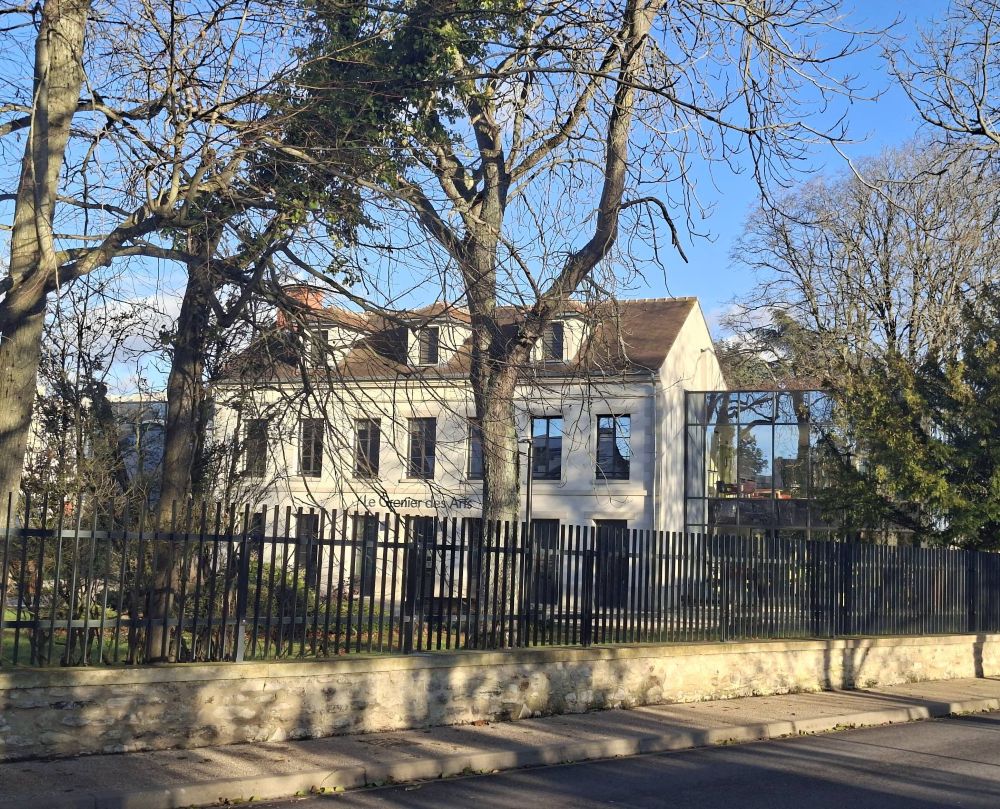
The Le Grenier des Arts is the name of the new media library, inaugurated in February 2020, The building was created in the 18C, most recently occupied by the Grenier family. Two glass extensions were added on either side of the building. A successful marriage of historic structure and contemporary architecture. It is located on Rue de la Mare Pasloue. The former family home, built of rubble stone, with a rendered facade, moldings, and arcades, now forms the central space of the media library.
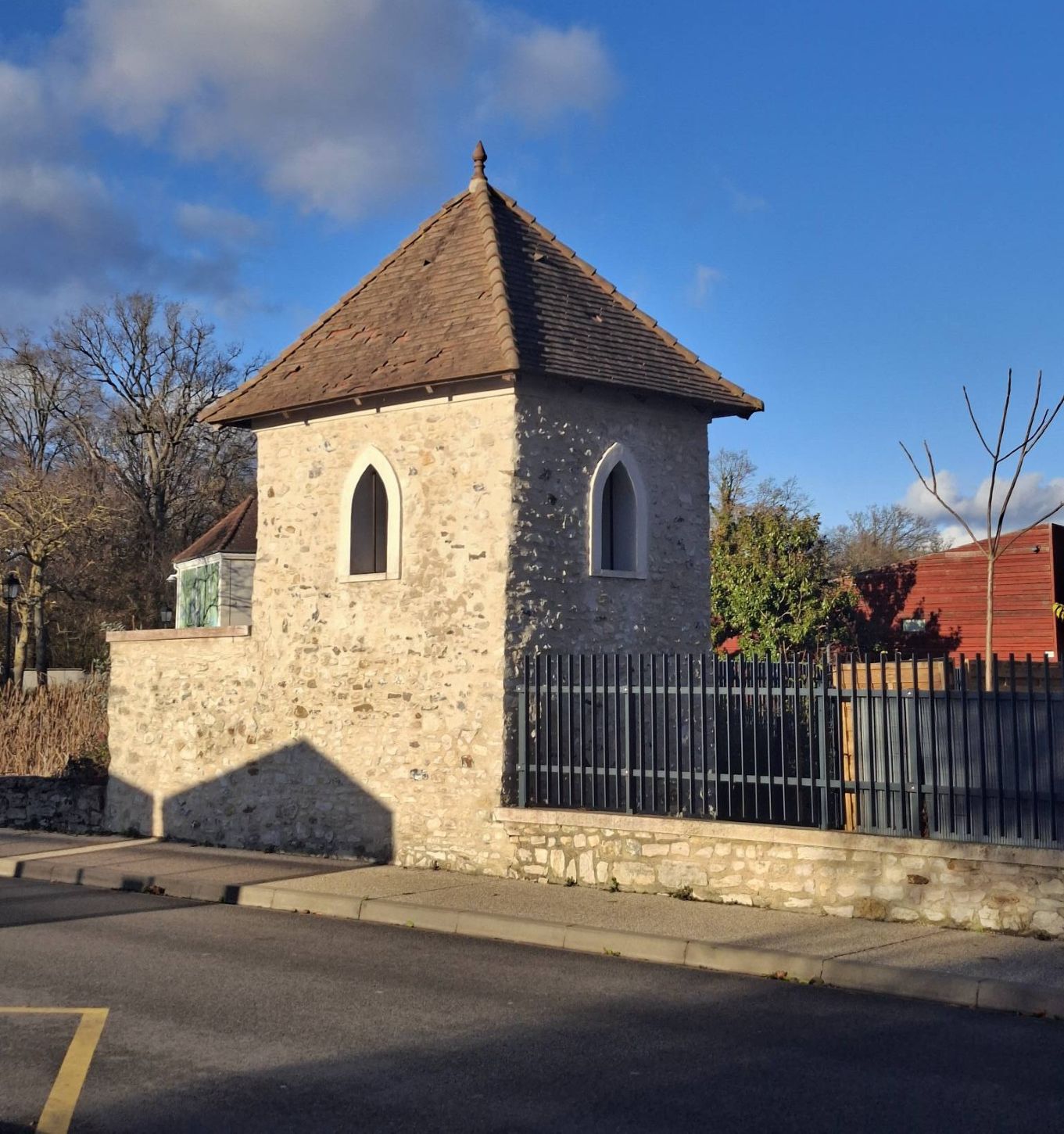
Recognizable by its pointed arch windows, the corner turret from the 18C near the Pasloue pond was reserved for livestock. The washerwomen could not use this water source and were forced to go down to Vaucouleurs in the nearby town of Mantes la Ville.
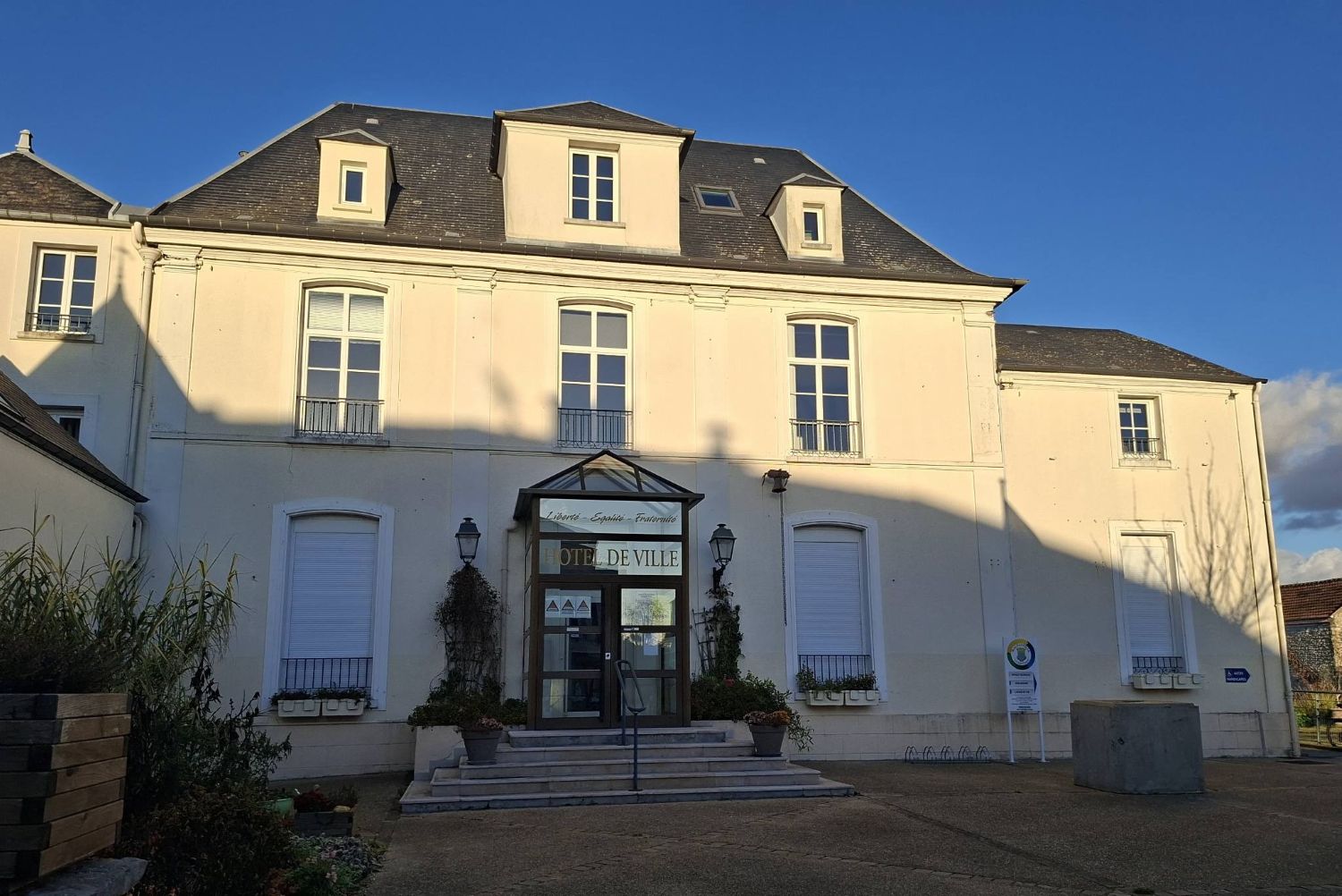
The City/town hall is housed in a manor house built in the 18C.
A bit of history I like tell us that the lords of Magnanville, mentioned as early as the 11C, were under the jurisdiction of the castellany of Rosny-sur-Seine. The lords of this town are found until the mid-14C. The fief then belonged to the des Landes, Briçonnet ,de Lamotte, and de Boullongne aka Préninville families. The lordship was confiscated as national property during the French revolution and sold in 1791 as National property, Magnanville was long considered the smallest town in the metropolitan area. It had only 100 inhabitants between 1800 and 1930. From 1970 onwards, the town urbanized with the arrival of new detached houses, leading to a sharp increase in population ,about 6,613 inhabitants. The town would be devoid of history if it did not have its castle and its charter house. The origin of the name of the town suggests the existence of an important agricultural operation, “magna villa”: the large farm.
The town of Magnanville on the médiathéque or library Le Grenier des Arts : https://www.magnanville.fr/a-voir-a-faire/mediatheque/la-mediatheque-le-grenier-des-arts/
The town of Magnanville on its heritage : https://www.magnanville.fr/ma-ville/decouvrir-magnanville/notre-histoire/
There you go folks, another dandy in my former Yvelines, and as said Magnaville is worth the detour indeed. Again, hope you enjoy this post on this is Magnanville !!! as I.
And remember, happy travels, good health, and many cheers to all !!!


