
I am back to my eternal Paris, oh well yes indeed. If someone invented the idea of a city then it definitively should have taken Paris as a model. We are at the museums, well my weak spot ! I am doing this post from my findings in my cd rom vault that should be in my blog for you and me. This is a special museum that really needs to be visited more including me. Therefore, here is my take on the Musée Nissim de Camondo of Paris !!! Hope you enjoy the post as I.
The Musée Nissim de Camondo was inaugurated in December 1936, located at 63 rue de Monceau in the 8éme arrondissement of Paris, in the former Hôtel Moïse de Camondo, built between 1911 and 1914 on the edge of Parc Monceau. It houses an exceptional collection of 18C French furniture and objets d’art in a neoclassical-style mansion inspired by the Petit Trianon, preserved in the state in which it was occupied at the beginning of the 20C, You can reach it on Metro lines 2 and 3 Villiers station or line 2 Monceau station, Also, on bus lines 30, 84, and 94,
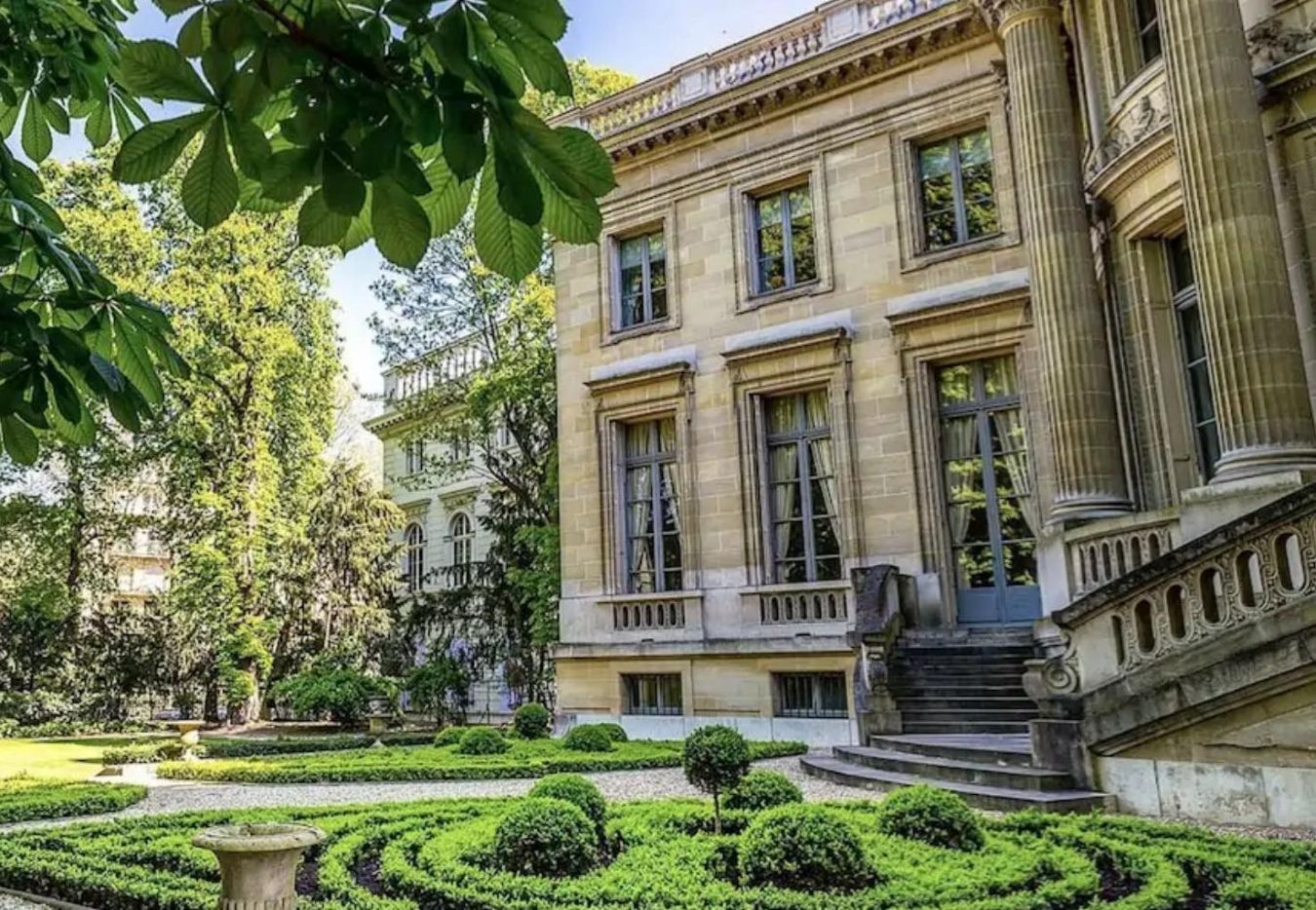
The miseum allows you to plunge into the life of the great families under the Second Empire and to discover also the tragic fate of a family of great lineage of Sephardic Jews having made fortune in the bank and whose descendants will be deported and killed in Auschwitz. The mansion was built in 1912 at the request of Moïse de Camondo, on the site of the old mansion that had belonged to his parents, demolished in 1911, with the exception of the building facing the street. The new building is inspired by the Petit Trianon at Versailles. The garden, as in many other prestigious residences of this period, was designed by the renowned landscape architect Achille Duchêne. Moïse de Camondo housed his collections there, which he continued to expand until his death on November 14, 1935. In his will, the mansion and its collections were bequeathed to the Union Centrale des Arts Décoratifs to become the Nissim-de-Camondo Museum, in memory of his son Nissim, a lieutenant in the MF 33 squadron, shot down in aerial combat on September 5, 1917, over the village of Leintrey in Meurthe-et-Moselle (dept 54).
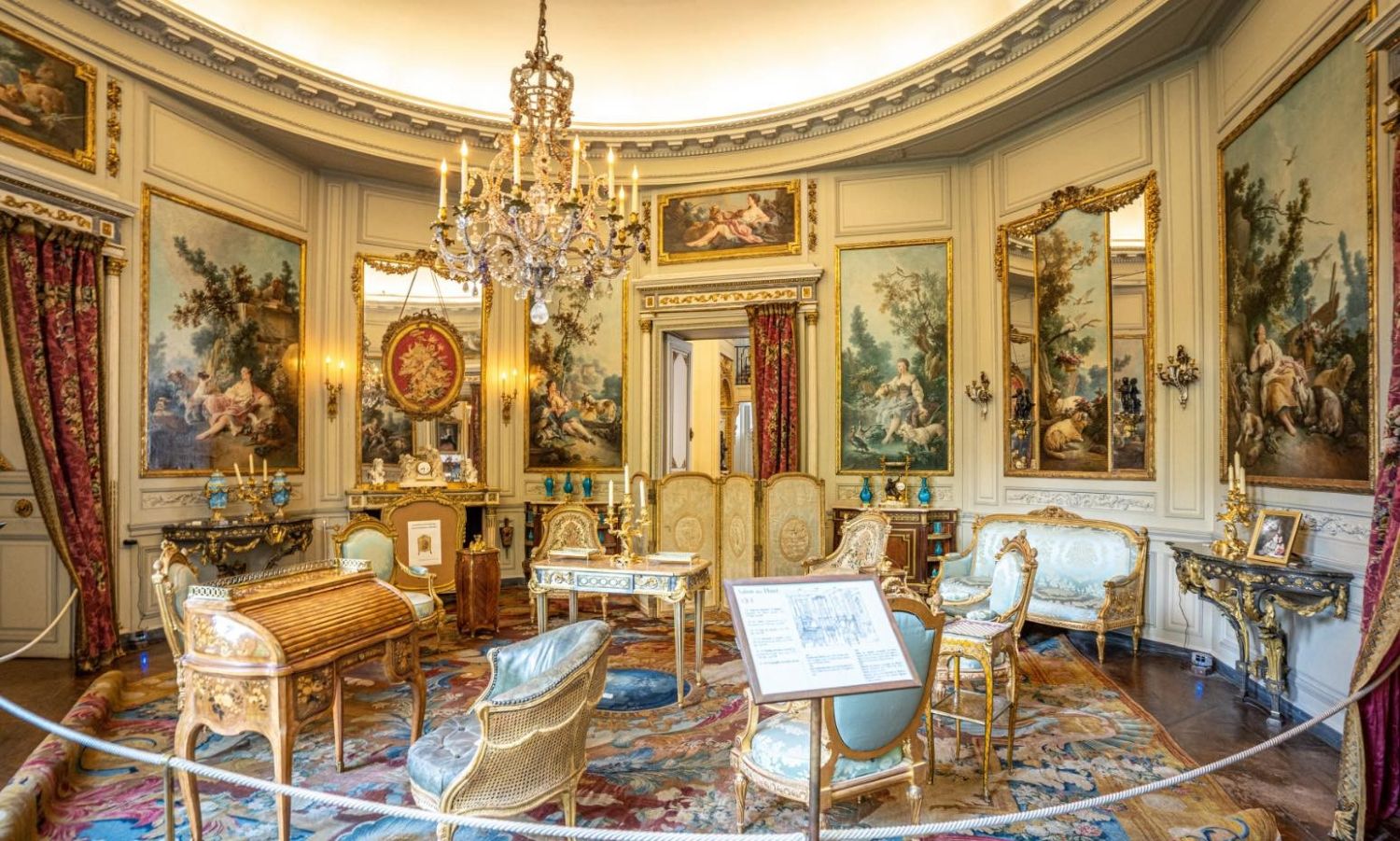
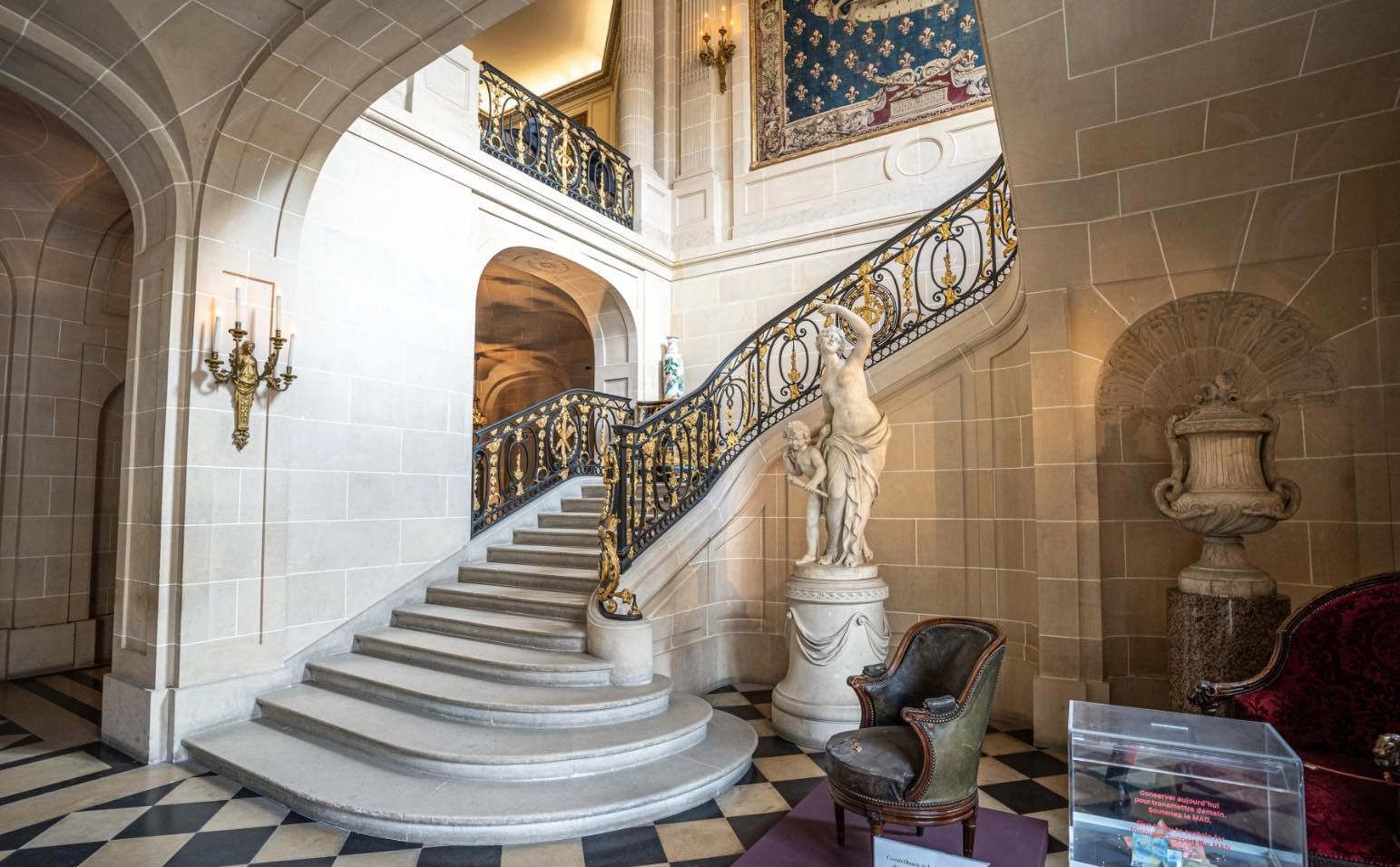
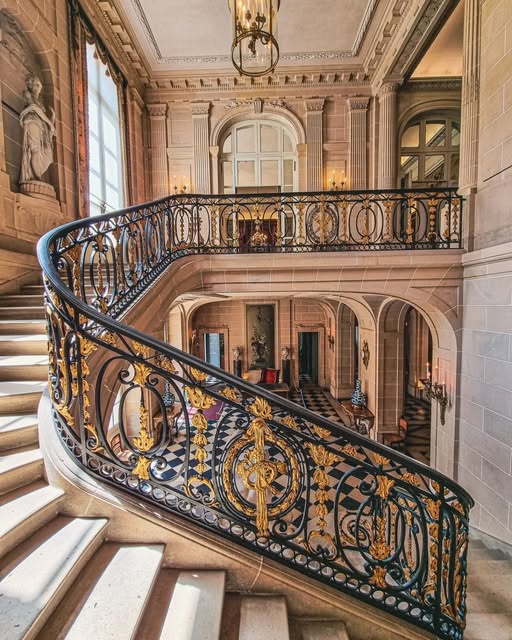
The tour begins with the salons on the first floor. This piece doubled by a traffic gallery is on one level on the courtyard of honor while all the other spaces on this low ground floor, reserved for the service, are half buried on the garden side. The walls like those of the stairs are made of stone from Ile-de-France and not in stucco, The small “Porcelain Cabinet” adjacent to the dining room, furnished with glass cupboards, where he took his meals when he was alone. The dining room contains pieces of silverware ordered by Catherine the Great for her favorite Orloff, wrecks from a gigantic service of more than 800 pieces. The Count’s presence is also felt in the vast blue drawing room serving as his office on the first floor and overlooking the foliage of Parc Monceau. In the fully tiled bathrooms adjoining the two bedrooms of Moïse and Nissim, the “18th century spirit” disappears to make way for the modern comfort of the early 20th century. Nissim’s former office, in the slightly Anglicizing style then fashionable among the French upper middle class, is decorated with 19th century paintings, with the traditional themes of hunting and horse riding. Descending to the ground floor, we return to the Belle Époque, with its celebration of domestic comfort, featuring the ingenious technical and architectural arrangements necessary to ensure the smooth running of the service and daily comfort: filtered and forced-air heating, compressed-air elevators, a vacuum cleaning system, illuminated cornices, etc. The spectacular kitchen demonstrates the master’s attention to the pleasures of the palate. A huge cast iron rotisserie accompanies the central stove; on the walls, copper utensils gleam, reminiscent of traditional cuisine. The rooms are lower ground floor: 5 rooms : Hall and Staircase , Kitchen, Gents’ Room, Laundry Room, The Chef’s Pantry, Upper Ground Floor: 7 rooms : Gallery, Large Office,Large Living Room,Huet’s Room,Dining Room and Porcelain Cabinet,Small Office,Dining Room Pantry, First Floor: 7 rooms : Blue Room, Library,Nissim de Camondo’s Apartment, Moïse de Camondo’s Apartment, and 3 Bathrooms.
A bit of history tell us that in the early 19C, the Camondos, a Sephardic Jewish family, founded a bank that became one of the most important in the Ottoman Empire. They were ennobled in 1867 by Victor Emmanuel II in gratitude for their financial support for the reunification of Italy. At the end of the Second Empire, the two Camondo brothers, Abraham-Behor and Nissim, left Constantinople and settled in Paris, where their bank had been established since 1869. Their sons, cousins Isaac and Moïse, became knowledgeable collectors and well-known figures in the art world during the Third Republic. Moïse was almost exclusively passionate about 18C French art; For over fifty years he bought at auctions from the greatest art lovers of the time: Baron Jérôme Pichon (1878), Baron Léopold Double (1881), Pierre Decourcelle (1911), Jacques Doucet (1912), Joseph Bardac, Mme de Polès (1927), Stroganoff (1931), Mme Louis Burat, Georges Haviland, Georges Blumenthal (1932), Charles Ephrussi, Mme C. Lelong, etc. Since 1890, he had been a regular client of Seligmann père et fils, leading Parisian antique dealers of German origin, Jacques, who in 1909 purchased the former Hôtel de Sagan on Rue Saint-Dominique, sold Moïse furniture from the famous Hertford-Wallace collection, formerly housed in the Pavillon de Bagatelle and in a vast master apartment at 2 Rue Lafitte. The rich contents of this collection were purchased in June 1914 from Lady Sackville-West, heiress of Richard Wallace’s secretary, and later trusted man and legatee to his widow. That same year, Seligmann sold Camondo the Louis XVI furniture from the grand salon , Arnold, who had become his regular supplier and shared his taste for symmetry, found for him in England the counterpart of a lacquered “support cabinet” by the cabinetmaker Garnier, which the two brothers had sold to him thirty years earlier. To showcase his collections, he had a vast residence built, classical in appearance but equipped with the latest modern comforts. Until his death in 1935, Moise de Camondo worked to complete his work of reconstructing an 18C aristocratic residence. In 1940, the museum closed its doors and seals were placed to protect its interiors and the few remaining collections ,mainly the library of books from the Château de Valençay, acquired in 1935 and not evacuated. The intact collections gradually returned to Paris from 1945 to 1947.
The official Culture Ministry site on the musée Nissim de Camondo : https://madparis.fr/Musee-Nissim-de-Camondo-742
The Paris tourist office on the musée Nissim de Camondo : https://parisjetaime.com/eng/culture/mad-musee-nissim-de-camondo-p3567
There you go folks, a must while in Paris. This is the wonderful Musée Nissim de Camondo is a wonderful off the beaten path jewel of my eternal Paris, It will take more than a post to tell you all about museums, but working on it. Again, hope you enjoy this post on the Musée Nissim de Camondo of Paris !!! as I.
And remember, happy travels, good health and many cheers to all !!!


One of my favourite places in Paris, celebrating 18th-century French excellence.
LikeLiked by 1 person
Indeed one of many favorites! Thanks for stopping by. Cheers
LikeLiked by 1 person