
Lots of history here, and lots of memories visiting and riding once living in Versailles. It has been a while and perhaps nostalgic found me more pictures in my cd rom vault that should be in my blog for you and me. This is one of those off the beaten path sites with lots of history and architecture to be visited more, me think, This is Louveciennes in the Yvelines dept 78,of the Île de France region of my belle France. Therefore, here is my take on the Church Saint Martin of Louveciennes !!! Hope you enjoy the post as I.
The City of Louveciennes is located 10 km from Paris on the slopes of the Seine , and 8 km from Versailles ,7 km from Saint-Germain-en-Laye, and 466 km from my current home, Its neighboring towns are Marly-le-Roi, Le Port-Marly, Croissy-sur-Seine, Bougival, La Celle-Saint-Cloud, Bailly and Le Chesnay-Rocquencourt. The town is crossed by two particularly busy roads, the N 186 and the D113. It has access to Le Chesnay-Rocquencourt on the A12 and A13 autoroutes/highways. We came here from Versailles, along Rue de la Paroisse, turning right on Rue des Reservoirs continuing on Bd du Roi (D186) towards the Place de la Loi roundabout bearing left on Bd Saint Antoine same road becomes Route de Saint Germain same road becomes Route de Versailles, same road becomes name N186 road going over the A13 highway or autoroute de Normandie ,continue and just before the musée du domaine de Marly (see post) bear right onto Rue du Maréchal Joffre that takes you to the place de l’église and the church City center of Louveciennes,
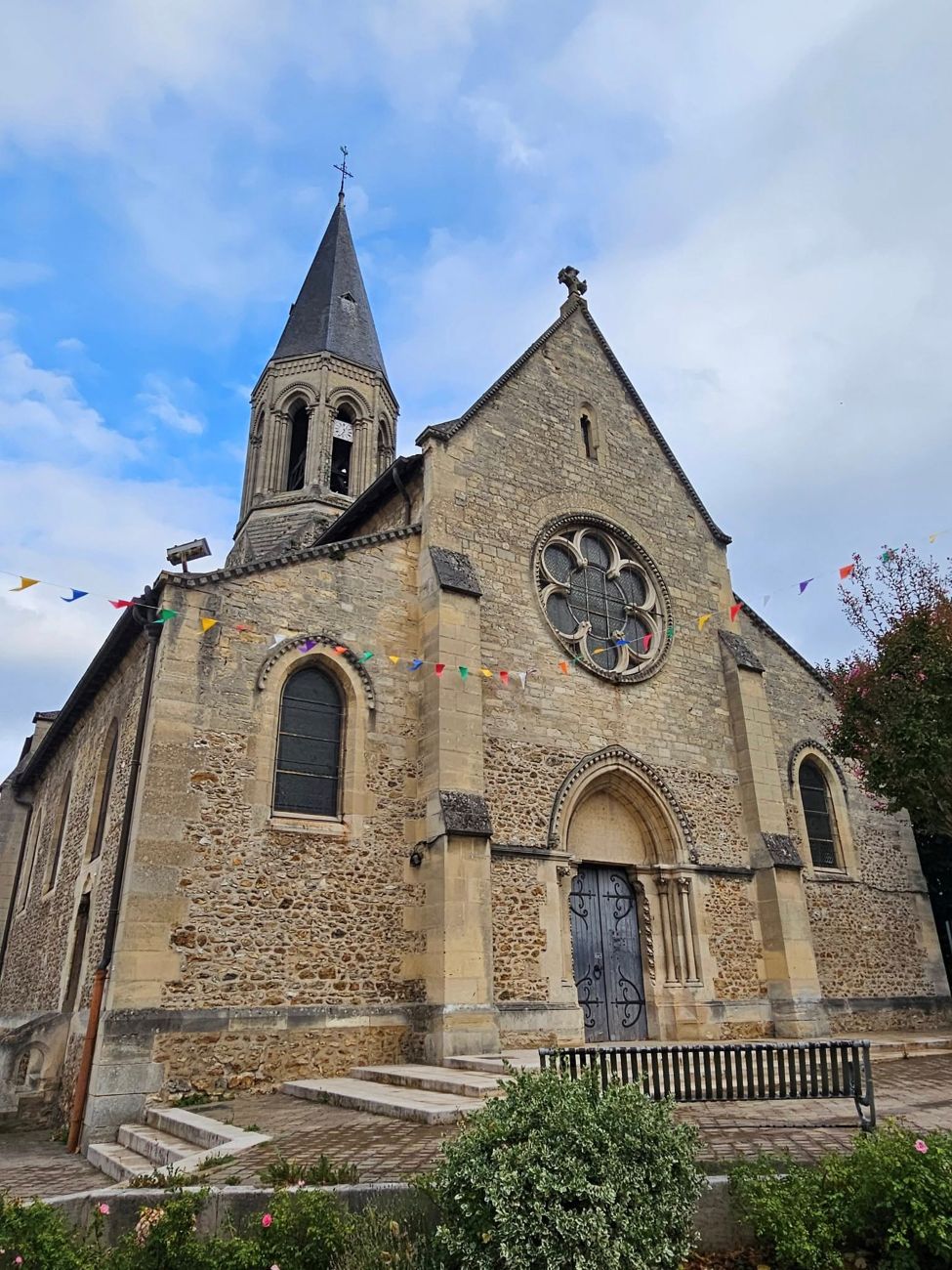
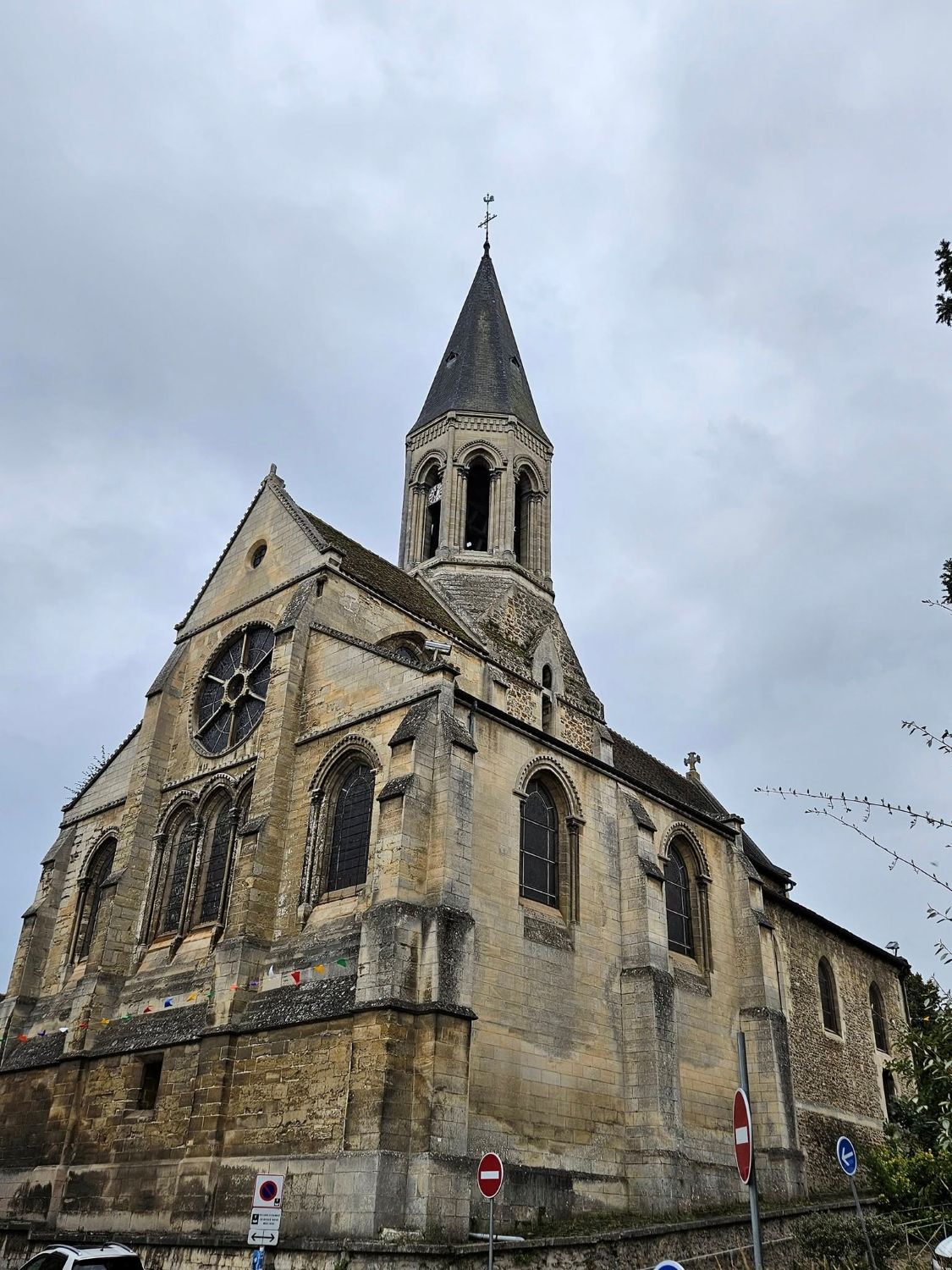
The Church Saint-Martin-et-Saint-Blaise: the flat apse choir dates back to the 13C. The nave was reduced by two bays in 1818. The bell tower was built at the end of the 19C.Of the original church only part of the apse remains.
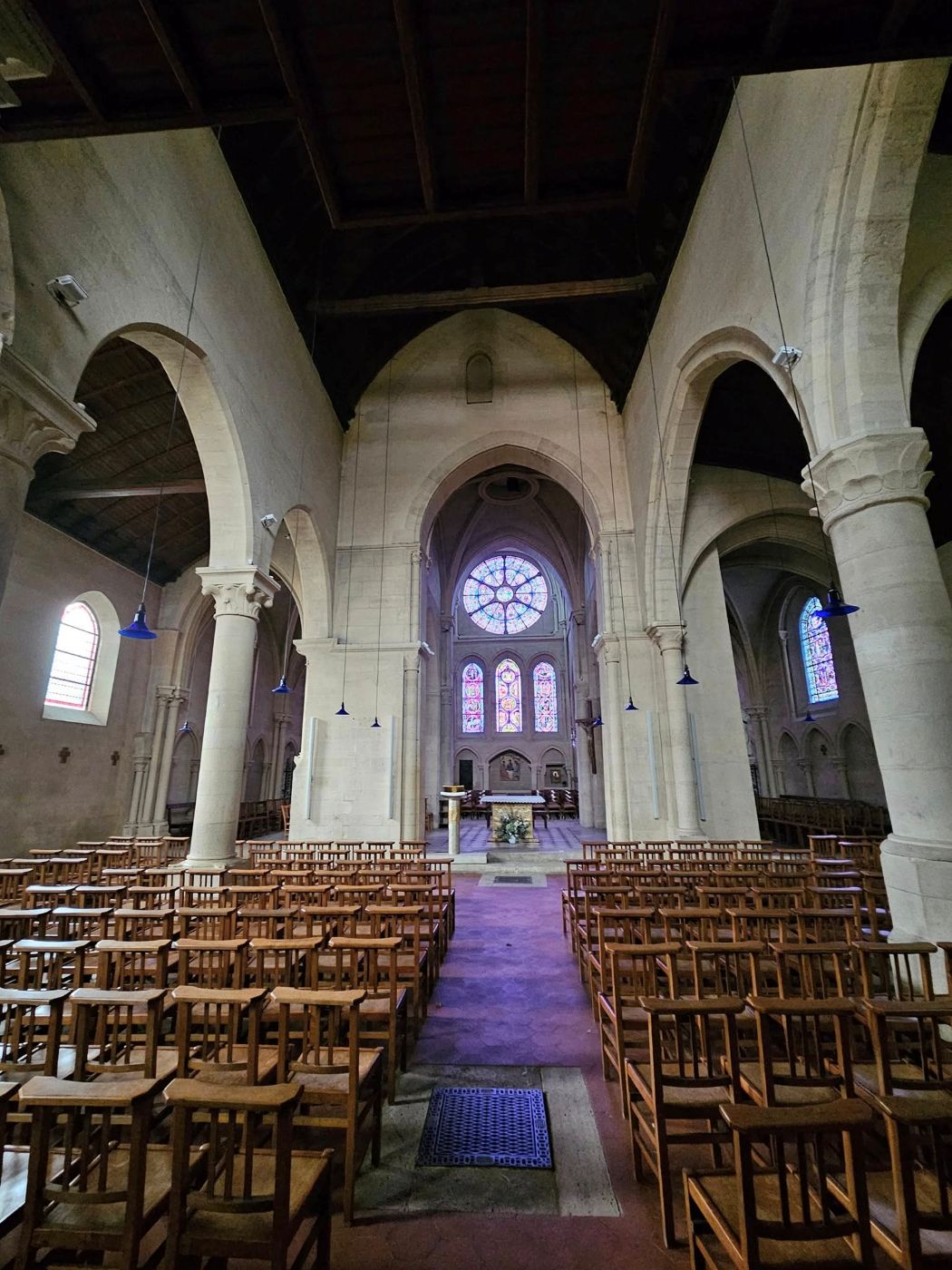
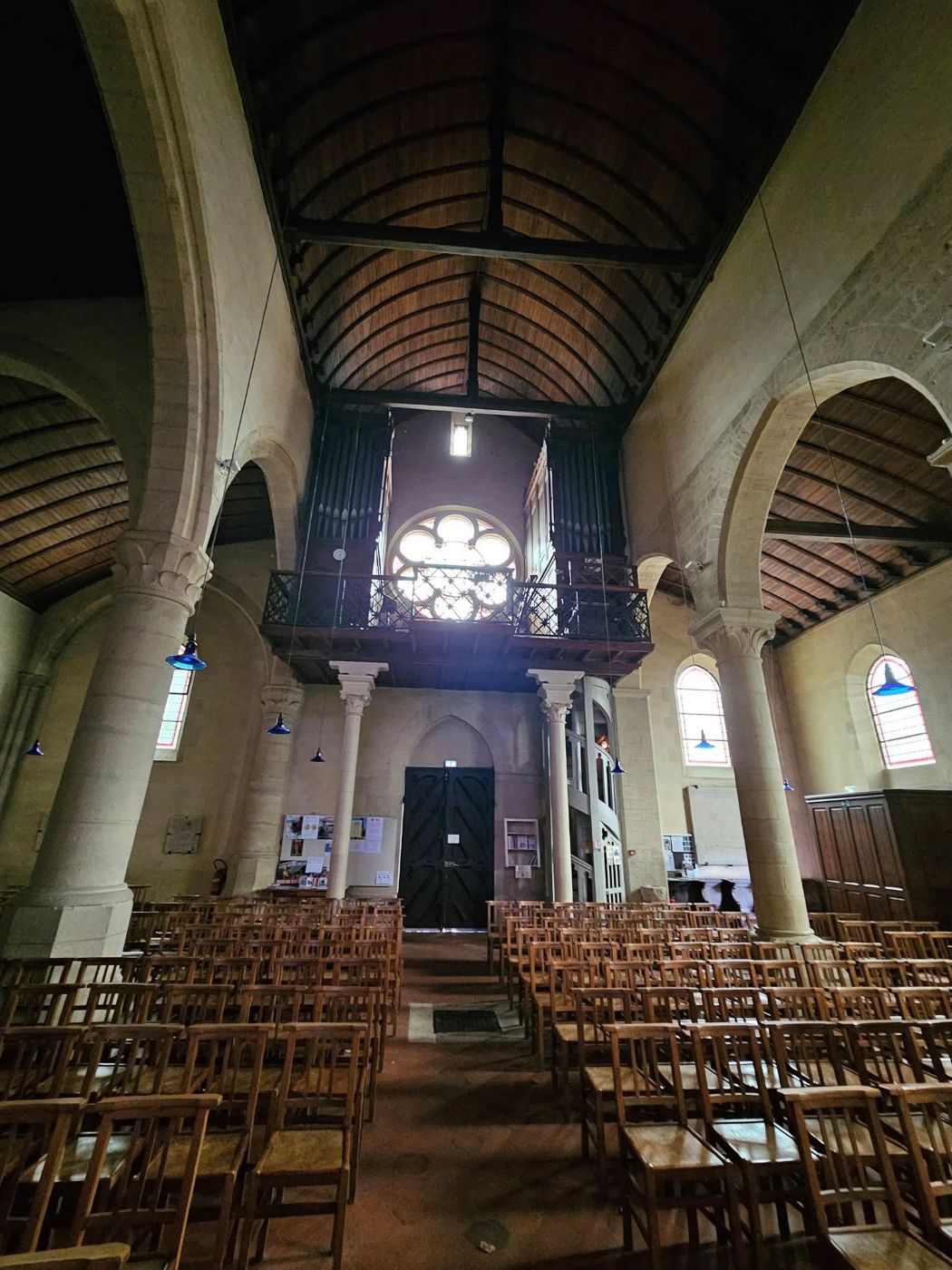
Inside is a double piscina, very rare in a church. Also noteworthy are the two column statues, which belonged to Viollet Le Duc. With the possible exception of the stained-glass window on the left of the apse, part of the triptych depicting the life of Saint Martin and which could date from around 1200, all the stained-glass windows in the church date from the end of the 19C. The chapel, to the left of the nave, long housed Elisabeth Vigée Lebrun’s only religious painting, “Saint Geneviève Guarding Her Sheep,” now housed in the Musée-Promenade in Marly-le-Roi / Louveciennes. The church is dedicated to two saints: Saint Martin and Saint Blaise.
Some of the other things to see here are many even if passed by it many times still have not seen it all lol !! need more time !! The Château de Madame du Barry in the village of Voisins, originally, a manor house called Pavillon des Eaux was built in 1684 on a fairly large property along the Chemin de la Machine for the governor of the Marly machine; it was enlarged in 1769 by Ange-Jacques Gabriel for Madame du Barry. In 1771, Madame du Barry had the Pavillon de Musique built by Claude Nicolas Ledoux, an archetype of neoclassicism, overlooking the cliff overlooking the Seine, to the north of the estate. The said pavilion was moved and removed from the cliff in 1923 by its owner, the perfumer François Coty; at the end of the 19C, a small castle was built along the Chemin de la Machine; The complex is now part of a separate estate; at the southern end of the estate, a reception pavilion composed of two connected entrance pavilions was built in 1897 and 1898; it now constitutes the third independent portion of the former estate. La Pharmacie du Barry, the house where Madame du Barry stored her “herbs.” It was painted by Auguste Renoir.
The Château de Voisins: originally, a castle was built at the end of the 17C later became the property of Louise Élisabeth de Bourbon-Condé, Princess of Conti. Around 1820, noting its dilapidated state, its owner, Count Hocquart de Turtot, had it demolished and then rebuilt with the configuration of the castle is then that of today. In 1857, the estate was bought by Charles Tavernier: he had the Voisins pavilion built there in 1858, which he had surrounded by a garden located along the Prunay road; in 1874, he passed it on to several folks ,and in 1913 the estate was divided, reserving the pavilion ,and ceding the château and its grounds to Robert de Rothschild. Since 1946, the estate has been owned by BNP Paribas,(bank) which uses it as a training center. The estate also includes the Château de Bellevue, on the edge of the hill. The pavillon de Voisins pavilion, located along the Chemin de Prunay, where Leconte de Lisle, a French poet, resided and died. His work consists of three collections of poetry, plays, and translations of ancient authors. He is considered the leader of the Parnassian movement. He was awarded the Legion of Honor in 1870 and elected to the Académie Française in 1886. It belonged to Karl Lagerfeld until his death.
The Château du Pont with the bridge, the moats and the gate, are from the 16C, and the buildings, from the 17-18C, The Estate dates back to the 14C. It is surrounded by ditches and moats fed by the Montbuisson stream which flows down from the forest just above The castle has recently been completely restored by the current descendants of the Demanche family. The Château des Sources was built at the end of the 18C and Madame Vigée Le Brun lived there. She was a French painter, considered a great portraitist of her time. A fervent royalist, she was successively painter of the court of France, of Marie-Antoinette and Louis XVI, of the Kingdom of Naples, of the Court of the Emperor of Vienna, of the Emperor of Russia and of the Restoration. It was rebuilt in its current form by the Thélier family in 1868. In 1965, the castle grounds were divided into lots and are now occupied by the Dauphine residence, made up of seven small luxury buildings.
The Château de l’étang, or Château Mallet, built in 1853, The Château de Louveciennes, also known as Château du Parc, built in the 15C by Jean de Louveciennes on the basis of a fortified castle and rebuilt during the second half of the 18C, The Château Beauséjour, current City/town hall. Built just after the French revolution, the property extended from the Route de Versailles to the rue de la Paix. The last owners ceded it to the City in 1937, which made it the City/town hall after numerous transformations. The Château de Prunay, located on the hillside below the hamlet of Voisins, chemin de Prunay. A first castle was built towards the end of the 18C and the beginning of the 19C; destroyed during the 19C, it was rebuilt at the beginning of the 20C. Its farm was divided into lots and became the Hameau de Louveciennes. The Château Louis XIV was built between 2008 and 2011 by Saudi businessman Emad Khashoggi. It was built on the grounds of the former Château du Camp (built in 1888), itself located on the site of a former military camp intended to accommodate the regiments employed in the construction of the Château de Marly. Mohammed bin Salman Al Saud, the Crown Prince of Saudi Arabia, acquired it in September 2015.
The pavillon de la Châtaigneraie or Chestnut Grove pavilion, a vast colonial-style house built in the early 1920s for Marshal Joffre after the end of his military career, and the mausoleum in which the Marshal rests, in the heart of the Châtaigneraie estate park. The Cœur-Volant manor, located along the Cœur-Volant hill, was home to the Count of Paris, the Orleanist pretender to the throne of France and the head of the Royal House of Orléans from 1940 until his death in 1999 under the name of “Henri VI” from 1929, he held the courtesy title of Count of Paris and his family lived here from 1953 to 1976. This manor was built in 1819 and has been occupied by many owners. The Museum of the Royal Estate of Marly, located at the entrance to the park of the old castle of Marly, at the royal gate at the top of the Flying Heart hill. (see Marly le Roi post).
The city of Louveciennes on its heritage: https://www.mairie-louveciennes.fr/D%c3%a9couvrir-Louveciennes/646/
The City of Louveciennes on the Impressionists trail : https://www.mairie-louveciennes.fr/DecouvrirLouveciennes/646/D/911/147/
The Seine St Germain en Laye local tourist office on Louveciennes:https://www.seine-saintgermain.fr/les-villes-et-villages/dans-les-pas-des-rois/
The Yvelines dept 78 tourist office on Louveciennes : https://www.destination-yvelines.fr/?_search=Louveciennes&s=
There you go folks, a historical wonderful area we love from our former hunting ground. The area of Louveciennes is tops to visit and to live, and you should enjoy it all surrounded by lush surrounding in noble French traditions. Again, hope you enjoy this post on the Church Saint Martin of Louveciennes !!! as I.
And remember, happy travels, good health, and many cheers to all !!!


