
Yes indeed in a small town and so much architecture and history as in Plouvien ! One of the nice road warrior trails to see this great off the beaten path gems of my lovely Bretagne !! I found again pictures in my cd rom vaults that should be in my blog for you and me, Therefore, let me tell you about this is Plouvien !!! Hope you enjoy the post as I.
The town of Plouvien is located in the Finistère department no, 29, in the lovely region of Bretagne and in my belle France. It is 17 km from Brest, 10 km from the beaches of the Iroise Sea, close to Aber-Benoît and not far from Aber-Wrac’h.
The Chapelle Saint-Jaoua Chapel was built on the remains of the old 11C Romanesque church, it was completed in the 16C. It houses the recumbent statue of Saint Jaoua and is frequently the site of festive events organized by the Plouvien residents, who are very attached to their chapel. The entrance shows on each of the four pillars is topped with a hemispherical crown on which a cross can be seen. The four pillars are connected in pairs by a granite slab placed on the edge, once intended to protect the enclosure from intrusion by animals.
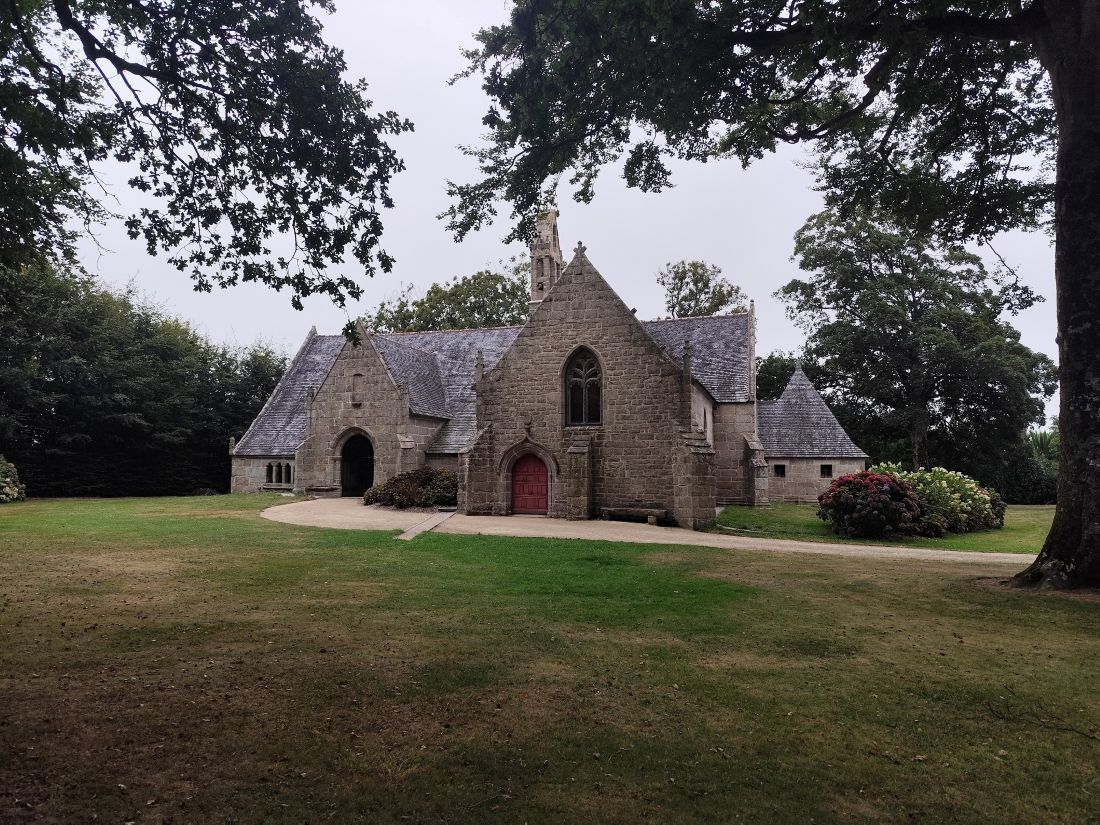
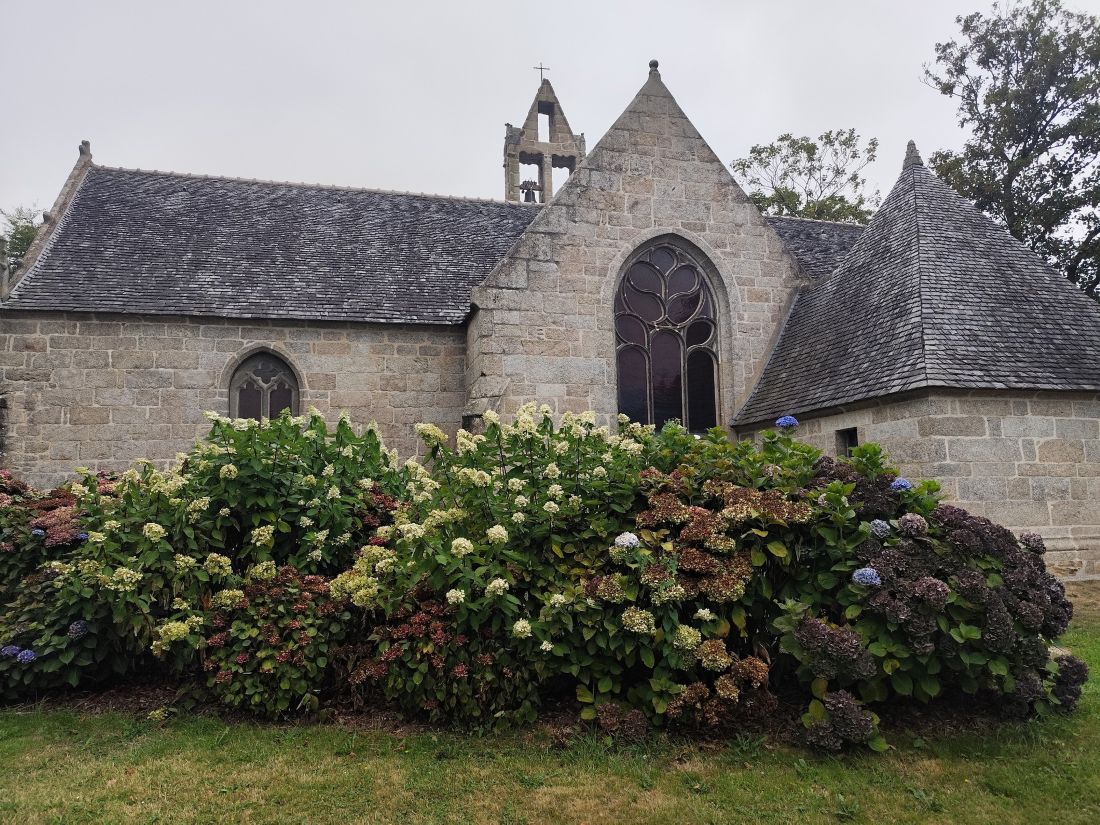
The current Saint-Jaoua Chapel dates from 1928. It houses the statues of Saint Jaoua as bishop (17C), Saint Catherine and Saint Michael. The ossuary of Saint Jaoua is in the Gothic style. It has eight arcades and is attached to the south side of the chapel nave, forming part of the building’s entire mass. The tomb of Saint Jaoua occupies the south wing of the chapel. The monument appears to date from the mid- to late-15C. It is decorated with Gothic arcades supported by small columns. The head of the deceased rests on a cushion. The saint is in his bishop’s robes, thus wearing his vestments. Lying at his feet, an animal (probably a dog) can be seen. The tomb was opened in 1856 and again in August 1897. A fragment of the recovered relics was transported with great pomp to the Cathedral of Saint-Pol-de-Léon (see post) on September 5, 1897, and other fragments were solemnly transported to the parish church of Plouvien, the church of Brasparts, and the bishopric of Quimper on March 6, 1898.
Saint Jaoua is said to have been born in Great Britain around the year 500. When Pol Aurelian, probably around 520, decided to travel to Armorica (or Little Britain= Bretagne), Jaoua was along for the journey. Coming from Great Britain, Pol Aurelian and his 14 companions first landed at Ushant and then came to the continent. Jaoua, nicknamed the Hermit, settled in a remote place now called Kerber in Lampaul , Jaoua then probably traveled to Plouvien, where he had two monasteries built. The rest of Saint Jaoua’s life is much less well known. A haphazard and controversial version tells us that Jaoua went to the abbey of Landévennec, then to the region of Faou and Daoulas before succeeding Pol Aurélien as Bishop of Léon. He died in Brasparts on March 2, 554.
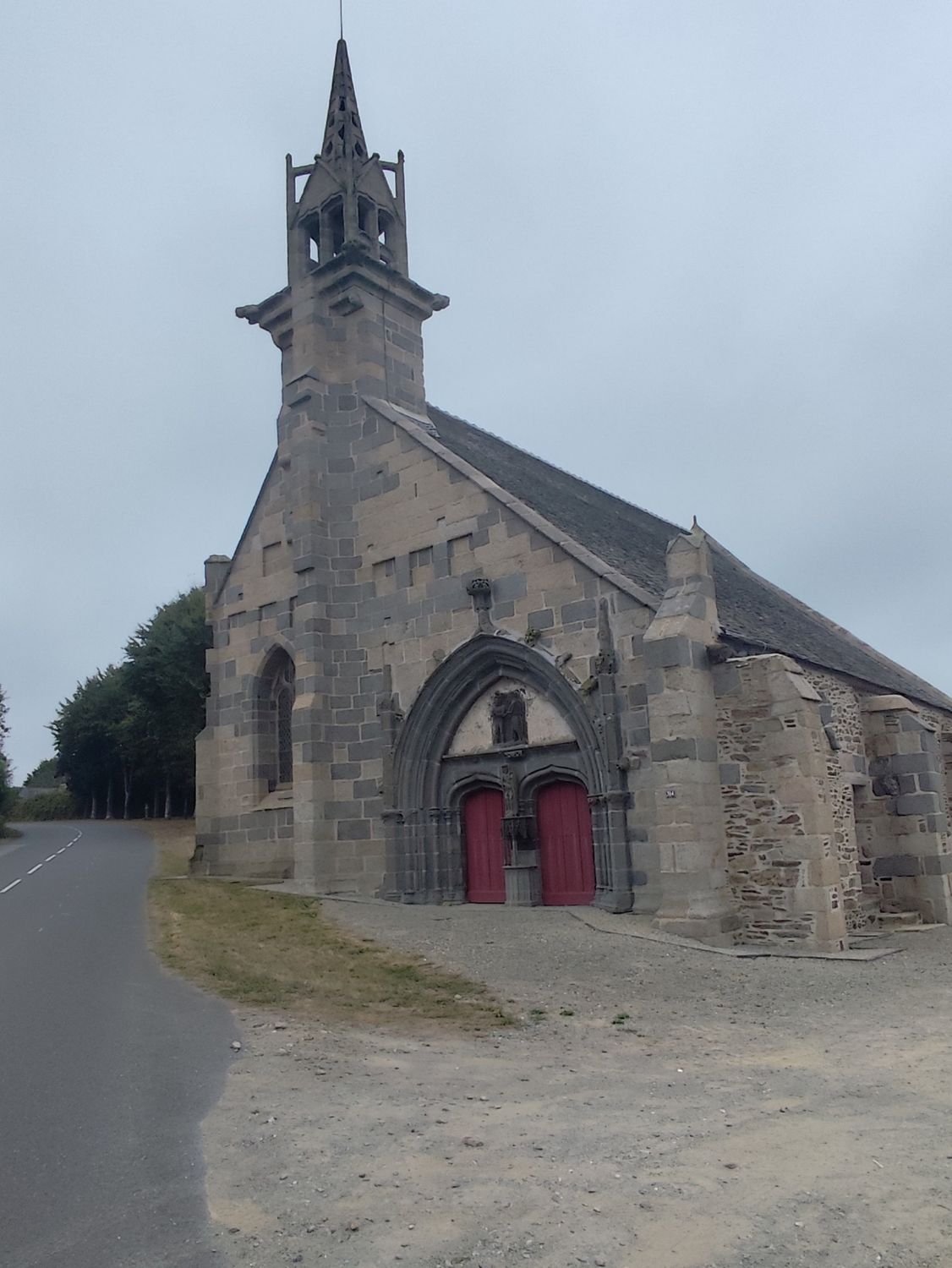
The Chapelle Saint-Jean Balanant was built on the banks of the Aber Benoît, which flows through the neighboring meadow. The name Balanant translates as “the valley of broom.” Dating from around 1440, it was once a possession of the Order of the Hospitallers of Saint John of Jerusalem aka Order of Malta. The chapel boasts remarkable architectural features, notably the west facade and its portal adorned with a sculpted tympanum, reminiscent of the nearby Folgoët Basilica. It has also been directly connected to the history of Léon and Brittany through the Lords of Kermavan and Penmarc’h, who were its patrons in the 15C.
Beautiful murals were discovered during the renovations undertaken in 2021. They date from the late 16C. Hidden under multiple layers of whitewash for centuries, they have aroused surprise and admiration. Ten painted paintings retrace the life and martyrdom of John the Baptist, the chapel’s patron saint. The old stained-glass windows in the nave were badly damaged, but their rarity and historical interest fortunately led the DRAC (Regional Directorate for Regional Development) to decide to restore them. A contemporary creation was combined with these reminders of a memorable past. The chapel, owned by the town of Plouvien, benefited from an ambitious renovation program that restored the beauty of this chapel. It is run by the Sant-Yann association.
Other thing to see here is the parish Church of Saints Pierre and Paul, in the neo-Gothic style, was rebuilt in 1887. The church bell tower, destroyed during the fighting on August 9, 1944, was rebuilt and inaugurated on October 6, 1946, and three new bells were named.
A bit of history I like tell us that around the 6C, the parish was founded by Saint Gwien. The Middle Ages were marked by the erection of the Saint-Jaoua chapel and a commandery of the Hospitaller Order of Saint John of Jerusalem. At the beginning of the 16C, a plague epidemic decimated a large part of the population, then the years 1661 and 1662 were marked by a significant famine, which led to an increase in the prices of wheat, rye, buckwheat and oats. Plouvien, land of mills, suffered serious consequences. Nine years later, two violent storms swept away all the mills located on the Aber-Benoît. The 17C ended with a typhus epidemic in 1695. During the French revolution, following conscription by lot, the requirement for the clergy to swear an oath to the Constitution, and the confiscation of church property by the state, numerous skirmishes and demonstrations of anger took place, followed by imprisonments. At the beginning of the 20C, Plouvien still derived its wealth from the cultivation of arable land and the activity of its numerous mills. The foal fair, held every second Saturday in July, was so renowned that people came from all over central Finistère. In the Great War or WWI a training camp for the French army existed on the site of the former potteries of “Landes de Lanveur.” In WWII,nazis troops, then American troops, reoccupied the site of “Landes de Lanveur” and dug deep trenches for their training, making the southern part of the site almost impenetrable. On August 7, 1944, Combat Command B of the US 6th Armored Division, arriving from Lesneven, which they had liberated, and after bivouacking nearby, the previous night, bypassed Plabennec, but had to repel a nazi counterattack at Plouvien and Bourg-Blanc, encountering strong enemy resistance in the Coat Laëron sector in Milizac where an anti-aircraft surveillance post was destroyed. Plouvien inaugurated a “Memory Trail” on May 9, 2010.
The town of Plouvien on its history/heritage ; https://www.plouvien.fr/ma-commune/#histoire
The local Abers region tourist office on the Chapelle Saint Jaoua : https://www.abers-tourisme.com/activite/chapelle-saint-jaoua/
The local Abers region tourist office on the Chapelle Saint Jean Balanant :https://www.abers-tourisme.com/activite/chapelle-saint-jean-balanant/
There you go folks, another dandy off the beaten path town in my lovely Bretagne, worth the detour, me think. This is Plouvien, and its chapels. Again, hope you enjoy this post on this is Plouvien !!! as I.
And remember, happy travels good health, and many cheers to all !!!


