
I have come here many times as it was very close to my old home you know in that other palace/museum and Saint Germain en Laye is nice too. Needless for me to tell you it is one of my favorite cities in France ,and yes they are many!. My family enjoy it very much, and we remember well the times spent here shopping and eating. I have walked its streets and taste the great places we usually went. It is always with great memories that we have come here thereafter. And yes this is in Yvelines dept 78 of the Île de France region of my belle France. I have found me again pictures in my cd rom vault that should be in my blog for you and me, Therefore, I like to tell you more on curiosities of Saint Germain en Laye, part I !!! Hope you enjoy the post as I
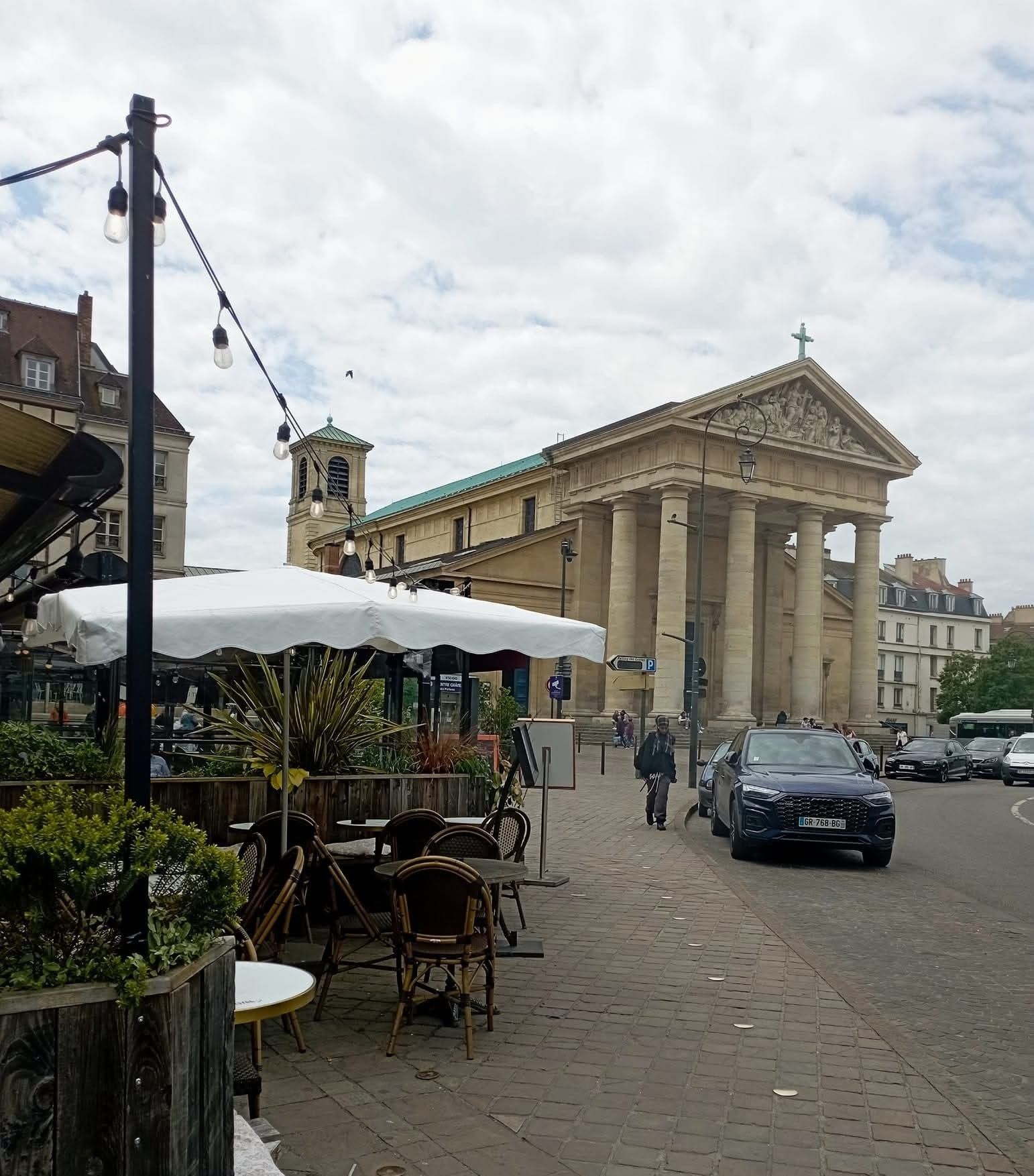
The nice Saint-Germain Church (see post) was called at the beginning of the 18C Saint-Germain-de-Paris. Located in front of the castle, this current Church built in 1824, in a neo-classical style inspired by the Paleo basilicas, was restored from 1848 to 1854. The present Church is however closer to Saint-Philippe-du-Roule in Paris. The present Church is the fourth built on the site.It houses the Mausoleum of the King of England, James II (Stuart), exiled to France and greeted by his cousin king Louis XIV. He resided and died at the Château de Saint-Germain,across the street.
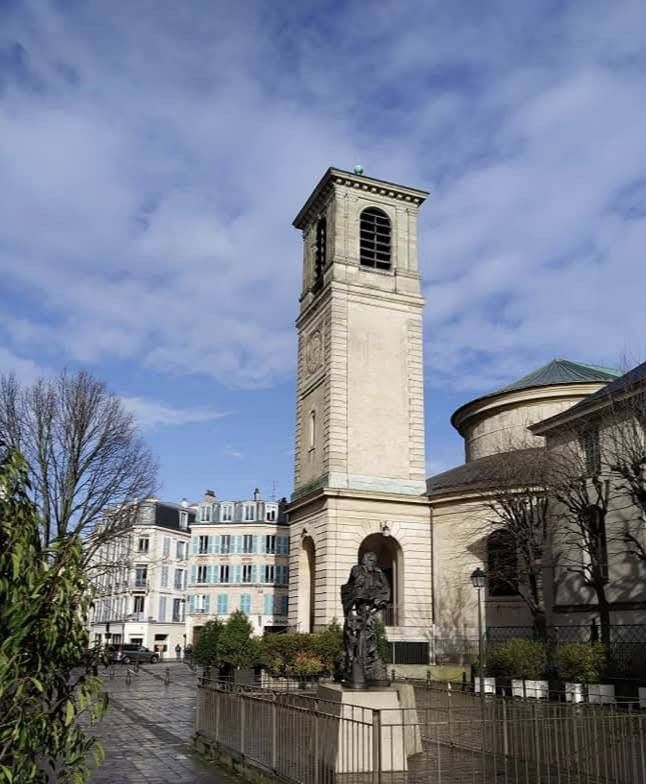
In the Church of Saint-Germain (see post), just behind the Place de l’Abbé Porcaro, stands a wonderful monument to Claude Debussy, a French composer born in Saint-Germain-en-Laye (see pic). The name of the square is honoring Pierre de Porcaro, who died on March 12, 1945, at the Dachau concentration camp, was a priest ordained in 1929 for the Diocese of Versailles. A professor at the minor seminary of Notre-Dame du Grandchamp in Versailles, he was appointed vicar of Saint-Germain-en-Laye in 1935. There, he founded a youth center to awaken the faith of young people. He was also chaplain of the Scouts de France group in Saint-Germain-en-Laye, a group now named St-Germain-Porcaro in his memory. Mobilized in 1939, he was taken prisoner in 1940. He organized the spiritual life of the camp with other priests, continuing the theological and biblical formation of the seminarians. He was released after a year. In 1943, at the urging of his bishop, Pierre de Porcaro agreed to serve as a clandestine chaplain for the STO (Service du Travail Obligatoire, or Compulsory Work Service) in Dresden. Following a work accident, he returned to France to convalesce. Aware of the risks, he chose to return to Germany, and was arrested on September 11, 1944, under the Nazi decree of December 3, 1943, targeting Catholic ministry to foreign workers in Germany, he was imprisoned in Dresden before being transferred in January 1945 to Dachau, near Munich. While caring for typhus patients, he contracted the disease in February and died at the age of forty on March 12, 1945, in Barrack 26. In a decree published on June 20, 2025, Pope Leo XIV recognized the martyrdom for hatred of the faith of fifty Frenchmen who died in 1944 and 1945, including Pierre de Porcaro. He was beatified on December 13, 2025, in Notre-Dame Cathedral (see posts) in Paris, along with fifty other Frenchmen.
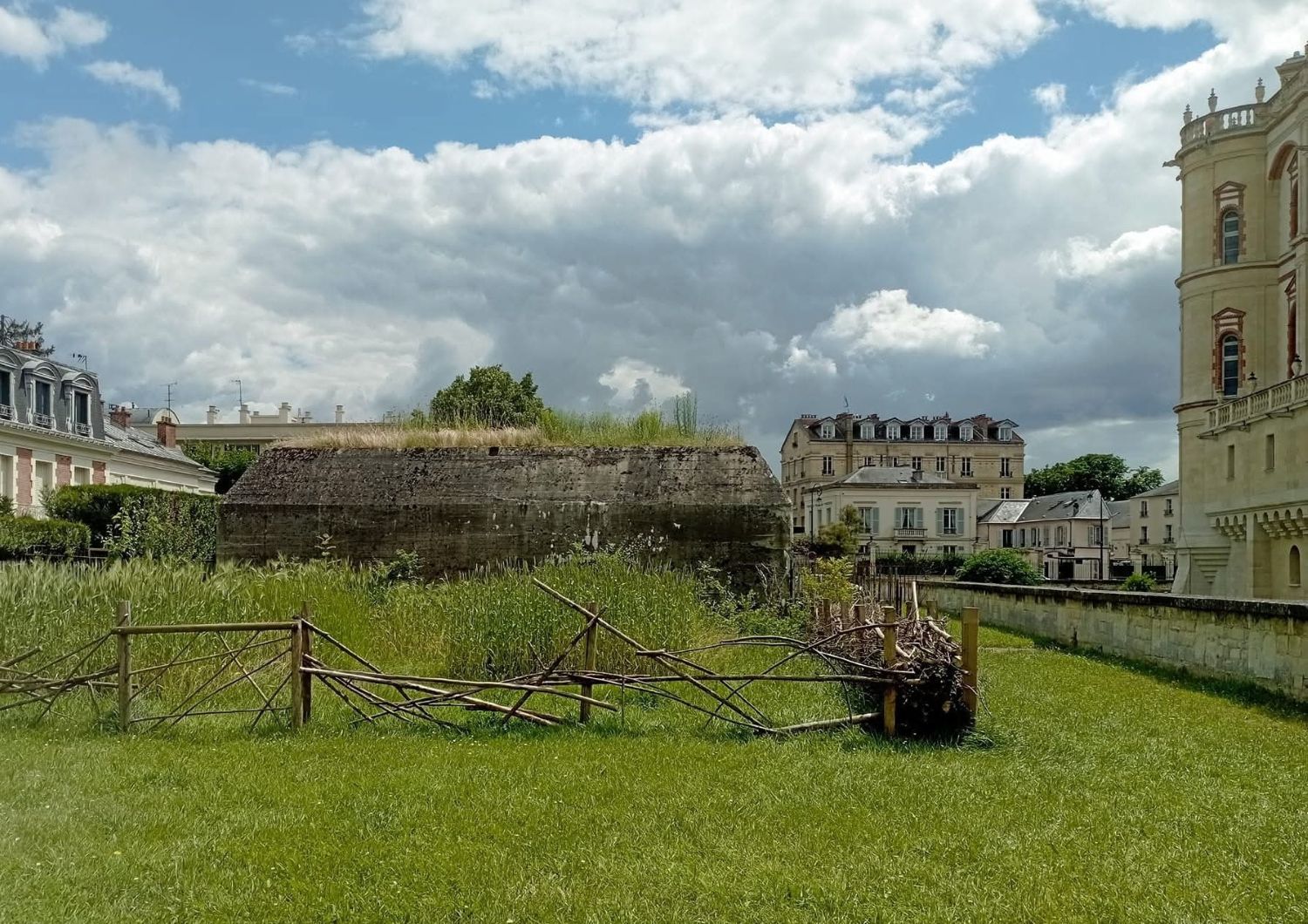
The town is occupied by the Nazis on June 14 1940 and liberated on August 25 1944. The HQ of the Nazi army was housed in the Pavillon Henri IV; and from here they planned the invasion of Great Britain on Opération Seelöwe. Evidence of the strong nazis presence in Saint-Germain during the Occupation, more than ten bunkers still exist today hidden throughout the city of Saint-Germain-en-Laye, The bunkers are located at the Parc du Château de Saint-Germain-en-Laye,(see pic) ; Cité Médicis :rue Thiers, Pavillon Henri IV : below the hotel, Quartier Gramont : rue Saint-Louis, 25bis rue Alexandre Dumas, Villa David : rue Alexandre Dumas, Collège Marcel-Roby : two of the structures are scattered throughout the park, Rue Félicien-David : the shelter of von Rundstedt’s PC, invisible from the street, – 4 rue Félicien-David : firing position overhanging the sidewalk; 13 rue des Monts-Grevets : firing turret posted in a garden, 6 bis boulevard Victor-Hugo : visible from rue Bellevue, 13 boulevard Victor-Hugo : currently a garage, and 10 ter boulevard Victor-Hugo : shelter under the greenery. For security reasons, access to the bunkers is prohibited today.
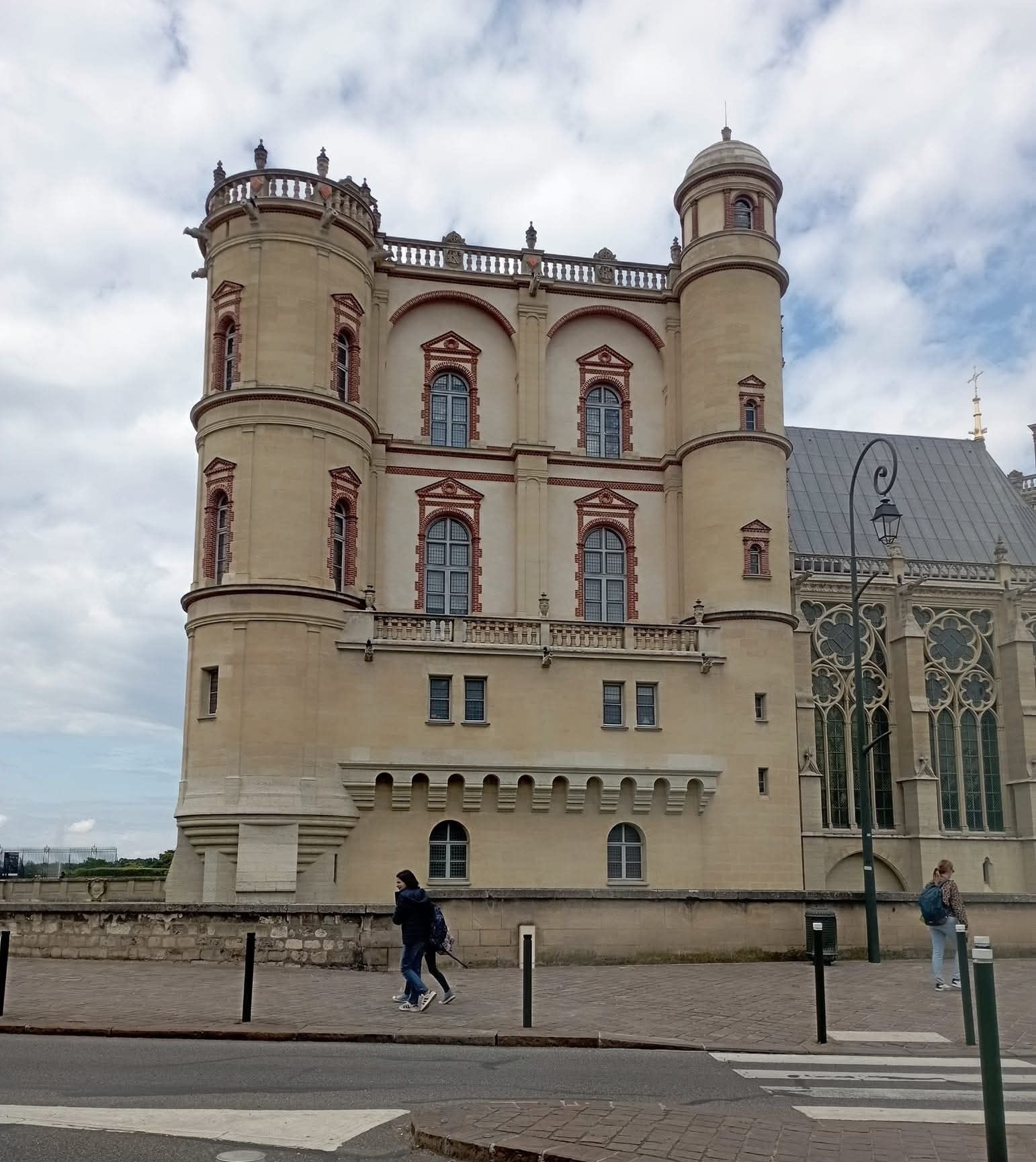
In 1777, King Louis XVI donated the Château Neuf (New Castle), in bad condition, to his brother Charles, Count of Artois, the future Charles X. He had it demolished with the intention of rebuilding it. Under the first Empire, the Château-Vieux (Old Castle) was repaired to form a cavalry school. It hosts the Special Military School of Cavalry, opened in 1809 and merged, in 1914, with the Special Military School of Saint-Cyr. From 1836 to 1855, the castle was transformed into a military penitentiary. It was extensively restored under Napoleon III . On March 8, 1862, an imperial decree acts the creation in the castle of a Museum of Celtic and Gallo-Roman Antiquities ;later renamed Museum of National Antiquities, then recently , and still today the Museum of National Archaeology (see post). The side you see in the picture is the Chapel (see pic and post), It was an act of king Louis IX,(Saint Louis) dated 1238, which tells us about the construction of this chapel. The same year, in this chapel, Beaudoin II, Emperor of Constantinople, ceded to Saint-Louis the relics of Christ, including the crown of thorns, for which the Sainte Chapelle in Paris was erected a few years later.
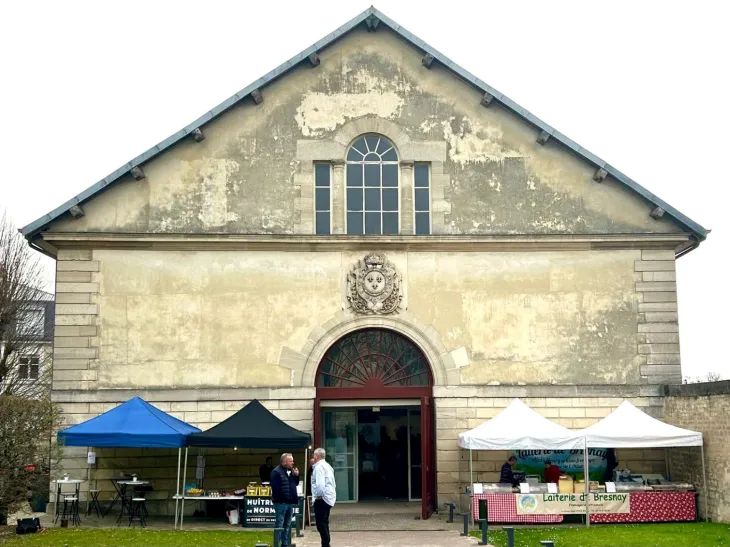
The Manège Royal was constructed during the glorious era of Louis XVIII and served as a training ground for his company of the Bodyguards from 1816. It is remarkable for its magnificent wooden frame in the shape of an inverted boat hull and has a remarkable gable end. The large hall is 50 meters long, The exterior façade is characterized by an entrance surmounted by a cartouche bearing the arms of Louis XVIII. It remained the property of the Army until the late 1990s, before being transferred to the City of Saint-Germain en Laye for a period of 99 years. Today, it hosts exhibitions, prestigious annual events, ticket offices, corporate events, and more. Such as a wine and gourmet event that I went once, do not recall when ,,, In 1768, it was commissioned to build a new road to the forest, bypassing the town. There were several plans, and the road was completed in 1771. The circular Place Royale was thus planned at that time. Originally, it was bordered only by the buildings and courtyard of the riding school ;now the Gramont quartier/neighborhood. The layout of the square dates back to the beginning of the Restoration period with the construction of the royal riding school, the Hôtel de Gramont (now destroyed) and the Luxembourg quartier/ neighborhood.
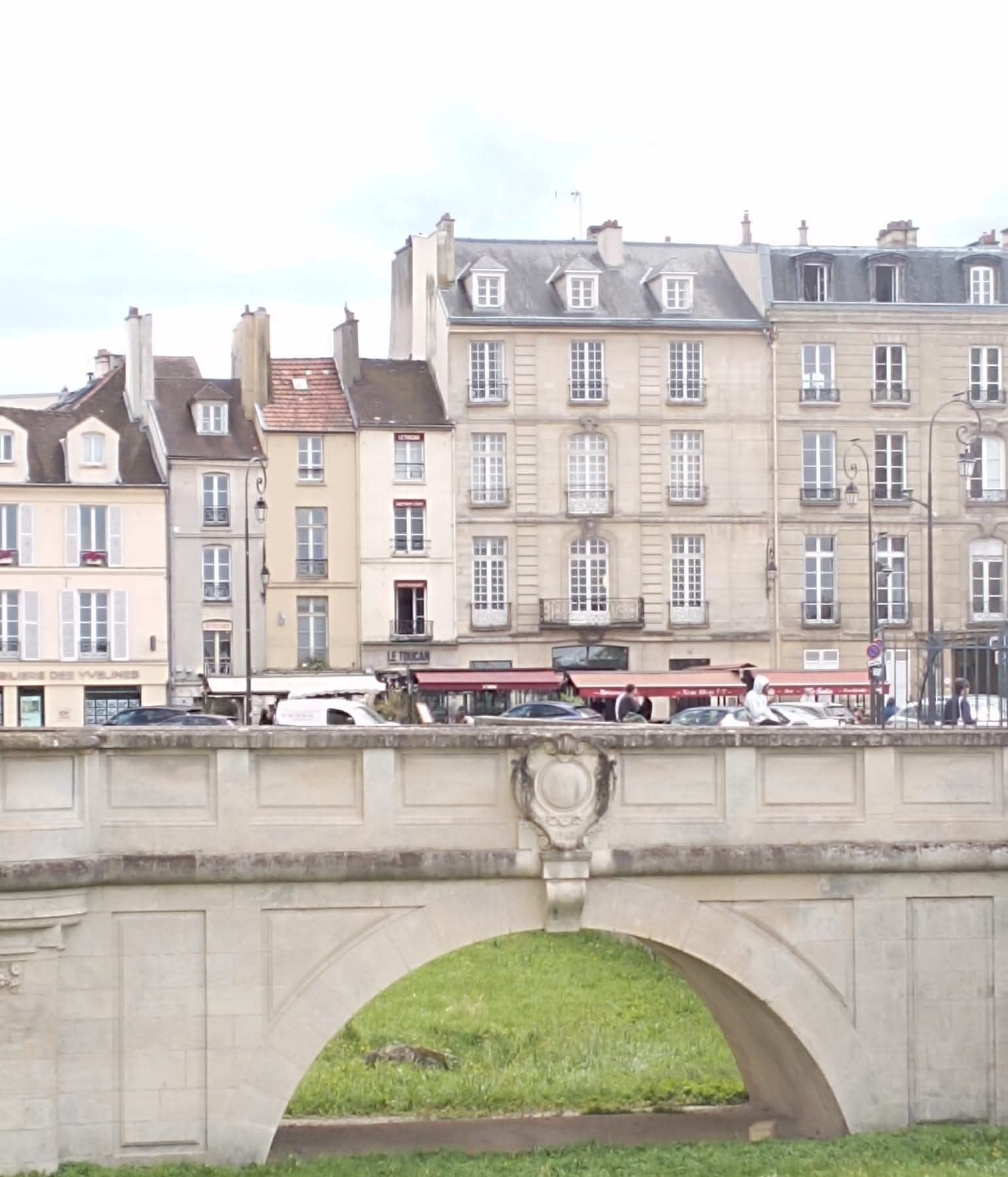
By the Place Charles de Gaulle you have the Château-Vieux de Saint-Germain has hosted many kings over the centuries, until the arrival of Napoleon III, who transformed it into the National Archaeology Museum we know today. Right across you have the RER A train to Paris and the underground parking Indigo Château at no,22, You see the Hôtel de Conti at no, 14 Today, few traces of the 17C building remain. The current building dates partly from the 18C, and the Hôtel de Soubise at no, 16 , The hotel was purchased in 1676 by François de Rohan, Prince of Soubise, who sold it in 1754 to Georges-René Binet, the Dauphin’s first valet. Now converted into a building, the hotel nevertheless retains its ancient architectural details. See two vertical stone chains dating from the 18C, as well as a Louis XV arched balcony on the first floor. The Hôtel de Soubise, along with the Hôtel de Noailles, is one of the most famous hotels in the city. These magnificent apartment buildings were built between 1754 and 1758 on the site of the first two hotels. See,also, on this square the Church Saint-Germain,
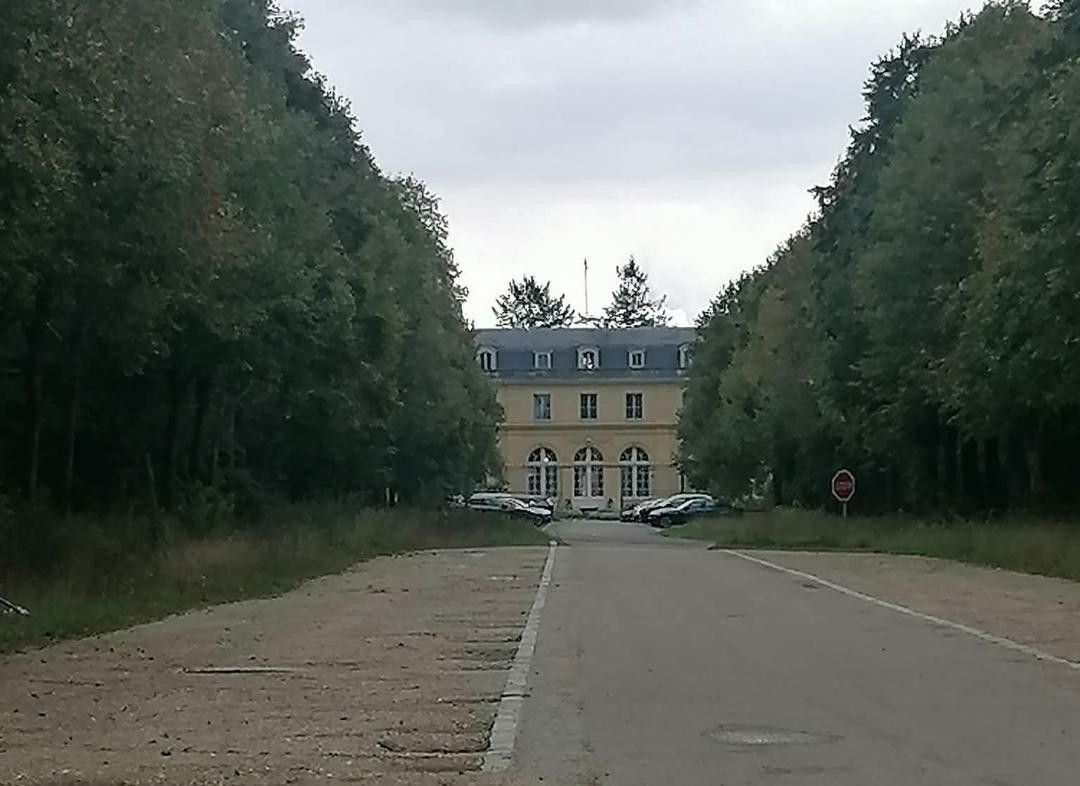
The Château du Val is a 17C classical-style castle located at the northern end of the Grande Terrasse. It was originally a hunting lodge built for King Henry IV, and was enlarged and renovated by the architect Jules Hardouin-Mansart for Louis XIV. Around the middle of the 18C, the Château du Val passed through the hands of several families, including the Beauveau-Craons and the Noailles, before being donated in 1927 to the Mutual Aid Society of Members of the Legion of Honor. From 2021, the Château du Val is managed by the group “Les Hôtels (très) particuliers” and, under the brand name “Les Maisons de campagne”, it takes the commercial name “la Maison du Val”.
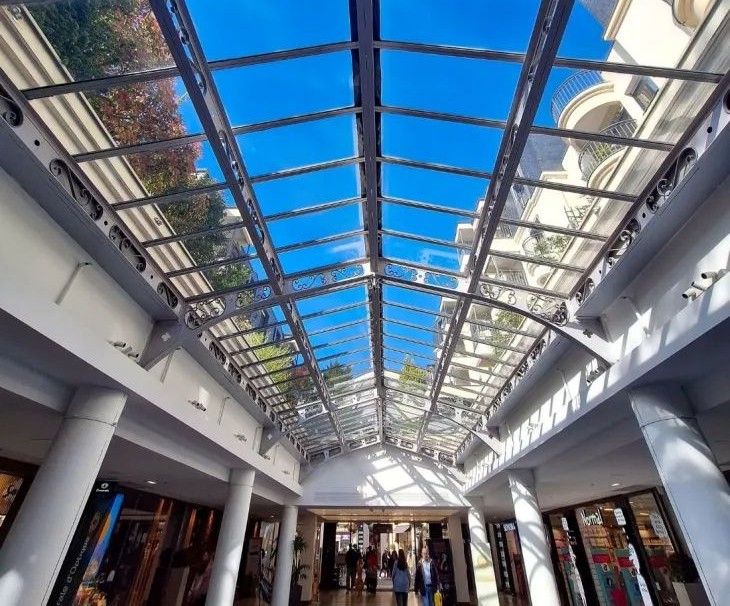
The City of Saint Germain en Laye is the largest open-air shopping center in western Paris offering a multitude of shops and services since 1638. Shopping, restaurants, markets… The City provides nearly 800 businesses to satisfy all your shopping needs! The Le Passage Saint Germain at 10 Ter Rue de la Salle located on the ground floor of buildings between Rue de la Salle and Rue des Coches ; built on the site of a former boys’ school and then a demolished technical high school. We used to come here and was nice, heard went thru some hard times and back since 2024 to be the shopping center in City cente Downtown of excellence, Another side trip from the place du Marché Neuf, me think, It is just about 6 min walking and 450 meters (about 1450 feet) away, Easy glorious walk thru some wonderful streets, The Le Passage Saint Germain,built from 1907, it became a middle school or collége in 1946, then a lycée technique municipal, or technical high school in 1975. Now there are a brasserie and about 20 stores. The official le passage Saint Germain: https://www.lepassagesaintgermain.fr/
The local Seine Saint Germain tourist office on Saint Germain en Laye: https://www.seine-saintgermain.fr/les-villes-et-villages/au-coeur-de-lhistoire/
The city of Saint Germain en Laye on its heritage: https://www.saintgermainenlaye.fr/140/envie-de/visiter-saint-germain-en-laye.htm
The Yvelines dept 78 tourist office on Saint Germain en Laye: https://www.destination-yvelines.fr/?s=&_search=saint%20germain%20en%20laye&_post_types=touristic_offer
The official Maisons de Campagne on the Maison du Val hotel : https://en.lesmaisonsdecampagne.com/maison-du-val
There you go folks, a dandy walk to some beautiful sights in sublime Saint Germain en Laye, a royal town of France. Worth a detour or a train ride from Paris. You will be delighted. Again, hope you enjoy the post on the curiosities of Saint Germain en Laye, part I !!! as I.
And remember , happy travels, good health ,and many cheers to all !!!


