
And here I take you again,way north of me almost to the tip in the pretty naval city of my Bretagne. One of the off the beaten path towns of the Finistére ,and seldom over look for its distance from the mainstream. However, it is worth a detour for its sea and Breton traditions. I found me pictures in my cd rom vault that should be in my blog for you and me, Therefore, let me tell you on this is Plouzané !!! Hope you enjoy the post as I.
The town of Plouzané is located in the Finistère department no, 29 of my lovely Bretagne and in my belle France. The town is located on the northern shore of Brest Harbor and the Brest Strait on the western outskirts of the Brest metropolitan area. The coastline, bordering Brest Harbor and the Brest Strait, is formed primarily of cliffs reaching up to 66 meters in altitude, interspersed with small, steeply sloping valleys carved by the tiny coastal rivers that indent the plateau. The town is 15 km from Brest , 14 km from Le Conquet, 206 km from Vannes, and 182 km from my current home, It can be reach by the D 789 road running from Brest to Le Conquet. We go there by the N165 dir Brest then the N265 around Brest to connect with the D67 at Gouesnou to Saint Renan take the D38 to Plouzané.
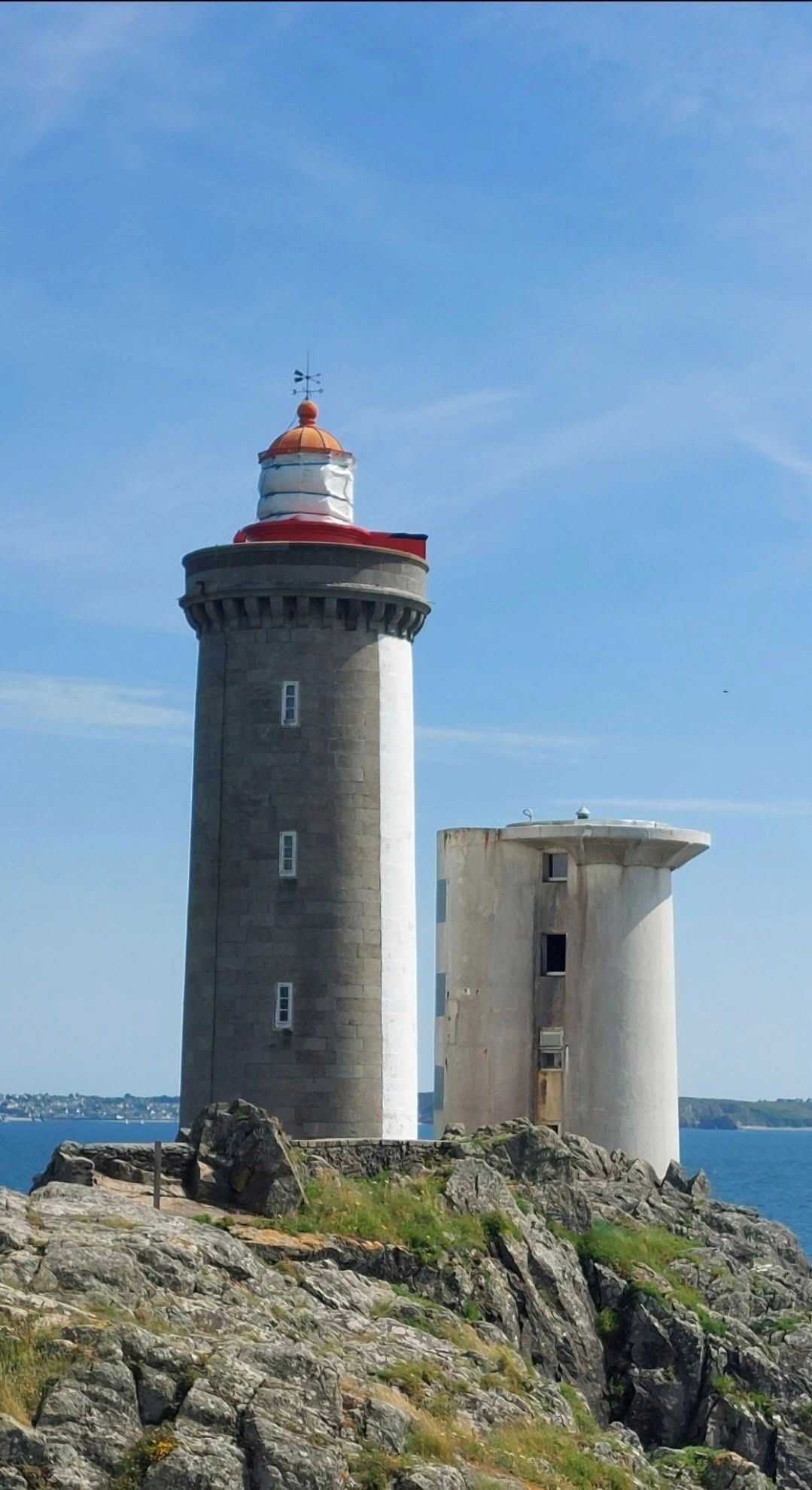
It’s impossible to stop in Plouzané without visiting the Phare de Petit Minou or lighthouse, proudly perched on its rocky point, facing the Crozon Peninsula, and its breathtaking panoramas. In addition to the lighthouse, also discover the fort in which it is located, as well as the nearby beach, well-known among surfers! The Petit Minou lighthouse indicates to boats heading to Brest the route to follow to enter the harbor. It forms an alignment with the Portzic lighthouse. It is located in front of the Petit Minou fort. The nearby Minou beach was the termination point, in 1869, of one of the first telegraph cables connecting Europe to the United States (originating from Brest, the cable was buried along the road from Brest to Le Conquet).
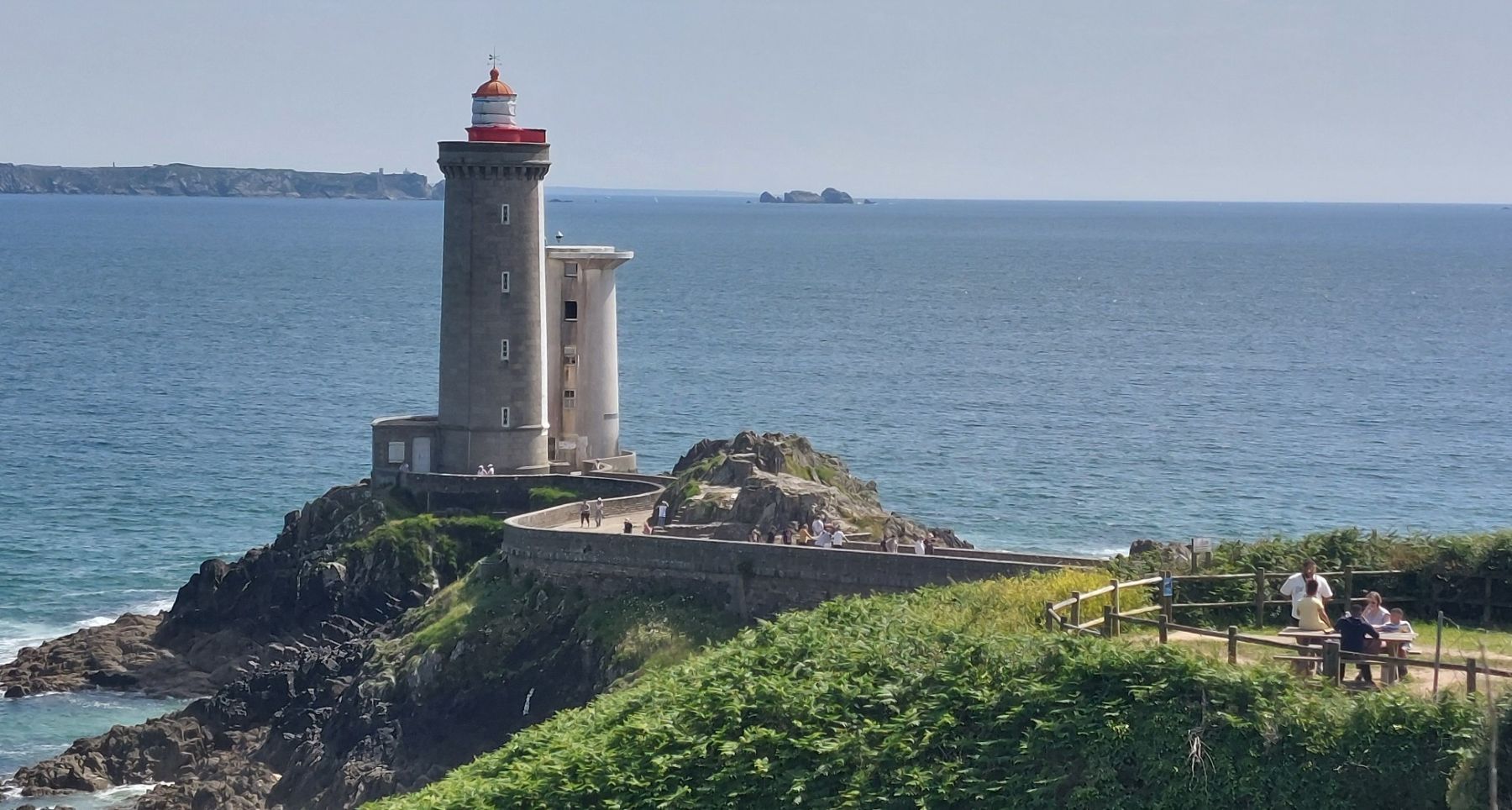
Le phare du Petit Minou or the small Minou lighthouse was built on the point in 1848. A 24-meter-high granite stone bridge leads to the cylindrical tower of the lighthouse. 26 meters high and automated since 1989, it projects a red and white flash every 6 seconds. Its range is 18 nautical miles in the white and 14 nautical miles in the red (i.e. 30 km and 23 km). The Minou fort is one of the many fortifications built to control the Brest channel. Built between 1694 and 1697, it is surrounded, on the land side, by a moat 9.5 meters wide and 3 meters deep. It is accessed by a drawbridge. After the war, the site was abandoned and now only houses the lighthouse and the keeper’s house.
Other things to see here , me think are the Chapel of the Trinity, which gave its name to the surrounding town, probably dates from the end of the 15C and had remarkable statues. The chapel was unfortunately largely destroyed during the fighting in 1944; it was restored, but with concrete beams completed in 1952; only the bell tower was rebuilt identically. A calvary is located on the forecourt of the chapel.
A bit of history I like tell us that Saint Sané is said to have reached the continent at the point of Perzell, now the point of Bertheaume, then, advancing inland, stopped in the heart of the forest of Lucos, a “consecrated place”, in the center of which were pagan temples. With his companions, they made these temples into Christian sanctuaries, including the first church of Locmaria-Plouzané. From the 15C to the 18C, the parish of Plouzané was, with its truce of Locmaria, one of the richest in rural nobility of the bishopric of Léon. In the 16C, Plouzané was part of the seneschalship of Brest and Saint-Renan. It was around 1630 that Richelieu founded, in the shelter of the harbor of Brest, an arsenal and an important military port. The inlet that separates the harbor from the Iroise Sea must therefore be defended. It was Vauban who was responsible for defining the defense lines. Four forts were built on the territory of the town ,and then modernized and adapted to the evolution of military techniques: Diable (now disappeared), Dellec (1747), Mengant (or Léon – 1687) and Minou (1697). In 1763, a garrison of 250 men occupied the Mengant fort, manning 42 cannons. During the French revolution, the parish of Plouzané and its truce of Locmaria resisted the Civil Constitution of the Clergy. In 1792, Mass was still celebrated by unsworn priests, under the protection of 40 or 50 armed men. On the night of July 1st to 2nd, 1941, a British bomber plane that had just taken part in the air raid against the Prinz Eugen and two other nazis ships was shot down by anti-aircraft guns at Kerarguen, west of La Trinité. The six airmen are buried in the Plouzané cemetery. The town was liberated by the Americans on September 13th, 1944 after more than 15 days of fierce fighting.
The town of Plouzané on the lighthouse and fort of Minou : https://plouzane.bzh/decouvrir-plouzane/sites-emblematiques/la-pointe-du-minou/
The official Direction Interregionale de la Mer Nord Atlantique Manche Ouest ( Interregional Directorate of the North Atlantic and Western Channel): https://www.dirm.nord-atlantique-manche-ouest.developpement-durable.gouv.fr/phare-du-petit-minou-a90.html
There you go folks, another dandy with very nice views of the channel and beautiful secluded creeks and beaches we like it. Looking forward to be back, eventually. Again, hope you enjoy this post on this is Plouzané !!! as I.
And remember, happy travels , good health, and many cheers to all !!!


