
I am , again reviving old glories of my belle France I used to lived not far from here, and came often. It is very easy from Paris too. I am talking about Epône, in department 78 Yvelines, region of Île de France of my belle France. I am able to do this post as found me pictures in my cd rom vaults that should be in my blog for you and me. Anyway ,this is a nice off the beaten path town that is worth a detour, me think. Therefore, let me tell you on this is Epône !!! Hope you enjoy as I
The town of Épône is located along the Seine river on its left bank,It is 44 km from Paris, 10 km from Mantes-la-Jolie, 22 km from Poissy, 37 km from Versailles, and 500 km from my current home, I came here on the A13 exit/sortie 10 then D130 to City center, The ways around here are very familiar for my many road warrior tours of the area, They are the D113, formerly known as the Route de Quarante Sous, is the old N13 Paris-Caen-Cherbourg route that crosses the town. This road has been rerouted and avoids the center of the two towns of Épône and Mézières-sur-Seine. It is paralleled by the A13 Autoroute de Normandie, accessible via an interchange No. 10 located near the train station. There is a rest area in the town on each direction of travel, km 38 and km 39, which I have used. The D191 ,formerly the N191, which runs south to Rambouillet, opens onto the D113 of the Mauldre Valley at the place called “le poteau d’Épône.” To the north, the D130 road reaches Gargenville on the right bank of the Seine river, The The town is served by the Épône-Mézières train station. The Paris-Saint-Lazare-Rouen line runs east to west via Poissy and Mantes-la-Jolie, and provides a direct connection to Paris-Montparnasse via Versailles-Chantiers via the Mauldre Valley line. Never use the trains here but my oldest son did nice rides.
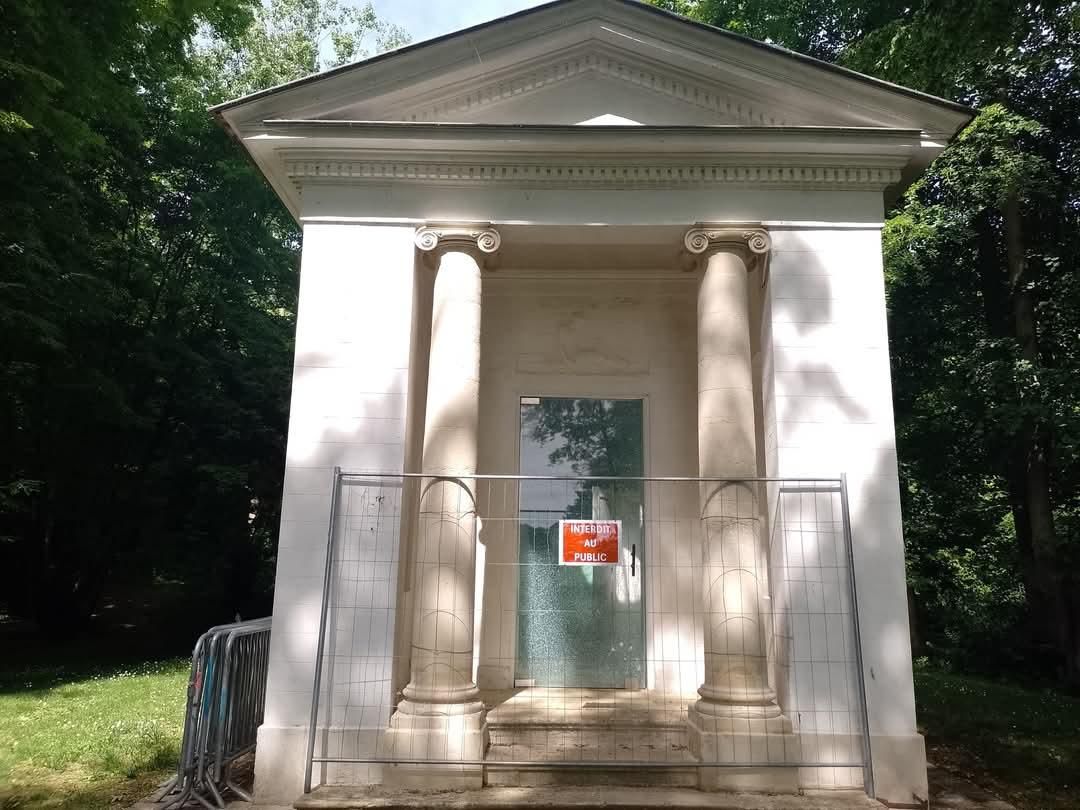
The Temple of David , a small neo-classical pavilion, of modest proportions located in the grounds of the Château d’Epône, a symbol of Franco-American friendship, is known as the first Masonic temple in France for its typical decoration. It was in this peaceful town that certain articles of the French Constitution were drafted in 1958! And well before, according to local legend, that of 1791 which was written in the Temple of David. and the Declaration of the Rights of Man and of the Citizen, subsequently voted in Versailles. This temple, also called the Pavilion, built in the antique style in 1785, its neoclassical plan is attributed to the painter Jacques-Louis David. It was here that Marie-Jean Hérault de Séchelles, Lord of Épône, received his controversial political friends Danton, Robespierre and St Just. He was celebrating the recent recognition of the United States of America.
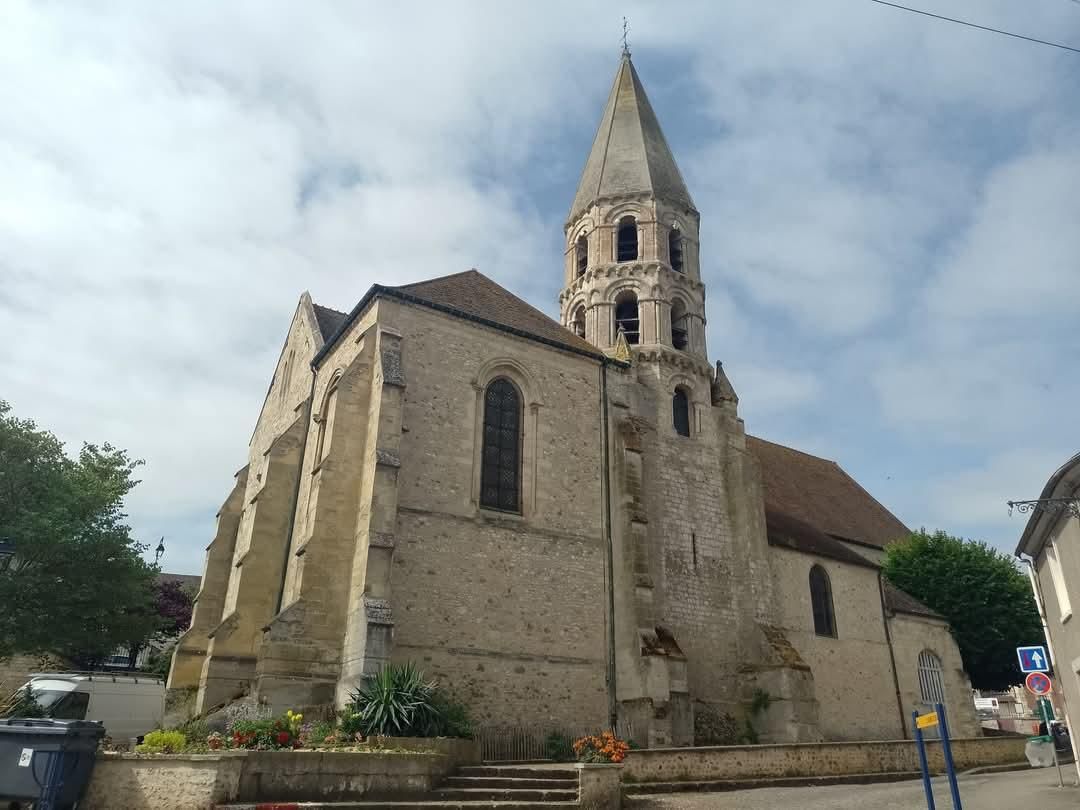
The Romanesque-style Church Saint-Béat has an octagonal bell tower topped by a stone spire. Inside, the nave is paneled in the shape of an inverted hull. The church was reportedly dedicated to Saint Béat in 982 and is mentioned in a donation made to the chapter of Notre-Dame Cathedral of Paris in 984. Around 1075, there was talk of rebuilding it, modeled on Carolingian churches. The new church almost the current one was completed around 1140-1150. It was extensively restored between 1865 and 1871, partly rebuilt, including the spire, which was removed stone by stone and reassembled. The interior was restored in 2003-2004. According to tradition, the stone spire was built, like sixteen other bell towers in the Vexin and Pincerais regions, by Agnès de Montfort, wife of Galéran II of Meulan. In the bell tower are three bronze bells, including the “Béate,” cast on site in 1597 and the only survivor of the destruction during the revolutionary period. The nave opens onto a flat chevet. An octagonal bell tower flanks the church on the north side. Two small quadrangular annexes are attached to the side facades of the church. The portal, decorated with several archivolts resting on small columns with capitals, is surmounted by a bay with a semicircular arch, also featuring an archivolt. The bell tower features a series of semicircular bays. The church is covered with a gable roof. The north and south facades are punctuated by semicircular bays.
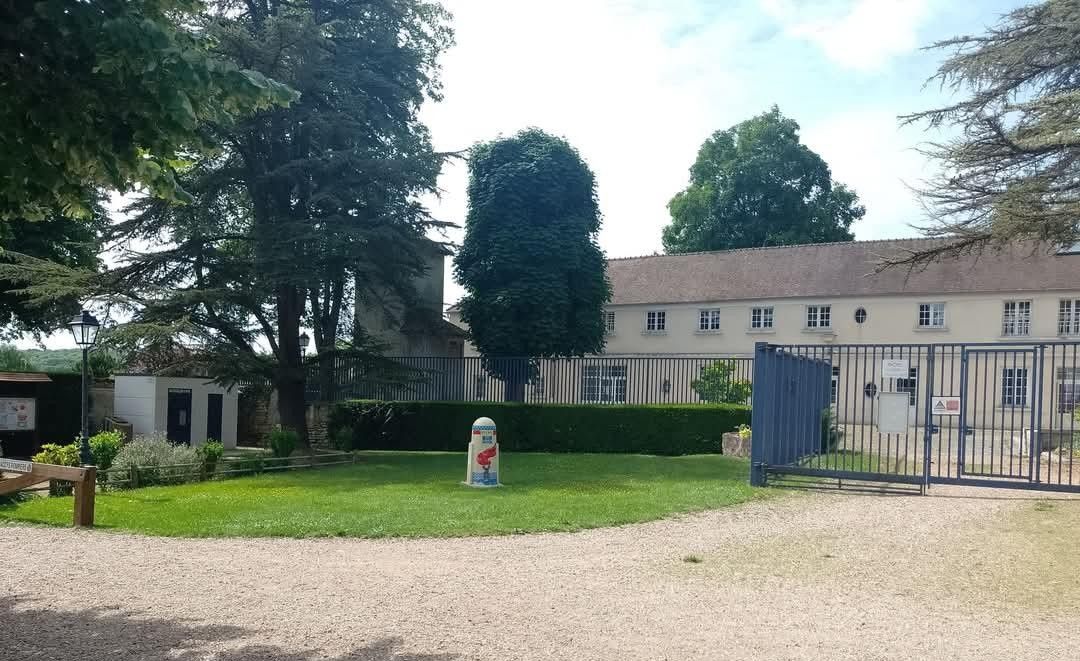
The centre culturel Dominique de Roux house in a 17C building In 1945: Max Brusset, Mayor-Deputy of Royan, buys the estate, 1980: The City becomes the owner and installs the cultural center there in 1981, This municipal establishment is dedicated to artistic education and aims to promote exchanges, creation and dissemination.
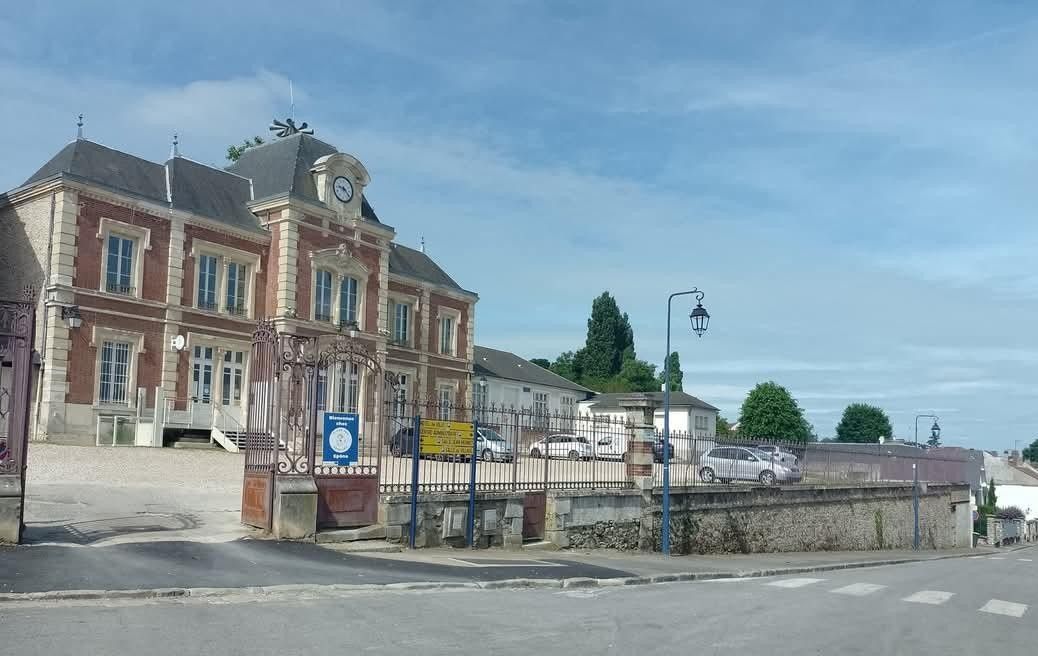
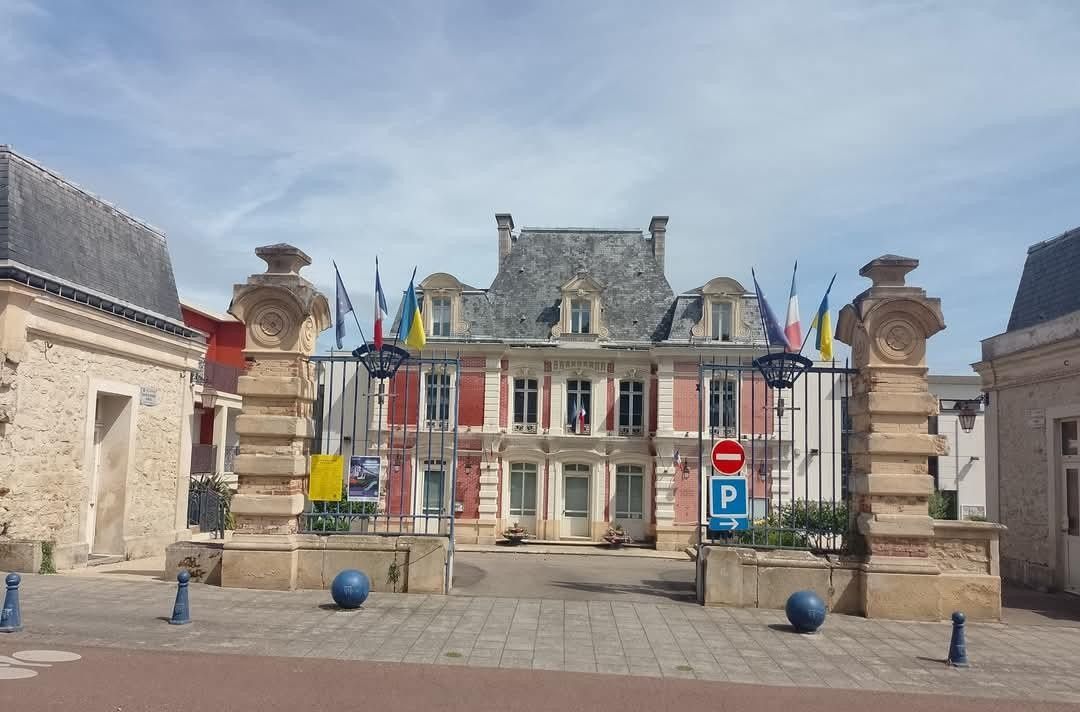
The former City/Town Hall is now a place of services of La Poste or post office.A coworking space is set up on the upper floor of the former City/town hall.
The new City/Town Hall is located at 90 Avenue du Professeur Emile Sergent nothing on it but an interesting architecture as the former building,
A bit of history I like tell us that in the Bronze Age, Épône was located on one of the tin routes that ran along the Seine. A few remains have been found not far from the river. In the Iron Age, the Celts who settled in the region left few traces. Before the Roman conquest, the region of Épône was located in the north of the territory of the Carnutes. In the Gallo-Roman period, it was a small, scattered settlement located on the lower slopes of the hill, the remains of which were unearthed in 1975 during the development of the industrial zone. Around 980, the lordship of Épône was entrusted by King Lothair to the Bishop of Paris, Élisiard, who transferred it, along with the Church Saint-Béat, to the canons of the chapter of Notre-Dame Cathedral in Paris. The Hundred Years’ War was a dark period for the region, which suffered successive foreign invasions. Around 1540, the fiefdom of Cocheret emerged, with its manor house above the church, and the castle was built around 1650. Successive lords sought to extend their domain and free themselves, without really succeeding, from the suzerainty of the chapter of Notre-Dame. In 1588, Épône surrounded itself with a city wall to protect itself from looters. The last vestige of these fortifications, a turret, is still visible on Rue de la Brèche. In 1590, Henri IV of Navarre defeated Henri de Mayenne at Ivry-la-Bataille, which opened the gates of Mantes to him, and then, four years later, those of Paris. Épône, linked to the opposing camp by its lords and by the chapter, was sacked around 1590. Henri IV attributed to Sully, lord of Rosny, the revenues of the lordships of Épône and Mézières.
The chapter of Notre-Dame de Paris was dissolved on November 29, 1790, during the French revolution, and its assets, including lands in Épône and Mézières, were declared national property as ecclesiastical property and sold at auction during 1791. The last lord of Épône, Marie-Jean Hérault de Séchelles, actively participated in the events of the revolution and ended up guillotined on April 5, 1794. His assets, including the castle, were seized and put up for sale the same year. The buyers were often locals. In 1814 and 1815, the region was occupied by the allied armies that had defeated Napoleon and the population had to submit to requisitions and war contributions to house and feed men and horses. In 1870, during the Franco-German War of 1870, the Prussian army occupied the region and Épône had to undergo costly requisitions, but escaped the looting and destruction that affected its neighbors, Maule and Mézières-sur-Seine. During the Great War or WWI, Épône, behind the front, hosted various regiments, including an infantry training center. Naval repair yards were set up on the banks of the Seine by the French and then by the Americans in 1918. During WWII, after the debacle of 1940, Épône was occupied, like the rest of Yvelines, from June 13, 1940. On August 19,1944, the town was liberated by the first elements of the 79th Infantry Division of the American Army.
The local Terres de Seine tourist office on the temple of David of Epône : https://www.terres-de-seine.fr/decouvrir/patrimoine/temple-de-david-a-epone/
The Yvelines dept 78 tourist office on the Temple of David of Epône : https://www.destination-yvelines.fr/visites-et-decouvertes/temple-de-david/
The Yvelines dept 78 tourist office on the Church Saint Béat : https://www.destination-yvelines.fr/visites-et-decouvertes/eglise-saint-beat/
The town of Epône on its heritage : https://epone.fr/tourisme-et-loisirs/tourisme-epone/voir-faire
The local Grand Paris Seine et Oise agglo metro area on Epône : https://gpseo.fr/commune/epone
There you go folks, another dandy in my former Yvelines, and as said Epône is worth the detour indeed. Again, hope you enjoy this post on this is Epône !!! as I.
And remember, happy travels, good health, and many cheers to all !!!


