
I have a lot of posts on my wonderful capital City of Vannes in my blog. In my quest to have the latest info I decided to update this post with new text and links for you and me, the memories of it all will be kept ,The city has a gorgeous original architecture untouched by wars with a wonderful canal into the Gulf of Morbihan, one of the most beautiful harbors in the world (conde nast, great bays etc) which of course takes you into the Atlantic ocean, all full of islands paradise. Let me bring you up to date on Vannes,in my beautiful Morbihan dept 56 of my lovely Bretagne and in my belle France, Therefore, here is my take on the streets of Vannes , part III !!! Hope you enjoy it as I.
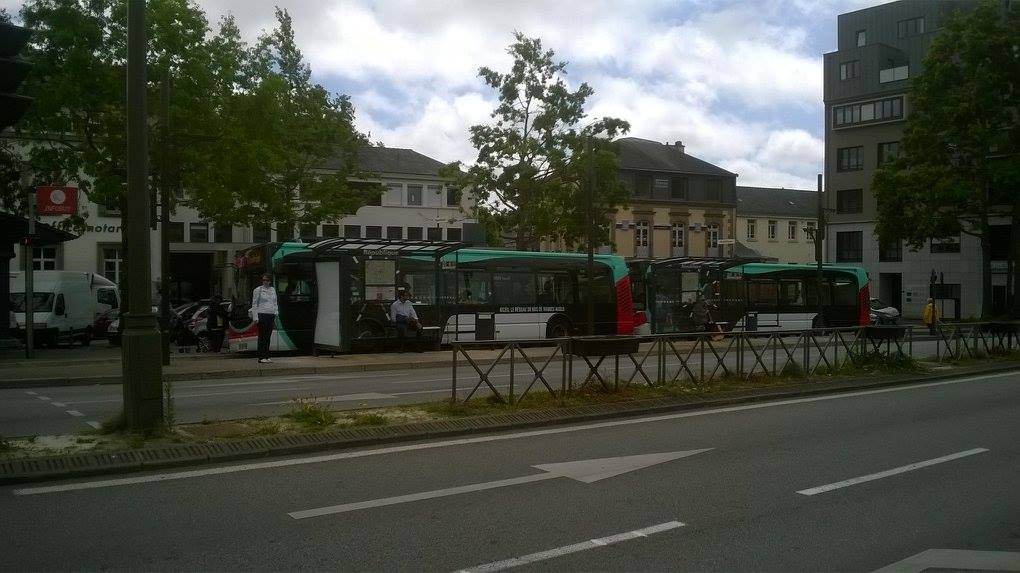
The Place de la République is a public square in city center/downtown Vannes It is one of the largest public squares in Vannes. Crossed by rue Thiers, which leads from the City/Town hall to the port Covering an area of approximately 1.8 hectares, it is rectangular in shape. It has a bus terminal and an underground car park is also provided under the square. The main public transport interchange at Vannes is located here. The Place de la République was created in 1862 under the name of “place de la Halle-aux-Grains”, in reference to the covered market which was built there at the same time. Initially square, the square takes a rectangular shape from its origin, when the construction of a court (courthouse and prefecture) is decided there. It also expanded towards the historic center, when the space east of rue Thiers, corresponding to the ditches of the old ramparts, was added to it. In 1955, the Halle aux Grain (grain hall), used as a post office since 1912, was demolished. It was replaced by a new post office
in the 1970s
Let me tell you about a wonderful old street of Vannes, It is traced on the edge of the old, cleared ditches, the rue du Mené was regularized in the 18C. This old street runs along the northern part of the urban ramparts wall and gives access to the suburb of Bourg Maria or Mené, seat of the parish of the same name, founded in the 12C. Its name, which means hill in Breton, is linked to the topography of the place. Until the construction of Boulevard de la Paix in the 1950s and 1960s, it remained the urban crossroads of the Nantes-Quimper road axis. In addition to the suburb it serves, its opening responds to the difficult traffic conditions encountered in the narrow and winding streets of the inner city. Aha even back then we had traffic lol! Unlike its northern slope, which was urbanized at the end of the Middle Ages, the south side of rue du Mené, established at the foot of the ramparts, was built during the second part of the 19C on the former gardens of the Bishop’s Palace. The rue du Mené became a very commercial artery at that time, where prestigious brands opened large and beautiful boutiques: the Grand Bazaar in Morbihan and the André novelty stores whose facades, known by old postcards, are still in place at nos 20 and 21. In 1967, the construction of Monoprix store on the site of the former parish church of Mené affirms the commercial tradition of this street. The place Marchais (former place du marché) and the rue Hoche (former rue Saint-Yves) on the upper part of the street was named rue Joseph Le Brix in 1931. As a result, the numbering of the houses on the street has changed, the numbers 1 and 2 then being assigned lower to the east of rue Billault. It now joins Place Maurice Marchais, and the seat of the city/town hall. Today it starts at the place Joseph Le Brix and continue to the confluence of rue du Lieutenant Colonel Maury, rue Saint Nicolas, and rue Francis Decker. The street is full of shopes , and at the corner of rue du Mené and rue de la Coutume you find Columbus Café! see post.

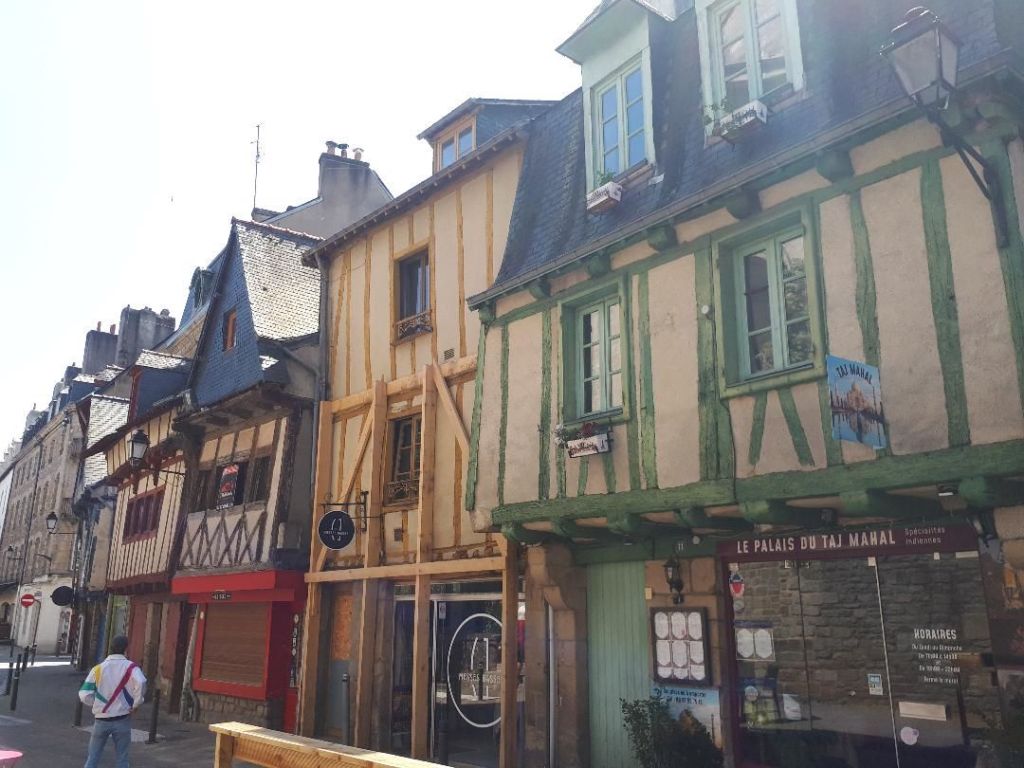
The Rue de la Fontaine is in the St Patern district. It starts at the Bd de la Paix and ends at the Rue Saint Patern / Rue Saint Nicolas. Saint-Patern is the Montmartre of Vannes! a very active district. Tanners, craftsmen, traders live in the half-timbered houses that can still be admired today on rue de La Fontaine . One example I always look up is at 1 rue de la Fontaine. The house dating back to the 1st half of the 16C according to the type of molding applied and the trace of the primitive windows. The shape of its fireplace, the spiral staircase and the roof frame confirm this dating. The house is mentioned in 1677 in the archives of the Reformation.
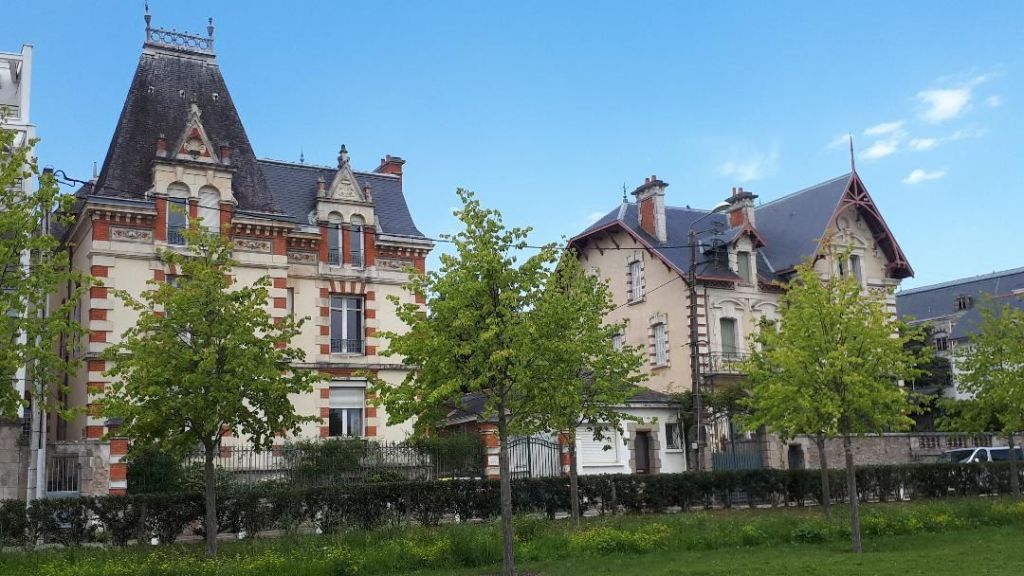
The Avenue Maréchal de Lattre de Tassigny , a long avenue along the canal to look a leisure beautiful lawn and along the canal with interesting architecture such as at no 34 , house build retire from the front sidewalk with a big garden in the 2nd quarter of the 20C, And others nicely shown in picture, By here you find the Bureau de tourisme de Vannes or tourist office of Vannes, and a new Carrefour City supermarket at no 22.
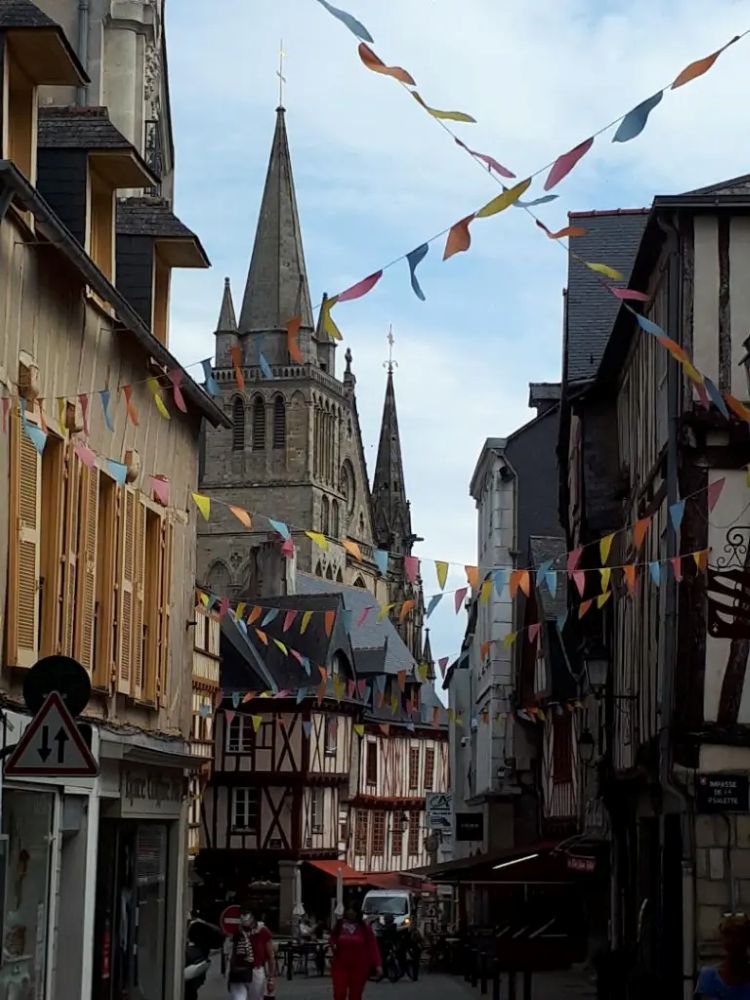
The wonderful medieval street full of shops. Right next to the Cathedral there is rue des Chanoines with more wooden houses taking you to the ramparts of Vannes! As in several , see the house at 28 Rue des Chanoines rebuilt in the second half of the 19C on the site of an ancient house at the end of the 18C and probably corresponding to the house built in the second half of the 15C. This house says the “little bishopric” gave the cathedral from the episcopal palace. The house, back in relation to the other buildings on the street, takes up the alignment plan of 1840. See the 16 Rue des Chanoines old house reported in the rentier of the ducal estate of 1455-1458, The archives of the reformation of the estate report it in 1677 as belonging to Jeanne de Talhouët: the absence of an interior visit does not allow to date this house 17C, the facade dating back more likely in the 18C according to the shape of the openings and the absence of a cantilevement. At 1 rue des Chanoines house rebuilt in the very beginning of the 17C in 1602 (date on the lateral wall) on the site of an older house reported in the rentier in the ducal estate of 1455-1458 ,The spiral staircase with day watch modifications; its departure was completed by a right volley going up according to the balusters in the 17C. The decor of the pedestals of the fireplace on the ground floor is from Renaissance period, which corresponds to the date carried on the lateral wall; On the other hand, the lintel is modern. See the wonderful historical breton library of Lenn ha Dilenn at 12 rue des Chanoines.
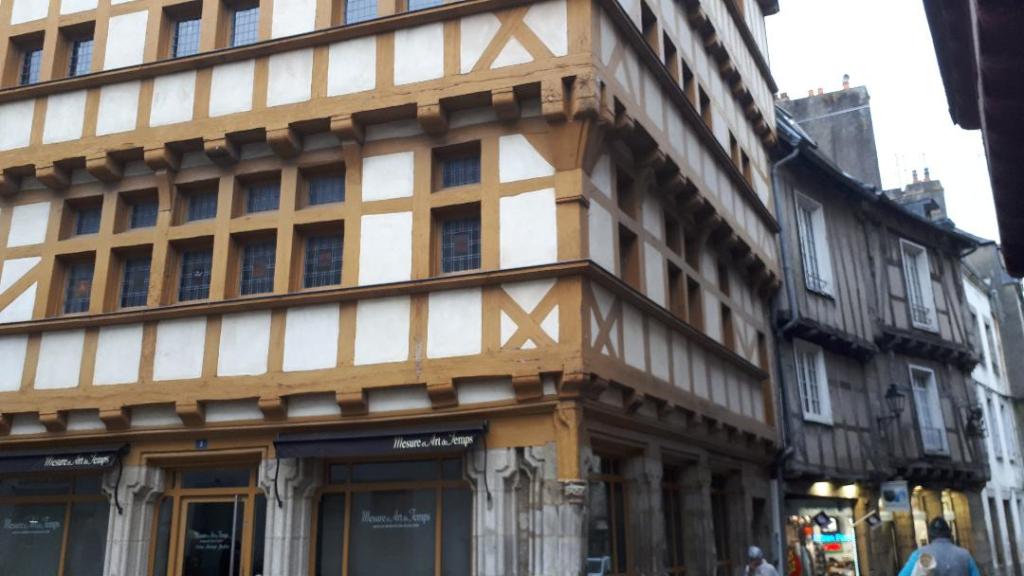
The small Place Henri IV is located at a crossroads of old ways. Its current name dates back to the 19C and has supplanted its designation of origin from place de Mein-Guèvr (Breton) or Place de la Pierre-aux-Chèvres (French). It is bordered by half-timbered houses with overhanging floors, dating mainly from the end of the Middle Ages. It is worth mentioned that numbers 2 and 4 of the square was the lodgings of Guillaume Le Roux, general treasurer of Brittany. It was originally an almost closed square, which later developments have transformed it. Restoration, demolition and alignment of the building in the 19C have modified the architectural framework of the square. Another great shopping spot full of wooden houses of old!
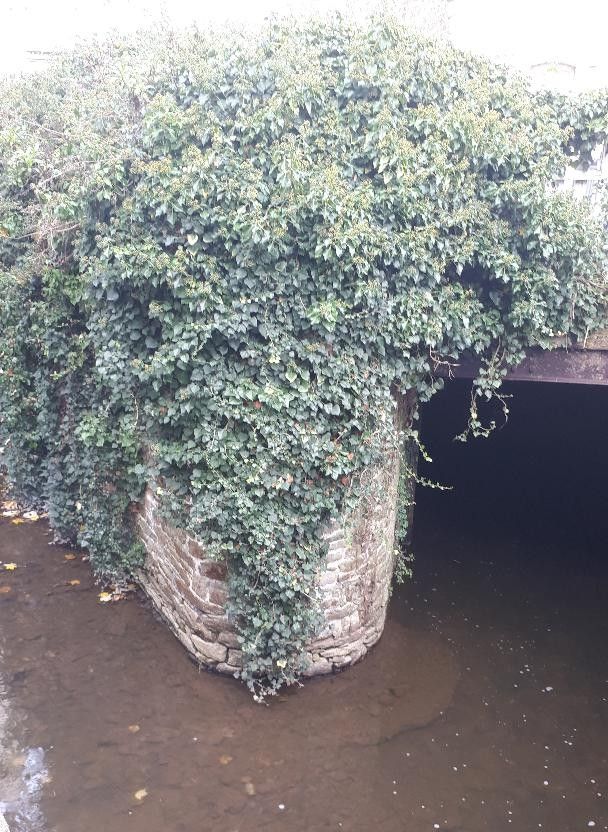
The Pont de la Tannerie,by 27 rue de la Tannerie (site of my dog Rex hair saloon) ,on the hill of Boismoreau where the city of Haut-Empire developed. The site is located along an ancient route (current rue de la Tannerie), below and at equal distance from the forum site and that of the no 10 rue de la Tannerie if we continue the curvature of the wall in a regular way , a semicircle is obtained 82 meters in diameter.It could be kept about 3.20 meters high and should reach about 2 meters wide in its lower part. Finally, traces of an occupation between the end of the Middle Ages and the modern era have been highlighted in the north of the public building on the corner. It is essentially a succession of traffic levels and some isolated structures. These vestiges may be linked to the activity of tanners’ workshops that develops in the sector from the end of the Middle Ages. Therefore, call the rue de la Tannerie.
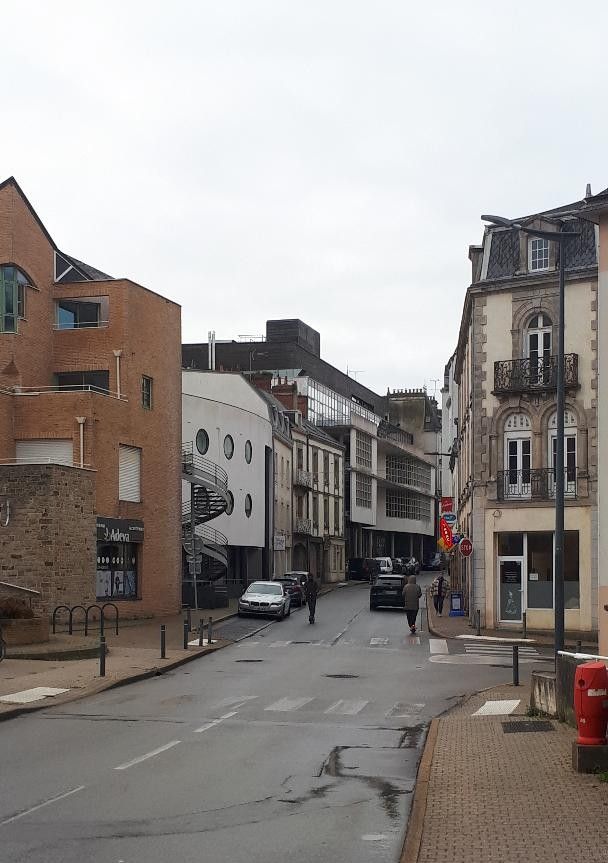
The Rue du Maréchal Leclerc , a wonderful walk with plenty of architecture to see at 59 rue du Maréchal Leclerc ;the house was probably built at the end of the 19C. This house occupies part of the courtyard, the space reserved for a building and the house of the cabaretier of the old Coriquel tannery, all overlooking the street 51 rue du Maréchal Leclerc the building is dated 1882 the building established in the large Quennec garden. The ground floor has been transformed. At 30, 32 rue du Maréchal Leclerc ,the building was built in 1889-1890 This elevation shows that the stores on the ground floor were planned from the outset. 2 square stages in alignment on the track with a sort of courtyard at the bottom of the plot.
The City of Vannes on its heritage : https://www.mairie-vannes.fr/decouvrir-le-patrimoine-vannetais
The Great Bays assoc on the gulf of Morbihan/Quiberon : https://world-bays.com/web/en/baies/baie-du-mont-saint-michel/
The official Colombus Café of Vannes : https://www.columbuscafe.com/en/boutique/vannes-rue-du-mene-2/
There you go folks, we are in France; la vie en rose or la vie est belle! Salut. One bit of up close and personal post of daily life in my neck of the woods. We take the road warrior approach seriously and are on the move every day not all posts, This is one post for the memories of always, Again, hope you enjoy this post on the streets of Vannes , part III !!! as I
And remember, happy travels, good health, and many cheers to all !!!


