
And here I continue with my road warrior trips in my lovely Bretagne. This time we again came to a town we have been before but not here. This is a gem outside in the countryside of Clohars-Carnoët and even if it was closed we will be back. Let me give you a glimpse of the historically nice abbatiale site de Saint Maurice in the city limits of Clohars-Carnoët. Hope you enjoy the post as I.

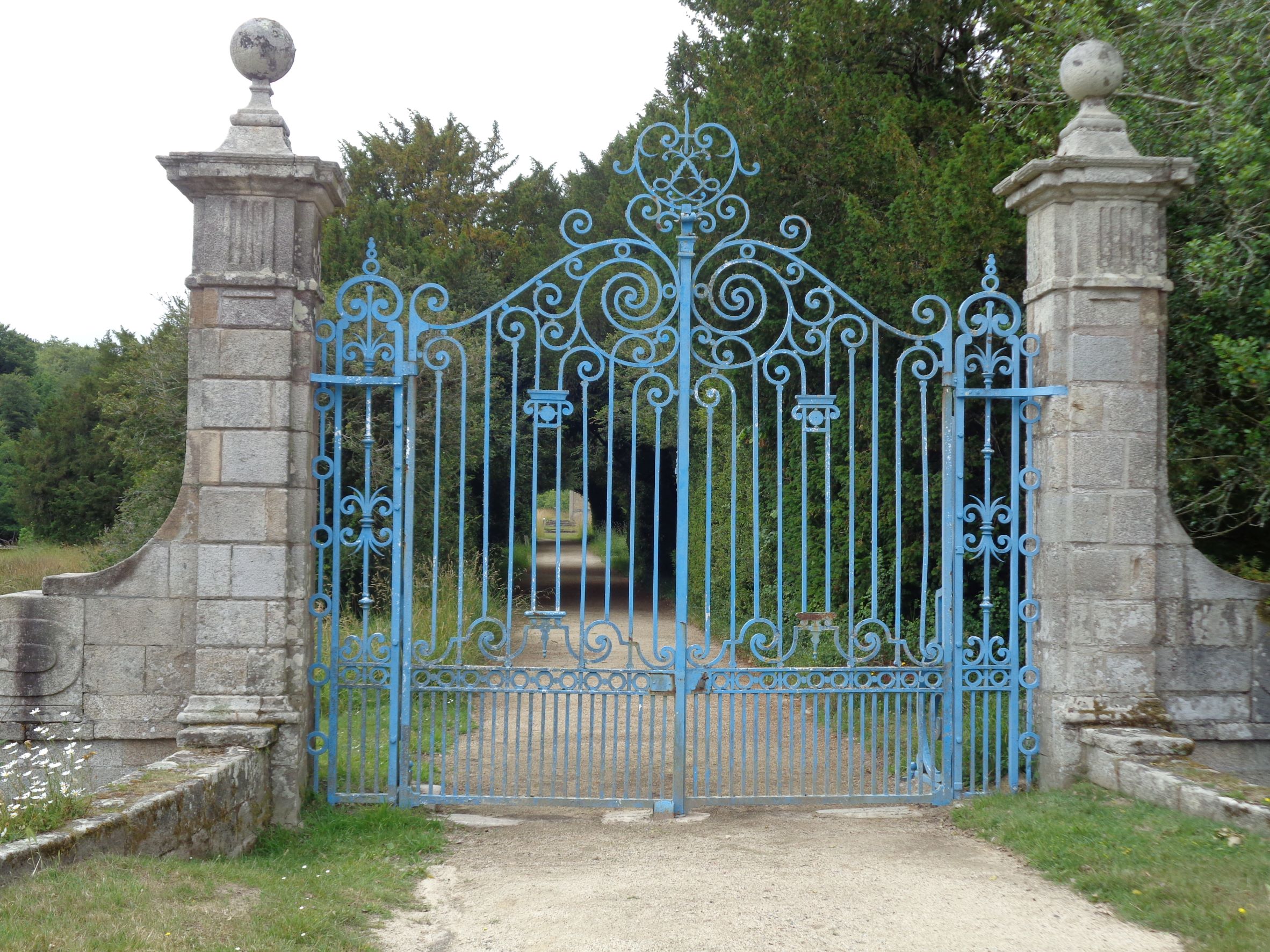
The Abbatial site of Saint-Maurice on the banks of the Laita river , and ancient Cistercian Abbey. The Abbey Church of Saint-Maurice was done in the mid-19C and enlarged in 1845. It includes, preceded by a Bell Tower whose spire dates from 1774, a nave with four spans, a transept and a choir. The statues of Saint Cornély and Saint Vincent Ferrier are found here.
I will give you a bit of the history I like on this post.
The Saint-Maurice de Carnoët Abbey or Saint-Maurice Abbey Site is located on the right bank of the Laïta ria, on the Finistère (dept 29) side, in the town of Clohars-Carnoët, a few km of the town of Quimperlé. It is a Cistercian abbey in ruins, but which retains interesting architectural elements in a splendid natural setting. Heavily affected during WWII, it was acquired, with its 118-hectare estate, by the Conservatoire du littoral in 1991.

Saint-Maurice de Carnoët is a former Cistercian abbey founded between 1170 and 1177 in the heart of the Carnoët forest. Maurice Duault de Croixanvec (future Saint Maurice de Carnoët), then abbot of Langonnet Abbey (see post), founded here in 1177 near the banks of the Laïta an abbey called Notre-Dame de Carnoët, of which he was abbot until his death on September 29, 1191 at the age of 76 and who was buried two years after his death in the abbey church. The abbey will later take the name of Saint Maurice de Carnoët abbey.

For six centuries, Cistercian monks would bring the estate to life to allow maximum autarky by organizing the space around the abbey. It was rebuilt in the 17C, but the destructions during the Terror during the French revolution would devastate the abbey, then abandoned. Sold as national property and become private property, its remains were partly used as a quarry, part being transformed into a castle during the course of the 19C. A resting place for the Nazi army during WWII, the castle, the last large building of the monastery, suffered a fire on April 20, 1945. It was razed by the owners in 1953, with the exception of the chapter house and the charter.
The estate, which now covers 123 hectares, was purchased in 1991 by the Conservatoire du littoral which, since then, has undertaken a major restoration program, both of the built and forest heritage, with century-old trees. The town of Clohars-Carnoët manages the estate and welcomes visitors. It remains today: the chapter house and the carter from the 13C, the barn, the abbey farm, the pediment of the 17C abbey and the 18C orangery. The abbey farm houses an exhibition on Cistercian life and the history of the site, as well as a colony of bats present in the attic, particularly the bigger horseshoe bats and visible thanks to an infrared camera.
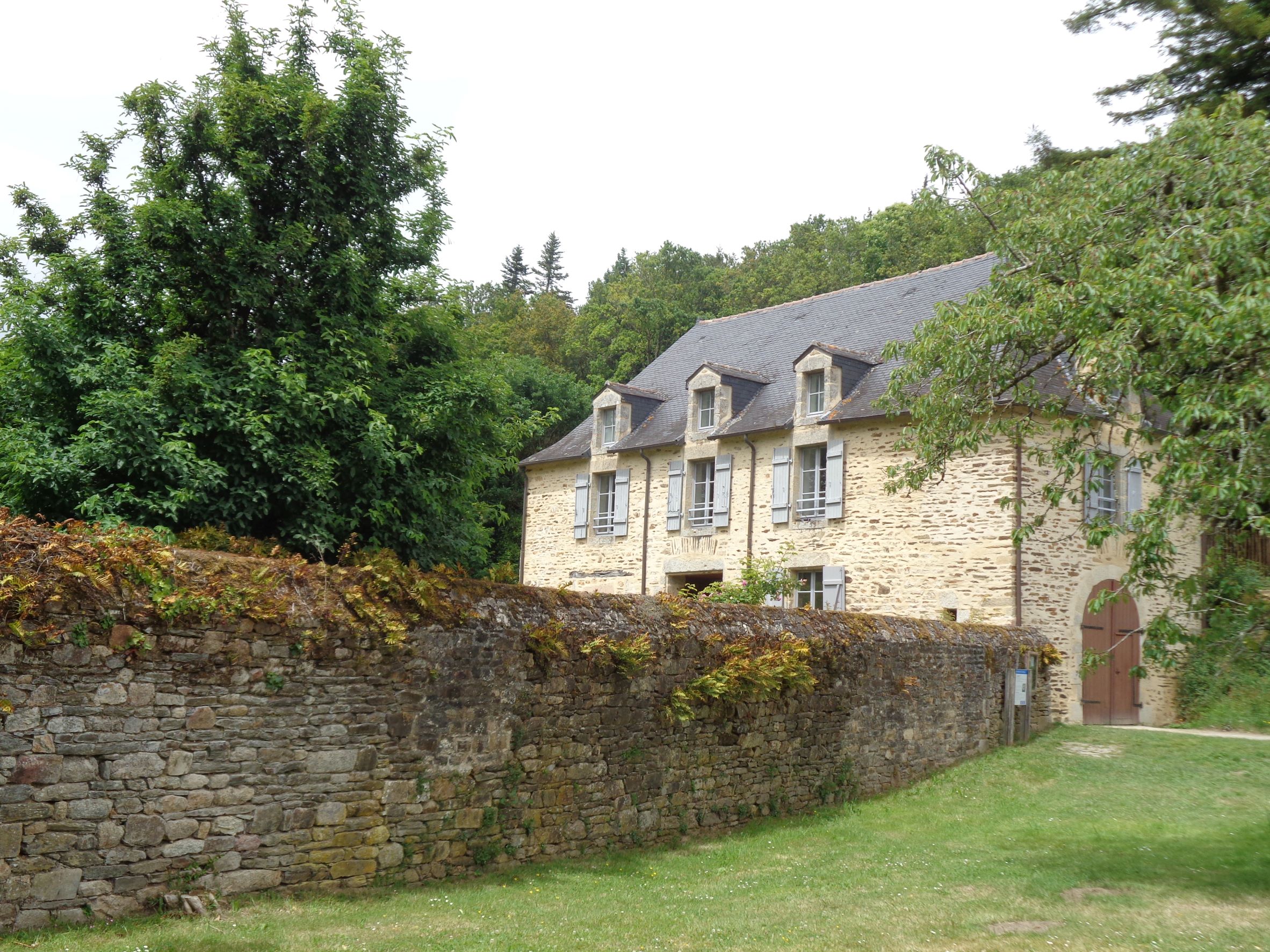
During the holidays: family entertainment, nature walks, temporary exhibitions, investigation game. 123 hectares of woods, moors, salt meadows and meadows make up the site. The audioguides are available in children’s version from 6 years old, in English, German and Dutch. It takes 1h30 to visit it ,slowly me think. Reception of formed groups, schoolchildren and leisure centers.
The official Abbaye Saint Maurice blog: https://abbayesaintmaurice.blogspot.com/
The town of Clohars-Carnoët on the abbey : https://www.clohars-carnoet.fr/patrimoine-historique/site-abbatial-saint-maurice/
There you go folks, another amazing dandy historical spot in my lovely Bretagne. This one is in the woods, the parking to the site is a long walk in the woods but nice clean trails, all worth it me think. One more jot down for an eventual closeup visit. The Abbatial site of St Maurice is worth the detour, me think.
And remember, happy travels, good health, and many cheers to all !!!

 Paris1972-Versailles2003