
I have made one round in my road warrior trails to this part of the Paris area, and was glad, plenty here to see, I found these pictures in my cd rom vault ,and decided to give a post of their own for the memories of always on Asniéres sur Seine, The City of Asnières-sur-Seine is located in the Hauts-de-Seine department no 92 in the Île-de-France region of my belle France. Therefore, let me tell you about this is Asniéres sur Seine !!! Hope you enjoy the post as I.
The road traffic in Asnières-sur-Seine is concentrated mainly along the banks of the Seine and on the main thoroughfares connecting neighboring towns. The Asnières bridge is a major crossing point between Asnières-sur-Seine and Clichy. The Grande-Rue-Charles-de-Gaulle and the Avenue d’Argenteuil provide connections to Bois-Colombes and the towns located in the northern part of the department. The City is 6 km from La Défense, 10 km from Paris, 26 km from Cergy, 19 km from Versailles, 478 km from my current town, We came here from Versailles along the Rue de la Paroisse left on Rue du Maréchal Foch, right on Bd de la Reine, left on Avenue des Etats Unis or D185 road continue on Rue du Général Pershing or D182 road continue on Bd de Jardy to connect bearing right onto the A13 autoroute de Normandie dir Paris butget off at exit/sortie 4 dir Saint Cloud to connect with the D985 road or Avenue du Général Leclerc continue to roundabout bearing right onto Rue Gounod crossing City center of Saint Cloud bearing left this becomes Rue Dailly then at roundabout bear left onto Avenue André Chevrillon then bear right onto Bd Senard then right onto Avenue des Pâtures then left onto Quai Marcel Dassault with the Seine river on your right hand side continue road changes name to Quai Léon Blum or D7 road by Suresnes (former work area taking this D7 road ) continue then same road Quai Gallieni, Quai de Dion Bouton ,Quai du Président Paul Doumer now also call the D7 road passing underneath the A14/N13 highway passing on same road La Défense continue on Quai Maréchal Joffre passing by Courbevoie, then name change to Quai du Docteur Dervaux same D7 road continue bearing right dir Saint Denis get off bearing left onto Rue Gambetta then right onto Rue du Château and the castle,before you have parking at the marché or market on Rue Gambetta or Place des Victoires,
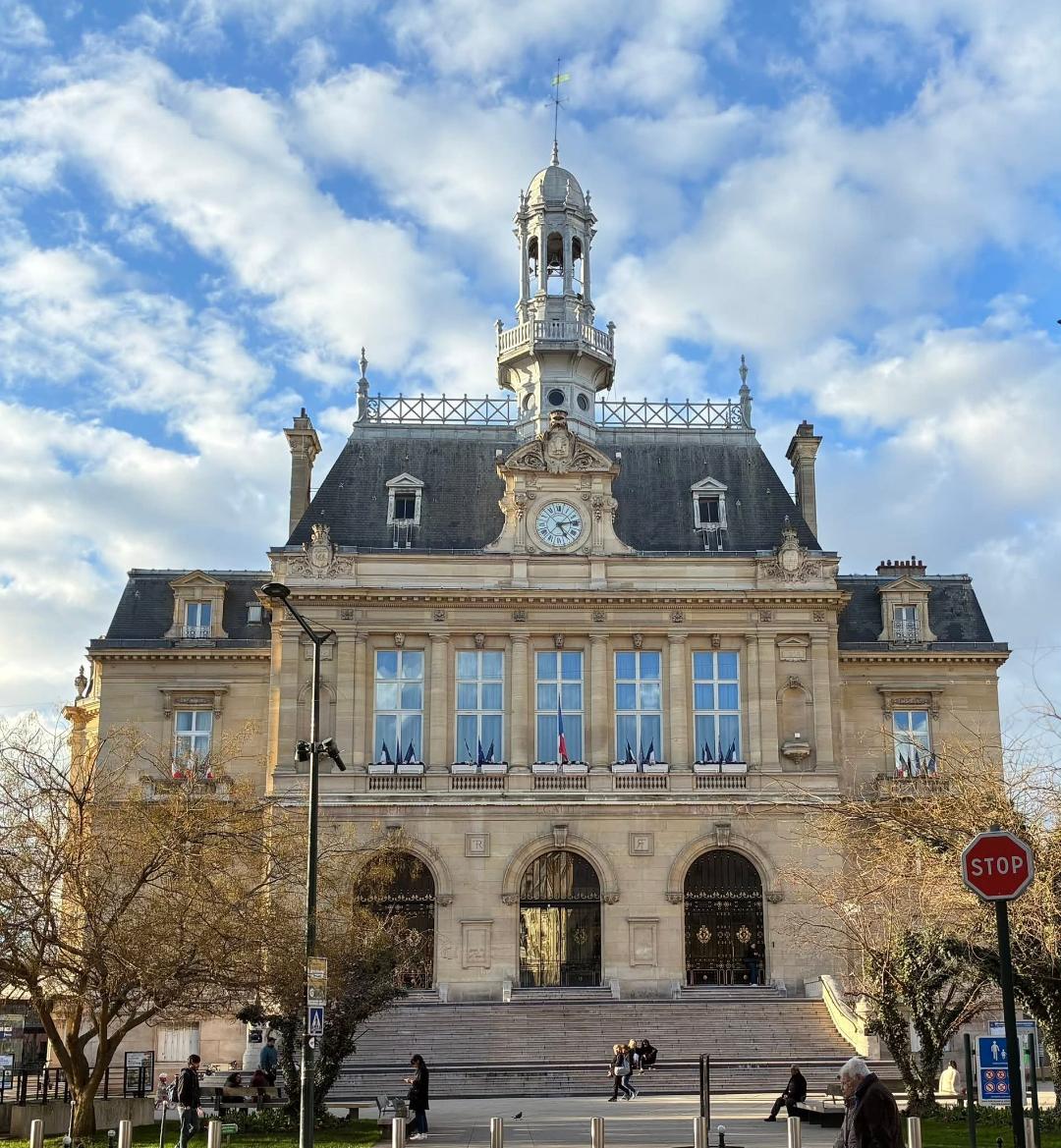
On August 12, 1822, the City purchased the former presbytery, and a room completely separate from the pastor’s residence was converted into the City/Town Hall. On November 4, 1849, the Municipal Council moved across the street to No 10, rue de l’Église, into a building completed on April 4, 1839, on the site of the former cemetery, place de l’Église, which had previously served as the municipal school. This building, demolished around 1929, housed the City’s offices from 1849 to 1875. During the summer of 1899, the buildings of the old City/town hall were demolished, and the new City/town hall was inaugurated on October 15, 1899. On the second floor,(3rd fl US), a central gallery, aligned with the grand staircase and illuminated by three splendidly decorated cupolas, separates and provides access to the council chamber and the wedding hall, both remarkable…in the hall The monumental entrance mosaic is composed of 600,000 marble squares, each 20 millimeters on a side. Following the creation of a “grand ballroom,” transformed into a “grand theater” in 1980, at the administrative and social center, the city hall continues to host banquets and receptions for various dignitaries such as Georges Bidault in 1951, Georges Pompidou in 1963, André Malraux in 1974, etc. in its reception rooms ,wedding hall and mayor’s office, as well as award ceremonies and certain conferences or concerts. The sculptures in the council chamber panels were painted around 1900. Of the mayor’s office from 1901, only the large Minister’s desk with pilasters carved in solid walnut and adorned with the city’s coat of arms, and the matching wooden armchair, remain.
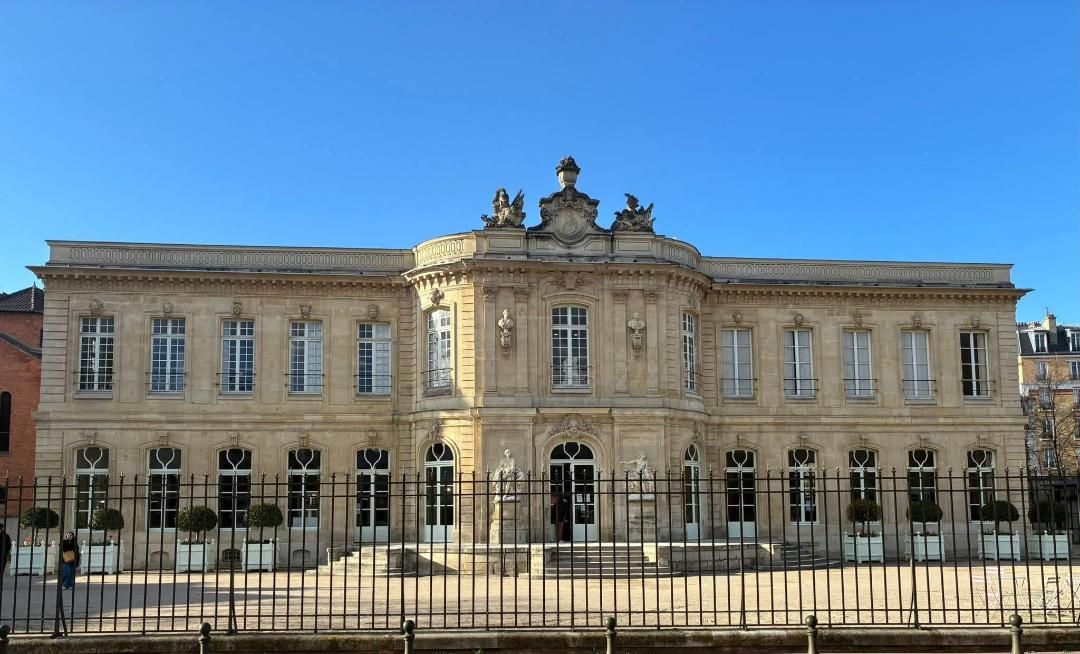
In January 1750, Marc-René de Paulmy de Voyer d’Argenson, Marquis de Voyer, acquired his property in Asnières. Comprising a large house, its outbuildings, and its gardens, this estate is known to have belonged, among others, to the Countess of Parabère, mistress of the Regent. The château was built between 1750 and 1752 on the foundations of this country house. The Château d’Asnières is one of the few surviving châteaux of the Parisian crown. At the dawn of the 18C, it was still a pleasure house on the outskirts of Paris, embellished by Madame de Parabère, mistress of the Regent, when Marc-René de Paulmy de Voyer d’Argenson, Director General of the Royal Stud Farms and a close associate of King Louis XV, undertook its reconstruction in 1750. The Château d’Asnières is a significant and typical example of 18C architecture; the Marquis’s bedroom retains its original features, and the two main staircases boast beautiful wrought-iron railings from that period. Its grounds, stretching from the present-day Pont de Clichy to the Pont d’Asnières, included various gardens, large stables, and an open-air riding arena. In 1769, the indebted Marquis sold the already stripped château. Since then, several owners have succeeded one another. The château was then used as a school (École Ozanam) from 1897 to 1913, and subsequently as a girls’ school, Institution Sainte-Agnès, from 1913 to 1975. In 1992, the City acquired it permanently and undertook various restoration campaigns. The castle was inaugurated, with the complete restoration of the first-floor (2nd fl US) rooms, in September 2014. The gallery, a miraculous return from exile; the Grand Salon and the Marquis’s bedroom, scattered masterpieces; the projecting section overlooking the gardens: the reassembled sculpted decoration; Madame’s antechamber; the Grey Room, this room is the only one to have retained its original wood paneling. The Great Hall of the Projecting Wing (Mansart de Sagonne Room) Located in the central projecting wing of the south façade, the central room is now the largest room on this floor. The extremely understated decor of the corridor has been restored to its original state. The entire air conditioning system for the first floor, as well as the security systems, have been installed in the attic. An elevator provides access. The Chinese Room, like all the rooms on the first floor,(2nd fl US) with the exception of Madame’s antechamber, the paintings are done in linseed oil, respecting 18C traditions. The mirror is part of the Dior collections. The Yellow Room ,the fireplace bay has been restored: one can admire its Louis XVI-era Sainte-Anne gray marble mantelpiece, its mercury mirror, and its surround. The wainscoting on the facade has been restored.
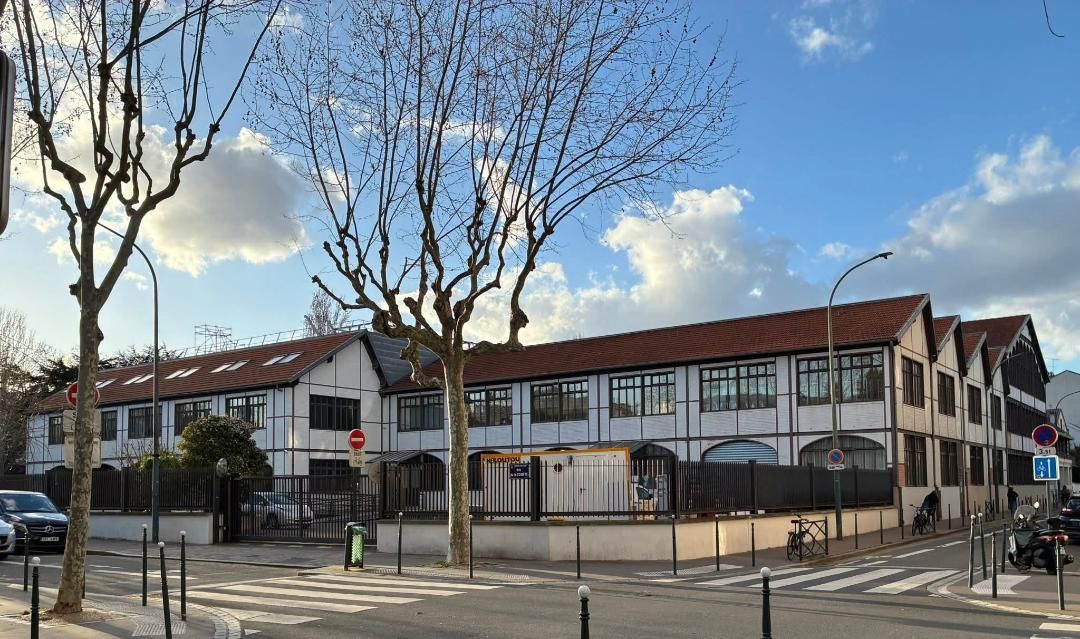
The Louis Vuitton Museum is a 19C Art Nouveau mansion-museum where the renowned trunk maker Louis Vuitton lived, the man who founded the brand and company that bears his name. This private museum, adjacent to the brand’s historic workshops, showcases 150 years of the manufacture’s history. In 1859, he expanded and moved his workshop, employing around twenty people, to Rue de la Comète in Asnières-sur-Seine, on the banks of the Seine. This allowed him to have the poplar wood necessary for making his trunks delivered by barge and to take advantage of the rail link to Paris. In 1860, he and his wife built their family home next to the workshops, which has since become the Louis Vuitton Museum. Bringing together the brand’s major pieces and the personal collections of the founder’s grandson, Gaston-Louis Vuitton. The mansion has been preserved in its original state, with its sumptuous Art Nouveau interior decoration. The historic workshops are still in operation today, producing bespoke leather goods for special international orders.
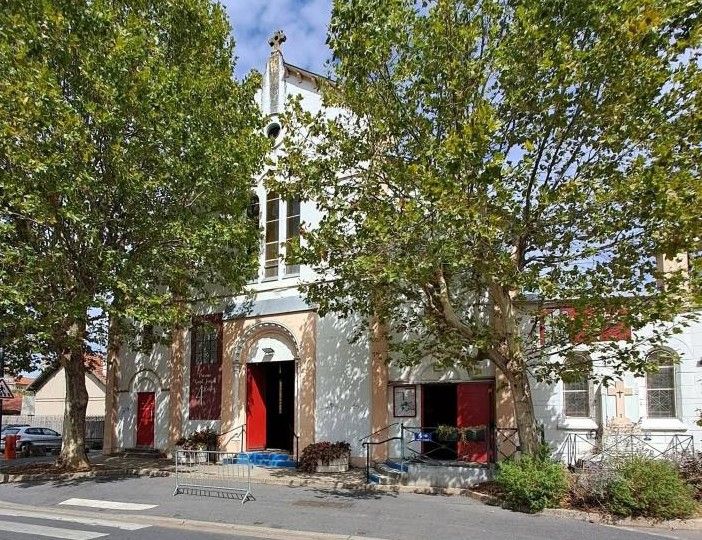
The Church Saint-Joseph des Quatre-Routes is located at 182 rue du Ménil, Inaugurated in 1911, the Saint-Joseph Chapel was built in 1910 at the Quatre-Routes intersection in Colombes. It replaced a chapel located in the ragpickers’ district, where the community was growing too large for the existing space. Funded by donations, the chapel enabled 800 ragpickers to attend Sunday Mass. It was elevated to the status of a parish church in 1922 and expanded in 1934, becoming the church we know today.On May 23, 1940, at the start of the nazis offensive in France, Father Jean Glatz, the parish curate since 1934 was killed while on his way to administer the last rites to a wounded man on the battlefield. He is buried at the church entrance, and a monument pays tribute to him.
Other things to see here are the Alcazar, on Rue de la Station, was one of the first suburban cinemas dedicated to art films. The Cemetery of Dogs was the first of its kind. It was created in 1899 on the former Île des Ravagers, next to the Clichy bridge. It contains the graves not only of dogs, cats, and birds, but also of horses, lions, monkeys, and other animals. The Church of Sainte-Geneviève was consecrated in 1711. The façade, gallery, and side aisles were rebuilt in 1929. It houses, among other things, an organ dating from 1893, which was restored in 2019. The Carbonnets train station, also known by the name of its architect, Juste Lisch, was built in 1878. This former landing stage on the Champ-de-Mars in Paris was constructed for the 1878 Universal Exhibition. The structure was dismantled in 1897 and transported to Asnières; abandoned in 2021, the building was purchased by the city in 2022. The Villa des Roses is inextricably linked to the city of Asnières, as the Rancy and François Bidel families are connected to the city’s history. from Asnières
A bit of history I like tell us that Asnières shares a history with the City of Gennevilliers. On June 26, 1158, a papal bull from Pope Adrian IV specifies and attests to the existence of Asnières at that time. 1224;the lordship of Asnières, which included the right of high justice, belonged to the Abbey of Saint-Denis even before 1224. Until the end of the 13C, Gennevilliers was part of the parish of Asnières, separating from it in 1302. 1650, the town boasted the residence of illustrious figures such as the Duchess of Brunswick, Prince Palatine Edward of Bavaria, and his wife, Anne Gonzaga of Cleves, Princess of Mantua. On March 20, 1676 birth of Pierre Boudou, surgeon to the king and founder of the first girls’ school in the village of Asnières. Chief surgeon of the Hôtel-Dieu, he became famous as an ophthalmologist (he performed cataract surgery with enucleation of the eye). Around 1715, Marie-Madeleine de Vieuville, Countess of Parabère, owned a house in Asnières, on the site of the château later built. She was the mistress of Philippe d’Orléans, regent of the kingdom from 1715 to 1723. 1750 – Construction of the château of Marc-René de Voyer de Paulmy d’Argenson, Marquis of Paulmy, then Marquis d’Argenson in 1757, by Jacques Hardouin-Mansart de Sagonne (grandson of the famous Jules Hardouin-Mansart). 1839 Gaspard de Prony died in Asnières. This engineer and mathematician, the first director of the land registry office and a member of the Bureau of Longitudes, oversaw the production of the standard kilogram and established a set of trigonometric tables in the metric system (fourteen decimal places). Made a baron and peer of France by Charles X. A vocational high school in Asnières-sur-Seine now bears his name. 1848 the events marking the fall of the July Monarchy led to the destruction of the bridge. It was rebuilt. 1848 , The Château d’Asnières was transformed into a restaurant, becoming a particularly popular spot for the Parisian bourgeoisie, hosting numerous balls and soirées. 1860 Louis Vuitton established his workshops in Asnières. By September 1870 during the Siege of Paris, the Asnières bridge was completely destroyed, and part of the Clichy bridge was damaged. On April 9, 1871 General Ladislas Dombrowski, commander of the Paris garrison, seized Asnières from the Versailles troops. Around 1873, the popular success of swimming and riverside cafes along the Seine attracted many artists. In 1873, Claude Monet (the year of Impression, Sunrise) and Auguste Renoir (1879) each painted The Seine at Asnières, Georges Seurat in 1883 with Bathers at Asnières, and then the Neo-Impressionists Paul Signac… set up their palettes on the banks of the Seine: Van Gogh, in turn, immortalized the Asnières bridge (1887) and the La Sirène restaurant. In 1879 , Sarah Bernhardt, the great tragedienne, moved to 19 rue Magenta in a property called the Château des Brumes. 1892 Louis Vuitton died in Asnières. He is buried in the cemetery on Rue du Ménil. 1893 Achille Laviarde, also known as Achille I, King of Araucania and Patagonia, Prince of the Aucas, Duke of Kialéon, settles in at the Villa des Cigales and leaves in 1894. In 1900 the swimming competitions of the second Olympiad (1900 Summer Olympics) take place in Asnières on the Seine. The 60-meter underwater event earns France its first gold medal. 1901, Ernest Daltroff buys the Emilia perfumery, which is later renamed after a popular acrobat: Caron. He creates his own perfumes starting in 1904 (Royal Emilia, Royal Caron, Radiant) and establishes part of his business on Avenue de la Lauzière, overlooking the railway line. On March 21, 1915, during the Great War or WWI, several bombs were dropped from a German Zeppelin airship, exploding at 70 Avenue d’Argenteuil, 18 Rue du Congrès, 24 Rue du Ménil, and 11 Rue des Ravageurs, as well as the former residence of Sarah Bernhardt. The Villa des Roses at 13 Rue de la Comète was also hit. On March 15, 1944, the National Council of the Resistance (CNR) met in Asnières and adopted a program of action that laid the foundations for Social Security, universal pensions, major public services, works councils, agricultural social legislation, and the right to culture for all. In 1968, Asnières was renamed Asnières-sur-Seine.
The City of Asniéres sur Seine on its heritage : https://asnieres-sur-seine.fr/sortir-a-asnieres/tourisme-et-patrimoine
The Association Les Amis du Château et du Vieil Asnières : https://www.asnieres-patrimoine.fr/
The official Louis Vuitton on the atelier d’Asniéres : https://fr.louisvuitton.com/fra-fr/magazine/articles/la-galerie-louis-vuitton-in-asnieres
The Hauts de Seine dept 92 tourist office on an impressionists tour of Asniéres : https://destination.hauts-de-seine.fr/balade-asnieres-sur-seine-impressionniste-insolite-hauts-de-seine.html
The Île de France region tourist office on impressionists trails in Asniéres : https://www.visitparisregion.com/en/on-the-traces-of-the-impressionist-painters-at-asnieres-sur-seine
The Parish of Saint Joseph des Quatre Routes : https://www.paroissesaintjosephdes4routes.com/notre-equipe-pastorale
There you go folks, an oasis of tranquility and class just bordering Paris, the off the beaten path, Asniéres sur Seine is worth the detour me thinks, Again, hope you enjoy this post on this is Asniéres sur Seine !!! as I.
And remember, happy travels, good health, and many cheers to all !!!


