
These are wonderful monuments of my belle France. Whether believer or not these tell the history and architecture of France that are a must to see while here, Indeed they are very popular by locals and tourists alike, I walked by this church as are many glad to found me new pictures in my cd rom vault to show in my blog for you and me. This one is a find in an area very much walk as near my HQ in my eternal Paris, Therefore, let me tell you a bit on the Church Saint Médard of Paris !! Hope you enjoy the post as I.
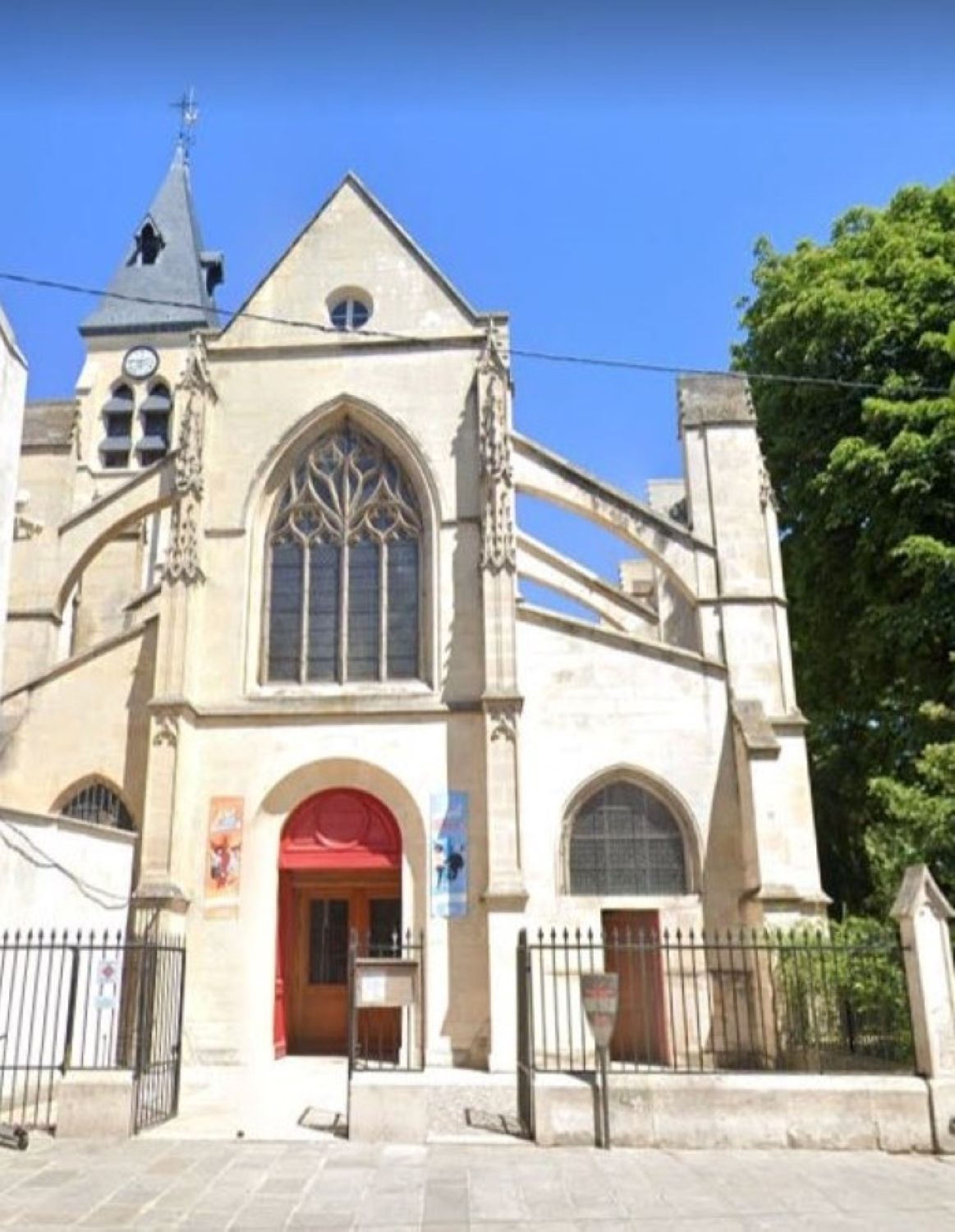
The Church Saint-Médard is located at 141 rue Mouffetard in Paris’s 5éme arrondissement, on the Left Bank of the Seine. It is serve by the Censier-Daubenton station on line 7. Built between the 15C and 18C, it serves as the parish church for parishioners from part of the 5éme arrondissement, including the Jardin-des-Plantes quartier and part of the Val-de-Grâce quartier, as well as part of the 13éme arrondissement, including the Croulebarbe and Salpêtrière quartiers. Since the separation of Church and State in 1905, it has been owned by the City of Paris.
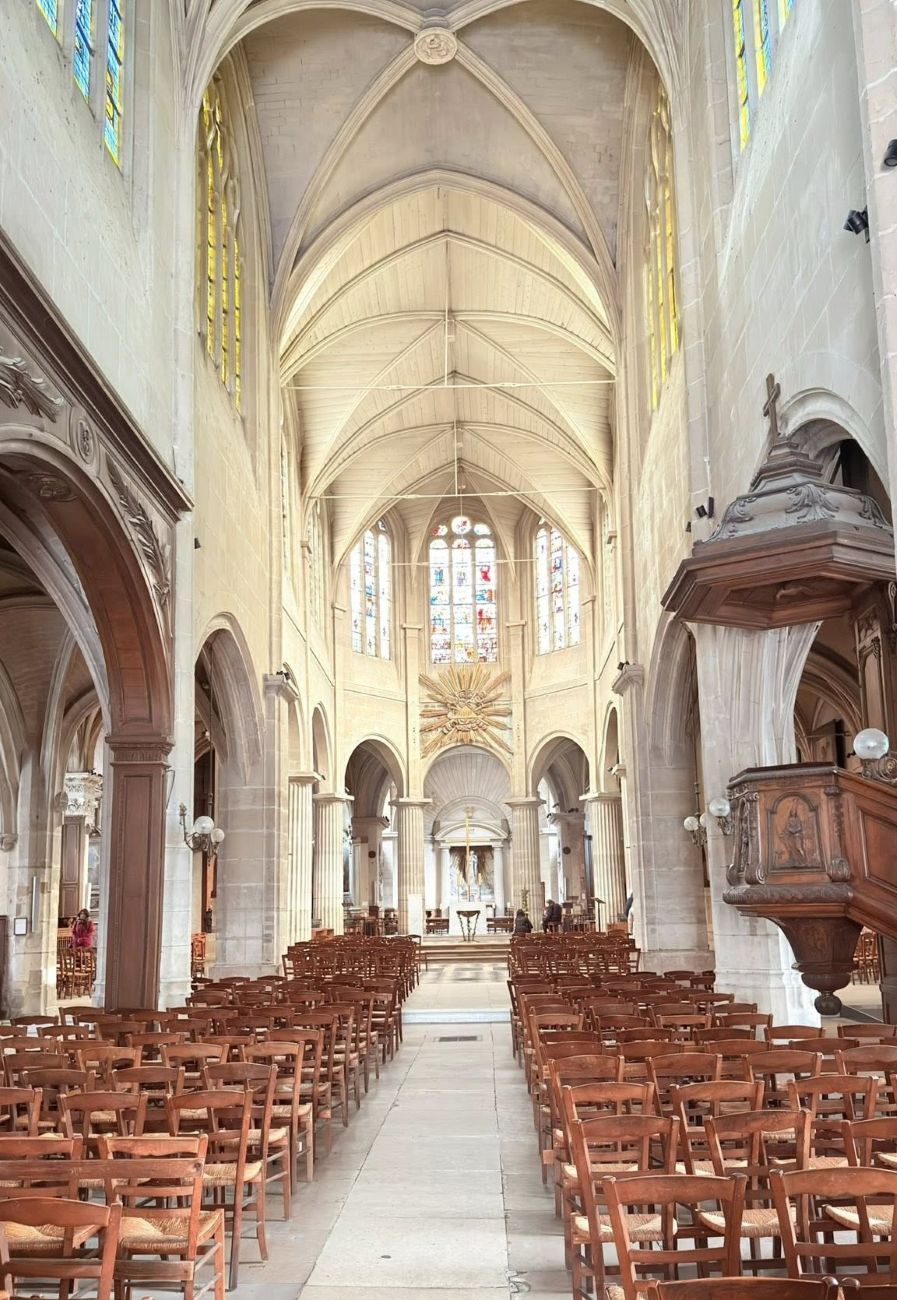
The church’s plan, lacking a transept, reflects its history with three distinct sections: the nave and the west facade are estimated to date from the early or mid-15C; the chancel dates from the period 1562-1620. The axial chapel of the Virgin was built in 1784. A sundial is engraved on its southeast facade. The Flamboyant Gothic nave was built in the early or mid-15C. Five sculpted keystones are visible in the center of the quadripartite rib vaults. The chancel is wider and taller; it was begun in 1550 and completed in 1632. It was covered in 1622 with a wooden vault, which is still in place, a unique feature in Paris. Alterations are particularly evident in the capitals, which illustrate Gothic, Renaissance, and Classical styles.
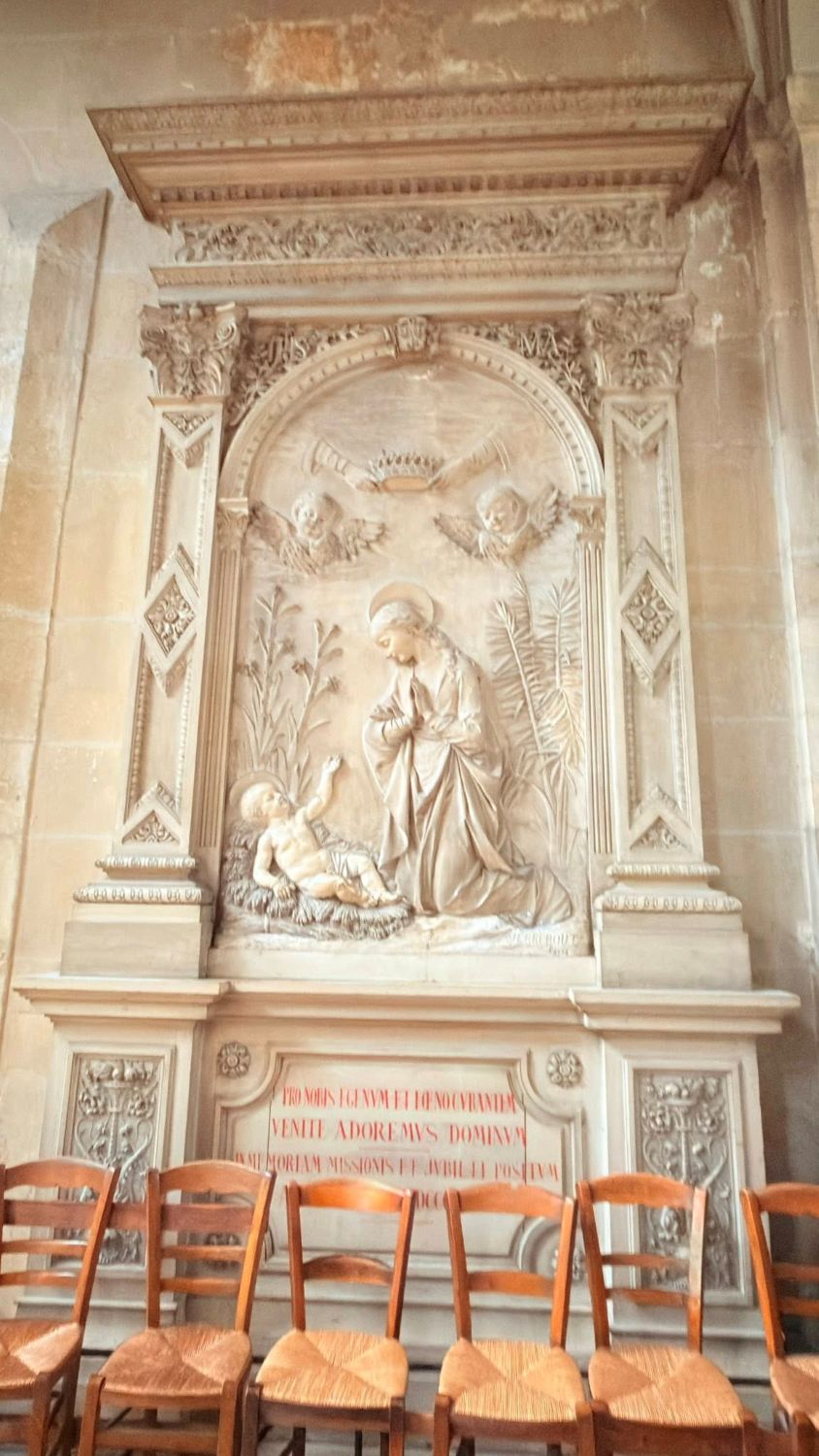
The baptistery chapel features a painting of Jesus driving the merchants from the Temple, painted in Rome in 1727-1728 , and a Baptism of Christ, painted in the early 18C. Chapel of Saint John the Baptist (or of the Dead): Baptism of Christ 1685. Chapel of Saint Joseph: Saint Paul and Saint Barnabas at Lystra, mid-18C. Chapel of Saint Anne: The Education of the Virgin; Christ the Child between the Virgin and Saint Joseph, two paintings from the 17C French School. Religion Inviting to its Holy Mysteries, a canvas before 1766. Chapel of Saint Genevieve: Saint Genevieve tending her sheep, a canvas long considered a work by Watteau, but currently attributed to Charles-Dominique-Joseph Eisen. Axial Chapel of the Virgin: The Marriage of the Virgin, painted in 1824. Saint Medard crowning his sister, the first Rose Queen, painted in 1837. Chapel of the Trinity. The Holy Trinity, French school, circa 1612. Donated by Pierre Thévenin, wine merchant, Parisian bourgeois, residing on the Grand’Rue Mouffetard, and Anne Cramoisy, his wife; The Stations of the Cross were painted between 1935 and 1936. These are fourteen paintings in eights, executed with a wide brush on plywood panels, after cutting; Saint Anthony of Padua, sculpture. Chapel of the Annunciation. The Annunciation and six prophets (Isaiah, David, Haggai, Solomon, Jeremiah, Moses , those associated with the coming of the Messiah, savior of Israel), dated 1617, anonymous French artist. In the lunette: God the Father sending the Holy Spirit, adored by angels Saint Cecilia, anonymous 18C. Chapel of the Sacred Heart, the Dead Christ, 17C, Saint-Louis Chapel: The Promenade of Saint Joseph and the Infant Jesus, painting by Francisco de Zurbarán, circa 1635 (painting restored in 2021: there are only two paintings by great Spanish masters preserved in Parisian churches, this one and The Marriage of the Virgin by Antonio de Pereda in the Church of Saint-Sulpice. Zurbarán’s painting was originally painted for the high altar of the Convent of the Discalced Mercy in Seville). The Martyrdom of Saint Stephen, tapestry, 1847 copy, from the Gobelins Manufactory. Saint Catherine Chapel: Triptych: The Dead Christ on the Virgin’s Lap, Saint Vincent, Saint Honoré, anonymous French, 16C. A sculpture of the Virgin of the Annunciation. Saint Anthony Chapel: Saint Joseph and the Infant Jesus, Spanish school, 17C. Saint Fiacre Chapel: Christ at the Pool, reduced copy, 1753, of the painting by Jacques Restout at the Louvre Museum.
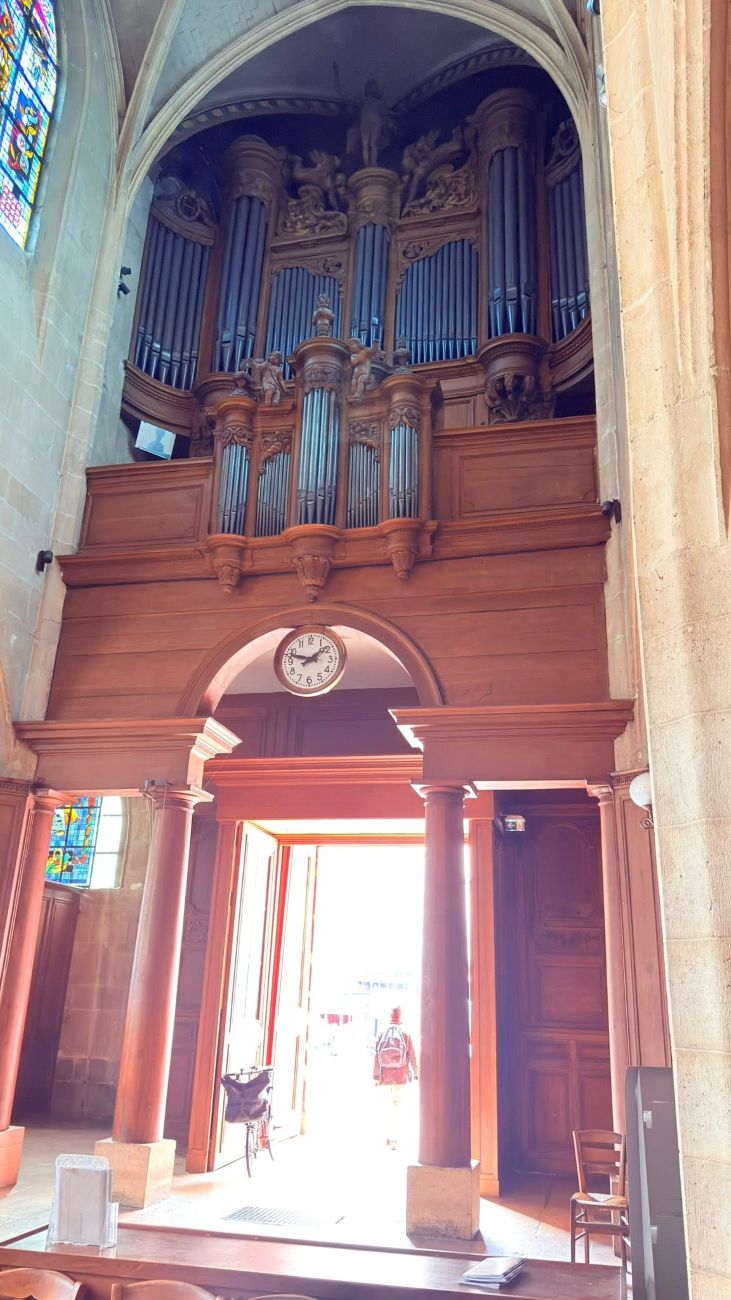
The great organ, located in the gallery above the main entrance, was originally built between 1644 and 1650 and was remodeled in 1767. The Roethinger choir organ was built in 1964 and installed in a side chapel of the choir.
A bit of history I like tell us that the church is dedicated to Saint Medard of Noyon (456-545), Bishop of Noyon. The Church Saint-Médard was built in the quartier or neighborhood that, until the French revolution, was known as the Faubourg Saint-Marceau. During the Merovingian period, Christian tombs were already gathered a few meters from the walls of the current church, as shown by excavations carried out at 43 rue Daubenton. A Christian cemetery and probably already an oratory, according to the custom of the time, therefore already existed in the 6C or 7C. As early as the 9C, after the Norman invasions, a chapel dedicated to Saint Medard was supposedly built along a Roman road led from Lutetia to Lyon at the point where the Bièvre river was crossed. The existence of a church and parish attached to the domain of the Abbey of Sainte-Geneviève in Paris is attested in 1163 in a bull of Pope Alexander III. The current church was built from the early or mid-15C to the 18C. During the French revolution, the church was closed and worship abolished in November 1793. It was reopened by a decree of the Convention in May 1795. The parish shared its church with the Theophilanthropists and with the decadal cult; it was called the Temple of Labor for ten months.
As an anecdote the Church Saint Médard is mention in Les Misérables, Book Four (“The Gorbeau Hovel”), Chapter IV (“The Remarks of the Principal Tenant”), Jean Valjean “frequented Saint-Médard, which is the nearest church.” The church is mentioned again in later passages, notably in Book Eight (“The Bad Poor Man”).
The official parish Church Saint Médard : https://www.saintmedard.org/
The City of Paris on the Church Saint Médard : https://www.paris.fr/lieux/eglise-saint-medard-19438
The Paris tourist office on the Church Saint Médard : https://parisjetaime.com/eng/culture/paroisse-saint-medard-p1226
There you go folks, another beautiful monument of my dear Paris, and worth the detour for the architecture, history or soul in them. It was always wonderful to walk, drive or visit them over the years and still do when visiting, You will do well to come and visit this church too, Do see my individual post on many of the churches of Paris in my blog. Again, hope you enjoy this post on the Church Saint Médard of Paris !! as I.
And, remember, happy travels, good health, and many cheers to all !!!


