
We have driven and walked in my eternal Paris, and would like to have an imprint in my blog on the wonderful family times we had there, There is so much to see , doing my best, and glad found me these pictures in my cd rom vault ,which now transposing in my blog for you and me, This was my former worked city, so glad to post more memorable spots on it, I thank you for your readership over the years and to bear with my rants! After all, Paris is to rant, shout and yelled about, me think. Therefore, here is my take on curiosities of Paris, part XCVI !!! Hope you enjoy the post as I.
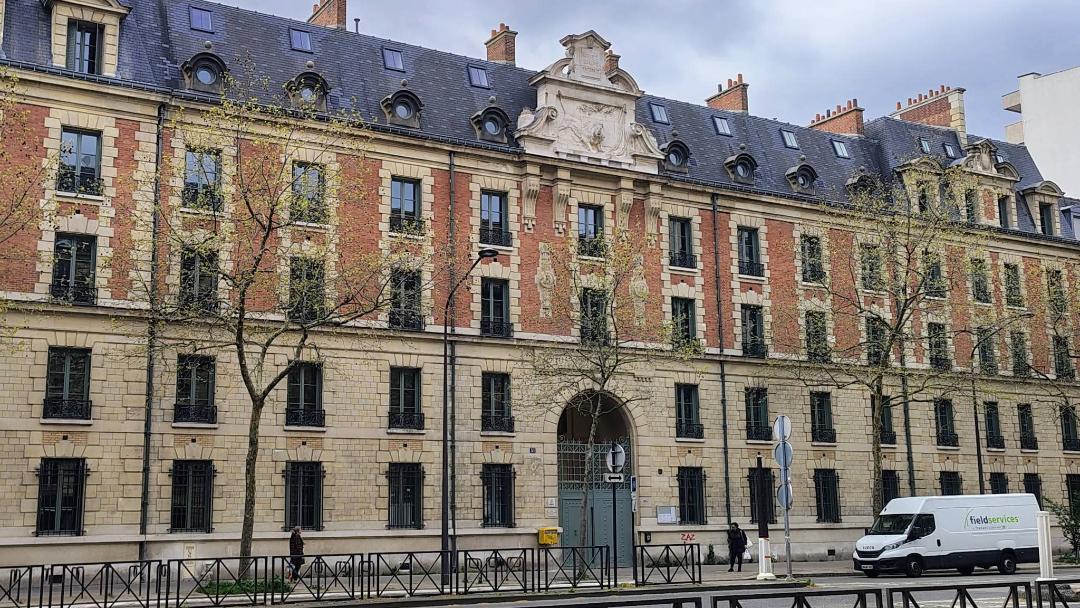
The Caserne Chalvidan barracks,located at 51 Boulevard Exelmans, aka the Exelmans barracks, a former gendarmerie barracks, is undergoing a mixed-use development. Within this former gendarmerie barracks, the Cinq Toits (Five Roofs) project fostered community living by experimenting with mixed-use development and activities. As part of a temporary occupancy initiated in 2018, the Chalvidan Barracks, owned by the City of Paris through Paris Habitat, was used throughout the redevelopment study to implement a social innovation project in the heart of Paris’s 16éme arrondissement. This new example of transitional urbanism serving social needs was led by the Aurore association, in partnership with the Plateau Urbain cooperative. The Five Roofs project was completed in April 2023. The social housing units are integrated with accommodation options and a halfway house, early childhood facilities, and various other spaces, with the aim of sharing resources. A bit of history on the name merit credit due tell us that Captain Jean Chalvidan of the Gendarmerie chose to serve in the Gendarmerie on June 25, 1937, and was assigned to the Mobile Republican Guard in Caussade (dept 82). On September 2, 1939, at his request, he was transferred to the 28th Light Infantry Battalion of Africa. On June 19, 1940, Chalvidan was taken prisoner in Besançon. He attempted to escape three times, without success. On November 15, 1940, he was released as a member of the Gendarmerie. After several postings that took him from the Yonne region to Gascony, he took command of the Saint-Cyr special platoon at Fort Montrouge. On July 5, 1944, he was assigned to command the Paris-Exelmans gendarmerie section. On August 22, 1944, during an operation to transport weapons and ammunition to the insurgents at the Paris Police Prefecture, he was arrested and executed by the nazis in Vélizy-Villacoublay (dept 78). The name Chalvidan barracks was given to the Paris-Exelmans gendarmerie barracks on August 22, 1945.
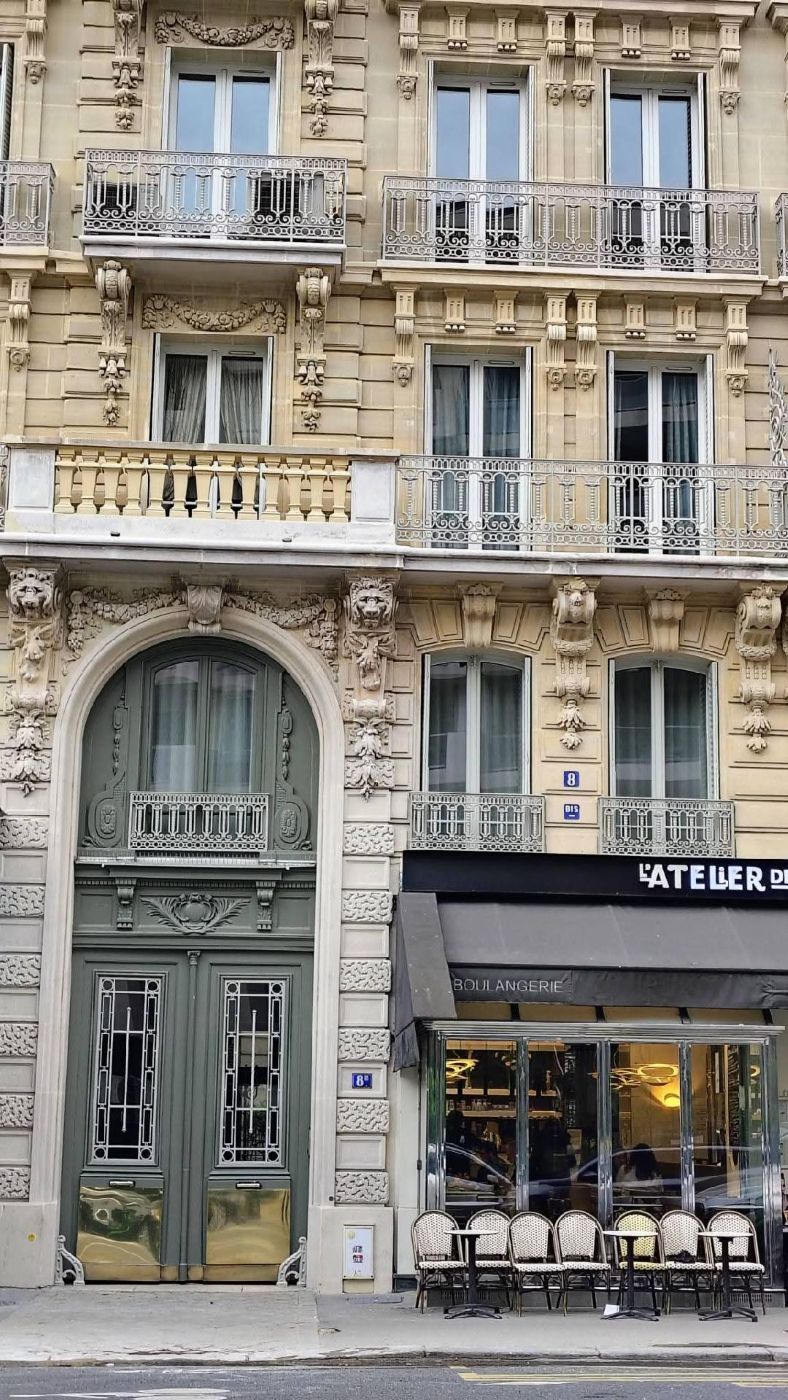
The Chaussée de la Muette is located in the 16éme arrondissement of Paris. It extends from the Rue de Passy to the Jardin du Ranelagh (see posts). It is served by metro line 9 at the La Muette station. It comprises two sections: the first, developed with apartment buildings, begins at the intersection of the Rue de Boulainvilliers and the Avenue Paul-Doumer and runs to the former Passy-la-Muette train station; the second, undeveloped, begins at the former station and continues through the Jardin du Ranelagh, ending at the corner of the Avenues Ingres and Prudhon. Historically, this was a non-building zone, created beyond the (now gone) fences of what was once the Parc de la Muette, to prevent any construction and to create ornamental flowerbeds. The first section is separated by roads with a median strip in the center. It owes its name to its proximity to the Château de la Muette. Before its reconstruction in the 1910s and 1920s and the subdivision of its grounds, the château’s entrance gate was located at 20 Chaussée de la Muette. Historically, this road is part of the thoroughfares of Passy, a village annexed to Paris in 1859. It was officially incorporated into the Parisian road network in 1863. Notable buildings: No. 1, at the intersection with Rue de Boulainvilliers and Avenue Mozart: Chanel boutique since 2024. No. 8 (see pic) home of the French writer, lawyer, novelist, and essayist, Henry Bordeaux. He lived there for twenty-five years and died there on March 29, 1963. No. 12: The brasserie La Rotonde de la Muette (see post) has been listed at this address since 1899. The interior decoration was updated in 2017. No. 16: Maurice Sand was a French writer, entomologist, and painter. He was the son of George Sand. He had his puppet theater there, in an apartment he had rented in 1853. No. 17: The actress and writer Rosemonde Gérard, wife of Edmond Rostand, lived at this address with her son Maurice. She died there on July 8, 1953. The actress Caroline Cellier lived at this address. No. 19: Passy-la-Muette train station (gare), on the former Petite Ceinture railway line. Opened in 1864, it was converted into a restaurant in the 1980s (see post of the former Le Gare my fav, and others later). The painter Camille Pissarro, originally from the Danish West Indies, came to study in Paris in October 1855, the year of the Universal Exhibition, and settled with his family on the Chaussée de la Muette. Petite Ceinture in the 16éme district or arrondissement.
The Paris tourist office on the 16éme arrondissement de Paris: https://parisjetaime.com/eng/article/a-la-decouverte-du-16e-arrondissement-de-paris-a830
The Eiffel Aerodynamic Laboratory is a wind tunnel located on Rue Boileau (see post), at the intersection with Rue de Musset, in the 16éme arrondissement of Paris. In 1903, Eiffel installed his first laboratory at the foot of the Eiffel Tower (see posts). This wind tunnel had an air duct 1.5 meters in diameter and 3 meters long. The air speed could then vary from 5 to 20 meters per second. This wind tunnel was used to study air resistance on objects falling from the second floor of the Eiffel Tower. In 1912, Gustave Eiffel completed the construction of the laboratory located at 67 Rue Boileau corner with 22 Rue de Musset in Paris,(see pic) with the aim of replacing the wind tunnel he had built on the Champ de Mars. The laboratory is equipped with a 22-meter diameter air stream capable of reaching speeds of 30 m/s and was initially used for research on aircraft wing profiles. After 1945, the laboratory diversified its activities, extending its research to the automotive industry, civil engineering (for studying the wind resistance of buildings), and ventilation. Since 1999, the laboratory has been a subsidiary of the Scientific and Technical Center for Building (CSTB). The laboratory is also regularly rented to manufacturers from all sectors to test their models.
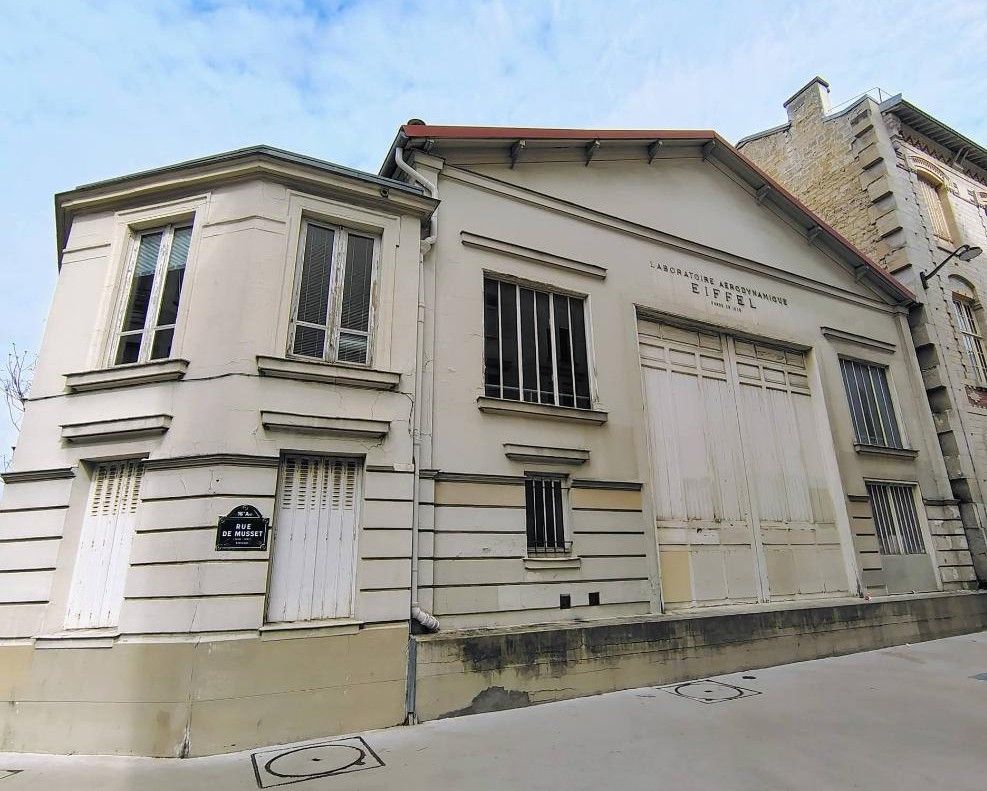
As already wrote on Rue Boileau will give you my take on Rue de Musset here, The Rue de Musset begins at 7, rue Jouvenet and ends at 67, rue Boileau. It is named after the French poet Louis Charles Alfred de Musset, a poet, playwright, and writer of the Romantic period, elected to the French Academy in 1852. The area is served by metro line 9 at the Exelmans station. A prefectoral decree of April 1, 1808, ordered the opening of the section of this street located between the streets that are now called “rue Chardon-Lagache” and “rue Jouvenet”. This section was initially called “Rue d’Iéna.” The portion of Rue de Musset between Rue Chardon-Lagache and Rue Jouvenet (formerly Rue d’Iéna) appears alone, under the name “Rue Benoit,” on the 1823 cadastral map. The improvement of Rue de Musset, formerly Rue Benoit, which received its current name by decree on August 24, 1864, was undertaken. In the summer of 2024, the street was transformed into rue aux écoles. Notable buildings: Numerous houses with gardens. No. 20: Musset Municipal Library and Elementary School. The library is the smallest in Paris. No. 22, intersection with Rue Boileau: Eiffel Aerodynamic Laboratory.(see above), Inaugurated in 1912, it was one of the world’s first aerodynamic laboratories. In 1920, the engineer bequeathed it to the aeronautical technical services. In 1929, he was assigned to the Trade Association of Aeronautical Industries.
The official Aerodynamique Eiffel laboratory: https://www.aerodynamiqueeiffel.fr/
The Paris tourist office on the Aerodynamique Eiffel laboratory: https://parisjetaime.com/eng/pro/laboratoire-aerodynamique-eiffel-p2783
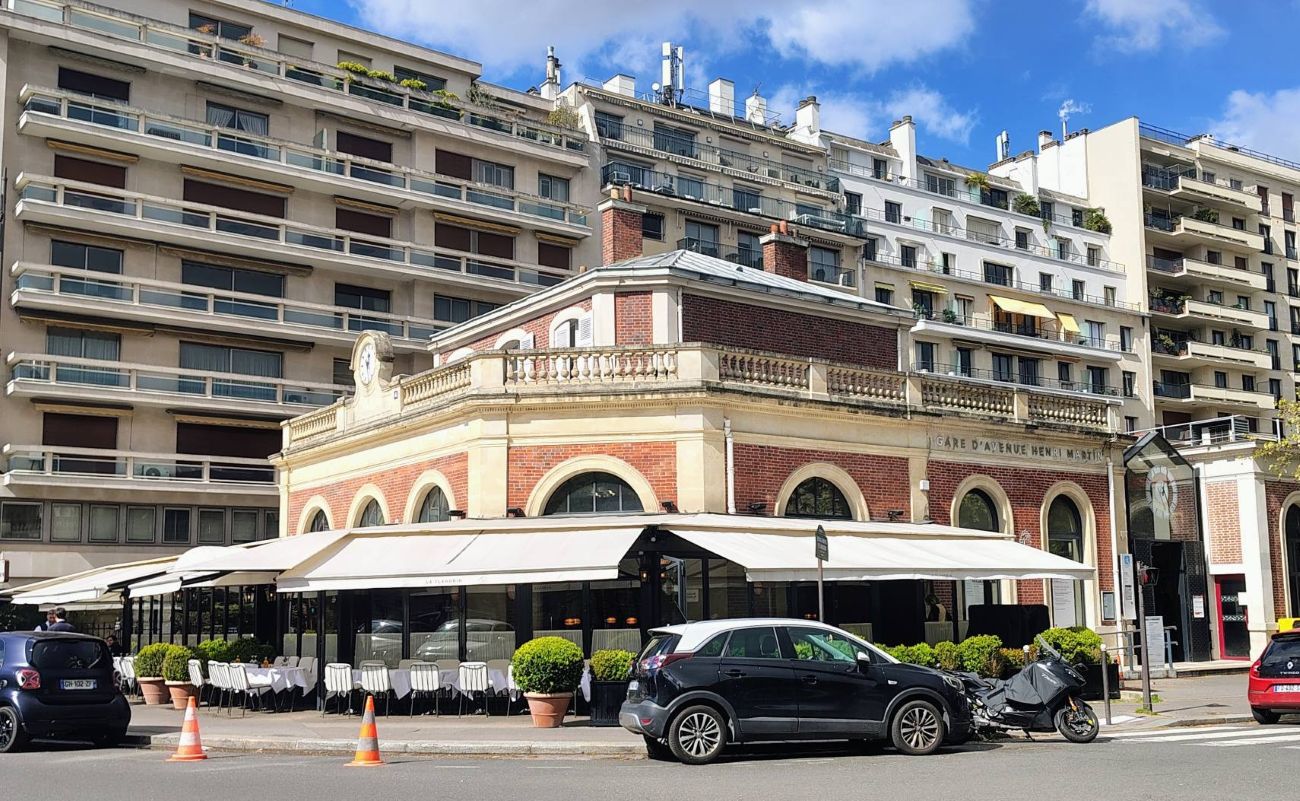
In operation since 1932, Le Flandrin, located at 4 Place Tattegrain is a chic, trendy, and fashionable restaurant in the Art Deco style, housed in the Gare Avenue Henri Martin train station in Paris’s 16éme arrondissement. It was part of the Loulou Groupe and now the Barriére groupe, The classic and lively Parisian brasserie atmosphere, created by the spacious layout, is softened by the warm, intimate light from the glass light fixtures reflected by the mirrors. The Avenue Henri Martin train station, has an address as 80 Avenue Henri-Martin built astride the tracks, opened in 1878 on the Petite Ceinture railway line for the 1878 Universal Exposition. Following the line’s closure, the underground station was integrated into the REC network in 1985. The above-ground building was converted into a restaurant, like other stations along the line. It is one of the few stations on this line to have survived its closure in 1934. It then continued as a station on the Pont-Cardinet-Auteuil section until 1985. The station, equipped with elevators and escalators, has a Transilien ticket office open daily, as well as a long-distance ticket office open Monday to Friday from 8h15. to 19h15 Transilien ticket vending machines, adapted for people with reduced mobility, and ticket vending machines for long-distance trains are available.
The official Transilien gare Henri Martin RER C : https://www.transilien.com/fr/gare/8738104
The Gare de l’Avenue Foch train station is located at Porte Dauphine in the 16éme arrondissement of Paris. Originally situated on the Pont-Cardinet to Auteuil-Boulogne line, it was integrated into line C of the Île-de-France regional express network (RER) in 1988. The station, under the name Avenue du Bois de Boulogne, opened to the public in 1854 on the Batignolles to Auteuil line, known as the “Auteuil line.” In 1867, it was integrated into the Petite Ceinture line. It was rebuilt for the 1900 Universal Exposition in a monumental style. The new station was used to accommodate foreign sovereigns or heads of state, such as King Edward VII of the United Kingdom on May 1, 1903, King Victor Emmanuel III of Italy on October 14, 1903, King Alfonso XIII of Spain in May 1905, King Charles I of Portugal on November 23, 1905, Emperor Khải Định of Vietnam on June 24, 1922, King Fouad I of Egypt on October 20, 1927, and King George VI of the United Kingdom on July 19, 1938. The Avenue du Bois-de-Boulogne was renamed Avenue Foch (my most entry into Paris by car!) in 1929; The station then changed its name. In 1988, the station joined the Ermont-Eaubonne to Champ-de-Mars line, which became part of the RER C commuter rail network. It has two entrances: the main entrance is located north of the platforms, at Place du Maréchal-de-Lattre-de-Tassigny and Avenue Foch; the secondary entrance is located south of the platforms, at Rue de Longchamp. The station connects, via public roads, with Porte Dauphine metro station, the western terminus of line 2. The metro station is 170 meters from the RER station. Since April 5, 2024, the station has also connected with tram line T3b, extended from Porte d’Asnières, of which it is the western terminus. It is also served by the RATP bus network’s PC line.
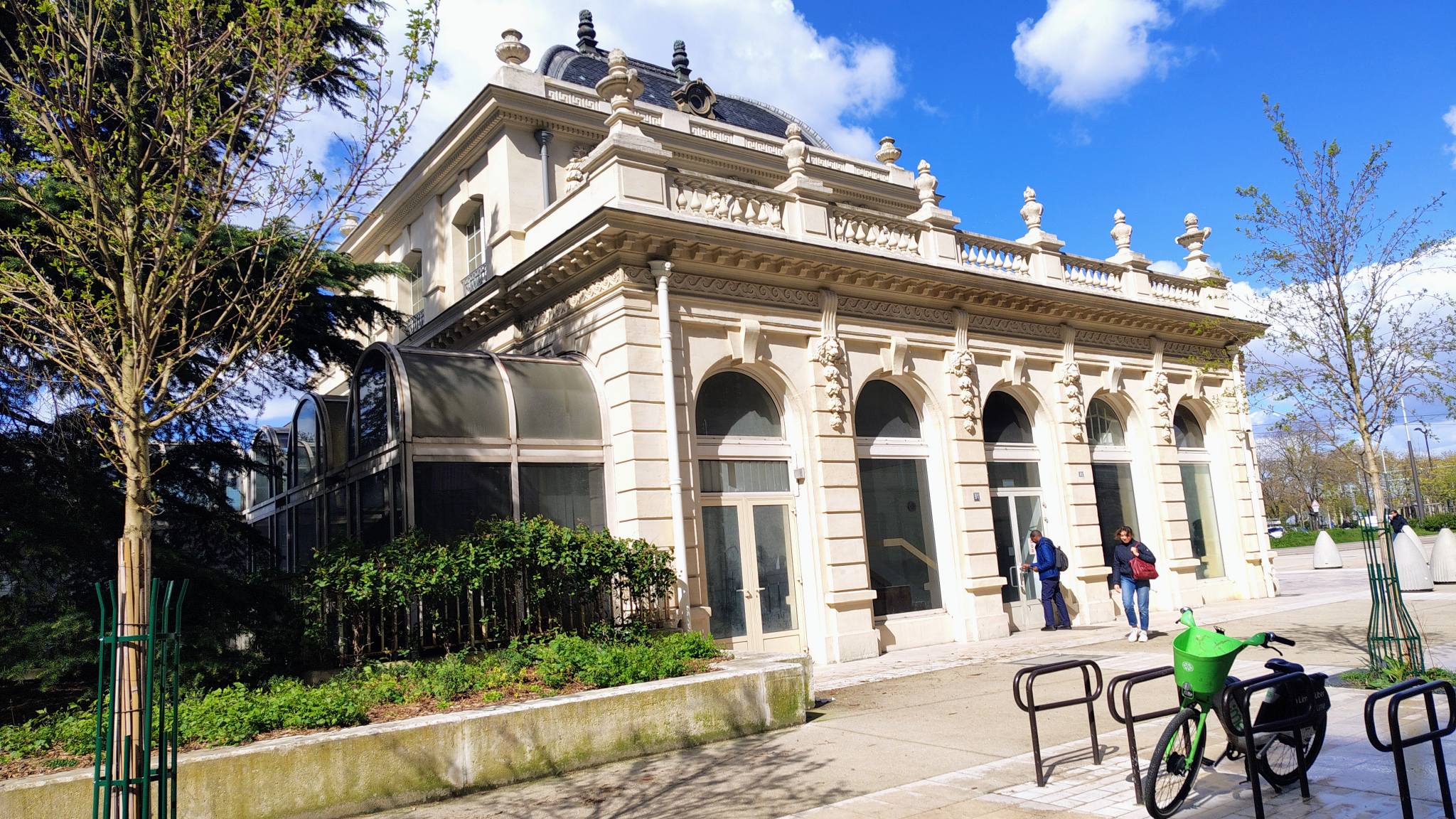
The official Transilien gare de l’Avenue Foch : https://www.transilien.com/fr/gare/8738103
The Gare Pont-Cardinet train station is located in the Batignolles quartier/neighborhood, part of the 17éme district/arrondissement of Paris. It is served by trains on the Transilien L line (Paris-Saint-Lazare network). It is 1.7 km from Paris-Saint-Lazare station. It is the only station within the city limits of Paris that is not served by the RER or long-distance trains. Since 2020, it has connected with metro line 14 via Pont Cardinet station, regaining a central role. The main entrance to the station is located on Rue Cardinet, opposite Square des Batignolles. Trains between Paris-Saint-Lazare and Versailles-Rive-Droite (via the Paris-Saint-Lazare to Versailles-Rive-Droite line); and Trains between Paris-Saint-Lazare and Saint-Nom-la-Bretèche – Forêt de Marly (via the Paris-Saint-Lazare to Versailles-Rive-Droite and Saint-Cloud to Saint-Nom-la-Bretèche – Forêt-de-Marly lines), only before 6h and after 21h30. (taken this line I think once) The old Batignolles train station opened on May 2, 1854, on the Auteuil line. In 1912, following the construction of two new tracks towards Versailles, the original building, demolished the previous year, was replaced by a temporary wooden structure located along Boulevard Pereire. In 1922, the station was rebuilt in concrete at the corner of Boulevard Pereire Sud and the Cardinet Bridge: it was opened on May 15, 1922 and named Pont Cardinet
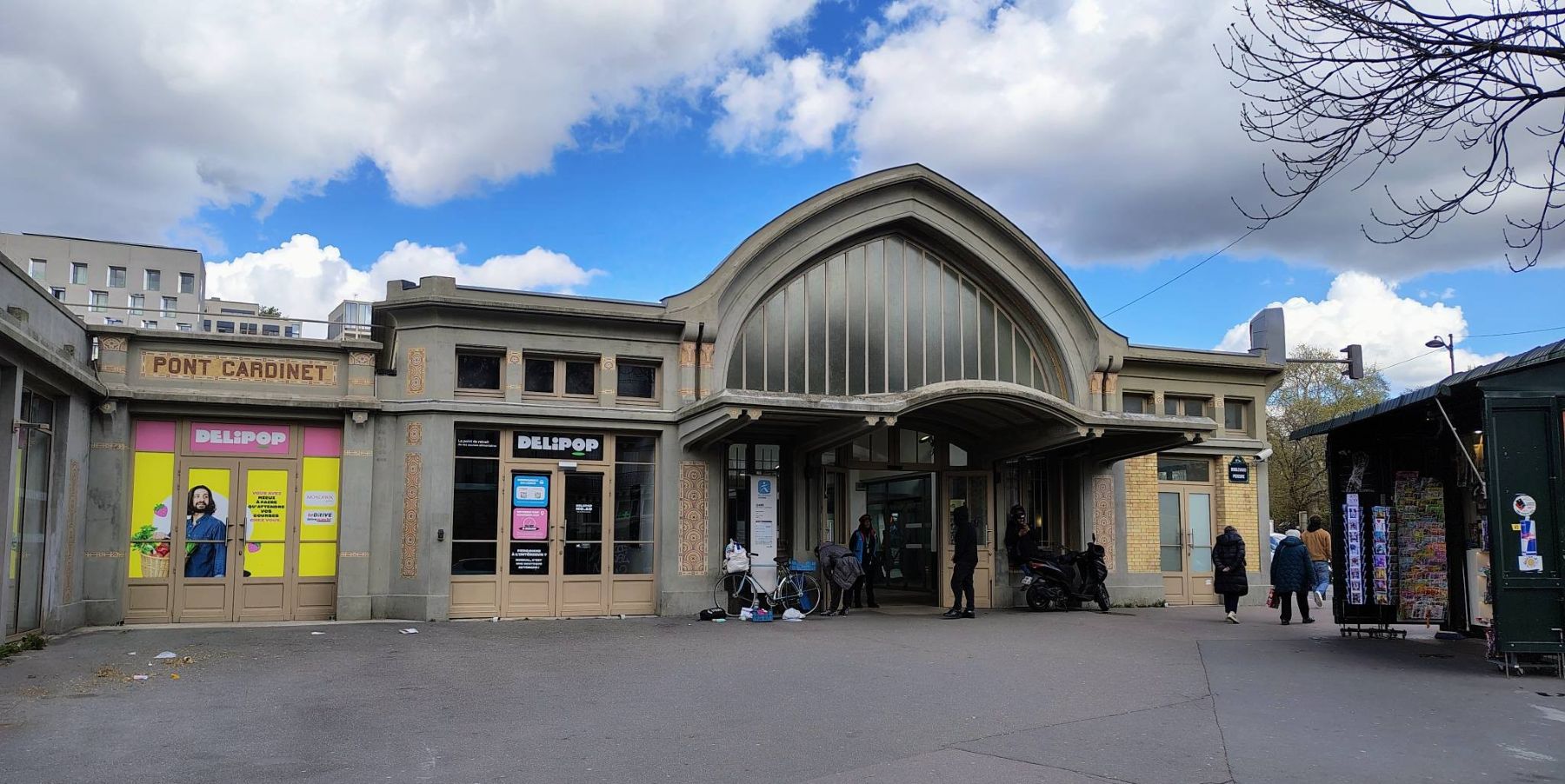
The official Transilien gare Pont Cardinet : https://www.transilien.com/fr/gare/8738111
There you go folks, a dandy city to explore and enjoy with the family, Memorable moments in my eternal Paris, driving and walking all over in my road warrior trails brings out sublime awesome spots with nice memorable family visits of yesteryear always remember and always looking forward to be back, eventually. Again hope you enjoy the post on curiosities of Paris , part XCVI !!! as I.
And remember, happy travels, good health, and many cheers to all !!!


