
Again looking into my cd rom vault found me several pictures that should be in my blog for you and me, This is one area came briefly several times but never used the train station, just passing by either on metro bus or car to see friends. I already have a full post on the train station, so let me tell you a bit more other similar things to see nearby for the memories of my eternal Paris. Therefore, here is my take on the Austerlitz sights of Paris !!! Hope you enjoy the post as I.
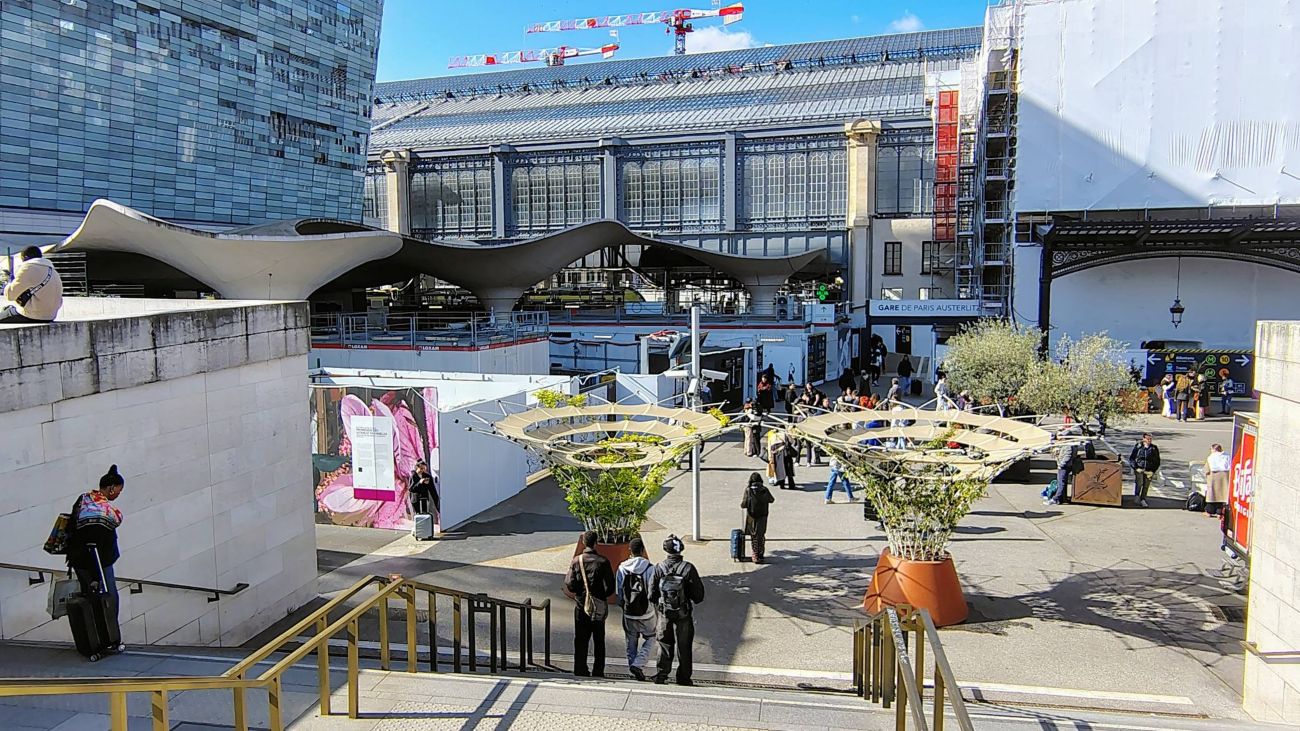
The Gare d’Austerlitz train station is located at 85 quai d’Austerlitz , It remained for a long time the main head of the lines for connections to the South-West of France, Spain, and Portugal but the commissioning in 1990 of the LGV Atlantique, serving Gare Montparnasse, considerably weakened its main line activity. The Gare d’Austerlitz ,formerly Gare d’Orléans is located opposite the Gare de Lyon on the other side of the Seine river, connected by the Pont d’Austerlitz, the Pont Charles de Gaulle, and the Passerelle d’Austerlitz, which is reserved for the metro. Originally, it was the terminus for the Compagnie Paris-Orléans, which had been operating its first line since 1840. The line was extended towards the center of Paris for the 1900 Universal Exposition. This Austerlitz-Orsay line was built along the banks of the Seine beneath its high platforms. The station was rebuilt between 1862 and 1867 , notably including the large metal train shed with a span of 51.25 meters and a length of 280 meters. In 1930, they were renamed “Gare d’Orléans – Austerlitz” before finally, on April 25, 1985, definitively losing the name “Orléans.” They retain the name Austerlitz, in reference to the district in which they were built. Two allegorical statues, draped in classical style representing Agriculture and Industry, decorate the façade.
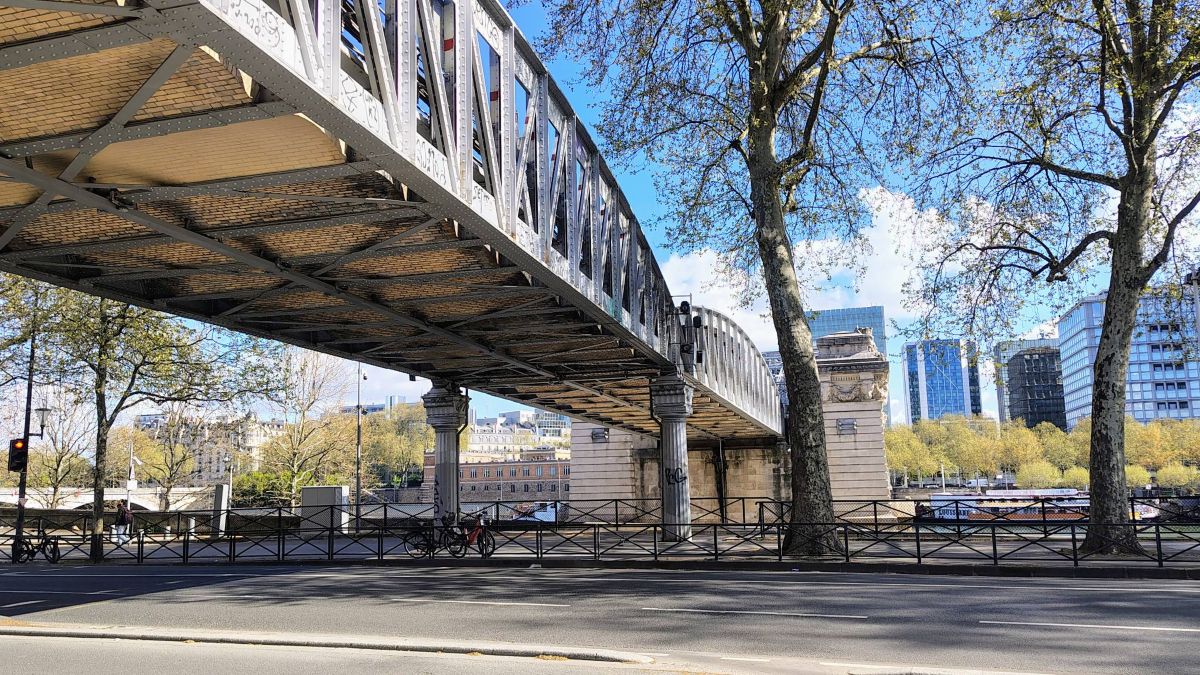
The wonderful Viaduc d’Austerlitz is a railway bridge that spans the Seine river. It is used by trains on metro line 5 . It connects the Gare d’Austerlitz train station, located under the Austerlitz train station’s covered market, to the Quai de la Rapée Viaduct, a curved structure with a 75-meter radius and a 40 per mille gradient, allowing the metro to reach the Quai de la Rapée station. This site is served by the Gare d’Austerlitz and Quai de la Rapée metro stations. Construction took place between 1903 and 1904. At that time, and still today, the viaduct had the longest span of any Parisian bridge, at 140 meters, surpassing the Pont Alexandre III, built three years earlier. The viaduct’s structure was reinforced by welding in 1936 to allow the passage of heavier metro trains. The decoration of the Austerlitz viaduct consisted of various nautical symbols such as fish, oars, anchors, tridents, etc, The arms of Paris (motto) are also present at the base of the arches. This viaduct, which was not to have any support in the Seine so as not to hinder navigation already disrupted by the nearby Austerlitz bridge, takes the form of a very long footbridge with two arches, suspended by lattice girders.
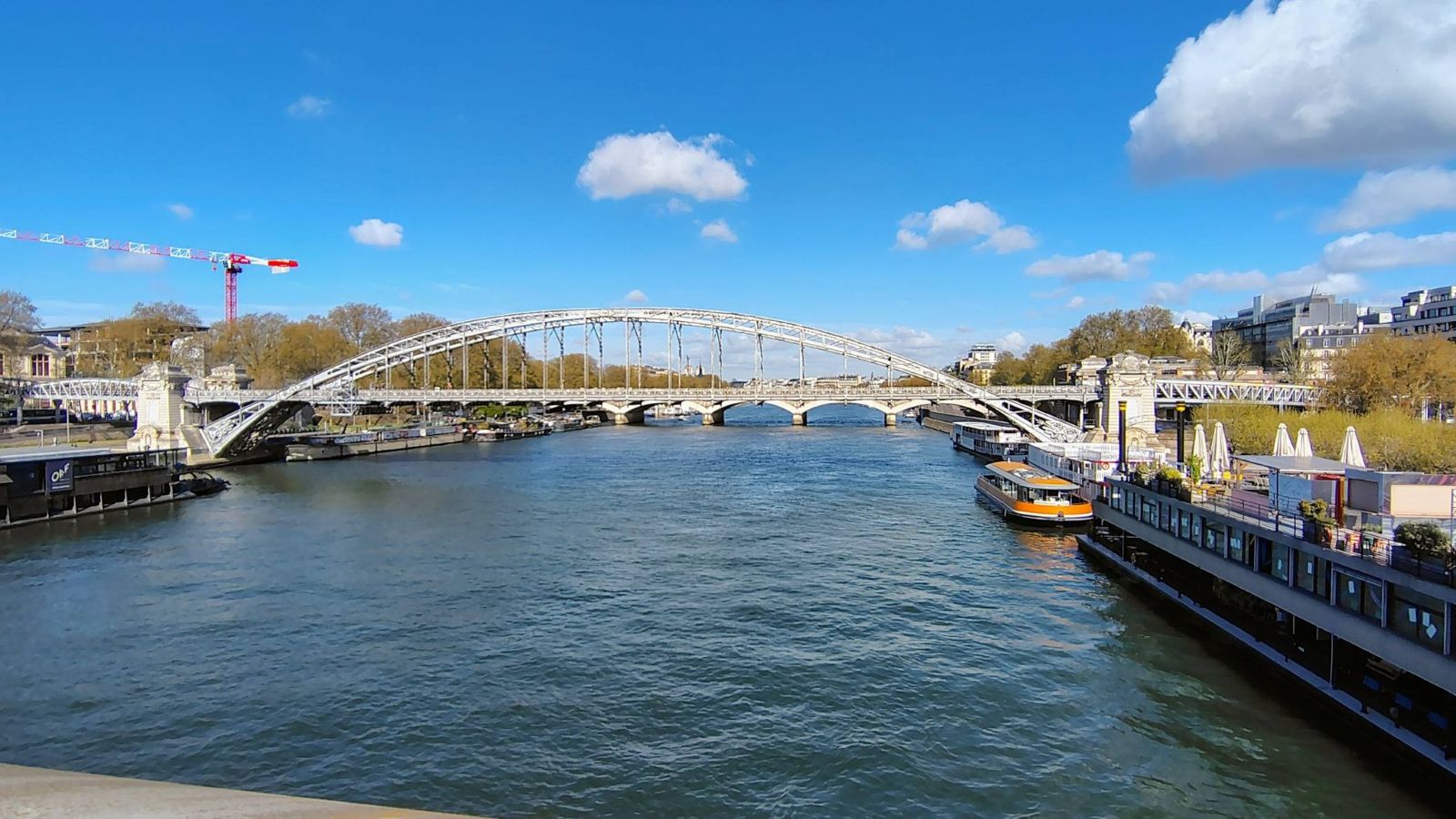
The Pont d’Austerlitz is a bridge spanning the Seine river. It connects the 12éme arrondissement, at the level of Avenue Ledru-Rollin, to the 5éme and 13éme arrondissements , at the level of Place Valhubert, opposite the Jardin des Plantes. The Austerlitz Bridge is served by metro lines 5 and 10 at the Gare d’Austerlitz station and by the RER C at the Gare de Paris-Austerlitz and Quai de la Rapée stations line 5. It takes its name from the victory won at Austerlitz by the Napoleonic armies of the First French Empire over the Russian and Austrian empires on December 2, 1805. The Pont d’Austerlitz originated from the need to connect the Faubourg Saint-Antoine on the Right Bank to the Jardin des Plantes on the Left Bank. Bonaparte, not yet Napoleon, decided in 1801 to build three bridges over the Seine: the future Austerlitz Bridge; the Cité Bridge; and the Arts Bridge. At the beginning of the 19C, the first bridge was built. Another bridge was constructed between 1802 and 1807. It was a five-arched cast-iron structure with a 32-meter span, supported by four piers and two masonry abutments. Between 1814 and 1830, its name was changed to “Pont du Jardin-du-Roi” so as not to offend the new Prussian and Russian allies. After the bridge regained its original name, its necessary renovation was undertaken under Baron Haussmann. In 1854, the bridge was deemed unsafe. It was then rebuilt in stone in 1855 and decorated with motifs including the names of the principal officers killed at the Battle of Austerlitz in 1884-1885. The third bridge was widened a second time. This is how it appears today.
The Paris tourist office on the Pont d’Austerlitz : https://parisjetaime.com/eng/transport/pont-d-austerlitz-p1879
The Paris tourist office on the Gare d’Austerlitz : https://parisjetaime.com/eng/transport/gare-d-austerlitz-p1939
The SNCF train lines on the Gare d’Austerlitz : https://www.garesetconnexions.sncf/en/stations-services/paris-austerlitz
The TER Centre Val de Loire on the local trains at Gare d’Austerlitz :https://www.ter.sncf.com/centre-val-de-loire/se-deplacer/gares/paris-austerlitz-87547000
The Transilien IDF region public transports on the Gare d’Austerlitz metro lines 5 and 10, and RER C : https://www.transilien.com/fr/gare/paris-austerlitz-8754702
There you go folks, feel better telling about another wonderful area of my eternal Paris, The Austerlitz completes nicely the panorama of the City transports choices, and offered nice walks around it indeed, Always good to walk Paris !! Again, hope you enjoy the post on the Austerlitz sights of Paris !!! as I
And remember, happy travels, good health, and many cheers to all !!!


