
We have driven and walked in my eternal Paris, and would like to have an imprint in my blog on the wonderful family times we had there, There is so much to see , doing my best, and glad found me these pictures in my cd rom vault ,which now transposing in my blog for you and me, This was my former worked city, so glad to post more memorable spots on it, I thank you for your readership over the years and to bear with my rants! After all, Paris is to rant, shout and yelled about, me think. Therefore, here is my take on curiosities of Paris, part XCV !!! Hope you enjoy the post as I.
The Boulevard Saint-Marcel is located in the Salpêtrière and Jardin-des-Plantes quartiers/neighborhoods in the 5éme and 13éme district/arrondissements of Paris. Its name comes from the Faubourg Saint-Marcel, through which the boulevard passes. The Faubourg takes its name from the Collegiate Church of Saint-Marcel, renowned for being the tomb of Saint Marcel, a former Bishop of Paris, who died in 436. The boulevard is accessible via metro line 7 at the Les Gobelins station and line 5 at the Saint-Marcel station. On October 17, 1857, a decree declared the creation of a boulevard, known as Boulevard Saint-Marcel, extending from Boulevard du Montparnasse to Boulevard de l’Hôpital. On August 19, 1864, the section east of the intersection of Rue de Lourcine (now Rue Broca) and Boulevard Arago retained its name, while the western section became Boulevard de Port-Royal. The church was located at the southern corner formed today by Boulevard Saint-Marcel and Avenue des Gobelins, along the edge of the old Roman road. This collegiate church disappeared in 1806. The church, rebuilt in the 1990s, is now located on Boulevard de l’Hôpital and houses a reliquary containing the saint’s remains. Notable buildings here are on the corner of Rue René-Panhard is the Institute of Human Paleontology, built in 1912. At No 35 (see pic) is the Police Officers’ Hospital, or Peace Officers’ Health Center, established in 1929 by the Chiappe Foundation. At No 66 is the site of the Sainte-Catherine Cemetery from 1783 to 1824. At No 81, near the intersection with Boulevard des Gobelins, is a marker from the City of Paris commemorating the existence of the Saint-Marcel Collegiate Church. Nearby was the Clamart Cemetery, which was used from 1673 to 1793.
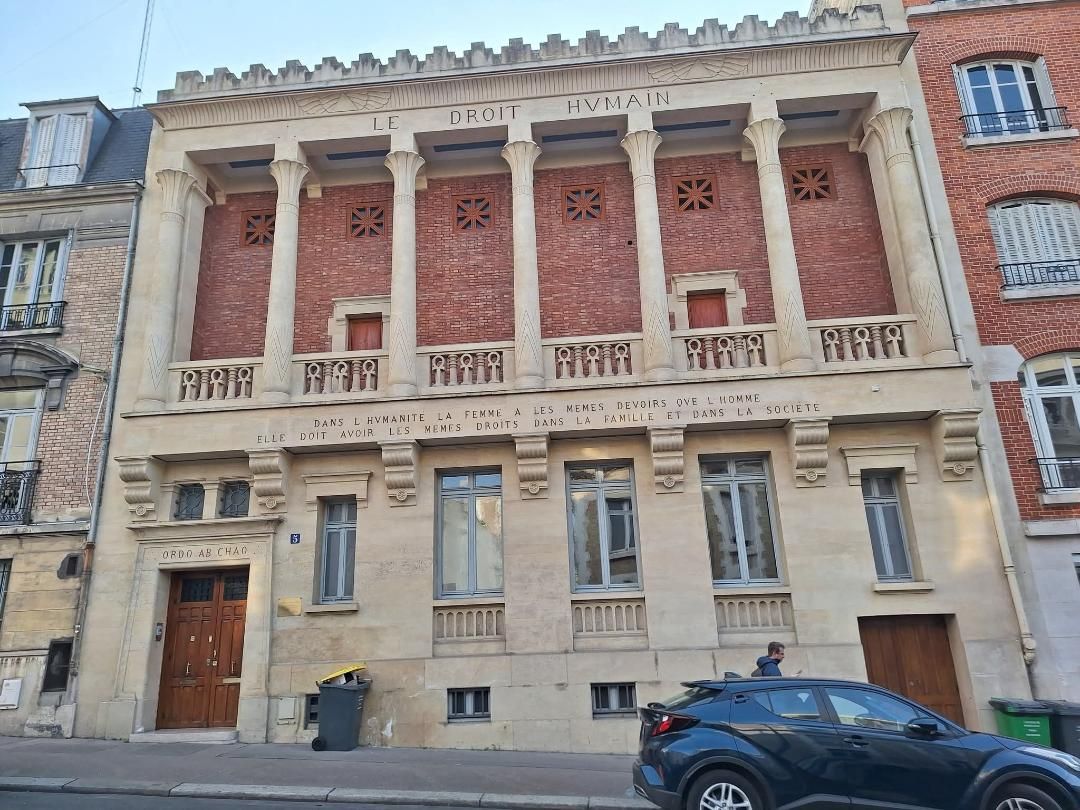
The Paris tourist office on the 5éme arrondissement de Paris : https://parisjetaime.com/eng/article/explore-paris-s-5th-arrondissement-a820
The Paris tourist office on the 13éme arrondissement de Paris : https://parisjetaime.com/eng/article/a-walk-through-the%20villages-of-the-13th-arrondissement-a775
The Impasse Sandrié is in the 9éme arrondissement of Paris. It begins at Place Charles-Garnier and ends at Square de l’Opéra-Louis-Jouvet. The street owes its name to the landowner who had the street built. This dead-end street, opened in 1775 under the name and spelling “Cul-de-sac Cendrier,” was located before the construction of Rue Auber on land that had previously been part of Passage Sandrié. This land had been leased in 1773 to Jérôme Sandrié by the Mathurins religious order through a long-term lease. At no 4, located a stone’s throw from the Opéra Garnier in the former Calmann Levy printing works is the Le Shack ,a true urban oasis, a restaurant, cocktail bar, and coworking space all in one. Main entrance by no 3 Rue Auber, One of the guarded secrets of Paris and just across the street from my job for several years which came for friendly lunch, The building offers, on the ground floor, a 1500m² space designed by Gustave Eiffel, where the printing works’ decor has been preserved; the spiral staircase is even a listed historical monument. It’s perfect for a business breakfast, a client meeting, a conference, drinks with friends, or even a sound meditation session, This place of convergence, at the crossroads of a social club, a workspace, a wellness center, and a restaurant, welcomes both the general public and professionals in a timeless atmosphere. The Le Shack Opéra also has a few private offices for 3 to 15 people.
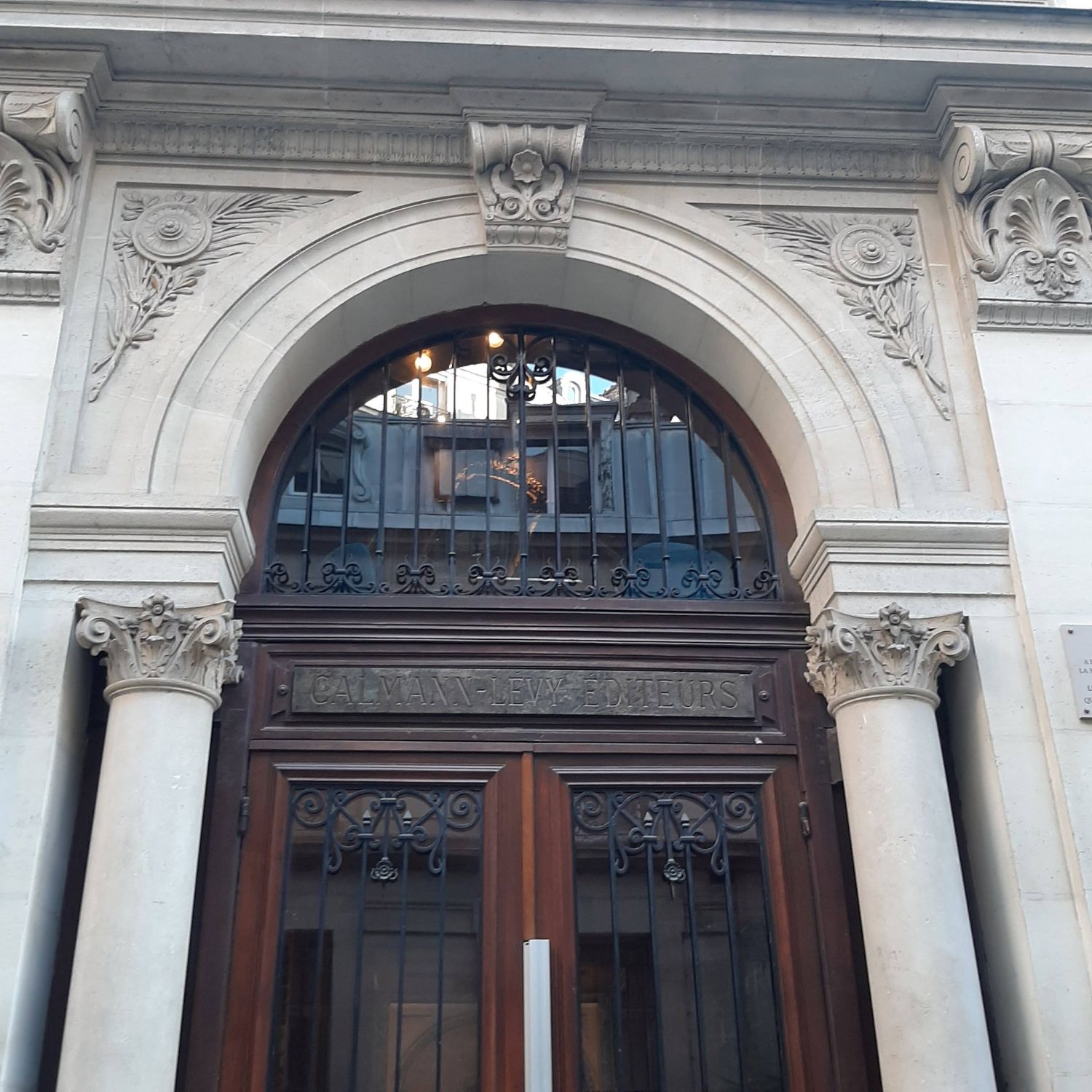
The official Le Shack Opéra : https://leshack.fr/adresse-le-shack/
The Paris tourist office on Le Shack : https://parisjetaime.com/eng/convention/pro/le-shack-pc4257
The metro Saint-Sulpice is on line 4 , located in the 6éme arrondissement of Paris. The station is situated under Rue de Rennes at the intersection with Rue du Vieux-Colombier. The station has three entrances: Entrance 1 “Rue de Rennes”; Entrance 2 “Rue du Four” in front of 65 Rue de Rennes; and Entrance 3 “Rue de Coëtlogon” via an escalator. The two entrances on Rue de Rennes, on either side of Rue du Vieux-Colombier, are adorned with a Val d’Osne lamppost. The station is served by RATP bus lines 39, 63, 70, 84, 86, 95, and 96, and at night by Noctilien night bus lines N01, N02, N12, and N13. The station opened on January 9, 1910. Its name comes from the Rue Saint-Sulpice, located in what is now the Saint-Germain-des-Prés quartier/neighborhood. The church, dedicated to Sulpicius the Pious, Bishop of Bourges from 621 to 624 and chaplain to king Clotaire II, replaced an earlier church dating from 1211 that had become too small. Begun in 1646, its construction was a long and sporadic process, continuing until 1788.
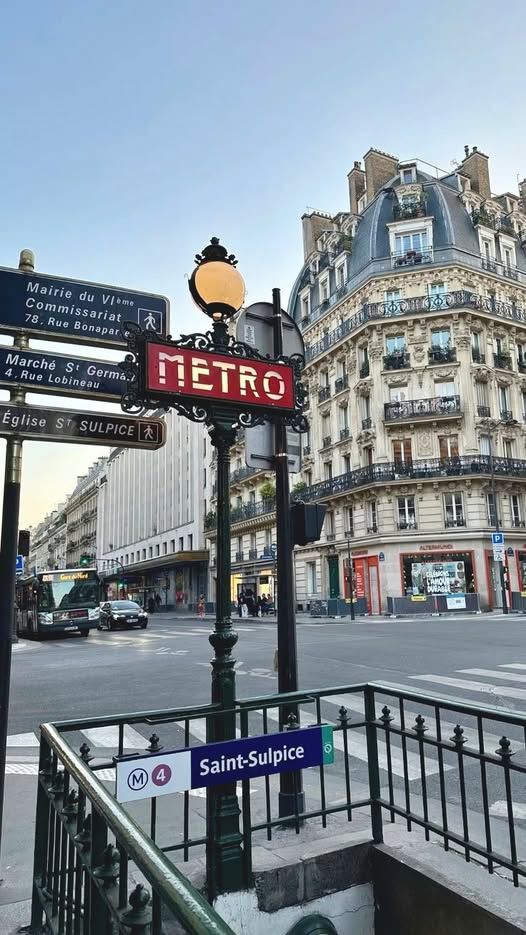
The official RATP transports of Paris on metro line 4 so Saint Sulpice: https://www.ratp.fr/en/plans-lignes/metro/4
The Paris tourist office on the 6éme arrondissement de Paris: https://parisjetaime.com/eng/article/explore-paris-s-6th-arrondissement-a823
The metro Porte d’Auteuil is on line 10, located in the 16éme arrondissement of Paris. The station is situated in the quartier/neighborhood of Auteuil ,under the Place de la Porte-d’Auteuil, and along the axis of the Rue d’Auteuil on one side and the Avenue du Général-Sarrail on the other. The station opened on September 30, 1913 with the commissioning of the first extension of line 8, from the temporary terminus of Beaugrenelle (now the Charles Michels station). Serving in turn as the terminus from Opéra, the station was transferred from line 8 to line 10 on the night of July 26-27, 1937, along with the entire section from Porte d’Auteuil to La Motte-Picquet – Grenelle, as part of the reorganization of lines 8, 10, and the former line 14 (which became part of the current line 13 in 1976). Simultaneously, line 8 was rerouted from La Motte-Picquet – Grenelle to its current terminus at Balard. However, full service to Jussieu was not provided until July 29. The station owes its name to its location beneath the Porte d’Auteuil, an opening in the 1860 fortifications that controlled the road to Boulogne, and whose name refers to the former village of Auteuil. The station has three access points, all consisting of wide fixed staircases: access no. 1 “Boulevard Murat – Parc des Princes – Roland-Garros” leading to the Place de la Porte d’Auteuil, within the bus station reserved for buses between Boulevard Murat and Avenue du Général-Sarrail; access no. 2 “Hippodrome” located on the edge of the Route d’Auteuil-aux-Lacs, opposite the entrance to the Auteuil racecourse; Access no. 3 “Rue d’Auteuil” is located on the median strip at the intersection of this street, Boulevard de Montmorency and Boulevard Exelmans (see pic). This last access is adorned with a Guimard kiosk. The two other entrances are decorated with a Dervaux-type wrought iron balustrade, with a candelabra in the same decorative style of the 1930s for access no. 1 and one of the rare Val d’Osne masts of the network on access no. 2.
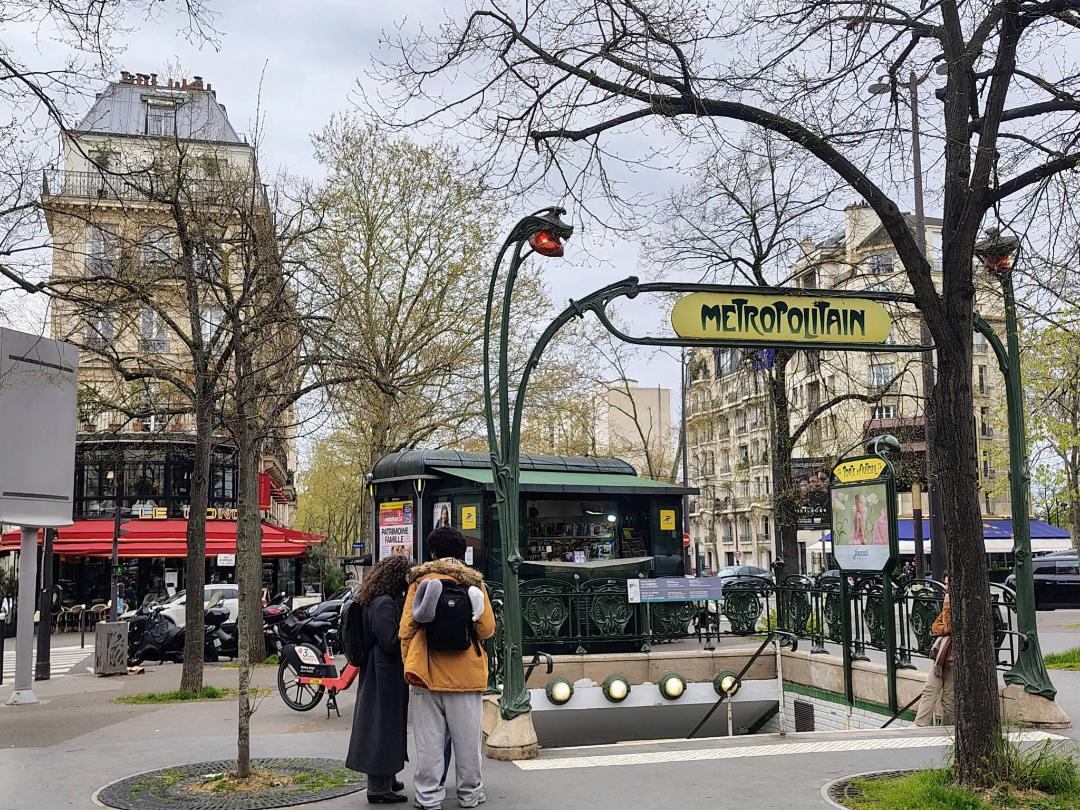
The official RATP transports of Paris on metro line 10 so Porte d’Auteuil: https://www.ratp.fr/en/vos-lignes/metro/10
The Paris tourist office on the 16éme arrondissement de Paris: https://parisjetaime.com/eng/article/a-la-decouverte-du-16e-arrondissement-de-paris-a830
The Pont Saint-Michel connects the Place Saint-Michel on the Left Bank to the Boulevard du Palais on the Île de la Cité. It is accessible via metro line 4 at the Saint-Michel station and via RER lines B and C at the Saint-Michel – Notre-Dame station. It takes its name from the nearby former Saint-Michel-du-Palais chapel, which stood in the Palais Royal, at what is now No 8 of the Palais de Justice. Originally built in 1378, the bridge has been rebuilt several times. The current bridge, constructed in 1857, is 62 meters long and 30 meters wide; it has three semicircular arches. At the center of the transom of each pier is an “N,” a reminder of the imperial emblem of Napoleon III. In the picture in the back you see the Quai des Orfévres,
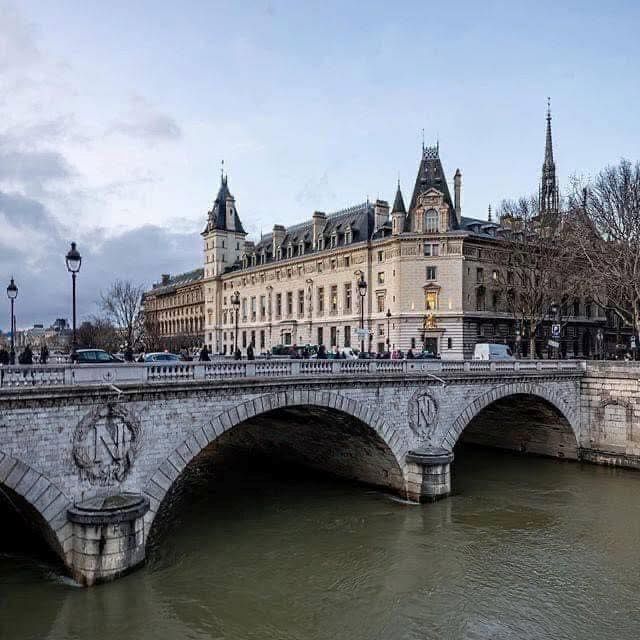
The Quai des Orfèvres is located along the Seine on the Île de la Cité, in the 1er arrondissement of Paris. It begins at the junction of the Pont Saint-Michel with the Boulevard du Palais and ends at the central embankment of the Pont Neuf, opposite No 15, Place du Pont-Neuf. The name was given to the western section of the current Quai des Orfèvres, built between 1580 and 1643 upon its completion, due to the presence of goldsmiths and jewelers along this thoroughfare. It is served by the Pont-Neuf station on metro line 7 and the Saint-Michel station on metro line 4, and by the Saint-Michel – Notre-Dame station on RER line C. The current Quai des Orfèvres resulted from the joining decided in 1807 and effective in 1810 of two initially separate roads, oriented east-west and parallel to the Seine, located on either side of the old rue de Jérusalem (disappeared in 1883), whose southern end was at the level of the current no. 38. It is cited under the name of “rue Saint Louys”, for one part and “rue du quay de l’isle du Pallais, regard vers les Augustins”, for another part, in a manuscript of 1636. For the revolutionary period during which the road was named “quai du Midi” before resuming its original name under Napoleon I. Notable buildings: No. 36: the site of the former residence of the First President of the Paris Court of Appeal, which burned down during the Commune uprisings of 1871 and was replaced by the current building, constructed between 1875 and 1880. Known as the Quai des Orfèvres, it housed the headquarters, staff, and shared services of the Regional Directorate of the Judicial Police of the Paris Police Prefecture until their relocation to 36 rue du Bastion, in the 17éme arrondissement of Paris, in 2017. This address, 36 Quai des Orfèvres, has thus witnessed the golden age of the Parisian police. It also fueled the imagination of certain writers, such as Georges Simenon: it is partly thanks to him and his legendary character, Inspector Maigret, that the location became so popular, featuring no fewer than 75 novels and 28 short stories! The “36” also serves as a backdrop for numerous films, such as Claude Zidi’s Inspector Clouseau and Henri-Georges Clouzot’s Quai des Orfèvres. Nowadays, television series have also made extensive use of this now-iconic location, notably in Commissaire Moulin, Alice Nevers, and Profilage. The 36 Quai des Orfèvres is slated to house the Police Museum ,currently located in the 5éme arrondissement police station.
The Paris tourist office on Paris Centre (arrond 1-4) of Paris: https://parisjetaime.com/eng/article/explore-the-centre-of-paris-a846
There you go folks, a dandy city to explore and enjoy with the family, Memorable moments in my eternal Paris, driving and walking all over in my road warrior trails brings out sublime awesome spots with nice memorable family visits of yesteryear always remember and always looking forward to be back, eventually. Again hope you enjoy the post on curiosities of Paris , part XCV !!! as I.
And remember, happy travels, good health, and many cheers to all !!!


