
We have driven and walked in my eternal Paris, and would like to have an imprint in my blog on the wonderful family times we had there, There is so much to see , doing my best, and glad found me these pictures in my cd rom vault ,which now transposing in my blog for you and me, This was my former worked city, so glad to post more memorable spots on it, in addition this was my area coming into Paris to work, many times walked these streets! I thank you for your readership over the years and to bear with my rants! After all, Paris is to rant, shout and yelled about, me think. Therefore, here is my take on curiosities of Paris, part LXXXIII !!! Hope you enjoy the post as I.
The Rue du Havre is in the 8éme (odd-numbered side) and 9éme (even-numbered side) arrondissements of Paris. It begins at Boulevard Haussmann and ends at Rue Saint-Lazare. It took the name “Rue du Havre” because trains departing from this dock provided access to Le Havre. The creation of the rue du Havre responded to the desire to facilitate traffic around the railway station of Saint-Germain, Versailles and Rouen, built in 1837. The section between the rue de Provence and the rue Saint-Lazare was opened by virtue of the royal ordinance of September 3, 1843 which fixed its width at 20 meters and gave it two chamfered sections of 30 meters at the opening onto the rue Saint-Lazare and two others of 5 meters at the corners of the rue Saint-Nicolas-d’Antin ,Notable buildings: No. 8: Lycée Condorcet (passed in front for many years to work) founded in 1803 and housed in the buildings of the Capuchin convent of Saint-Louis-d’Antin, built in the 1780s by the neoclassical architect Alexandre-Théodore Brongniart. It is one of the four oldest high schools in Paris. The institution has successively borne the name Lycée Condorcet since 1883. Notable alumni include: Bảo Đại, the throne name of Prince Nguyễn Phúc Vĩnh Thụy, only son of Emperor Khải Định of Vietnam; Georges Eugène Haussmann, also known as Baron Haussmann; André Citroën, a French engineer and graduate of the École Polytechnique, a pioneer in the automotive industry, and founder of the Citroën automotive empire in 1919; and Marcel Dassault, born Marcel Ferdinand Bloch, a French engineer, politician, and entrepreneur. He is best known as a figure in the aeronautics industry and CEO of the Dassault Group, which he created. Marcel Proust was a French writer, whose principal work is the novel sequence entitled In Search of Lost Time, published between 1913 and 1927. Paul Verlaine was a French writer and poet. Lucien Ginsburg, also known as Serge Gainsbourg, was a French singer-songwriter, painter, screenwriter, writer, actor, and filmmaker. Louis de Funès was a French actor of Spanish descent. His father was Carlos Luis de Funès de Galarza, and his mother was Leonor Soto Reguera. Jean Cocteau was a French poet, painter, draftsman, playwright, and filmmaker. Henri de Toulouse-Lautrec was a French painter, draftsman, lithographer, poster artist, and illustrator. Among many others.
I write about these two streets above and below because it was my walking trail for several years going and coming to from work in Paris, A memorable passage of unforgettable moments in my eternal Paris, the picture borders both and is the Au Printemps dept store (see post) and (see pic here) at the corner of both streets,
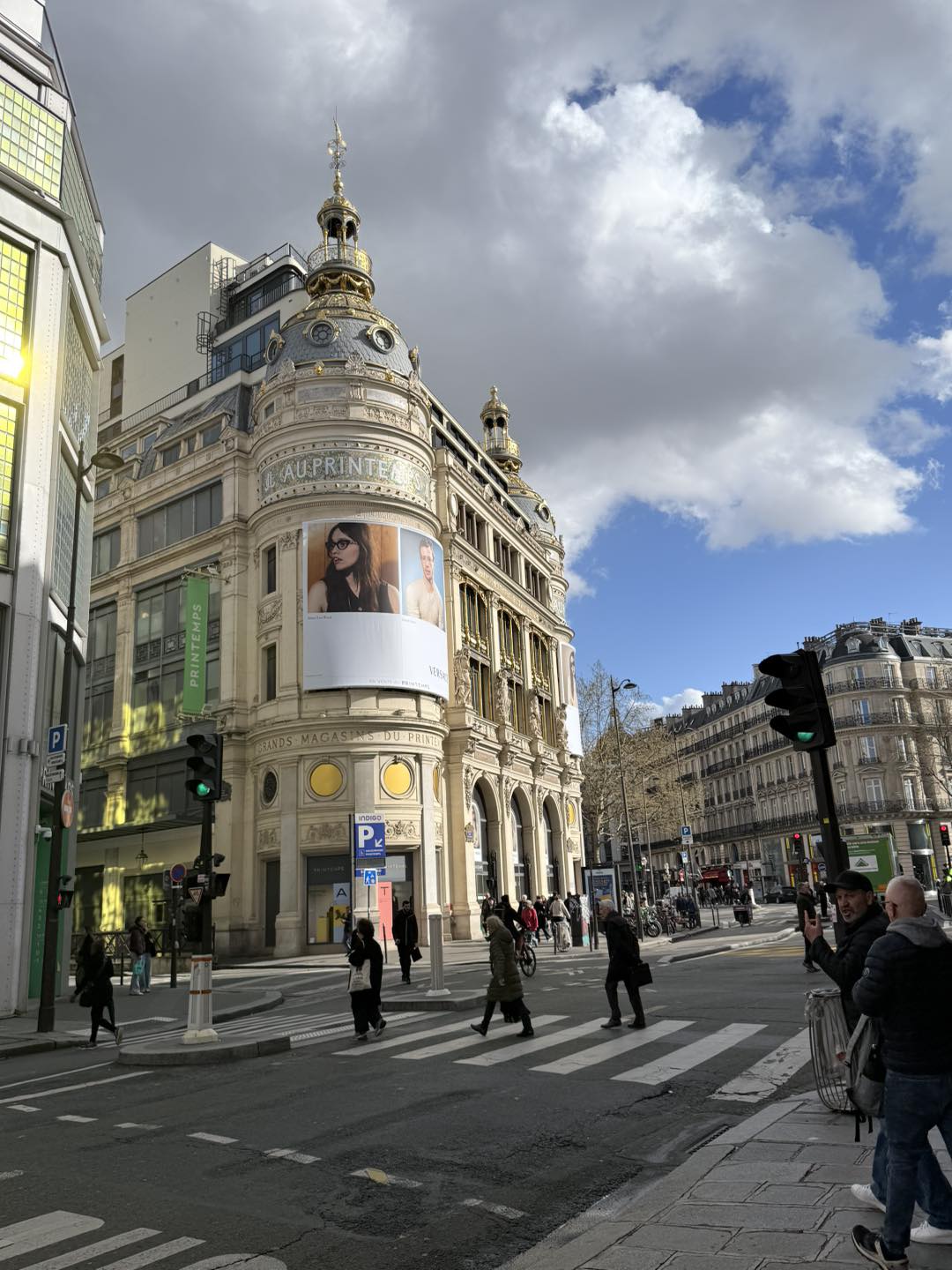
The Rue de Provence is located in the 8éme and 9éme arrondissements of Paris. It begins at Rue du Faubourg-Montmartre and ends at Rue de Rome , Only the short section between Rue du Havre (see above). and Rue de Rome is located in the 8éme arrondissement. This site is served by the metro Trinité – d’Estienne d’Orves (line 12), the Le Peletier (line 7), the Havre – Caumartin (lines 3 and 9), and the Chaussée d’Antin-Lafayette (lines 7 and 9). It was named in honor of Louis-Stanislas-Xavier, Count of Provence, brother of Louis XVI and King of France in 1814 under the name Louis XVIII. The opening of the Rue de Provence was authorized by letters patent of December 15, 1770, in favor of the banker and tax farmer Jean-Joseph de Laborde. In 1784, it was extended to the Rue de l’Arcade under the name “Ruelle de l’Égout,” then “Rue de l’Égout-Saint-Nicolas,” and finally “Rue Saint-Nicolas-d’Antin.” The construction of Boulevard Haussmann eliminated the section of this street located west of Rue de Rome; the remaining section was renamed Rue de Provence in 1868. Notable buildings: No. 22 (corner of Rue Chauchat): an 18C mansion converted by art dealer Samuel Bing into an Art Nouveau gallery in late 1895 under the name Maison de l’Art Nouveau. It was demolished in 1922. A post office, which has retained its exterior decoration, now occupies the site. Nos. 23-25: headquarters of Le Figaro since 2023. No. 32: a rare example of a building from the very end of the 18C. No. 34: the door leaves are said to be the only remaining vestige of the famous Hôtel Thellusson, built in 1778 by Claude-Nicolas Ledoux for the widow of the Genevan banker Georges-Tobie de Thellusson, Resident of the Republic of Geneva in Paris. No. 42: Taitbout Chapel, a Korean Baptist church. No. 44: Barbey d’Aurevilly lived at this address. Nicknamed “the Constable of Letters,” he was a novelist, short story writer, essayist, poet, literary critic, journalist, dandy (a lifestyle he theorized, even before Baudelaire, in his essay *Du dandysme et de George Brummell*), and polemicist. Nos. 57, 59, and 61: entrances to the Cité d’Antin. This street was cut through the site of the former Hôtel de Montesson, where the Austrian Embassy ball (1810) was held to celebrate the Emperor’s marriage to Archduchess Marie-Louise. The ball ended in a tragic fire. This fire and its aftermath led to a complete reorganization of the fire brigade, the equivalent of the fire service at the time, which would become what is now the Paris Fire Brigade. In Alexandre Dumas’s novel *La Dame aux camélias*, the character Armand Duval resides for a time on this street.
The Paris tourist office on the 8éme arrondissement de Paris : https://parisjetaime.com/eng/article/explore-paris-s-8th-arrondissement-a826
The Paris tourist office on the 9éme arrondissement de Paris : https://parisjetaime.com/eng/article/explore-paris-s-9th-arrondissement-a828
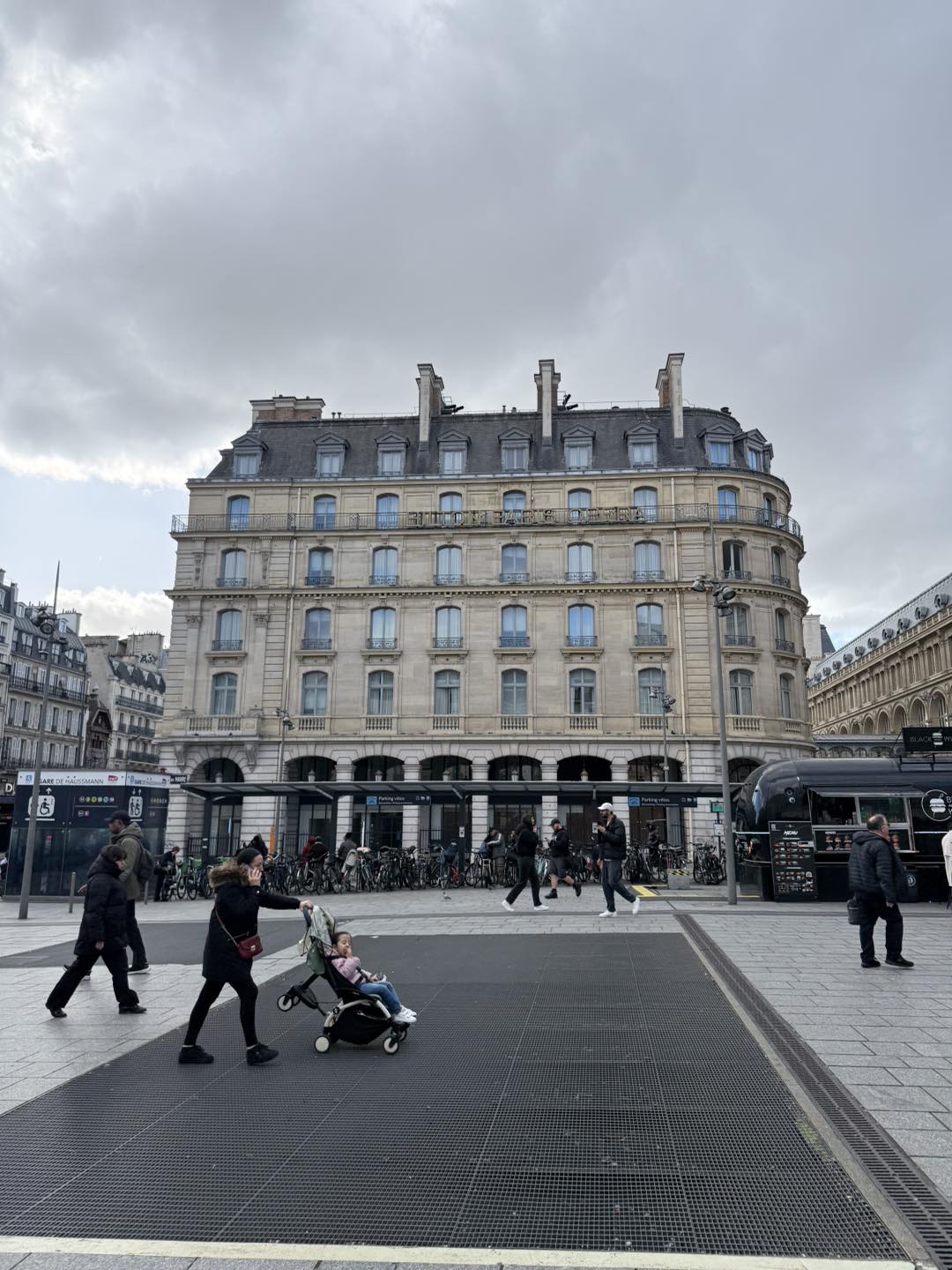
The metro Saint-Lazare is on lines 3, 12, 13, and 14 , located on the border of the 8éme and 9éme arrondissements of Paris. The reason of this post finally as it was my initial station for trains and then metros from my Versailles to go to work in Paris, The salle de Correspondance or underground interchange hall of Saint-Lazare metro station, aka “La Rotonde,” was built in 1912. And all lines passages go by it lol ! Memories forever, The station is situated next to and connected to the Gare Saint-Lazare train station (see post), at the administrative boundary between the Madeleine, Europe, Saint-Georges, and Chaussée-d’Antin quartiers/neighborhoods. The station owes its name to its proximity to the Gare Saint-Lazare and to the Rue Saint-Lazare, which refers to the former Saint-Lazare house to which the street once led. The platforms were built as follows: on line 3, in a curve under the Cour de Rome, along the axis of the Rue de Rome, at ground level above the tunnel of line 13; on line 12, along an axis under the Rue Saint-Lazare, between the Place du Havre and the end of the Rue de Caumartin; on line 13, in line with the platforms of line 12 under the same street, between the Cour du Havre and the Cour de Rome, alongside the Hilton Paris Opéra hotel (had convention meetings here !); on line 14, underground under the Cour de Rome. The station opened on October 19, 1904, with the commissioning of the first section of CMP line 3, between the temporary termini of Avenue de Villiers (now Villiers) and Père Lachaise. On July 14, 1999, the station was connected to the new underground Haussmann – Saint-Lazare station, served by RER line E, of which it then became the western terminus. Through this connection, an indirect transfer was now possible with the Havre – Caumartin metro station on lines 3 and 9, indeed, thus creating the first underground connection between lines 9 and 12, which had not existed until then as well as with the Auber station on RER line A, the latter being itself connected to the Opéra station on lines 3, 7, and 8. The station has 11 entrances: Entrance no. 1 “Cour de Rome”: escalators (entrance and exit), Cour de Rome staircase. This entrance features a glass structure, La Lentille, designed by Jean-Marie Charpentier; Entrance no. 2 “Place du Havre”: two staircases at 13 Place du Havre; Access no. 3 “Passage du Havre”: two staircases at 14 Place du Havre, along with direct access to the Passage du Havre shopping center (my most used exit); Access no. 4 “Galerie des Marchands”: escalators (entrance and exit) to the shopping arcade connected to the SNCF train station; Access no. 5 “Rue Intérieure”: Rue Intérieure (access to the SNCF train station); Access no. 6 “Place Gabriel-Péri”: Place Gabriel-Péri; Access no. 7 “Rue de l’Arcade”: 62 Rue de l’Arcade (corner of Rue de Rome); Access no. 8 “Rue d’Amsterdam”: a staircase opposite 2 Rue d’Amsterdam; Access no. 9 “Cour du Havre”: an escalator at the exit of Cour du Havre; Access no. 10 “rue Caumartin”: a staircase at 95-97, rue Saint-Lazare and Access no. 11 “rue Saint-Lazare”: 92, rue Saint-Lazare.
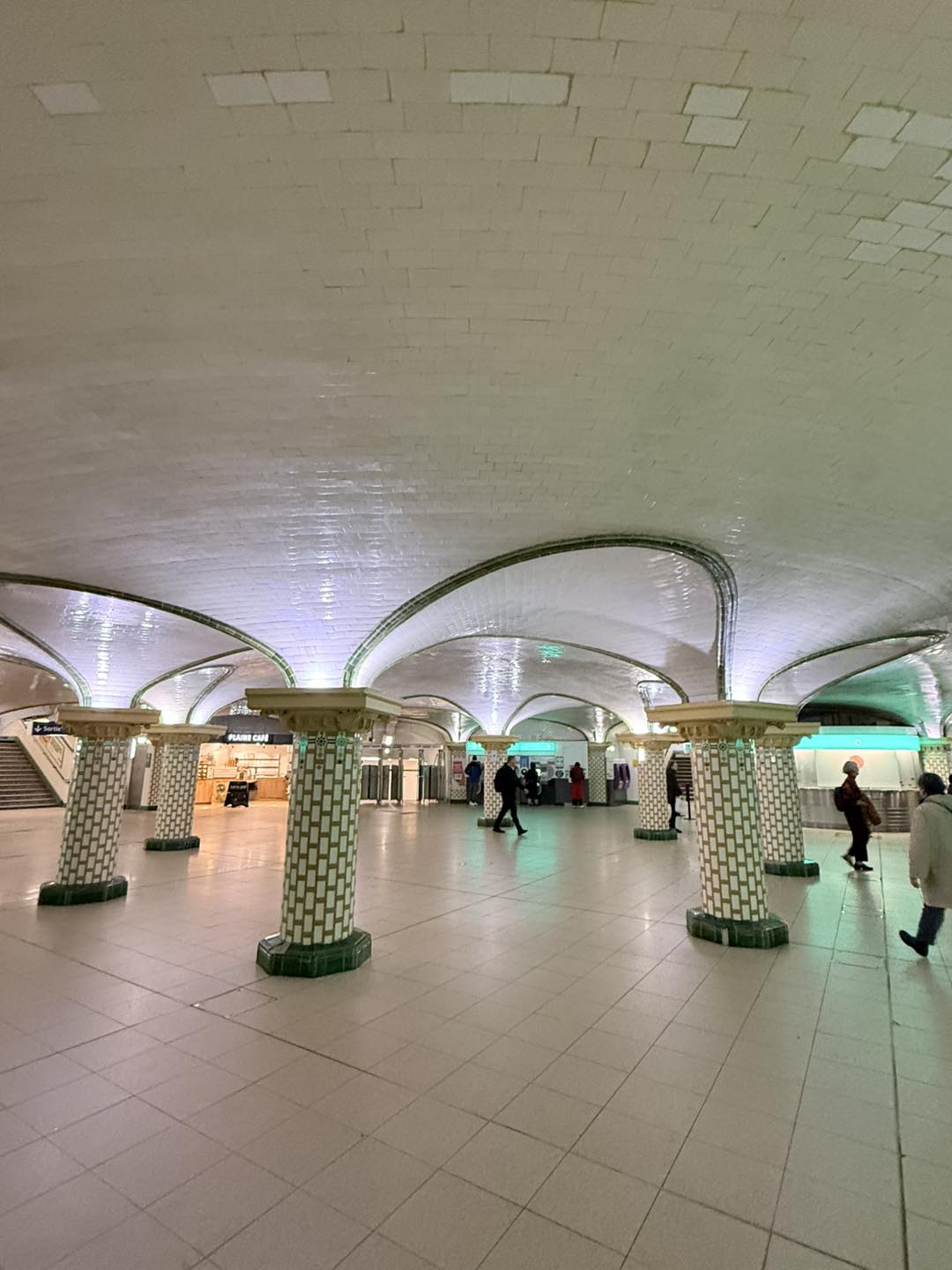
The RATP transports of Paris on the Saint Lazare station : https://www.ratp.fr/en/vos-lignes/vos-stations/saint-lazare
The Gare Saint Lazare train station (see posts) will be in mind forever, memories never to go away. Not your fan of public transport if you followed me but sometimes for one reason or another they were needed in my belle France to take them. Some of the memories was the work days when had late arrivals or departures due to technical problems on the tracks lol! Back then, upon arriving at Saint Lazare I walked 18 minutes to the office same time as taking the public transport, but you see more of eternal Paris, glorious grand department stores, Madeleine, rue Saint Honoré, passing by rue de Rivoli , like I said once in Paris, walk.
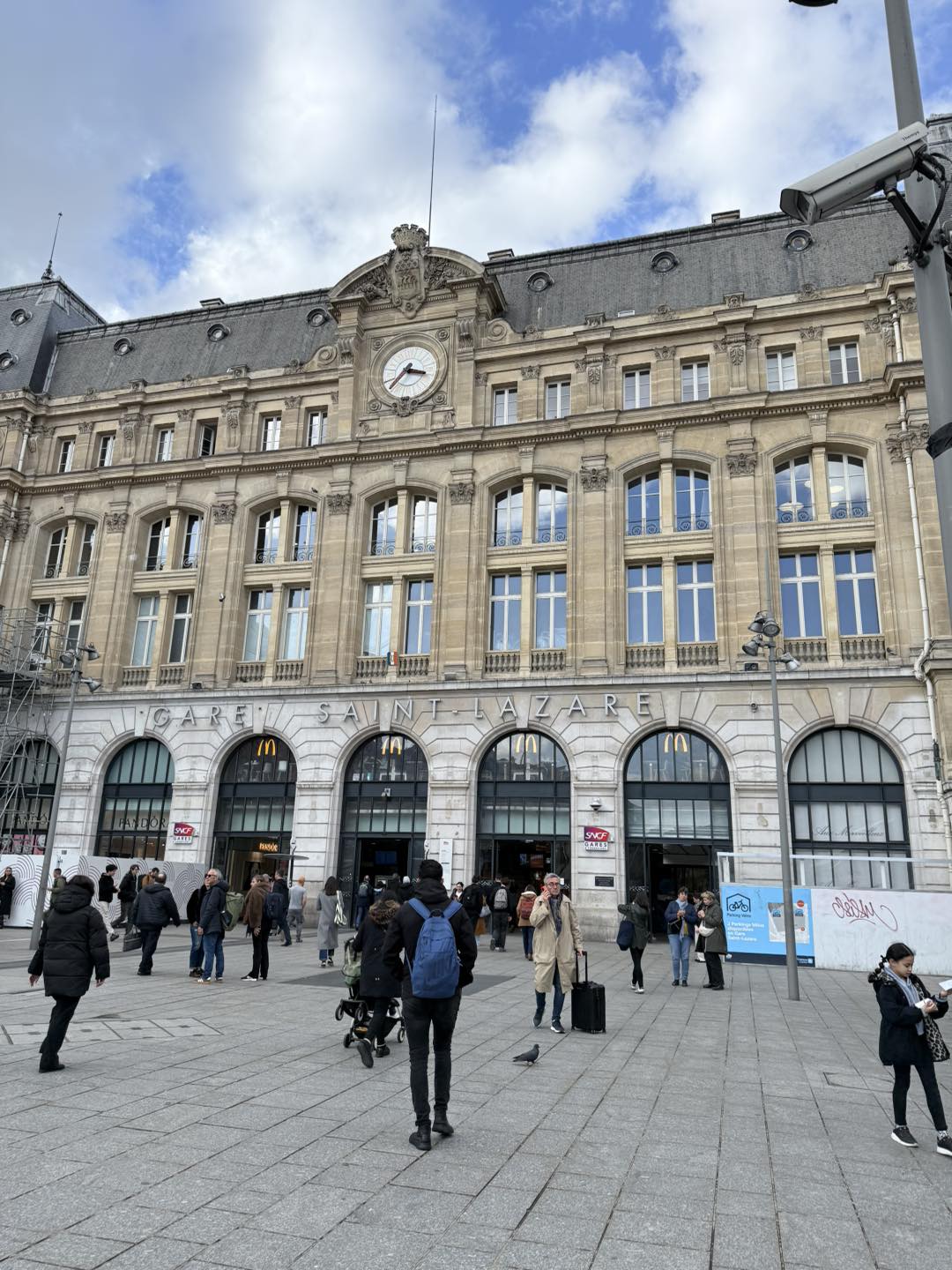
The SNCF information on the Saint Lazare train station : https://www.garesetconnexions.sncf/fr/gares-services/paris-saint-lazare
The Paris tourist office on the Gare Saint Lazare: https://parisjetaime.com/eng/transport/gare-saint-lazare-p1941
The passage du Havre located main entrance at 109 Rue Saint-Lazare is a covered passage located in the 9éme arrondissement of Paris, It has now 40 stores on 23,500 square meters facing gare Saint-Lazare train station,which was my passing thru to work for several years, The Passage du Havre shopping center was launched in 1997, and the main stores I have visited are L’Atelier du Chocolat, FNAC, L’Occitane, Maison Pradier, Louis Pion (where they always fixed my watches lol!) and Yves Rocher,
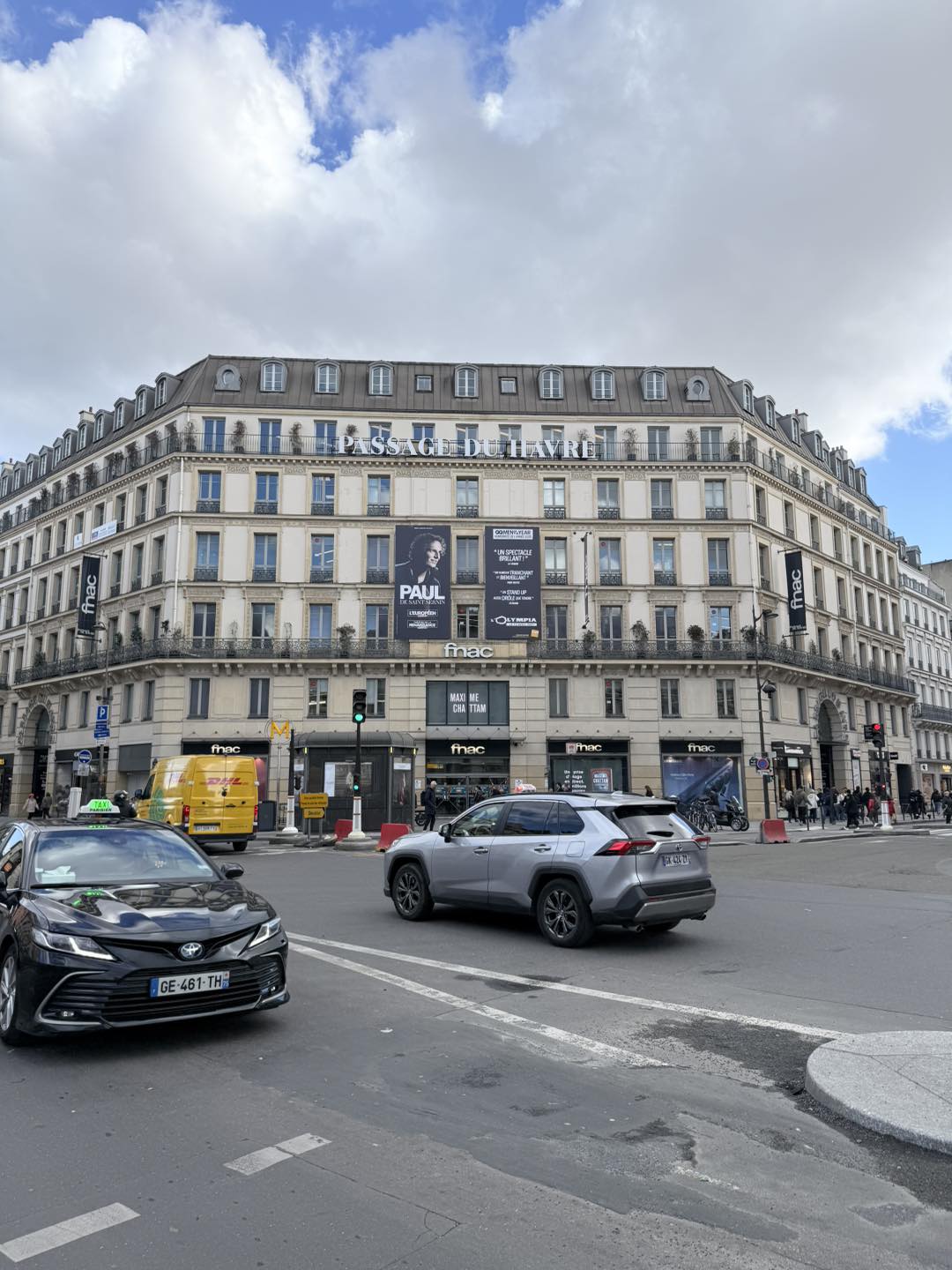
The official Passage du Havre : https://www.passageduhavre.com/
The Paris tourist office on the Passage du Havre : https://parisjetaime.com/eng/shopping/passage-du-havre-p3742
The Cour de Rome is located in the Europe quartier/neighborhood of the 8éme district/ arrondissement of Paris. It should not be confused with the Cour de Rome in the 3rd arrondissement. This street is an extension of the Saint-Lazare train station. The Cour de Rome is served by metro lines 3, 12, 13, and 14 at the Saint-Lazare metro station. Also a busy bus depot for lines 26 27 29 42 66 94 95 ,and 150-155 taken many here over the years ! It takes its name from its proximity to the Rue de Rome and is the counterpart to the Cour du Havre located to the east of the station. This street was created during the reconstruction of the Saint-Lazare train station between 1885 and 1888. In 2003, with the opening of metro line 14, a glass bubble-shaped metro entrance was inaugurated. Notable buildings: The Saint-Lazare train station. The five-meter-high sculpture “Accumulation” by Arman, entitled “Consigne à vie” (Leasehold for Life), representing a stack of suitcases.
The Paris tourist office on the 8éme arrondissement de Paris : https://parisjetaime.com/eng/article/explore-paris-s-8th-arrondissement-a826
There you go folks, a dandy city to explore and enjoy with the family, Memorable moments in my eternal Paris , walking these streets for several years that brings out sublime awesome spots with nice memorable family visits of yesteryear always remember and always looking forward to be back, eventually. Again hope you enjoy the post on curiosities of Paris , part LXXXIII !!! as I.
And remember, happy travels, good health, and many cheers to all !!!


