
Let me tell you about an off the beaten path City of my belle France , I am glad found me new pictures in my cd rom vaults that should be in my blog for you and me, My dear late wife Martine love shopping and we went all over for it, and took a peek around, The City of Troyes in the dept no 10 of the Aube in the region of Grand Est, and in my belle France, It is located in the historical and cultural region of Champagne, of which it was the county capital. Let me tell you a bit about this wonderful monument, Therefore, this is my take on the Church Saint Rémy of Troyes !!! Hope you enjoy the post as I.
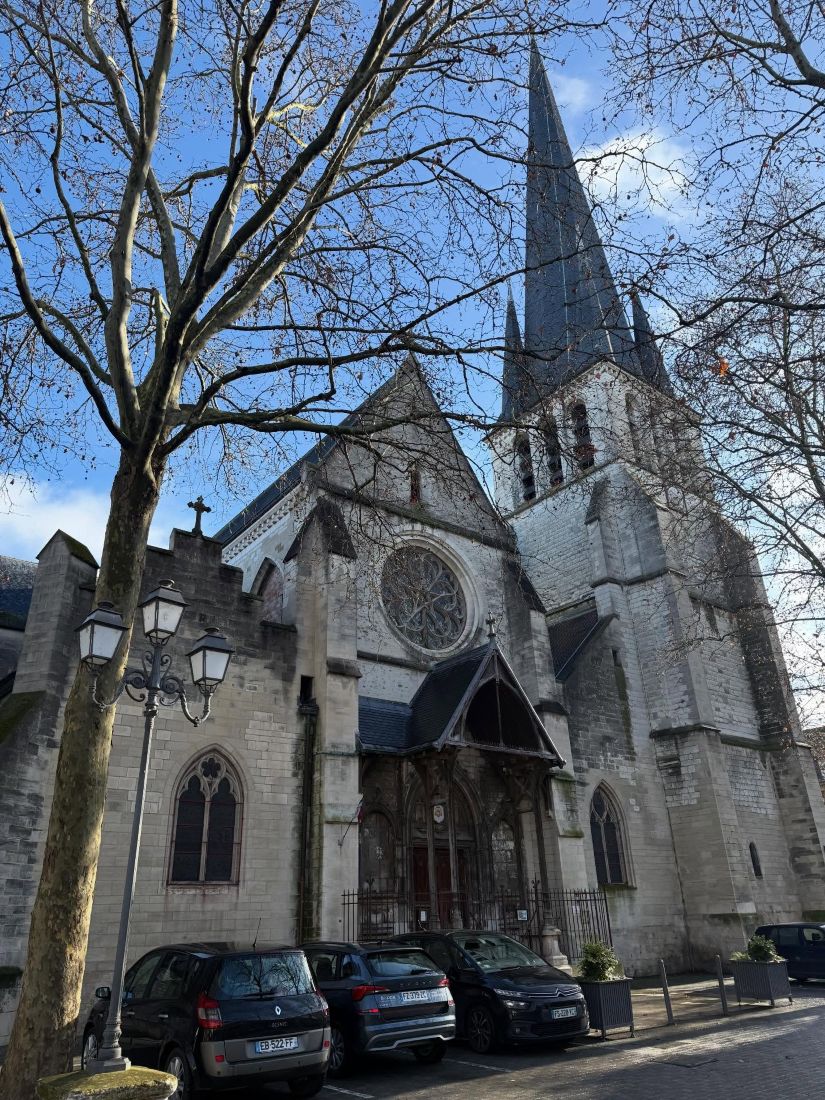
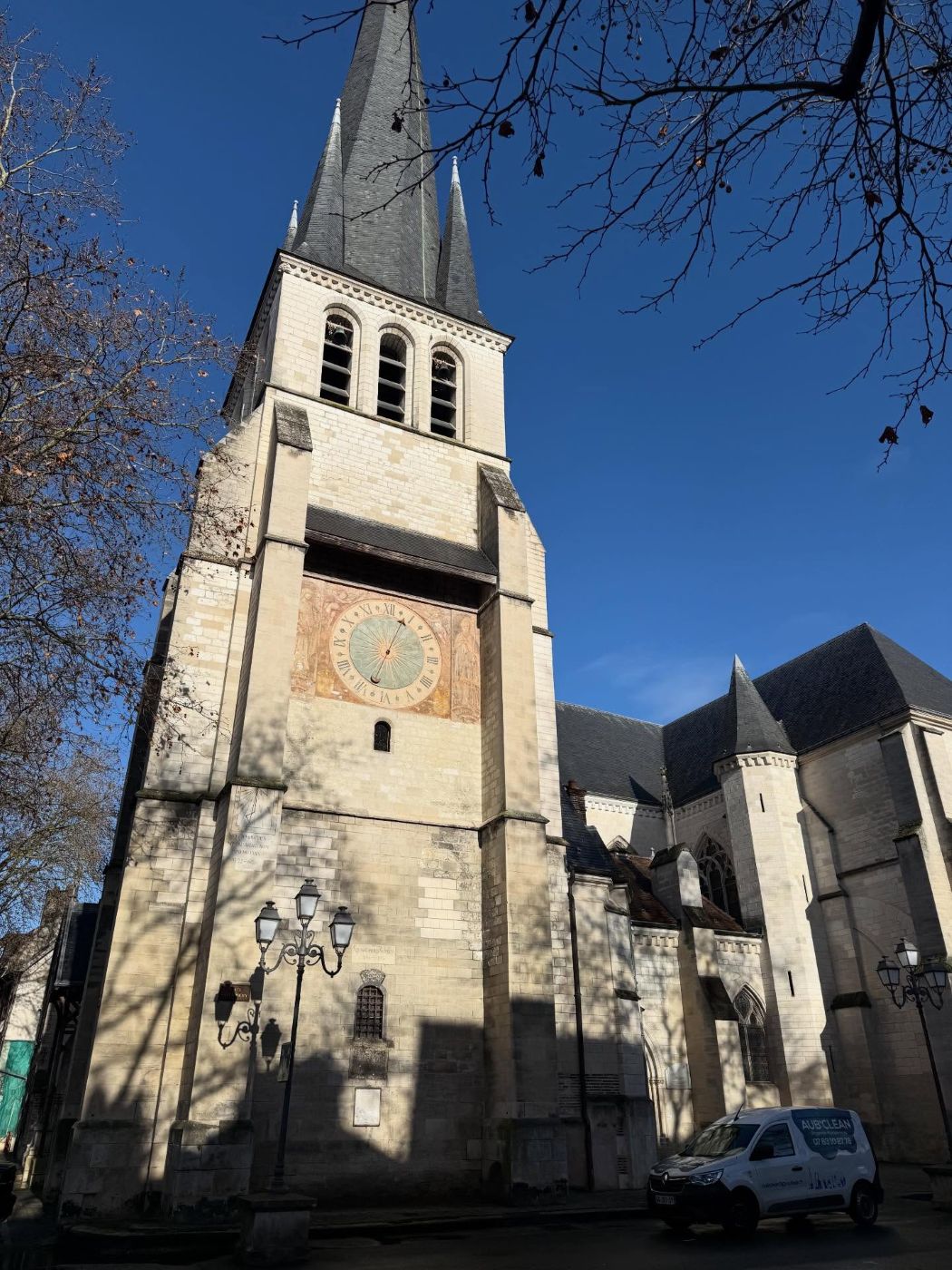
The Church Saint Rémy is one of the oldest churches in the city, known in particular for its pictorial works from the 16-17C as well as for its stained glass windows from the 19C and early 20C. The church façade dates from the 14C and was somewhat altered at the end of the 19C. The current portal was sculpted between 1410 and 1450; one of the church’s curiosities is found there: a sculpture representing a snail with a dog’s head at the northern end of the archivolt. The central portal, along with the south portal, is the only sculpted part of the church’s exterior. The canopy overhanging the whole dates from 1875. Dominating the whole, a rose window with mullioned, trilobed arches that meet in the shape of five-pointed stars illuminates the nave, preceding the gable surmounted by a cross. Two buttresses flank this facade which extends with the walls of the side aisles, on the right by the bell tower and on the left by the presbytery built in 1899. The bell tower of Saint-Rémy, at the corner aisle of the church, is the only example of a 14C tower preserved in the region, its construction began in 1386. The tower is flanked by buttresses and divided into four stories by dripstones, the second of which is occupied by a clock face with a single hand, decorated with a fresco from 1772. The tower is finally surmounted by four pinnacles surrounding an octagonal spire 33 meters high, ending in a weather vane cross 4 meters high, thus overlooking the whole city of Troyes. The tower with its spire (excluding the weathervane cross) measures almost 62 meters.
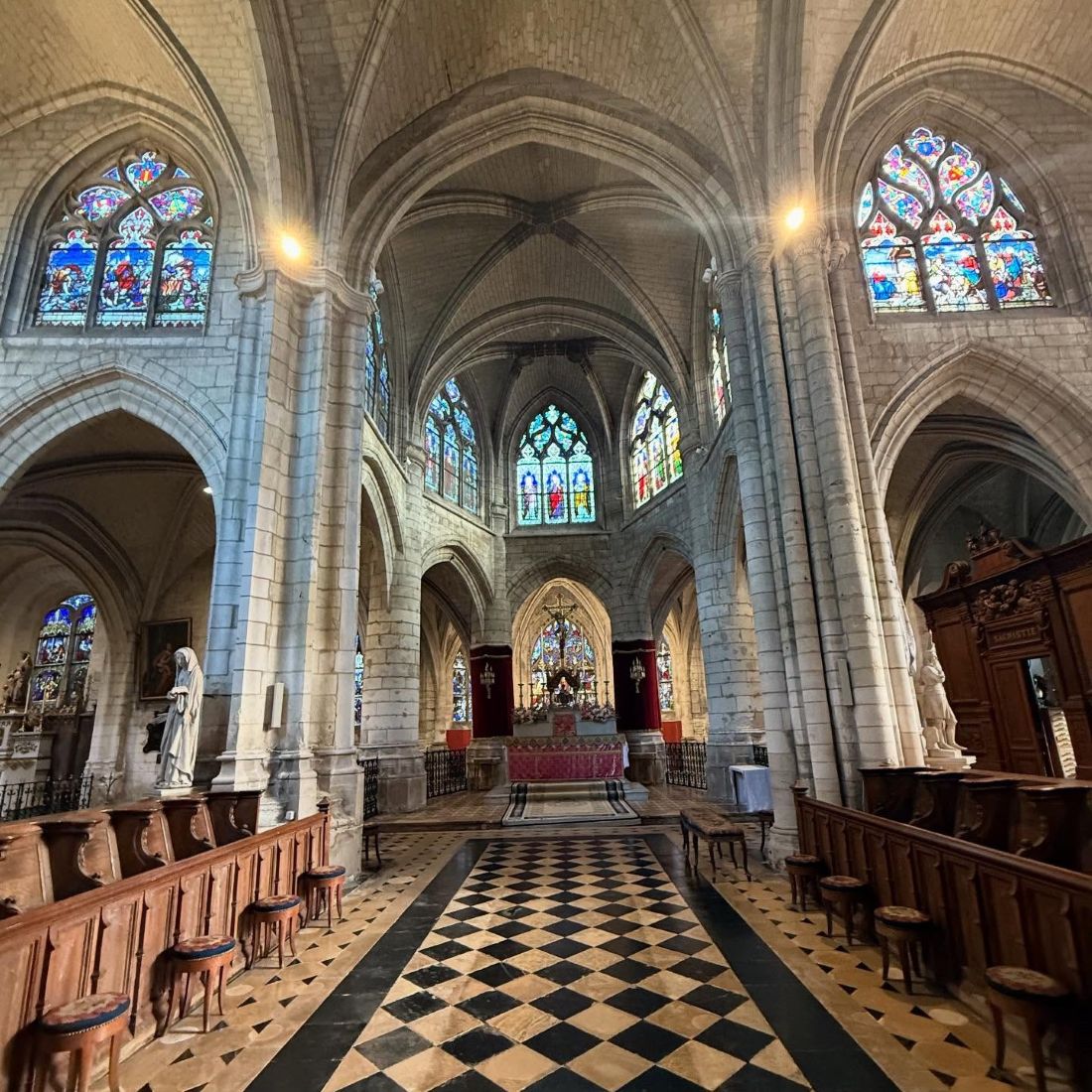
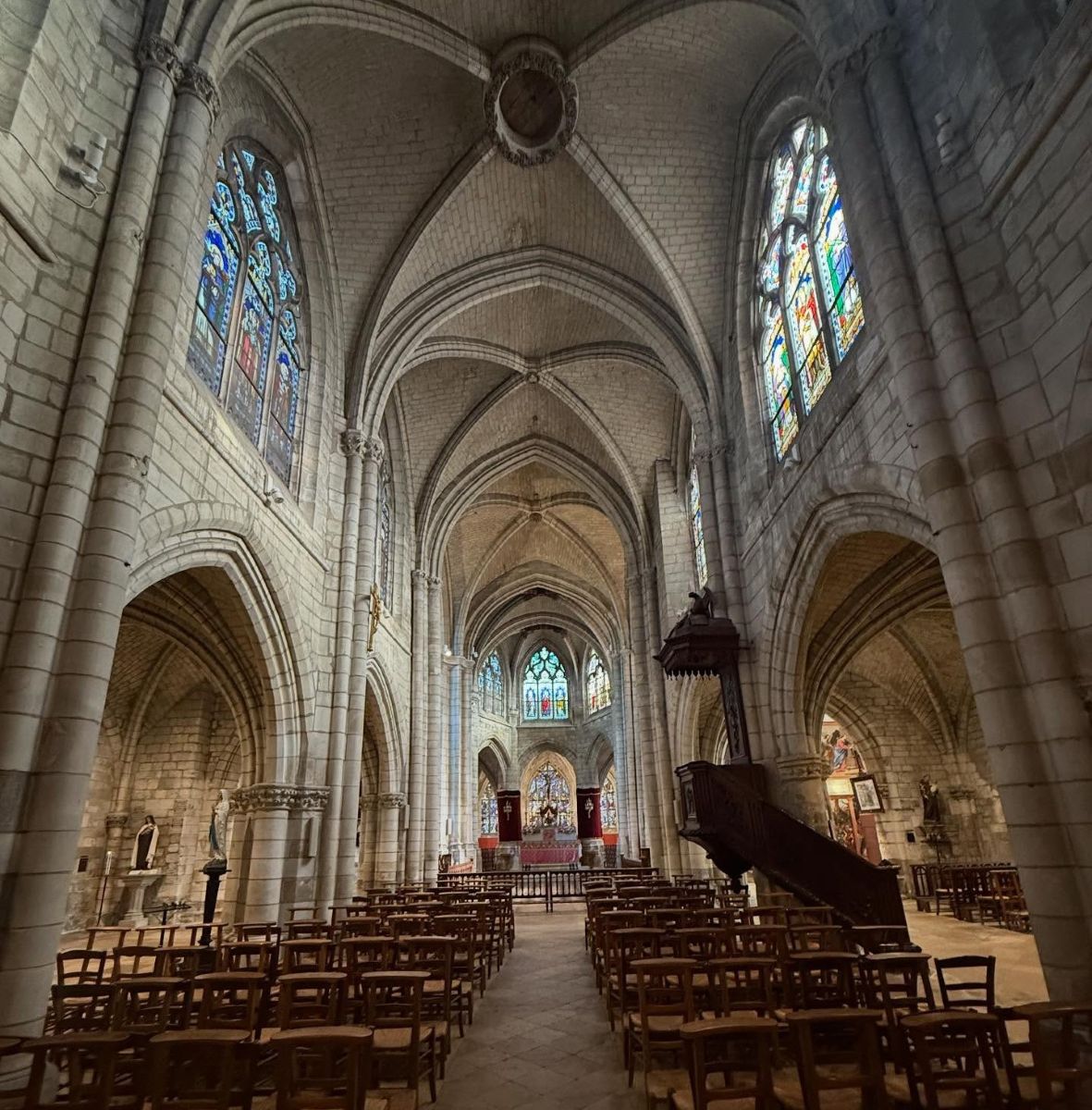
The Church Saint Rémy follows a Latin cross plan, likely modified during its 14C reconstruction, a period when the nave, composed of four bays with ribbed vaults resting on pillar capitals adorned with sculpted floral bouquets, and its side aisles were entirely rebuilt. The nave pillars, walls, and vaults of the side aisles date from the late 14C, the rest from the late 15C and early 16C. The transept, choir, ambulatory, and radiating chapels were added in the 16C and somewhat modified in the 19-20C. The apse is composed of five sides and features three chapels surrounding the choir, whose keystones bear the monograms of Christ and the Virgin Mary.
Among the pre-19C objects and furnishings, noteworthy are the Louis XIII-era pulpit from the Visitation convent, and the exceptional sacristy door, flanked by fluted pilasters with Corinthian capitals, where two angels hold a wreath of flowers, while Saint Remigius baptizing Clovis stands above them. In the north transept is a 16C Saint Genevieve, from the Troyes school, with a discreet smile, holding a book in her left hand, and its counterpart in the south transept, a 17C Saint Michael the Archangel in the costume of the Commedia dell’arte, vanquishing a demon. Just beside it are a 13C or 16C statue of Saint Frobert and its 15C canopy, both from the former church of Saint-Frobert. The baptistery’s woodwork dates from the 18C, while the marble baptismal font, dating from 1781, replaced the old copper one, which had become unusable.
In 1690, François Girardon gifted the church where he had been baptized a bronze crucifix he had made himself, which can still be seen today. The rest of the furnishings and statuary are from the 19C and early 20C. The organ was delivered in 1853. The altars of Saint Joseph and the Virgin Mary, as well as the tabernacle of the high altar, were made in 1839. Two small 16C statues, one representing Saint Remigius and the other Saint Frobert, watch over the neo-Gothic reliquary. Recognized as authentic and sealed on September 28, 1839, it contains relics of Saint Parres, Saint Remigius, Saint Bernard, Saint Malachy, Saint Savinian, Saint Exuperanta, Saint Savine, and Saint Mathia. Saint-Rémy is one of the churches in Troyes with the most beautiful and impressive collection of paintings: painted panels from the 16C and 17C.
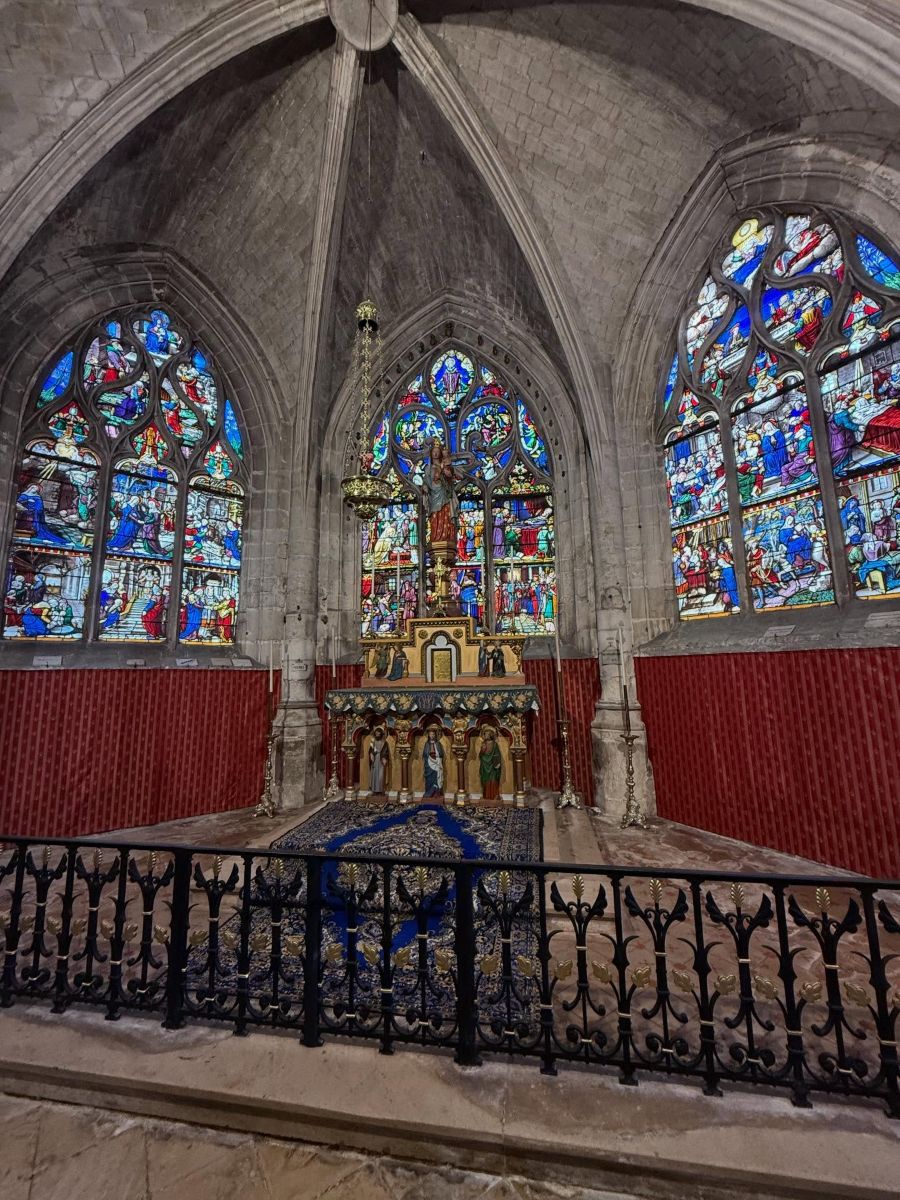
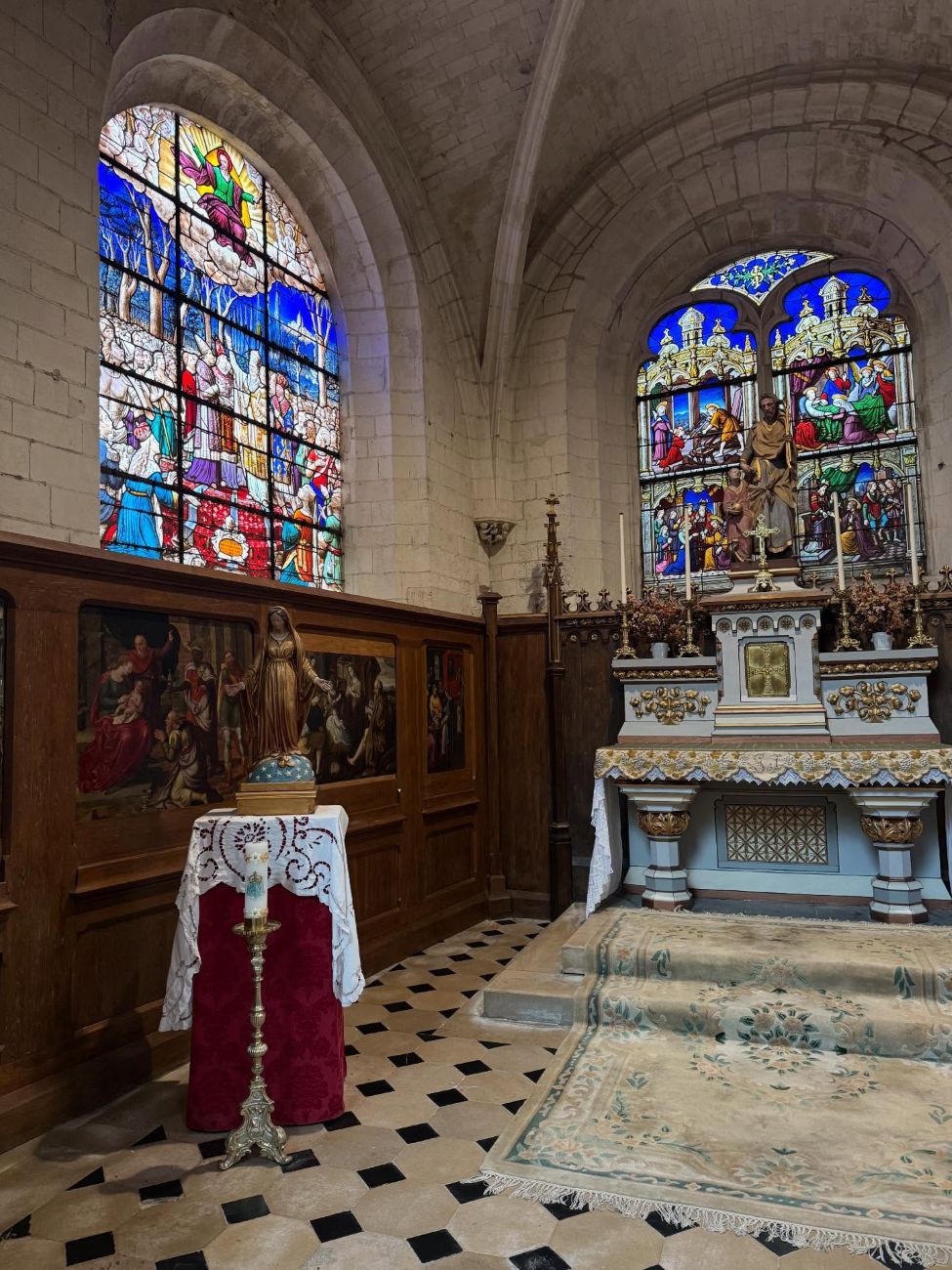
Today, the Church Saint Rémy is part of the parish of Saint-Bernard, the parish in the city center. Every Sunday and on feast days, it hosts Mass at 10h30, sung in Gregorian chant according to the Extraordinary Form of the Roman Rite, that is, in Latin.
A bit of history I like tell us that recent archaeological excavations in the late 1980s revealed that the church was built on the ruins of a Gallo-Roman building destroyed in the late 2C or early 3C, located on the edge of an ancient road that remained in use until the Middle Ages. Tombs were also discovered, demonstrating that Saint-Rémy was part of the western suburbs of Troyes in the 10C, the parish and church only being incorporated into the new city walls in the 13C. Further evidence of its antiquity and therefore its importance is that Saint-Rémy was a cardinal parish: it had two dependent churches under its jurisdiction: the Church of Sainte-Madeleine and the Church of Saint-Frobert. The first parish was attached to Saint-Rémy before the 12C, and on two occasions, in 1590 and 1724, the bishop attempted to establish a separate parish from Saint-Rémy, but without success. It wasn’t until the second half of the 18C that La Madeleine was established as a parish church, as was the church of Saint-Frobert, emptied during the French revolution and subsequently converted into an apartment building, which had been attached to Saint-Rémy under Count Thibaut III of Champagne at the end of the 12C. Like many religious buildings, Saint-Rémy suffered greatly during the Revolution: in 1790-1791, the chapters were abolished, Saint-Rémy was among the parishes retained, and on March 24, 1791, the first sworn priest was installed. The church furniture and silverware were sold at auction from January 17, 1793, and its bells were sent to Paris to be melted down and transformed into cannons. No apparent trace remains of the Gallo-Roman period or the original church, as it was almost entirely rebuilt around the 14C; only a 12C wall of the western part of the south transept survives. A curious and extremely rare feature is that the church’s foundations are virtually nonexistent, and the church rests almost directly on the ground.
The town of Troyes on its religious heritage : https://www.ville-troyes.fr/decouvrir-troyes/troyes-un-patrimoine-et-une-architecture-exceptionnels/le-patrimoine-religieux-et-cultuel/
The Aube Champagne dept 10 tourist office on religious monuments ofTroyes : https://en.troyeslachampagne.com/going-out/visit/religious-buildings/churches/
The Troyes Champagne tourist office on the Church Saint Rémy: https://en.troyeslachampagne.com/cultural-heritage/eglise-saint-remy/
The Parish of Saint Bernard on the Church Saint Rémy : https://www.paroissesaintbernardtroyes.com/saint-remy
There you go folks,another wonderful off the beaten path City of my belle France. It is worth more time ,and not just for shopping and we will be back, eventually. Again, hope you enjoy this post on the Church Saint Rémy of Troyes !!! as I.
And remember, happy travels, good health, and many cheers to all !!!


