
Once again, coming back from my road warrior trails in my belle France. This one after many passing finally went after visiting nearby Thouars, a small village and a castle with great architecture and history to boot. I am glad to have found these pictures in my cd rom vault to show in my blog for you and me, Therefore ,here is my take on this is the Château d’Oiron in Plaine et Vallées !!! Hope you enjoy the post as I.
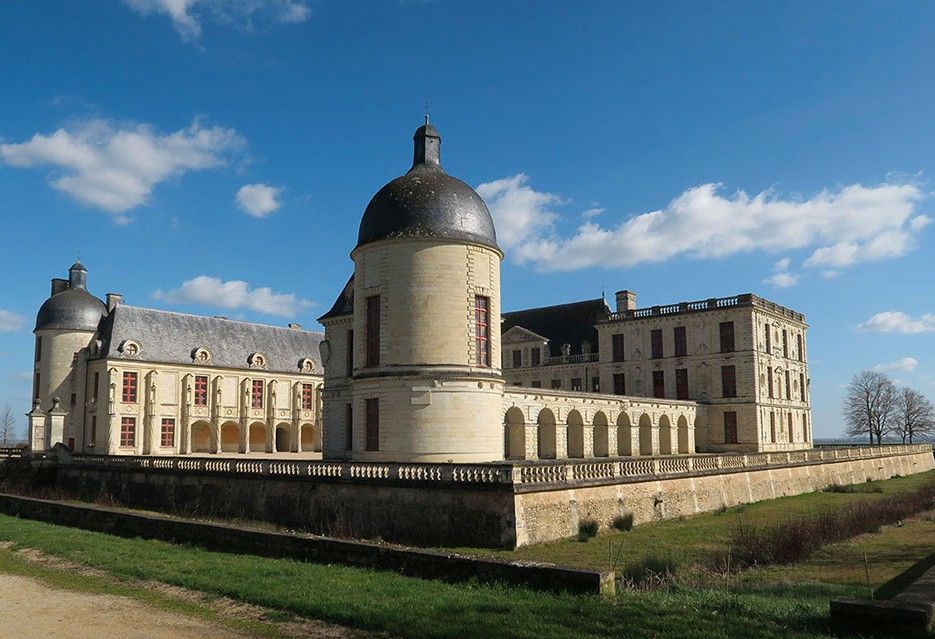
The new town of Plaine-et-Vallées is a result from the merger, on January 1, 2019, of the villages of Brie, Oiron, Saint-Jouin-de-Marnes, and Taizé-Maulais. The town is 15 km from Loudun, 41 km from Chinon, 37 km from Bressuire, 42 km from Parthenay, 46 km from Saumur, 278 km from my current home.However, I was in my road warrior trails and came here from Thouars 13 km away along the D759 road dir Oiron then bear right onto the D162 road you see the panel for the castle here, continue into the town of Plaine et Vallées bearing right onto the D64 or rue du château until parking on your left and the castle on your right, The village of Oiron is a former village, located in the Deux-Sèvres department no 79, in the Nouvelle-Aquitaine region of my belle France. It borders the Vienne department no 86, from which it is separated by the Dive River for 6 km.
The Château d’Oiron is located in the former village of Oiron of a Renaissance and Classical style castle built primarily by the Gouffier family. The castle has been dedicated to art and culture from the outset. You have here the beautiful 55-meter-long 16C painting gallery, one of the largest in France, perfectly illustrates the ancient text of the Trojan story. The painting gallery was commissioned by Claude Gouffier, and it was completed between 1546 and 1549.
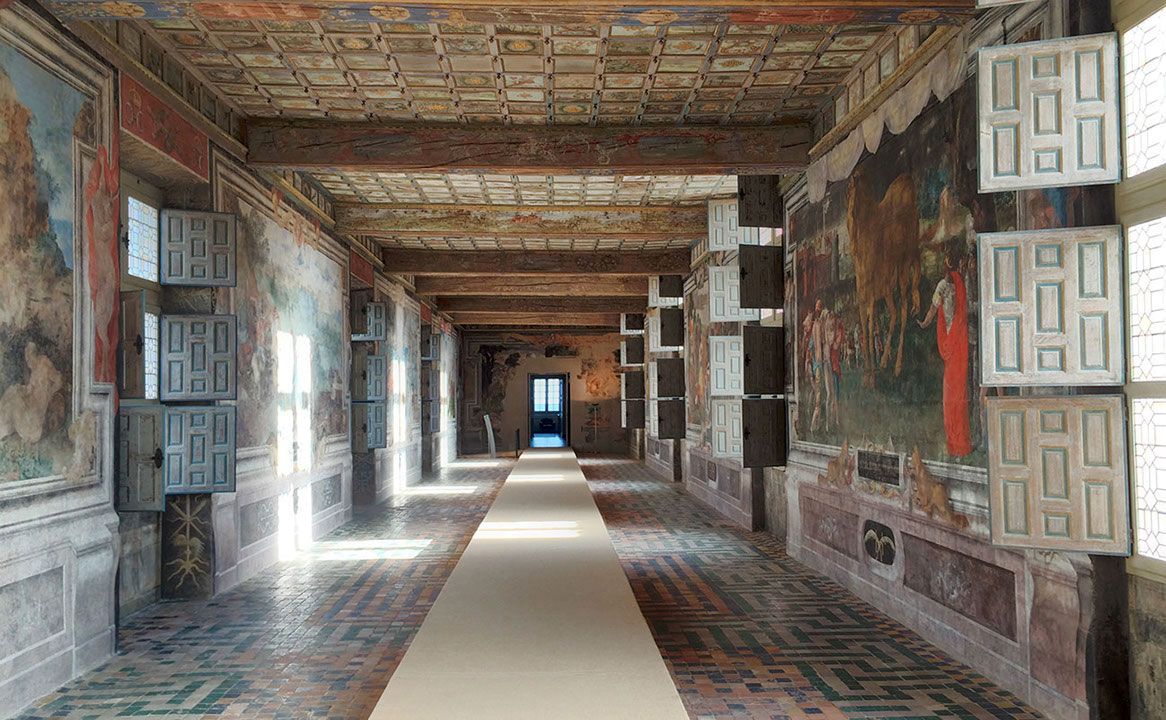
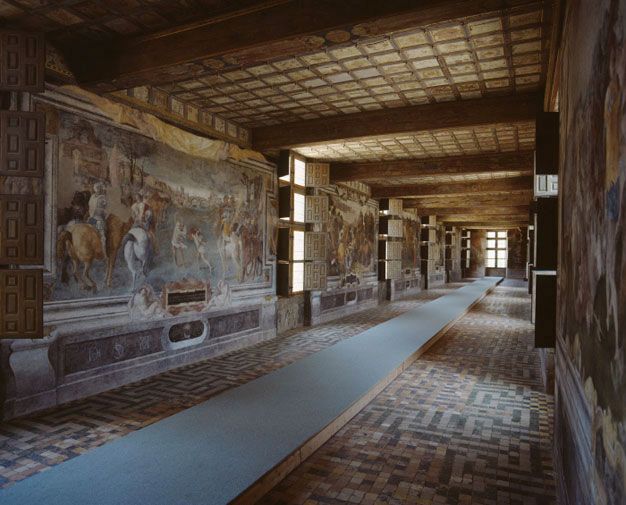
The main thing to see here is the Château d’Oiron, 16C, which displays a collection of contemporary works. Also, with more time the Collegiate Church of Saint-Maurice d’Oiron, 16C and 17C, houses, among other works, four recumbent effigies of members of the Gouffier family.
A bit of history I like tell us that the lordship of Oiron belonged in the 12C to a local family, the d’Oiron. The estate came into the possession of the Thouars at least since Viscount Hugues II in 1325. Linked to Jacques Cœur, he fell from grace in 1449 (trial from July 1, 1450 to June 9, 1451), even before the fall of Charles VII’s treasurer. He was then condemned and his property seized by the Crown. Charles VII then gave Guillaume I Gouffier, his chamberlain and confidant, one of Jacques Cœur’s principal accusers and despoilers, the lordship in 1449. Gouffier was disgraced and his property seized in 1457, quickly rehabilitated, seized again by Louis XI upon his accession in 1461, and finally reinstated in October 1465. The descendants of Guillaume Gouffier held Oiron until 1700, the date of the sale to Madame de Montespan, whose descendants kept the land of Oiron until June 1739.
The following text taken from the castle webpage, The Château d’Oiron is the work of the Gouffier family. For three generations, the Gouffiers, lords of Bonnivet and several small fiefs near Poitiers, became one of the leading families in France. Guillaume Gouffier received the land of Oiron from King Charles VII in 1449. His patronage enabled him to acquire several lordships in Poitou ,including Oiron and Roannais. His two sons, Artus and Guillaume, in turn took advantage of their privileged position at Court. Artus followed Louis XII to Italy, then became governor to the young François d’Angoulême. François I appointed him Grand Master of France in 1515, on his accession to the throne. His brother Guillaume, Lord of Bonnivet, Admiral of France, died on the battlefield after François I’s capture at Pavia in 1525. A generation later, the family reached its apogee when Claude Gouffier son of Artus and Hélène de Hangest accessed to the prestigious office of Grand Ecuyer de France in 1546. Heir to a considerable fortune inherited from his grandfather Guillaume and his father Artus, Claude Gouffier built up a collection that included paintings by Julius Romano and Perugino, as well as the portrait of King Jean Le Bon and Raphael’s Saint John the Baptist, both now in the Louvre The 17C saw the decline of the Gouffier family. Louis , Claude’s grandson, became duke and peer of France in 1620, but opposed Richelieu, who exiled him to Oiron. The end of the Gouffier family presence at Oiron was marked when Louis Gouffier’s grandson, Artus, ceded the monument to his sister Charlotte Gouffier. Charlotte, the sole heiress, married François d’Aubusson aka Marquis de La Feuillade, who took an interest in Oiron for several years and undertook major works. Madame de Montespan bought the château in 1700 on behalf of her son, the Duc d’Antin or Louis-Antoine de Pardaillan de Gondrin. She completed the work on La Feuillade with the construction of the Tour des Ondes. She divided her life between her property at Oiron and her cures at Bourbon-l’Archambault, where she died in 1707. After a long period of abandonment with successive owners from the 18C to the 20C either not having the same interest in the estate or simply not being able to maintain it ; the castle felled into oblivion and lacks maintenance. At the same time as thinking about the château’s future and designing a contemporary art collection inspired by the personality of Claude Gouffier, a full-scale restoration program was launched in the late 1980s.
This program continues today, with the completion of an exemplary 7-year project on the Trojan War and Aeneid cycle in the painting gallery (2002 to 2009) and the restoration of the King’s Pavilion (2020, 2021).In 1989, the French Ministry of Culture decided to enrich the château’s historical heritage by creating a collection of contemporary art, mainly through public commissions, specifically designed for the castle. In 1993, the Curios & Mirabilia collection was inaugurated.It represents the most important experiment in France to integrate contemporary creation into an ancient heritage. Daniel Spoerri, in the King’s room, where power and might are asserted, responds ironically to the princes of the 17C with his Corps en pieces, reintroducing everyday life and banality as a new source of wonder. In the King’s Chamber (Louis Gouffier’s 17C ceremonial apartments), the symbolic presence of royal power, Claude Rutault’s monochrome canvases are embedded in the wall surface, becoming mere traces of paintings that may once have been there. In the horse gallery, Georg Ettl revives ancient iconography and history. Today, this collection enables Château d’Oiron to welcome you with a sense of authenticity that other historic sites have abandoned.
The Center of National Monuments of France on the Château d’Oiron :https://www.chateau-oiron.fr/en
The official small villages of character of France on Oiron : https://www.petitescitesdecaractere.com/cites/oiron/
The Deux Sévre dept 79 tourist office on the castle : https://www.tourisme-deux-sevres.com/activite/chateau-doiron-centre-des-monuments-nationaux/
The Nouvelle Aquitaine region tourist office on things to do in Deux Sévres dept79 : https://en-nouvelle-aquitaine.fr/ou-aller/deux-sevres/
There you go folks, again, another gem of my belle France ! This is in wonderful countryside on an off the beaten path site, but worth the detour, me think, Again, great architecture and history as always, Again, hope you enjoy the post on the Château d’Oiron in Plaine et Vallées !!! as I
And remember, happy travels, good health, and many cheers to all !!!


