
There you folks, again found me more pictures in my huge cd rom vaults to share in my blog with you and me, This is a real off the beaten path village we passed by on our road warrior trails, to visit other properties in the park and came by gladly by this one, It gave me the opportunity to see this village ; a nice quant village of Breuil en Vexin, Therefore, let me tell you my take on curiosities of Breuil en Vexin !!! Hope you enjoy the post as I
The village of Brueil-en-Vexin is located in the Yvelines department no, 78, in the Île-de-France region of my belle France. The village lies within the boundaries of the Vexin Français Regional Natural Park.(see post) The village was officially authorized to adopt the name Brueil-en-Vexin by decree on June 14, 1890. It is 9 km from Meulan en Yvelines, 14 km from Mantes-la-Jolie , 18 km from La Roche-Guyon, 44 km from Versailles , and 459 km from my current home, The access is primarily provided by the D913 road and the D130 road, which coincides with the D913 between Brueil-en-Vexin and Sailly.It can be reach by the A13 autoroute de Normancie exit/sortie 10 dir Gargenville, We came here in our road warrior trails from Versailles on the A13 exit/sortie 10 continue on the D130 road passing Gargenville and continue to Breuil en Vexin City center,
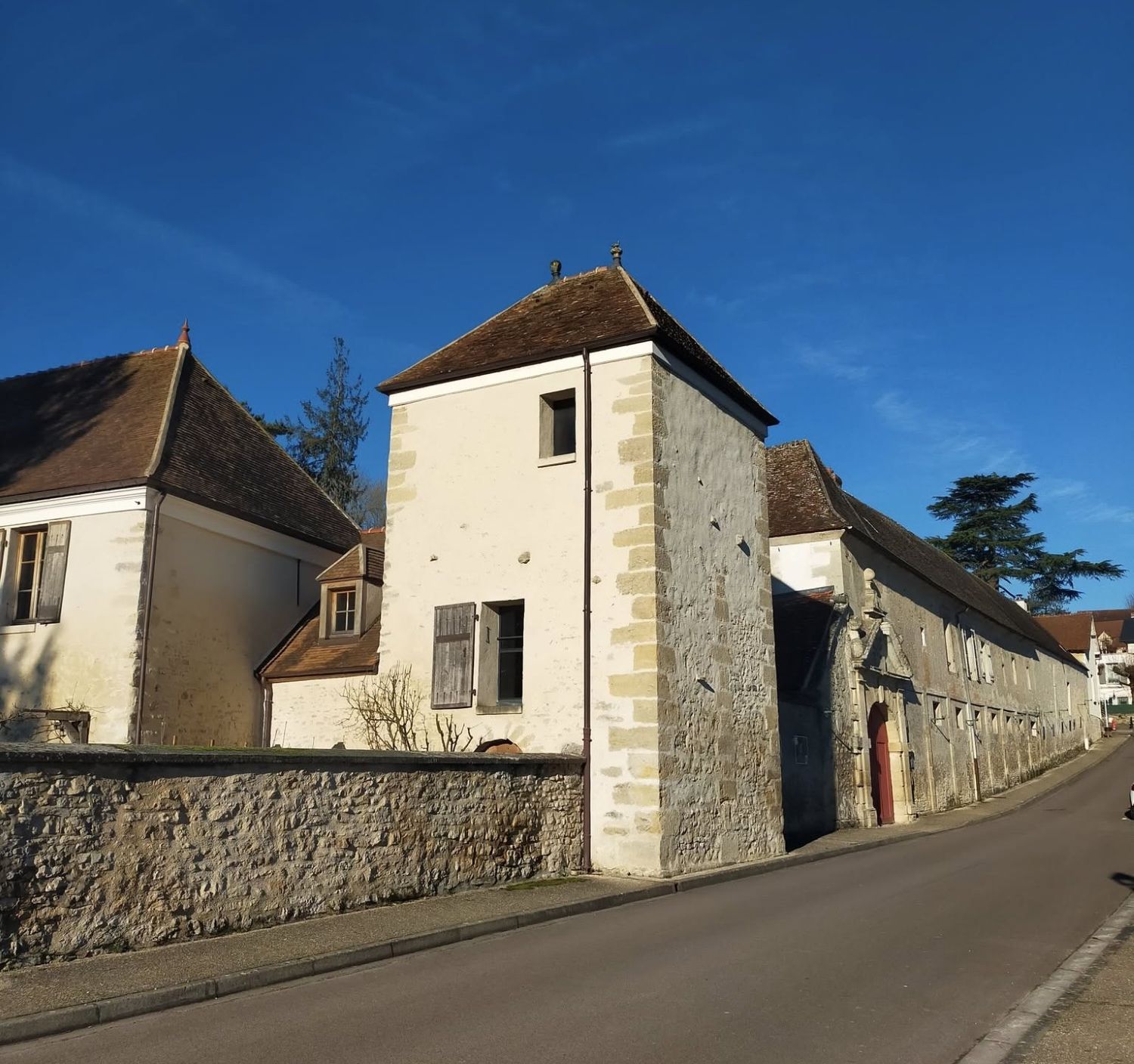
The manor house aka castle of Brueil-en-Vexin located at 2 Rue du Pont Madame dates from the last quarter of the 16C and the first quarter of the 17C (not open to the public). It features a magnificent gateway with a pediment and acroteria surmounted by spheres, bearing a double coat of arms surrounded by a collar. This residence belonged to the former estate of the Lords of Brueil. The buildings of the former Manor House are comprised of four distinct elements: a henhouse dating from the late 19C; a long main building, late 16C early 17C on two levels plus an attic, converted into a farmhouse around the mid-18C; a dovecote from the 17-18C; and an old barn, also from the 17-18C.
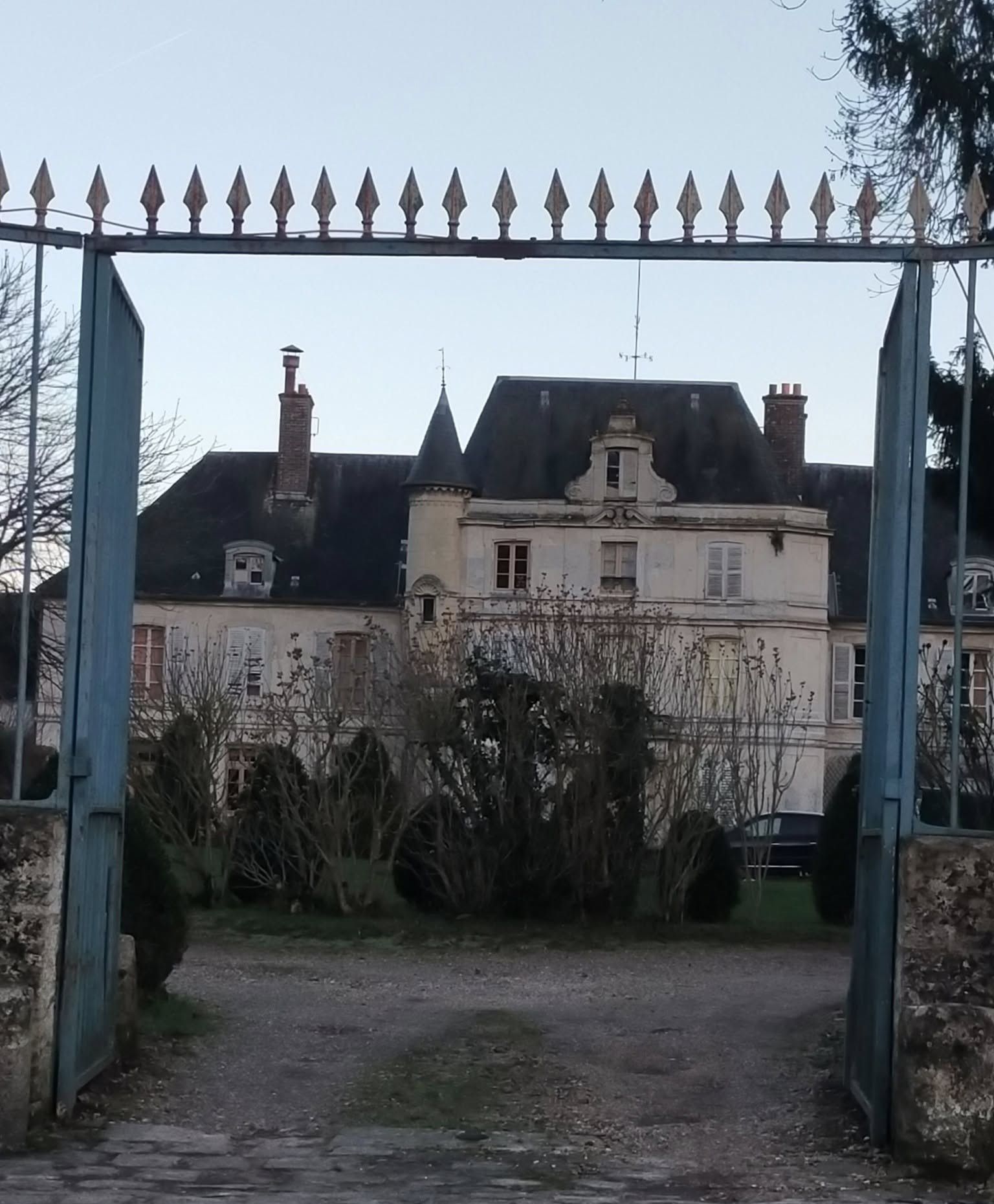
The current Château de La Chartre dates from the late 17C and early 18C. The three-story central section is flanked by two recessed two-story wings. The central facade is adorned at its left end with a watchtower, a 19C addition. The entrance door is framed by two neoclassical columns surmounted by an ornamental stone balcony. The opposite facade, is straight and has only two stories. The southern wing is extended by a small gazebo decorated with bas-reliefs. On the site of the current castle stood an old fortified house with large and small towers, surrounded by moats. It was accessed by a drawbridge. In 1061, the first known lord of Brueil was Ernaud de Meulan, who was a seneschal. Many lords succeeded him, including Galéran, Oudart, and Hugon. In 1500, the castle passed into the Sailly family. It left the family following sales, only to return in 1761. It then belonged to Abbot Charles de Sailly, Counselor to the King in his councils, Grand Cantor of the Sainte-Chapelle, and Chaplain to the Dauphin. The castle subsequently belonged to the Braëckman, Davaux, and Lesseville families. In 1856, it was purchased by Paul Maret, who later became a senator. The property remained in this family until 1980. It has underwent interior and exterior renovations in 2015 and 2016.
Other things to see here are the Cave aux Fées covered alleyway is a semi-subterranean megalithic covered alleyway, a collective burial site dating from the late Neolithic period (2220 BC). Saint-Gaucher Fountain located in the hamlet of La Chartre, below the D130 road, it houses a statue of Saint Gaucher, who was raised as a wet nurse in the hamlet at the beginning of the 11C. The Romanesque Church Saint-Denis dating from the 12C or 13C. The Saint-Laurent Priory: (not open to the public), founded in the 11C under the name of Saint-Laurent-de-Conservin or Saint-Laurent-la-Garenne. Now in ruins, only vestiges remain: engaged columns, Romanesque capitals, walls, and a gateway. It was dependent on the Abbey of Josaphat.
A bit of history I like tell us that in the 13C, the village belonged to the knight Hugues de Brueil and was part of the County of Meulan. In the 17C, the lordship of Brueil was attached to the deanery of Magny-en-Vexin. Established as a village during the French revolution, Brueil has been part of the canton of Limay since 1803. In 1204, Philip Augustus definitively united the County of Meulan (of which Brueil was a part) with the crown. Hugues, knight and lord of Brueil, swore homage to the king. In the 16C, the Wars of Religion followed foreign wars, but the fighting was not bloody in the Meulan region, where the majority of the population remained Catholic. The region then experienced foreign occupations in 1815 and 1870, but there were no major political changes. The Vexin escaped the German army’s advance in 1914. Brueil, however, was occupied from June 1940 to August 1944 during WWII. In August 1944, the villagers received orders from the nazis authorities to evacuate the village and take refuge in the Damply quarry. They remained there for a week while the Battle of the Vexin raged throughout the region. In 1967, after the dissolution of the old Seine-et-Oise department, Brueil became a village in the new Yvelines department no 78. The village was part of the Vexin Français Regional Natural Park from its creation in May 1995.
The village of Brueil en Vexin on its heritage : https://www.brueil-en-vexin.fr/decouvrir-brueil-en-vexin/patrimoine/
The community of towns of the Grand Paris Seine & Oise on Breuil en Vexin : https://gpseo.fr/commune/brueil-en-vexin
The official Parc Naturel Régioinal du Vexin Français on its towns and villages so Breuil : https://www.parcduvexin.fr/communes-et-villes-portes/
There you go folks, this was a nice stop indeed, in a beautiful parc naturel régional du Vexin Français, a pretty off the beaten path village of my belle France, Again, hope you enjoy this post on curiosities of Breuil en Vexin !!! as I
And remember happy travels, good health, and many cheers to all !!!


