
A wonderful quant litle village ,we have passed by on our road warrior trails enough to have a wonderful time. I am glad found me pictures in my cd rom vault that should be in my blog for you and me, Do read my introduction to Medinaceli post in my blog. The village of Medinaceli is located in the province of Soria, in the autonomous community of Castilla y León,and in the kingdom of Spain. I drove from Madrid along the A2 autovia del Nordeste (northeast highway) passing Torrejon de Ardoz, Alcalà de Henares, Guadalajara, bearing left onto the N2 highway dir Medinaceli getting to City center on the Avenidad de Madrid then with the train station on your right bear left onto Carretera de Baraona road or SO122 a curvy winding road continue then with the Ermita del Humilladero hermitage on your left bear right onto SO130 road continue same road Calle Campo de San Nicolàs then bear left onto Calle Marimedrano continue into Plaza la Azotea and then Plaza Mayor find parking before by Calle Marimedrano, Therefore, let me tell you bit on curiosities of Medinaceli !!! Hope you enjoy the post as I.
The Plaza Mayor is located on the site of the former Roman forum ; completely restored and paved today. The Plaza Mayor took over from the Roman forum, its ample space becoming the administrative, social, and economic center of Medinaceli. Its 5,000 square meters astonish even long-time residents, a stark contrast to the narrow, winding streets of the rest of the town. The square, where the houses and palaces rarely exceed two stories, features a central lamppost, a common sight for photographers The Plaza Mayor is rhomboidal in shape, and some of the town’s most important buildings are located around it. Among them is the Ducal Palace, which occupies one side of the square and was built in the first half of the 17C by order of the Duke of Medinaceli. Also worth mentioning is the old Alhóndiga, a magnificent building with a double arcade, whose upper floor formerly housed the local council. Much of the perimeter of the square is arcaded, and various events are held throughout the year on its cobbled surface. The Ducal Palace is a Renaissance palace built during the 16C as a worthy seat of the House of Medinaceli, whose coat of arms are displayed on the façade. In December 2008, a museum dedicated to cultural exhibitions was opened, with ten rooms that occupy practically the entire ground floor of the former palace,
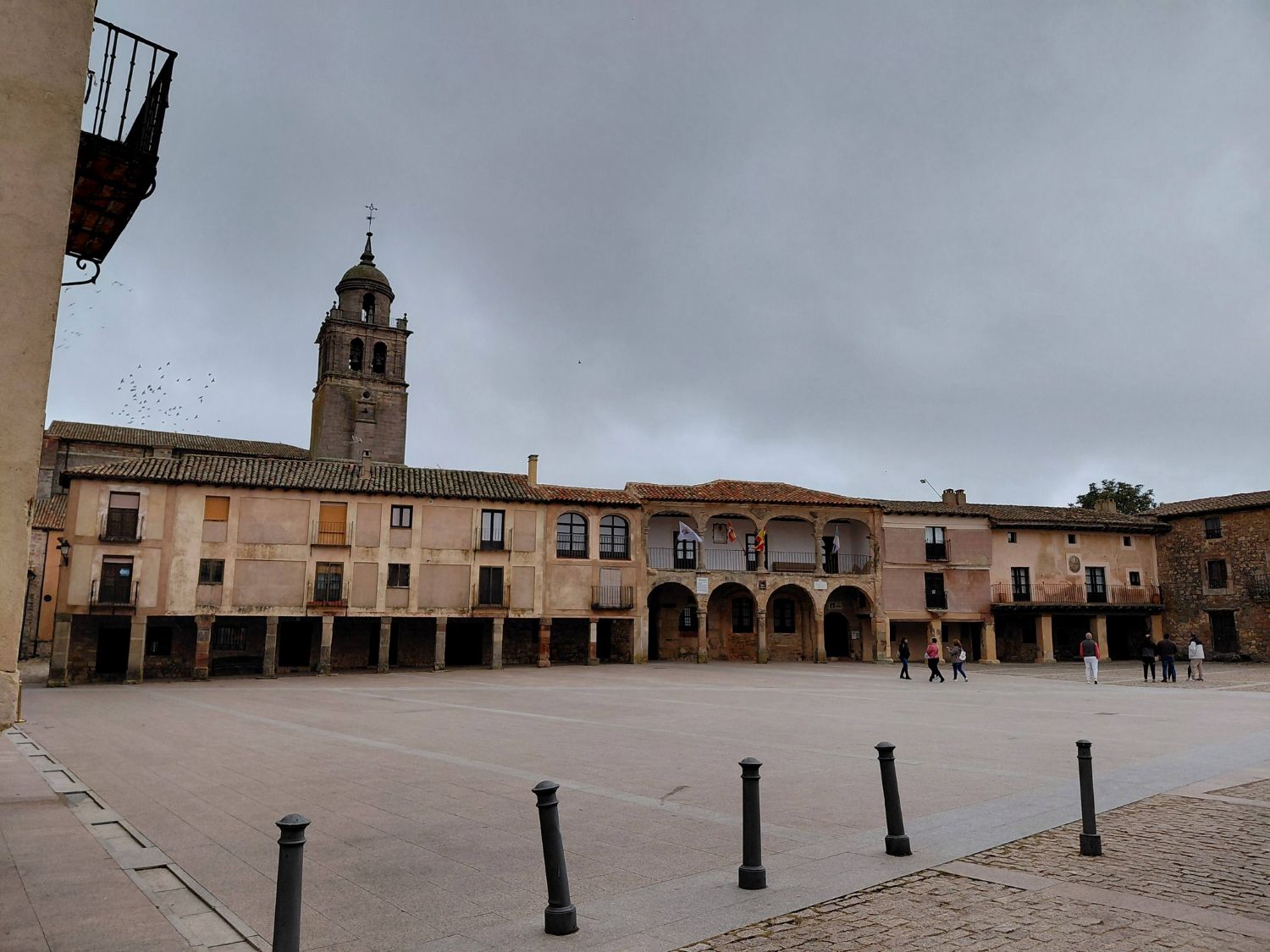
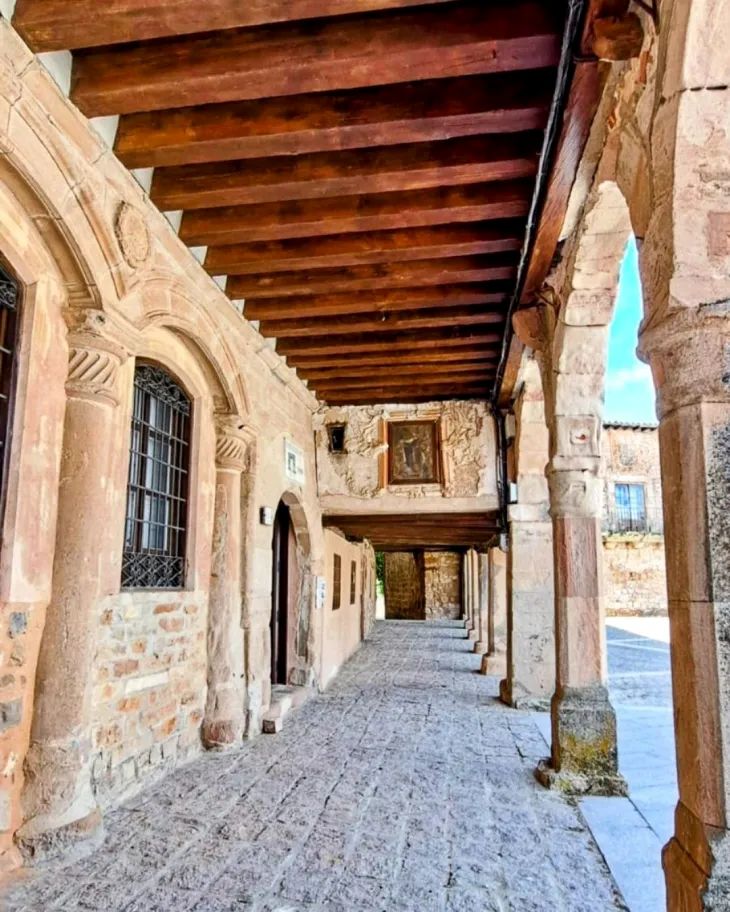
The Alhóndiga,16C the oldest building in the Plaza Mayor, began as a grain warehouse and sales point for the town. Over time, it also housed the City/Town Hall and the jail, playing a key role in the administrative, economic, and judicial life of Medinaceli. This building originated as an alhóndiga, that is, a grain warehouse and sales point to ensure the population’s supply. A single building, three fundamental functions for the administrative, economic, and judicial life of the town. Its imposing presence and multifaceted history have made it one of the most photographed spots for visitors exploring Medinaceli in search of its monumental past. Admission is free.
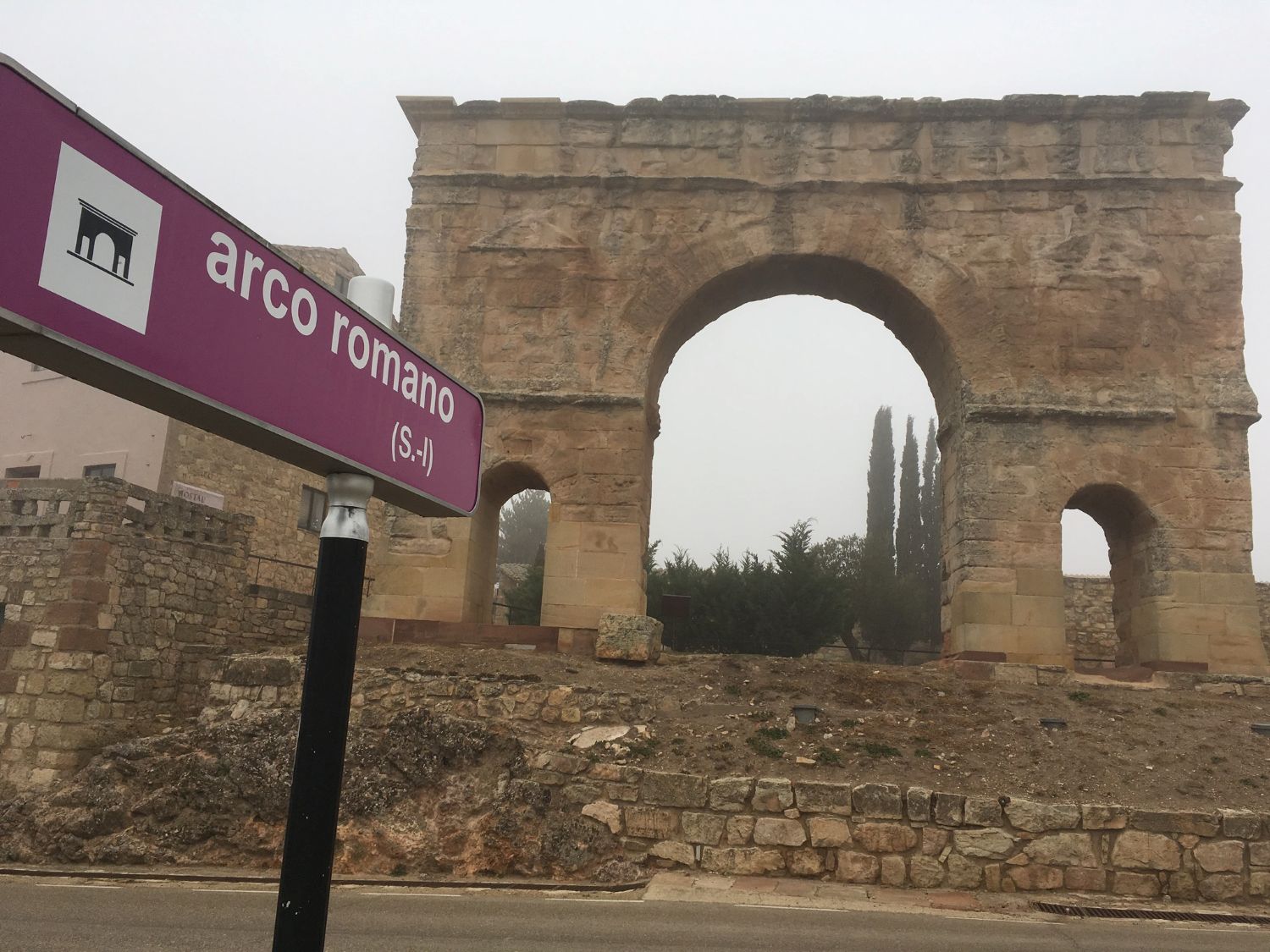
The Arco Romano is a unique Roman arch on the Iberian Peninsula, with its triple, orientalizing arcade, probably dating from the first third of the 2C. In line with the city wall, it faces the valley, following the Antonine Itinerary (from Caesaraugusta to Toledo), indicating to the traveler the border between the Cluniac and Caesaraugustan legal districts. Markings on the frieze suggest a lost inscription; other reliefs or marble carvings in the blind temples would also provide information about its function. Its proportions are impressive: 13.2 meters long, 8.1 meters high, and 2.1 meters thick. The central opening allowed the passage of carriages, while the side openings were intended for pedestrians and travelers. At an altitude of over 1,200 meters, the views are simply spectacular: the ancient hill of Occilis, the Arbuxuelo and Jalón valleys, and the historic salt flats unfold before you in an unforgettable landscape.
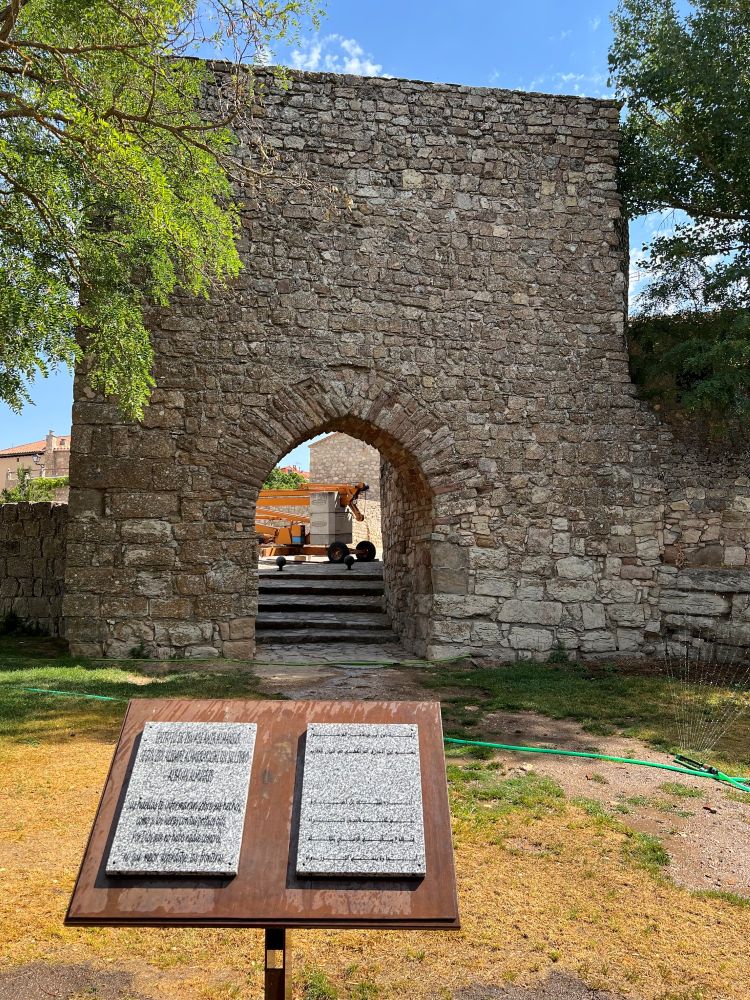
The Arab ruins a few meters outside the perimeter of the wall, you can visit the old Arab icebox, which was used for centuries to preserve food using the snow that was preserved under its vault thanks to its location on the northern slope of the plateau. The medieval Arab Arch, the only gate still standing among the most intact remains of the wall. Built between the 1C and 3C, it is the only in Spain, with three arches , On the patrol walk towards the castle, you can distinguish the different levels of the wall that has surrounded the town since Roman times. The reconstructed remains of the castle, currently used as a cemetery, are also visible from the valley. It was a Moorish citadel and later the residence of the then Counts of Medinaceli until their transfer to the Ducal Palace, whose balconies overlook the Plaza Mayor. The Arco Árabe is one of the four gates of the original Roman camp. It must have been rebuilt and its position slightly altered during Arab times ,and modified again after the Reconquista, when it acquired its current pointed, swollen arch. In the 12C, after the conquest by Alfonso I “The Battler,” the gate was remodeled once more to adapt to the defensive needs of the time. Later, in 1370, when Medinaceli lost its status as an independent council and passed into the hands of Bernal de Bearne, the city was walled again, and it is likely that the gate then acquired its characteristic pointed arch. The last restoration took place in 1969, preserving and reinforcing this historic monument, which, along with the gate, was a common site for markets due to the lack of large open spaces in the city. From this entrance, one can imagine the evolution of Medinaceli, a silent witness to the passage of Romans, Arabs and Christians who shaped the history and architecture of the village.
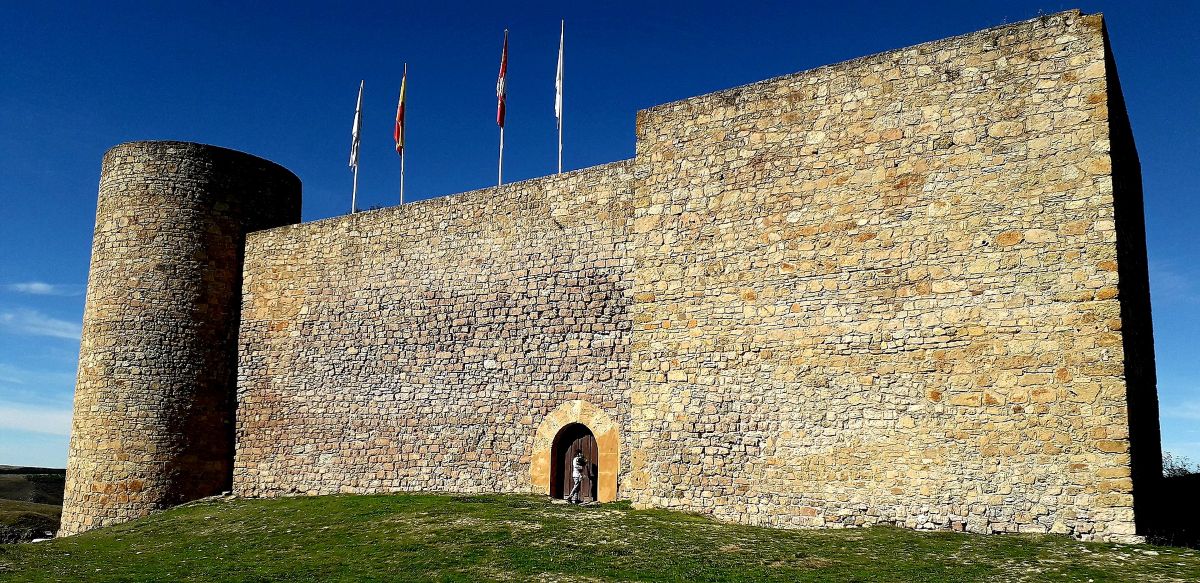
The Castillo or castle ,currently used as a cemetery, the castle’s few reconstructed remains stand on the site of the former Arab Alcazaba ; the city’s political and religious center. Later, it served as the castle of the Counts of Medinaceli until their move to the Ducal Palace. The Castle of Medinaceli, situated at the western end of the Roman wall and almost entirely rebuilt upon the original Arab Alcazaba, is separated from the surrounding buildings by the so-called Campillo del Castillo. Dating back to the 10C, its purpose was to alert the Medinaceli garrison to any sightings in the nearby valleys via visual signals. Few remains of this once-important medieval castle have survived to the present day. Among the surviving ruins are the foundations of a tower atop a rocky outcrop, as well as two sizable cisterns, and the remains of rooms and staircases, all carved into the rock. It was rebuilt on the site of the Arab citadel, of which only the underground stables remain. Constructed of ashlar masonry, it has a square floor plan, a rectangular keep, and circular turrets at three of its corners.
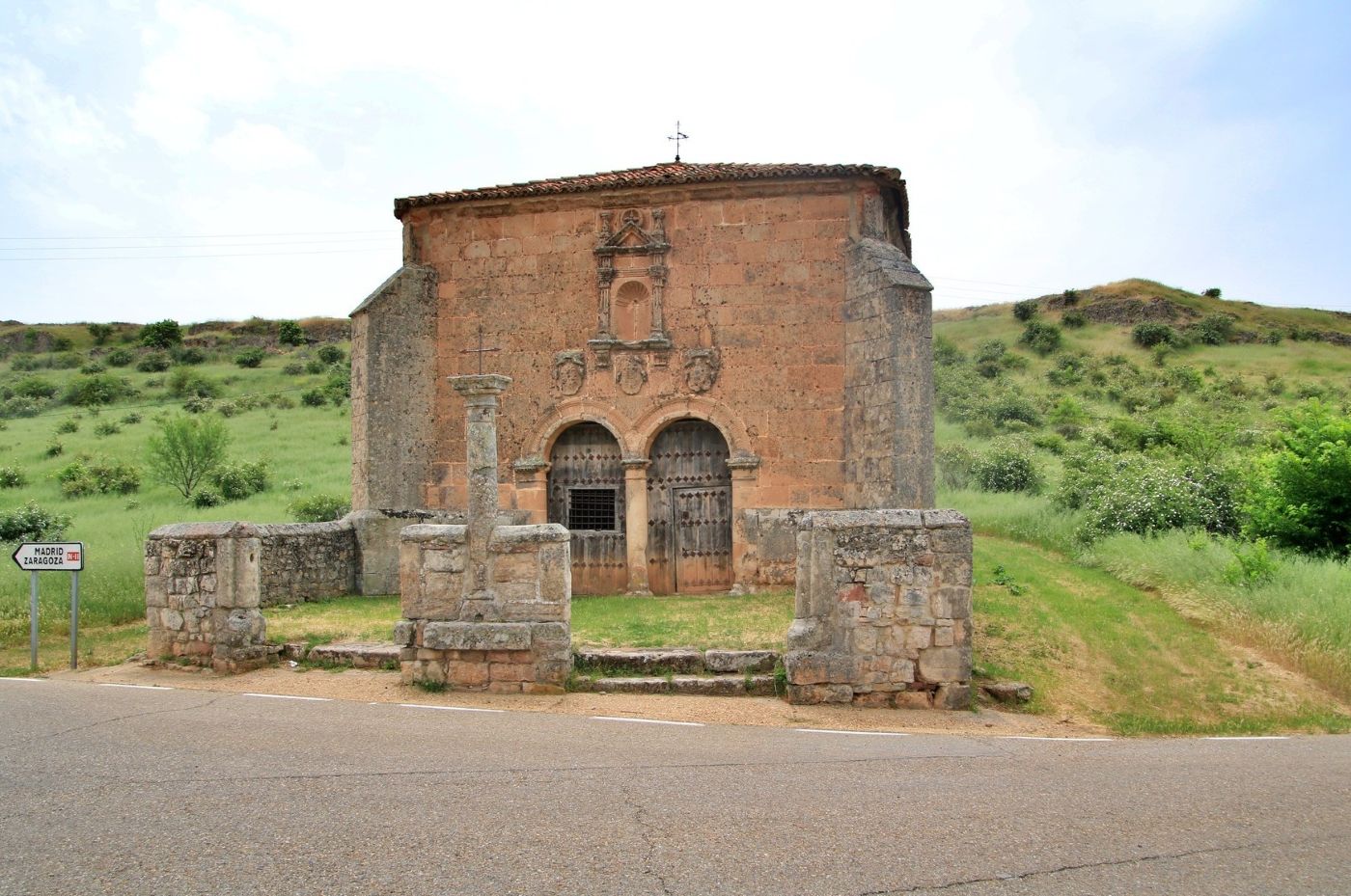
The name Ermita del Humilladero refers to a type of hermitage, a kind of Christian building. It takes its name from the term “humilladero,” a place located outside the city walls, at crossroads at the entrance and exit of some towns. The original purpose was to facilitate religious practice for travelers. Currently, they are used sporadically, serving as a destination or starting point for pilgrimages in some cases. This Ermita del Humilladero is located opposite Medinaceli Castle at the intersection of the SO-130 and SO-132 roads. Which we saw passing by, Its style is Renaissance, and its elegant double-arched doorway bears an inscription that reads: “This work was begun in the year 1568 and finished in 1569, with alms from the members of the Confraternity of the Holy True Cross and Humility or Solitude.” On another stone located in the corner of one of the two sides, a Latin inscription reads: Soli Deo honor et gloria 1773, indicating that what is now a chapel was added to the main body of the church.
The village of Medinaceli on its heritage : https://medinaceli.es/callejeando-por-la-villa/
The Province of Soria tourist office on Medinaceli : https://www.sorianitelaimaginas.com/comarcas/tierra-de-medinaceli/
The Castilla y Léon region tourist office on Medinaceli : https://www.turismocastillayleon.com/en/heritage-culture/medinaceli
There you go folks, another gem in my dear Spain, Medinaceli was a nice ride and great impression, all worth it on my road warrior trails. Again, hope you enjoy this post on curiosities of Medinaceli !!! as I.
And remember, happy travels, good health, and many cheers to all !!!


