
I am again to tell you about more streets of my eternal Paris. I have many many posts on Paris and several on the streets of the most beautiful city in the world. I have come up with pictures from cd rom vault that should be here for you and me. As always thank you for following my blog some since Nov 26, 2010. Therefore, here is my take on the streets of Paris, part XL !!! Hope you enjoy it as I.
The Avenue des Ternes is located in the 17éme arrondissement of Paris, it begins at the intersection of 1 Place des Ternes (see post) ,and 49 Avenue de Wagram. It ends at 59 Boulevard Gouvion-Saint-Cyr. It crosses the Ternes quartier/neighborhood, from which it takes its name, given on May 23, 1863. Beyond former Place de la Porte-des-Ternes ,today Place du Général-Kœnig, it continues as Avenue du Roule, The avenue is served by metro line 2 at the Ternes station. It took its name from the fact that it was the main street that crossed the former hamlet of Ternes. Originally, it was a street in Neuilly-sur-Seine, part of the Saint-Germain road, aka the “old Neuilly road,” before being renamed the “Montagne-du-Bon-Air road” in 1793. After becoming part of D12 road, it was annexed to Paris in 1863, where it acquired its current name. Notable buildings here are at no 16, the Maison Pou delicatessen has been located since 1830. At no 25, Monoprix replaced the Prisunic store, one of the first self-service food stores in France. At no 19, the Society of Saint Pius X held its services from 1974 onwards in the Sainte-Germaine chapel (a makeshift location). At no 30 stands the Magasins Réunis building, one of the former department stores of Paris, at the corner of Avenue des Ternes and Avenue Niel. The store took the name Magasins Réunis in 1914, a name it retained until the end, and which can still be seen at the top of the dome. At no 36, a bookstore succeeded the Librairie 36 of the printer Guy-Victor Labat; it was also the headquarters of his publishing house, NLF (Nouvelle Librairie de France), specializing in historical collections (French People, Explorations, Women, Work, Education, Brittany, Civil Service, etc.) and books for bibliophiles. At no 51, the building was occupied by the private school Cours Françoise-de-Maintenon until June 1960, before giving way to the pan-African weekly Jeune Afrique. At no 96, entrance to the private road Villa des Ternes.
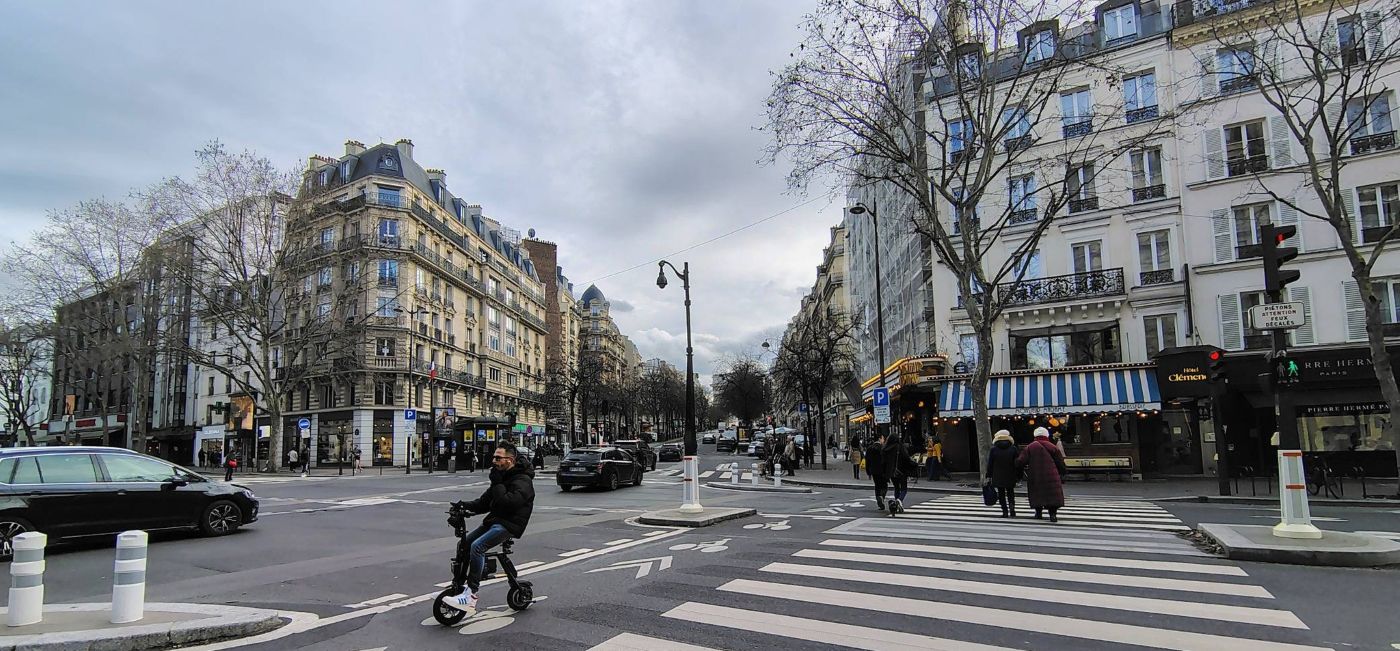
The Paris tourist office on the 17éme arrondissement de Paris : https://parisjetaime.com/eng/article/explore-paris-s-17th-arrondissement-a831
The Boulevard Gouvion-Saint-Cyr is located in the 17éme arrondissement of Paris. It begins at Avenue de Villiers and ends at Porte Maillot, where it continues as Boulevard de l’Amiral-Bruix.-One of my former work hq) It is 1,050 meters long and between 30 and 36 meters wide. The boulevard is divided into two sections. The northern section, between Porte Champerret and Porte de Villiers, is part of the Boulevards des Maréchaux. A little beyond Porte de Villiers, heading south, it continues in a straight line as Boulevard Pershing, with which it forms an intersection. The southern section curves beyond this intersection, running alongside the Hyatt Hotel and the Palais des Congrès (see post) to the east and the Méridien Étoile Hotel, located directly opposite, to the west, before joining Boulevard Pereire and Avenue de la Grande-Armée at the edge of Place de la Porte Maillot and the Neuilly – Porte Maillot RER C station.
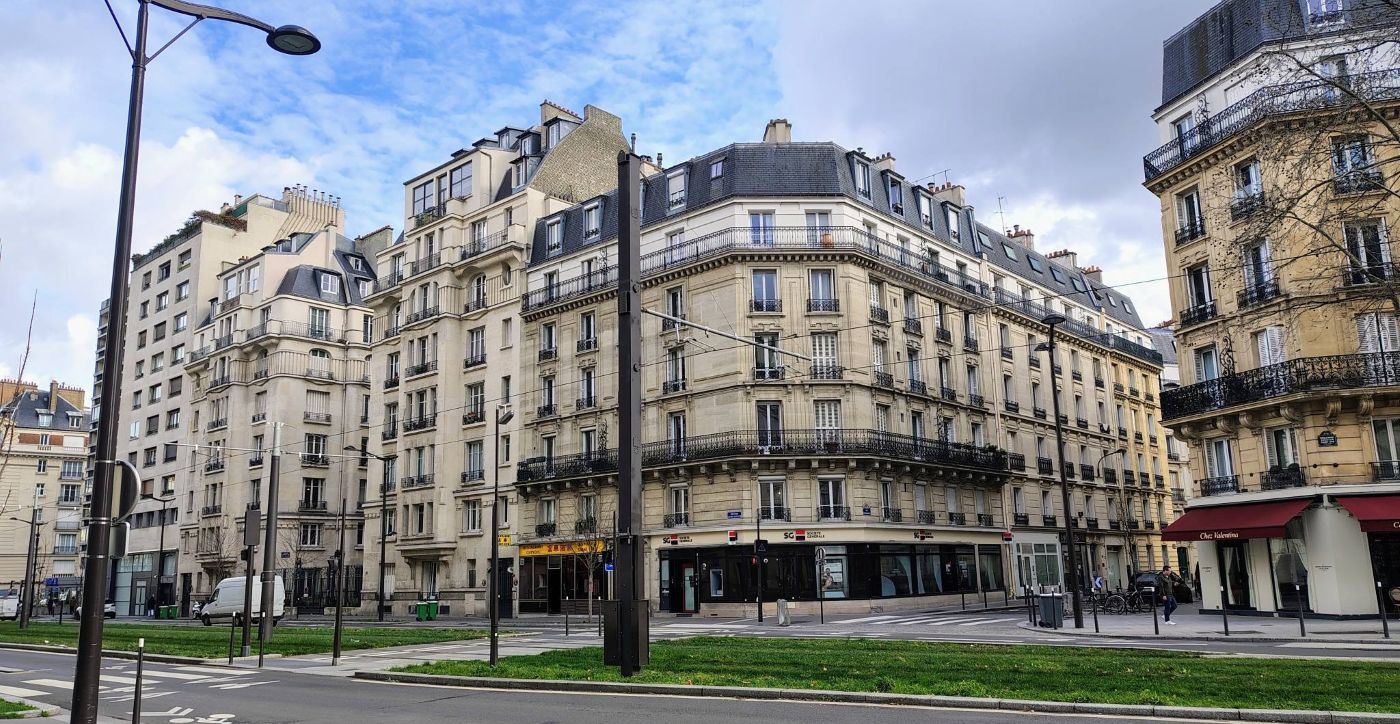
This boulevard was named after Marquis Laurent de Gouvion-Saint-Cyr , Marshal of the Empire and French politician. Enlisting in the army in September 1792, he participated in the Revolutionary and Napoleonic Wars. After the fall of the Empire, Gouvion-Saint-Cyr was appointed Minister of War by King Louis XVIII twice, in 1815 and then from 1817 to 1819. It is a section of D 11 road, known as the Route de la Révolte , created around 1750 on the site of an old road leading to Saint-Denis (see posts). The Boulevard Gouvion-Saint-Cyr is part of the ring of boulevards created from 1861 onwards along the Thiers Wall, replacing the Rue Militaire. It took its current name in 1864. From the late 19C onwards, in this section of Boulevard Gouvion-Saint-Cyr, of which only the Paris side was built up, numerous companies specializing in saddlery and coachbuilding established themselves. Attracted by these skills, many manufacturers and dealers of automobiles, bicycles, and accessories set up shop on this boulevard. In particular, no 83 housed the first headquarters of Peugeot (in partnership with Michelin), as well as other numerous manufacturers, accessory suppliers, dealers, and garages, such as: no 3: Decauville repair shop; no 9bis: Neubauer dealership; no 23: home of the painter Abel Bertram circa 1923-1928; no 13: headquarters of the French Motorcycle Club; no 87: Comiot motorcycles (from 1894 to 1914); no 95: the Fiat and Mercedes-Benz dealership , and the Rosengart factories. Today, many companies related to automobiles and bicycles can still be found there, including dealerships for BMW, Ferrari, McLaren, Maserati, Mercedes-Benz, Rolls-Royce and others… At No. 38: Jacques Pills and Lucienne Boyer lived there in 1939. After starting to work as a teenager, Nadine Talier, the future Nadine de Rothschild, not getting along with her authoritarian stepfather, rented a maid’s room on Boulevard Gouvion-Saint-Cyr. In 1797, between the Chemin de la Révolte (today Boulevard Gouvion-Saint Cyr), the Rue de l’Arcade (today Rue Bayen), and the Rue de Villiers ( today Rue Guersant), Jean-Antoine Chaptal (a chemist, physician, and politician who theorized chaptalization, a winemaking technique) founded the Coustou et Cie company, a mineral acid factory in the Ternes neighborhood. He established a large factory there, which was to experience little expansion, but it was, it seems, in the laboratories of the Ternes factory that Chaptal made his principal discoveries.
The Paris tourist office on the 17éme arrondissement de Paris : https://parisjetaime.com/eng/article/explore-paris-s-17th-arrondissement-a831
The Rue de Rome runs through the 8éme and 17éme arrondissements of Paris. It begins on Boulevard Haussmann, shortly after the Au Printemps department store (see post), and continues along the Saint-Lazare railway trench to the Pont-Cardinet train station (memorable great street parking by here!) , where it ends at the beginning of Boulevard Pereire. The street runs alongside the tracks of the Gare Saint-Lazare (see post). Its name pays homage to the city of Rome, the capital of Italy. The section between Rue Saint-Lazare and Boulevard des Batignolles, which runs alongside the railway tracks, was opened in 1850. The section between Boulevard Haussmann and Rue Saint-Lazare dates from 1868. In 1909-1910, the railway trench providing access to the Gare Saint-Lazare was widened. A cantilevered structure over the tracks was then built to support the street, and the fourth gallery of the Batignolles tunnel was excavated between Boulevard des Batignolles and Rue La Condamine. Most of the tunnel was demolished between 1923 and 1925, but the gallery under Rue de Rome was preserved. Notable buildings: The street runs alongside the Saint-Lazare train station on its western side. The street also borders a façade of the Lycée Chaptal, between Rue Bernoulli and Boulevard des Batignolles. No. 4: In 1870, Sarah Bernhardt rented an apartment in a building recently constructed by the architect Jules Bon, who was also the owner. She was flagged by the vice squad because, not yet famous, she entertained older gentlemen there to supplement her income. No. 10: Hector Fabre was a Quebec journalist, senator, intellectual, and diplomat. He was the first official representative of Quebec in Paris and the first Commissioner General of Canada in Paris in 1906. No. 25: secondary entrance of the Lycée Racine, built in 1887. No. 48: John Grand-Carteret, a French journalist, art and fashion historian, considered a pioneer in the field of iconology, his work L’Histoire, la vie, les mœurs et la curiosité par l’Image remains a reference, published in 1910. No. 52: Méry Laurent, born Anne Rose Suzanne Louviot, was a courtesan and muse to several Parisian artists. She held a literary salon, where she welcomed Stéphane Mallarmé, Émile Zola, Marcel Proust, Auguste de Villiers de l’Isle-Adam, François Coppée, Henri Gervex, James Whistler, and Édouard Manet, who died there. No. 87: Stéphane Mallarmé, known as Stéphane Mallarmé, was a French poet, teacher, translator, and art critic. He lived there in 1875. The building’s number became No. 89 in February 1884. Having taken several thousand photographs alongside his literary work, the writer Émile Zola, at the end of the 19th century, took one of pedestrians in the rain at the intersection of Rue de Rome and Boulevard des Batignolles.
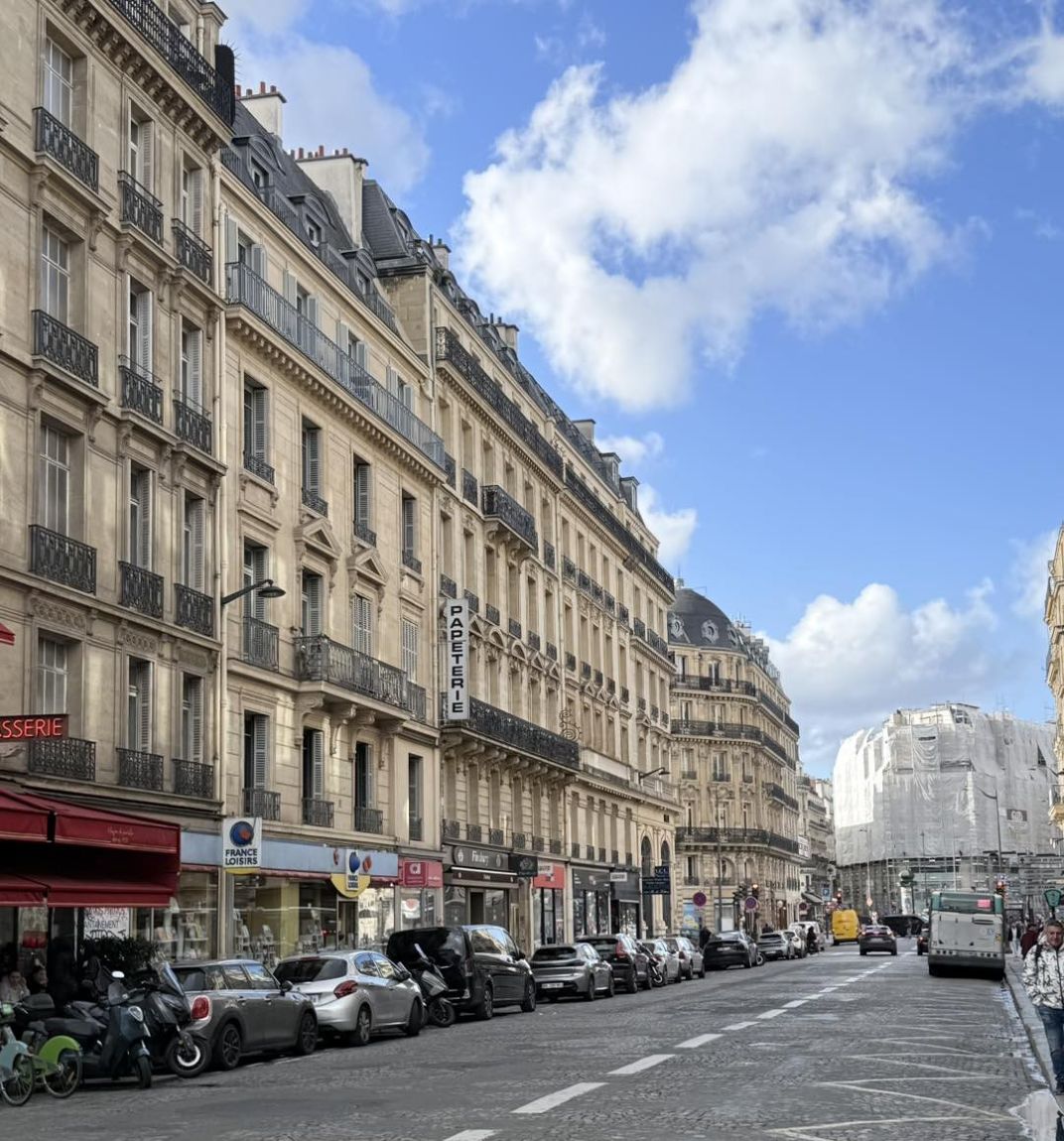
The Paris tourist office on the 17éme arrondissement de Paris : https://parisjetaime.com/eng/article/explore-paris-s-17th-arrondissement-a831
There you go folks, another dandy beautiful set of glorious streets of my eternal Paris. I have criss cross them many and have many in my blog already, Again, hope you enjoy this post on the streets of Paris, part XL !!! as I.
And remember happy travels, good health, and many cheers to all !!!


