
We have driven and walked in my eternal Paris, and would like to have an imprint in my blog on the wonderful family times we had there, There is so much to see , doing my best, and glad found me this picture in my cd rom vault ,which now transposing in my blog for you and me, This was my former worked city, so glad to post more memorable spots on it, I thank you for your readership over the years and to bear with my rants! After all ,Paris is to rant, shout and yelled about, me think. Therefore, here is my take on the rue de Seine of Paris !!! Hope you enjoy the post as I.
The Rue de Seine is located in the 6éme arrondissement of Paris. This street runs through the Monnaie, Odéon, and Saint-Germain-des-Prés quartiers or neighborhoods. It is 665 meters long, beginning at 3 Quai Malaquais and ending at 16 Rue Saint-Sulpice. The area is served by metro line 10 at the Mabillon station. This street was laid out on the section of the moat of the Philippe Auguste city wall that led to the Seine. Originally a path built on the part of the city moat leading to the Seine, this street was named “Rue de Seine” in 1489. It was briefly called “Rue du Sénat” from 1867 onwards. Construction of the street itself began around 1535. It is mentioned as “Grand rue de Seine” in a 1636 manuscript. The section between the Quai Malaquais and the Rue de Buci is the only old one, dating back to the mid-13C, and was known by various names such as “chemin du Pré aux Clercs,” “chemin tendant de la Porte de Buci au Pré aux Clercs,” “chemin de la Porte de Buci à la Seine,” and “chemin du Pilori au Pré aux Clercs.” Also, the street was called “rue Dauphine” because of the “Hôtel Dauphin,” located at no 18. Under the First Empire and during the Restoration, it was called “rue de Seine-Saint-Germain.”
Notable buildings here are at No 1 and also Quai Malaquais and No 27, Place de l’Institut: the Pavillon de l’Institut, also known as the Pavillon des Arts and formerly the Pavillon des Quatre-Nations. The painter Jean Jouvenet, known as “the Great,” died there on April 5, 1717, in his apartment. The writer Jules Sandeau lived there from the late 1850s or early 1860s until his death, in official lodgings, less than 200 meters from the apartment where, in his youth, he used to meet George Sand (see no. 31). Nos. 2 to 10: location of the facade and main building of the former palace of Queen Marguerite of France, commonly called the Hôtel or Palace of Queen Margot. She lived there from 1606 until her death and bequeathed it, along with its park and outbuildings, to Louis XIII, who sold the entire property to a consortium of financiers in 1623. Five years later, the hôtel particulier was divided into three lots. Opposite this palace, in one of the original houses (now gone) on the odd-numbered side, Vincent de Paul, then chaplain to Queen Marguerite of France, resided from 1610 to 1612. Nos 2, 4, and 1, Quai Malaquais: Square Honoré-Champion, laid out in 1947. Its location is the same as that occupied in 1628 by one of the three lots created from the former palace of Queen Margot. Since 1962, it had housed a full-length statue of Voltaire created in stone between 1945 and 1947. This contemporary work was removed by the Paris City Hall services in August 2020. A marble resin copy was, however, reinstalled in the square in the spring of 2024. No. 6: premises, since 1938, of the Roger-Viollet photography agency. Formerly the site of the main gate of Queen Margot’s palace, then of the second of the three lots created in 1628 during the subdivision of this palace. At the back of the courtyard is a private mansion built in the first half of the 17C. Nos. 14 to 18: site of the former Hôtel de La Rochefoucauld-Liancourt, previously Hôtel de Bouillon and even earlier, Hôtel Dauphin. This private mansion, dating from the first half of the 17C and demolished in 1825 to make way for the Rue des Beaux-Arts, was sold in 1793 by its owners. Descendants, then diverted from its original function, divided and rented out, the Hôtel de La Rochefoucauld retained its landscaped garden, which in 1811 was considered one of the most beautiful and picturesque in Paris. No. 16: From 1920, the painter Maximilien Luce lived here when he wasn’t staying in the house he had acquired in Rolleboise, (Yvelines 78), and he kept this pied-à-terre until his death. It then became the Parisian residence of his son, Frédéric Luce, who organized the “Work-Paintings of Maximilien Luce” exhibition here from April 22 to May 11, 1951. No. 25: House where D’Artagnan lived before moving to Rue du Bac. A fight is said to have taken place between him and Cardinal Richelieu’s guards on the staircase. D’Artagnan managed to escape through the top-floor apartment. No. 26: Former cabaret called Au petit Maure, known since the reign of Henri IV, and of which the sign remains. In 1926, the art gallery of Léopold Zborowski and Anna Zborowska opened: they exhibited Amedeo Modigliani, André Derain, Pinchus Krémègne, Chaïm Soutine, Marc Chagall, André-François Breuillaud, René Iché, Eugène Ebiche, Maurice Utrillo, Jean Aujame, and Jean Fautrier. No. 27: This was the address of Charles Baudelaire from July to August 1855 (or from July to December), as he moved frequently. He had previously occupied a room at No. 57. On the ground floor, the site of Gallery 27, where many works by Pablo Picasso were exhibited in the 1970s, has since been replaced by a tribal art gallery. No. 31: This house was inhabited in 1831 by George Sand, and from 1911 to 1966 by Raymond Duncan, who established his academy there between the two World Wars. No. 41: Armande Béjart (a French actress of the Grand Siècle, she was Molière’s wife for eleven years, and he wrote many roles for her, including that of Célimène in The Misanthrope) moved in after Molière’s death. No. 57: a building erected in the 17C, formerly the Hôtel du Maroc and, at an undetermined time, the Hôtel Louis XV. The poet Charles Baudelaire lived at the Hôtel du Maroc from May 1854 to March 1855. From July of that same year, he returned to live at No. 27 on Rue de Seine. The trendy nightclub Rock’n Roll Circus was located there, replaced in 1972 by the Whisky à Gogo (later renamed WAGG, with its entrance at 62 Rue Mazarine). According to an unofficial account, Jim Morrison, singer of the psychedelic rock band The Doors, died at the Rock’n Roll Circus on the night of July 2-3, 1971, at the age of 27, from a heroin overdose. His body was then reportedly taken back to his home, to the apartment he shared with his partner on Rue Beautreillis, on the other side of the Seine, in the 4éme arrondissement. The doctor tasked with drawing up the forensic report on his body, found in the bathtub, concluded that he died of natural causes, specifically cardiac arrest following a myocardial infarction. No. 60: Hôtel La Louisiane (see pic), where the Egyptian writer Albert Cossery lived (for sixty-three years), Juliette Gréco, Anne-Marie Cazalis, Annabel Schwob (before her marriage to Bernard Buffet), Jean-Paul Sartre, and Simone de Beauvoir. The Hôtel La Louisiane is built on the former site of the Abbey of Saint-Germain-des-Prés. Beneath the fortified towers, the hotel’s predecessors, flows a river towards the Seine, from which the Rue de Seine takes its name; the dreamlike qualities of this water, now underground, are said to explain the peaceful sleep of our guests! With the advent of urban planning and Baron Haussmann, A drawing by Picasso pays homage to the poet Guillaume Apollinaire there. No. 63: the Polish poet Adam Mickiewicz lived here in 1834 and wrote his masterpiece, Pan Tadeusz, here. Chardin was born here in 1699, and Edmond-Marie Poullain had his studio here in 1904, receiving prominent figures in the arts and poetry.
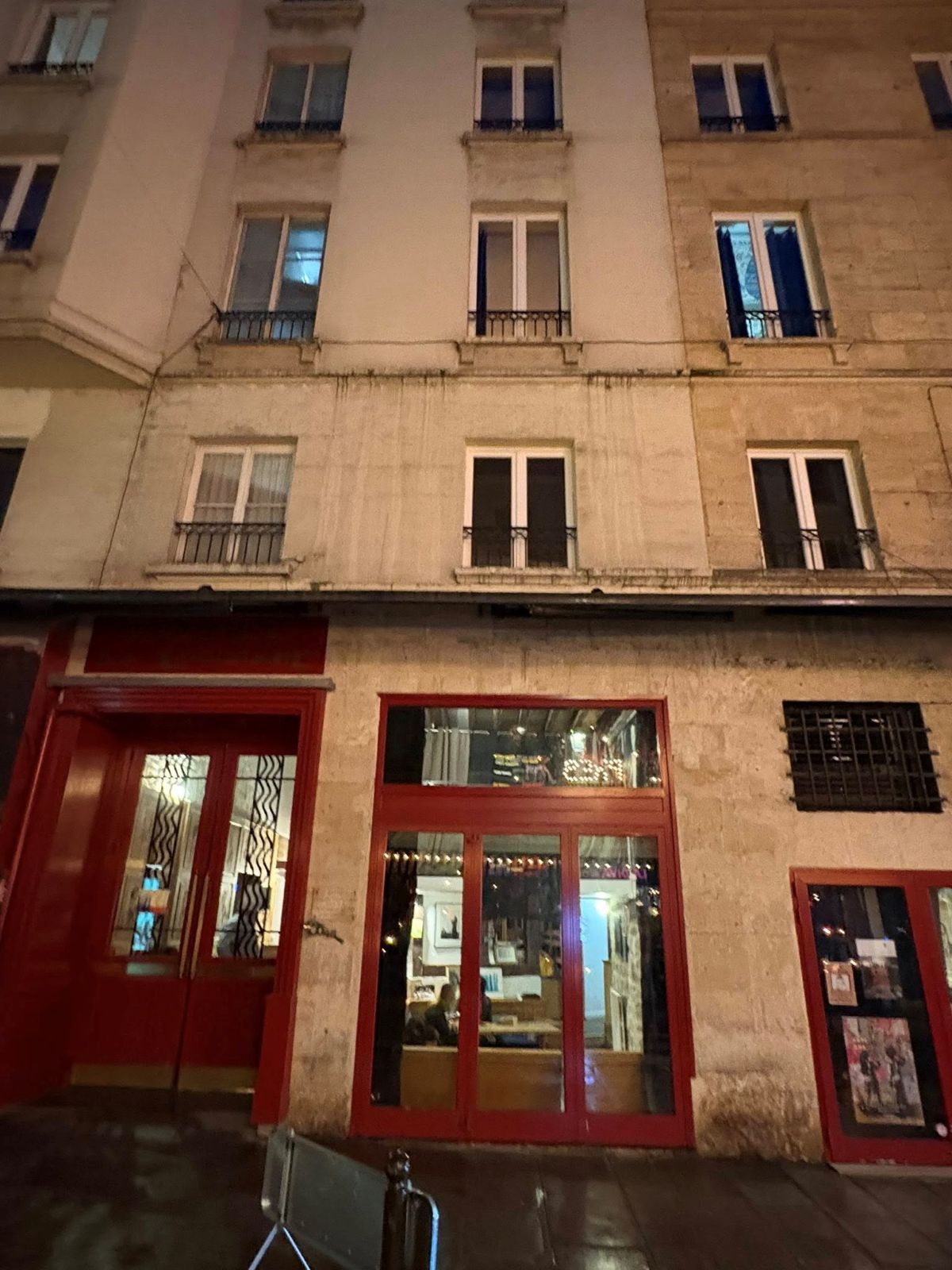
My anecdotes on rue de Seine are that in his novel *The Duchess of Langeais*, completed in 1834, Honoré de Balzac places General de Montriveau’s residence in the southern part of the Rue de Seine, near the Chamber of Peers, which met in the Luxembourg Palace. “Armand lived on the Rue de Seine, a few steps from the Chamber of Peers, where a session was to be held that day. But long before the peers arrived at their palace, some people caught sight of the Duchess’s carriage and livery.” *Rue de Seine* is the theme and title of a poem by Jacques Prévert.
The Paris tourist office on the 6éme arrondissement de Paris : https://parisjetaime.com/eng/article/explore-paris-s-6th-arrondissement-a823
There you go folks, a dandy city to explore and enjoy with the family, Memorable moments in my eternal Paris, driving and walking all over in my road warrior trails brings out sublime awesome spots with nice memorable family visits of yesteryear always remember and always looking forward to be back, eventually. Again hope you enjoy the post on the rue de Seine of Paris !!! as I.
And remember, happy travels, good health, and many cheers to all !!!


