
This is a nice town and a wonderful off the beaten path visit of Cernay la Ville. I am glad to have found me these pictures in my cd rom vault that should be in my blog for you and me. When I was in Versailles, I came twice to this town and walked all over it. Therefore, here is my take on the former Abbaye des Vaux de Cernay in Vernay la Ville !!! Hope you enjoy the post as I.
The village of Cernay-la-Ville is located in the Yvelines department no, 78 in the Île-de-France region of my belle France, Situated on the D906 between Rambouillet and Chevreuse, and then on to Chartres, and the D24 leads to Limours. the village is part of the Haute Vallée de Chevreuse Regional Natural Park, on the northeastern edge of the Rambouillet state forest and the Beauce plateau. It is located 40 km from Paris, 14 km from Rambouillet, and 20 km from Versailles Saint-Germain-en-Laye.
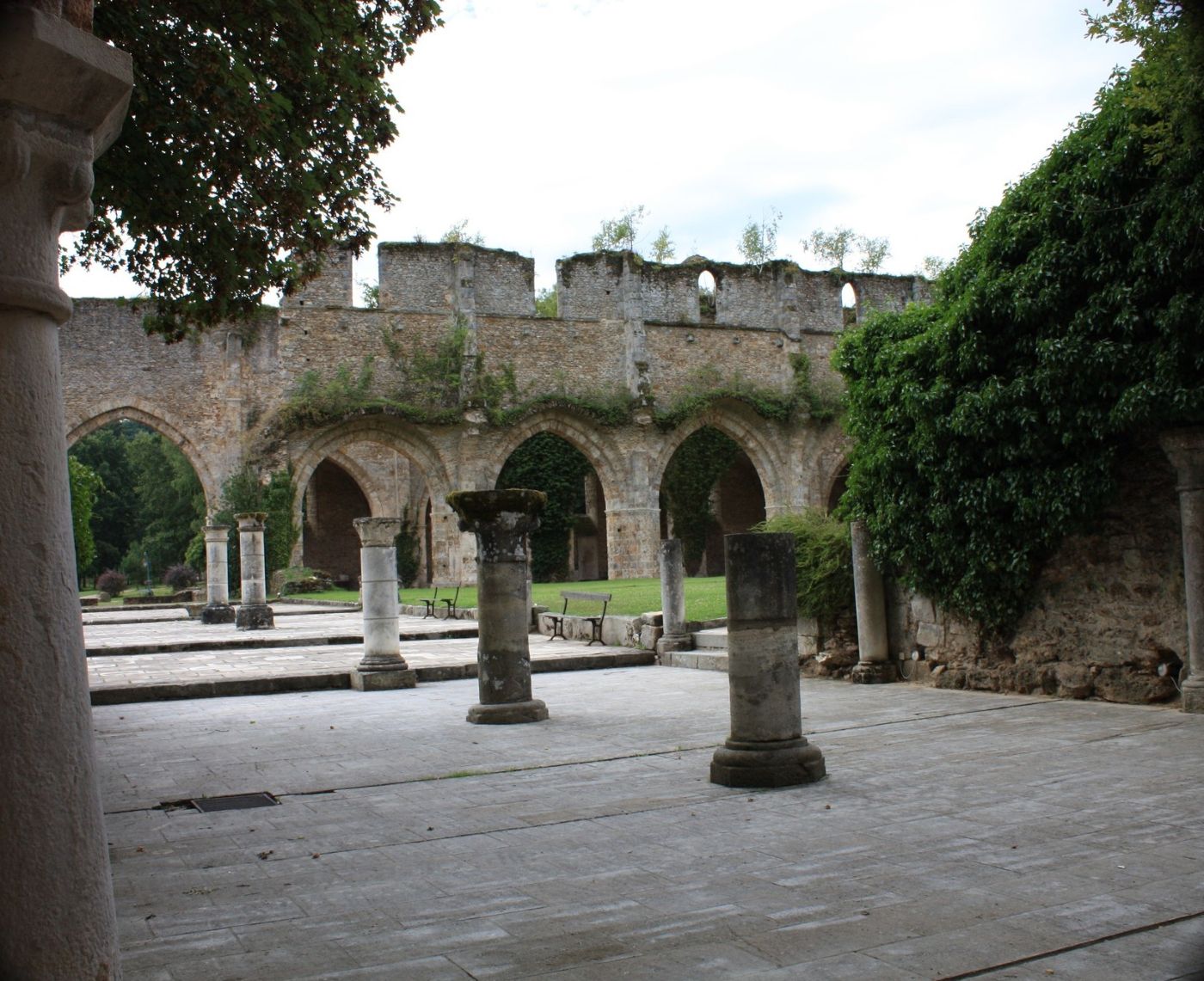
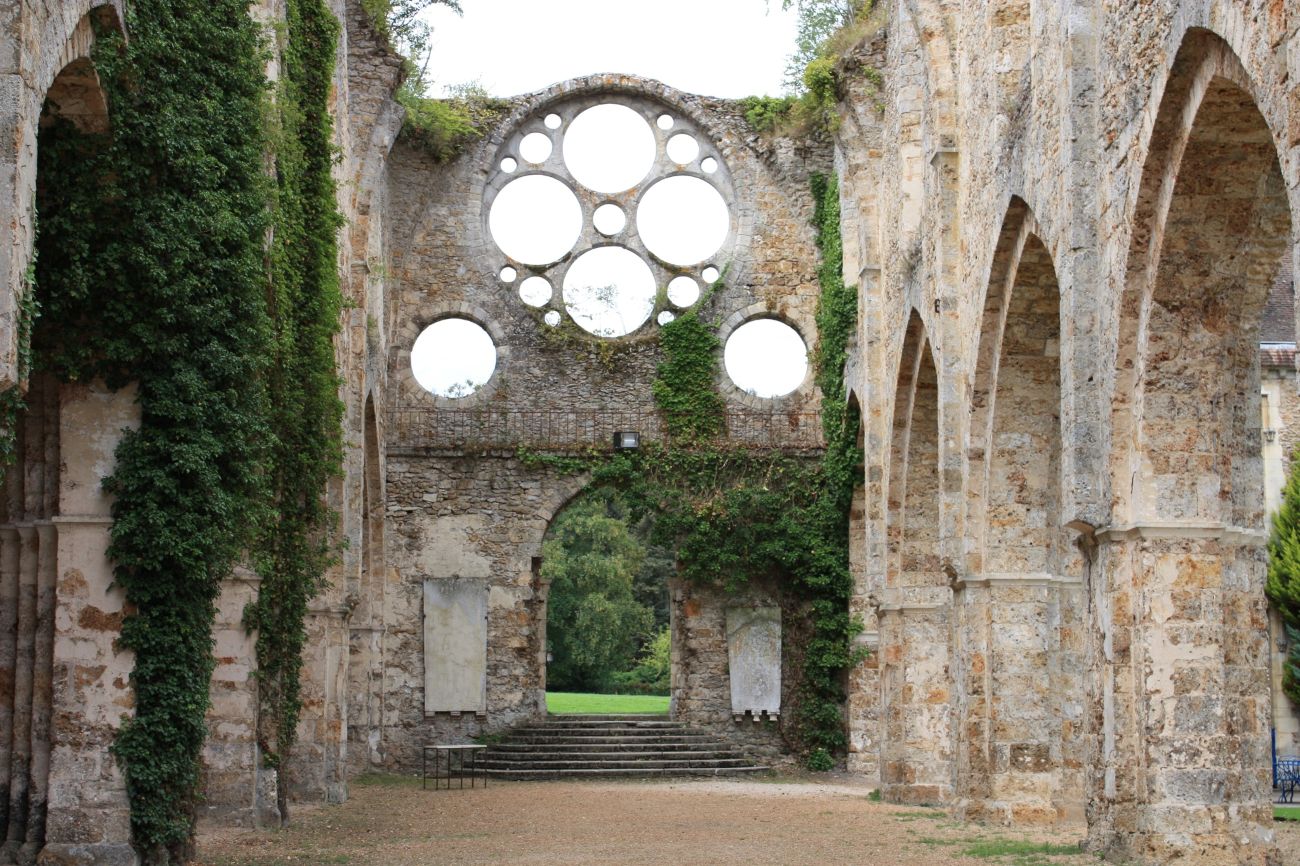
The Vaux-de-Cernay Abbey is a former Cistercian monastery dating from the 12C Its two most remarkable features are the ruins of the abbey church and the monks’ chapter house. This hall, 80 meters long, has two bays of Gothic vaults, making it one of the largest of its kind in France. The complex comprises several rooms, including the former cloister, the reading gallery, the mill, and the chapter house. Near the abbey is the Saint-Thibaut fountain (20C). The structure that rises above the Saint-Thibaut fountain is a remnant of the Renaissance-style cloister, built in the 16th century and later reused as a shrine during the restoration of the estate by Baroness de Rothschild. Among the abbey’s agricultural outbuildings is the grange of Ithe, founded around 1150 and leased out in the 15C. The abbey gardens display monumental sculptures by Pollès, a French sculptor.
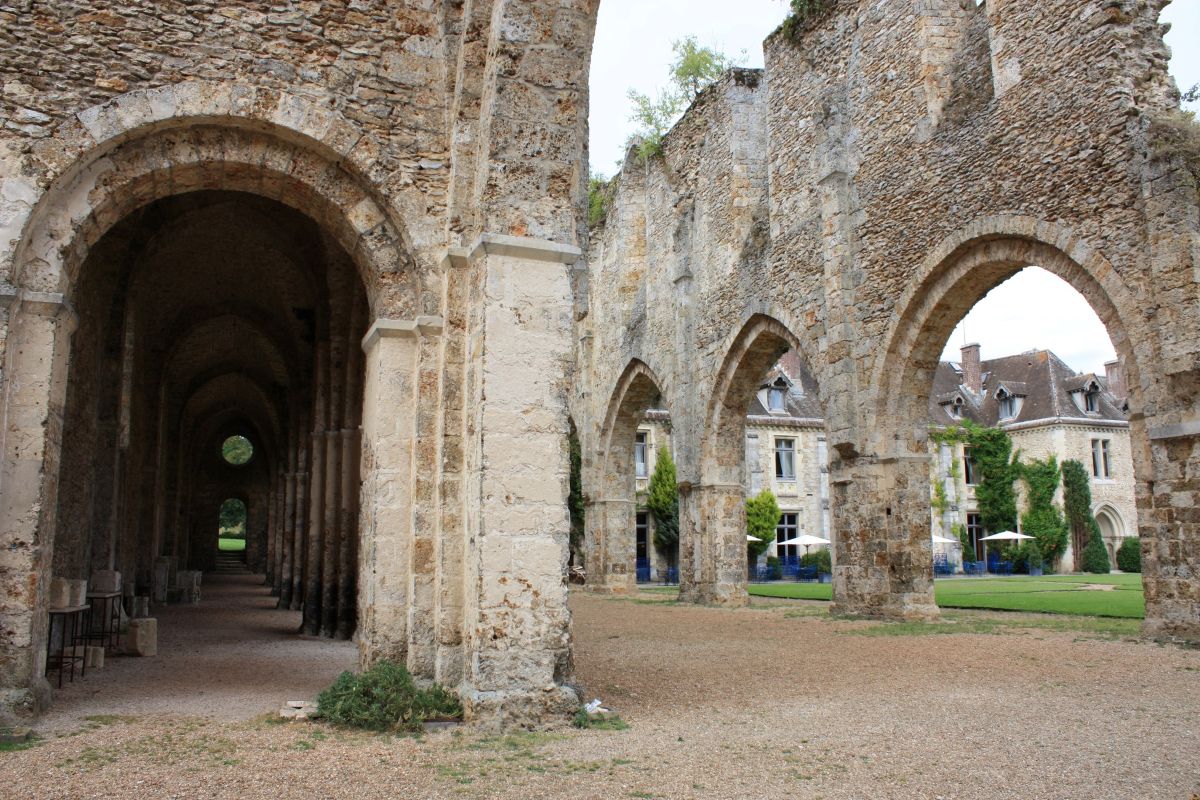
A bit of the new now a luxury hotel, The spirit of the former mistress of the manor reigns over the different areas of the Abbaye: Reception, Les Chasses, l’Auberge, le Réfectoire des moines, the enfilade of salons, the Jame’s bar, the boutique and the hotel’s most prestigious rooms. Just a stone’s throw from the Abbaye, the property’s former stables reveal cosy attic rooms, a sublime SPA and wellness area, a swimming pool and a gym. At the Pavillon d’Honneur, a jewel nestled in the trees, we cultivate a hunting lodge spirit and a sense of comfort. At the Le pavillon des sources spacious and convivial, this through-home will delight lovers of generous volumes and luminous spaces. At La Ferme or the farm like any self-respecting farm, it’s home to many animals that need to be cared for. Chickens, rabbits, donkeys, little goats… all beg to be petted at any time of day. his was without counting on the obstinacy of an avant-garde and passionate woman, Baroness Charlotte de Rothschild, who, almost a century later, brought the place back from the ashes. A lover of the arts, painter and musician (her piano teacher was a certain Chopin), she scrupulously rebuilt each building and added new constructions, shaping the estate as we know it today.
How to get to the Abbey Vaux de Cernay from Paris:go thru the Porte de Saint-Cloud, take the A13 autoroute de Normandie dir Rouen , continue on bearing right on the A12 autoroute dir Rambouillet/Dreux , then follow the N10 towards Rambouillet until the first exit, Le Perray-en-Yvelines. Head towards the village of Auffargis, then follow the signs for Abbaye des Vaux-de-Cernay. The main entrance to the estate will be on your left 3rd entrance gate. However, I came here from Versailles along the Rue du Maréchal Foch, Avenue de l’Europe continue Avenue du Général de Gaulle, then Rue Royale right on Rue du Général Leclerc then left on Rue du Général Joffre continue on Avenue Clément Ader or D91 road towards connecting with the N12 hightway dir Dreux then get off exit/sortie 6 Guyancourt passing City center Voisins le Bretonneux still on D91 road thru Dampierre en Yvelines then bear right onto Route de l’Abbaye then continue Route de Vaux de Cernay or D24 road see panel bear sharp right onto the abbey entrance,
Other things to see here are the Church of Saint-Brice: the transept and the base of the bell tower date from the 13C, the nave and aisles from the 16C, the oak statue of Saint Brice from the 13C, and the large wooden Christ from the 17C. Relics of Saint Thibaut de Marly, abbot of Vaux de Cernay, are also kept in the church.
During the second half of the 19C, many prestigious young painters came to work outdoors in Vaux de Cernay. They stayed in welcoming inns such as the “Chez Léopold” or “Au Rendez-vous des Artistes”) in Auffargis or Cernay-la-Ville. The painters of the Cernay school were then very well known. Their leader was Léon Germain Pelouse, who lived in Cernay from 1870 to 1884 and was also elected president of the Paris painting and sculpture salons. His works are exhibited in numerous museums in France (Paris Orsay, Bordeaux, Le Havre, Rouen, Carcassonne, Nantes) and abroad (Oslo, Chicago, New York, Montreal and Sydney). Several hundred French and foreign painters came to the region during the second half of the 19C, followed by numerous artists associated with the Cernay-la-Ville school: Jacques Raymond Brascassat , Henri Harpignies, Kitty Lange Kielland , Albert Rigolot , Julian Alden Weir, Charles Ferdinand Ceramano of Belgium, Peder Severin Krøyer of Denmark, Winslow Homer of the United States, Theodore Robinson of the USA, and Marc-Aurèle de Foy Suzor-Coté of Canada. In 1897, the friends and students of Léon Germain Pelouse commissioned Alexandre Falguière to erect a monument in his memory in the Vaux de Cernay. This work having been stolen in 1999, a new bronze bust of Léon Germain Pelouse, created by the sculptor Marc Deligny and the Coubertin foundry, was installed near the Vaux de Cernay pond in 2004.
A bit of history I like tell us the village of Cernay is mentioned as early as 768 in a charter of Pepin the Short. The true history of Cernay-la-Ville begins in the early 12C with the construction of the Abbey of Notre-Dame des Vaux-de-Cernay, belonging to the Cistercian order. Initially built of wood, the first structures were gradually reinforced with stone starting in 1145, following arduous work to drain and irrigate the area around the Vaux stream. The first recorded mention of the name Vaux-de-Cernay is found in a document from Louis VII dated 1142. In 1147, the site experienced renewed growth following the affiliation of the Savigny order with Cîteaux. The Vaux-de-Cernay abbey attained the prestigious status of a Cistercian abbey within the Clairvaux affiliation. Vaux-de-Cernay then became a very important cultural center in the 12-13C, protected by a community of local nobles loyal to the monarchies and feudal systems, with the support of the papacy in the background. In March 1215, Cistercian nuns founded the Abbey of Porrois, subject to Vaux-de-Cernay, which would later become famous as Port-Royal (see post) . In 1235, the monks appointed Thibaut de Marly (Saint Thibaut in 1270) as their abbot, who would foster a remarkable intellectual and social movement (lasting until the 14C. It was also during this period that Louis IX (Saint Louis) met the saintly abbot, reportedly to discuss the infertility of his wife, Queen Margaret of Provence. She subsequently had 11 children. At the tomb of Thibaut de Marly knelt Philip the Bold, Philip the Fair, and Charles VI. The abbey received numerous prestigious visits in the following centuries, including kings, queens, the Dauphin of Louis XIV with his court after the hunt, presidents, and prominent figures of the French Republic (including Victor Hugo, who drew a copy of the rose window.
But from the 14C onward, the abbey gradually declined, and the buildings were no longer maintained as the country was ravaged by wars and plagues of all kinds. In December 1463, by letters patent, King Louis XI confirmed the royal protection granted by his predecessors. In 1542, the abbey was placed under commendam, which weakened its financial resources. The monastery experienced a period of prosperity at the end of the 17C and during the 18C, thanks to notable patrons such as Jean de Furet and his wife, Catherine Sainte Marie. It briefly passed into the hands of John II Casimir Vasa, former King of Poland (supported by Louis XIV), in 1669, who visited it in 1671 before dying the following year. The revolutionary period did not spare the community, which was abruptly dissolved in 1791 with the hasty sale of furnishings and property following the requisition of the buildings by the Dourdan court.
In 1988, the entire Vaux-de-Cernay Abbey was purchased from the Amiot family by the Savry group, “Les Hôtels Particuliers.” The business was acquired at the end of 2020 by the Paris Society/Accor group. In the second half of the 19C, the so-called “landscape painters’ school” in Cernay-la-Ville referred to a group of landscape painters inspired by the Vaux-de-Cernay and its surroundings.
The Village of Cernay la Ville on its heritage : https://www.cernaylaville.fr/decouvrir/patrimoine.html
The official Abbaye des Vaux de Cernay : https://en.abbayedesvauxdecernay.com/
The Rambouillet tourist office on Cernay la Ville : https://www.rambouillet-tourisme.fr/communes/cernay-la-ville/
The Parc Naturel Régional Haute Vallée de Chevreuse on Cernay la Ville : https://www.parc-naturel-chevreuse.fr/un-territoire-preserve/le-patrimoine-dans-les-55-communes/la-carte-des-communes-du-parc/cernay-la
The Yvelines dept 78 tourist office on the abbey of Vaux de Cernay : https://www.destination-yvelines.fr/randos-a-pied/les-1001-facettes-des-vaux-de-cernay/
There you go folks, enjoy this wonderful ride into the French soul, and the countryside of the Yvelines dept 78 at quant nice off the beaten path to Cernay la Ville, there is a lot more in my belle France. Again ,hope you enjoy this post on the former Abbaye des Vaux de Cernay in Vernay la Ville !!! as I.
And remember, happy travels, good health, and many cheers to all !!!


