
We have driven and walked in my eternal Paris, and would like to have an imprint in my blog on the wonderful family times we had there, There is so much to see , doing my best, and glad found me these pictures in my cd rom vault ,which now transposing in my blog for you and me, This was my former worked city, so glad to post more memorable spots on it, I thank you for your readership over the years and to bear with my rants! After Paris all is to rant, shout and yelled about, me think. Therefore, here is my take on curiosities of Paris , part LXII !!! Hope you enjoy the post as I.
The Place Sainte-Opportune is located in the 1er arrondissement of Paris. It bears this name because it occupies the site of the cloister of the Church of Sainte-Opportune, which was destroyed in 1792 during the French revolution. It is mentioned as “Cloister of Saint Opportune” in a manuscript from 1636. The square was enlarged during the construction of Rue Sainte-Opportune, declared a public utility in 1836 and completed immediately afterward. It was opened further south after the construction of Rue des Halles. Notable buildings here tell us the square is graced by a statue of Saint Opportune, at the corner of Rue des Halles and Rue des Lavandières-Sainte-Opportune. The niche is surmounted by the sculpted coat of arms of Marie-Louise Rouxel de Médavy, Abbess of Almenêches, dedicatee of The Life and Miracles of Saint Opportune, Abbess, published in 1655 by Olivier Gosset, parish priest of the Church of Saint Opportune. The Châtelet metro station entrance (see pic) is a glass and metal structure with a divided glass canopy, supported by three pillars. The construction creates an airy and open feeling thanks to its transparent materials and slender supports. The entrance exhibits the Art Nouveau style through its organic forms and a roof reminiscent of dragonfly wings. Visitors can observe how natural forms have been integrated into the urban infrastructure. Hector Guimard’s original design was created in the early 1900s, but the initial structure did not survive. The current entrance was rebuilt in 2000 based on archival plans and Guimard’s original concept. The entrance provides access to metro lines 1, 4, 7, and 11, connecting the main areas of central Paris. The Sainte-Opportune quartier or neightborhood is a historic neighborhood of Paris, dating from the early 18C to the French Revolution. Today, it corresponds to the southeastern part of the 1er arrondissement. Surrounded by the Saint-Jacques-la-Boucherie, Les Halles, Louvre, and Cité quartiers or neighborhoods, the quartier Sainte-Opportune is bordered by the market and Place de la Porte de Paris and Rue Saint-Denis; by Rue de la Ferronnerie, including the charnel house of the Innocents located on the same side of the street, and by part of Rue Saint-Honoré, from Rue de la Ferronnerie to the corner of Rue du Roule and Rue des Prouvaires; by Rue du Roule and Rue de la Monnaie and by the Trois-Maries crossroads to the Seine; and by Rue de la Descente de la Vallée de Misère and Quai de la Mégisserie.

The Paris tourist office on Paris Centre (arrond 1-4) : https://parisjetaime.com/eng/article/explore-the-centre-of-paris-a846
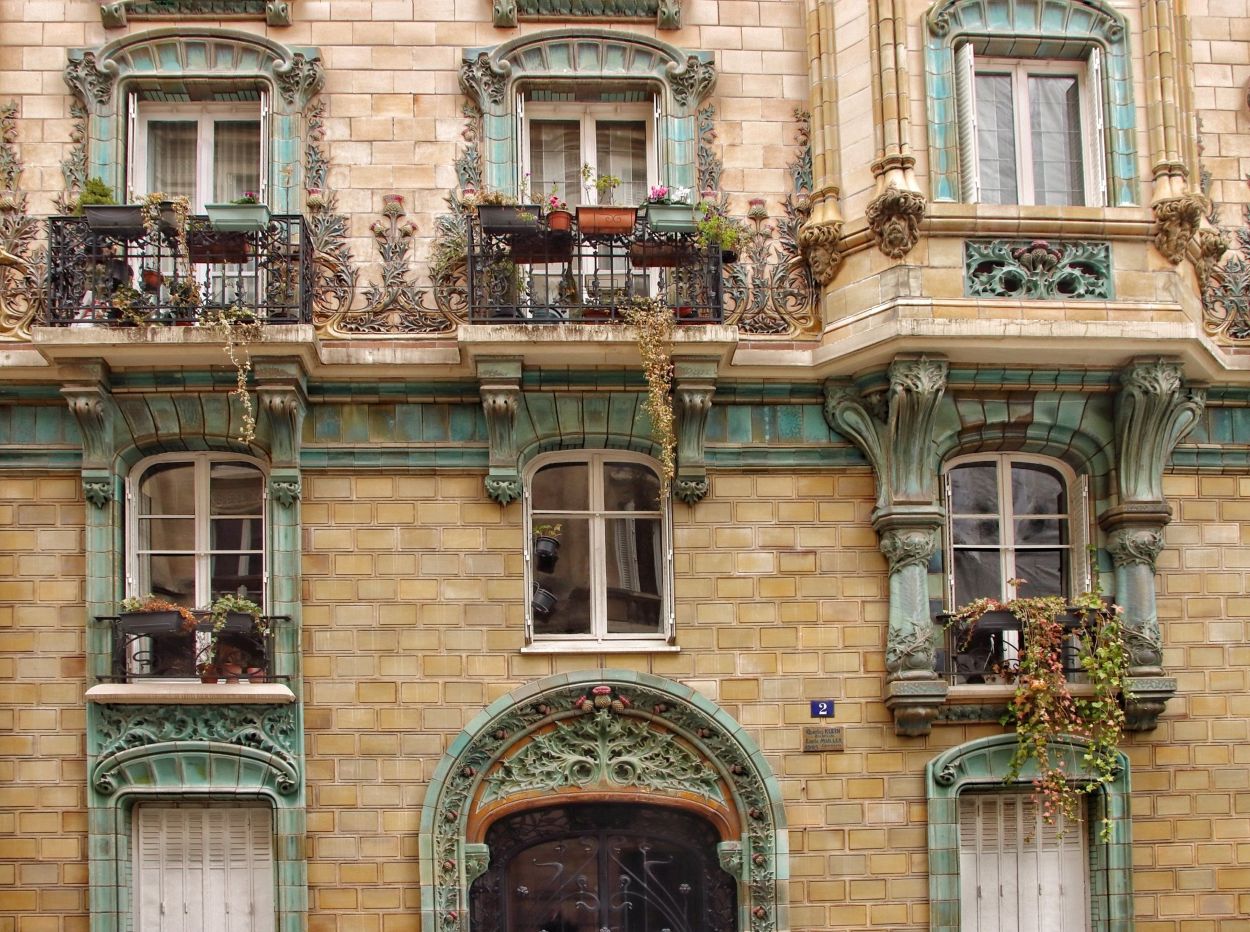
The Rue Eugène-Manuel is located in the 16éme arrondissement of Paris. The street is a short public thoroughfare, approximately 200 meters long. It begins at 7 Rue Claude-Chahu and ends at 65 Avenue Paul-Doumer. Developed in a short period at the beginning of the 20C, this street displays a homogeneous post-Haussmannian style with a few buildings featuring Art Nouveau decorations. The neighborhood is served by metro line 9 at La Muette station and by metro line 6 at Passy station. The street was named in honor of the French poet, professor, and politician Eugène Manuel. This street, opened between Rue Claude-Chahu and Rue Francisque-Sarcey in 1897, received its current name by a decree of April 5, 1904. It was extended to Rue Paul-Saunière in 1908 and then to Avenue Paul-Doumer in 1937. Notable buildings here are at No. 2: Les Chardons building,(see pic) built in 1903, is an Art Nouveau building with its main entrance at No 2 on this street. It is one of the most famous buildings in Paris. In 2008, Mona Achache filmed Le Hérisson (The Hedgehog) there, a loose adaptation of the novel L’Élégance du hérisson (The Elegance of the Hedgehog) by Muriel Barbery. Some scenes from Stephen Frears’ film Chéri were filmed here in 2009. Nos. 5-7 at corner of Villa Eugène-Manuel, an Art Deco building constructed in 1926 by the architect Henri Dubouillon, signed on the façade. No. 7: Villa Eugène-Manuel, private road. No. 24: the writer Jacques d’Adelswärd-Fersen, a French poet and novelist. An aristocrat and dandy, he is known to the public for having been tried in 1903 in a morals case for which he was convicted, and for having founded Akademos, the first French homosexual magazine, in 1909. He moved here in 1908.
The Paris tourist office on the 16éme arrondissement de Paris : https://parisjetaime.com/eng/article/a-la-decouverte-du-16e-arrondissement-de-paris-a830
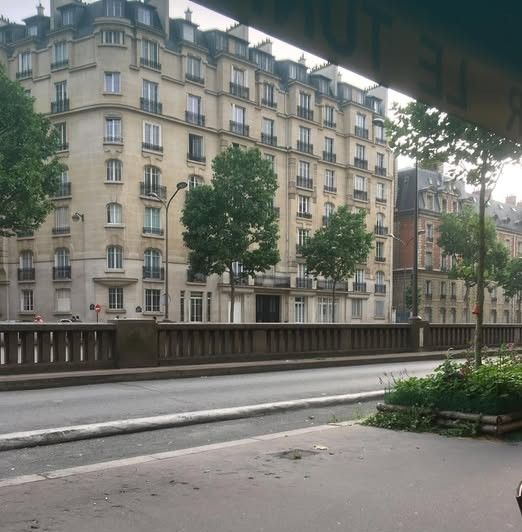
The Boulevard Exelmans is part of a municipal road in the secondary road network of the city of Paris, located in the quartier/neighborhood of Auteuil of the 16éme district or arrondissement of Paris, connecting the Pont du Garigliano to the Porte d’Auteuil. The boulevard begins at Quai Louis-Blériot, where it continues from the Pont du Garigliano and Boulevard du Général-Martial-Valin in the 15éme arrondissement, and ends at Rue d’Auteuil. The boulevard is served by metro line 9 at Exelmans station and line 10 at Porte d’Auteuil station. The boulevard is named after Rémy Joseph Isidore, Count Exelmans, Marshal of France during the Second Republic. The boulevard was built in 1862-1863, It was renamed Boulevard Exelmans on March 2, 1867. Around 1960, the boulevard’s viaduct was demolished. At the intersection with Avenue de Versailles, a tunnel was opened on June 21, 1963, to provide access to the Pont de Garigliano Bridge. Notable buildings here are at No. 17: former site of the Point-du-Jour station, on the old Petite Ceinture railway line. At numbers 24-38: Place Claude-François, inaugurated on March 11, 2000, in the presence of numerous dignitaries. Near the singer’s home (No. 46) and his offices (No. 122). At No. 39: The Carpeaux studio, built in 1895, in the pre-Art Nouveau style, constructed at an unknown date, remodeled by the architect Édouard Lewicki in 1888, heightened by Hector Guimard in 1895, and then remodeled by Paul Harant in 1914. The artist himself did not live there. It was commissioned by the sculptor’s widow, Amélie de Montfort, from the architect Hector Guimard. She died there in 1908. The façade is adorned with Carpeaux’s statues of Crouching Flora and Fisherman with a Shell. At No. 43 visiting friends took this picture for this post. At No. 51: Although Paris is a police district, number 51 houses a departmental gendarmerie barracks built in 1908, the Chalvidan barracks, named after a gendarmerie captain killed by the Nazis on August 22, 1944. No. 59: The French composer of operettas, comic operas, and opéra-comique, Charles Lecocq, died here in 1918. A contemporary building has occupied the site ever since. Since the mid-2020s, it has been the headquarters of the European Communication School. No. 87: Russian Orthodox Church of the Apparition of the Blessed Virgin Mary, later Our Lady of the Sign. Formerly and for a long time dependent on the Archdiocese of Russian Orthodox Churches in Western Europe. Like other parishes, since the end of 2019, and following a vote by the parishioners, it has been attached to the Vicariate of Russian Tradition to the Metropolis of France, which allows it to remain faithful to the Patriarchate of Constantinople. No. 90: The archaeologist Léon Heuzey died here in 1922. He was a French archaeologist, admitted in 1885 as a free member of the Academy of Fine Arts, and a member of the Academy of Inscriptions and Belles-Lettres. No. 122: A private mansion that belonged to the singer Claude François, which housed the offices of his Flèche record label between 1969 and 1978.
The Paris tourist office on the 16éme arrondissement de Paris : https://parisjetaime.com/eng/article/a-la-decouverte-du-16e-arrondissement-de-paris-a830
The Rue Payenne is located in the 3éme arrondissement of Paris. It begins at no 20, rue des Francs-Bourgeois, and ends at no 15, rue du Parc-Royal. A quiet little street in the Marais quartier or neighborhood, extending from rue Pavée, it is lined with private mansions and gardens. The area is served by metro line 1 at the Saint-Paul station. The street is named after Guillaume Payenne, the notary in charge of subdividing the market gardens of the Sainte-Catherine-du-Val-des-Écoliers convent. He created the Sainte-Catherine cultural district and personally acquired a plot corresponding to the Hôtel de Marle. This street is one of the roads created within this development in 1545. This road, which is mentioned as “rue Payenne” in a manuscript from 1636, also bore the names “rue Payelle”, “rue Parelle”, “rue de Guienne” (1639) and “rue des Payens”. Notable buildings: The first houses, nos. 1 and 3, occupy the site of the former convent of the Daughters of the Nativity of Jesus before 1687. At no. 5 is the house of the architect François Mansart (great-uncle of Jules Hardouin-Mansart), which he built and in which he died in 1666. The building was destroyed and then rebuilt in 1844, before a positivist group bought an apartment there in 1903 to turn it into a chapel of Humanity. Auguste Comte’s muse, Clotilde de Vaux, daughter of a modest infantry captain, inspired his “religion of Humanity.” She lived there and died in her third-floor apartment. The Franco-Brazilian Social and Cultural Center is housed there. In 1979, the bookseller and publisher Les Insolites was located there. Opposite, at no 6, behind a metal gate, one can glimpse the rear of the Lycée Victor Hugo High School (formerly the Blue Girls Convent). No 9 houses, behind gates that are sometimes open, the Lazare Rachline Garden, the small formal garden of the Hôtel de Donon, now the Cognacq-Jay Museum. At no 11 is the Hôtel de Marle, occupied since 1965 by the Swedish Institute. The residence, built starting in 1558, this mansion is aka the “Hôtel de Polastron-Polignac”, has a garden accessible from Rue Elzévir, containing one of the 364 wells recorded in Paris, entirely covered in ivy. Opposite lies the Square Georges-Cain, formerly the private garden of the Hôtel Le Pelletier de Saint-Fargeau. A statue by Aristide Maillol and floral arrangements decorate the flowerbed. To the left, the orangery of the mansion marks the boundary of the garden. No 13 is occupied by the Hôtel de Châtillon (see pic of carriage type door), charming with its paved courtyard and beautiful interior staircase. The hotel was originally the residence of Henri de Daillon, Count of Lude, Grand Master of the Artillery of France, made Duke in 1675, then First Gentleman of the Bedchamber, Governor of the castles of Saint-Germain and Versailles, and one of Madame de Sévigné’s loyal followers. Françoise d’Aubigné, the future Madame de Maintenon, lived there. Later, the building belonged to Marshal de Roquelaure, Attorney General at the Court of Aids (1735), to the Dowager Duchess of Châtillon ,between 1762 and 1781; she gave her name to the building, as did lived Alexandre d’Argouges. The buildings nos 9, 11, and 13 occupy the grounds of the city’s former Petit Arsenal. The actor Josias de Soulas, aka Floridor, a French squire and lord of Primefosse, was a gentleman, as well-known as Molière in his time, and also lived on Rue Payenne. François Trudaine, a naval captain and lord of Monceaux near L’Évêque-Saint-Georges, resided on the street in 1582. The street is mentioned several times in Restif de La Bretonne’s ,a French writer *Les Nuits de Paris, ou Le spectateur nocturne* (1788). It houses a private mansion where Count Octave, one of the characters in Honorine, a long novella by Honoré de Balzac, lives in seclusion.

The city of Paris on Paris Centre arrondissements 1-4 of Paris: https://mairiepariscentre.paris.fr/
The Paris tourist office on Paris Centre (arrond 1-4): https://parisjetaime.com/eng/article/explore-the-centre-of-paris-a846
There you go folks, a dandy city to explore and enjoy with the family, Memorable moments in my eternal Paris, driving and walking all over in my road warrior trails brings out sublime awesome spots with nice memorable family visits of yesteryear always remember and always looking forward to be back, eventually. Again hope you enjoy the post on curiosities of Paris, part LXII !!! as I.
And remember, happy travels, good health, and many cheers to all !!!


