
I like to tell you a bit on the memorable town of Conflans Sainte Honorine. There is a wonderful history of river boating here and we remember if fondly, I am lucky to found me some pictures hidden in my cd rom vault to do this post for you and me, The town of Conflans Sainte Honorine is located in the Yvelines department 78 in the Île-de-France region of my belle France. Therefore, here is my take on curiosities of Conflans Sainte Honorine, part I !!! Hope you enjoy it as I.
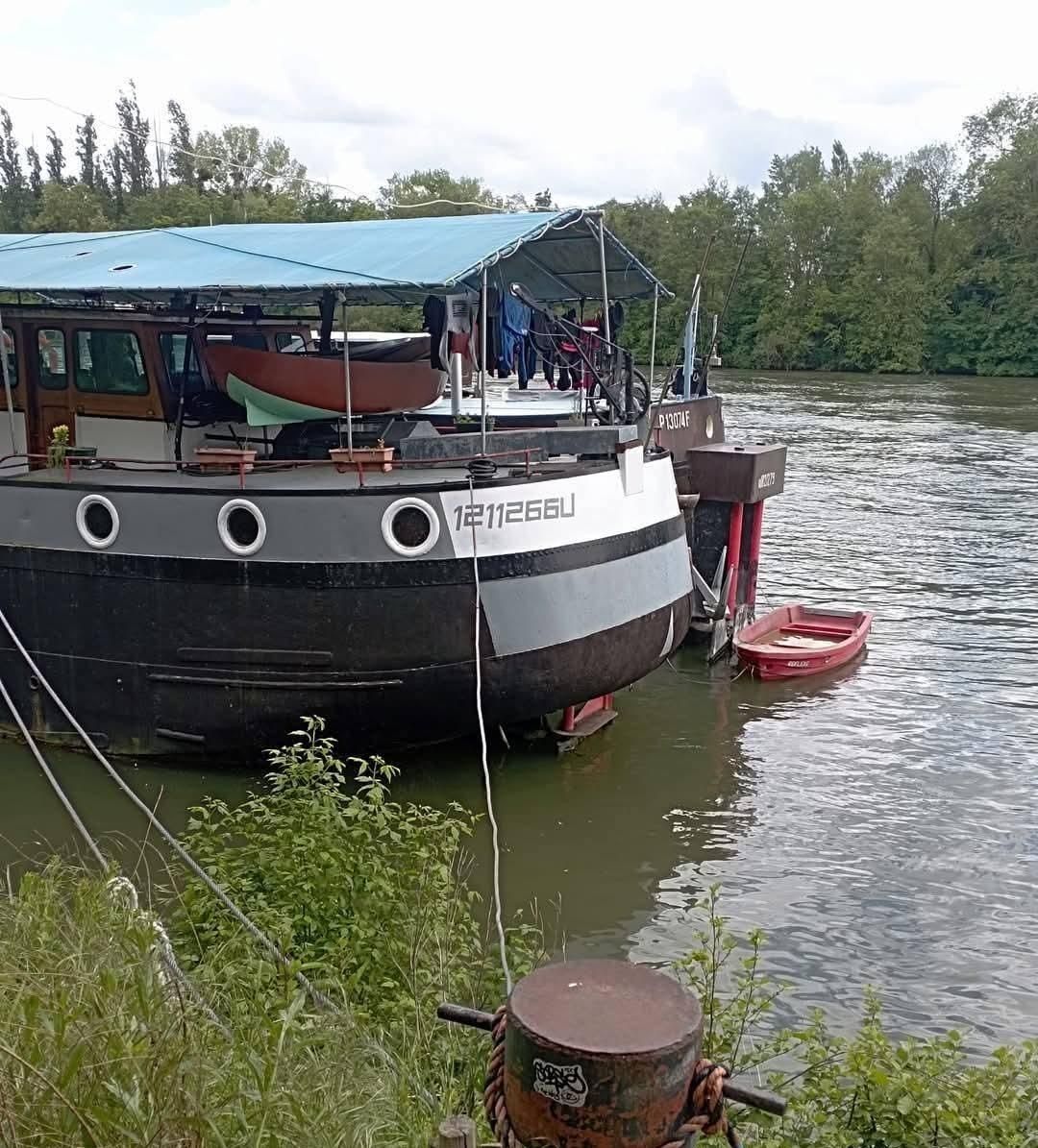
The town of Conflans-Sainte-Honorine is located in the northern Yvelines department no, 78, on the border between Val-d’Oise department no, 95 and the Cergy-Pontoise metropolitan area, It is 14 km from Saint-Germain-en-Laye , 30 km from Paris, 27 km from Versailles, and 485 km from my current home. The town is crossed by the road N184, which connects, among other places, Cergy-Pontoise and Saint-Germain-en-Laye ; by the RD 48, which connects Herblay-sur-Seine to Andrésy ; and it is bordered by the RD 54 which connects the RD 48 to Neuville-sur-Oise then to Jouy-le-Moutier. My parking on street by the Seine on the Promenade François Mitterand, There is a train station on the line J of Paris Saint-Lazare from Conflans-Sainte-Honorine station and on line RER A .
The town of Conflans Sainte Honorine can be reached via the Seine, the Oise, and their tributaries. For example, the town is between 70 and 73 km from the Pont Marie in Paris, the “zero point” for distances along the Lower Seine to Le Havre. More curiously, the navigable section of the Oise has its “zero point” at “Pointil,” the confluence. In the past, Conflans saw passenger boats passing from Paris to London. Small river-sea freighters still “cross” the town, which stretches along both banks of the Seine.
You can see always the converted barge, now theater, shows, moored, unique on the Seine River, Conflans-Sainte-Honorine is considered the main French capital of inland waterway transport. Every year in June, a festival called “Pardon National de la Batellerie” is celebrated.
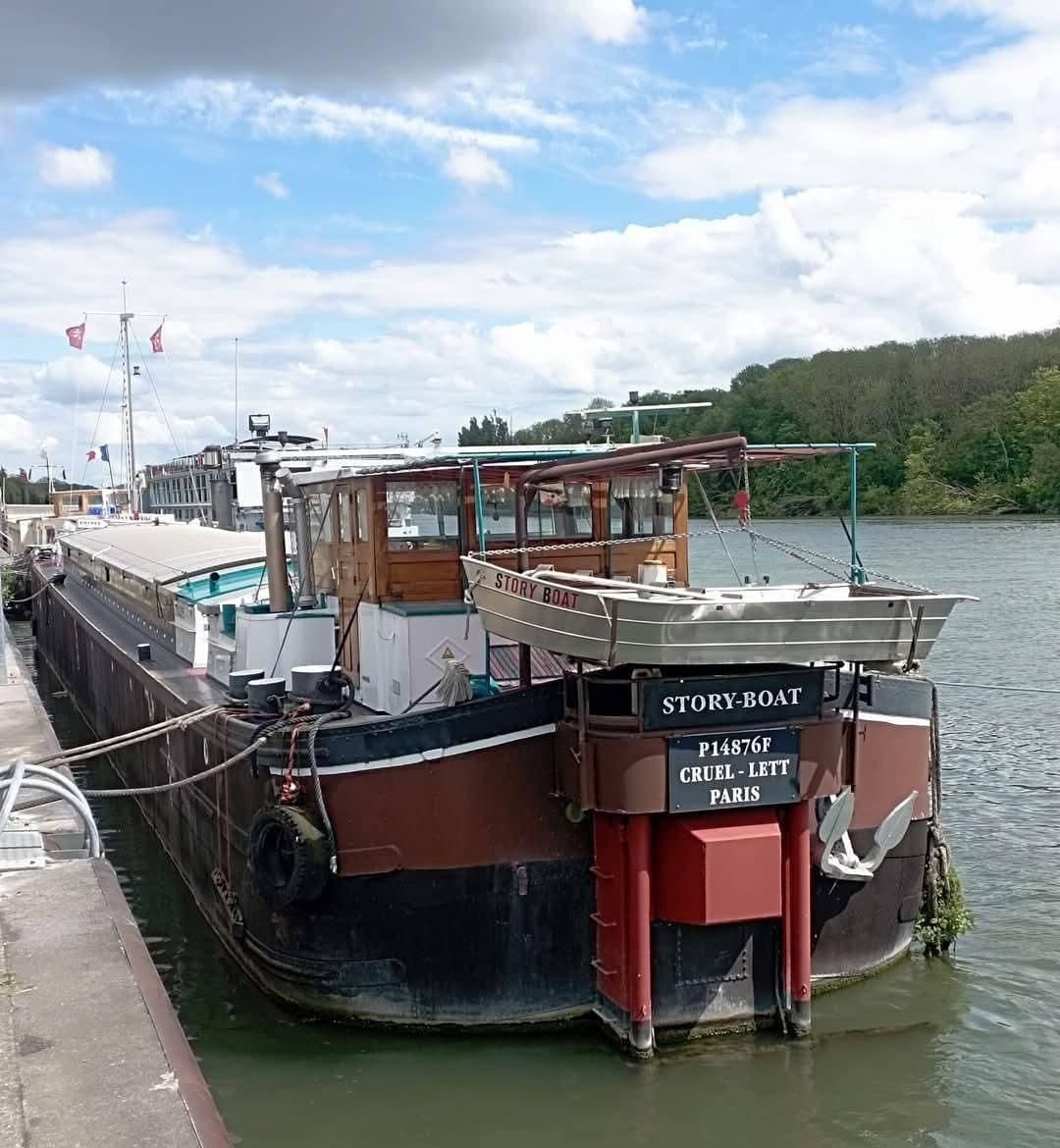
The river stop or port is located in the city center ,opposite 23, rue René-Albert, near the Saint-Nicolas port. It is freely accessible and free of charge. It has 10 moorings for pleasure boats less than 12 meters long and less than 3.5 meters wide. Parking for pleasure boats is limited to 72 hours. A launching ramp is located at Pointil, at the confluence of the Seine and the Oise rivers. Ramp access via the Cours de Chimay , port access via the Ile de Devant, left bank of Conflans.
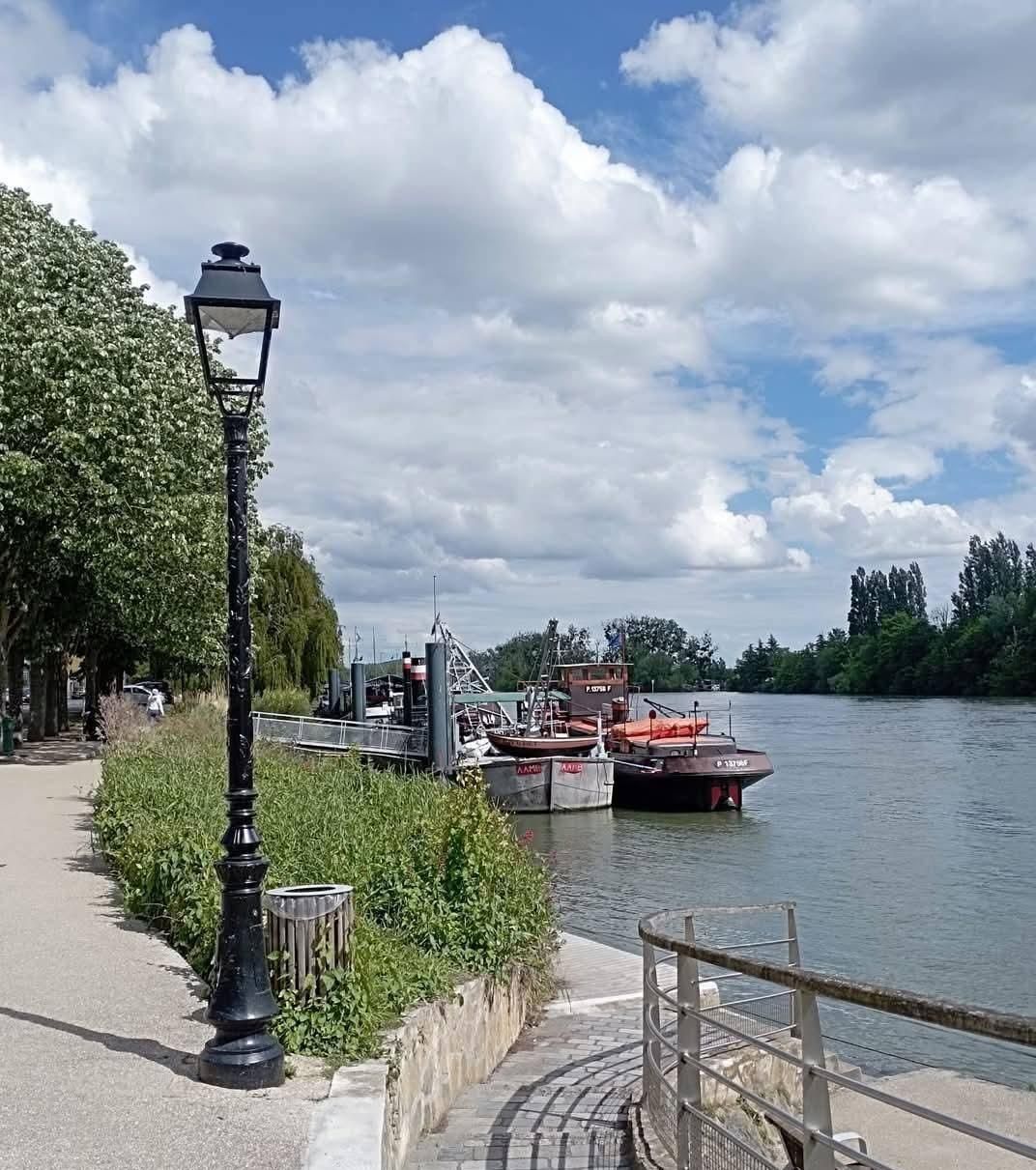
The linear area dedicated to river transporters represents nearly 1,820 linear meters of parking in Conflans Sainte Honorine, distributed as follows on the banks: 136 ml on the bank of the Oise, 758 ml on the left bank including the Ile du Devant and 884 ml on the urbanized right bank. The Saint-Nicolas port, created on the initiative of the town, and managed by the Voies Navigables de France (VNF), can accommodate Freycinet-type boats for exclusive residential use as a main residence.
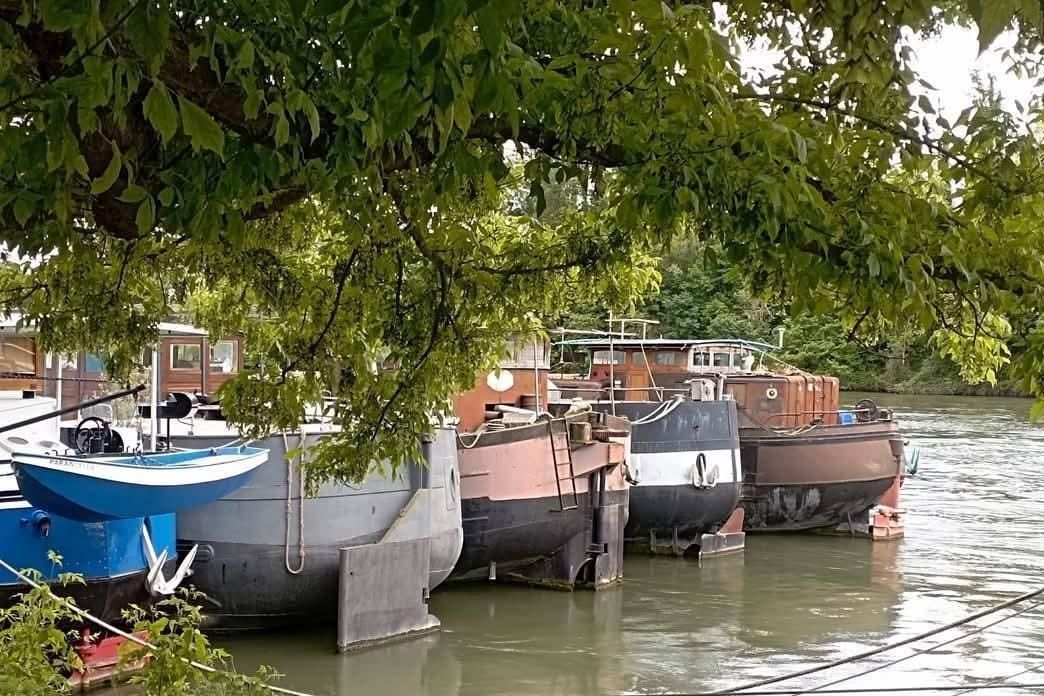
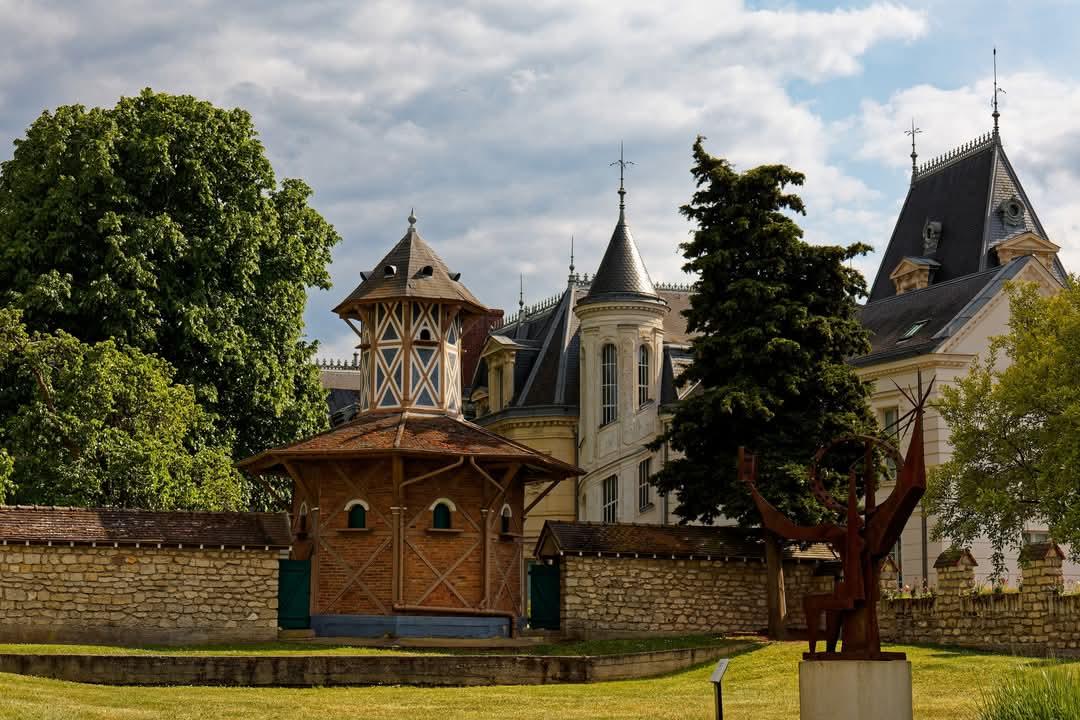
The monument to see here is the musée de la batellerie et des voies navigables de Conflans-Sainte-Honorine or inland waterway and inland waterway museum , This is a municipal museum, but with a national vocation, dedicated to inland waterway, riverboats and inland waterways. It was created in 1965, the Castle and municipal park known as “Priory”: former priory residence modified in the 19C, first, from 1816, by Samuel Lhéritier de Chézelles, general-baron of the Empire, then, from 1872, by Jules Gévelot, industrialist (cartridges). They were both mayors of Conflans. This castle houses the inland waterway museum of national interest which reopened in June 2015 for the “general” public on the occasion of the National Pardon of Inland Waterway. The Museum of Inland Waterways and Barge Transport is located on a hillside overlooking the Seine and the port of Conflans-Sainte-Honorine. The Château du Prieuré at 3, Place Jules-Gévelot, which houses the museum, acquired by the city in 1936, is surrounded by a park containing an orangery and immense greenhouses installed there at the end of the 19C. Thanks to its reserves, rich in 40,000 documents, engravings, maps and models and 12,000 postcards, numerous temporary exhibitions are organized around original and fascinating themes.
The official Musée de la Batellerie et des voies navigables de Conflans Sainte Honorine : https://www.musee-batellerie-conflans.fr/
Other things to see here, me think are the Tour Montjoie Tower, built in the 11C, the building has been in ruins since the end of the 15C. Only the four walls, about fifteen meters high, remain; the west and south facing towards the Seine have been restored. The Bateau-chapelle « Je Sers » reinforced cement barge 70.36 meters long and 8.10 meters wide. Built in 1919, first named Langemark, and considerably modified from 1935 by the Association Entr’aide Batelière, it houses a chapel dedicated to Saint Nicholas, patron saint of boatmen, and various rooms. Parc du Prieuré where part of the film On the Trail of the Marsupilami was filmed in October 2010 in the serre Gévelot or greenhouse, transformed into a tropical lair.
A bit of history tell us that this site of a fortified camp known from the 8C, it is the extreme western limit of the royal domain proper. Charles II the Bald gave this village and the lordship to the bishops of Paris, on condition that peasants constantly watch to announce the arrival of the Vikings who would go up the Seine. A priory was founded in 1080, served by monks sent from Normandy by Anselm, abbot of Bec-Hellouin, future archbishop of Canterbury, better known under the name of Saint Anselm of Canterbury, doctor of the Church. A keep-tower, still present, then rose for the Beaumonts, seat of the barony until the French revolution and a second castle was built a century and a half later, a little further east, for the Montmorencys. It would be called “Château-Neuf”. Today, only a cellar and a well remain. The Romanesque castle is called Tour Montjoie, Tour de Ganne, or La Baronnie. The monks having left the priory at the beginning of the 16C, the Romanesque church deteriorated very seriously due to lack of maintenance. The Montmorencys remained lords until 1632, with occasional eclipses as the fief was sold to other high-ranking figures such as Guy de la Trémoille but later bought back by Constable Anne de Montmorency. After the beheading of Duke Henri II, implicated in the plot of Gaston d’Orléans (brother of Louis XIII) against Richelieu and executed in Toulouse, the fief passed to the Prince of Condé, husband of Henri de Montmorency’s sister, Charlotte. It subsequently fell into the possession of the La Grange family and then of the Marquis de Castellane, who sold it in 1776 to Count Florimond de Mercy-Argenteau, Austrian ambassador and Lord of Neuville and Conflans. The latter installed his mistress, the beautiful Rosalie Levasseur, a singer at the Paris Opera, in a large estate in the hamlet of Chennevières from 1775 to 1792. During the French revolution, the town was provisionally named Confluent-de-Seine-et-Oise. The boom in inland waterway transport began in 1855 with the installation of the downstream head of the towing chain, which allowed barges to sail up the Seine towards Paris, thus supplying the capital, which was undergoing rapid urban development. Then the tugs are imposed A line of defense around Paris is created from the banks of the Marne at La Ferté-sous-Jouarre to Conflans-Sainte-Honorine. Formed of approximately 260 “blocks”, anti-tank ditches, flood zones, it is established at the ends of a radius of approximately 25 to 40 km around the northern part of Paris. 7 types of fortifications exist, ranging from the simple “strong point” to more complex structures or even types of casings intended for small naval guns. This half-belt of defense is designated as “Chauvineau Line”, from the name of this divisional general, specialist in the engineering, who was at its origin in 1932 and recalled to active duty from his place of retirement for the start of hostilities in 1939
The local Terres de Seine tourist office on Conflans Sainte Honorine : https://www.terres-de-seine.fr/decouvrir/bords-seine/conflans-capitale-de-la-batelellerie/
The City of Conflans Sainte Honorine on its history : https://www.conflans-sainte-honorine.fr/culture-sport-et-loisirs/histoire-patrimoine/histoire/
The Yvelines dept 78 tourist office on Conflans Sainte Honorine : https://www.destination-yvelines.fr/visite-conflans-sainte-honorine/
There you go folks, another quant ,nice memorable town in my former dept 78 Yvelines. Oh yes , Conflans Sainte Honorine is worth the detour, me think. Again, hope you enjoy the post on curiosities of Conflans Sainte Honorine, part I !!! as I.
And remember, happy travels, good health, and many cheers to all !!!


