
We have driven and walked in my eternal Paris, and would like to have an imprint in my blog on the wonderful family times we had there, There is so much to see , doing my best, and glad found me these pictures in my cd rom vault ,which now transposing in my blog for you and me, This was my former worked city, so glad to post more memorable spots on it, I thank you for your readership over the years and to bear with my rants! After Paris is to rant, shout and yelled about, me think. Therefore, here is my take on curiosities of Paris , part LIX !!! Hope you enjoy the post as I.
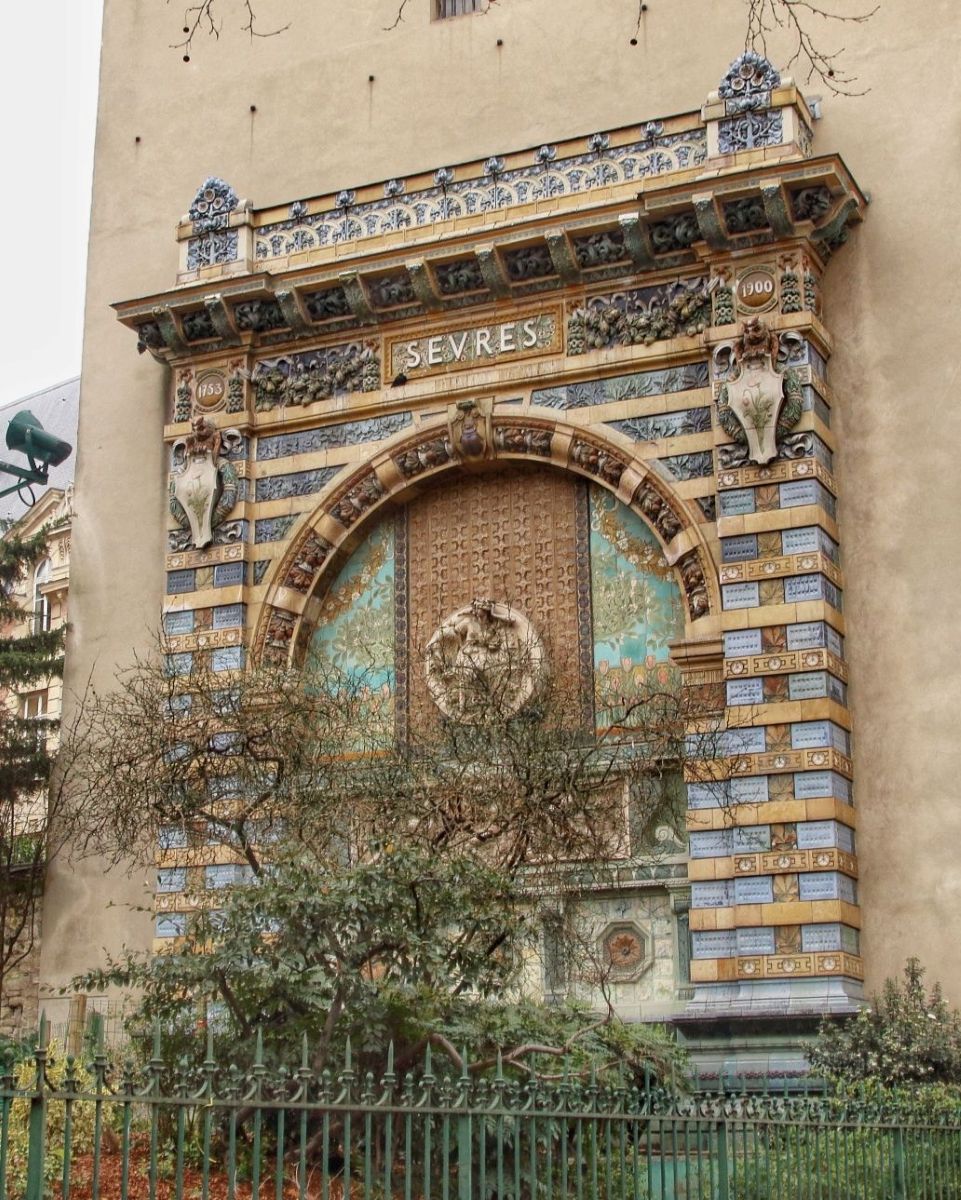
The Square Félix-Desruelles is located in the quartier or neighborhood Saint-Germain-des-Prés in the 6éme district or arrondissement of Paris. The garden is accessible from Boulevard Saint-Germain. It is served by metro line 10 at the Mabillon station and by metro line 4 at the Saint-Germain-des-Prés station. It pays tribute to Félix Desruelles, one of the most important French artists, renowned for his work in commemorative sculpture of the Great War or WWI. During the construction of Boulevard Saint-Germain, the Rue Childebert and Rue d’Erfurth, which had been opened in the 1710s, were demolished. Following the demolition of the houses surrounding the Church Saint-Germain-des-Prés (see post), a square was created in 1872. It is located at 168 bis Boulevard Saint-Germain, at the foot of the church, along Boulevard Saint-Germain. See the monumental Jules-Coutan Portico (1900), an Art Nouveau piece in glazed stoneware designed by the architect Charles-Auguste Risler and the sculptor Jules Coutan, This work was intended to be one of the bays of the facade of a palace entirely made of ceramic, which exhibited the products of the Sèvres Manufactory during the Universal Exhibition of 1900. Decorated with various motifs characteristic of Art Nouveau, this glazed stoneware portico is adorned with a central medallion representing a young woman. (see pic). Monument to Bernard Palissy, a bronze by Louis-Ernest Barrias (possibly also created for the 1900 Universal Exhibition), cast by Thiébaut in 1880, two other copies of which are located in front of the Sèvres National Porcelain Manufactory and in Boulogne-Billancourt. The Pastoral Fountain (1925), a sculpture by Félix-Alexandre Desruelles. At the back of the square, a glass stele commemorates the Jewish infants of the 6éme arrondissement, murdered during WWII,
The City of Paris on the Square Félix Desruelles : https://www.paris.fr/lieux/square-felix-desruelles-2456
The Paris tourist office on the 6éme arrondissement de Paris : https://parisjetaime.com/eng/article/explore-paris-s-6th-arrondissement-a823
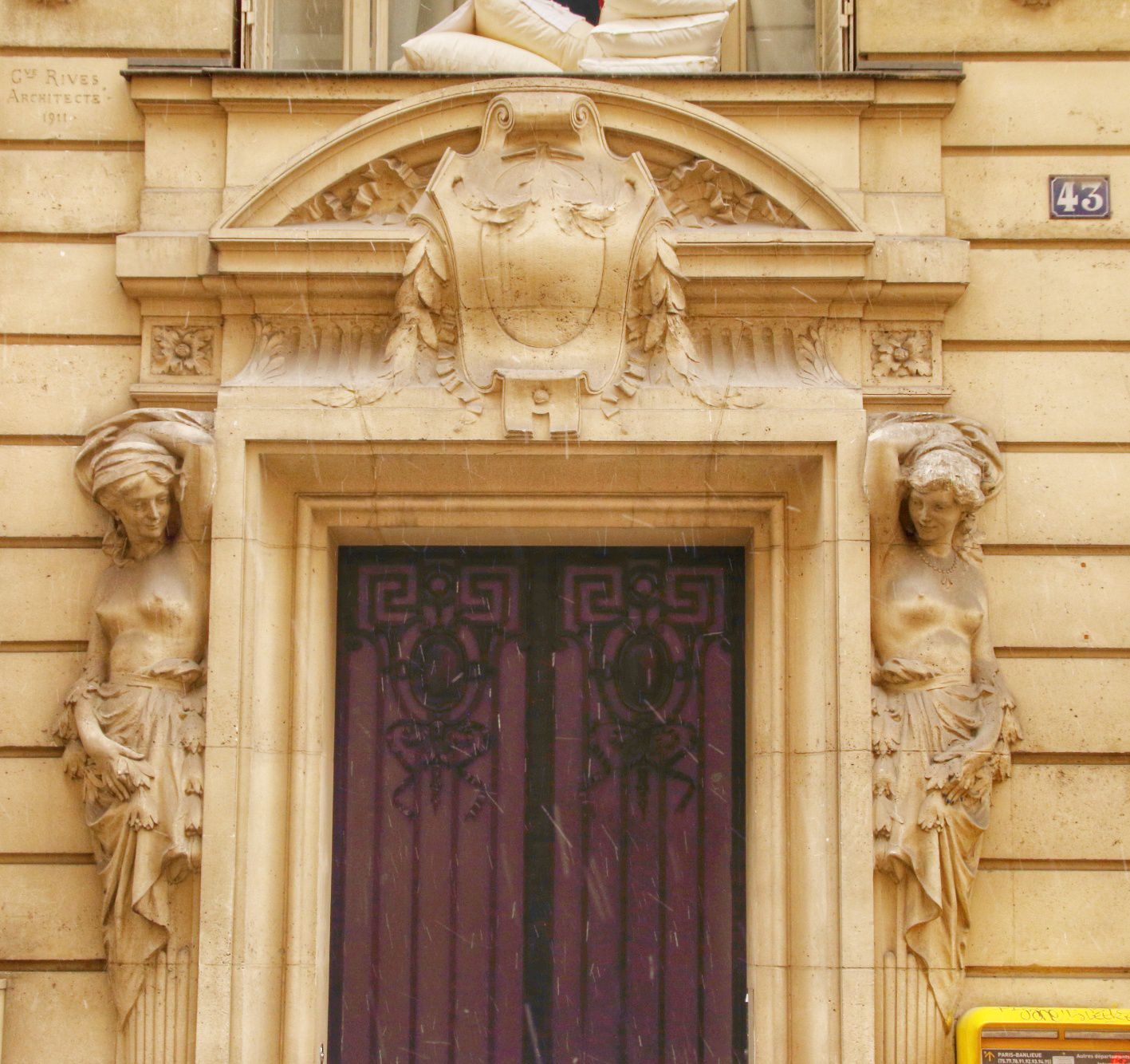
The Rue des Petits-Champs, formerly known as “Rue Neuve-des-Petits-Champs,” and before that as “Rue Bautru” in 1634 during the construction of the Palais-Cardinal, It is located in the 1er and 2éme arrondissements of Paris. It is 450 meters long, and begins at 1 Rue de la Banque and 1 Rue La Vrillière and ends at 26 Avenue de l’Opéra. The area is served by metro lines 7 and 14 at the Pyramides station. It bears this name because it was opened in the 17C on the site of former marshland that had been drained and transformed into fields. It is mentioned as “rue des Petitz Champs” in a manuscript from 1636. On December 18, 1944, the street between the Avenue de l’Opéra and the Place Vendôme was renamed “Rue Danielle-Casanova.” Notable buildings here are at Nos. 4 and 6: the Heugel music publishing house was located on the ground floor of these two buildings between the Restoration and 1975, not far from the Opéra, which at that time stood on the site of the Square Louvois. It is now one of the entrances to Galerie Vivienne (see post) No. 5: a 17C building overlooking the Passage des Deux-Pavillons, which opened in 1853. No. 8: the Hôtel Tubeuf, housing the Prints and Photography Department and the Maps and Plans Department of the National Library of France. No 13 Willi’s Wine Bar ,one of my former hangouts in Paris ! No. 24: the birthplace of Viollet-le-Duc. No. 39: a building from the Revolutionary period, completed by the father of the painter Camille Corot in 1809. Camille Corot himself resided here around 1850. No 40 Passage Choiseul entrance,(see post), No. 43: the full-length caryatids framing a doorway are the work of Gustave Rives and were sculpted in 1911 (see pic). No. 44: this is where, in 1661, the Hôtel de Lionne, also known as the “Hôtel de Lionne-Pontchartrain” and “Hôtel de Pontchartrain,” was built for Hugues de Lionne, Louis XIV’s Minister of Foreign Affairs. It was designed by the architect Louis Le Vau and the contractor Michel Villedo. In 1748, it became the Hôtel des Ambassadeurs Extraordinaires, succeeding the Hôtel du Maréchal d’Ancre. In the 17C, it occupied, along with its outbuildings and gardens, almost the entire area between Rue Gaillon and Rue Sainte-Anne, and between Rue des Petits-Champs and the Louis XIII city wall. The hôtel particulier was demolished in 1827 to make way for the Passage Choiseul and to widen Rue de Ventadour. No. 45: On the corner of Rue Sainte-Anne stands the Hôtel Lully, built by the architect Daniel Gittard for the composer Jean-Baptiste Lully in 1670. The musician lived there until 1683. The building is decorated with musical instruments on Rue Sainte-Anne and with mascarons on Rue des Petits-Champs. No. 57: Jean-Jacques Rousseau lived here after beginning a relationship with a young working-class woman named Thérèse Levasseur. They lived there from December 1746 to the autumn of 1747, probably in an attic room. In 2020, during works carried out on rue de Valois under the Banque de France building, remains of the Charles V city wall were unearthed. A temporary outdoor exhibition was then organized by INRAP at the intersection of rue des Petits-Champs and rue Radziwill.
The Paris tourist office on Paris Centre (arrond 1-4) : https://parisjetaime.com/eng/article/explore-the-centre-of-paris-a846
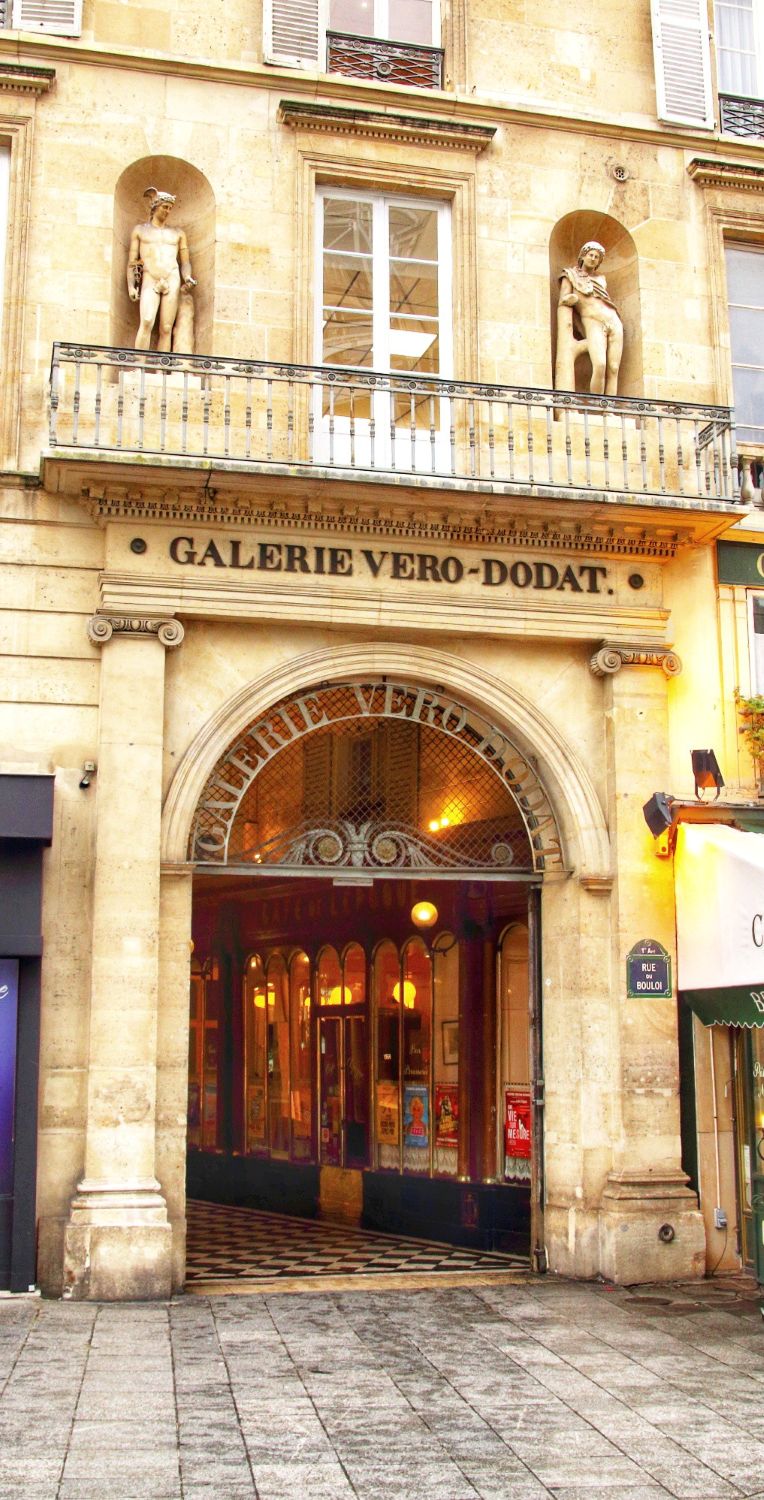
The Rue du Bouloi is located in the 1er arrondissement of Paris. It begins at Rue Croix-des-Petits-Champs and ends at Rue Coquillière. Documents are not to be found regarding the origin of its name. In 1359, it was referred to as “Rue aux Bouliers,” also known as “Cour Basile.” In the 15C, it was called “Rue de Baizile,” and then, in the 16C, it was known as “Rue des Buliers,” also called “Cour Basile.” In the mid-17C, during the Fronde (1648-1653), the Carmelite nuns of the Faubourg Saint-Jacques obtained permission from King Louis XIV to establish a retreat and refuge in the city. Between 1656 and 1669, they acquired several buildings on Rue du Bouloi and Rue Coquillière for this purpose, which they gradually rebuilt to create a house suitable for their community. An independent congregation since 1663, the Carmelites moved to Rue de Grenelle in 1687 to have more space. The houses in the Les Halles quartier/neighborhood were then rented out, regularly maintained, and enlarged. In 1702, the “Rue du Bouloi,” which is part of the Saint-Eustache quartier or neighborhood, began at Rue Coquillière, in front of Rue Coq-Héron, and ended at Rue Croix-des-Petits-Champs. Notable buildings: No. 2: western end of the Galerie Véro-Dodat,(see pic and post) opened in 1826, which begins at 19 Rue Jean-Jacques-Rousseau. Former headquarters of the Aubert & Cie company and current location of the Café de l’Époque, opened in 1826. Nos. 2 bis to 4 ter: building (late 19C) which was replaced by a former 16C private mansion, demolished in the 1880s, which changed names several times. The birthplace of the future Cardinal Richelieu, acquired in 1579 by his parents, François IV du Plessis, Lord of Richelieu, Provost of the King’s Household and Grand Provost of France, and Suzanne, née de La Porte. No. 17: Clément Gontier, born in Lavaur (Tarn), painter, resided here from 1907 to 1912. No. 24: in 1847, the inventor and mechanical engineer Paul-Gustave Froment had his workshop for manufacturing scientific instruments here.
The Paris tourist office on Paris Centre (arrond 1-4) : https://parisjetaime.com/eng/article/explore-the-centre-of-paris-a846
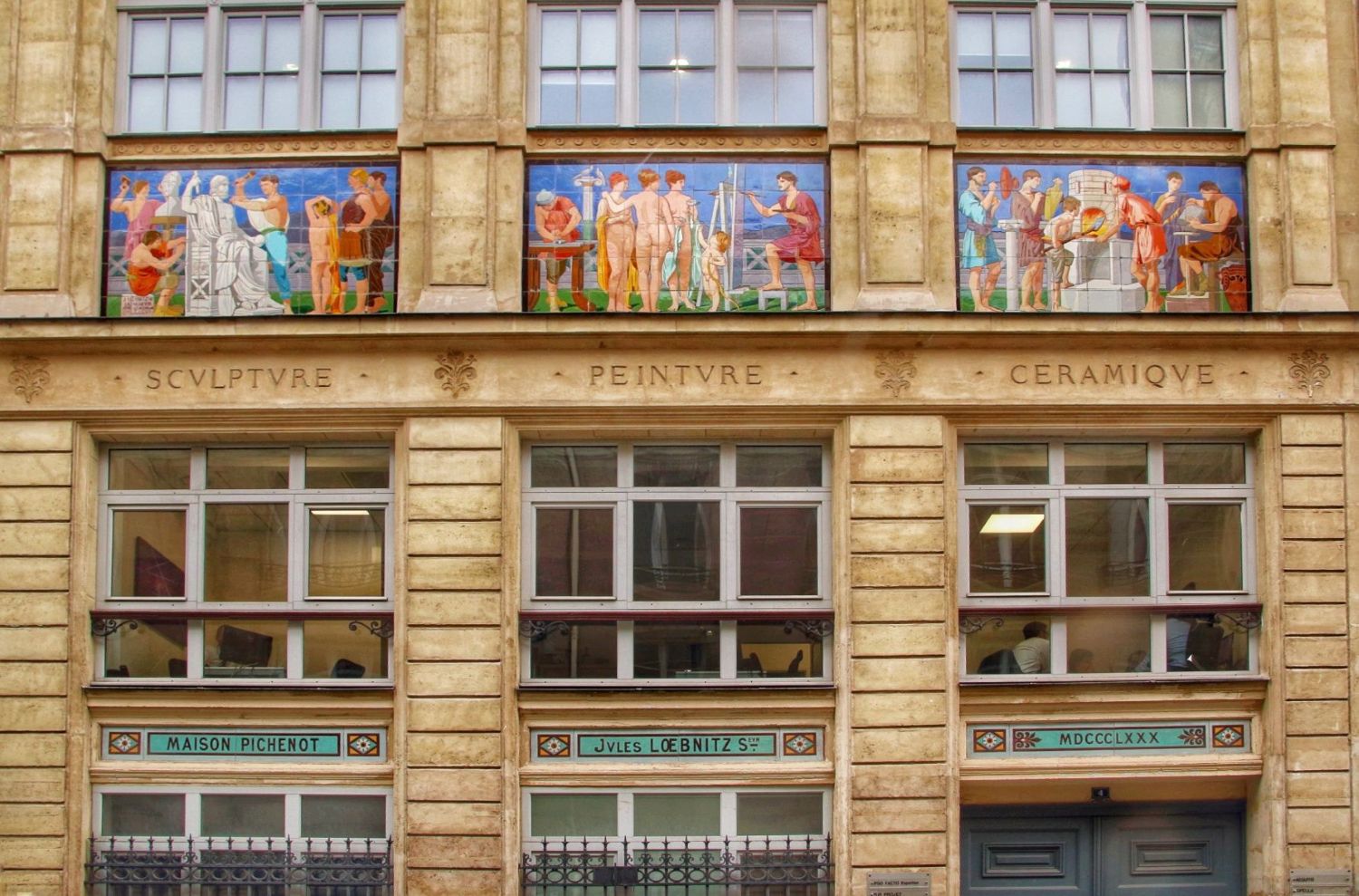
The Rue de la Pierre-Levée is located in the 11éme arrondissement of Paris. It is a straight street, 267 meters long and 12 meters wide. It begins between nos 1 and 7, Rue des Trois-Bornes, at its junction with Rue Jean-Pierre-Timbaud and Avenue de la République, on Place de la Fontaine-Timbaud. It ends between nos 12 and 14, Rue de la Fontaine-au-Roi. Apart from these streets at its ends, it is not joined by any other thoroughfare. On the other side of Avenue de la République, Rue Gambey continues along the axis of the Rue de la Pierre-Levée. During the opening of this street, excavations unearthed a stone that appears to have been part of a Druidic altar. This menhir gives its name to the street: it was then called “Rue Pierre Levée.” This street was opened in 1782 under the name Rue Pierre-Levée. When the arrondissements of Paris were created in 1795, Rue Pierre-Levée became part of the former 6éme arrondissement, in the Temple quartier/neighborhood but located on the other side of the old Louis XIII city wall. The street received its current name by decree of July 27, 1936. Notable buildings here are at No. 4: the former Loebnit earthenware factory,(see pic), built in 1884 by the architect Paul Sédille (who also designed the Printemps department stores in Paris). It comprises workshops on one side and staff housing on the other. The façade features three ceramic panels (Architecture, Sculpture, Painting) by Émile Lévy, his student Lazar Meyer, and the ceramist Jules Paul Loebnitz, originally from the door of the Fine Arts pavilion at the 1878 Universal Exhibition. A fourth panel (Ceramics) was installed by Loebnitz as a sign. Kilns still remain in the building’s basement. No 8: here, the painter Camille Flers, associated with the Barbizon School. On November 11, 1826, he married Louise Adèle Clauss, daughter of Jean Marx Clauss, a porcelain manufacturer on the rue de la Pierre-Levée, which he founded in 1805, and Odille Seeger, daughter and granddaughter of porcelain and earthenware painters and chemists from the Niderwiller factory. No. 17: house where Henri Gambey, a French inventor and manufacturer of precision instruments, died in 1847, member of the Academy of Sciences.
The Paris tourist office on the 11éme arrondissement de Paris: https://parisjetaime.com/eng/article/explore-paris-s-11th-arrondissement-a829
The Rue de Téhéran is located in the 8th arrondissement of Paris. It begins at Boulevard Haussmann and ends at Rue de Monceau. It is characterized by its proximity to both Parc Monceau and Boulevard Haussmann. Furthermore, it is primarily composed of Haussmannian buildings and former private mansions. Some of these buildings feature facade elements designed by Gustave Eiffel. The area is served by metro lines 9 and 13 at the Miromesnil station. Its name comes from the city of Tehran, the capital of Iran. The Avenue de Plaisance was created in 1810 when the Roule slaughterhouse was established, marking its western boundary; it then ran from Avenue de Munich (on the current Boulevard Haussmann) to Rue de la Bienfaisance. It received its name by ministerial decree on June 21, 1844. By virtue of a royal ordinance of February 2, 1826, it was extended from Rue de la Bienfaisance to Rue de Lisbonne by a thoroughfare called “Rue de Plaisance.” The street was named in reference to the Duchy of Piacenza in Italy, created by Napoleon I for the benefit of the Third Consul, Charles-François Lebrun, who had died shortly before in 1824. The entire street took its current name in 1864.
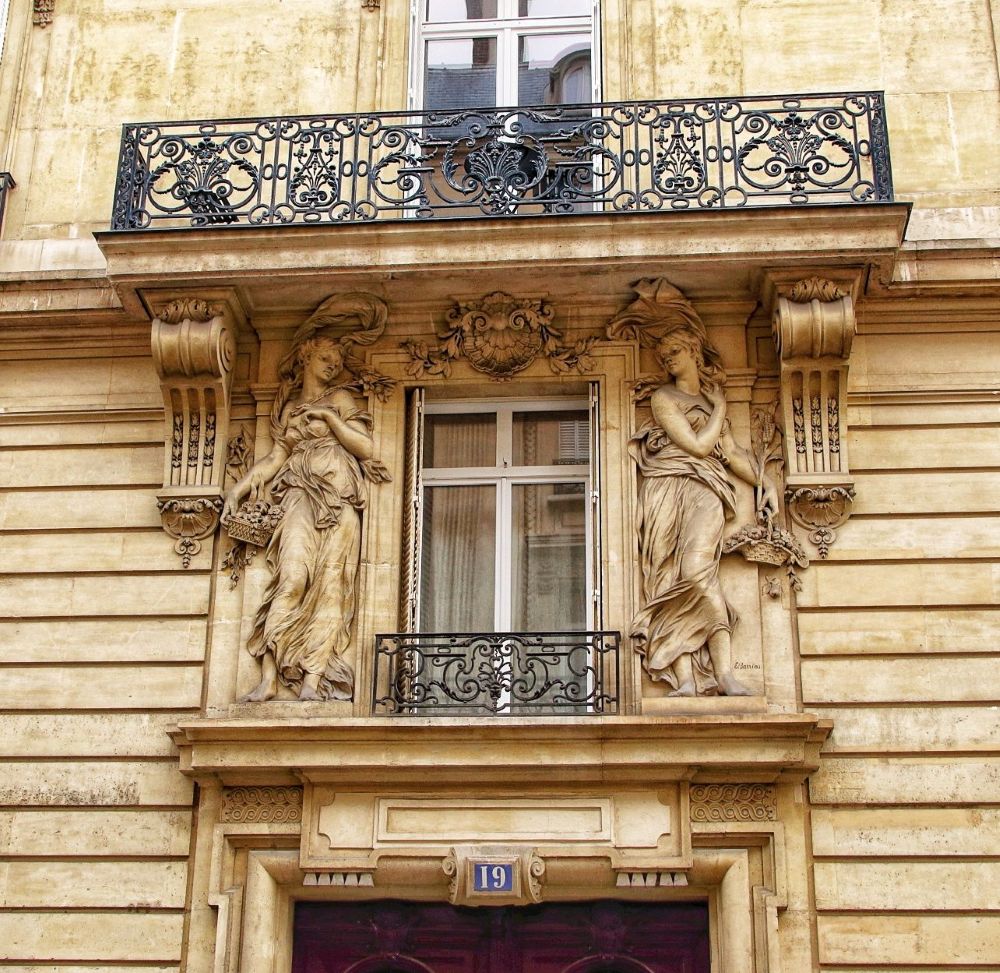
Notable buildings here are at No. 7: site of the private mansion of the painter Gustave Popelin, son of the poet Claudius Popelin. No. 9 (demolished): on November 26, 1936, in the presence of the United States Ambassador, the American Library, formerly located on rue de l’Élysée, inaugurated its new premises at this address, in a two-story stone and brick building “between courtyard and garden”. At No 13 in 1946, the Maeght Foundation established itself there and opened a gallery. Many artists were exhibited there at that time, including Kandinsky, Chagall, Matisse, and Braque. The Galerie Lelong has since taken its place. No. 19: the management and secretariat of the UGIF – Union générale des israélites de France (1941-1944) were established at this address during the Occupation. This organization, established by the Vichy regime in 1941, was abolished by the Provisional Government of the French Republic in 1944. Later, it housed the FSJU (Unified Jewish Social Fund, created in 1950) and ADASEJ (Jewish Children’s Social Welfare Organization), which were still located there in the 1990s but have since moved to 37 rue Broca (5éme arrondissement). The façade is adorned with two monumental female statues.(see pic), The building now houses several firms mostly medical fields,
The Paris tourist office on the 8éme arrondissement de Paris : https://parisjetaime.com/eng/article/explore-paris-s-8th-arrondissement-a826
There you go folks, a dandy city to explore and enjoy with the family, Memorable moments in my eternal Paris, driving and walking all over in my road warrior trails brings out sublime awesome spots with nice memorable family visits of yesteryear always remember and always looking forward to be back, eventually. Again hope you enjoy the post on curiosities of Paris, part LIX !!! as I.
And remember, happy travels, good health, and many cheers to all !!!

 Paris1972-Versailles2003
Delightful details
LikeLiked by 2 people
Trying harder …. Thanks for stopping by Cheers
LikeLiked by 1 person