
This is going back to my former backyard in the Yvelines dept 78 of the Île de Franceregion of my belle France. I was a couple times by Limay; once in the city walk around to see a bit of the town. I have found me again pictures in my cd rom vaults that should be in my blog for you and me, Therefore here is my take on this is Limay !! Hope you enjoy the post as I.
The town of Limay is located in the Yvelines department no, 78 in the Île-de-France region of my belle France. The town’s territory largely encompasses an island in the Seine River, the Île de Limay, the part belonging to Mantes-la-Jolie being called the Île aux Dames. The town is 3 km from Mantes-la-Jolie, 49 km from Evreux, 47 km from Versailles, and 449 km from my current town, The D 983 road crosses the town center to reach Mantes-la-Jolie. The D 190 connects Limay to Poissy, following the right bank of the Seine, paralleled further south and closer to the Seine by the D 146 road, which primarily serves the industrial areas and the river port located in the town. Two road bridges cross the Seine: the Pont Neuf de Mantes bridge, a very old crossing point, rebuilt in 1951, and the more recent viaduct of 1993. The latter provides access to the A13 autoroute de Normandie at the Mantes-la-Ville (Mantes-Est) exit/sortie 11. A pedestrian and cycle bridge has crossed the Seine since September 2019, connecting Limay and Mantes-la-Jolie along the Pont-Neuf. We came here from Versailles along the A13 to the exit/sortie 12 at Mantes la Jolie cross over the City center towards Limay crossing the Seine on the Pont Neuf bridge,
The Church Saint-Aubin located at 45 rue de l’église, is a Romanesque-style church built around 1150 from millstone grit. It was enlarged in the 16C with the addition of four bays. The bell tower features a 41-meter-high stone spire, which was restored in 1906. This church continues to reveal its secrets and masterpieces. For example, a painting by a 16C Dutch master and a Hebrew stone dating back more than fifteen hundred years were recently discovered there.
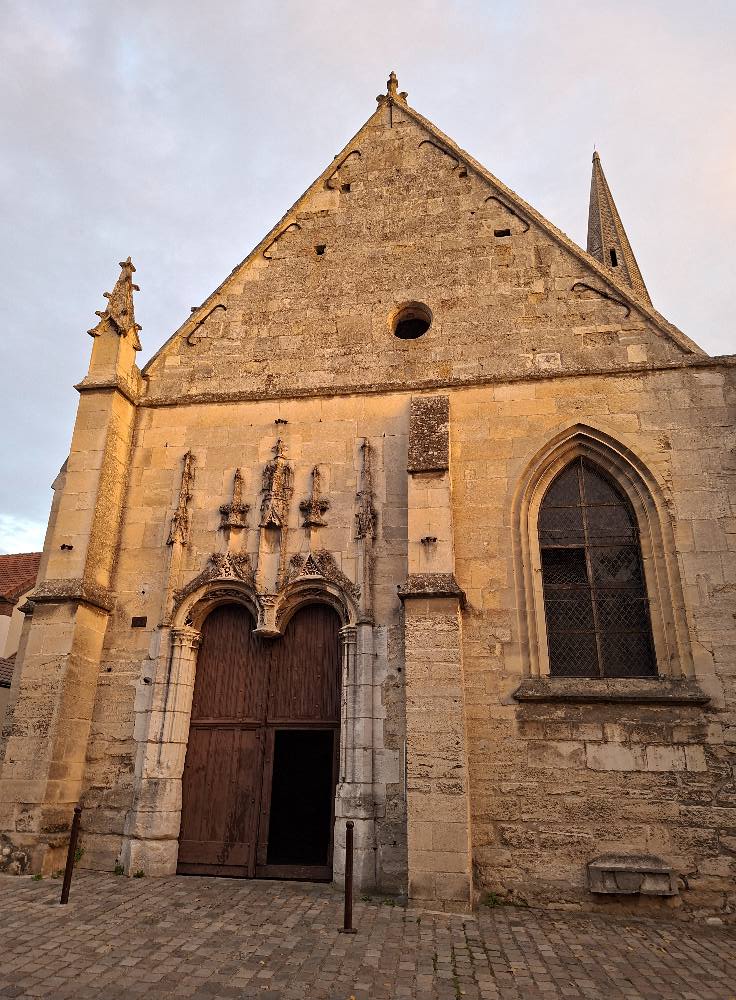
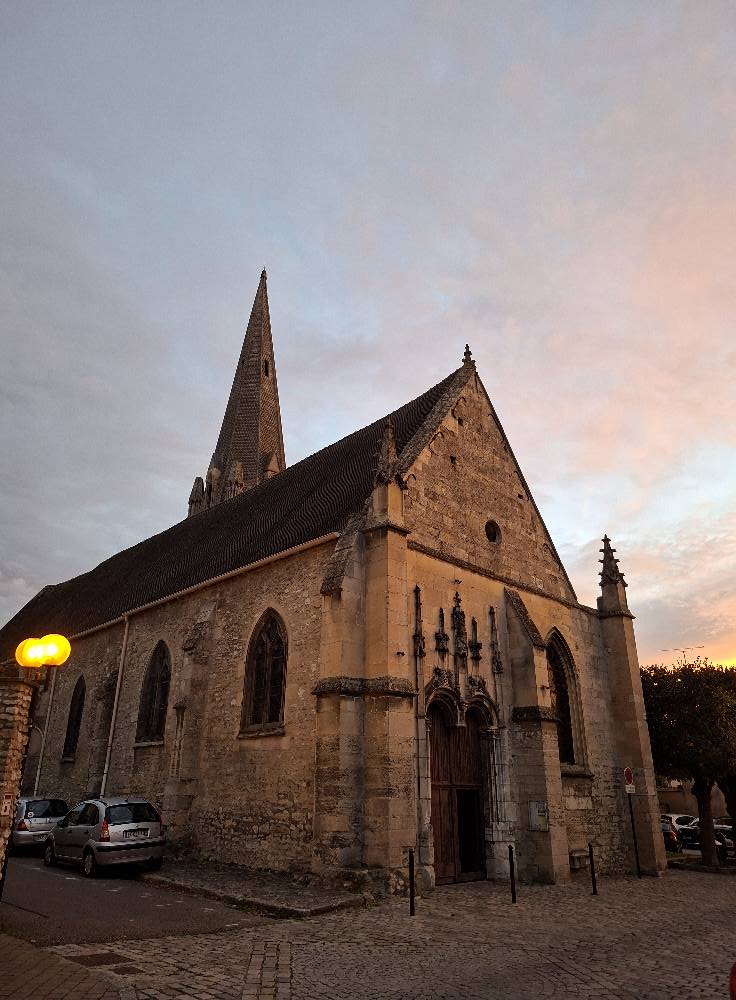
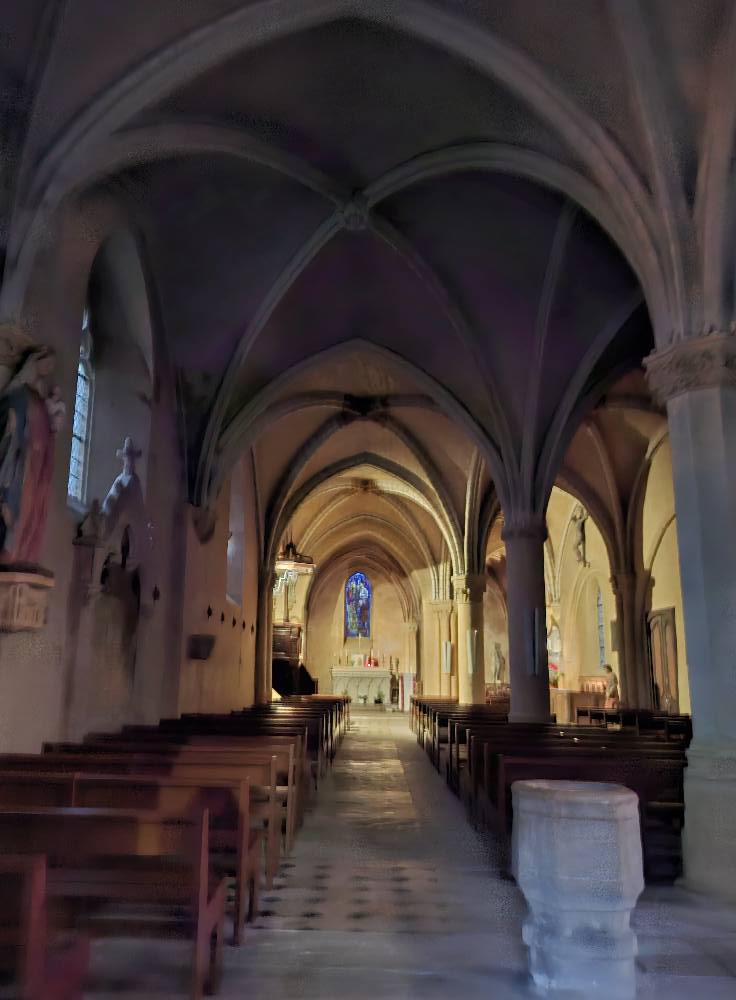
The Church Saint-Aubin its oldest parts date back to the 1140s. These include the base of the bell tower and the old choir in the late Romanesque style, which followed a single nave from the same period, demolished towards the end of the 17C. The rest of the current church was built from around 1230 to the north of the Romanesque church, in the Gothic style. It consists of a square hall-choir with a flat apse and a double nave, all vaulted with ribbed vaults and at a single level of elevation. The first two bays of the double nave were rebuilt after the Hundred Years’ War, including the portal, in the Flamboyant Gothic style. The stone spire of the bell tower dated from the same period as the Gothic choir but was entirely rebuilt at the beginning of the 20C. The church is particularly remarkable for its double-nave plan, its two ribbed vaults dating from before the middle of the 12C, and its bell tower, and houses interesting and varied furnishings.
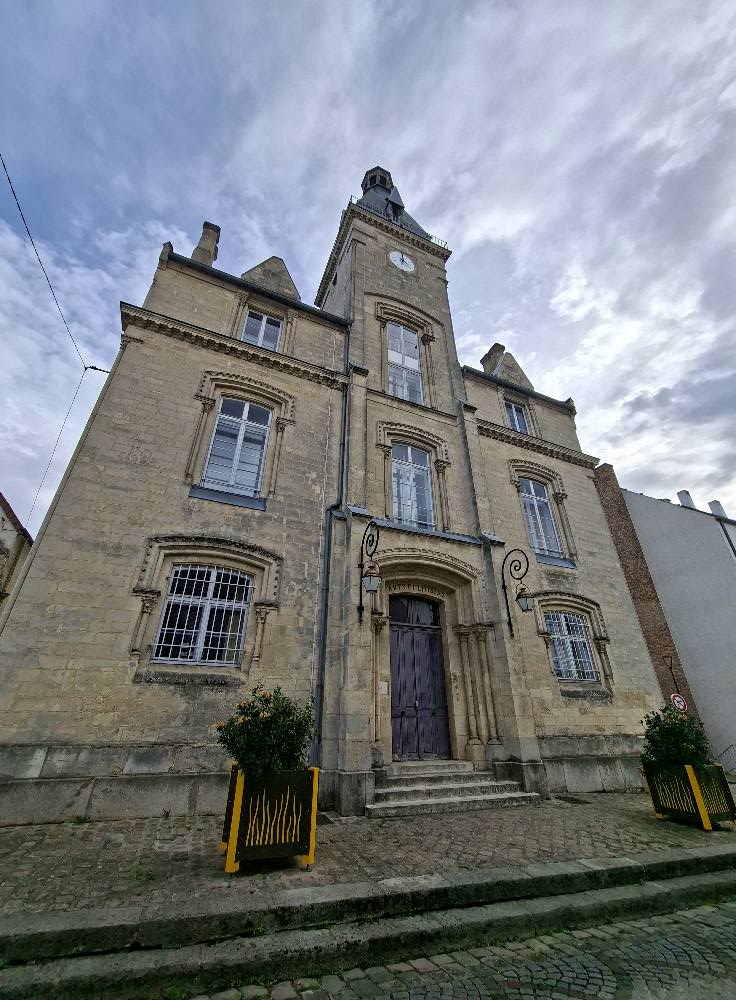
Passing could not resist a picture of the quant city hall building. Limay early in the 20C had a city hall that is located since 1859 at rue de l’Église. This building is today the Conservatoire de musique et de danse or the music and danse conservatory.
Other things to see here are the pont vieux on the Seine with the remains of its old gates and the ferryman’s house, This is an old bridge from the 10C and 12C, rebuilt by Sully in 1613, of which only a few arches remain on the Limay side following numerous vicissitudes, the last of which was the destruction of two arches in 1940. This bridge is depicted in several paintings by the painter Jean-Baptiste Camille Corot. The Château des Célestins, with the remains of the old convent, and its park.
A bit of history I like tell us that before the Roman conquest, the territory was occupied by the Celtic people of the Veliocasses, attached to Gallia Belgica. In 1376, Charles V founded a Célestin monastery in Limay, located in the middle of the rocks and quarries of Saint-Aubin, and dedicated it to the Holy Trinity. The monastery was suppressed during the French revolution , but its architecture was remodeled between the end of the 18C and the beginning of the 19C to become the current Château des Célestins. In 1614, Marie de’ Medici began the construction of the Capuchin convent, located outside the town. The stones from the citadel of Mantes were used in its construction. The convent is now an old building.
The town of Limay on its heritage : https://ville-limay.fr/ma-ville/le-territoire-de-limay/patrimoine
The local Terres de Seine tourist office on Limay : https://www.terres-de-seine.fr/?s=limay
There you go folks , another gem of my dear Yvelines. Always memorable trails in my life that cherished forever. Glad to have Limay in my blog ! Again, hope you enjoy the post on this is Limay !! as I
And remember, happy travels , good health, and many cheers to all !!!


