
We have driven and walked in my eternal Paris, and would like to have an imprint in my blog on the wonderful family times we had there, There is so much to see , doing my best, and glad found me these pictures in my cd rom vault ,which now transposing in my blog for you and me, This was my former worked city, so glad to post more memorable spots on it, I thank you for your readership over the years and to bear with my rants! After Paris is to rant, shout and yelled about, me think. Therefore, here is my take on curiosities of Paris, part LIII !!! Hope you enjoy the post as I.
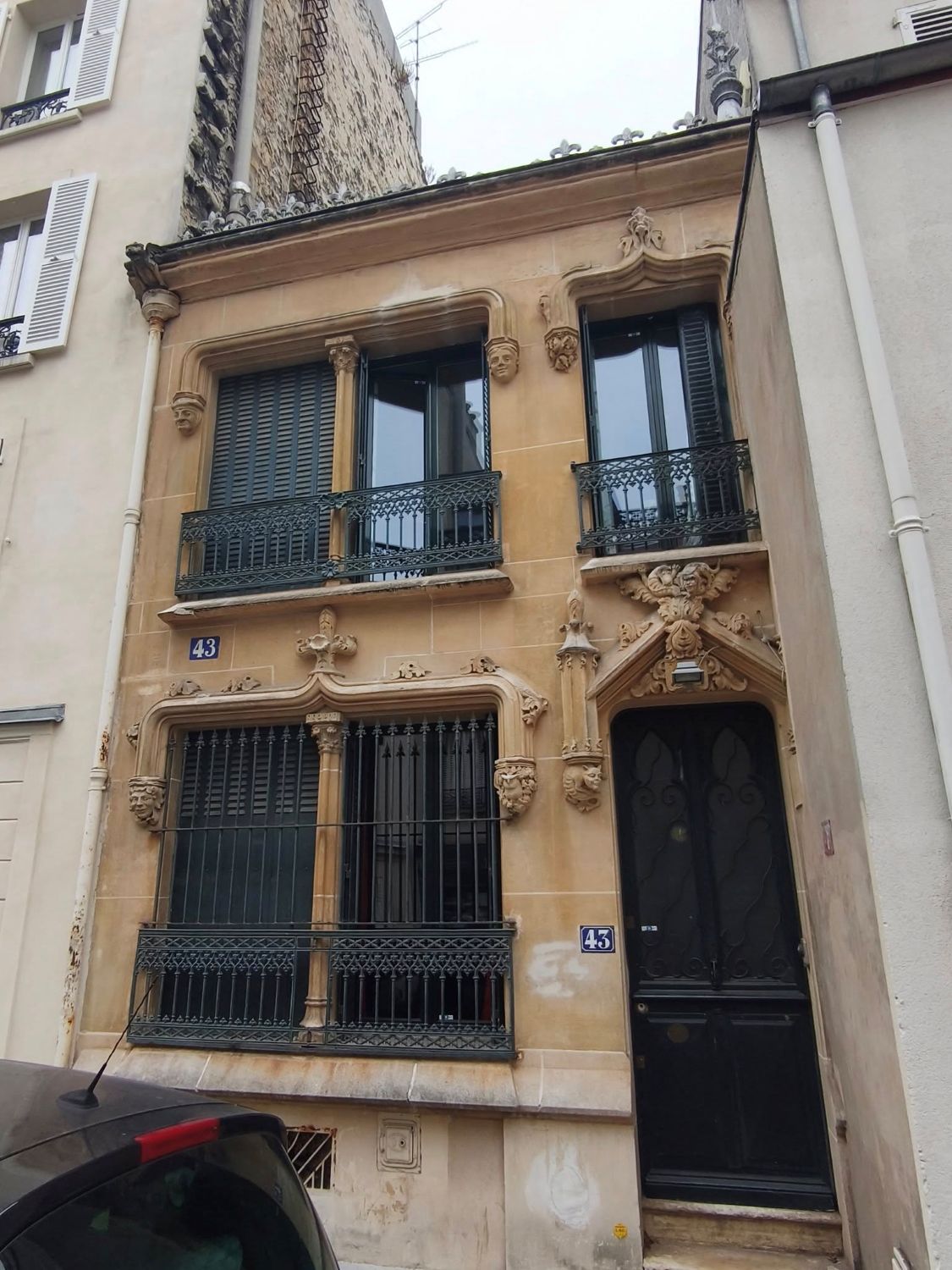
The Rue Bénard is located in the 14éme arrondissement of Paris. It begins at 22, rue des Plantes and ends at 24-26, rue Didot, running alongside Place Flora-Tristan. Rue Bénard is named after the owner of the land on which it was opened. The street was created and took its name on May 23, 1863. Notable buildings here are at no. 7: house with a red brick facade inhabited from 1974 until the end of his life in 1987 by Jacques Hérold, painter, sculptor and illustrator linked to the surrealist movement. At no 43 (see pic) there is a front of a house very intriguing as no info on it found, at least have the picture, At no. 49, the cyclist Octave Lapize was born on October 24, 1887, winner of the 1910 Tour de France, the 1909, 1910 and 1911 Paris-Roubaix, who died for France on July 14, 1917 in Toul. WWI,
The Paris tourist office on the 14éme arrondissement de Paris : https://parisjetaime.com/eng/article/explore-paris-s-14th-arrondissement-a836
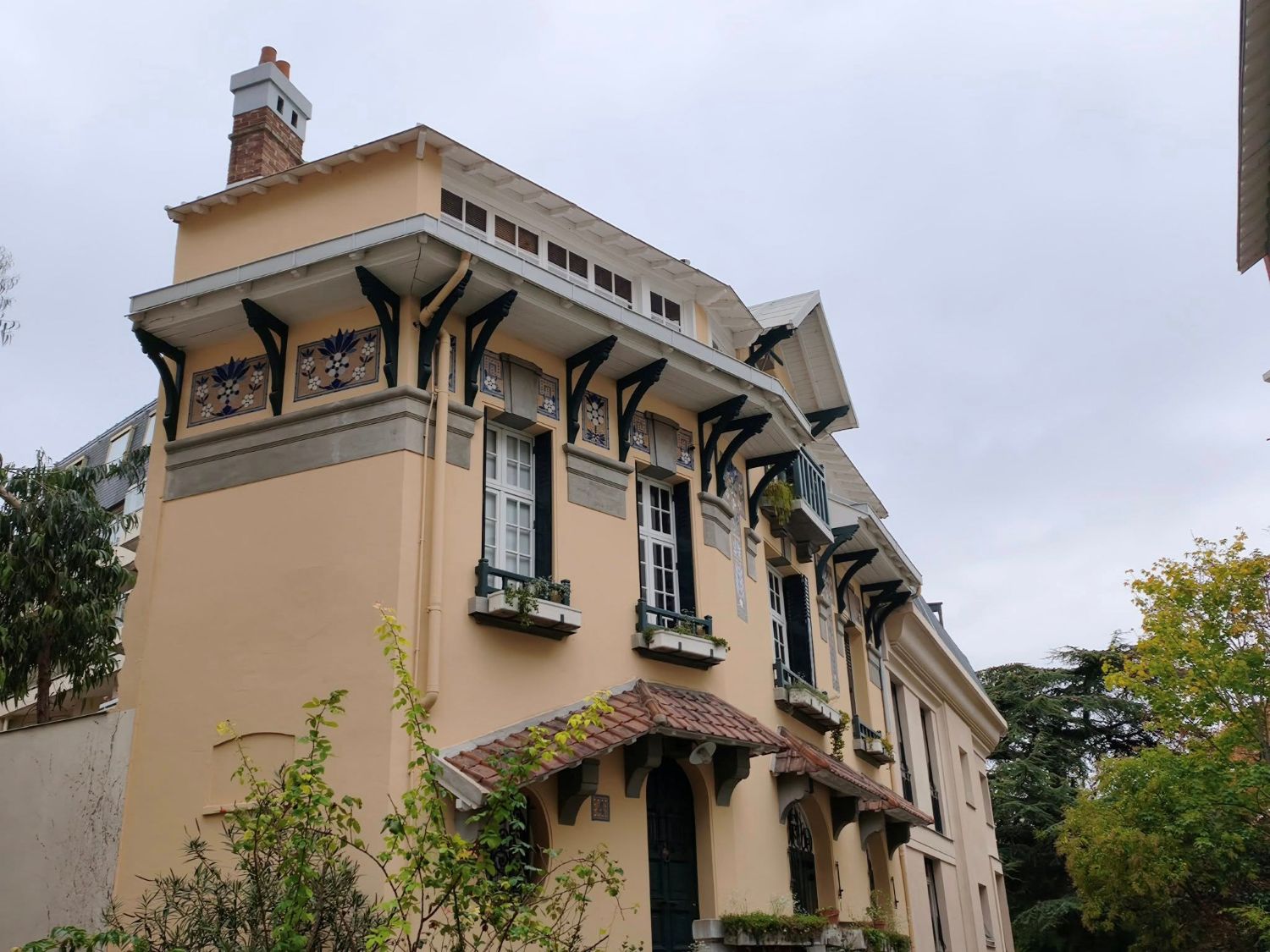
The Square Montsouris or Rue du Square Montsouris, is an unenclosed private road located in the quartier or neighborhood of the Parc-de-Montsouris in the 14éme district or arrondissement of Paris. It is access by 8-12 Rue de Nansouty / 51 Avenue Reuille, and by metro line 4 at the Alésia and Porte d’Orléans stations. Approximately 200 meters long, paved and steep,bordered by around sixty terraced houses. They are all clad in red or ochre bricks. They are inspired by different architectural styles: Art Nouveau, Art Deco, Neo-Norman, and Modernist. Some feature picturesque facade elements: half-timbering, bow windows, wooden balconies, and canopies. This very green street takes its name from the neighboring Parc Montsouris. Opened in 1922 under its current name, this private road has also been open to public traffic since a decree of June 23, 1959. Notable buildings here tell the story of a street lined with houses, many of which were built between the two world wars, in Art Nouveau and Art Deco styles. In particular, the one located at No 2, the Gaut House, was designed in 1923 by the Perret brothers, after initially being entrusted to Le Corbusier. At No 40,(see pic) , the architect Gilles Buisson built this curious house for himself in a picturesque style with half-timbering and stained-glass windows At No 51, the house-studio of the painter Ozenfant was built in 1923 by the architect Le Corbusier in the modernist style for the painter Amédée Ozenfant. The painter Roger Bissière also had a house built there at No 41 by the architect Dechelette, where he lived until 1939. For 10 years, one floor was occupied by a friend, the painter Camille Liausu, while in the summer he rented his home to another friend, the painter Nicolas Wacker. The artist Tsugouharu Foujita took up residence here in 1928. Jean Chapin also settled there. A sundial painted in 1900 adorns the facade of No 28. Actress Julie Gayet owned a 220 m² house there, with a 70 m² garden, where she lived with former President François Hollande, which she sold in December 2022. Singer Vanessa Paradis and American actor Johnny Depp also lived in the square in the 2000s. Opened in 1865, the Parc Montsouris (see post) of 16 hectares was the green lung desired by Emperor Napoleon III in the southern part of Paris. In the 1920s and 1940s, Montparnasse, the world capital of artistic creation, was in full swing. Artists who were penniless or in search of peace and quiet settled in the quartier or neighborhood of Montsouris, which was more affordable and greener.
The Paris tourist office on the 14éme arrondissement de Paris : https://parisjetaime.com/eng/article/explore-paris-s-14th-arrondissement-a836
The Paris tourist office on a bucolic walk by the Parc Montsouris : https://parisjetaime.com/eng/article/a-bucolic-walk-around-the-montsouris-park-a772
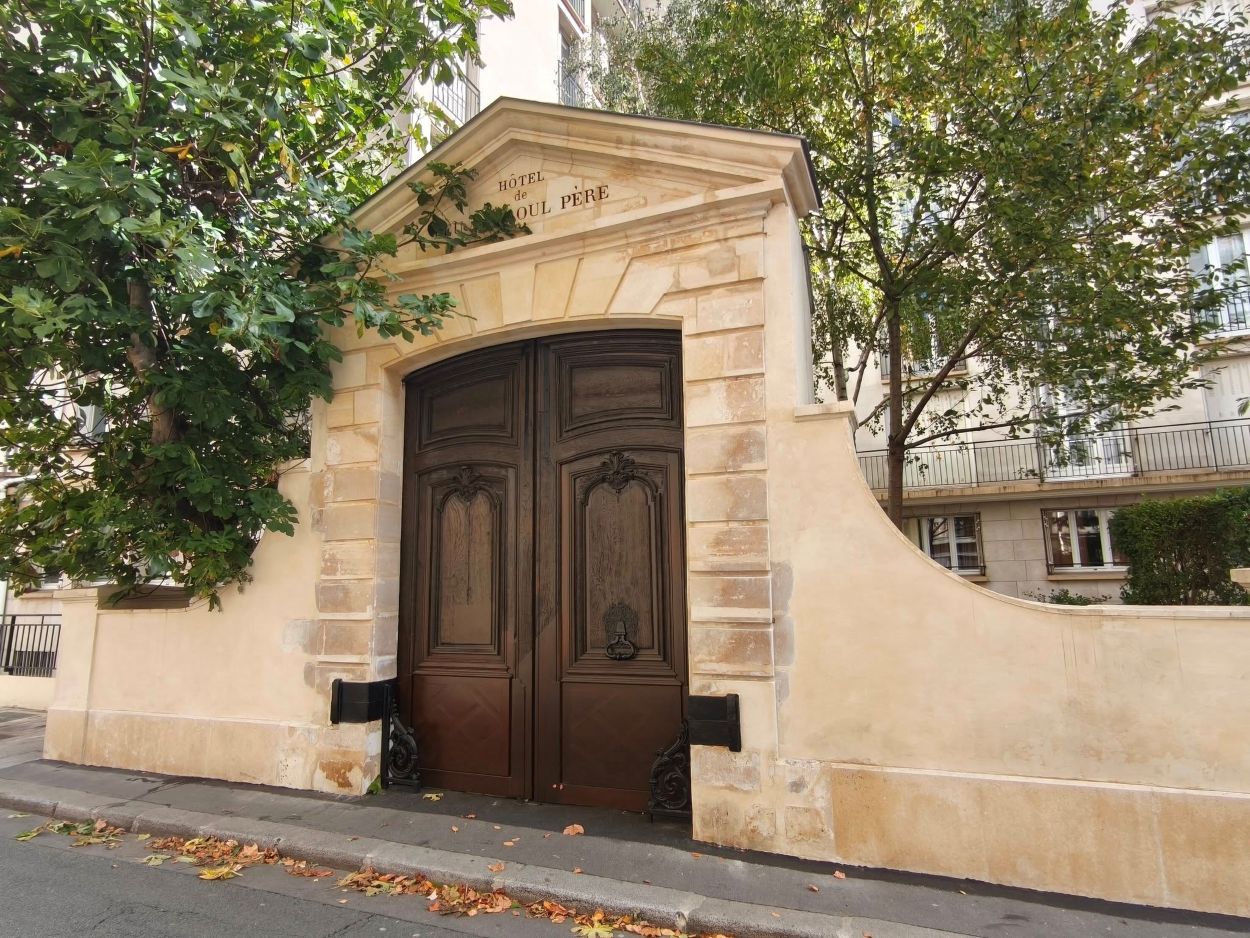
The Hôtel Raoul is located at 6 rue Beautreillis, in the quartier or neighborhood of the Marais and in the 4éme district or arrondissement of Paris. This hotel, of which only the gate, an old clock and some wrought iron railings remain, was built by Paul Ardier, a financial officer of Henri IV in 1604. It was one of the very first hotels built between courtyard and garden. It remained the property of descendants until the French revolution when it was “shared with the Nation” right,,,. In 1810, Jean-Louis Raoul, a manufacturer of exceptionally high-quality files from Aveyron, bought the hotel from the ruined aristocrats descended from the builder. It was then that it took its current name. He had his workshops set up in the very courtyard of the private mansion. They were divided into modest rental accommodation. While the owners remained in the apartments on the first floor, with their rich Louis XV decor preserved, the Pension Raoul housed up to twenty-one families, or nearly sixty people, in 1926. Wrought iron railings were reused at 15 rue du Petit-Musc. The dolphin clock on the annex façade was originally located in the courtyard onto which the gate opened. Placed above the entrance door of the old building, it welcomed visitors. The Hôtel Raoul remained in the family of the industrialist’s descendants, but gradually lost its former glory. It was demolished in the early 1960s, just before the Malraux law (legislation on the protection of the historical and aesthetic heritage of France) protecting the Marais; it was therefore one of the very last private mansions to have suffered this fate. The future of this 400-year-old façade is uncertain, but it stands firm, and remains, as such, a curiosity! It is now towards the Fondation du Patrimoine that hopes are turning. To be continued.
The Rue Beautreillis is located 4éme district or arrondissement of Paris. It runs almost parallel to Rue Saint-Paul and Rue du Petit-Musc, it begins at Rue des Lions-Saint-Paul and ends at Rue Saint-Antoine. It successively intersects Rue Charles-V and Rue Neuve-Saint-Pierre. Its name, given in 1555, is a tribute to the Hôtel de Beautreillis, which was built on the site of the Hôtel Saint-Pol and took its name from the trellises that rose against the walls of its garden. The district is served by metro line 7 at the Sully-Morland station, and by metro lines 1, 5, and 8 at the Bastille station. Notable buildings here are at No. 6 remains of the Hôtel Raoul (see above). Nos. 17-19: Jim Morrison lived here for the last weeks of his life. He was found dead in an apartment on the 3rd floor. Other sources suggest that he died in the toilets of a club on the Left Bank, the Rock’n Roll Circus, and that his body was taken home afterwards. No. 22: Baudelaire lived here with Jeanne Duval. Paul Cézanne lived there occasionally from 1865 to 1868. No. 24: Espace Marais Theatre. Eugène Grangé, a French playwright, librettist, songwriter and goguettier, was born in the street on December 16, 1810. Victorien Sardou, a French playwright, also known for her mediumistic etchings, was born in the street on September 5, 1831.
The Paris tourist office on Paris Centre (arrond 1-4) of Paris : https://parisjetaime.com/eng/article/explore-the-centre-of-paris-a846
The Rue de Tracy is located in the 2éme arrondissement of Paris. It begins at 127 Boulevard de Sébastopol and ends at 222 Rue Saint-Denis, The area is served by metro lines 4, 8, and 9 at the Strasbourg – Saint-Denis station and by metro lines 3 and 4 at the Réaumur – Sébastopol station. It is named after Antoine Destutt de Tracy, a politician, philosopher, and general of the French revolution. It opened in 1784 on the grounds of the Filles de Saint-Chaumont convent, under the name “Rue des Dames-Saint-Chaumont,” and quickly took the name Rue de Tracy. Notable buildings here are at No. 14: birthplace of historian Jules Michelet in 1798, You see the picture at the corner of no 14 rue de Tracy and 222 Rue Saint Denis the old convent and the Sister’s monument on the wall, ,The former Convent of the Daughters of Saint-Chaumont or Convent of the Christian Union was located on Rue Saint-Denis (currently Nos 224 and 226), corner of Rue de Tracy. Their garden extended to Rue du Ponceau in the part absorbed by Boulevard de Sébastopol (currently No 131). The entrance was originally on the side of Rue Saint-Denis. At the corner of Rue de Tracy, the convent church was located.
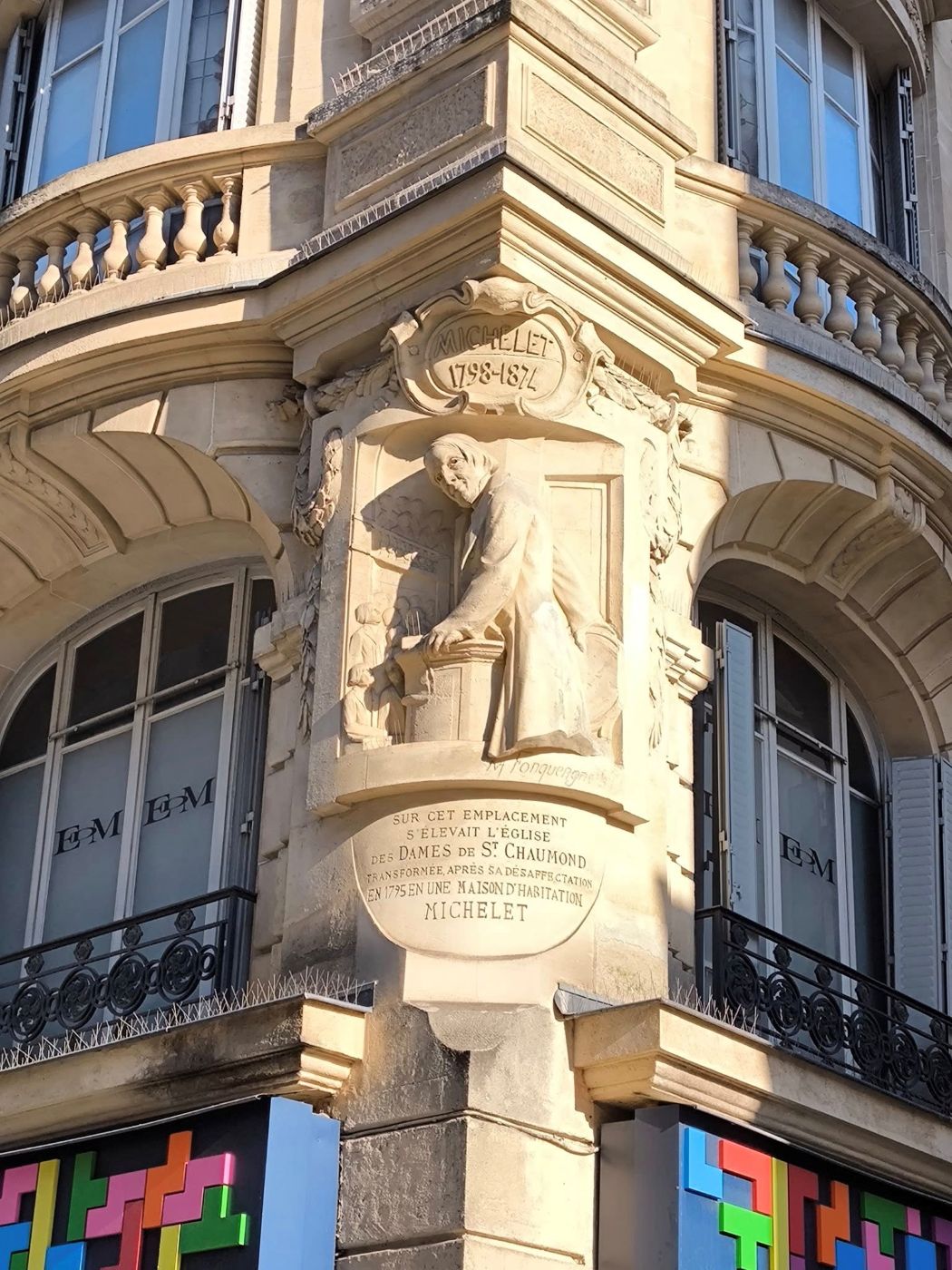
From 1631, Melchior Mitte, Marquis of Saint-Chamond and minister of Cardinal Richelieu, had a large private mansion built on the site of the former Bellot courtyard. In 1683, the Saint-Chamond mansion was acquired by a religious community, the Daughters of the Christian Union. This community had been founded in 1652 by Saint-Vincent de Paul and Madame de Pollalion. Its mission was to raise poor young girls, mainly orphans and new converts to Catholicism, in piety. The community would take its name from “Christian Union of Saint-Chaumond”. To accommodate their boarders, the ladies of Saint-Chaumond had a beautiful private mansion built from 1735. The plans for this very beautiful rococo-style building were signed by the architect Jacques Hardouin-Mansart de Sagonne. Fortunately, the hotel still exists and is located in the heart of the block between Rue Saint-Denis and the current Boulevard de Sébastopol. On the Boulevard de Sébastopol side, its undulating facade is enlivened by an elegant curved avant-corps and curves at the ends to form barely outlined pavilions. The consoles supporting the first-floor balcony and the bay brackets are sculpted with virtuosity. On the Rue Saint-Denis side, the facade of the hotel is enlivened by a central avant-corps and framed by small convex pavilions. In 1736, the convent was sold but the Daughters of Saint-Chaumond remained tenants until the French revolution. The Princess of Conti, (Marie-Fortunée d’Este, Princess of Conti by her marriage to Louis-François-Joseph de Bourbon-Conti (a prince of the French blood. He will be the last Prince of Conti.), protector of this religious community, called upon her own architect, Pierre-Claude Convers, to build the new convent church. The princess laid the foundation stone of the new building in 1781, which was completed in 1782. She contributed to its decoration by commissioning an Adoration of the Shepherds by the king’s painter François-Guillaume Ménageot (now in the Church of Saint-Eustache). This convent was abolished in 1790. Having become national property, it was sold in three lots on June 26, 1795. In 1798, the Passage Saint-Chaumond was opened: from then on, the magnificent hotel was crossed in its center by the passageway The printer Michelet installed his presses in the church. His son, the future historian Jules Michelet, was born at this address. With the opening of the Boulevard de Sébastopol, the convent disappeared; then the church was demolished in 1906. Only the tympanum of its pediment survived; it is preserved at the Carnavalet Museum. The Saint-Chaumond passage is open during the week and allows you to discover this superb private mansion hidden in the middle of the block.
The Paris tourist office on Paris Centre (arrond 1-4) : https://parisjetaime.com/eng/article/explore-the-centre-of-paris-a846
The Rue Hautefeuille is located in the quartier/neighborhood La Monnaie in the 6éme district/arrondissement of Paris. It begins at Place Saint-André-des-Arts and ends at 8 Rue de l’École-de-Médecine, across from the Cordeliers site of the University of Paris-Cité’s Medical Training and Research Unit. You can reach it on metro lines 4 and 10 at the Odéon and Saint-Michel stations. The Rue Hautefeuille meets the following roads: beginning at Place Saint-André-des-Arts; Rue Francisque-Gay; Impasse Hautefeuille; Rue des Poitevins; Rue Serpente; Boulevard Saint-Germain; Rue Pierre-Sarrazin; and ending at Rue de l’École-de-Médecine. The origin of the name “Hautefeuille” is uncertain. One theory is that the street was lined with tall, leafy trees, and that the monks of the Cordeliers convent would play tennis under the “high foliage.” The Rue Hautefeuille is a very old street in Paris, which in the Middle Ages extended as far as the Faubourg Saint-Jacques. It was cut in two by the city wall built by Philippe Auguste between 1190 and 1215. The construction of the Cordeliers convent in the 12C shortened the street again, which now ends at Rue de l’École-de-Médecine, formerly Rue des Cordeliers. In 1252, the street was named “Rue de la Barre” between Rue Saint-Séverin and Rue Serpente. In 1292, it was designated in a tax document as “the street which goes straight to Saint-Andri”, which suggests that it still did not have a name known to all. At the end of the 12C to the 16C, it was called “rue du Chevet-Saint-André”, “rue Saint-André” then “rue de la Vieille-Plâtrière”, before taking its current name.
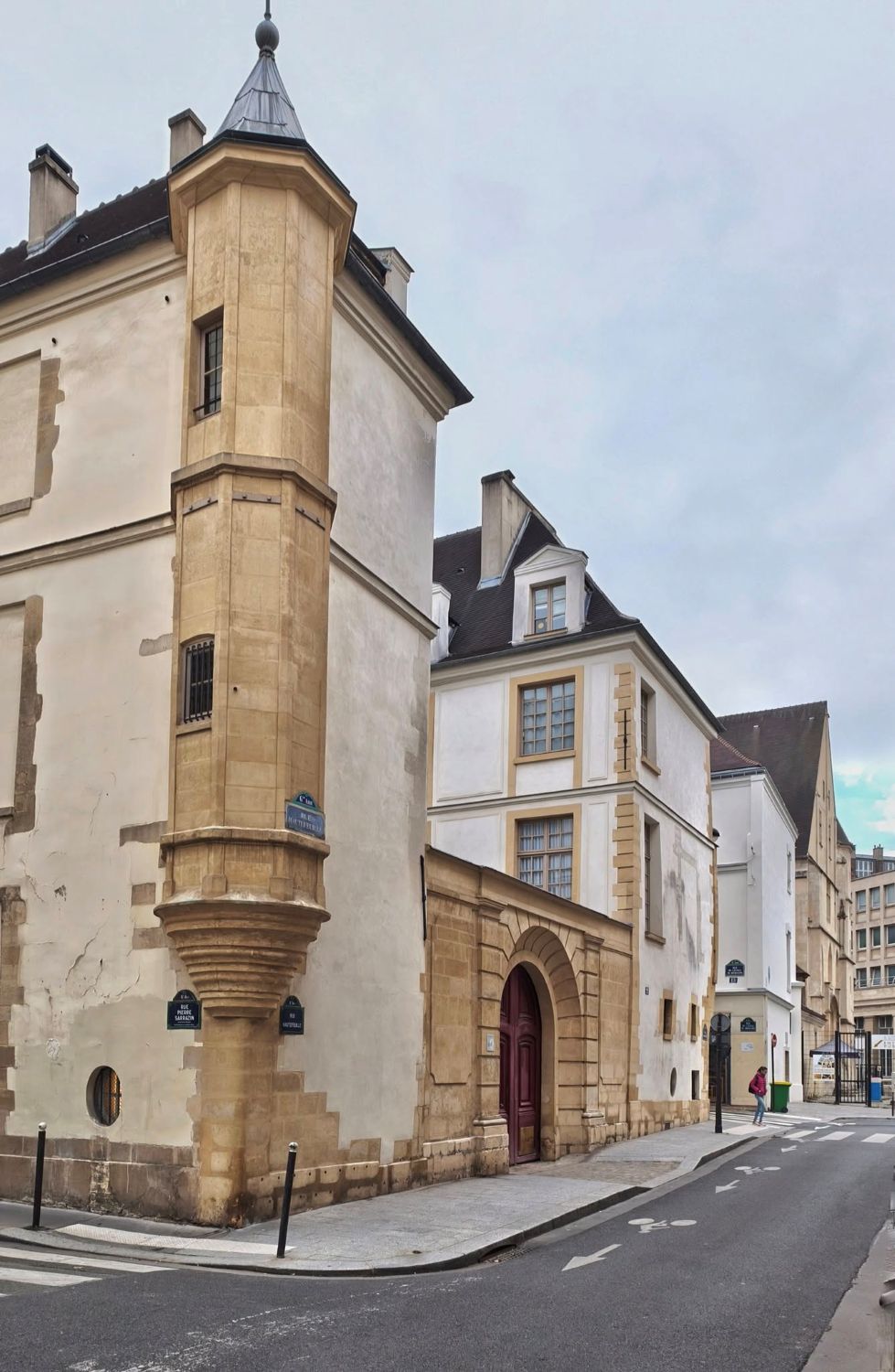
Notable buildings here are at No. 4: It belonged in the 17C to François de La Mothe Le Vayer, author of De la vertu des païens, protégé of Cardinal Richelieu, who received a royal pension and entered the French Academy in 1639. He was appointed in 1647 tutor to the Duke of Anjou [Philippe, son of Louis XIII and Anne of Austria, he was then 7 years old], the queen would finally call him to collaborate in 1652 in the instruction of the Dauphin [future Louis XIV, who was then 14 years old] . “In 1727, to de Montgeron; in 1735, to his son Carré de Montgeron, defender of the memory of Deacon Pâris and the convulsionaries of Saint-Médard, which led to his imprisonment, At No. 5: Hôtel des Abbés de Fécamp, or Hôtel de Fécamp, This private mansion, located at the intersection of Rue Hautefeuille and Impasse Hautefeuille, dates from the 16C and was built to replace an old residence of the Abbots of Fécamp which dated from 1292. The building has a corner turret, or watchtower, in a cul-de-lampe, from the beginning of the 16C. It is badly deteriorated but the lace sculptures of the corbel and the pearls and interlacing of the cornice remain. No. 7: MK2 Hautefeuille art house cinema, located at the intersection of Rue Serpente. No. 8: private mansion built under Louis XIII, having been the property of the Bishop of Caesarea of Mauretania, Bonaventure Rousseau. No. 17: the poet Charles Baudelaire was born at this address, in a house that no longer exists; a plaque pays tribute to him. At No. 21: Hôtel de Forez also known as Hôtel de Bullion, from the 16-17C (see photo) The land delimited by Rue Hautefeuille between nos 15 and 21, Rue de l’École-de-Médecine, Rue Pierre-Sarrazin and Rue de la Harpe (now Boulevard Saint-Michel) was a Jewish cemetery in the Middle Ages until 1310, which disappeared following the expulsion edict of 1306 by Philip the Fair. The land appears to have subsequently belonged to Pierre Sarrazin, who sold it in 1252 to the canons of Prémontré Abbey to establish the Danville College. In 1321, Jean, Count of Foretz, purchased land occupied by a Jewish cemetery from the nuns of Poissy. He had his hotel built there, which no longer exists. The current hotel was built in the 17C retaining its original foundations dating from the 16C. The current mansion, known as the Hôtel Bullion, belonged in 1703 to Angélique Charlotte de Bullion, in 1755 to Captain de Coëtlosquet, and in 1805 to Arthus Bertrand. At the beginning of the 20C, the building was occupied by the Corporate Association of Medical Students. In 1923, the publishing house Georges Crès et Cie was established there. The building has a two-story octagonal corbelled corner turret dating from the 14C, characteristic of the Renaissance. On Rue Pierre Sarrazin, the bays framed with harp-shaped stonework have remained walled up. The hotel is entered through an elegant arched portal with slits. The hotel exudes a certain austerity, often characteristic of 17C French architecture. Restored in 2014, the hotel is private and divided into apartments. No. 23: The bookseller-publisher Arthus Bertrand lived at this address in 1808. The Andler brasserie, located towards the middle of the street, was a lively meeting place for students, artists and figures of the Republican left in the 1840s and 1860s. It was frequented by Gambetta, Jules Vallès, Courbet, Corot, Daumier, André Gill, among others.
The Paris tourist office on the 6éme arrondissement de Paris : https://parisjetaime.com/eng/article/explore-paris-s-6th-arrondissement-a823
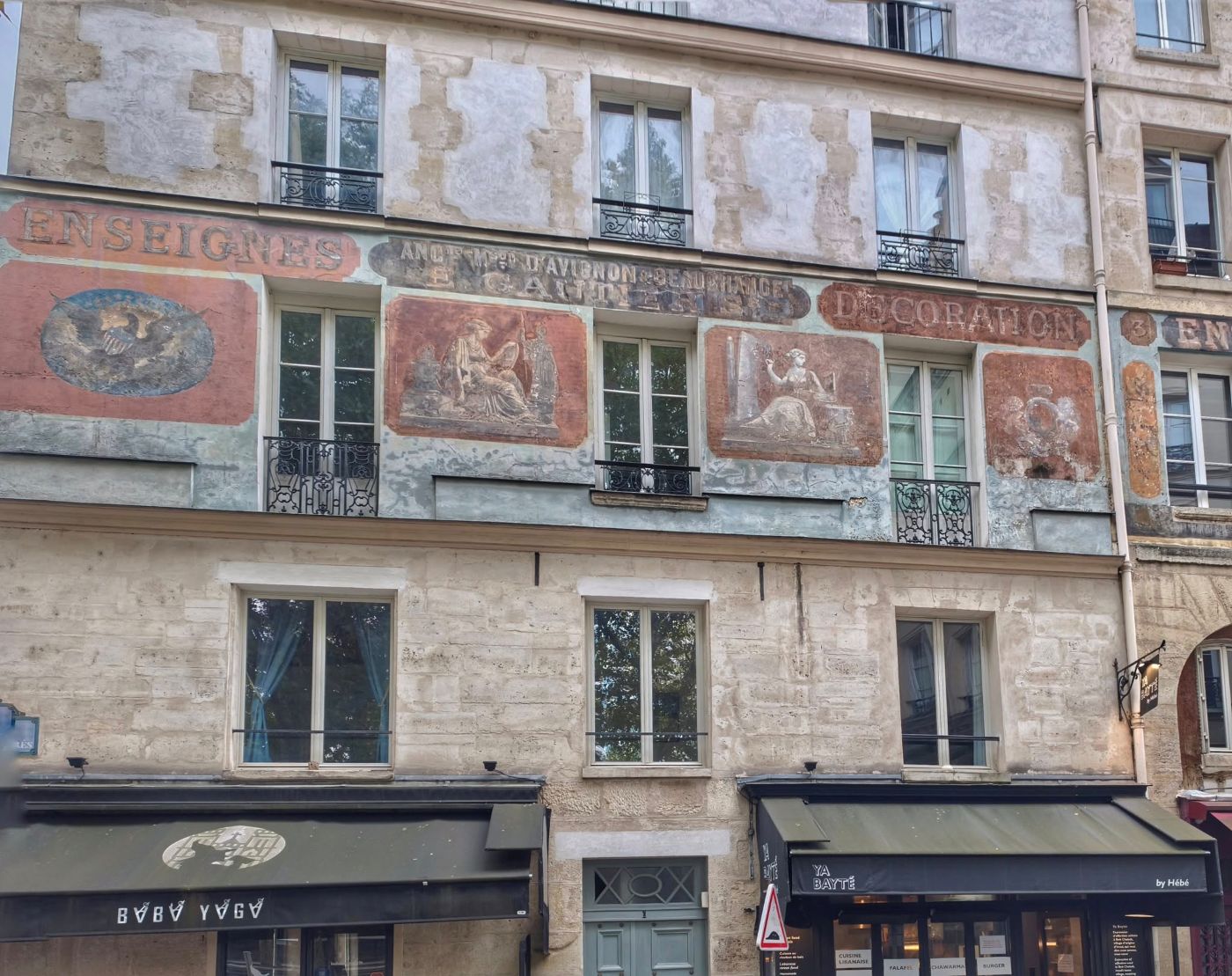
The Rue des Grands-Degrés is located in the quartier/neighborhood of Saint-Victor of the 5éme district/arrondissement of Paris. It is served nearby by metro line 10 at the Maubert-Mutualité station. This street owes its name to the staircase that once led to the Bièvre river. The mouth of a diversion of the Bièvre, the “Canal des Victorins,” dug in the 12C to supply the Abbey of Saint-Victor, was located at the southern end of the street. This diversion dried up at the end of the 14C. A canal dating from the 14C was then called “Rue Saint-Bernard” due to its proximity to the Collège des Bernardins (see post). At the time, much longer about 200 meters, it started from Rue de Bièvre and joined Place Maubert. It later became “Rue Pavée” and, in the 18C, took the name “Rue des Grands DeGrez” and then Rue des Grands-Degrés, Notable buildings here are at the intersection of Rue de la Bûcherie, Rue Frédéric-Sauton, and Rue des Grands-Degrés is the very small Square Restif-de-la-Bretonne . The facade of the house located at No 1 bears a large painted sign reading “Ancienne maison d’Avignon et Beauchange”, “E. Gautier”, “Enseignes”, “Décoration”. (see photo). The word “Enseignes” is also found on the facade of the house at No 3, which also advertises a calico business. It is likely that this sign probably dating from the second half of the 19C indicates the presence at this address of a facade decorator and serves as an advertisement for his business. In addition to the lettering, there is an American eagle and two antique scenes illustrating the painting. It preserves beautiful stone houses dating from the 18C, such as the Maison Bourdet house at No 6 with its mascarons.
The Paris tourist office on the 5éme arrondissement de Paris : https://parisjetaime.com/eng/article/explore-paris-s-5th-arrondissement-a820
There you go folks, a dandy city to explore and enjoy with the family, Memorable moments in my eternal Paris, driving and walking all over in my road warrior trails brings out sublime awesome spots with nice memorable family visits of yesteryear always remember and always looking forward to be back, eventually. Again hope you enjoy the post on curiosities of Paris , part LIII !!! as I.
And remember, happy travels, good health, and many cheers to all !!!


