
Let me tell you again on my former little town of Brec’h, its actually part of Pays d’Auray, It is 9 km from Auray, 26 km from Vannes,and 7 km from my current home, all along the D768 road, The town of ,Brec’h (French Brech) is divided into about 7 villages plus the center or bourg where the church, post office,tabac are located as well as the mayor’s office and local ,real local govt offices are. This is where I came in contact with my beautiful Morbihan and lovely Bretagne! Memories forever see posts on these towns in my blog, Therefore, on this post let me tell you about the Champ des Martyrs of Brec’h !!! Hope you enjoy the post as I,
However, found me a picture in my cd rom vault that together with another had on other post combine to tell you about a historical sacred spot for the Bretons, the Champ des Martyrs, This is located in the village of Penhoët part of the town of Brec’h, The Champ des Martyrs or Field of Martyrs is located in the Kerzo marshes. This natural area witnessed two major events in Breton history: the Battle of Auray in 1364 (see post), and the execution of émigrés and Chouans (rebels who fought the French revolution) following the Quiberon expedition in 1795. The Quiberon landing was the last major attempt by the Counter-Revolution, which arose from the uprising of populations disillusioned by the reforms and consequences of the French revolution, plunging the country into civil war. In Brittany and western France, the insurgent populations organized to restore the monarchy and religious freedom. Thus, the Chouannerie was born. This with the Royal and Catholic Army of Brittany under local (Auray) General Georges Cadoudal,(see post), Text taken from the City page of Brec’h,
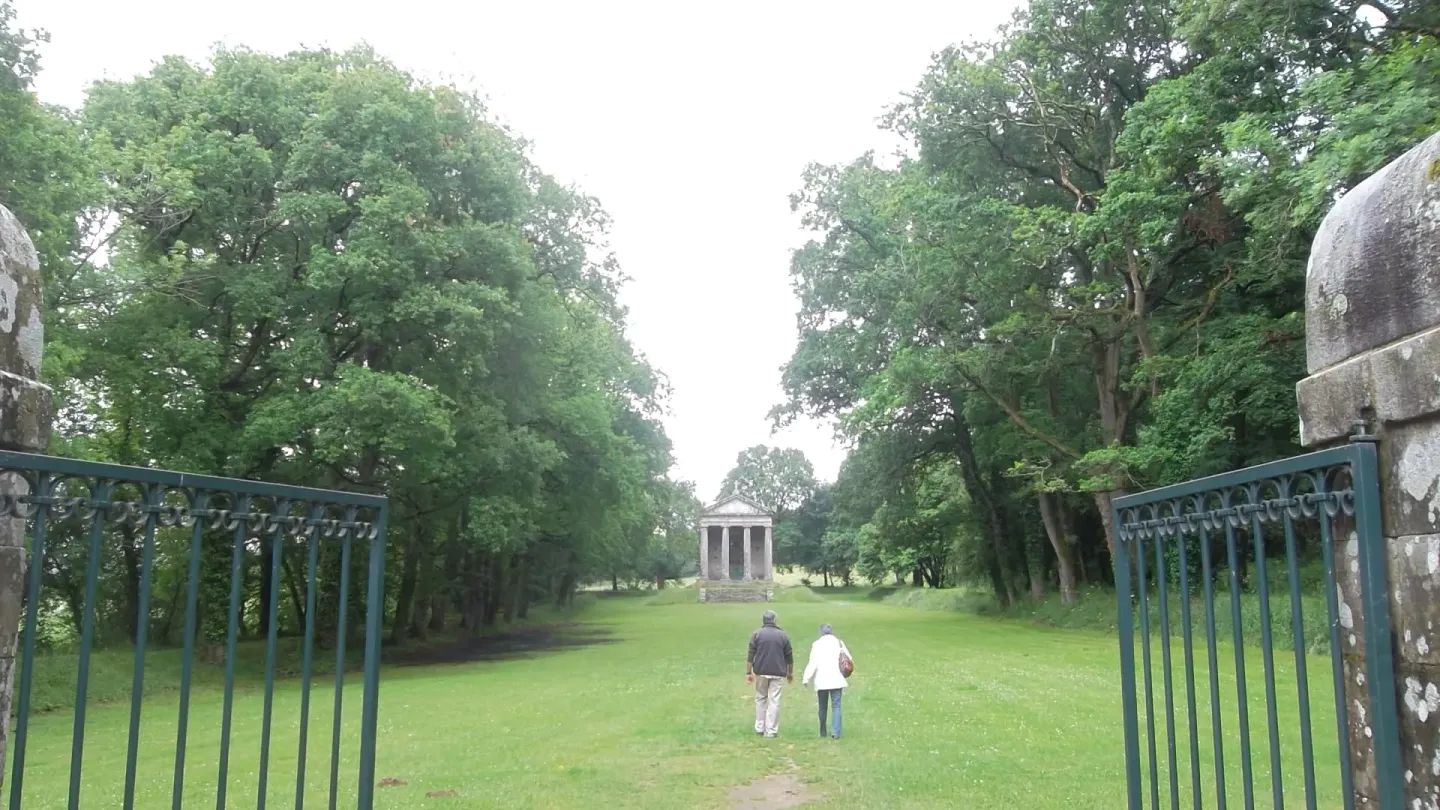
In this field stands the Chapelle Expiatoire or Expiatory Chapel. It is one of two monuments dedicated to the victims of the Quiberon landing. The second is the mausoleum located at the Chartreuse monastery (see post). At the request of Gabriel Deshayes, a priest from Auray, the hastily buried remains of those executed were transported to the Chartreuse monastery on May 15, 1814. That same year, the Duke of Angoulême came to pay his respects before the victims’ remains. The eldest son of the future Charles X, he was the husband of Marie-Thérèse of France, the only surviving child of Louis XVI and Marie Antoinette. It was following a ceremony during his visit that the construction of a memorial was decided upon, with the authorization of Louis XVIII. The Quiberon Monument Commission took charge of the project, which resulted in the erection of the two buildings.
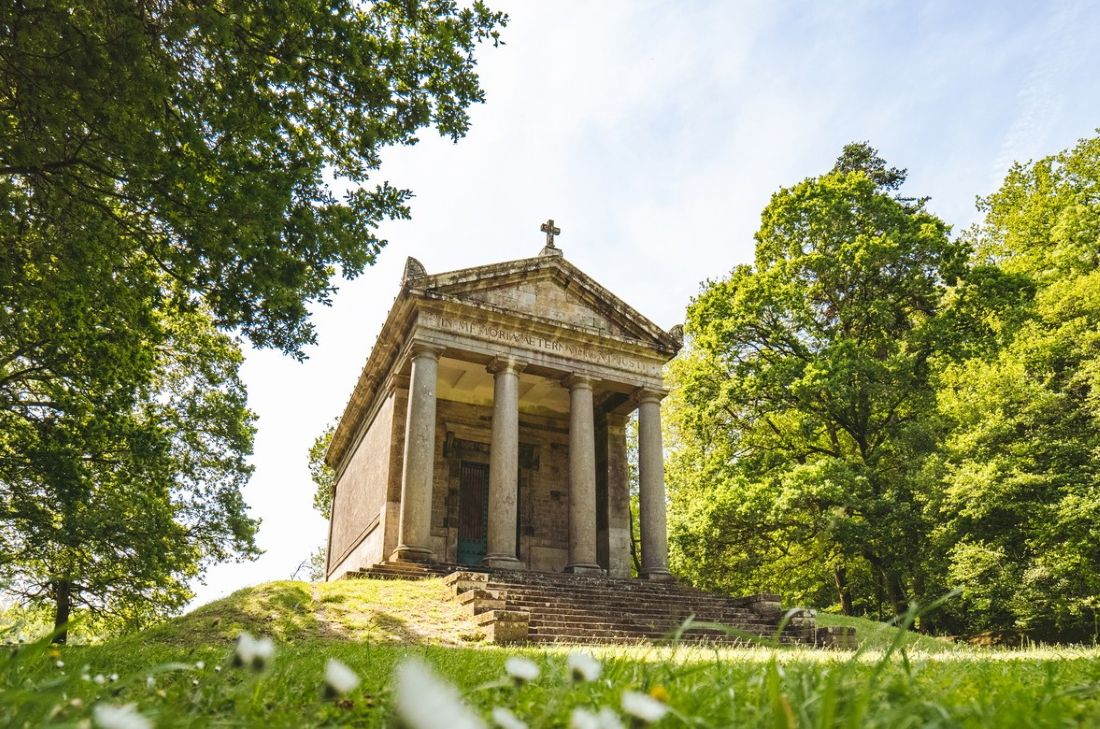
The Expiatory Chapel was thus built on the site of the execution, the land for which had been purchased by the Duchess of Angoulême. On October 15, 1829, the Expiatory Chapel and the mausoleum were inaugurated in the presence of bishops and 15,000 Bretons. The day before this ceremony, the remains of those executed had been placed in the vault located beneath the mausoleum at the Chartreuse monastery. The Expiatory Chapel is the work of the architect Auguste Caristie. The Latin inscription on the façade reads, “They fell here.” Several monuments, stelae and crosses, particularly in the Auray region, commemorate this landing and its consequences, which have left a lasting mark on local memories. Indeed
A bit of history tell us that the Quiberon landing was the organized expedition of royalist émigrés from England to Brittany, with financial and logistical support from the English. Its objective: to rally the coalition of Chouans, united in a Catholic and Royal Army of Brittany, and march on Paris to overthrow the French Republic. On July 27, 1795, more than 5,000 émigrés landed on the beaches of Carnac and Quiberon. Ashore, they were met by more than 12,000 Chouans, including Georges Cadoudal, the royalist leader of the Auray division. But nothing went as planned. The Count of Puisaye and the Count of Hervilly, in command of the expedition, clashed over strategy. The discord among the commanders, the impossibility of integrating the émigrés and Chouans, and the rapid concentration of the Republicans allowed the Republican troops (revolutionaries), under the command of General Hoche,(native of Versailles) to trap the Royalists on the Quiberon peninsula. The ceasefire took place on July 21, 1795, after a final attempt at resistance by Sombreuil, the third of the expedition’s principal leaders. Of the 6,232 émigrés and Chouans taken prisoner, many were released or imprisoned, but 750 were sentenced to death. 206 of those condemned were shot here and hastily buried on the spot between July 29 and September 4, 1795.
The town of Brec’h on the Champ des Martyrs: https://www.brech.fr/a-voir/le-patrimoine-historique/le-champ-des-martyrs-et-sa-chapelle-expiatoire/le-champ-des-martyrs-et-sa-chapelle-expiatoire/
The Morbihan dept 56 tourist office on the Champ des Martyrs : https://morbihan.com/a-voir-a-faire/suivez-le-guide/champ-des-martyrs-brech-fr-4412093/
The local Bay of Quiberon tourist office on the Champ des Martyrs: https://www.baiedequiberon.bzh/a-voir-a-faire/culture-et-patrimoine/chapelles-et-eglises/champ-des-martyrs
There you go folks, a small town even a village divided in 26 parts with lots of historical monuments and a wonderful river bank of the Loch. Again, hope you enjoy this post on the Champ des Martyrs of Brec’h !!! as I
And remember ,happy travel, good health, and many cheers to all !!!


