
Once again, came in to visit this wonderful City by the Laita river and again fun day with the boys and our dog Rex, I have written plenty on this nice town, but as visit again, these are new pictures for my blog and you and me, Therefore, here is my take on curiosities of Quimperlé !!! Hope you enjoy the post as I.
And as I am a Ford lifetime member lol!! didn’t I told you so? Buying Ford since my first one an LTD 1975 to NYC to visit the Yankees (baseball)! And coming over to France of course, I continue the history with Ford. Had practically all the models over the years and now down to the one of the smallest the Fiesta. Nice car done in Germany and Spain here, and well made. As I follow good salespersons from Vannes I followed him to Laita Ford, Great service again welcome by my old salesmen ,then great welcome by the shop manager who took an hour to do the work and off we went home.

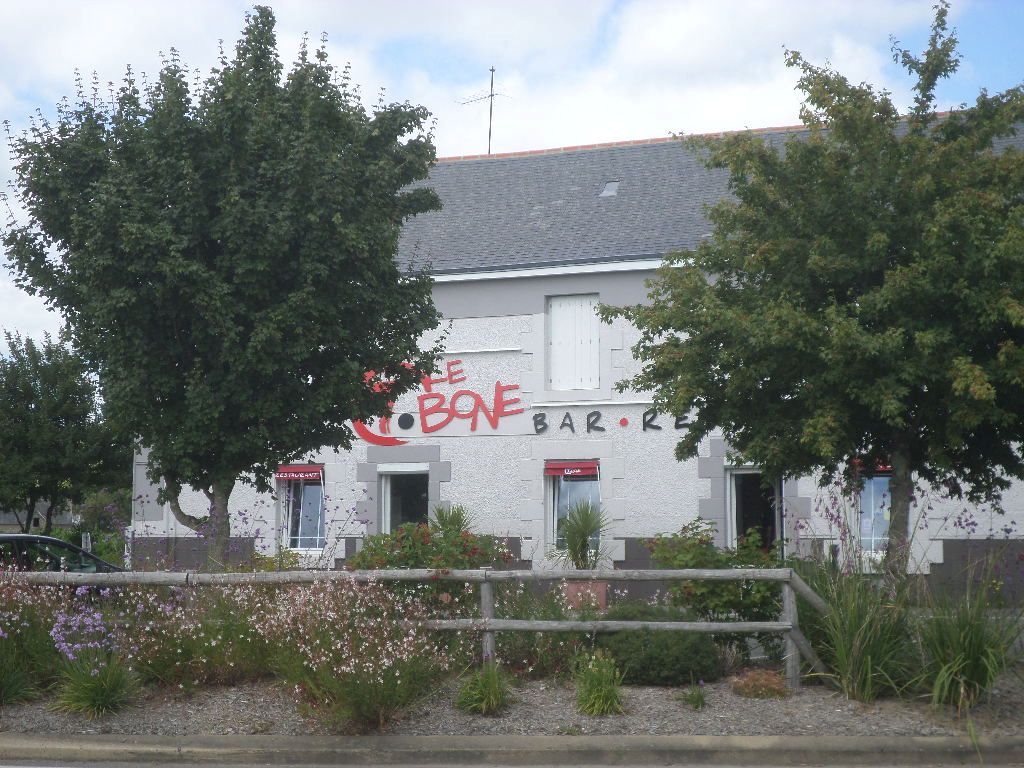
However, as we had some time and were outside city limits almost in a commercial zone to kill time we went over to the across the street bar restaurant for a cold beer! This is the T-Bone bar restaurant. T-Bone lol! As we got there by almost 15h we went in for a cold Grimbergen Belgian blonde beer. We were quickly told to sit inside and were the only ones there, of course at that time is past lunch time. This is what they say translated: The restaurant Le T-Bone, at the eastern entrance to Quimperlé,on the D765 road towards Lorient. As a connoisseur and with passion, the chef will have the pleasure of concocting dishes with regional flavors. The restaurant offers different specialties: Stuffed snails, casserole from the sea, Saint-Jacques skewers, T-Bone, piece of beef, rib steak, tab, rump steak, frog legs …Seafood platter to order. No web ; this is the RestaurantGuru reviews on the T Bone restaurant; https://restaurantguru.com/Le-T-Bone-Quimperle
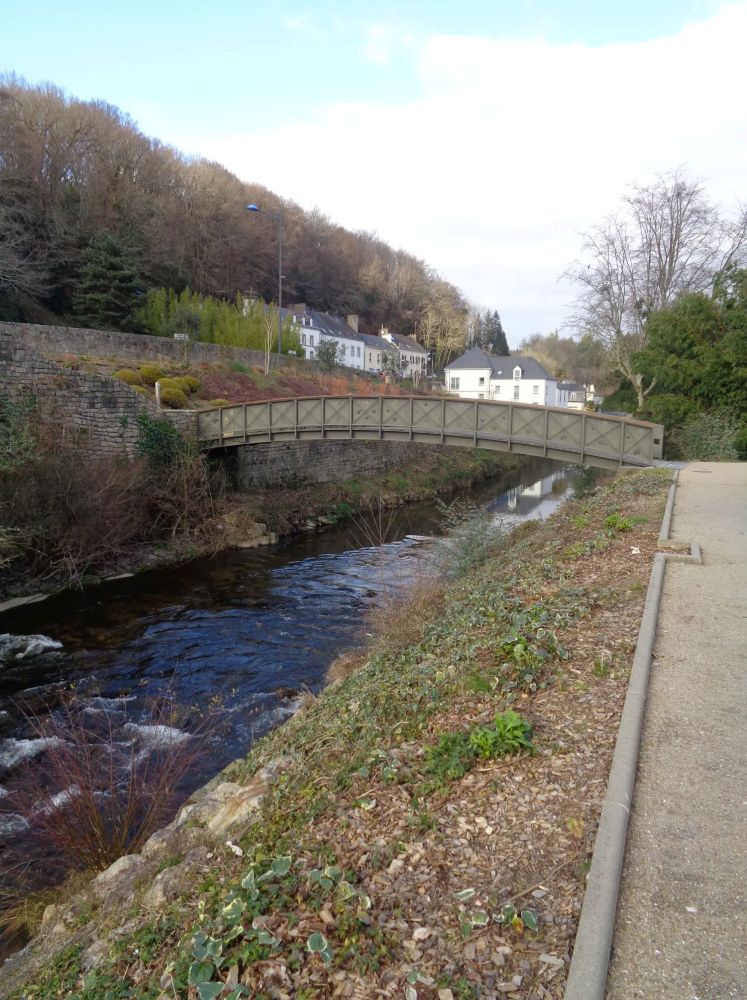
Recall that Quimperlé is located at the confluence of the Ellé and the Isole then forming a coastal river La Laïta , The Isole river has very clear waters. It has its source in the Montagnes Noires, in Morbihan. Its course is made up of many meanders, until it creates deep gorges at the level of the Cascadec forest, in Scaër. The Isole is a 48 km long river that crosses Morbihan and Finistère before flowing into the Laïta. Five bridges in the town of Quimperlé upstream from the confluence with the Ellé to form the Laïta.
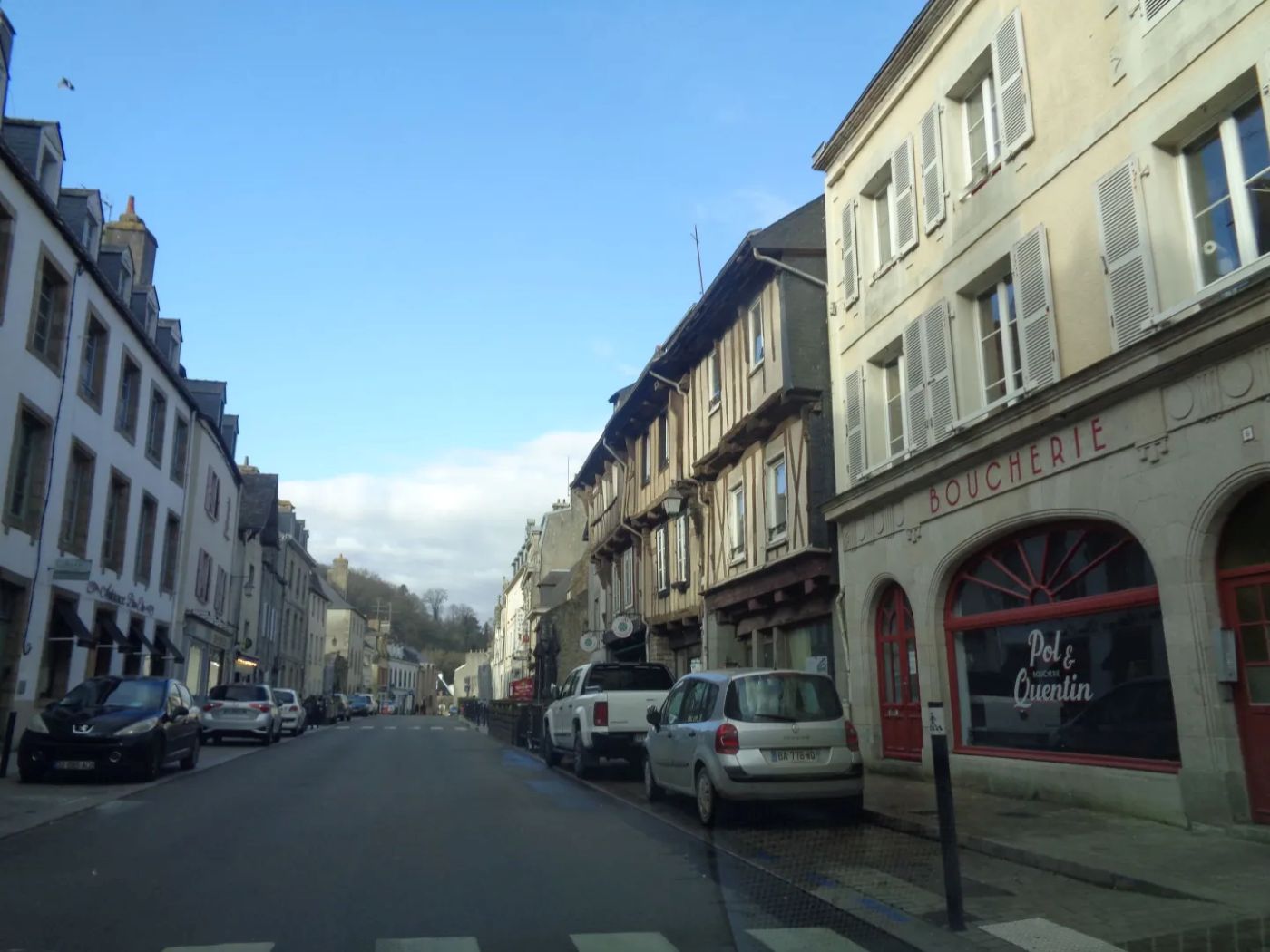
See wooden houses nos 8 ,10 12 in quant nice Rue Brémond-d’Ars from the 16C renovated.
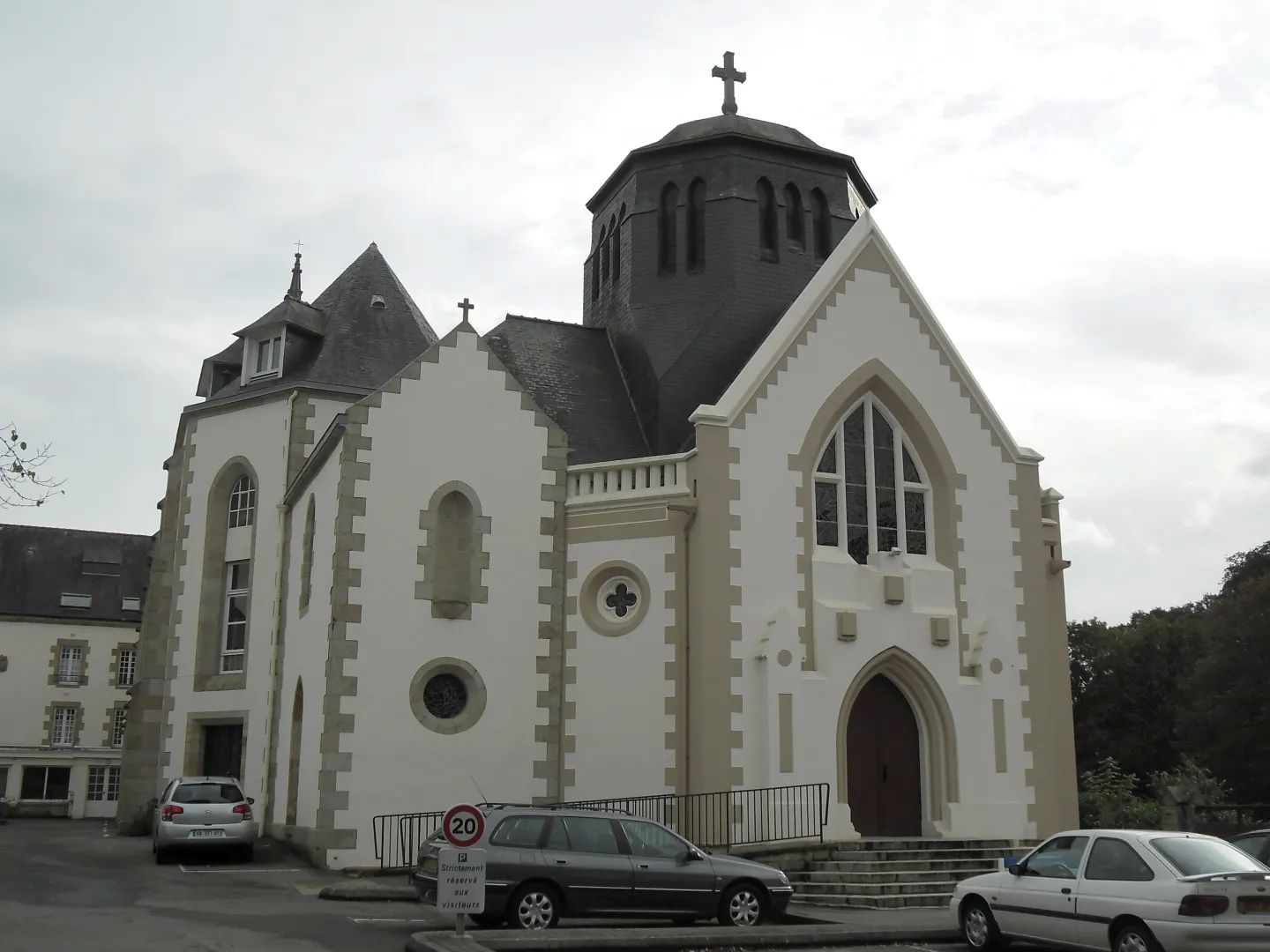
The White Abbey is the former Dominican convent. Founded in 1265, by Duke John I, it closes in 1790 and is purchased as a national property in 1793, serves as a quarry of stones, but the buildings of the 16C are still partially preserved, as well as the portal of the 15C.. It suffered destruction during the French revolution: destroyed church and conventual buildings disfigured. Sisters settled there at the beginning of the 19C and, since 1960, it housed the order of the Daughters of Jesus of Kermaria. The Saint-Joseph Chapel is built from 1932 to 1935, and is decorated with stained glass windows. The Sisters of the Congregation of the Daughters of Jesus left the White abbey ,couple years ago. Now the city is looking into what would the future holds for the 4,000 m2 site which extends over an area of nearly 20,000 m2 including 13,000 m2 of garden . It is ,also, knowing that the Saint-Joseph house (seniors care) still remains on site until early 2027, the time of the construction of the new hospital where its follow -up care service will settle.The official White Abbey: https://abbayeblanche.bzh/
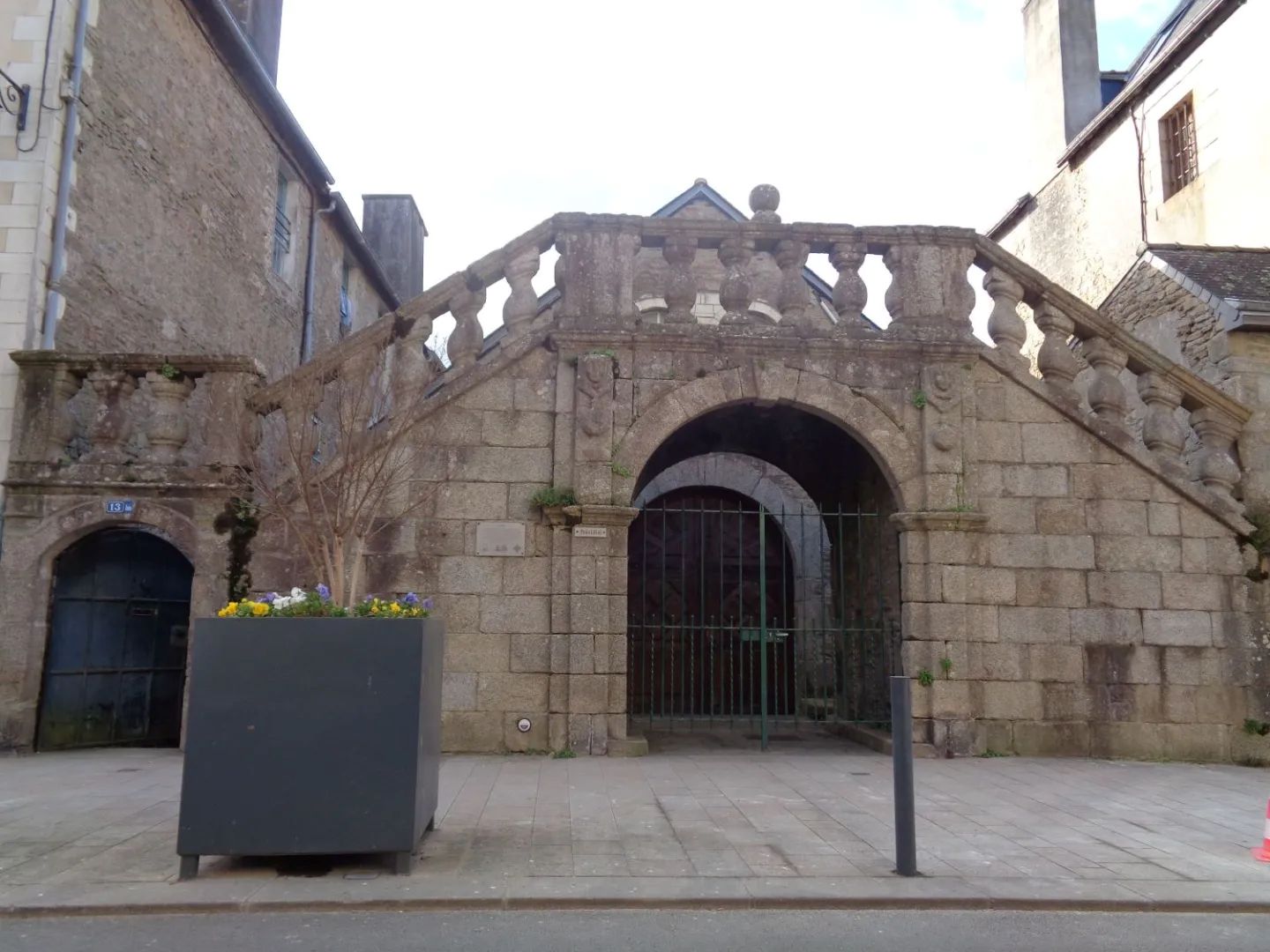
The Le Presidial was a building built in 1653, on the model of the neighbouring house (on the left of it) , on the ground floor, the crowd (covered market) and, upstairs, the town community and the sénéchaussée (Royal Court). The historical Le Présidial, the building mostly gone now only is left with a front . From the visual stairs shown you went into a terrace that give to the first floor, where the justice audience was carry out ,at the end of this salle or room you had two doors communicating to allow exchanges with the municipal elected officials . The found guilty were enclosed in the building next to the stairs that served as municipal prison. The Hall survived in the ground floor until 1829. The “présidial” served temporaly as a prison until 1868. Since 2015, the Le Presidial has supported local mediation projects in connection with territory associations. It is a place of residence for artistic creation and cultural mediation where exhibitions, workshops, conferences, auditions, master-class and small forms are organized. A meeting place for all audiences and all forms of contemporary creations. The local Quimperlé les rias tourist office on the Presidial:https://www.quimperle-lesrias.bzh/visites/presidial-quimperle-pcubre029v52piyi/
The Chapelle des Ursulines or the Ursulines Chapel , This is ,aka the Chapelle de Notre Dame des Sept Douleurs or Our Lady of the Seven Sorrows Chapel. This Jesuit cum baroque-style chapel which was part of a 17C convent boasts a magnificent roof gilded with gold leaves. In 1946, they regained their function as a public school and now house the Collége Jules Ferry (middle school). The former conventual church, owned by the City of Quimperlé, has served as an exhibition space since 1996.


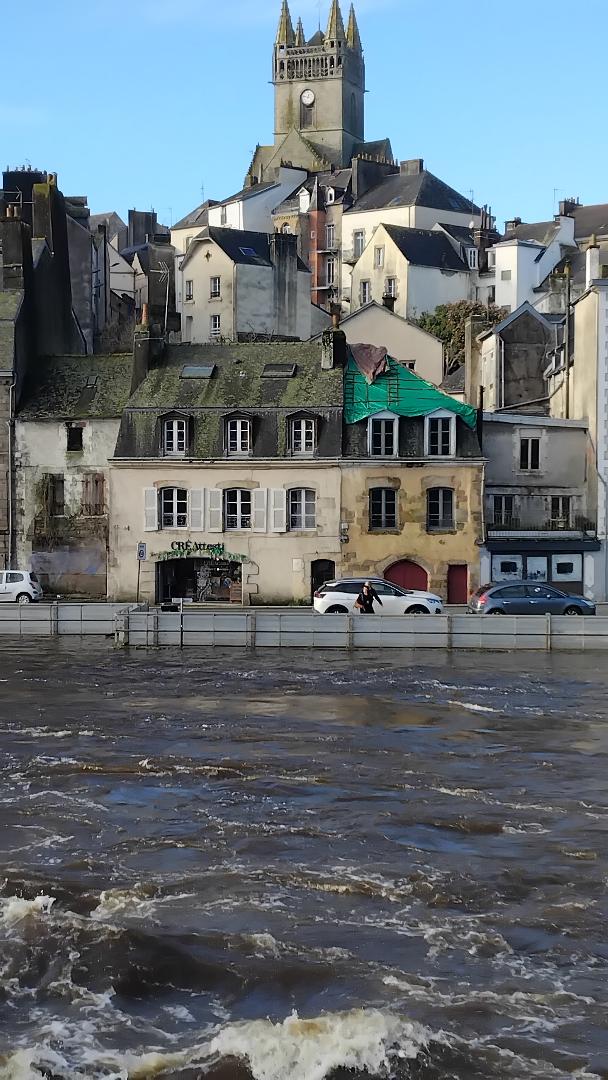
The Laïta is a river estuary formed by the Ellé and the Isole river after their confluence. The name Laïta does not appear for the first time in official writings until 1825, on the cadastre of Quimperlé. In the writings dating from before the French revolution, the river which flows from Quimperlé to the sea still bears the name of Ellé. The origin of the name Laita remains obscure. This is a very strong current river that have cause flooding in City center, you can see the rapid waters and afar on top the tower of the Church Notre Dame de l’Assomption (see post)
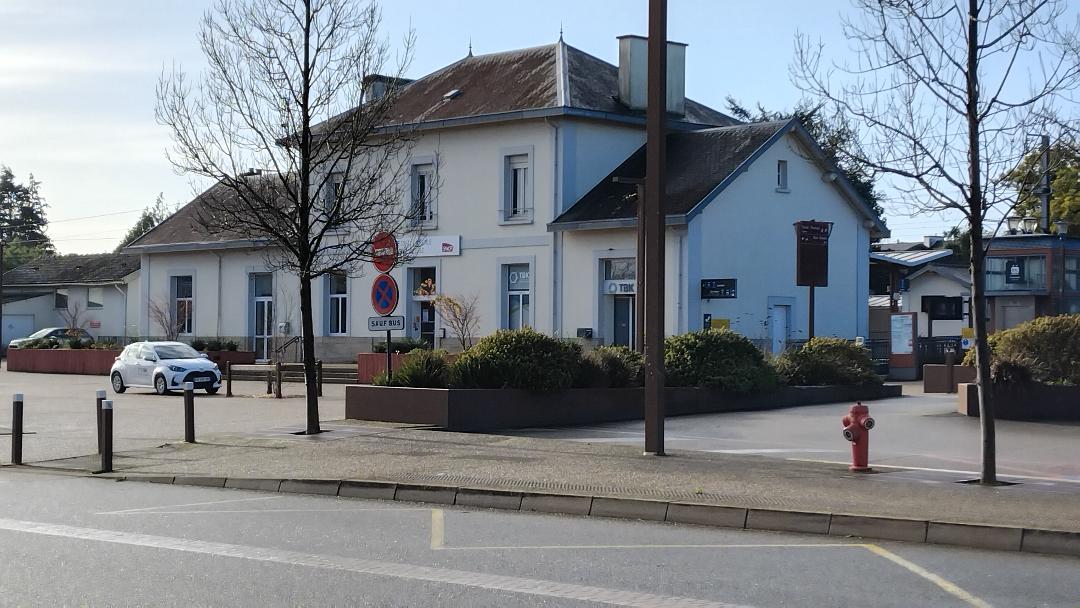
The Gare de Quimperlé or train station is on the line from Savenay to Landerneau, and located near the center of the town. It was put into service in 1863 , The Quimperlé train station is served by TGV inOui on the Paris-Montparnasse – Rennes – Quimper relationship, and by TER Bretagne trains which carry out missions between the stations of Quimper ,Lorient, Rennes, and Nantes. We passed by it again and could not go away without another picture.
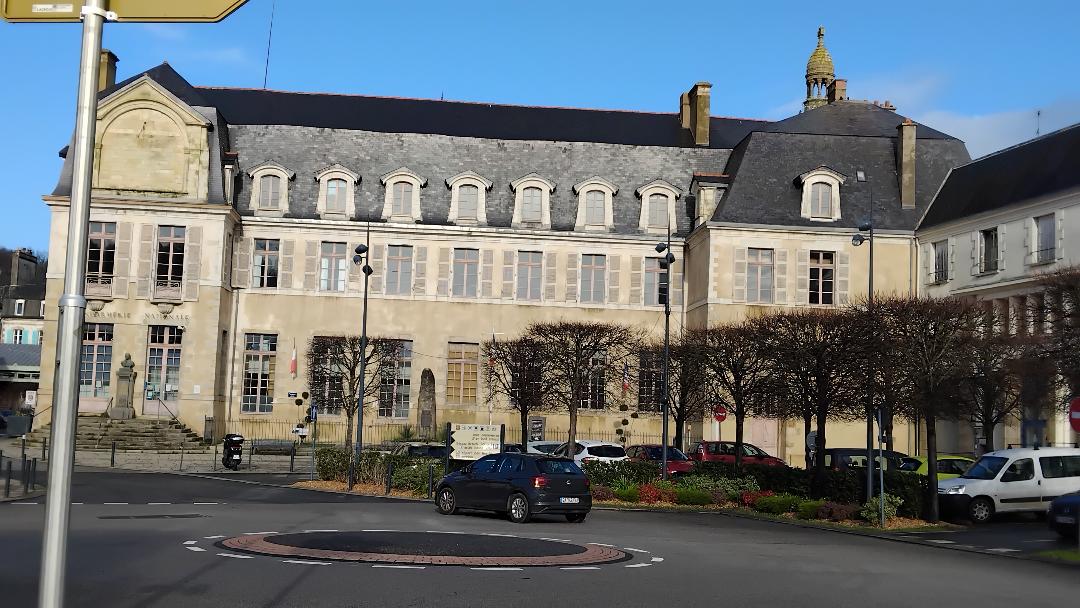
The gendarmerie nationale or national armed forces police is an armed force established to enforce the law and ensure public safety and order. Quimperlé is home to an independent Gendarmerie brigade. This brigade covers the towns of Baye, Tréméven, Mellac, Querrien, Rédéné, Arzano, Locunolé, Guilligomarc’h, and Quimperlé. The current Lieutenant Jamet Barracks, are no longer suitable at 2 Rue de la Paix (see pic). The new barracks will be built on land located between Kervail and Kervidanou, on the right-hand side of Rue de Pont-Aven, as you leave the town.
The city of Quimperlé on its identity/presentation: https://www.quimperle.bzh/decouvrir-la-ville/quimperle/carte-didentite/
The local Quimperlé les rias tourist office on its heritage: https://www.quimperle-lesrias.bzh/la-ville-de-quimperle/
The Finistére dept 29 tourist office on its historic towns so Quimperlé : https://www.toutcommenceenfinistere.com/en/patrimoine/historic-towns/
The Bretagne region tourist office on Quimperlé : https://www.brittanytourism.com/destinations/the-10-destinations/quimper-cornouaille/quimperle/
There you go folks, another dandy run to wonderful Quimperlé , amazing architecture and history all over, we love it, Again, hope you have enjoy this post on my curiosities of Quimperlé !!! as I
And remember, happy travels, good health, and many cheers to all !!!


