
I like to bring you back to my beautiful Morbihan and its small picturesques towns on the off the beaten path. I like to update this post with new text and links on Sérent to you. Again, found older pictures new to the blog and they should be in it, Do read/see my other post for more ! Therefore here is my take on the Church Saint Pierre of Sérent !!! Hope you enjoy the post as I.
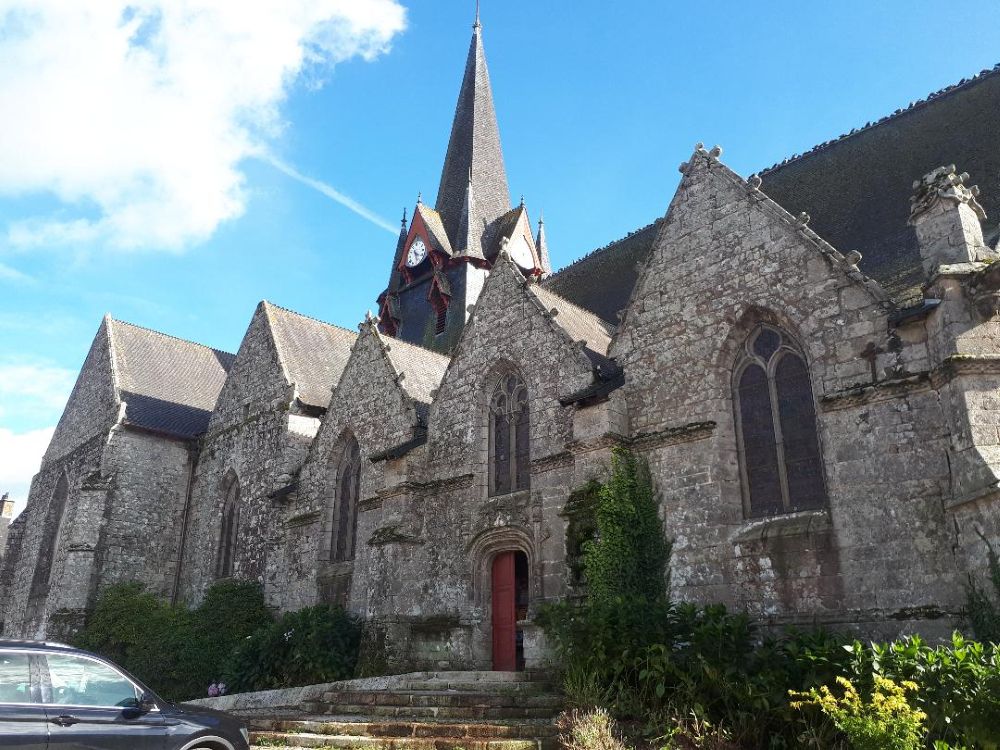

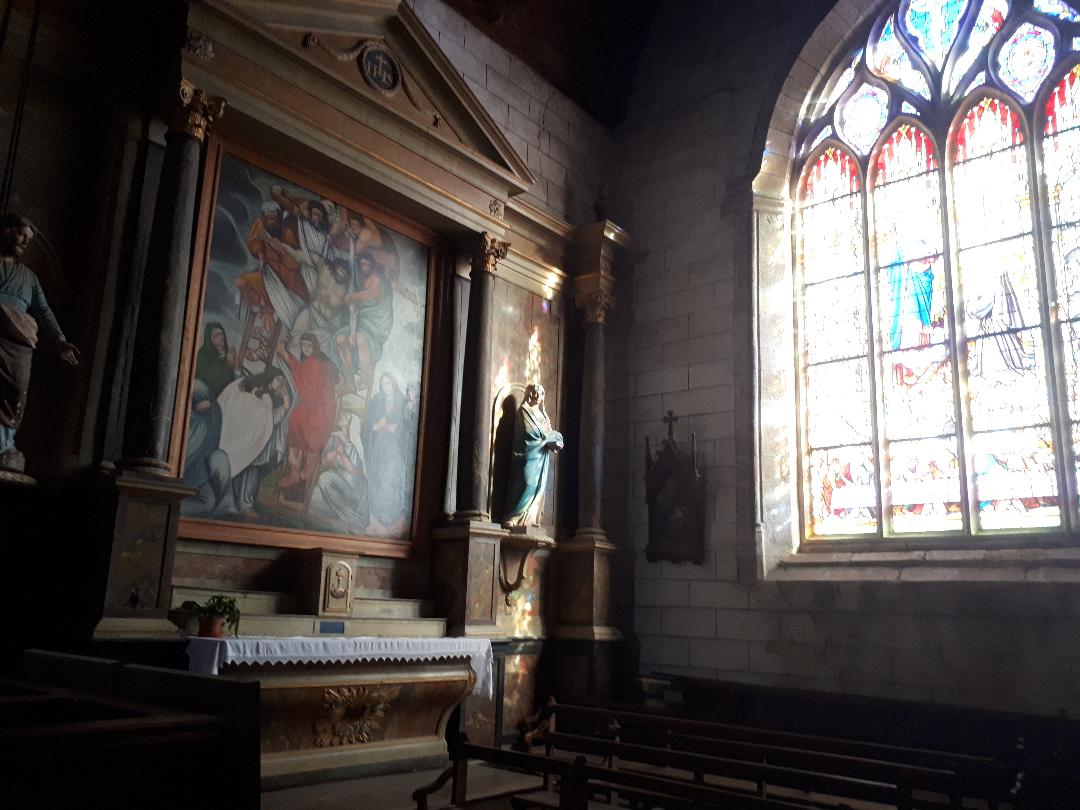
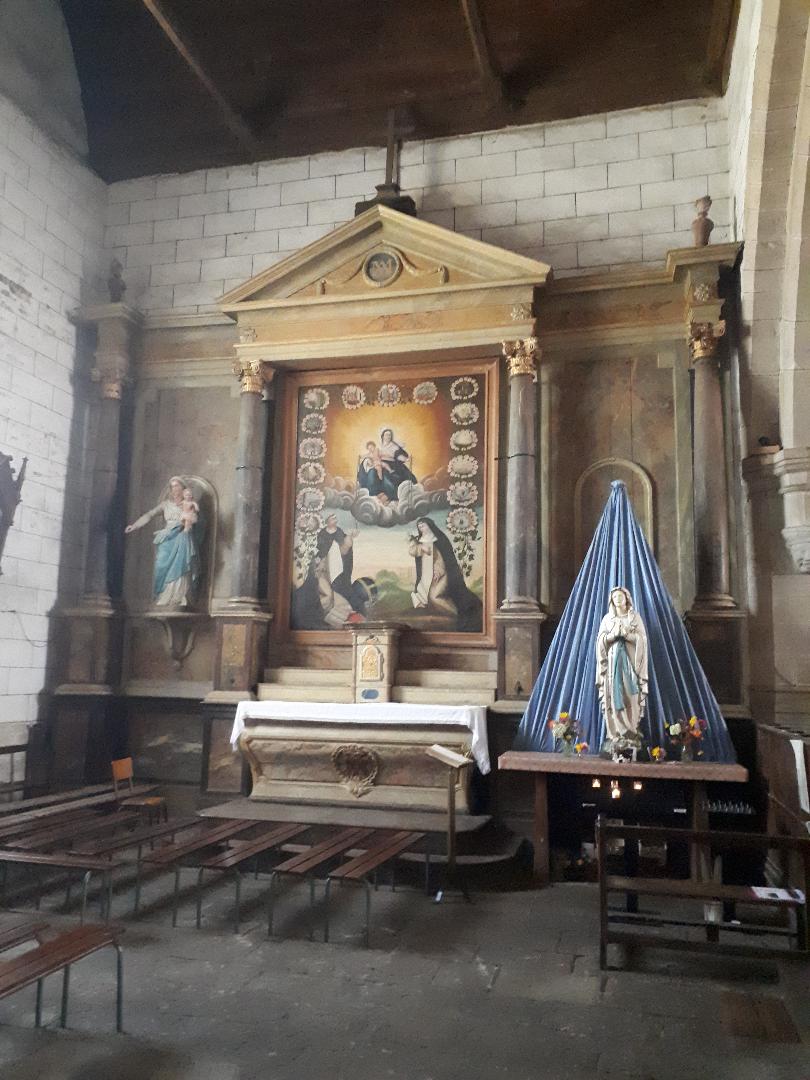
The main thing we like here and is right in city center is the Church St Peter’s (église St Pierre) ,Built in the 15-16C, the church is in the shape of a Latin cross: 3 naves, 2 transepts and a choir. The choir is from the 15C and its decoration from the classical period. The 3 naves date from the 16C and the central nave measures 37 by 20 meters. All around the church, magnificent stained-glass windows represent the patrons of the various chapels of the parish and the names of the donors. A false gargoyle representing a washer kneeling with her dog, recalls the legend of the barkers of Josselin.
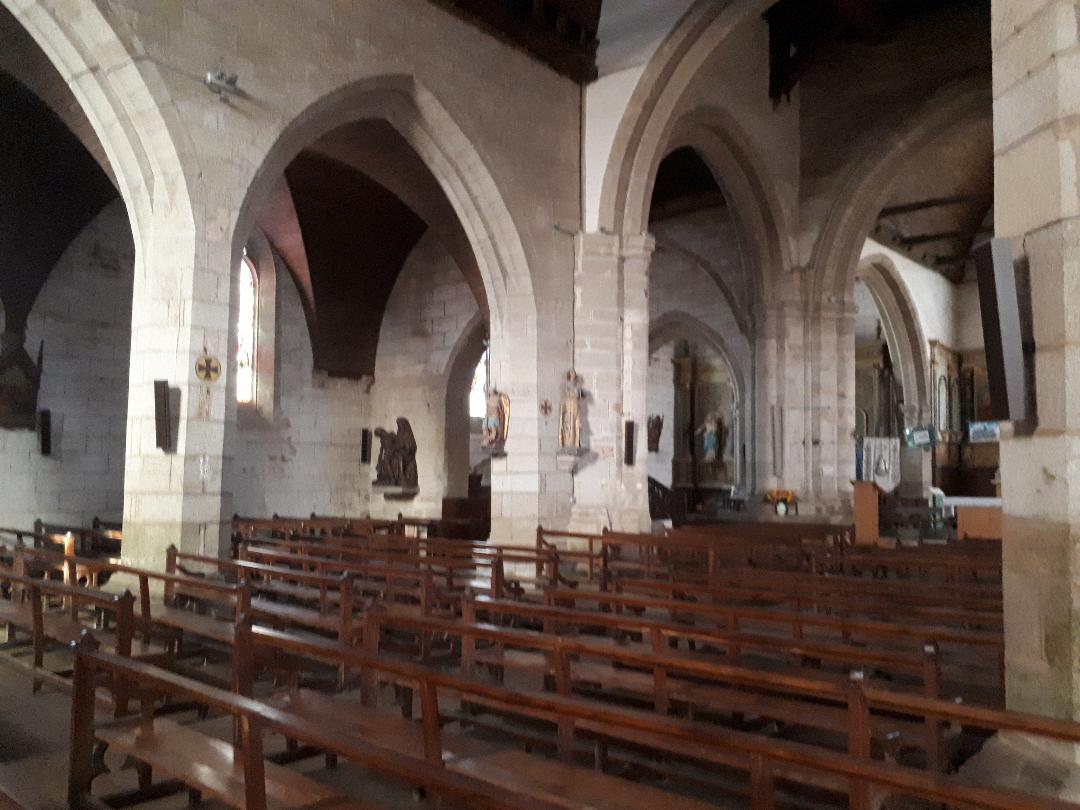
The large arched arches, are supported by heavy pillars with engaged columns. The nave was redone in the 16C and it communicates with the aisles by means of three-point arcades penetrating into polygonal pillars. The exterior decoration of the windows, surmounted by gables, and that of the portals are made of flamboyant and Renaissance elements. The bell tower, which stood on the last bay of the nave, was rebuilt between 1885 and 1890 . The church is covered with a frame dated, on the quarry stones, from 1601. The church has eight gables, a monumental staircase, a long-sided roof, a polygonal spire punctuated by four bell towers and twelve stained-glass windows. The stained-glass window of the “Sacred Heart of the Calvary of Saint Suzanne”, dates from 1893-1898. The Pietà, in oak wood, dates from the 16C. The church contains a silver chalice coated with gold, which dates from 1672. In the past and from 1300, we could see the tomb of the Sérent family, the preeminent lords. Jean de Sérent, Lord of Tromeur, is exhumed there in a white marble tomb, adorned with a reclining statue.
The town of Sérent is a typical breton town , in country agricultural and very much attach to family traditions. It is a picturesque town nice clean and a great square with shops/restos around the Church St Pierre. A nice stop indeed in my road warrior travels of my lovely Bretagne.
Other things to see here me think are the Manor of Tromeur (15-16C), property of Jean de Sérent; The Manoir de la Ville Gros (17C) ; the successive property of the Le Blaye or Blay families (in the 15-16C, The castle of La Salle (17C) : The estate has a main house of the 17C partially rebuilt in the 19C ( circa 1820). It has a well, a private chapel and a Calvary, Le manoir de Bohurel dated 1613, The manor house was restored in the 18C. Burned down in 1944 and partially rebuilt at that time, La Houletière castle: seat of the former lordship of La Ville-Raix or Ville-Rée, The castle of La Rivière: seat of the former lordship of La Rivière which belonged to a younger branch of the Sérent family, owned by Geoffroy de Sérent in 1464 and François de Serent in 1536. It formerly had a private chapel; a cromlech is located not far from the castle, it has a diameter of 2.70 meters; the seven stones that compose it are, on average, 70 cm high, The castle of Rohéan (15C), in ruins around 1840. In 1919, it became the property of the Briand family; The Calvary of Sainte-Suzanne (16C) its central shaft – framed by four columns topped with spheres, represents the agony of Christ; this Calvary has a large base preceded by an altar and dominated by five stepped balusters.
A bit of history I like tell us that the first allusion to Sérent dates from the end of the 9C in the cartulary of Redon, The La Terre de Sérent or La Chapelle en Sérent was erected into a barony in 1318 by John III, Duke of Brittany in favor of Olivier II, sire de La Chapelle, Marshal of Brittany, The town had an eventful history during the French revolution when the opposition between Chouans and “Bleus” (Republicans) ravaged the countryside, The Catholic and Royal Army of Morbihan was even made up of a column called “Column of Sérent” which, with that of Bignan and that of Pleugriffet, made up the Legion of Bignan. During , WWII, the maquis of Saint-Marcel , a mecca of the French /Breton Resistance, was in fact located mainly in the town of Sérent around the farm of La Nouette. Serent therefore had to deplore the exactions of the Nazi occupier (the great majority of Georgian soldiers engaged in the Nazi army).
The town of Sérent on its heritage: https://www.serent.fr/tourisme/a-decouvrir/le-patrimoine.html
There you go folks, a picturesque little town of Sérent ,in the countryside of the Morbihan. Again, hope you enjoy this post on the Church Saint Pierre of Sérent !!! as I.
And remember, happy travels, good health, and many cheers to all !!!


