
So you know Vannesis my capital city and administrative center for us. It was as well for 9 + years my place of work, just outside city limits, and we go there every week at least once! Therefore, I have written plenty about Vannes in my blog; but as often the case there are always wonderful sights to tell you with new text and links on my latest visit with pictures there, This is a wonderful place to visit while in Vannes, I say a must. Therefore, here is my take on the ramparts of Vannes, part II !!! Hope you enjoy the post as I.
The tour du Connétable or Constable tower was built in the first half of the 15C, is a building integrated into the ramparts of Vannes. Despite its fortified appearance, resolutely turned towards the defense of the city, and although the tower has artillery casemates in the lower room, the initial destination of the Constable’s tower was to house the chief of the Duke of Brittany’s armies. . Its name therefore comes from its function, the most illustrious representative of which was Arthur III of Brittany known as “the Constable of Richemont”, Constable of France and Duke of Brittany.
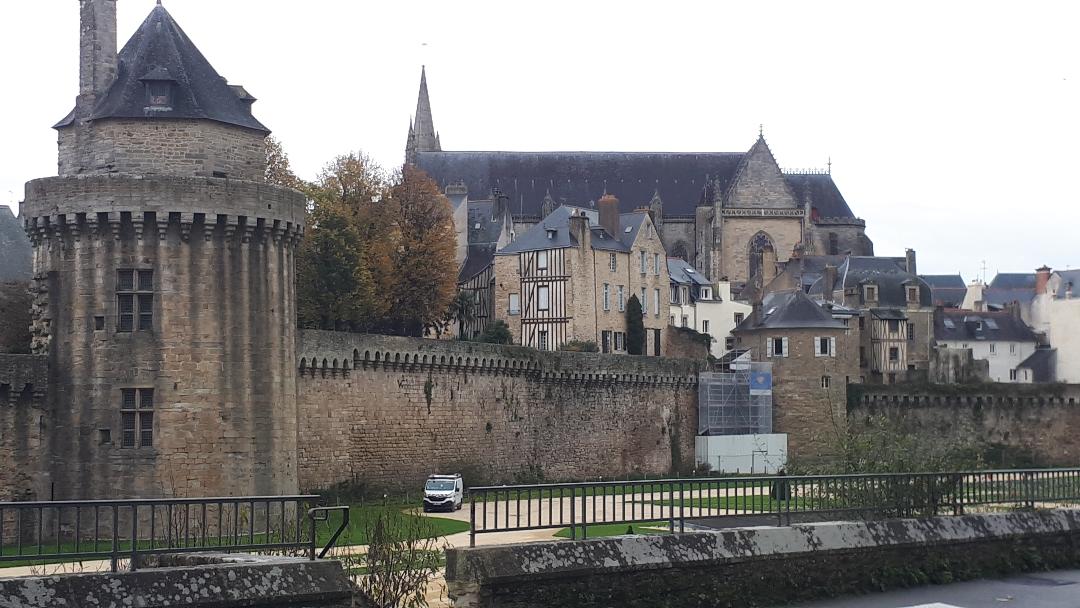
The Tour Poudrière is closer to the end of the ramparts. The gun Powder Tower was redeveloped in the second half of the 15C on the basis of an old 12C tower. This tower equipped with artillery casemates was used at the end of the Middle Ages as a reserve of gun powder, which earned it its name of Poudrière. Part of the curtain wall between the Joliette and Poudrière towers is the only section to be permanently accessible to the public, the entrance being on rue des Vierges by the Place Lucien Laroche. See far rigtht above picture.
The new enclosure undertaken at the end of the 14C by Jean IV includes two new gates to the south towards the port district one of these was the Porte de Calmont. The gate takes the name of the suburb it serves and which is the starting point towards the Rhuys peninsula following the coastal route via Séné and the passage of Saint-Armel. This Calmont gate retains the traces of the closing system comprising two swing drawbridges: high grooves in the wall, above each door which retains the bridge arrows once raised. At the base of the two passages, we can see the holes that received the axes of the drawbridges. The development of this gate also includes on its left the construction of a tower which rose on three levels. Today it is clipped from its last level where, under the roof, was an upper room surrounded by a covered walkway resting on the consoles of the machicolation.

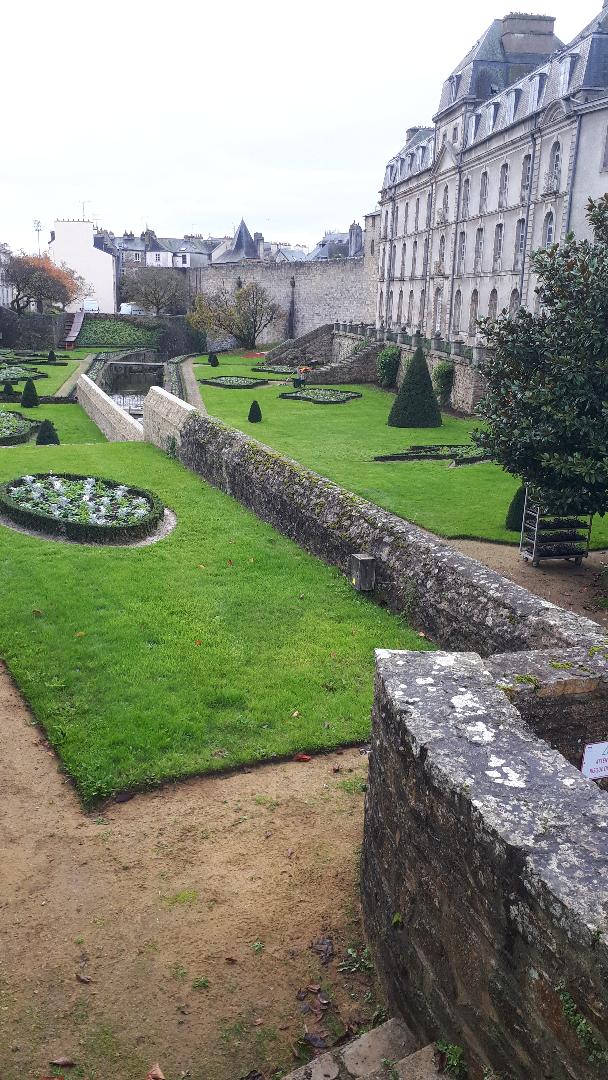
Jardin des remparts Garden of the ramparts This site is one of the florets of the Vannetais gardens. Several accesses allow you to walk there along the Marle River. For the record, know that for the only garden of the ramparts, 30,000 flowers are necessary for its decoration. A playground, on the prison side, is reserved for young children.

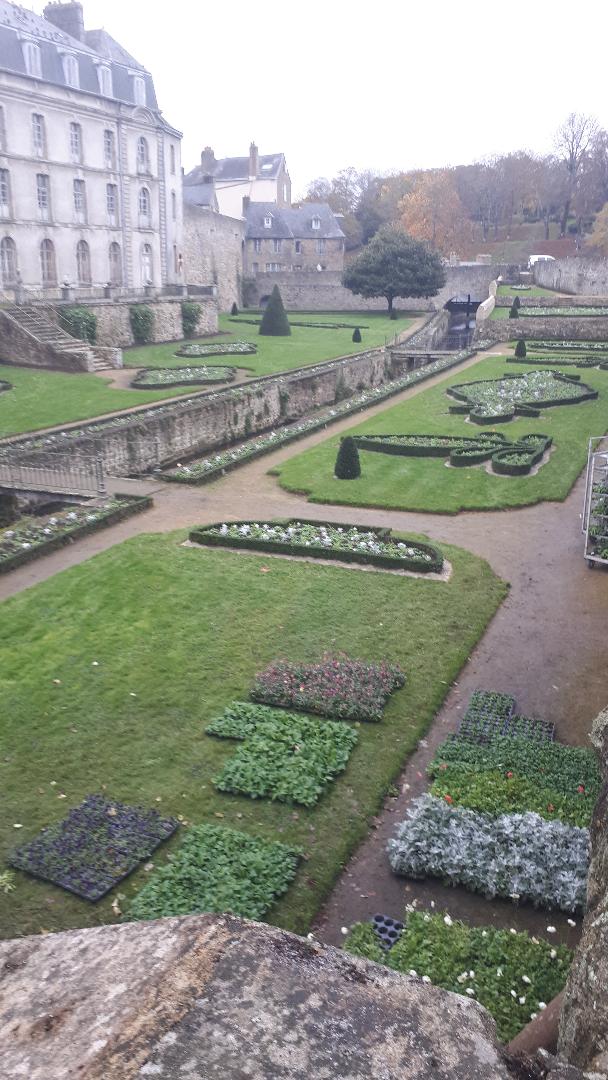
The City of Vannes stated ambition is to make the Château de l’Hermine, the new museum of fine arts. The project consists of giving visibility to the Museum of Fine Arts, giving it a strong tourist and local appeal and above all allowing it to present collections in an environment designed for this purpose, for optimal promotion of the works and a very pleasant discovery trail for visitors. Jardin du Château de l’Hermine is a pure style of French gardens, this garden is essentially visual and decorative.
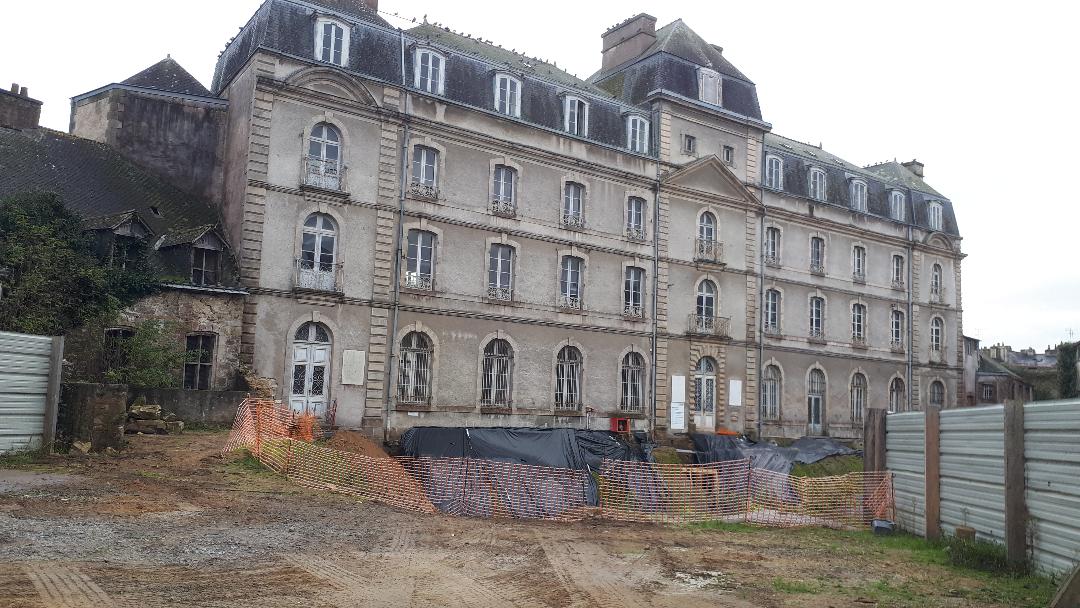
The Château de l’Hermine(later Hôtel Lagorce but still call by locals Hermine ) at 12 Rue Alexandre le Pontois was a small castle built in the ramparts of Vannes . The castle was the main residence of the Dukes of Brittany between the end of the 14C and the 15C. Ruined and then dismantled in the 17C, it was replaced during the 18C by a special hotel, the Hôtel Lagorce which took the name of its owner. It is however commonly known as the Château de L’Hermine, the memory of the ancient fortress of the Dukes being well anchored in the memories of the local Vannetais. The castle was a defensive and residential building, intended by Duke Jean IV of Bretagne, who wished to benefit from a residence in a city which had been favorable to him during the War of Succession of Bretagne.
The whole washouse or lavoir building is about 40 meters long, protected by a slate roof. The first building, a rectangle of about 13 × 7 meters is built of timber with exposed beams. Despite its small size, the main building has a chimney roof. And for good reason: this is where the laundries were located where we put the laundry to boil. Under the gallery covered with a slate roof, which follows the curvature of the Marle, the women came to wash and rinse their linen in relatively polluted water. Then, they invested the banks of the river and the orchards, which were replaced by French gardens, to put it to dry, Upstairs, it now houses the heritage animation service. On the ground floor: exhibition rooms.

The city of Vannes on the porte de Calmont: https://www.mairie-vannes.fr/porte-et-tour-de-calmont
The Gulf of Morbihan tourist office on the jardin des remparts of Vannes: https://golfedumorbihan56.com/le-jardin-des-remparts-de-vannes-ses-fleurs/
The city of Vannes on its ramparts walls: https://www.mairie-vannes.fr/les-remparts
The City of Vannes on the washhouses or lavoirs : https://www.mairie-vannes.fr/lavoirs
The city of Vannes on the Château de l’Hermine : https://www.mairie-vannes.fr/chateau-de-lhermine
There you go folks, two wonderful gates/towers along the beautiful ramparts of Vannes a must to visit when in town. Again, hope you enjoy this more detail post on the ramparts of Vannes, part II as I.
And remember, happy travels, good health, and many cheers to all !!!

 Paris1972-Versailles2003