
I am back at you to show you more of Poissy, in my former dept 78 of Yvelines ,in the ïle de France region of my belle France, Today I like to bring you out of Paris and into the beautiful nostalgic Yvelines where I spent my first few years in France. I like to remember memorable places of mine and this is another one. I used to come by here on many business/family trips and to get my sons off school at the train station in Poissy , also a stop for the RER A into Paris. Several posts on the royal city of Poissy but today let me tell you a bit on this is Poissy !!! Hope you enjoy the post as I.
The city of Poissy is located approximately 30 km from Paris, 8 km from Saint-Germain-en-Laye, and 23 km from my Versailles. The neighboring towns are Saint-Germain-en-Laye , Chambourcy ,Aigremont, Feucherolles, Orgeval ,Villennes-sur-Seine, Carrières-sous- Poissy , town from which it is separated by the Seine river. A beautiful crossroad of my France indeed. Lovely area with beutiful historical and architecturally stunning monuments !!! Many bypass this lovely small town on their way to Normandy from Paris on the A13 or the train. However, it is a royal town of France !! The tourist office is at 132 rue du Général de Gaulle and its a rounded tower built in 1832 to make payment of the animals sold, and a tax to enter the city, it marked the city limits. Getting out into the A13 autoroute de Normandie direction Rouen until exit sortie 6 Versailles centre that brings you on the N186 is only 23 kms or take a bit longer but more scenic route on the D190 into the N13 at St Germain en Laye and onwards to the N186 to Versailles. The roads A13,A14, D30, N13 D190 all passed and bypassed the town. A city always in the history books to modern times and a big crossroad of railways as well.
I used to come by here on many business trips and to get my sons off school at the train station in Poissy .There are many roads here and yours truly has partake them all. The D 190, links Le Pecq to Limay and crosses the Seine river by the Poissy bridge and constitutes the historic axis of the city, deviated towards the north following the construction of the new bridge in the 1950s; the D 30 is a local road , D 308, which links it to Maisons-Laffitte; the D 113, nicknamed “route de quatre sous”, which crosses the D30 at a place called the Maladrerie de Poissy, passes south of the city; D 153 (facing the ND Collegiale Church ) connects Poissy to the Orgeval interchange, junction of the A13 (exit/sortie 7) and A14 highways. These latest two highways cross the city in its southern part. We came front or back the route down pad by getting out into the A13 autoroute de Normandie direction Rouen until exit /sortie 6 Versailles centre that brings you on the N186 is only 23 kms or take a bit longer but more scenic route on the D190 into the old N13 now D113 (route de quatre sous) at St Germain en Laye and onwards to the N186 to Versailles. And you will love the forest.
There are two paid parking zones in Poissy: a short-term zone limited to 2 hours (downtown lanes), a long-term zone limited to 5 hours (peripheral routes). Parking is payable Monday to Saturday from 9h to 12h30 and from 14h to 19h. There are parking areas such as the train station or gare de Poissy with 904 places at 6, rue du Bac. Another at the Hôtel de Ville or city/town hall with 271 places at Place de la République, and a third one at Les Lys parking with 129 places at 23, rue Jean-Claude-Mary. It has two terminals equipped with two charging sockets and accessible at rue du 8 mai 1945, near the city/town hall and at 4 rue Jean-Claude Mary, parking near the train station. There is a further parking we used by the Parc Meissonier a bit walk into town but free and just great scenery along the Seine river and its peniche boats!!
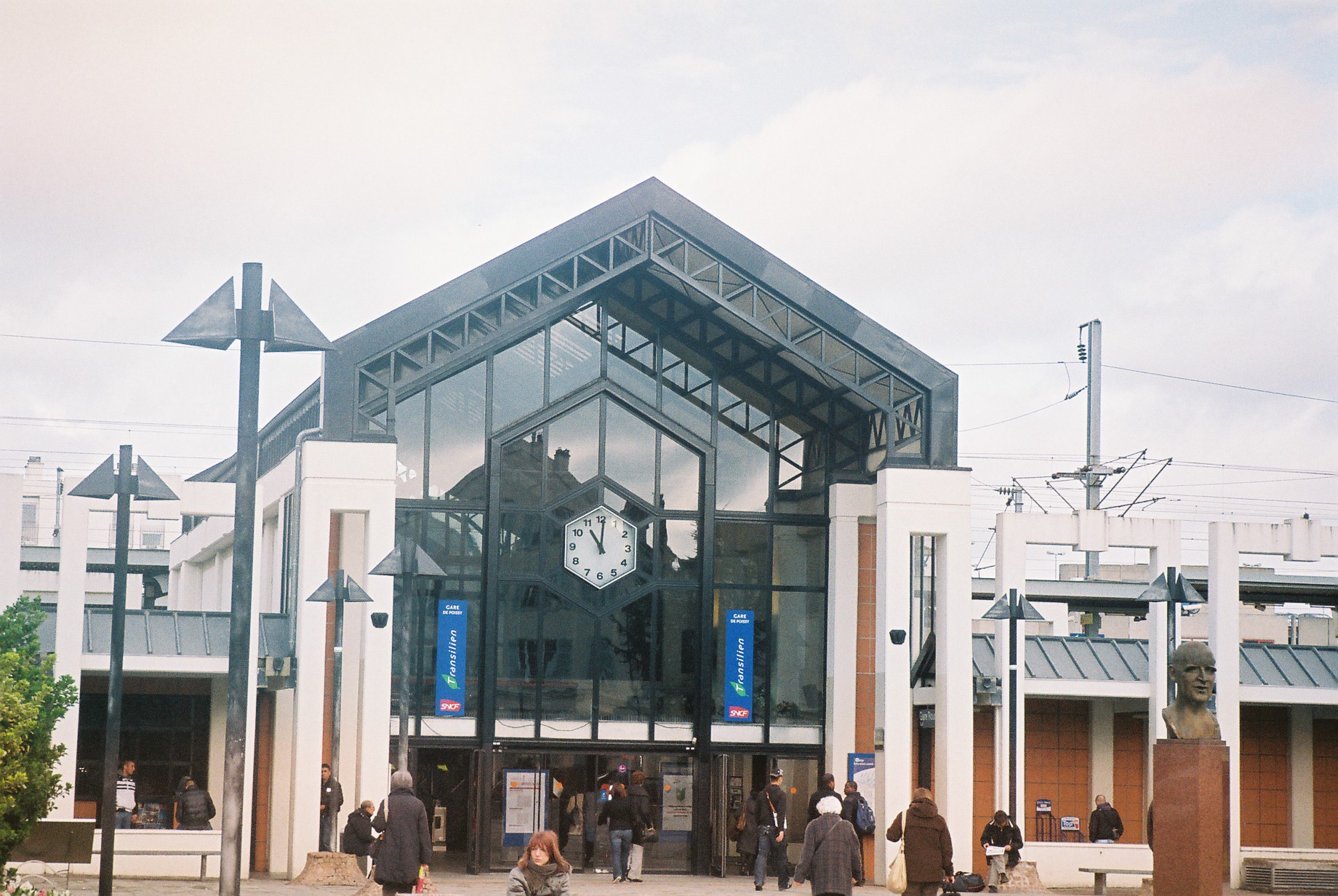
Another popular spot by me and taken the RER A or train from gare St Lazare many times as we like to go to Poissy when lived in the area in Versailles! However, from Paris is easier by train from the Gare Saint Lazare in Paris direction Mantes or the RER A from several points in Paris. Terminus of RER line A5 (Poissy / Achères Grand Cormier / Maisons-Laffitte / Sartrouville / Houilles – Carrières sur Seine / Nanterre / La Défense Grande Arche / Paris). The train station or gare de Poissy is right off the city center so very easy for walkers and no car is needed. The city of Poissy is crossed by two railway lines: the Paris-Le Havre line which runs along the Seine river at the western edge of the town, the train station is located on the J line Paris – Mantes-la-Jolie (Poissy / Houilles – Carrières-Sur-Seine / Paris Saint-Lazare). Trains are direct in the morning to Paris Saint-Lazare and in the evening from Paris Saint-Lazare . Also, the Grande Ceinture line, limited to a restricted traffic of goods, which runs along the forest of Saint -Germain-en-Laye in the eastern limit of the city. Passenger service is provided by Gare de Poissy, 14, place Georges-Pompidou ,which is a terminus station for services of the A5 branch of the RER A and a transit station for the other suburban trains of the Transilien line J bound for Les Mureaux and Mantes-la-Jolie as well as TER to Vernon (Eure). To Paris, all these trains end at Gare Saint-Lazare , a very short ride. Not taken but from Versailles Chantiers to Poissy you need to get to La Défense and then Poissy.
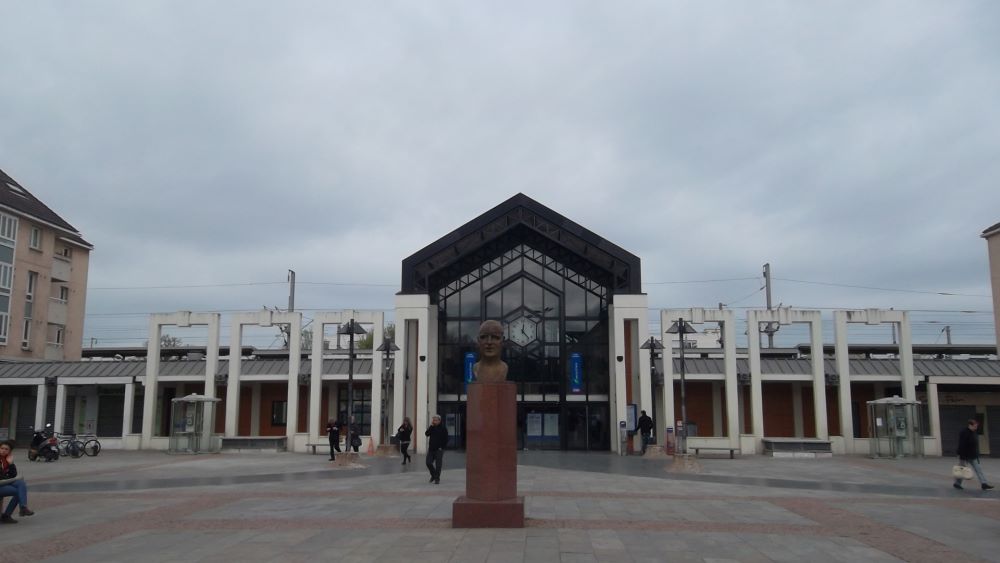
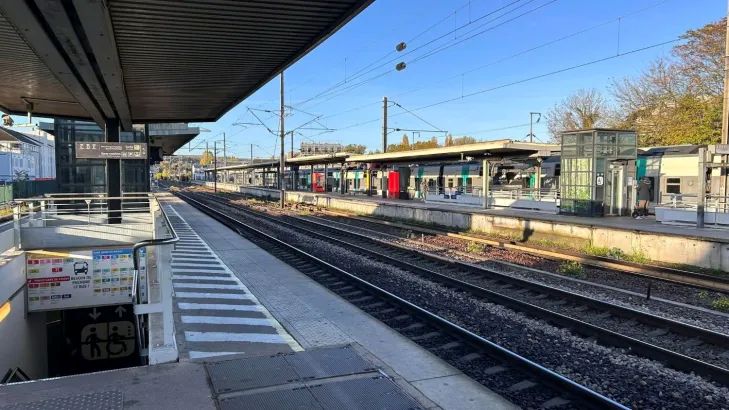
The city of Poissy has a particularly dense bus network as it offers 31 bus lines, serving all neighborhoods and many surrounding municipalities. Gare Nord or North bus station is at 2, rue du Pont Ancien. Gare Sud or South bus station is at 87, avenue Maurice-Berteaux. Bus transport is available to many including Versailles, on bus 24 to St Germain en Laye RER A station and then Bus line 1 to Versailles Château-rive gauche. Or vice versa. The bus no 9 from Poissy train station/bus terminal takes you to Avenue de l’Europe in Versailles near the palace/museum.
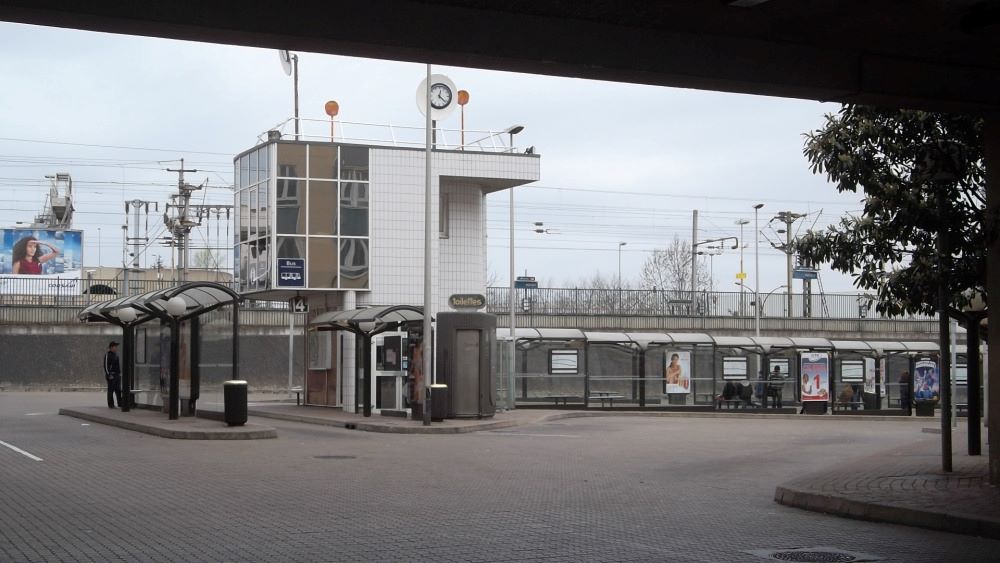
Some of the future development and ongoing are : Phase 1 connecting Saint-Cyr RER to Saint-Germain RER, declared of public utility in February 2014 and whose work has started. With the extension of the T13 tram line from Saint-Germain-en-Laye (Lisière Pereire) to Achères, via Poissy, you will be able to travel easily and quickly from the north to the south of the Yvelines department and access new connections with the existing transport network. The Eole project is scheduled to take place over several years to ensure the continuity of service on line J from 2017 to 2026. In 2027, the new line E will replace the current line J between Paris and Mantes via Poissy. The future Gare de Poissy train station will have to increase the attractiveness of the district thanks to the modernization of the services offered ,redefine and secure access and connections, reorganize the operation of the two bus stations. Whatever the preferred scenario, the project will be commissioned at the same time as the Eole RER, by 2028.
The reconfiguration of the crossroads D190 and D30 (Carrefour Pigozzi) is part of the objectives of the Yvelines transports renovations, The project of new connection with the Seine crossing between the D30 and the D190 (Pont d’Achères) and that of requalification of the D190 with insertion of public transport on a site specific to Carrières-sous-Poissy and Triel-sur-Seine, The Boulevard Robespierre to Boulevard de la Paix will be one way (from Place de l’Europe to Maisons- Laffitte). A path to the misinterpretation will be reserved for buses to avoid taking the Boulevard de l’Europe. The rue Maxime-Laubeuf will be reconfigured with three lanes: two tracks south, one track to the north. A direct link to the D190 will be created in the direction of Carrières-sous-Poissy.The rue du Port and rue du Bac will be put in double ways. The crossroads between these two streets will be regulated by tricolor lights. The crossroads between rue de la Gare and the cours du 14 Juillet will be changed. On rue de la Gare, the track from the south will be doubled over a hundred meters to better sell traffic at night time. Lots of renovation and construction I wonder if I will recognise it when back!
You have things to see here such as The Collegiale Church of Notre Dame (St Louis was baptized here ) a roman Church style from the 12C; the old bridge of Poissy first built in the 12C destroyed by English bombings in 1944; was a bridge of 410 meters long and 24 arches , now only three arches remain linking the left bank of the Seine river to an isle in the middle of the Seine river; it has been replaced by a new bridge just 300 meters next to it. The prairie Porterie is what is left of the old abbey of the Dominicans where the colloquial of Poissy was held, been founded by king Philippe le Bel in the 13C and destroyed in the 18C including the priory Church of Saint Louis. It is now housing the museum of toys or musée du jouet (very nice indeed) . The city hall or Hôtel de Ville is the old Cistercian convent dating from 1620 that was changed to a school in 1837; a new building was done in 1937 including a theater. The Pavillon de L’Octroi is an octagonal tower built in 1830 replacing the old gate of Paris and now the tourist office . The nearby Villa « Les Heures Claires », or aka as Villa Savoye work of architect Charles-Édouard Jeanneret aka as Le Corbusier built between 1928 and 1931; the wonderful distillery of the liquor of Noyau de Poissy, with a store at the rue du Général-de-Gaulle. The old slaughterhouse of the Halle aux Veaux built in 1831 in the now place de la République, stop been used as such in 1870;now it is the host of a wonderful market inside and outside there.
The city hall or Hôtel de ville at rue de la Gare was an old convent of the Capuchins dating from 1620 transformed into city hall/school in 1837. A new city hall was done opening in 1937 with the innovation of integrating a theater. It ,also, has a nice marché Beauregard or market day and a pretty riverfront (Seine) scene of music jazz and restaurant on a peniche boat. La villa Savoye and the parc Chateau de Villiers are good too the park is just across from the Seine river. The Chateau de Villiers of Louis XIII style built with stone and brick in the 19C now houses since 1976 an events center; the Chateau de la Coudraie built in 1870, on rue de Migneaux, and housed personnel of the auto brand Simca in 1962. The Chateau de Bethemont modified in 1858 is today a golf park . The chapel of Saint Lazarus de la Maladrerie dating from 1120-1140 , the tower or tour de Bethemont built in the 14-15C, damaged in 1429 while the reconquest by Jeanne d’Arc and taken again by the English who made it without further use. The wonderful park or parc Meissonier 12 hectares along the Seine river and the avenue du Bon Roi Saint-Louis (road D 153). It has English style garden with a lake , a rosary, theater and green house owned by the city since 1952 and renovated a part of the old abbey cloister. The parc de Villard next to the parc Meissonier and owned by the city since 1976 includes a castle, playground park and mini farm. Lovely town I tell you ; it must be seen more !
For the lovers of nature, walkers, bike riders etc the city is squeeze between two wonderful and historical forests. The forest Domaniale of Saint Germain en Laye to the west and the Forest Domaniale of Marly le Roi to the south. It is ,of course, at the confluent of the Seine river with three islands that of Migneaux ,the Grand Motteau and of Blanc. You can even arrange a boat ride at the harbor or Rue du Port, rive gauche right by the old bridge ; the existence of which is not sure but have found written document of the existence of a wooden bridge going back to 1162! the bridge was 400 meters long over the Seine river from Poissy to the town of Carrières-sous-Poissy , of this bridge only is left about 6 arches but only about 330 meters away from the new bridge and 570 meters from the bridge of the island of Migneaux that links it to the city. In all a very nice town for a walk to see the beautiful buildings and lively life not to mention home to the manufacturer of PSA Peugeot automobiles.
A bit of the history I like tell us that from the time of the Gauls ,Poissy was a modest town of farmers and fishermen on the limit of the territory of the Carnutes or Chartres (Carnutum). They have discovered some tombs on the street of rue de l’Église when doing work that is from that period. On the Roman times, Poissy was one of the crossing points of the Seine river. Recently, they have found evidence of Antiquity or the Middle Ages by the area of the Royal Priory. Under the Merovingians, Poissy, was called Pinciacum, and the territory extended to the north of the Seine river to the limit with the forest of Yvelines all including the valley of the Mauldre. Under the Capétiens, there was already a castle here and the first one old castle next to the collegiate Church was on a site of a hunting meeting place of the Mérovingiens. The second or new castle was built probably by Constance d’Arles, 3rd wife of king Robert II the Fair, and was at the enclos of the abbey next to the old castle. In 1200, king Philippe-Auguste gives this castle to his son Louis VIII on the occasion of his marriage to Blanche of Castile. Saint Louis was born here in 1214, probably in the castle and was baptised in the parish Church of Notre Dame(see post), later he signed private letters as Louis de Poissy or Louis, lord of Poissy to remember his baptism here. In 1297, the Pope Boniface VIII does the canonisation for Saint Louis here. The king Philippe le Bel, founded an abbey of Dominicans here in honor of Saint Louis that was his grandfather.
In 1245, is born here Philippe III le Hardi, son of king Louis IX , and Marguerite de Provence , and he ruled from 1270 to 1285. During the War of Hundred Years in 1346 the king of England , Edward III pillage and burn the city after landing in Normandy and coming along the Valley of the Seine, and defeat king Philippe VI de Valois at Crécy before his capture at Calais. In 1369, king Charles V ordered destroyed what was left of the castle of Poissy, that was burned in 1346 by the Black Prince son of the king of England. In 1429, the troops of Joanne of Arc takes the tower or tour de Béthemont aux Godons. Poissy is again occupied in 1441 by John Talbot and the English and again pillage the town and the abbey. It is at Poissy in 1561 that the colloquial of Poissy takes place. This was organized by Catherine de Médicis, to meet Catholics and Protestants held on the refectory room after been restored from the pillages of John Talbot. The failure of the effort of reconciliation gave light to the Wars of Religion. Here in 1567, took place the Battle of Poissy between Calvinists (led by the Prince Condé) and Catholics.
In December 12/13 1840, the flotilla of transports carrying the rests of Emperor Napoléon Ier made a stop at Poissy and a ceremony was held the Sunday December 13. An interesting anecdote, worth mentioning even if no longer there. There was a live animal market here very important in the region, on the route Paris to Rouen to provide beef to Paris. It was the right to trade given by king Louis IX in 1245 and the names of some streets tells you of the activity that was here such as rue de la Triperie (tripes) , rue des Moutons (lambs), rue du Bœuf couronné (beef), ruelle aux Vaches (cows). This concentration of animals also needed great expanse of land that was to be built on it . In 1867, the live animal market of Poissy, was cancelled and transferred to the new market at Villette in Paris on that year. During the Franco Prussian war of 1870, the town was occupied for several months in 1870/71. The bridge was mined to slow down the Prussian advance arriving from Saint Germain en Laye; the town was submitted to requisitions and needed to maintained a regiment of cavalry and their horses. During WWI, Poissy was in the field of tranches from Paris and many fortified works were done in town, the town hosted two military hospitals for the battlefront wounded. From 1928 to 1931 the architect Charles-Édouard Jeanneret dit Le Corbusier built the villa Les Heures claires better known as the Villa Savoye. IT was damaged during WWII and taken by the city in 1958 that wanted demolished. A campaign was done with the intervention of d’André Malraux ,then Minister of Culture to save the villa,and of course it was succesful. In 2016, a convention between the town of Poissy and the Fondation Le Corbusier was signed to open the museum Le Corbusier. During WWII the town was again occupied by the Nazis from 1940 to 1944. The town of Poissy is liberated by the American army in August 26 1944.
The City of Poissy on its train lines : https://www.ville-poissy.fr/index.php/vivre-a-poissy/urbanisme/mobilite/les-trains.html
The Transilien regional transports of Île de France on Poissy: https://www.transilien.com/fr/gare/poissy-8738657
The official RER Eole project at Poissy : https://www.rer-eole.fr/categorie/travaux/gare/poissy/
The taxi stand facing the gare or train station at rue Jean-Claude Mary Poissy: https://www.les-taxis-de-poissy.fr/
The city of Poissy on car parkings and regulations: https://www.ville-poissy.fr/index.php/vivre-a-poissy/urbanisme/mobilite/les-parkings.html
The city of Poissy on its heritage: https://www.ville-poissy.fr/index.php/sport-culture/vie-culturelle/patrimoine.html
The local Terre en Seine tourist office on Poissy: https://www.terres-de-seine.fr/?s=poissy
The Île de France region tourist office on Poissy : https://www.visitparisregion.com/en/discover-paris-region?search=poissy&page=0
There you go folks, a wonderful town of Poissy on a fantastic region of the beautiful France, not to be missed . Its a Royal Town of France, and it shows all phases of it up to now. See it and enjoy it as soon all will change. Again, hope you enjoy this post on this is Poissy !!! as I
And remember, happy travels, good health, and many cheers to all !!!


