
I am taking you back to the north of my quant beautiful Dinan; located in the Côtes d’Armor dept 22 of my lovely region of Bretagne,and in my belle France, It is an area worth seeing indeed, and one reason is very popular to visitors of Brittany. As said, have written several posts on Dinan, but this time will tell you more of one monument that needs special attention for a visit. Therefore, here is my take on the Church Saint Malo of Dinan !!! Hope you enjoy the post as I,
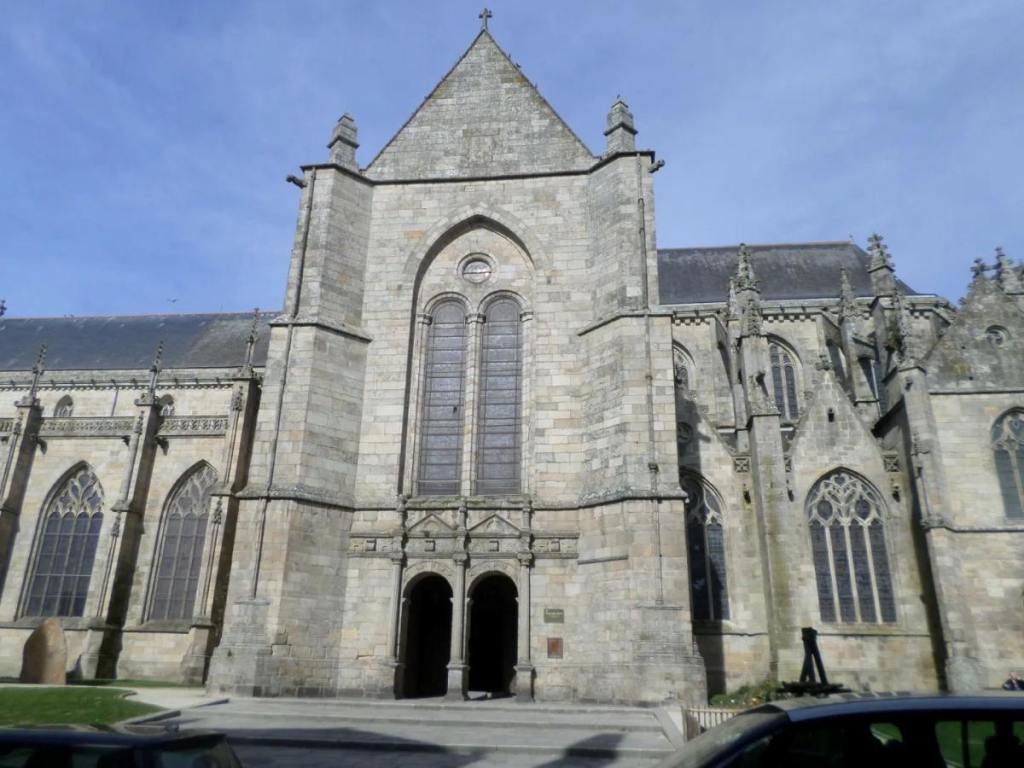
The Church of Saint-Malo is from the 15C. It is representative of the flamboyant Gothic in Brittany. The Church dimensions are 76.50 meters long by 44.10 meters wide. It is quite imposing size, has a small steeple 40 meters, which is in fact only a four-pans roof with some small giblets. Originally, the church had to have a granite arrow, of which we can see the bases from each angle of the roof. It should have been consistent, given the size of the four pillars of the transept, each having a diameter of three meters. The first Church of Saint-Malo was located outside the walls at the site of the present Chapelle Saint-Joachim at boulevard Flaud, this first church depended on the Priory Saint-Malo founded in 1066 by Olivier, Viscount of Dinan. In 1488, the French army threatened Brittany, Duke Francis II fearing the capture of Dinan ordered the destruction of the first Church of Saint-Malo, in order to prevent the French army of Charles VIII from using it as a fulcrum to attack the city. He agreed to finance a new Church on the condition that it be rebuilt intra-muros. In 1508, the financing of the church was taken over by Duchess Anne and then by King Louis XII. These gifts added to those of the congregation of Saint-Malo, allow to complete the choir , a sanctuary covered with a wooden vault, ambulatory and chapels, the walls of the transept and the central vessel of the nave. The steeple without its arrow were built in 1517. The north chapels would not have been built until the mid-16C.
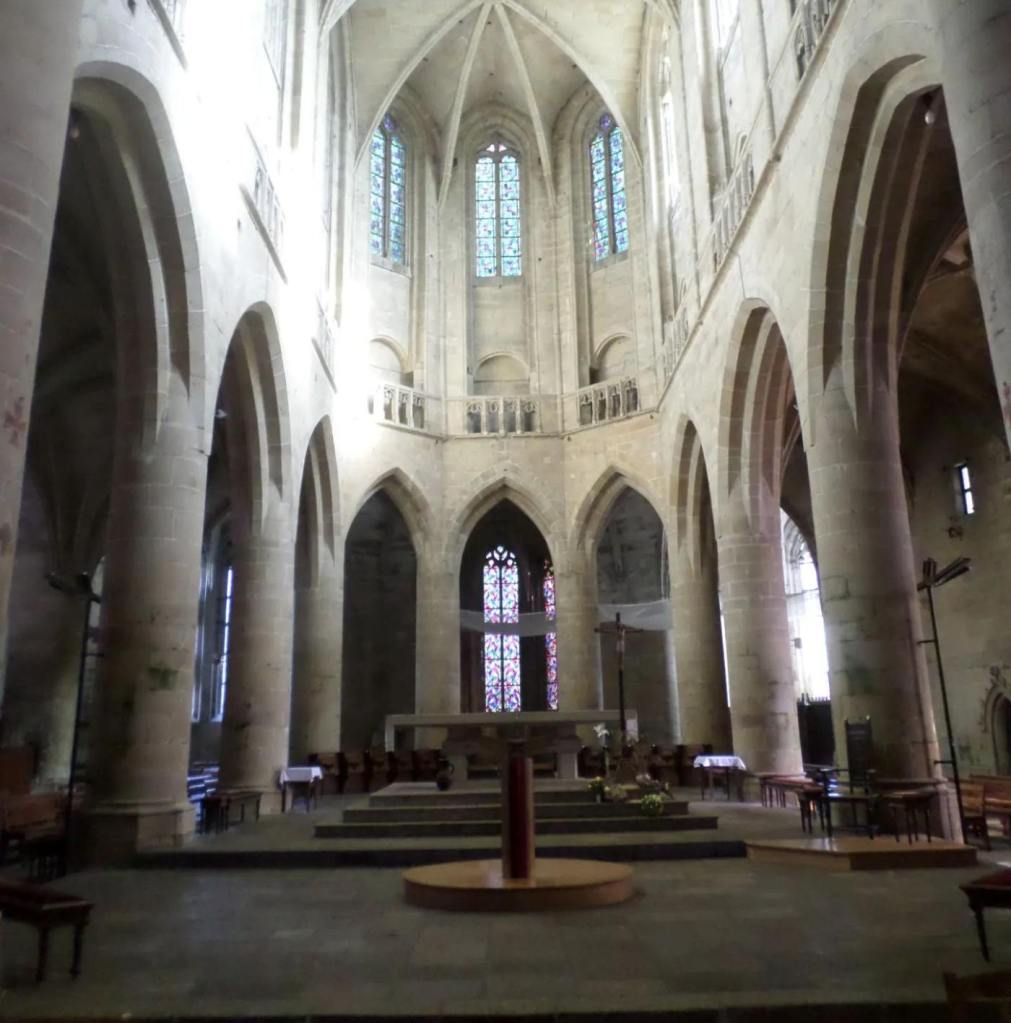
Three chapels occupy the apse and four the north ambulatory, the last one contains the door overlooking the staircase leading to the steeple. Each chapel has splashback . The key located in front of the axial chapel of the apse represents the seven deadly sins, this representation could relate to the conflict between Jean II of Rohan, founder of the Church of Saint Malo and the Duke of Brittany. If one observes the scene well, one can notice that the devil having the hand on the mouth of the character tortured possesses a ducal crown, it could be the Duke of Brittany preventing Jean II de Rohan from expressing himself.
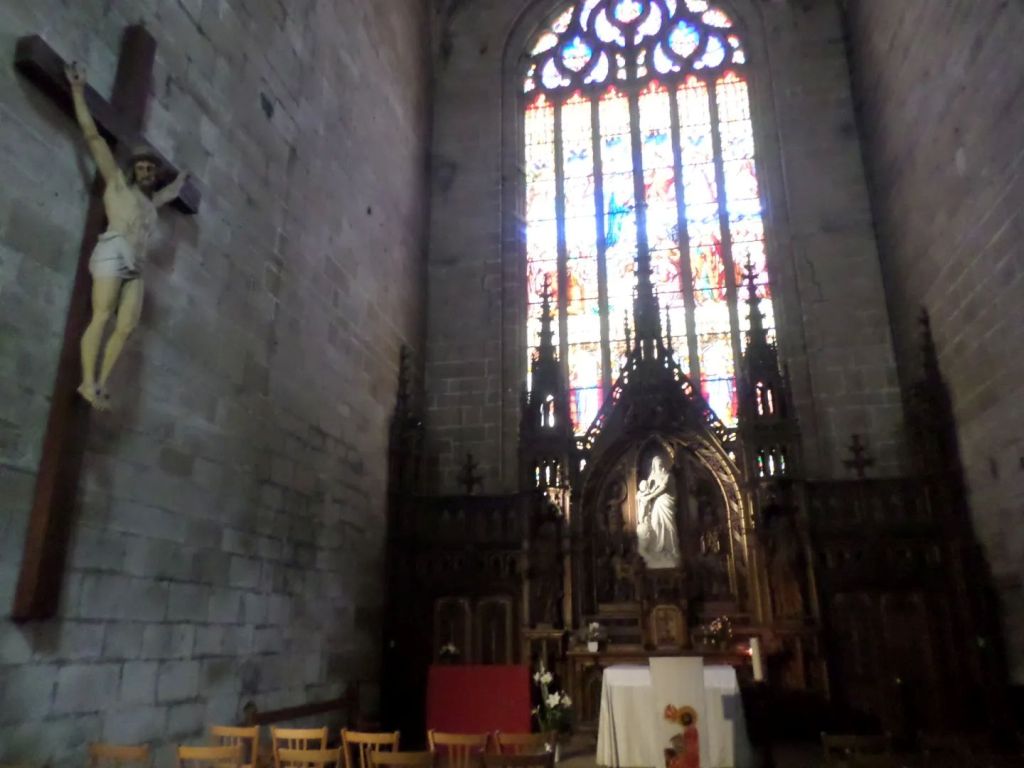
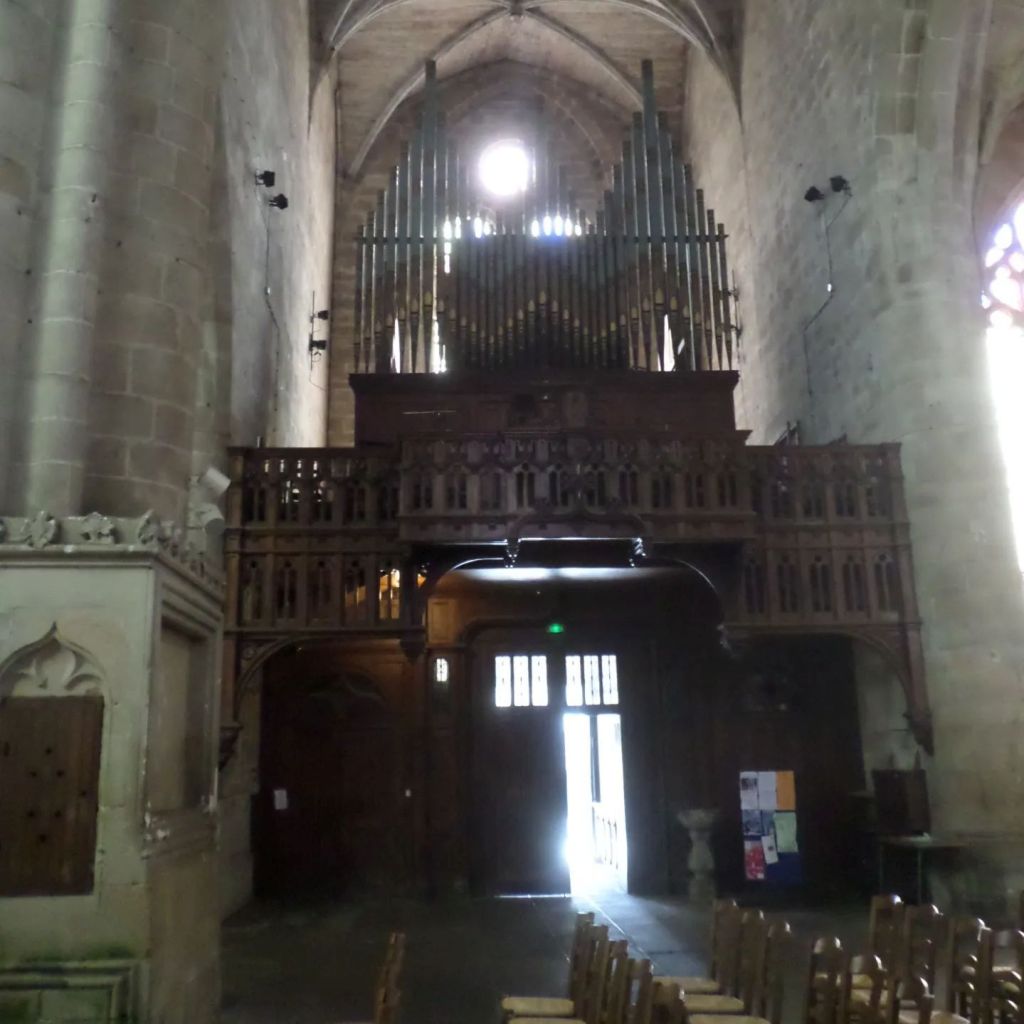
Set up after the completion of the nave in 1865, the stained glass windows of the choir, the transept and the chapels of the nave were laid during the late 19C, those of the aisles of the nave, during the first half of the 20C, then the stained-glass windows of the axial chapel were renovated at the beginning of the second half of the 20C. The Church Saint Malo has two organs: the Grand organ, built in 1889, of English built, it has three keyboards of 56 notes and a pedal of 30 notes., just like the carved chestnut tribune, which is located in the south transept. A second organ, formerly owned by a Polish pianist, Henri Kowalski, serves as a choir organ. It is in a chapel in the northeast of the altar.

A bit of history I like tell us that the first Church of Saint-Malo was located outside the walls at the site of the present Chapelle Saint-Joachim at boulevard Flaud, this first church depended on the Priory Saint-Malo founded in 1066 by Olivier, Viscount of Dinan. In 1488, the French army threatened Brittany, Duke Francis II fearing the capture of Dinan ordered the destruction of the first Church of Saint-Malo, in order to prevent the French army of Charles VIII from using it as a fulcrum to attack the city. He agreed to finance a new Church on the condition that it be rebuilt intra-muros. At the end of July 1488, after the Breton defeat of the Battle of Saint Aubin du Cormier, the French army commanded by Louis de la Trémoille began the siege of Dinan, the city capitulated quickly and in August 1488 Jean II of Rohan, first Baron of Brittany but ally of France, took control of the city. There he will remain the captain from 1488 to 1516.
The choice of this Flamboyant Gothic architecture could have been imposed by Jean II of Rohan, churches with the same type of architecture are indeed distributed in its possessions in other regions of Brittany. The laying of the first stone takes place in May 1490 with part of the materials recovered from the site of the old church of Saint-Malo (present-day Chapel of Saint-Joachim), of which there will remain only part of the nave, the complement is provided by Querignan granite. In 1508, the financing of the church was taken over by Duchess Anne and then by King Louis XII. These gifts added to those of the congregation of Saint-Malo, allow to complete the choir , a sanctuary covered with a wooden vault, ambulatory and chapels, the walls of the transept and the central vessel of the nave. The steeple without its arrow were built in 1517. The north chapels would not have been built until the mid-16C. At the end of the 16C, the heirs of Jean II of Rohan became Protestants, Henri II de Rohan then ceded his right in the axial chapel of the church to the steward Raoul Marot des Alleux, he was built a mausoleum in white marble in the form of a sarcophagus of the first half of the 17C. The triumphant porch on the Grand ‘ Rue ,southern entrance of the transept was erected between 1613 and 1630.
During the French revolution, the Church of Saint Malo was no longer dedicated to worship, it served as a wheat market, stable, theater, and barracks. Most of the noble marks present in the Church are hammered according to the guidelines of the Convention, the mausoleum of the steward Marot des Alleux was destroyed in 1795 (five fragments are known: two were reused as fronts of altars- Chapel in the Church of Saint-Malo and Chapelle Saint Joachim-Two are stored at the museum and the last one is used in siding in a chapel of the Basilica of Saint Sauveur). Throughout the revolutionary period, the church degrades, the roof of the nave pours the rainwater into the nave, the two chapels which had been built at both angles of the transept and nave threaten to fall into ruins, the Ivy invaded the pinnacles and the gargoyles, the windows were clogged in the places where the stained glass was broken. The Church is returned to worship in 1803.
The local Dinan-Cap Fréhel tourist office on Dinan: https://www.dinan-capfrehel.com/en/our-essentials/dinan-medieval-city-brittany/
The Bretagne region tourist office on Dinan: https://www.brittanytourism.com/destinations/the-10-destinations/cap-frehel-saint-malo-mont-saint-michel-bay/dinan/
The city of Dinan on the religious monuments: https://www.dinan.fr/mes-loisirs/culture-et-patrimoine/le-patrimoine/les-sites-historiques/les-edifices-religieux/
There you go folks, as you have read my previous posts on Dinan, the sights are endless, the beauty is out of this world,and I encourage you to come over and see it first hand. Lots of history, architecture here. Again, hope you enjoy this post on the Church Saint Malo of Dinan !!! as I.
And remember, happy travels, good health, and many cheers to all !!!


