
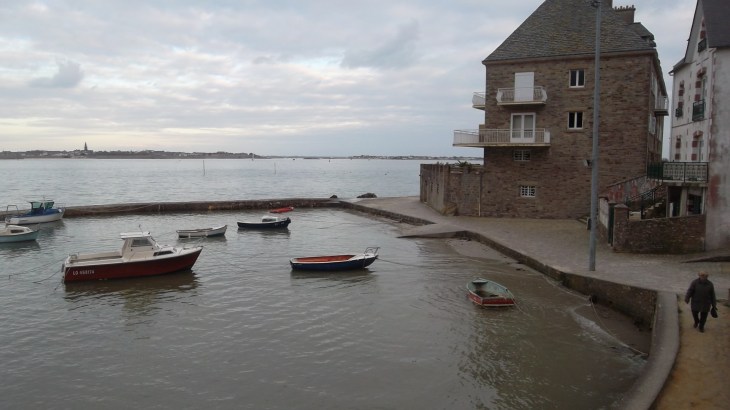
The town of Larmor-Plage is located on the west bank of the entrance to the harbor of Lorient which marks the confluence of the Blavet and Scorff rivers, it faces the island of Groix and the Atlantic Ocean. The territory of the town extends inside the harbor of Lorient, allowing a view on the peninsula of Gâvres, the Citadel of Port-Louis and Lorient (see posts). Of course all this to tell you it is in my beautiful Morbihan and lovely Bretagne in my belle France, I again found me older pics not in my blog and they should, Therefore, here are my curiosities of Larmor Plage, part I !!! Hope you enjoy the post as I.
The territory of the town extends inside the harbor of Lorient, allowing a view on the peninsula of Gâvres, the Citadel of Port-Louis and Lorient (see posts) . The coastline is rich and varied, alternating rocky coast, sandy beaches such as port Maria, and Toulhars etc., dune cordon with its marshes at Anse de Kerguelen, and Parc Océanique, the coastal urban area with its ancient and contemporary villas, the village center surrounded by the Notre Dame de Larmor-Plage Church (see post) and its Tower fortified steeple that responded to the salutation of the naval ships passing through the access channel of the harbor by a flock of bells. Larmor-Plage is a seaside resort, adopted by tourists and local walkers for its beaches, its Marina, its restaurants in the village, on the port, and along the promenade of port Maria, its traditional market on the place du Bourg on Sunday mornings and its promenades with a view on the island of Groix and the harbor of Lorient.
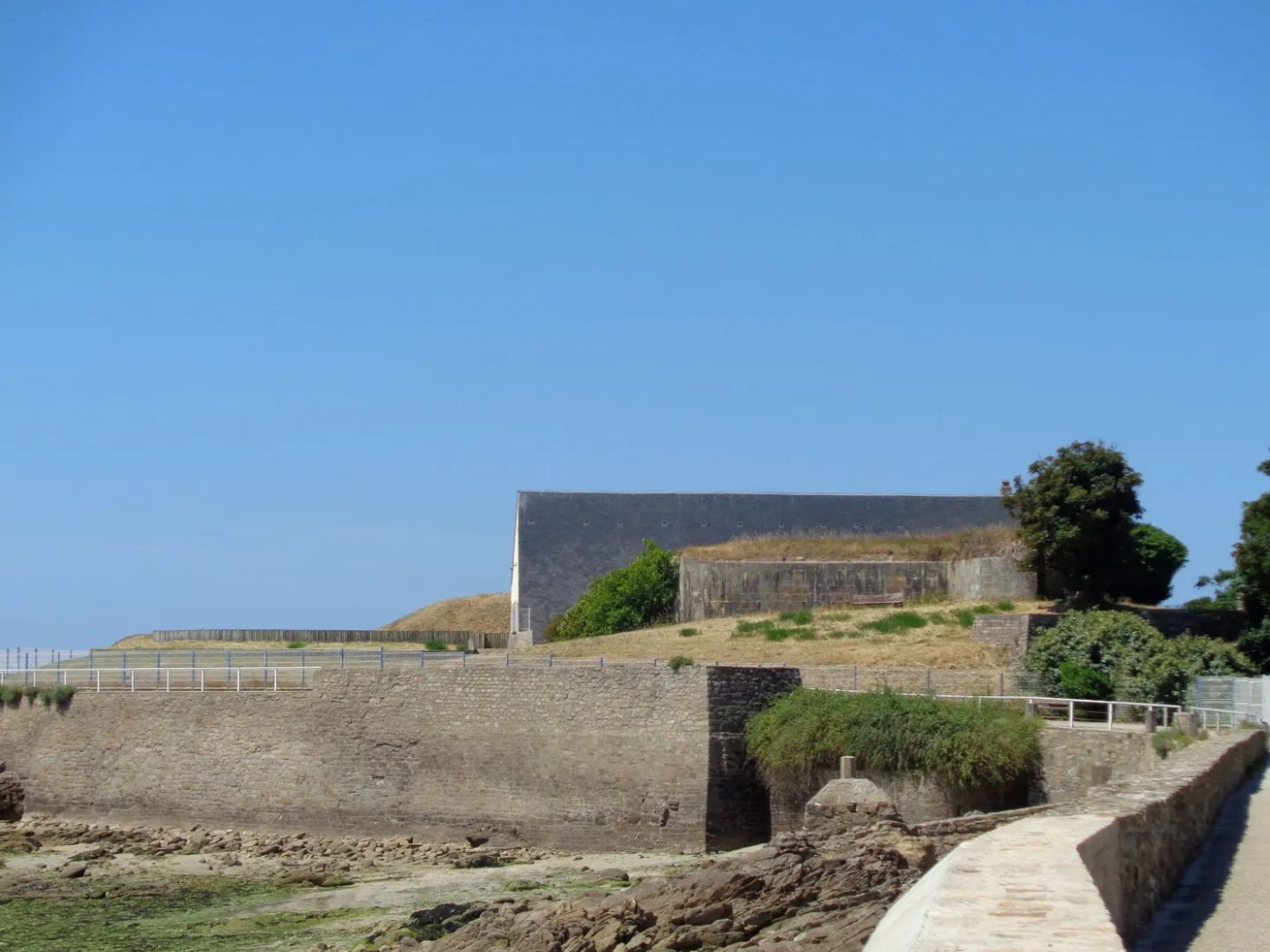
This fort is situated on the coast, south of the town of Larmor-Plage, between Port-Maria beach to the east and Kerguélen beach to the west. In the 18C, the site appeared as a bastioned fort featuring a thin, crenellated parapet. On the landward side, two bastions projected outward to defend the entrance to the enclosure. An earthen rampart surrounded the site. The guardhouse, originally built in 1848, was reconstructed in 1881 and equipped with four cannons. In June 1940, the fort housed two cannons; two years later, the Todt Organization constructed concrete gun emplacements and casemates to house new artillery pieces intended to defend the approach to the port of Lorient. Nazis naval artillerymen stationed there from 1940 onwards made no changes until 1942. During this period, the Kriegsmarine’s coastal artillery manned three batteries for the defense of Lorient, in addition to two heavy installations at Fort-du-Talut and on the island of Groix. Along with the batteries at Gâvres and Île Saint-Michel, the Locqueltas battery was equipped with six cannons. Today, the Locqueltas fort is located on French Navy military land, though part of the battery lies within the grounds of a campsite. The Locqueltas battery is now consisting of four concrete bunkers: two inside the fort and two others outside. Today, the Locqueltas district has been urbanized around the military space. Bunkers have been transformed into theatres. Others serve as municipal sheds or house a nautical club or associations of amateur fishermen. A campsite has also been established partly on the old battery. Sitting at end of Port Maria beach and out from the Kasino.
The Kasino of Larmor Plage has 110 latest generation slot machines, Black Jack, Electronic English Roulette, Table games, Bar-Brasserie area with musical entertainment every weekend Restaurant le A, with a view of the ocean (Port Maria beach). Open 7 days a week from 10h to 03h (04h on Fridays, Saturdays and the day before public holidays).
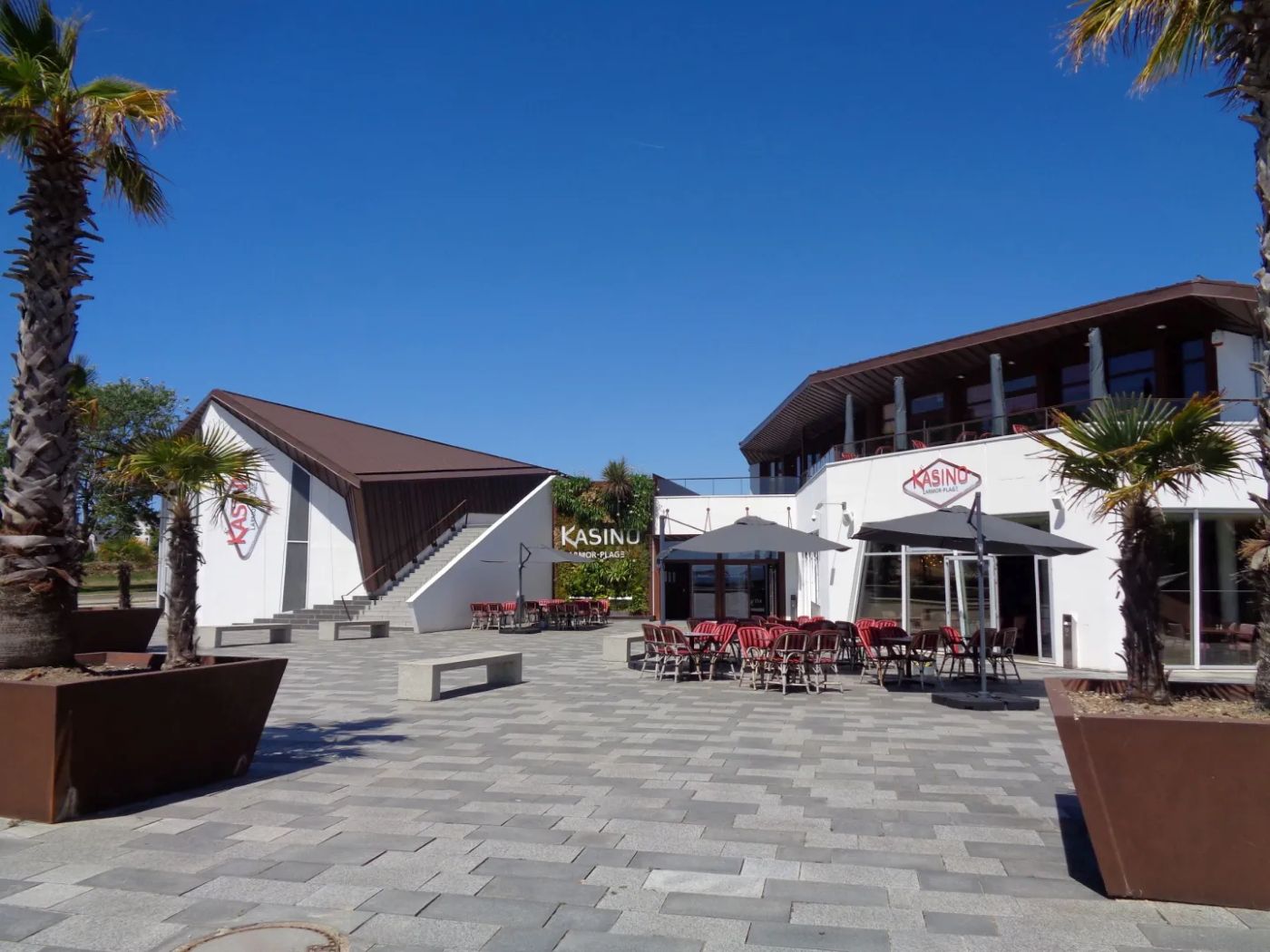
The city of Larmor Plage on the Kasino(casino) : https://www.larmor-plage.bzh/casino/
The Lafosse family carousel welcomes children on its wooden horses, a stone’s throw from the beach, every day of the week. This carousel, which is over 100 years old, has been restored after suffering damage during WWII. In the past, it was a horse harnessed inside that made it turn. Replaced by a gas generator, it now runs on electric power . Info open to children, from 11h to 12h30 and from 16h to 19h, every day until September.
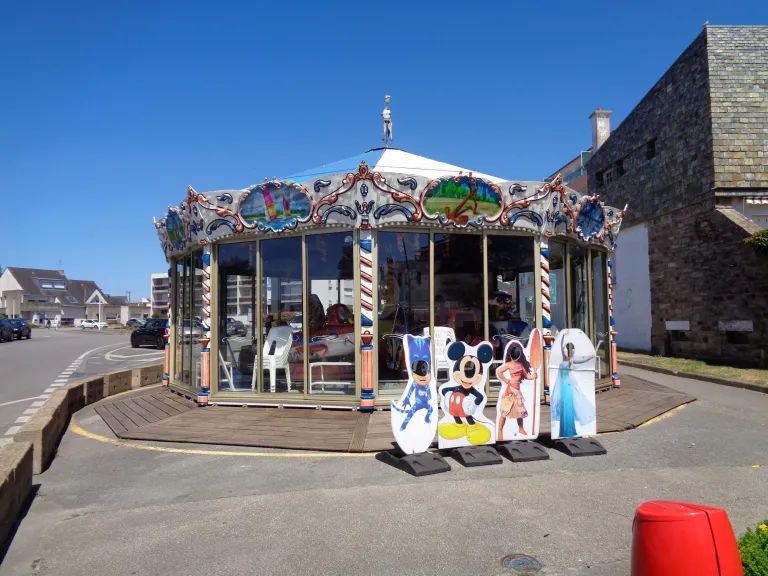
The city of Larmor Plage on the carrousel : https://www.larmor-plage.bzh/le-manege-de-larmor-plage/
The Notre-Dame fountain is located rue Beg-Tal-Men , on your way to the Church Notre Dame de Larmor (see post). A staircase gives access to the fountain which is against the bench of the path. The fountain is framed by low walls, the ossicle wall has a niche and a pediment. To its left is a kind of basin or stoup. Built in the 18C. Until the last war, some of these water points were still used as drinking water reservoirs, washing places or drinking troughs. On weekends, they served as a place of pilgrimage, walk, meeting. The main source of Larmor-Plage, Notre-Dame-de-la-Clarté, was considered the only source of healing water. Coins were thrown into it to restore sight and hope. Now , there is work going on to develop the paths to access the buildings around it.
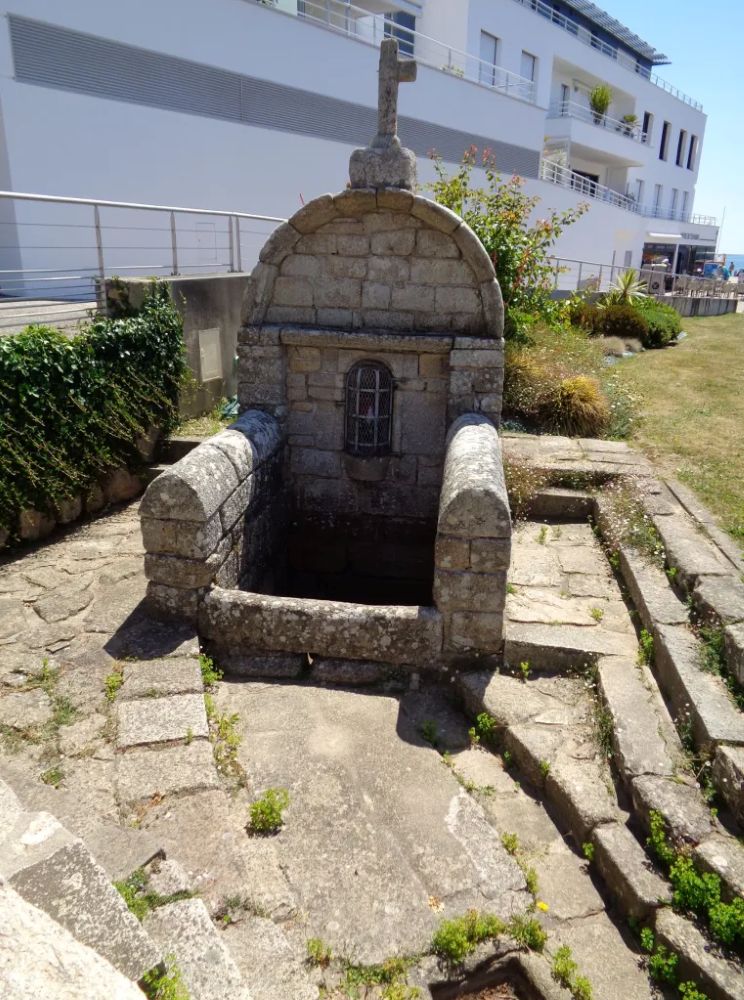
The city of Larmor Plage on fountains: https://www.larmor-plage.bzh/industriel/
The town of Larmor Plage on its other heritage : https://www.larmor-plage.bzh/listes/patrimoine/
The Lorient south Brittany tourist office on Larmor-Plage: https://www.lorientbretagnesudtourisme.fr/fr/immanquables/larmor-plage/
There you go folks ,another dandy spot,in my beautiful coastal Morbihan. You won’t go wrong in Larmor Plage along the coast not far from me! Again, hope you enjoy the curiosities of Larmor Plage, part I !!! as I.
And remember, happy travels, good health ,and many cheers to all !!!


