
And you can tell ,love the history of the places I go, not just for a pretty picture or nice walk but to know their history and meaning in our world. A complete world traveler and or road warrior indeed.None the least in my dear old home of Versailles,in the Yvelines dept 78 of the Île de France region of my belle France. Therefore, let me tell you again on the streets of Versailles, part III !!! Hope you enjoy the post as I.
I like to bring you back to my dear Versailles , memories forever, they were 9+ wonderful years spent in this marvelous royal city that we will remember forever. I have written plenty on it in my blog, but there is always more more of the City. This is from a new visit last week just love it !!!
The Avenue de Sceaux is a very much used traffic street in Versailles, one of the three streets which radiate in a fan from the place d’Armes, in front of the Palace/museum of Versailles, with the Avenue de Paris and the Avenue de Saint-Cloud. The Avenue de Sceaux borders some of m y favorite buildings in the city such as the Petite Écurie, Court of Scents, the Square des Francine, also called Louis XIV abreuvoir or watering place, at no. 10: Hôtel de la Marine et des Galères; and Jardin des étangs Gobert or pond garden of Gobert. You can, also, walk from the parking above on Avenue de Sceaux directly into the left hand side of the palace/museum or commonly call the Château de Versailles! The Avenue de Sceaux in the district of Saint-Louis created in 1710. A nice convenient parking is at the end, by the RER C train station.
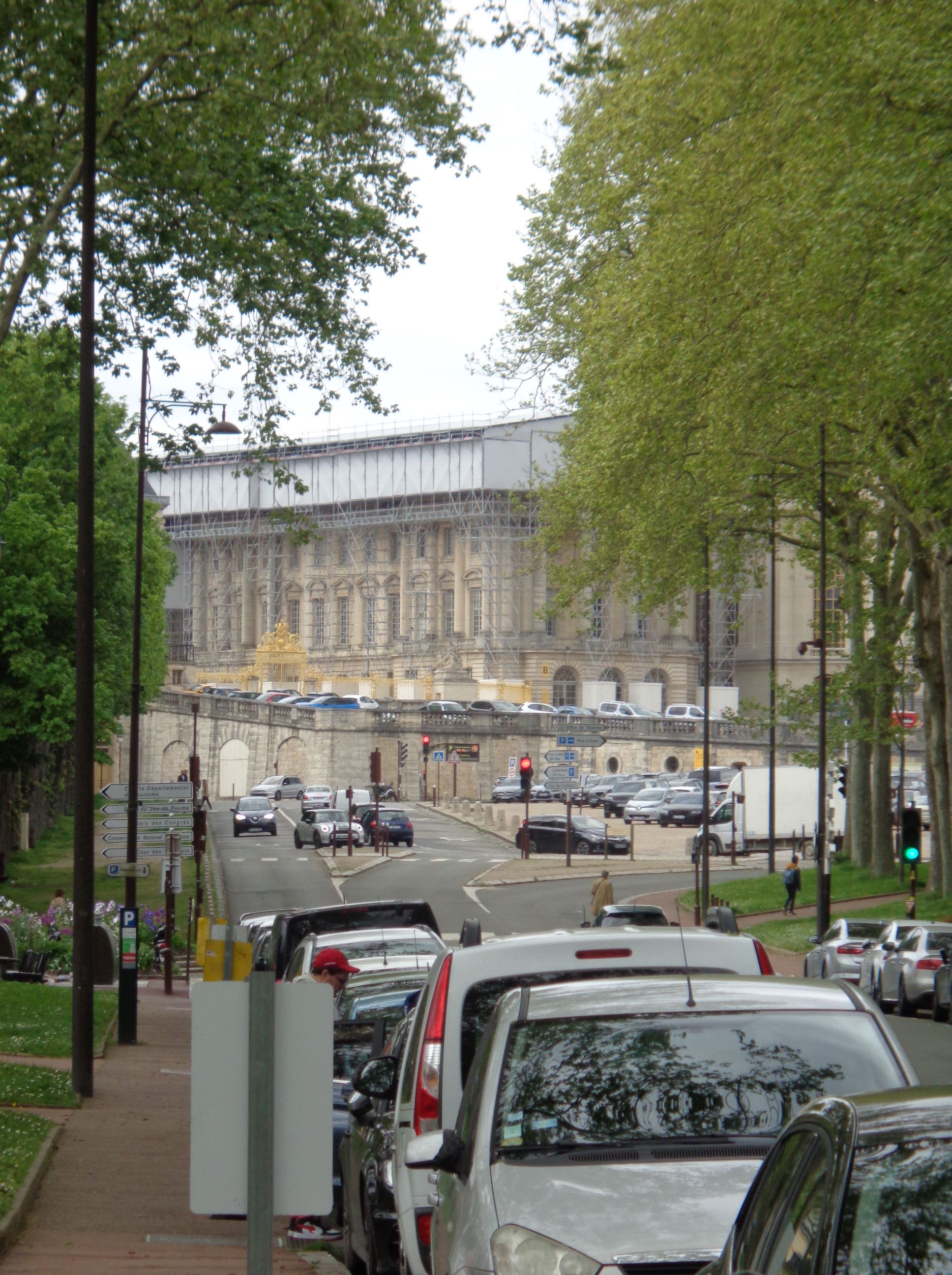
Avenue de Paris ,is the old royal road that connected the palace of Versailles with the palace of the Louvre in Paris, In fact as you go by car as I, you come into Versailles on the Avenue de Paris and come into Paris on the Avenue de Versailles ; the now D910 or D10 road !! The Avenue de Paris was created in 1682, the central axis of the Trident set up by Jules Hardouin-Mansart (avenues of Sceaux, Paris, Saint Cloud). One of the widest avenues of France at 97 meters. Many nice monuments to see on it see posts,
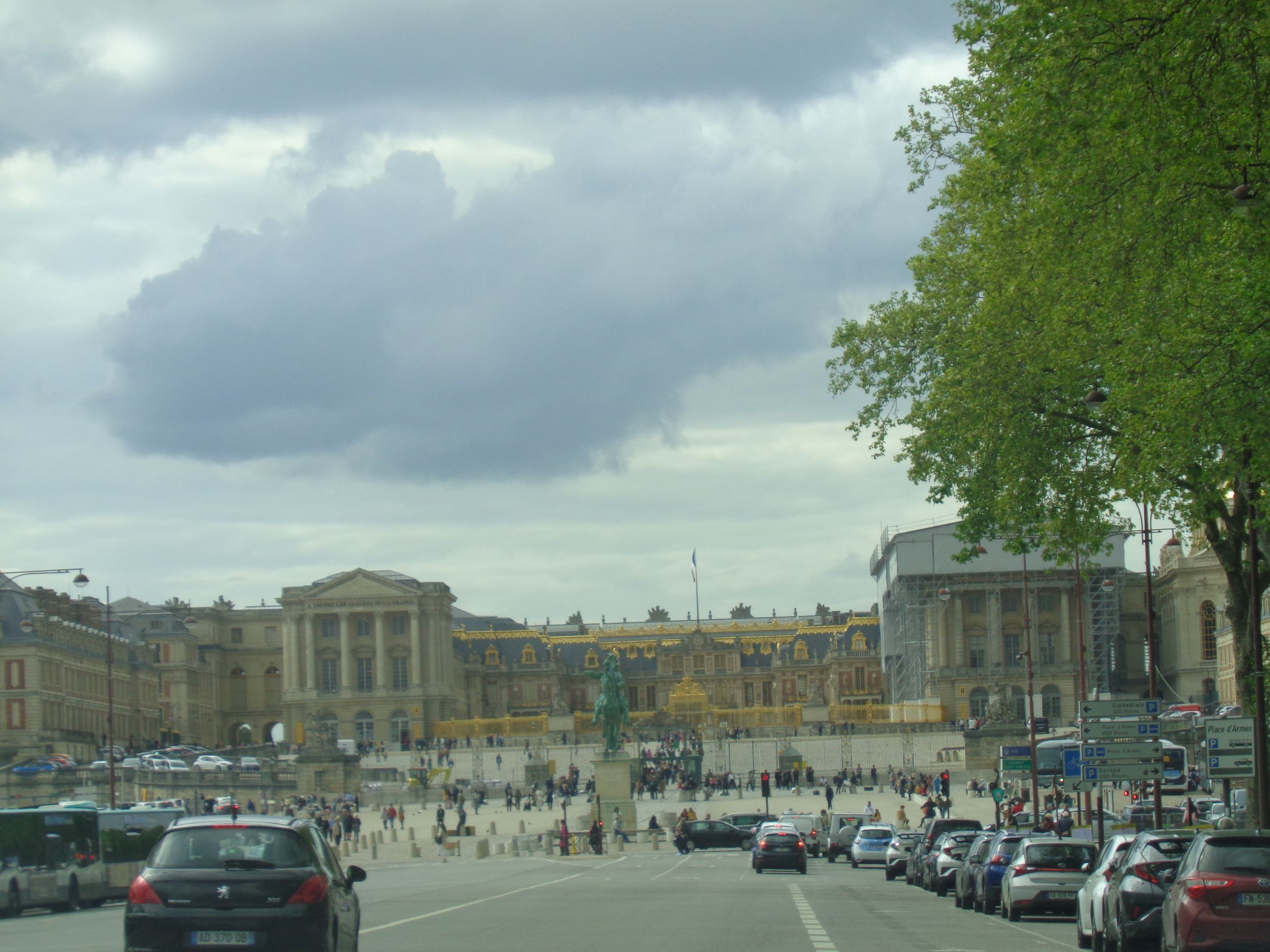
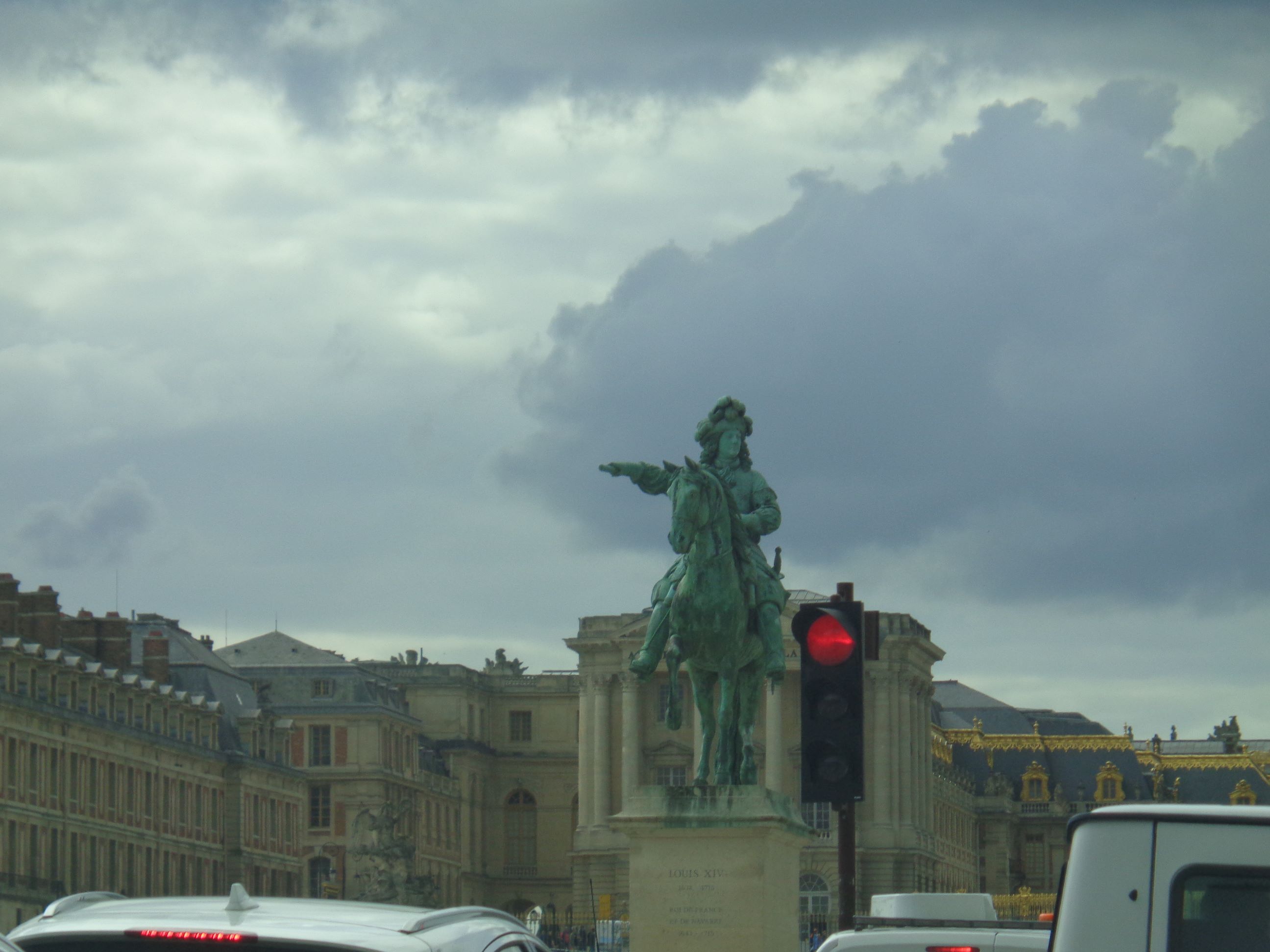
The Place d’Armes located in front of the Palace of Versailles. It is about 300 meters long and 150 meters wide. On its side opposite the castle, three lanes radiate the avenue de Saint-Cloud; the avenue de Paris, and the avenue de Sceaux. In 1660, when Louis XIV decided to extend his palace ,it was decided to level and to enlarge the Place d’Armes and radiate from it three wide avenues planted with trees. The Place d’Armes borders the following buildings: the Château de Versailles where the Grille d’Honneur separates it from the Cour d’Honneur; the Grande Ecurie, and the Petite Ecurie. Since 2009, the square has also been home to the equestrian statue of Louis XIV, which previously stood in the Cour d’Honneur.
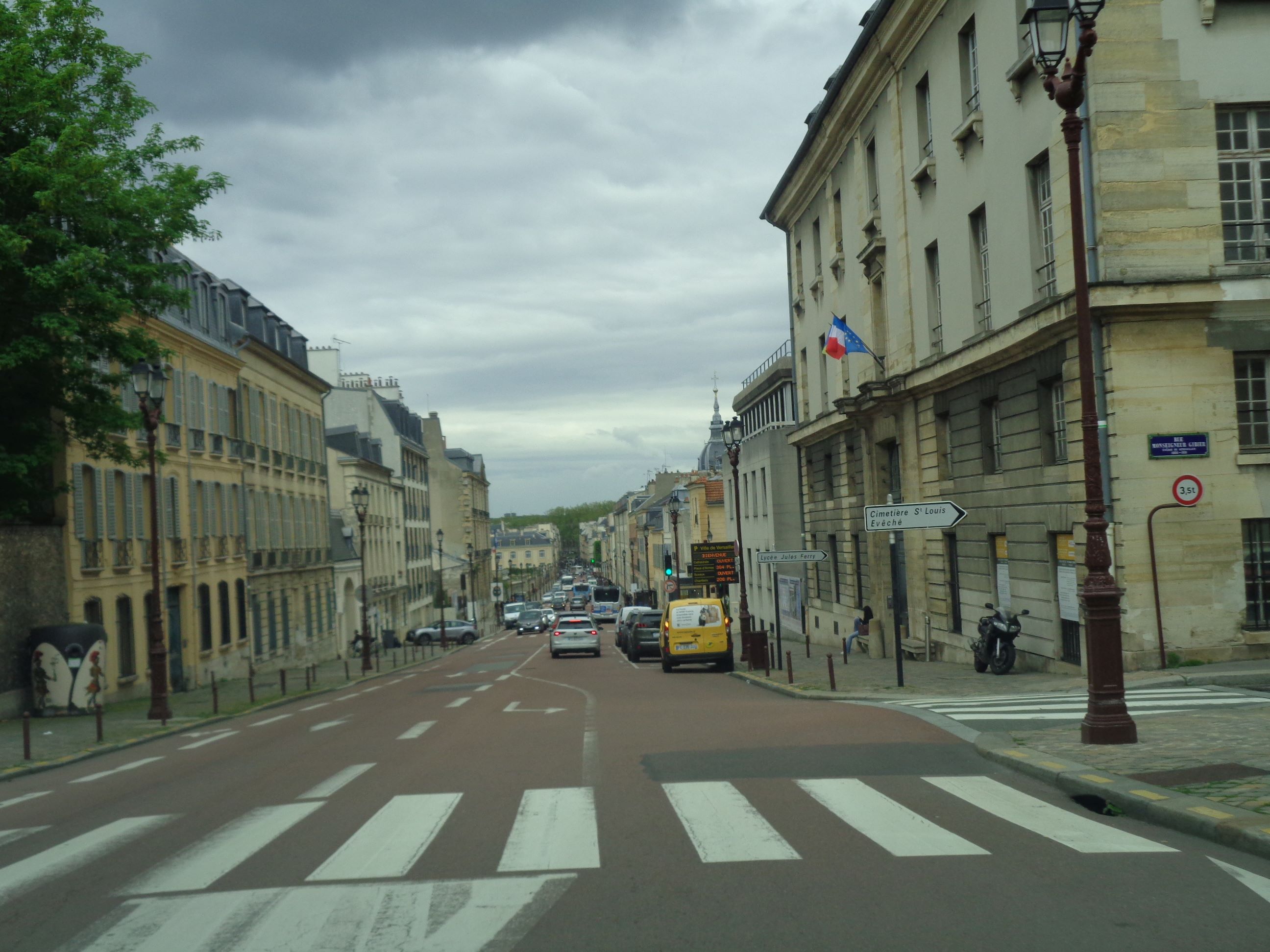
The Rue du Maréchal Joffre: Saint-Louis district. named in 1919. Old rue de Satory named after the hill it crosses to the south. Named after Joseph Joffre, Commander-in-Chief of the French Army from 1914 to 1916 during WWI. Notable buildings here are at No 1: Former restaurant of the Trois Marches (Gérard Vié moved to rue Colbert then to the Grand Trianon). No 2: Former small vegetable garden of the king (manure and seedlings), allotted in 1736. No 4: Lot attributed to Jean Loustonneau, surgeon of the Children of France, under Louis XV. Awarded in 1864-1869 to the chief medical officer of the military hospital. No 5: House where Mademoiselle de Romans died, one of the mistresses of Louis XV in 1808, from whom she had a recognized son Louis-Antoine de Bourbon. No 7: Home in 1789 for Isaac Le Chapelier, founder of the Breton club which met at the café Amaury, rue Carnot, and associated with the corporate prohibition law which bears his name and which was never applied. At No 10: Current entrance to the Potager du Roi which was created from 1678 to 1683 under the direction of Jean-Baptiste de la Quintinie. Former vegetable garden and orchard of Louis XIV and his successors. A neighborhood police station and housing for employees of the horticultural school were located at the corner of rue Hardy until the 1980s. The construction of craftsmen and traders along the wall of the vegetable garden was eliminated in 1853 and two gates open opposite the streets of Anjou and the Bourdonnais. Headquarters of the National Higher School of Horticulture from 1873 to 1995. Currently and since 1976 National Higher School of Landscape training landscape architects (State diploma in landscaping at the master’s level since 2015), and research master (Theories and approaches to the landscape project) since 2005. The Potager du Roi has been accessible to visitors since 1991 from April to October from Tuesday to Sunday from 10h to 18h, and from October to March on Tuesday and Thursday. (See post)
At No 12 Parc Balbi park. Former cul-de-sac in Satory giving access to the entrance to Balbi park. Named after the Countess de Balbi, Anne Jacobé de Caumont de la Force, for whom the Count of Provence, brother of Louis XVI and future Louis XVIII had the park and adjoining pavilion demolished by its owner Claude Cagnion, a merchant, in 1785 for wood, in 1797 In 1792, part of the rare plants was moved to the Jardin des Plantes in Paris. In 1842, the land was ceded to the State and to the neighboring Grand Seminary, which turned it into a park with statues and oratories. Then it was rented at the Collége Jules-Ferry (middle school) in 1907. That year a gate with a gate was opened between the park and the Potager du Roi. In 1907 its management was assigned to the School of Horticulture and, in 1986, in part to the city of Versailles as a neighborhood square. Since 2004, the cave and the pond have been open to visitors upon request to the National School of Landscape, which has managed the site since 1996, when the Horticultural School was transferred to Angers. (See post)
At No 13: Former dwelling of the family of the Marquis de Lalonde (mayor of Versailles until 1825) entrance to the Saint-Louis cemetery. Depended in 1990 on the college of the Sacred Heart. No 14: Former Hôtel Letellier before the French revolution, then Grand Séminaire in 1833, which became college Jules-Ferry school in 1907 after the Separation of the Church and the State, then Lycée Jules-Ferry (high school), extending in place of the old Denfert barracks across the street. No 15: Corner of rue des Bourdonnais. Cemetery from 1725 to 1776. Purchased in 1890 by the Versailles Provident Society. In 2015 collége Saint-Louis private school. No 19: Former hotel of Choiseul d’Aillecourt. Salon of the Countess of Écotais under the Restoration, then of an American diplomat between the two wars. No 21: In 1990 André-Mignot home for the elderly and inter-age university. No 24: Impasse Satory. A villa built from 1791 to 1804 with a view of the pièce d’eau des Suisses. Convent of Carmelites in 1900, then Grand Seminary in 1906 until 1972. Saint-Louis retirement home for elderly priests and some laymen since 1981 (EHPAD). No 29: Lycée Jules-Ferry (high school). Former hotel of the Duke de la Vrillière in 1772, which served as stables for the Comtesse d’Artois, younger sister of the Comtesse de Provence. They contained 28 cars and 7 sedan chairs. The building then became the Denfert cavalry and infantry barracks, and from 1981 the new Lycée Jules Ferry (high school) with the extension of the building on the other side of the avenue. No 30: Old ice house or coolers in the Satory area which operated until 1879 by the Société des Glacières de Paris. No 37: Land purchased by the Sisters of Hope in 1854; they built a chapel there, now disused, the entrance of which is on the street. Retirement home in 1990. No 39: former home of Jean Chavignat, the queen’s first surgeon and his wife née Simonet des Tournelles, the queen’s maid. No 40:
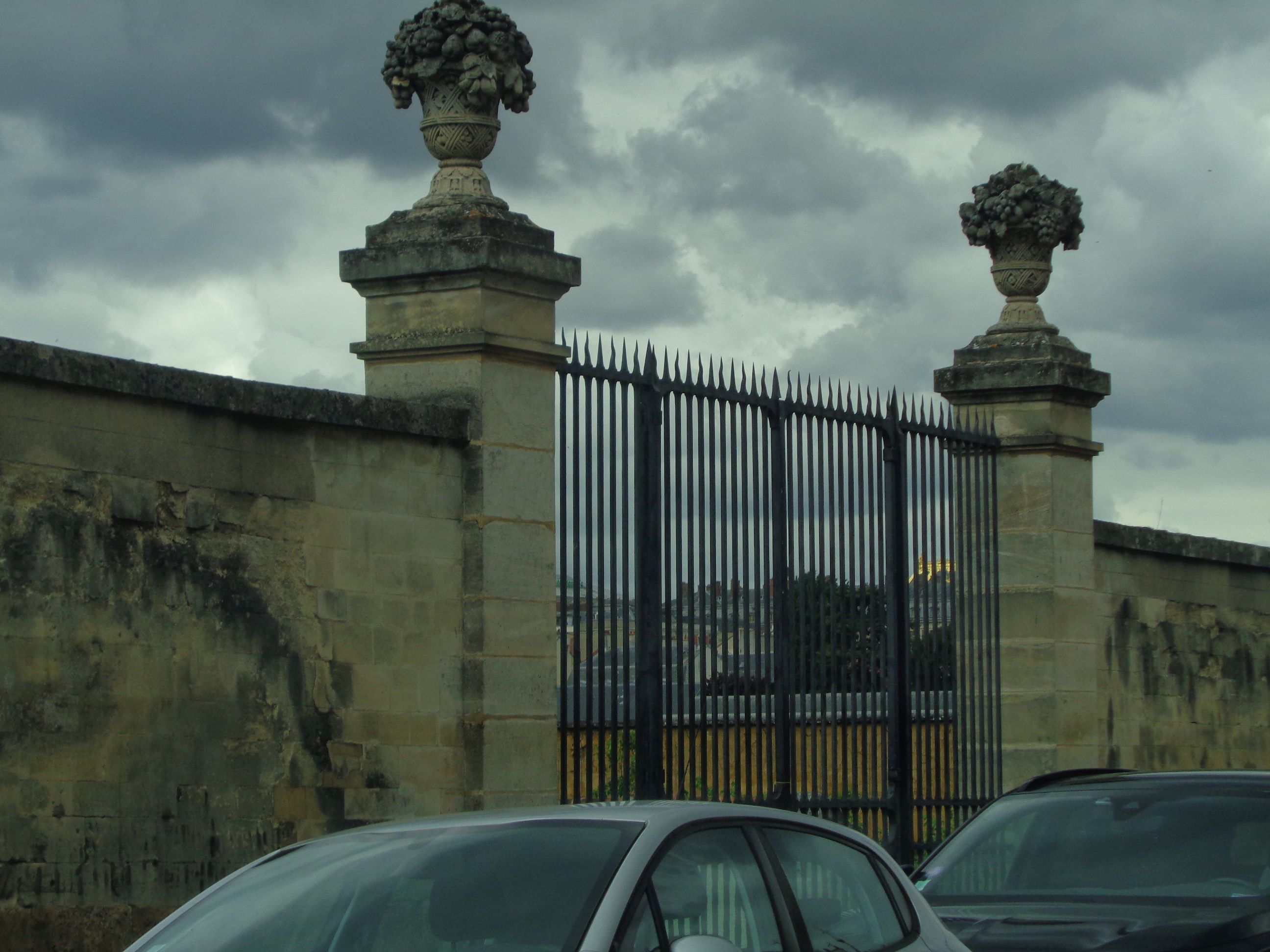
The Avenue Clément Ader is next to Camp de Satory ,i came this time by here passing an old reliable gas station BP, This street connects the Saint-Louis district and the Satory district, via a passage under the national 12 road coming from the A86,
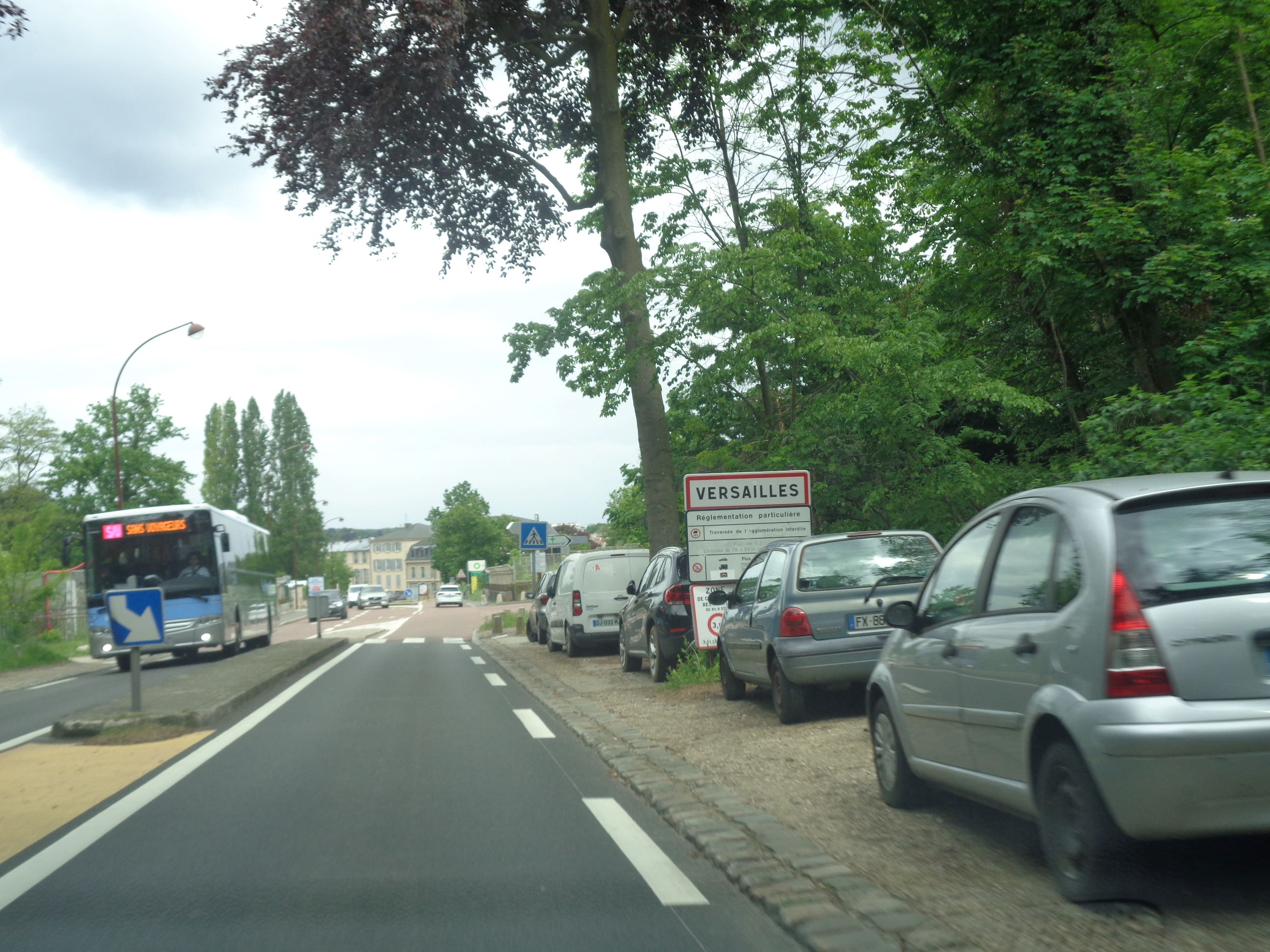
The Guy Môquet covered trench, or Guy Môquet tunnel, is a work of art located on the beltway road A86, in the territories of Vitry-sur-Seine and Thiais in the Val-de-Marne (dept 94) , With a total length 650 meters long, this twin-tube tunnel has 3 traffic lanes per direction, And we take it to go around Paris on our way East/West
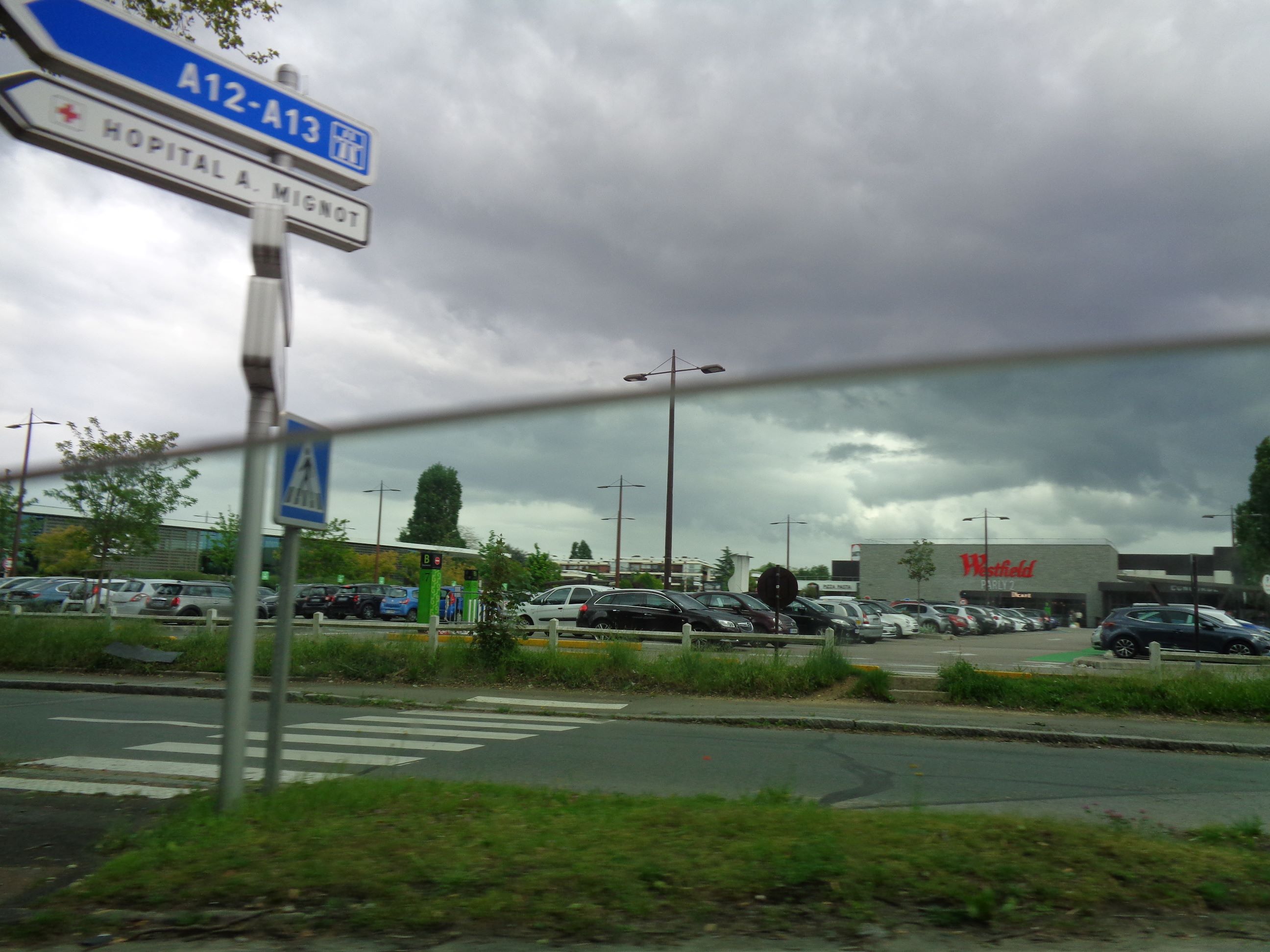
The N186 or RN186, is a road which was the second ring of Paris before being gradually replaced by the A86 highway, The A13 begins in Paris, more precisely on the peripheral boulevard at the height of the Porte d’Auteuil. It is then cut and covered on certain sections, before meeting the A12 at the Triangle de Rocquencourt. A connection A13 to A12 and vice versa taken zillions of times. The famous CC Parly 2 shopping center with nearly 200 shops on 3 floors with white, gold and warm and refined wood decor. We shopped here to death, our favorite by far while living in Versailles, It is at 2 Av. Charles de Gaulle, Le Chesnay-Rocquencourt (former Le Chesnay) on the road D186 becomes N186 at A13 dir Rouen or go over the bridge to St Germain en Laye etc, This was on our way out to A13 and new home !
The Versailles tourist office: https://en.versailles-tourisme.com/
The city of Versailles on its heritage: https://www.versailles.fr/65/decouvrir-versailles.htm#
There you go folks, a dandy small stories of my dear Versailles, as said, a lot more than the palace to be seen and enjoy. A nice town good for the whole family, heck it was great for mine. Again, hope you enjoy this post on the streets of Versailles, part III !!! as I.
And remember, happy travels, good health,and many cheers to all !!!


