
I take you back again to this monumental sight to see in my sentimental Toulouse, I have found older new pictures to the blog that felled need to be in it. Of course, will tell you a bit more of the wonderful sublime Cathédrale Saint Etienne (St Stephens) of Toulouse, part I !!! part II Hope you enjoy the post as I.
A wonderful monument we always stop by and a must to see while in the pink city of Toulouse. The walks around the neighborhood are nice too perfect to see the architecture and history of the city. The Cathedral of St Stephens (Saint Etienne) of Toulouse was founded in the 3C by Saint Saturnin, its first bishop, who suffered martyrdom around the year 250. As for the cathedral, dedicated to Saint Etienne, the first historical mention, currently known, is provided by a charter of Charles the Bald given, in the year 844, for the benefit of the churches of the city. At the time of the Gregorian reform, in 1078, Bishop Isarn built or rebuilt, a new church located on the site of the current nave called Raimond VI. Magnificently adapted for the liturgy and preaching, this vast construction, currently divided into 3 bays, is covered with a vault with powerful cross-sectional ribs with a square section.

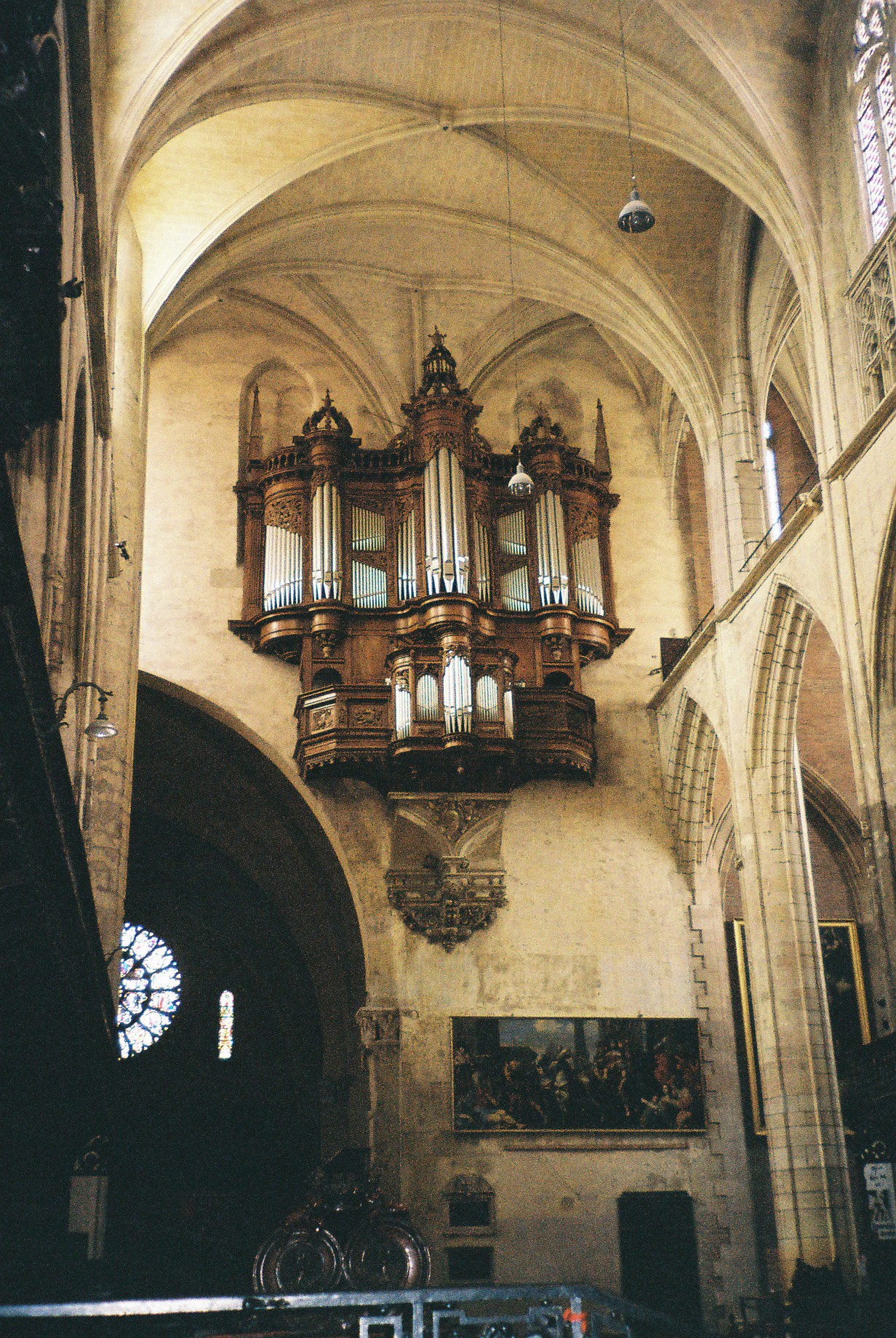
The gallery organ dates from 1612. The woodwork was enlarge in 1677 ,then in 1738, restoration in 1761 , in 1772, and 1787, The gallery organ weighs about 13 tons. it is 12 meters high and 10 meters wide. It is not placed on a support, but hung on a vertical “swallow’s nest” wall ! It had a conservative reconstruction by Aristide Cavaillé-Coll in 1852, and a complete restoration in 1977, The Choir organ by Aristide Cavaillé-Coll dates from 1868.
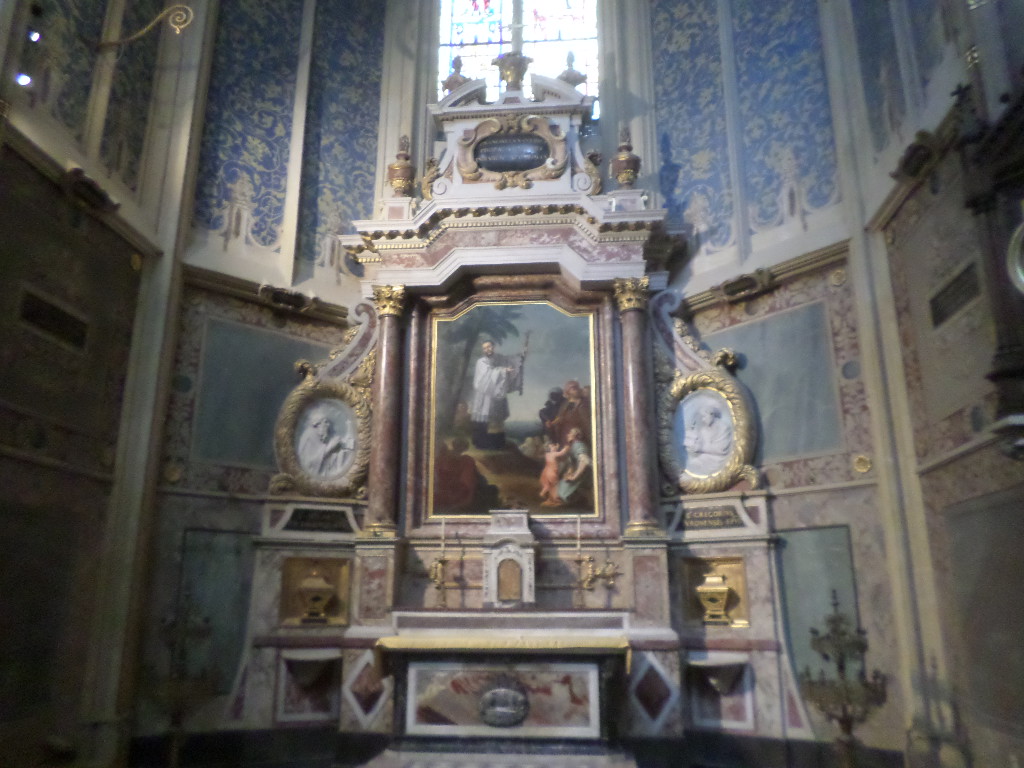
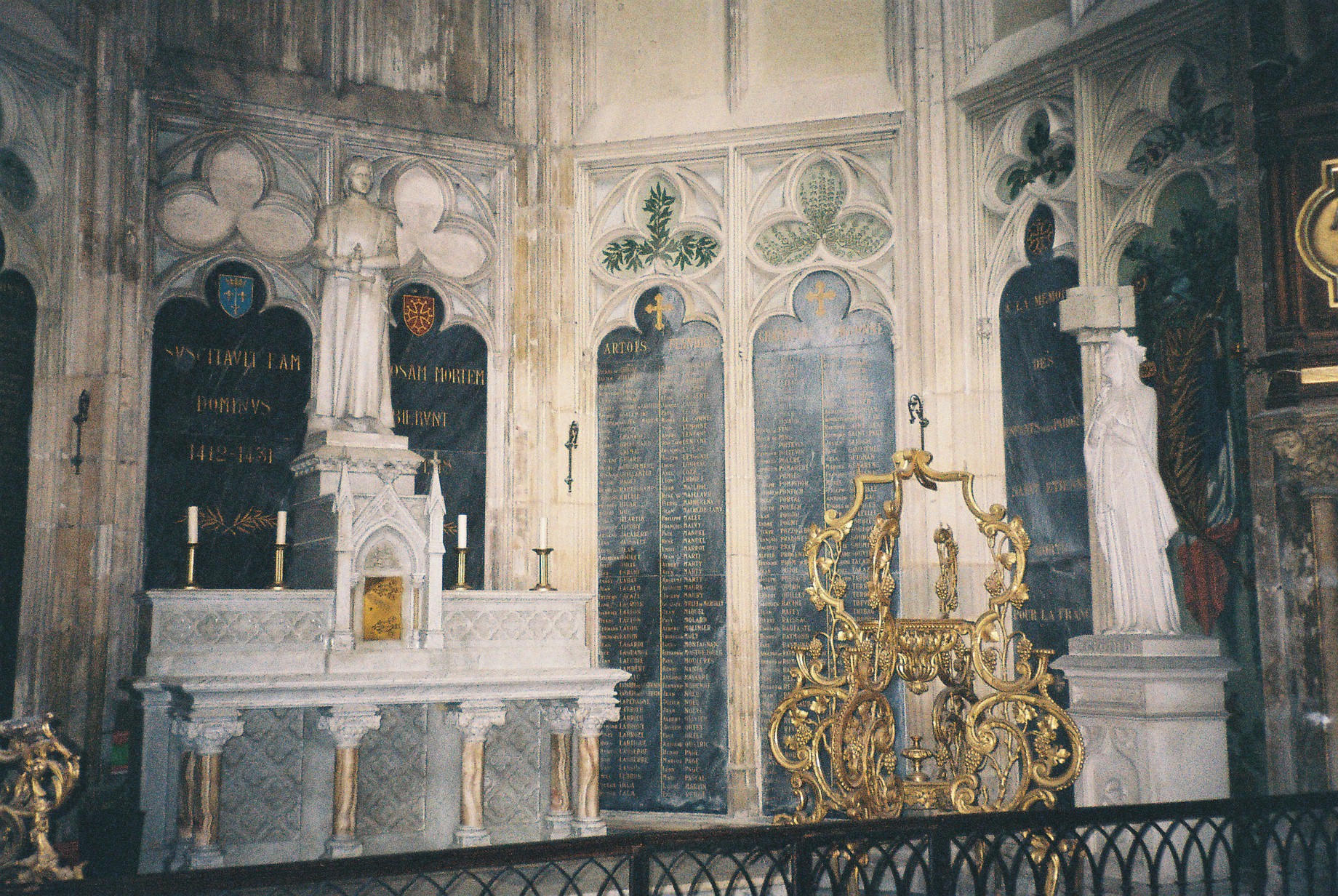
You have magnificent beautiful chapels amongst them, the Chapel of Saint-François-de-Sales , completed in 1279, was initially dedicated to Saint Martin who is still present on the keystone. Revamped and restored from 1843 to 1846, the chapel was then dedicated to Saint François-Xavier. In the 19C it has a painting by Fauré representing Saint François-Xavier preaching to the Indians. The Saint-Joseph Chapel , The Chapel of Saint Joan of Arc with on the right side a statue of Saint Clotilde and on the left side of Saint Geneviève. This chapel dates from 1279. The current decor dates from 1922 after her canonization in 1920.
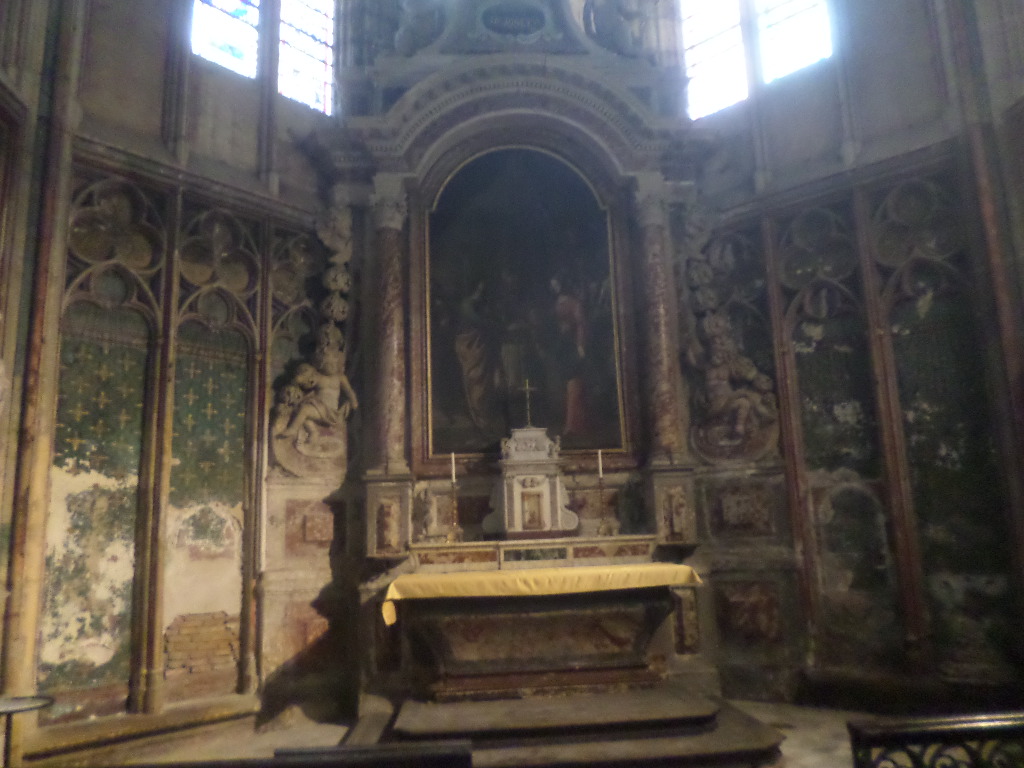
You can look up and see beautiful stained glass even the incomplete stained glass windows from the 14C adorn the chapels of Saint Pierre, Saint François, Saint Augustin, and Saint Vincent de Paul. The royal canopy (15C) offers portraits of Charles VII and his eldest son, the future Louis XI. Remarkable among others, the image of Saint Louis, seated on his throne, raised to Heaven by 2 angels, around 1300, Saint Joseph’s Chapel, Saint Catherine and a bishop, these scultées circa 1340, On the south collateral you see the woodwork of the choir and the great organ, executed from 1610, constitute a rare set of sculptures, which complete the large altarpiece of the High Altar circa 1660-1668, it is surrounded by wrought iron gates done in 1766, A 33-piece hanging, from the 16-17C, is dedicated to the history of Saint Etienne and the Holy Bishops of Toulouse. In the side aisles are the tombs of President de Lestang 1623, Bishop H. de Sponde 17C, and President de Puyvert 1784. Finally, 2 painted canvases from the 17C : the Triumph of Joseph by H. Pader, under the organ, and the Adoration of the Shepherds by Nicolas Bollery, school of Fontainebleau.


It has wonderful sublime tapestries such as with the first group includes four pieces , dating from 1532 to 1534. The scenes trace the history of St Etienne. The second group consists of 17 tapestries, first suite dedicated to the life of St Etienne, includes 9 pieces; the other includes 8 pieces and is dedicated to the holy Bishops of Toulouse such as Saturnin, Hilaire, Sylve, Exupère, Germier, Louis d’Anjou, Martial, and Bertrand de Comminges, The 9 tapestries of the first suite, devoted to the life of St Etienne represent the election to the diaconate, the miracles, the appearance before his judges, the stoning, the burial, and the translation of the body of the martyr. Four of these tapestries were presented, installed in the stalls from March 19 to 31, 2016. These are : The ordination or the election of Saint Etienne to the diaconate, the stoning , the burial, and the translation of the relics.
A bit of history I like tell us that the oldest parts of the cathedral date from the Romanesque period. These are the south wall of the choir and the north and south walls of the old nave. You can easily see a portion of it from the Place Cardinal Saliège square; it is visible at the level of the current nave, where the wall is in slight relief. It has two oculi, a small door covered with a semicircular arch and two buttresses nested in the Gothic buttresses. The Romanesque building was shorter than the current nave. It is estimated that it was 20 meters wide by 85 meters long. In all likelihood, it consisted of a western massif with two towers, a nave with three vessels and a tripartite chevet in extension. The aisles were pierced by oculi to the west, surmounted by a platform and consolidated by buttresses. Its construction probably spans between the episcopate of Bishop Isarn 1071 to 1105, and continues under that of his successor Amiel 1105 to 1139. The construction of the cathedral is linked to a policy of recovery of the Church, in the midst of a crisis since the 10C. The papacy encouraged a reform intended to restore discipline among the clergy, change their customs and consolidate their independence from the laity. Bishop Isarn, notably influenced by the action of the Cluny monastery, introduced this reform in Toulouse in 1073. He had a charter drawn up in which it was required: “Let all the clerics eat together, sleep together. May food and clothing be common to all according to the prescription of apostolic tradition. That the freedom to go and move in any place is only granted with the permission of their prior, so that there exists only one spirit, one soul for those who have only one God , one faith, one baptism ”. Bishop Isarn had the buildings necessary for this community life constructed. A cloister, a chapter house and a large refectory are built to the south and east of the cathedral. They are added to the group of churches Saint-Etienne and Saint-Jacques. The district, most probably fenced, develops in an area of 2.3 hectares. It is bounded to the east by the city wall. Three vaulted passages, to the north, south and west, open onto the city but are closed after dark. The cathedral is located on the edge of this district to allow people to enter more easily. The famous sculptors’ workshops of Moissac and Saint-Sernin participate in the ornamentation of this vast architectural ensemble. Part of their production can still be appreciated despite the almost complete disappearance of Romanesque buildings. The capitals of the nave and five others visible in the gallery come from the old cathedral. They can be compared to those dated 1100-1110 from the Saint-Sernin Basilica. (see post) The St Augustins Museum (see posts) preserves magnificent sculptures from the cloister and the chapter house, some of which are attributed to Gilabertus, one of the major artists of Romanesque art.
The Saint Stephen’s Cathedral is marked by the revolutionary period. In France, the Constituent Assembly seeks to establish a new Church. The property of the clergy is confiscated, religious orders suppressed and the authority of the pope rejected. New priests must be elected and swear an oath to the Civil Constitution of the clergy. This new constitutional clergy must leave the religious habit for a civil dress and marry its members, under penalty of imprisonment. The Toulouse priests were summoned on March 6, 1791. The session took place in the cathedral. The majority of religious refuse to take an oath to the Constitution and must flee. Father Sermet, favorable to new ideas, was elected bishop on March 27. Constitutional worship is also prohibited. The cathedral was closed in March 1794. The canonical quarter, which no longer had any reason for being, was gradually destroyed. The cloister was demolished in 1799. The church suffered numerous destructions. The portal statues are overturned, the Cardailhac bell is thrown from the bell tower and the furniture is partially destroyed. The choir serves as a warehouse for the furniture of the suppressed churches. The nave of Saint-Etienne becomes the place of revolutionary celebrations. It is transformed into a temple of the goddess Reason then receives the worship of the Supreme Being. Then take place the decadal worship ceremonies, during which the laws are read and civic spirit glorified. The persecution of religious ends with the Concordat of 1801, an agreement signed between Napoleon Bonaparte and the Papacy. Christianity regained its dominant place in society. After twelve years of unrest, the cathedral is returned to Catholic worship. In a state of ruins, it has lost much of its wealth. And it came back better than ever,Amen!!!
The official Cathédrale Saint Etienne: http://paroissescathedraletoulouse.fr/home-2/culture-et-tourisme/cathedrale-saint-etienne/
The Toulouse tourist office on the Cathedral: https://www.toulouse-visit.com/la-cathedrale-saint-etienne/toulouse/pcumid031fs000a2
There you go folks, even a revolution could not change the faith. So do come to see a wonderful monument testament of enduring faith and beautiful architecture. It is Toulouse, if you are here , you must come to it. Again, hope you have enjoy the post on the Cathédrale Saint Etienne of Toulouse, part I !!! as I.
And remember, happy travels, good health, and many cheers to all !!!


One thought on “The Cathédrale Saint Etienne of Toulouse, part I !!!”