
The town of Guémené sur Scorff is in my beautiful Morbihan and lovely Bretagne, Another off the beaten path place with pretty architecture of its monuments. This is a return visit and tell you about the curiosities of Guémené sur Scorff !! The town is about 43 km from my house, Hope you enjoy the post as I,
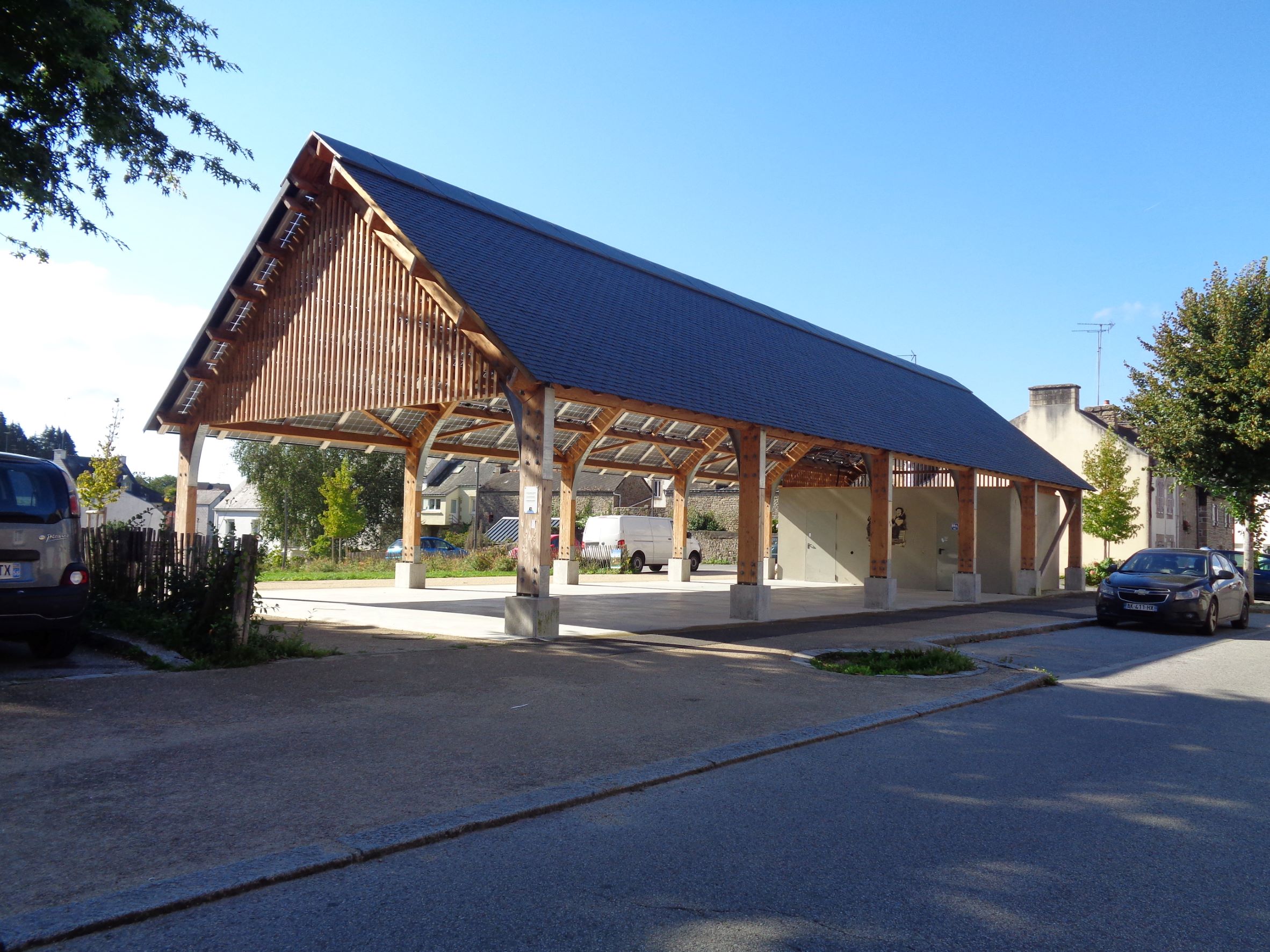
The halles were first built in 1634, and were located on what is now Place Loth. They housed the grain and flour market, the displays of sheets and linens, wholesalers and retailers alike. Sold in 1809, then acquired by the town in 1870 ; it was decided in 1923 to destroy it, safety and health being in question. Now Place des Halles,and rename Place Joseph-Loth, named after the linguist historian who was born in one of the houses there. Today, a new Halle built on rue Emile-Mazé, at the level of the intergenerational garden. With more than 100 m2, this halle will house public toilets and will offer a shaded area where some outdoor events can be organized in open air.
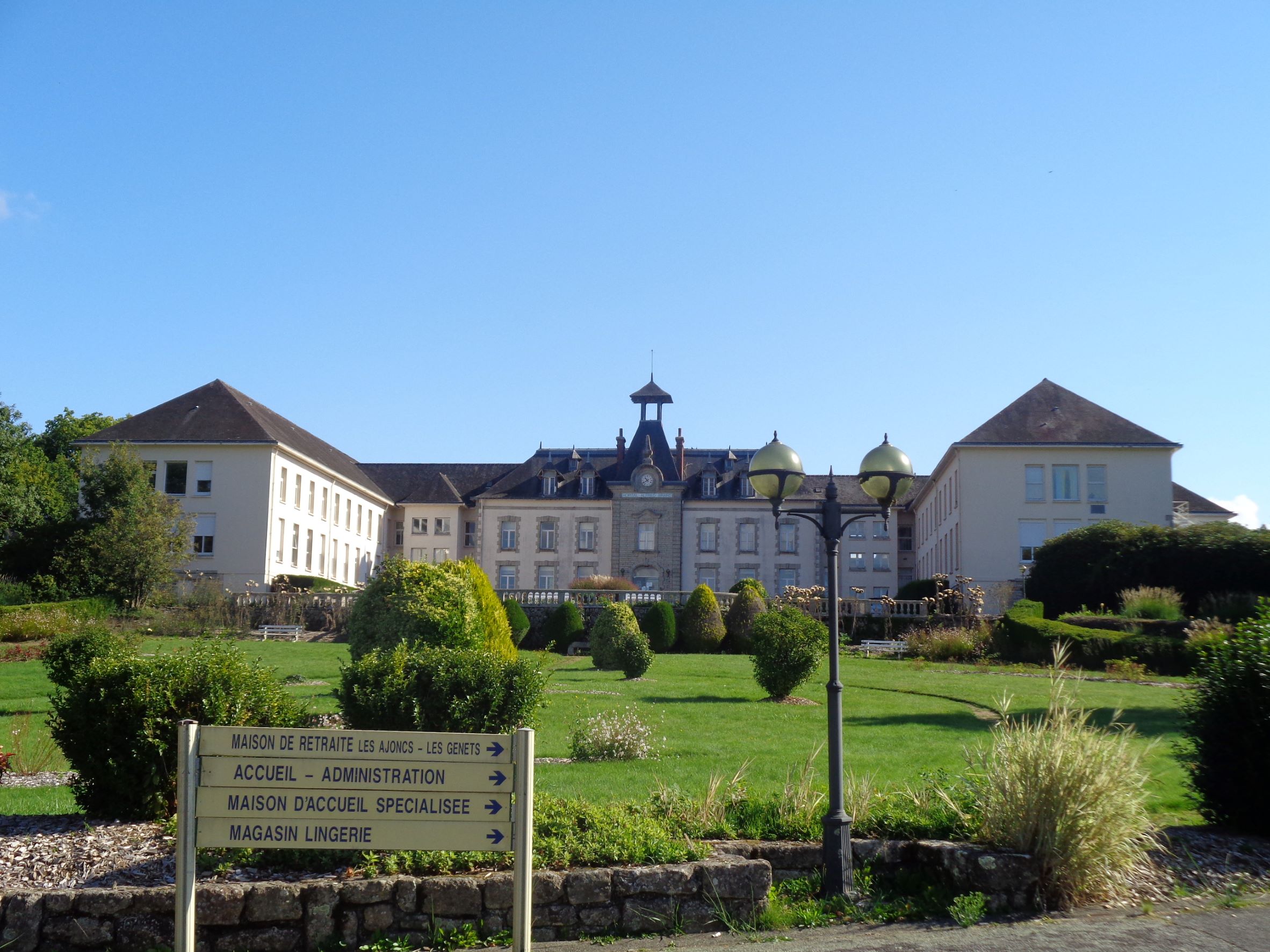
The Hôpital Alfred Brard hospital is located at rue Emile Mazé, A bit of history I like : The first hospital was done in 1642 and was located at rue Neuve, the hospices became very dilipated and insufficient, In 1912, thanks to deputy Alfred Brard a new hospital was done at the place call Le Belvédére ; this construction was stopped by WWI and work did not resume until 1923 ; the new hospital was completed on December 4, 1927. The new hospital in Guémené-sur-Scorff was the first modern establishment erected after WWI. This congregation has been running the hospital since 1784 is the Congregation of the Daughters of Wisdom, whose motherhouse is located in Saint-Laurent-sur-Sèvre (Vendée 85), particularly attached to hospital services.
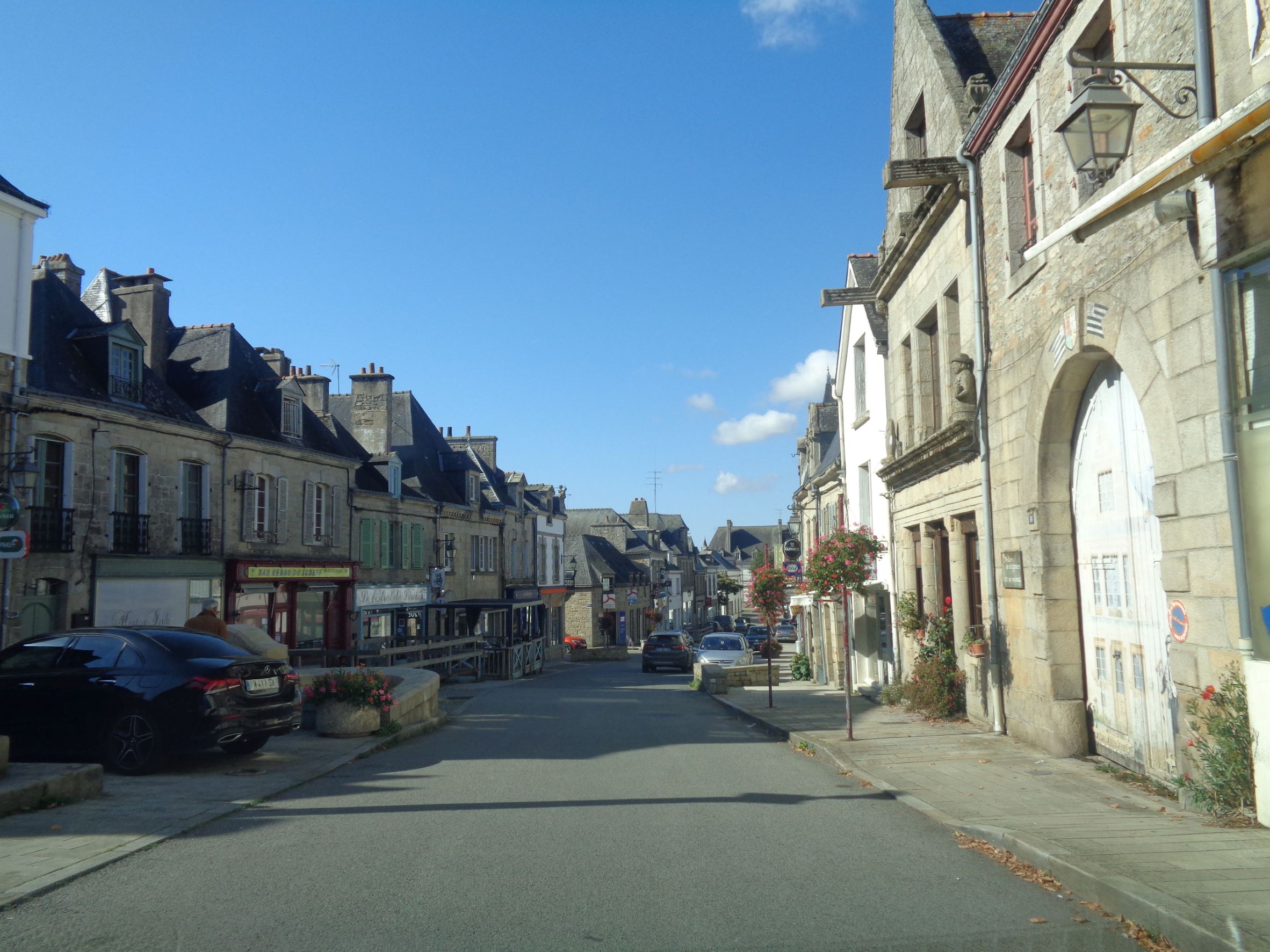
The picturesque and commercial rue Bisson is nice for a walk and see at 14-16 rue Bisson , the former Hôtel de la Croix Blanche, known as a former coaching inn.
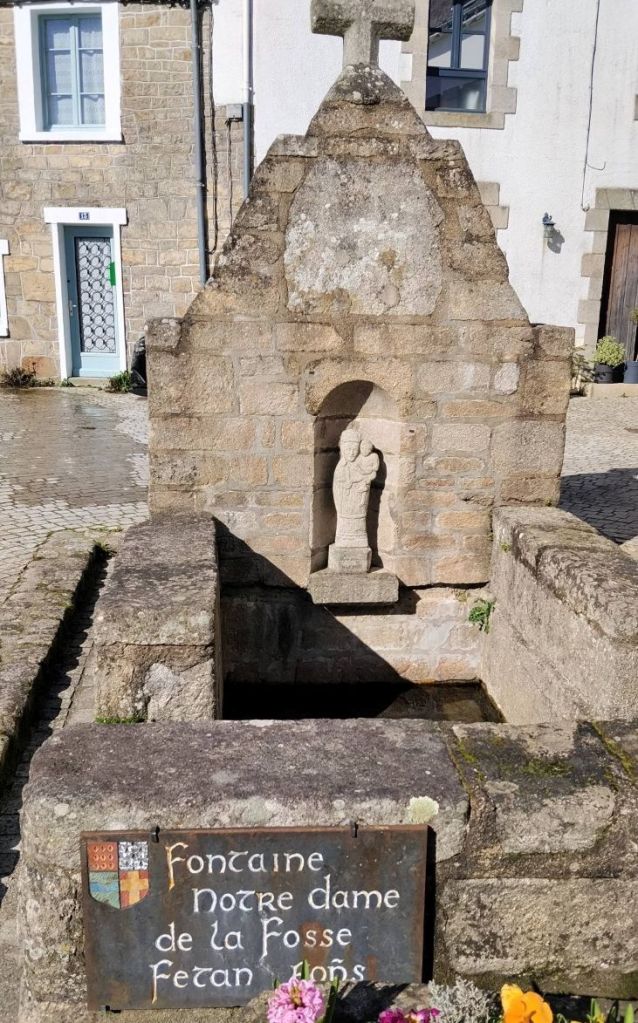
The Fontaine Notre-Dame de la Fosse or the Fountain of Our Lady of the Pit. In time immemorial, the villagers argued over where to dig a fountain, each wanting it near their house. The Virgin Mary intervened. She appeared, angered, picked up a stone, and declared, “Where the stone falls, you shall build the fountain.” She threw the stone, which transformed into a ball of fire and fell precisely where the fountain was built . Dating from the 18C, its history is linked to the church. It replaced a simple spring discovered in the Middle Ages by the Virgin Mary herself to quell a conflict between villagers. During the destruction of the collegiate church in 1793, during the French revolution, some revolutionaries, disregarding its mystical significance, temporarily renamed it the Fountain of the Sans-Culottes ( without breeches = were the common people of the lower classes in late 18C France, a great many of whom became radical and militant partisans of the French revolution in response to their poor quality of life under the Ancien Régime ). The fountain inherited the miraculous powers of its patron saint and, of course, cured just about everything: skin diseases, eye ailments, and lameness, Its name, Our Lady of the Pit, likely comes from the proximity of the castle moat, where a statue was supposedly found. Consequently, the church is also dedicated to Notre-Dame de la Fosse. The original statue in the niche disappeared a long time ago.
The City of Guémené sur Scorff on the hospital :https://guemene-sur-scorff.com/lhopital-2/
The City of Guémené sur Scorff on the old halles or market : https://guemene-sur-scorff.com/les-anciennes-halles/
The city of Guémené sur Scorff on its history/heritage: http://guemene-sur-scorff.com/lhistoire/
There you go folks, another dandy in historical Guémené sur Scorff .Sights and stories to always amaze you. Again, hope you enjoy the post on wonderful Curiosities of Guémené sur Scorff !! as I.
And remember, happy travels, good health, and many cheers to all !!!


