
And here I am back in my inland Morbihan road warrior trips and more beauties of course! I had briefly written on this wonderful town of Malestroit, but will update the post literally all new and links. Therefore, here is my take on this is Malestroit !!! Hope you enjoy it as I.
I was drawn to Malestroit, inland Morbihan. It was a thrill to find more gems there. Actually, I came here first because my company sponsored a running race thru the woods starting in city center here and I was a happy spectator! And voilà, Malestroit came into my map! Things happens here in lovely Bretagne! The best is by car from Vannes take the N166 direction Rennes and come off at exit D776 Malestroit, follow the signs for the city. Or a bit further or coming from Rennes closest is the exit D10 Serent/Maletroit. From Nantes you take the N165 to the N166 direction Rennes and follow above. There is a bus and no train station fyi.
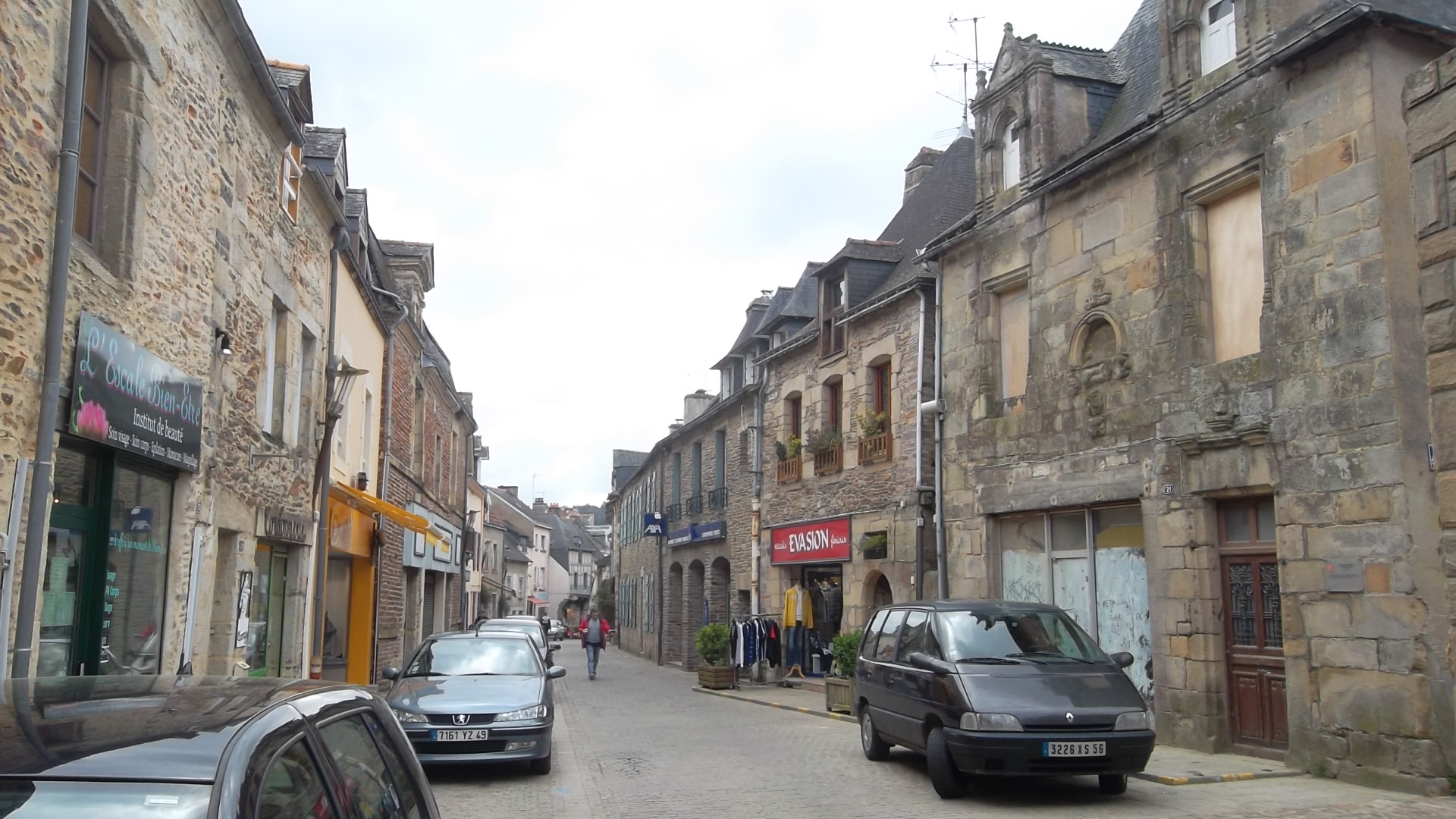
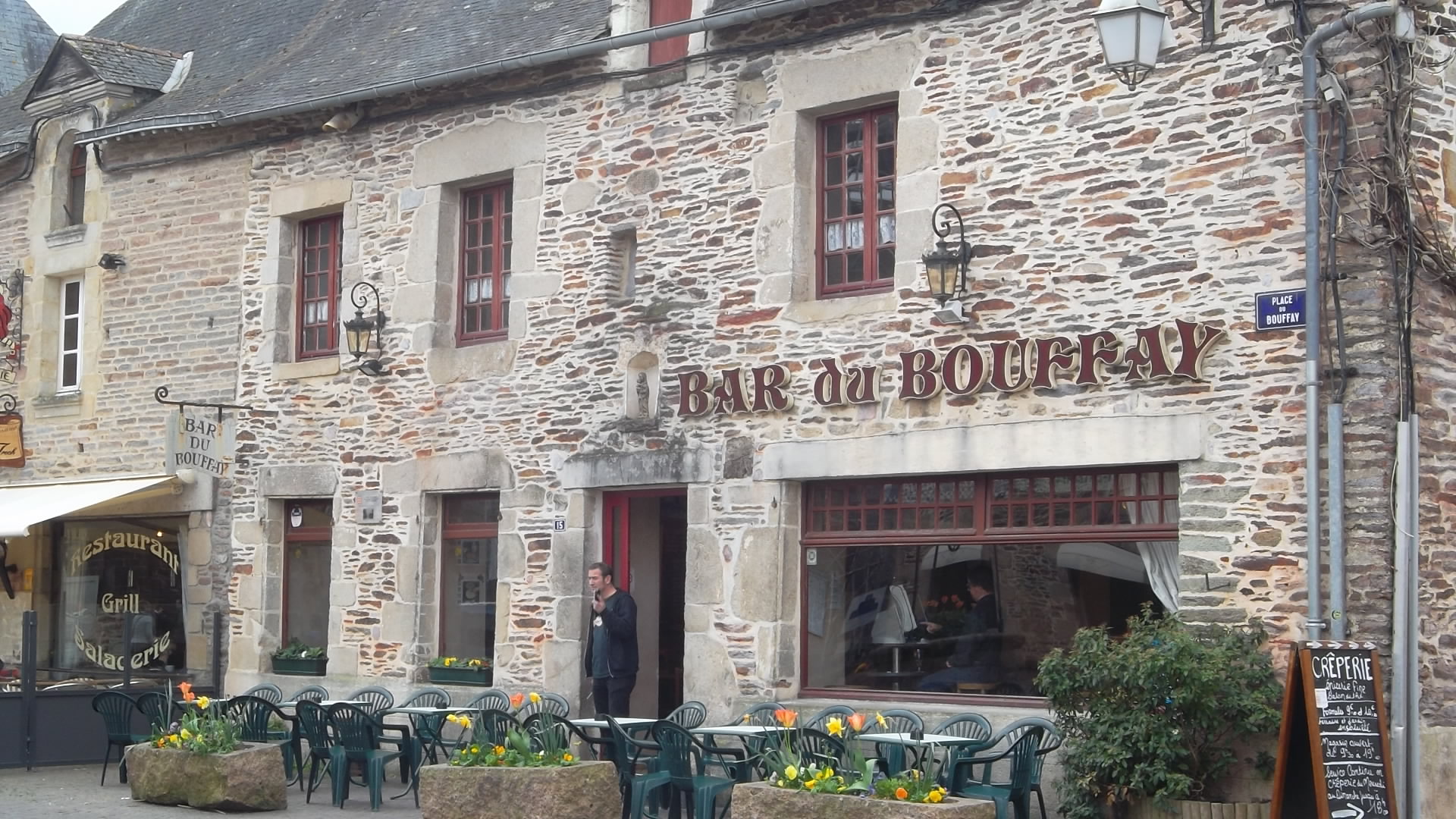
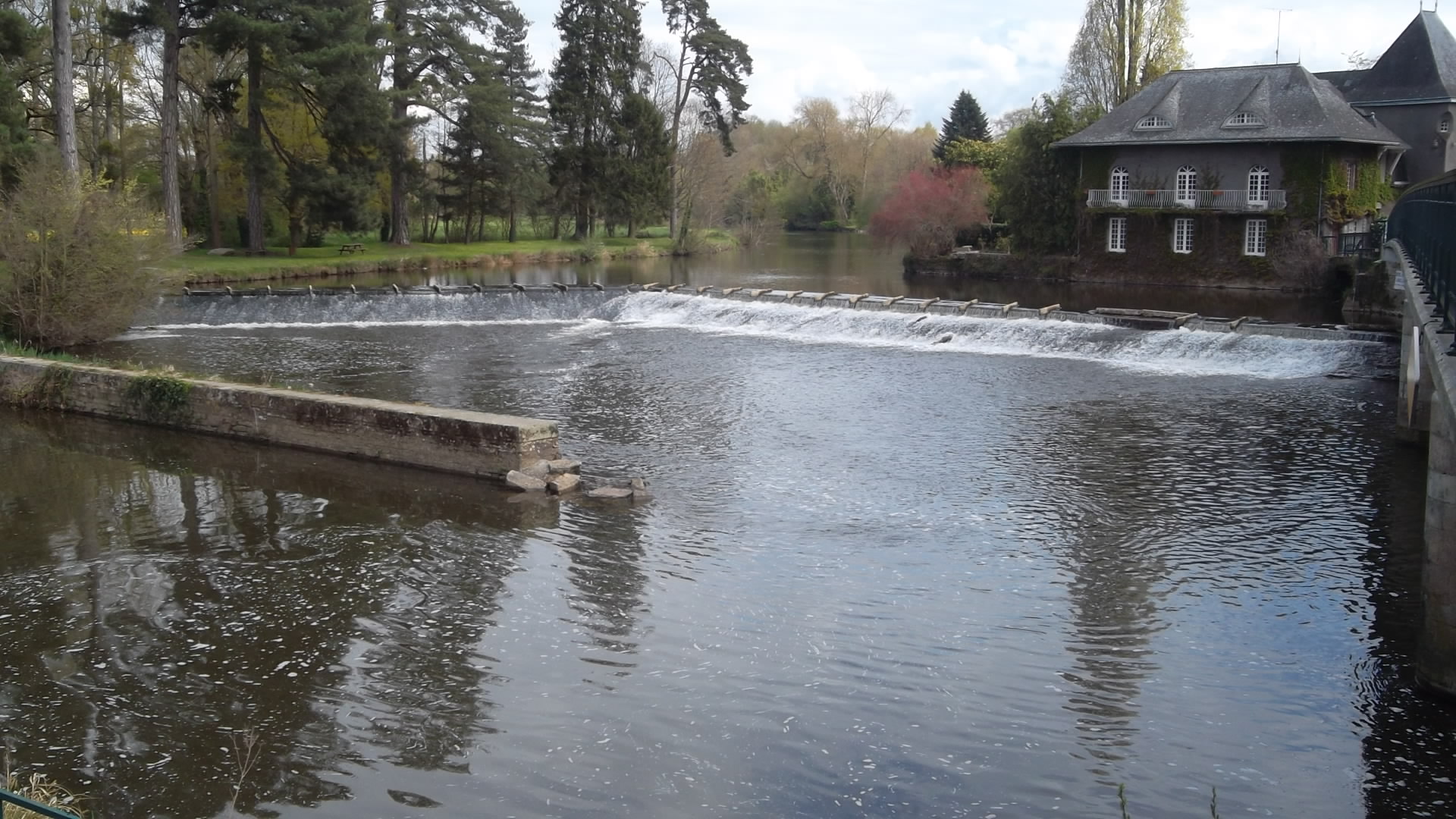
Malestroit as many other towns in Brittany receives for its historical richness the title of « Petite cité de caractère » or small towns of character. All works around the Oust river , that connects here with the wonderful Canal Nantes-Brest. You have many things to see here and a day will be filled with goodies to enjoy,such as the place du Bouffay (houses from the 15C to 16C), L’île Notre-Dame (isle of Notre Dame between canal and river), Church of Saint-Gilles (12-16C), Chapelle de la Madeleine (where treaty of the Hundred years war was signed), Monastery of the Augustines, see and walk medieval streets such as rue du Général de Gaulle, rue Sainte-Anne ,and rue des Ponts (houses from the 15-16C), see the stone shales in purple, green,and blue, sand, tiles, stones, and granite in the architecture of the buildings and houses. See the windmill of flour,and the ecluses or levies on the river and canal, plenty of houses of wood front from many years old since 15C ; and see the house of water and fishing or maison de l’eau et de la pêche.

The Church Saint Gilles, (see post)very nice in a pedestrian section by the pl du Bouffray, really nice,the most impressive is the meridional façade shown very high on the front. You have a nice place to eat at Bar du Bouffray lights meals and drinks (which we did) , other heartier restos abound. At 4 Faubourg Saint-Michel ,you see the wonderful Monastery of the Augustines, and next door the Chapel of the Immaculate Conception.
Other wonderful thing to walk ,see and admire is the magnificent Canal Nantes Brest that passes the town along the Oust river. A bit of info on it, the Canal link the two cities in the name from Nantes to Brest, taken the valleys of the rivers Erdre, Isac, Oust, Bravet, Doré, Hyéres, and Aulne; these rivers are link by three canals that joints flanking the lines of water. Its construction goes back to the first half of the 19C and it has 364 km long. The idea was to link by water as by road was more difficult the whole of the Duché de Bretagne, idea as far back as 1538. After many hesitations and the ravages of war, the project took fly in 1803, and was achieved in 1858 ,with the presence of emperor Napoleon III and the Imperatrice Eugene at the levy of Guilly Glaz.
A bit of further history I like tell us that the town of Malestroit belongs to a group of strongholds of large fiefs to the west of the ducal town of Ploërmel, which appeared in the 11-12C in an isolated, forested Brittany. The town is built on both sides of the Oust River. The choice of the site was determined by the intersection between the road that leads from Sérent to Locminé along the non-navigable Oust, and the one that crosses the river, linking Vannes to Ploërmel. A castle was built in the 11C on the islet of Sauldraye by the Malestroit family; it has now completely disappeared. The priory of the Madeleine, dependent on the powerful Benedictine abbey of Marmoutier in Touraine, was founded in 1129 by Payen I, on the left bank of the Oust; The creation of a parish and a chapel reinforced the birth of the town, This part of the town, between the Oust and the road to Ploërmel, would become the suburb of La Madeleine, from the 13C. Its chapel today only presents the remains of its Romanesque bell tower and a section of wall with Gothic windows. On the right bank, the first Saint-Gilles Church (see post) was founded in the 12C, on the site it currently occupies. The church was rebuilt at the beginning of the 13C and would be rebuilt again in the 15C and 16C. The town developed little by little; the Faubourgs Saint-Julien, Sainte-Anne and Saint-Michel are mentioned from the 15C; they still exist but retain little of their old architecture. The enclosure, built in 1463 after the lordship was raised to a barony in 1451, was dismantled in 1592, then repaired and reinforced immediately; damaged during the French revolution, it was demolished from the beginning of the 19C. The presbytery, built in 1419 by order and at the expense of the Lord of Malestroit, was enlarged in the 16C and restored in the 18C, its interior layout was reworked in the 19C. On the Place du Bouffay, market halls, probably medieval, housed a weekly market on Thursdays; at the end of the Middle Ages, These halls, rebuilt in the 18C, were destroyed in 1922. The Place du Champ de Foire is where the weekly market is held today
In Malestroit, activities diversified: canvas and woolen cloth continued to be manufactured, but leather was also worked in the 18C, there were thirty-two tanners and curriers in Malestroit; and, in 1847, the hat trade was flourishing.. The hospital was founded in the 14C by the lords of Malestroit; its current buildings date from the 18C; its chapel, dedicated to Saint Anne and rebuilt in 1600, was enlarged with a transept in 1617; its dilapidated state led to a new reconstruction in 1741 and a final one in 1839. On the islet of Sauldraye, the chapel of Notre-Dame de Toute Joie had taken the place of the destroyed castle in the 15C. From 1633, next to this chapel, the Augustinian convent was built by members of the Parisian congregation; at the end of the 18C, following a flood of the Oust, part of the buildings collapsed, along with the chapel choir; what remained was sold in 1791 and destroyed, apart from a two-story pavilion now converted into a house. In the 20C buildings of a clinic, remains of the Ursuline monastery of Ploërmel, founded in 1670 at the entrance to the Faubourg Saint-Michel are preserved; The establishment, closed in 1790, was bought in 1828 by Jean-Marie de La Mennais and housed the novitiate of the Congregation of Priests of Saint-Méen until 1866, when the Augustinians of the Mercy of Jesus, from Vannes, settled there. The 19C and 20C brought little change to this layout for the city within the walls. Furthermore, the alterations are minimal: a few houses destroyed, some constructions on empty plots. On the other hand, the changes are significant, which concern the communication routes. Part of the Nantes-Brest Canal, a connecting canal, between lock No. 27 of the Née (Saint-Marcel) and lock No. 25, joins the Oust at the Sauldraye islet; The New Bridge, built in 1863 at the old Saint-Julien port, improved traffic since it constituted a second crossing point of the already canalized Oust and bypassed the old center from the south (rue des Écoles and boulevard du Pont neuf), without using the Sauldraye islet.
The region of Broceliande tourist board on Malestroit and its heritage: https://www.broceliande-vacances.com/decouvrir/incontournables/canal-nantes-brest/petites-cites-caractere-canal/malestroit/
The Bretagne region tourist office on Maletroit: https://www.brittanytourism.com/destinations/the-10-destinations/destination-broceliande/malestroit/
The city of Maletroit on its heritage: https://www.villedemalestroit.bzh/index.php/tourisme-et-patrimoine/presentation-et-actualite
There you go folks, some of the off the beaten path people asked me all the time well plenty in my belle France still to be discovered by many. Again, hope you enjoy this post on this is Malestroit !!! as I.
And remember ,happy travels good health, and many cheers to all !!!

 Paris1972-Versailles2003