
Well this is one of those places sorry that over the years have been abuse from the tourist point of view. It is of course, very popular and overloaded with visitors. To me it has lost the charm of old as when I first came to see it back in 1990. However, did wrote a post on it and would like to updated for you and me. Therefore, this is my new take on the Place du Tertre of Paris, part I !!! Hope you enjoy the post as I.
As any visitor/tourist would attest, coming here is like a pilgrimage while in Paris. I admit came here in 1990 for the glamour in the travel books as my French family was not taken none of this. It immediately struck as an overpopulated square loaded with visitor/tourists walking around and so popular! Many cheap portraits made in China but signed by locals !indeed. It was a one time impression and I believe been back maybe once after that. Montmartre has better places to be ,but if you are here for only a visit or is your first time then do come if simply for the bragging rights ! I was here!
A bit on the history of the Place du Tertre of Montmartre…Paris tell us that the place du Tertre is located on the Butte Montmartre, in the neighborhood or quartier of Clignancourt of the 18éme district or arrondissement. It is at 130 meters above sea level. It is named because of its situation on the heights of Montmartre. It corresponds to the center of the old village of Montmartre, a few meter from the Basilica of Sacré-Coeur and the Church of Saint-Pierre in Montmartre (see posts). This site is served by the metro stations Abbesses (line 12) and Anvers (line 2), as well as by the Montmartrobus. I have come and parked at the parking Anvers 500 meters from Sacre-Coeur at 41 boulevard de Rochechouart.
With its numerous artists erecting their easels each day for tourists, the Place du Tertre is a reminder of the time when Montmartre was the place of modern art. This artists square is divided into 149 locations of 1m² where everyone gives free rein to their talent. At the end of the 19C and at the beginning of the 20C, many painters such as Toulouse-Lautrec , Picasso, Modigliani and Utrillo lived there. This square, which is the center of the old town of Montmartre, was already formed in the 14C and bordered by the closing wall of the Montmartre Abbey. It was on this square that the sinister forks of the abbesses of Montmartre stood.

At the end of the siege of Paris, (during Franco-Prussian war) the National Guards stored part of the 171 cannons that were stocked on the mound. On March 18, 1871, General Lecomte attempted to remove them, causing a riot that will be at the origin of the commune of Paris of 1871. On December 24, 1898, an oil car driven by Louis Renault, its builder (and later Renault automobiles), reached the Place du Tertre.
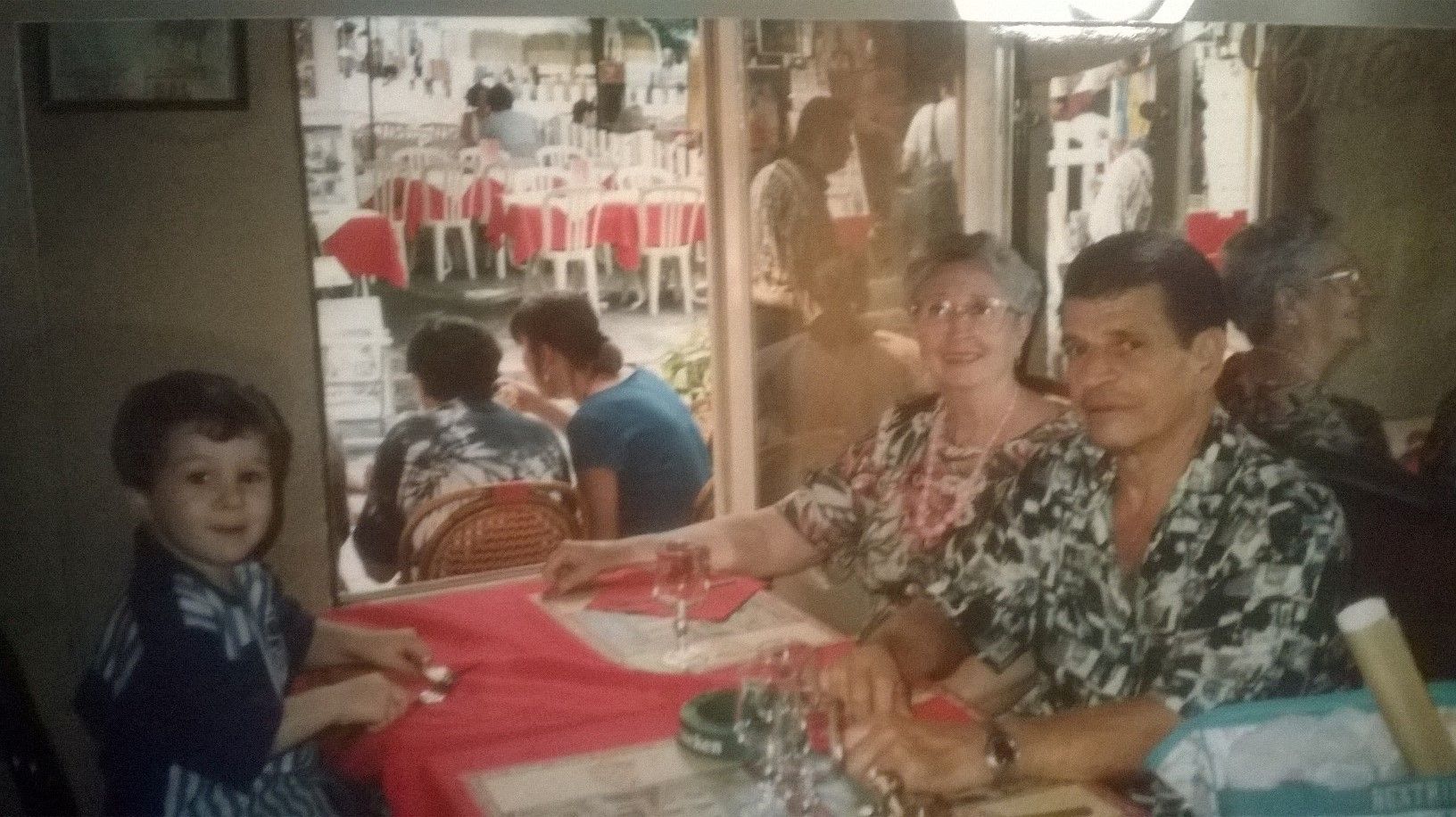
Remarkable buildings on the Place du Tertre are: corner of Rue du Mont-Cenis: Hotel Boya. No. 3: Old city /town Hall of Montmartre. No. 6: Restaurant A la Mére Catherine, founded in 1793 ,you will find the famous Mère Catherine. Before the Revolution, there was the presbytery where the parish priest lived as the church St Pierre was divided into two parts , one “St Denis” reserved for nuns, the other “St Pierre” for the villagers. With the Revolution and the confiscation of religious property, the house was sold and bought by Catherine Lamotte who turned it into a café-restaurant. One of the clients at the time was none other than Danton! After the death of Mother Catherine, there will be other owners including the second mayor of Montmartre Mr. Lemoine who installed a wooden billiard table, which was very successful, and earned him the nickname “Father of billiards”. The restaurant claims that the word “bistro” was born here when, after Napoleon’s defeat, the Cossacks who came to occupy Paris were served there drinks and to hasten the service shouted “bistro bistro” which phonetically and approximately means in Russian “quick quick”. The thing is disputed and questionable but it is part of the Montmartre legend made of gaffes and stories mixed with the truth! At No. 9: Maison de Maurice Douard. No. 15: It is this location that was located the Telegraph which was experimented in 1822. Actually we ate at Chez Eugéne 17 Place du Tertre on a memorable lunch way back on that special year as above. We had come back and for the memories here is Chez Eugéne: https://chezeugene-paris.fr/en

A bit of history I like tell us that we are in the Middle Ages. Let’s say without seeking too much precision, in the 12C. A few houses were built, especially a little lower, towards the current place Jean-Baptiste Clément which was then the center of the village, its main square (then called Place du Palais) . Later, probably in the 14C, the land (which is not yet a square) is bordered on the east side by a thick wall which forms part of the Abbey enclosure. In the center of the square which extends at its feet, the abbesses who possessed the right of justice had installed forks and gallows. The square did not have its current appearance and three houses were built in its center. They were destroyed in the middle of the 19C and it was not until 1921 that the city bought back the private part of the central square. The name Place du Tertre which obviously alludes to its location at the top of the hill only appears late, in the 19C. It almost disappeared when a decree of 1867, a year after the annexation of Montmartre to Paris, had provided for its abolition in order to widen the rue Norvins. Luckily, the project was abandoned!
The Paris tourist office on the Place du Tertre: https://parisjetaime.com/eng/transport/place-du-tertre-p1989
There you go folks, another place ,square, street to get lost in eternal Paris and dream on even if with plenty of help around you. Again, hope you enjoy the Place du Tertre of Paris, part I !!! as I
And remember, happy travels ,good health, and many cheers to all !!!

 Paris1972-Versailles2003