
I like to update this older post from 2018 as it is often the case, we come searching for a big monument to see and end up seeing a lot more of what the town has to offer. This is the case with nice Vitré, where we heard of the castle and came to see it, however, we found out many nice things to tell. This is the times to update/revise this old post on the Château of Vitré, part I !!! Hope you enjoy the post as I.
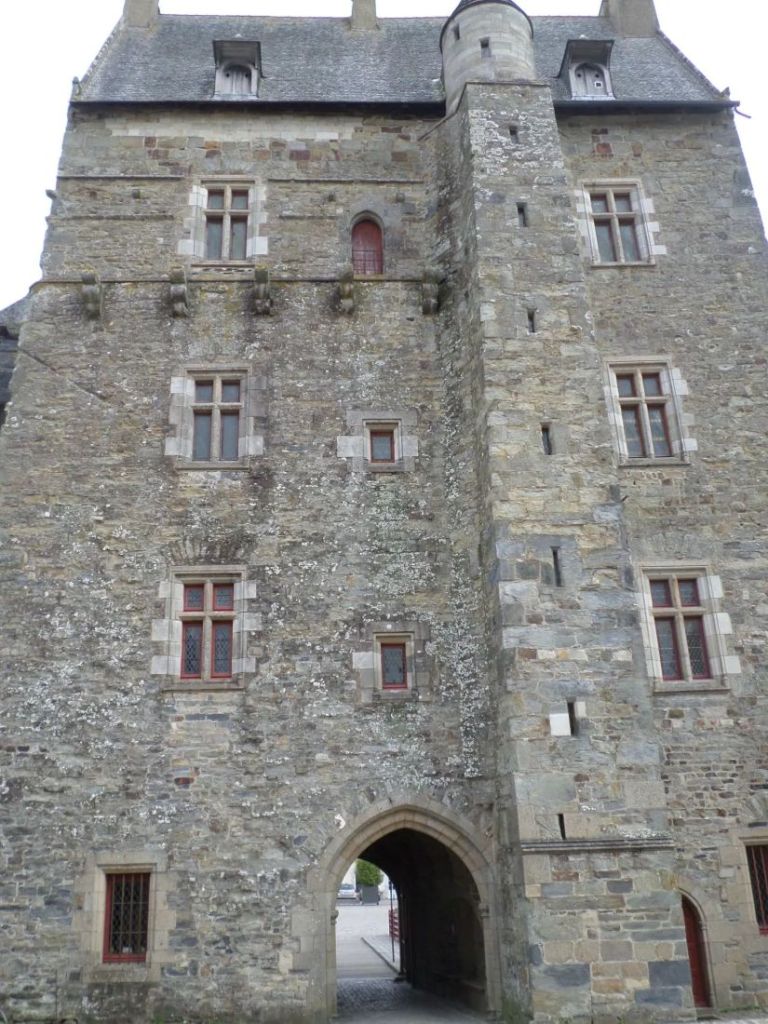
Of course Vitré is in the Ille et Vilaine dept 35 of my lovely Bretagne. It occupies the Marche region in upper Bretagne. It is label City of Art and History and the inscription to the list of the most beautiful detours of France. Vitré is the 37th French town with the most historical monuments and comprised 14% of the historical monuments of the department. She was promoted to flower town or “Ville Fleurie”, on 3 flowers label and has two stars in the green Michelin Guide. There what are you waiting for? Vitré is located 275 km from Paris, 132 km from Caen, 104 km from Nantes, 62 km from Mont-Saint-Michel and 35 km from Rennes. The Paris-Brest Expressway N157-E50, which extends the A11 expressway to Vitré. It, also a railway node, to Vitré was opened in 1857 on the Paris-Brest line. Then, a second line in the direction of Fougréres was opened in 1867 a viaduc spanning the valley of the Vilaine was built to the west of the city, and finally in 1874, a third line to the La Guerche-de-Bretagne. The construction of the train station was carried out in 1855 in the form of a small Gothic Castle in brick and Tufa, in the city center, just south of the walled city.
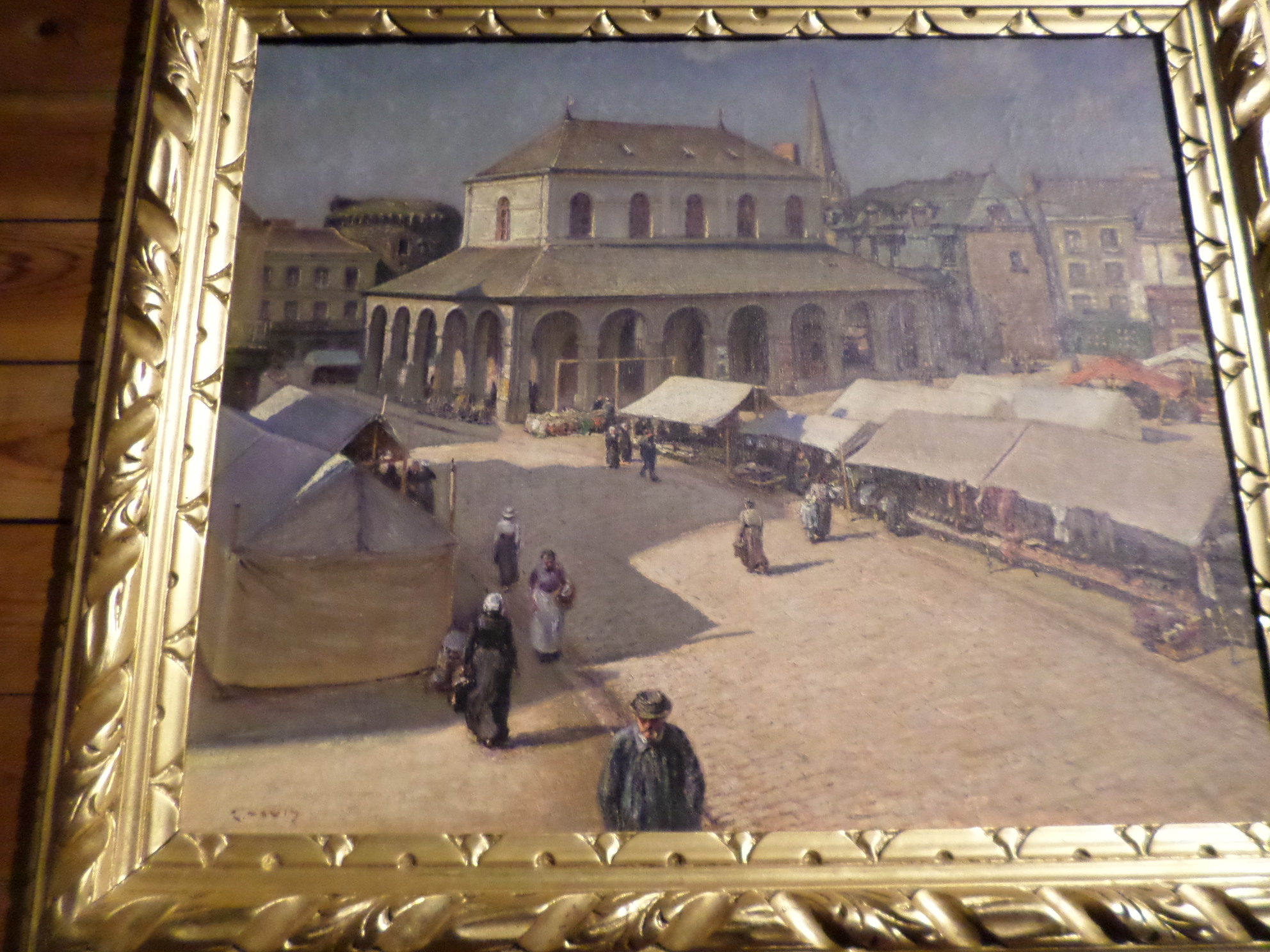
All around Vitré, the chouannerie develops in the countryside, in particular the division of Vitré, member of the Catholic and Royal army of Rennes and Fougéres led by Alexis Louis Gordien du Bouays de Couësbouc on the one hand, and the Knights Catholics, led by Joseph de Puisaye and René Augustin de Chalus. In 1799, the Battle of Argentré occurred, still in the surrounding of Vitré countryside. A legitimitist Royal insurrection, hostile to the new regime of the July monarchy, broke out in 1832 in the country of Vitré, marked in particular by the Battle of Toucheneau. During his trip to Brittany in 1858, Napoleon III and the Empress Eugénie stopped for a few moments in Vitré, the last Breton town visited before their return to Paris via Laval. Vitré also had its haussmannisation with the piercing of streets in its medieval center such as Rue Garangeot, rue Bertr and rue Argentré, rue Bordie and Boulevard Saint-Martin.
The museum in the Château de Vitré includes an exterior visit and the interior with paintings, tapestries, sculptures, and natural history museum. There is the Museum or Musée Saint-Nicolas located about 500 meters from the Castle with a collection of religious jewerly from the end of the 19C and early 20C (Unique in France and of National reference). The museum or Musée Saint-Nicolas is really the chapel depending and next to the convent of Augustinians built in the 17C; it has a beautiful cloister of the times. The castle present square was the courtyard or farmyard of the castle: there were the collegiate church, the stables and the common. The entrance is defended by a drawbridge and a mighty Châtelet flanked by two large towers in machicolations. At the south corner stands the dungeon or St. Lawrence Tower, at the northeast corner of the Madeleine Tower, at the northwest corner of the Montafilant tower. These various works are connected by an enclosure reinforced by other towers. Only one wall enclosure was built in the 13C. Today only the north and east ramparts (the broken tower) and the south wall between the Tour de Claviers (keyboards tower) tower and the Bridole tower remain. Finally, part of the Porte d’Embas is still standing. This set of ramparts is among the oldest and best preserved in Brittany.
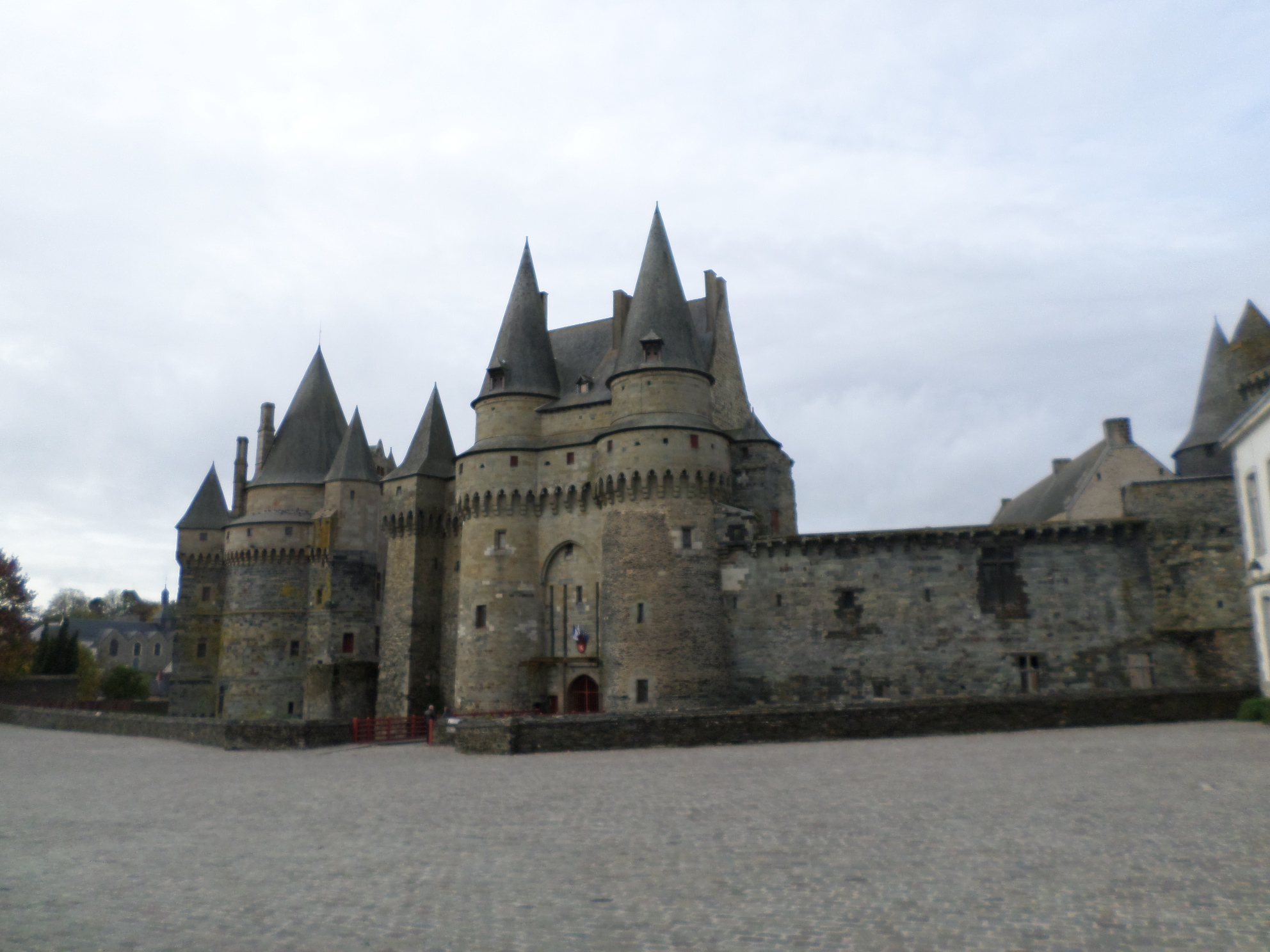
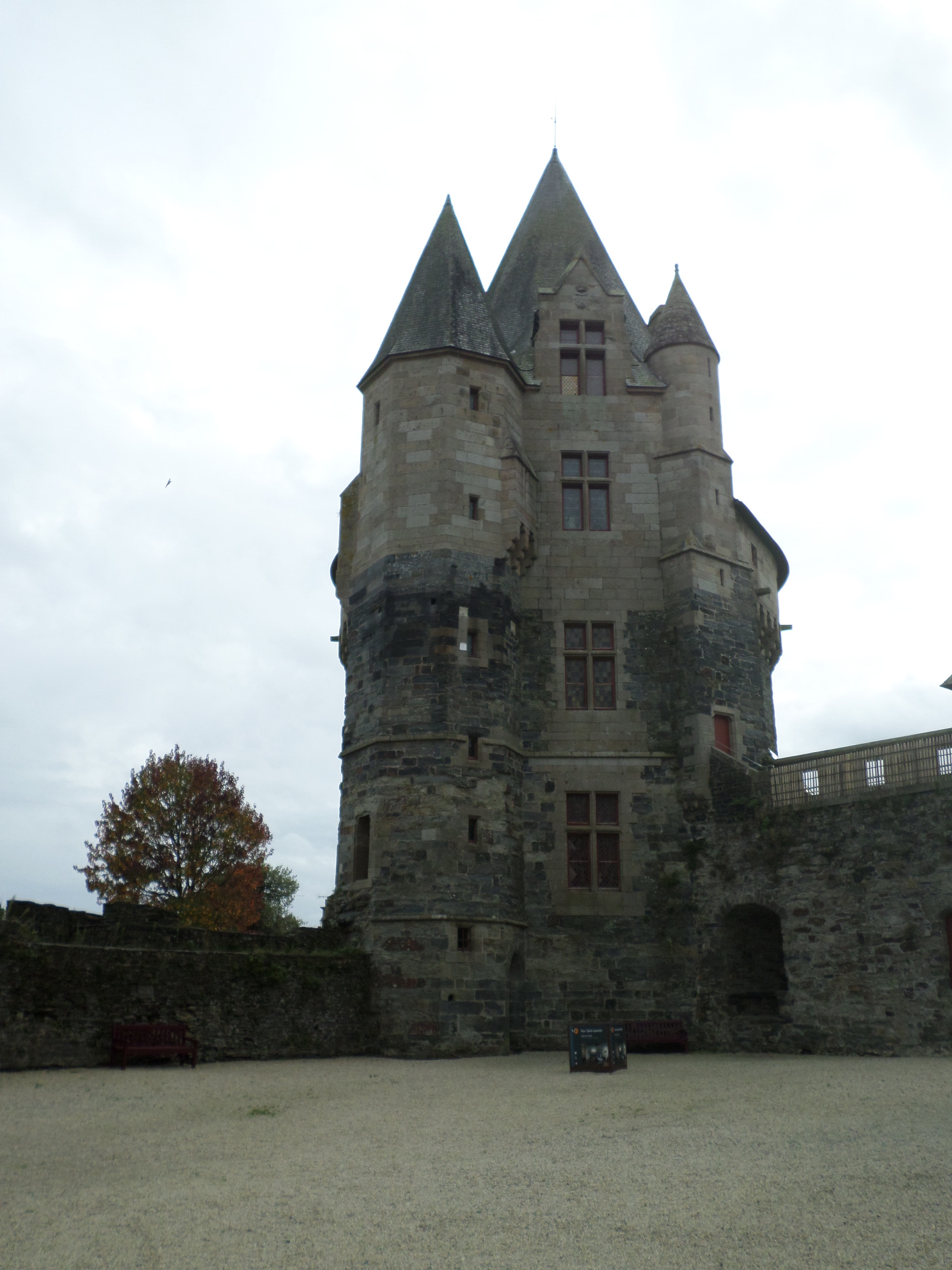
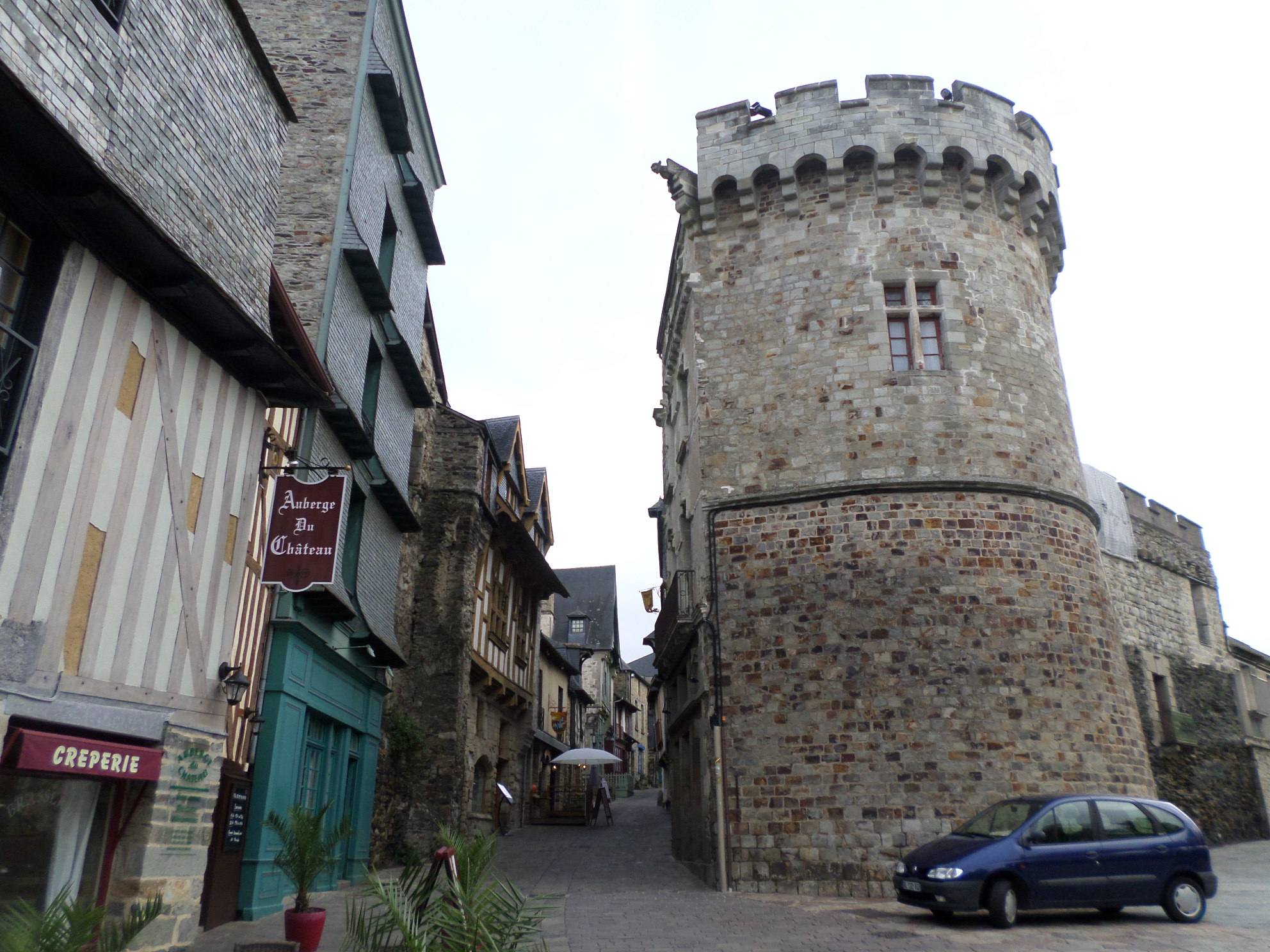
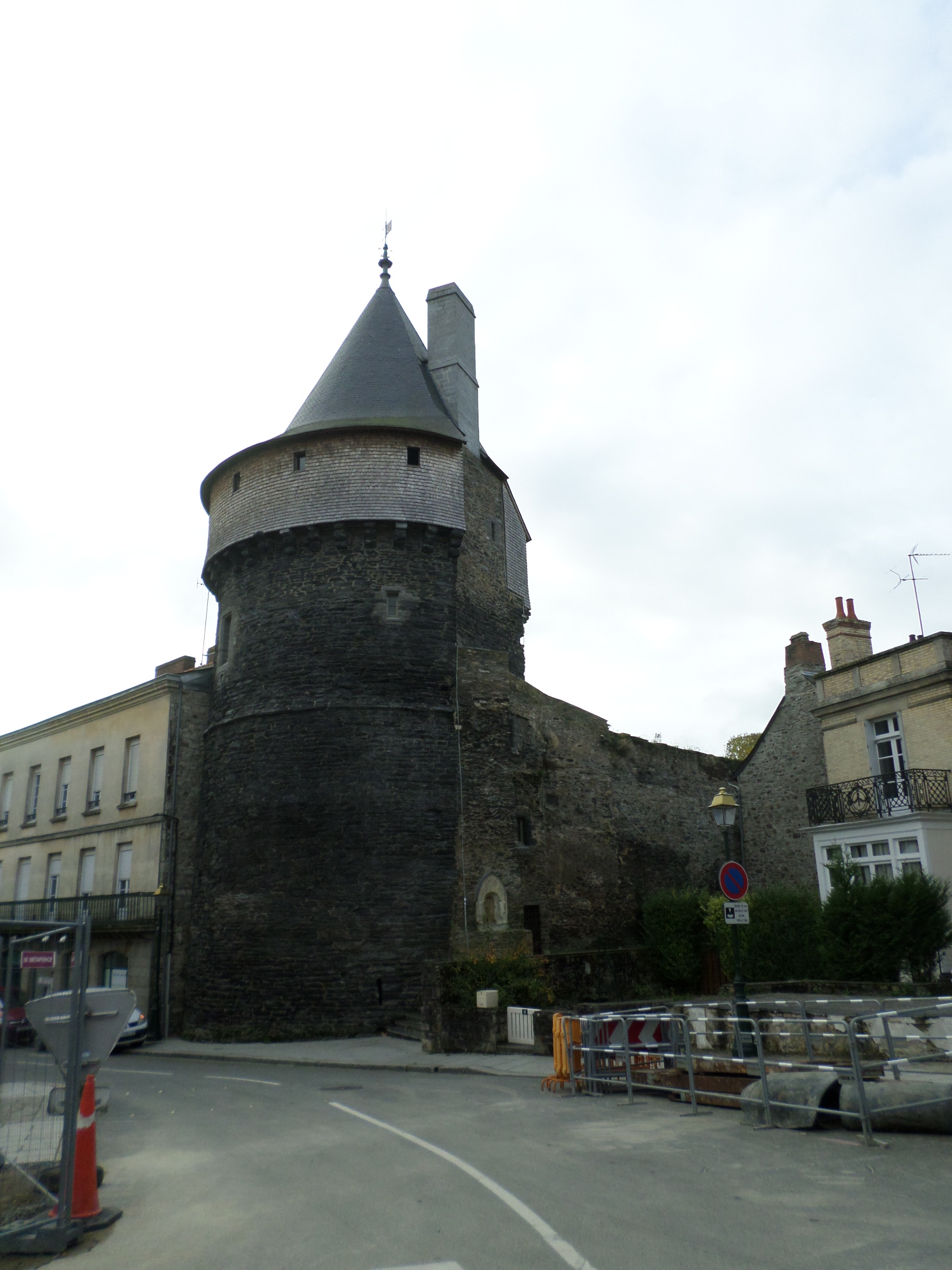
A bit of history of the castle I like tell us that at the beginning of the year 1000, a feudal motte stood on the site of the current Sainte-Croix Church (see post). In the years 1060-1070, Robert I built a first stone castle on the current rocky promontory. The Romanesque portal of this first fortress is still visible in the courtyard of the castle. During the first half of the 13C, André III, Baron de Vitré, began building around the first castle the current fortress on a triangular plan, flanked by circular towers at each corner and semi-circular towers on the curtain walls Two centuries more later or late 14C early 15C, the construction of the gatehouse and the elevation of the Saint-Laurent tower and the Madeleine tower gave the fortress the silhouette it still has today , Inside see the monumental tomb of Gui X (preserved in the museum of the castle) and the bell tower of the collegiate church of the Madeleine of the castle ,built around 1380.
The Vitre castle was abandoned in the 17C and 18C, confiscated as national property during the French revolution, it was partly transformed into a prison in the 19C. Several restoration campaigns were needed before experiencing a new lease of life with the opening in 1877 of the Castle Museum. The latter now offers a route through the Tour Saint-Laurent, the Tour de l’Argenterie and the Tour de l’Oratoire with eight rooms that will transport you from the 15C to the 19C between statues, furniture, clothing and portraits. At the beginning of the 20C, the City/town hall of Vitré took place in a neo-Gothic style building restoring the old stately home of the 15C inside castle grounds !
For the services rendered to the crown of France during the Hundred Years War by the lords of Vitré-Laval, King Charles VII of France erected Laval into a county in 1429. His successor, Louis XI gave the collar of Saint-Michel, an honorary distinction, to the brothers, Gui XIV, André de Laval-Lohéac and Louis de Laval-Châtillon. In the 17C, during the reign of Louis XIV, the Vitré castle hosted eight meetings of the Estates General of Brittany. In 1794, during the French revolutionary period, the Prince of Talmont, son of the last Baron de Vitré, was guillotined. The Vitre castle, seized, is then transformed into barracks, the tower of the Madeleine into a fodder store. In 1820, the castle threatens to fall into ruin and the La Trémoille family sold it to the department and the City of Vitré, Finally, the prison will not be replaced by the current City/town hall until 1902.
The official Castle of Vitré: http://chateau.vitre.bzh/
The city of Vitré on its heritage: https://www.mairie-vitre.com/-Town-of-Art-and-History-label-.html
The Vitré tourist office on the castle: https://en.bretagne-vitre.com/le-chateau-de-vitre/
There you go a wonderful town of Vitré indeed and really worth a visit , one of those towns passed by many times and when finally came in inside it hits me , lovely place. Again hope you have enjoy this post on the Château of Vitré, part I !!! as I.
And remember, happy travels, good health, and many cheers to all !!!


